
Can You Use Bleach on Laminate Flooring Without Ruining It?
You can use only a highly diluted, spot‑tested bleach solution on laminate and still risk damage. Undiluted bleach will strip the protective wear layer, cause fading, and harm seams or finishes. If you must disinfect a small, isolated stain, rinse thoroughly, ventilate, and limit exposure time. Most manufacturers recommend pH‑neutral cleaners, mild soap, or alcohol‑based spot treatments instead to avoid warranty issues and long‑term harm. Keep going to learn safer methods and step‑by‑step alternatives.
Quick Answer Can You Use Bleach on Laminate Flooring?
Short answer: you generally shouldn’t use undiluted bleach on laminate flooring because it can strip the protective finish and discolor the surface.
You can sometimes use a highly diluted bleach solution for disinfecting small, non-painted areas or stubborn mold, but only if you spot-test first and rinse thoroughly.
If you’re unsure or the laminate is damaged, stick to manufacturer-recommended cleaners to avoid voiding warranties.
One-sentence verdict
You can use diluted bleach on laminate in a pinch, but you should rarely do so because it can dull the finish, discolor seams, and weaken the protective wear layer over time.
In short, if you’re asking can you use bleach on laminate flooring, don’t make it your go-to — opt for gentler cleaners, spot-test first, and limit bleach to rare, controlled uses.
When it might be acceptable and when it’s not
Since bleach can harm laminate over time, it’s worth knowing exactly when a limited use might be acceptable and when you should avoid it altogether.
Use diluted bleach for isolated mold or tough stains, applied briefly and rinsed well.
Don’t use it routinely, on seams, unfinished edges, or on faded/worn boards.
Test first in an inconspicuous spot and prioritize gentler cleaners whenever possible.
How Laminate Flooring Is Made and Why Cleaners Matter
Laminate flooring is built from layers topped by a clear wear layer that protects the printed design and core board, so what you use to clean it matters.
You’ll want to know how harsh chemicals can break down that wear layer or react with the core, causing discoloration or swelling.
Different stains—like food, ink, or pet urine—vary in chemical sensitivity, so choosing the right cleaner prevents damage while removing the spot.
Laminate construction and protective wear layer
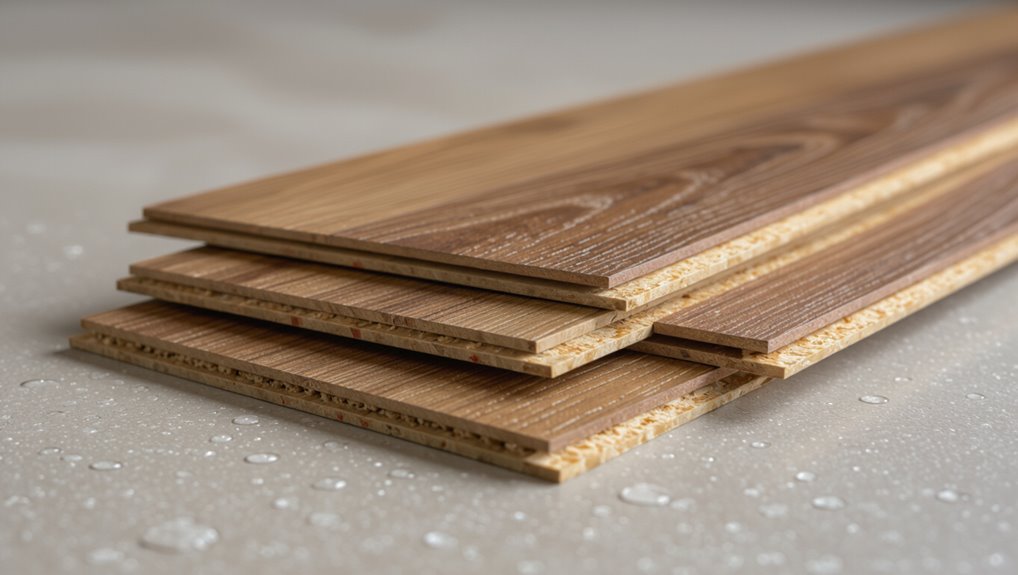
Although it looks like wood, this flooring is a layered composite built for durability: a core of high-density fiberboard or HDF provides structure, a printed design layer gives the wood-look, and a transparent wear layer — usually aluminum oxide-infused resin — protects the surface from scratches, stains, and cleaning chemicals.
You should treat that wear layer as your primary defense and choose cleaners that respect its integrity.
How harsh chemicals interact with laminate surface
When you expose the transparent wear layer to harsh chemicals, those solvents can soften or etch the resin, dulling the finish and making the printed design more vulnerable to damage.
You’ll notice loss of shine, whitening, or clouding as polymers break down. Repeated exposure weakens the protective barrier, increases abrasion risk, and can shorten the floor’s lifespan—so choose cleaners designed for laminate.
Common types of stains and their chemical sensitivity
The wear layer’s vulnerability to solvents also determines which stains will harm your floor and how aggressively you need to treat them.
Oil, grease, and food soak into scratches and resist water; use mild degreasers.
Dye, wine, and ink can chemically alter the wear layer—test removers first.
Nail polish and paint may need acetone sparingly; avoid prolonged exposure to bleach or strong alkalis.
Risks of Using Bleach on Laminate Flooring
Be careful: bleach can strip color and cause fading on laminate’s decorative surface.
It can also wear down the protective finish and creep into seams, leading to swelling of the core or damage to the underlayment.
Plus, the fumes and strong chemicals mean you’ll need good ventilation and protective gear if you choose to use it.
Potential for discoloration and fading
If you use bleach on laminate, you risk noticeable fading and uneven discoloration because the strong chemicals can strip or alter the wear layer and printed design.
You’ll likely see pale patches where pigment’s removed and edges or joints may contrast sharply. Spot-testing helps but won’t guarantee uniformity; once color’s changed, reversing it isn’t practical, so avoid bleach unless absolutely necessary.
Damage to the wear layer and finish
When you apply bleach to laminate flooring, it can eat away at the protective wear layer and dull the finish, leaving the printed design exposed and vulnerable.
Repeated exposure speeds up surface breakdown and makes scratches, peeling, or bubbling more likely.
You’ll notice loss of sheen, increased susceptibility to abrasion, and a shorter lifespan for the surface, forcing costly refinishing or replacement.
Effects on seams, swelling, and underlayment
Beyond surface wear, bleach can undermine the joints and layers that keep laminate flooring stable.
If liquid seeps into seams or edges, it can break down adhesives and swollen core boards, causing gaps, buckling, or delamination.
You’ll risk moisture migration to the underlayment, promoting long-term weakening and mold.
Use minimal contact, avoid pooling, and seal damaged edges promptly.
Health and ventilation concerns when using bleach
Although bleach can disinfect laminate floors effectively, it also gives off strong fumes that can irritate your eyes, nose, throat, and lungs, especially in poorly ventilated rooms.
You should open windows, run fans, and avoid enclosed spaces; wear gloves and a mask if you’re sensitive.
Never mix bleach with ammonia or acids, and keep pets and children out until fumes dissipate.
Safe Alternatives to Bleach for Laminate Floors
You don’t need bleach to keep laminate floors clean and germ-free; gentler options will protect the finish while tackling dirt and stains.
Use pH-neutral or commercial laminate cleaners for routine care, try simple DIY mixes for light messes, and pick enzyme or stain-specific products when needed.
Reserve disinfectants for high-risk situations and choose ones labeled safe for laminate or follow manufacturer guidance.
- pH-neutral cleaners / commercial laminate solutions
- DIY gentle cleaners (diluted vinegar sparingly, mild dish soap)
- Enzyme cleaners and stain-specific products
- Disinfectants only when necessary, choose laminate-safe options
- Always follow manufacturer recommendations and test in a hidden spot first
pH-neutral cleaners and commercial laminate solutions
When you want a safe, effective alternative to bleach, reach for a pH-neutral cleaner or a product made specifically for laminate floors.
You’ll protect the wear layer, finish, and seams while removing dirt and stains. Choose cleaners labeled pH-neutral or “for laminate,” follow manufacturer dilution and application instructions, and test a small, hidden area first to guarantee compatibility.
DIY gentle cleaning solutions (vinegar dilution, dish soap)
If commercial pH-neutral cleaners aren’t on hand, you can make gentle, effective solutions from common household items like white vinegar and mild dish soap.
Mix 1 cup vinegar with 1 gallon water for routine cleaning, or add a few drops of dish soap to warm water for greasy spots.
Wring microfiber mops well to avoid excess moisture and always test a small area first.
Enzyme cleaners and stain-specific products
Although bleach can seem like a quick fix, enzyme cleaners and stain-specific products break down organic stains without harsh chemicals.
This way, you’ll protect your laminate’s finish while removing spots like pet messes, food, and mildew.
Choose a gentle enzyme formula, test a hidden area, follow dwell times, blot rather than scrub, and rinse residue to avoid sticky buildup that attracts dirt.
When to use disinfectants and safe choices
Because laminate isn’t waterproof, you should reserve disinfectants for situations that truly need germ-killing—like after an illness in the home, pet accidents, or blood spills—rather than routine cleaning.
When you do disinfect, use diluted hydrogen peroxide, 70% isopropyl alcohol applied sparingly, or a manufacturer-approved disinfectant.
Wring bottles and microfiber mops thoroughly to avoid excess moisture and finish by drying the floor promptly.
Step-by-Step: How to Clean and Disinfect Laminate Floors Without Bleach
Start by prepping the area—sweep or vacuum so dirt won’t scratch the surface.
Test your chosen cleaner in an out-of-the-way spot, then apply a properly diluted solution with a microfiber mop and treat any stubborn spots with targeted methods.
Finish by drying the floor thoroughly to prevent moisture damage and keep a routine to avoid future buildup.
Step 1 Prepare the area (sweeping, vacuuming)
Clear the room and give the floor a quick sweep or vacuum to remove dust, grit, and loose debris before you mop.
Move small furniture and rugs, pick up toys and cords, and spot-check corners.
Use a soft-brush vacuum attachment or broom to avoid scratches.
Empty the vacuum or dustpan promptly so you’re not reintroducing dirt when you finish.
Step 2 Test cleaner in an inconspicuous spot
Before you mop the whole room, test your chosen cleaner in a small, out-of-the-way spot (like inside a closet or behind a baseboard) to make sure it won’t dull, discolor, or damage the laminate’s finish.
Apply a small amount, wait the recommended time, then wipe and inspect for color change, stickiness, or sheen loss.
If anything’s off, choose a gentler product.
Step 3 Apply cleaner correctly (dilution, microfiber mop)
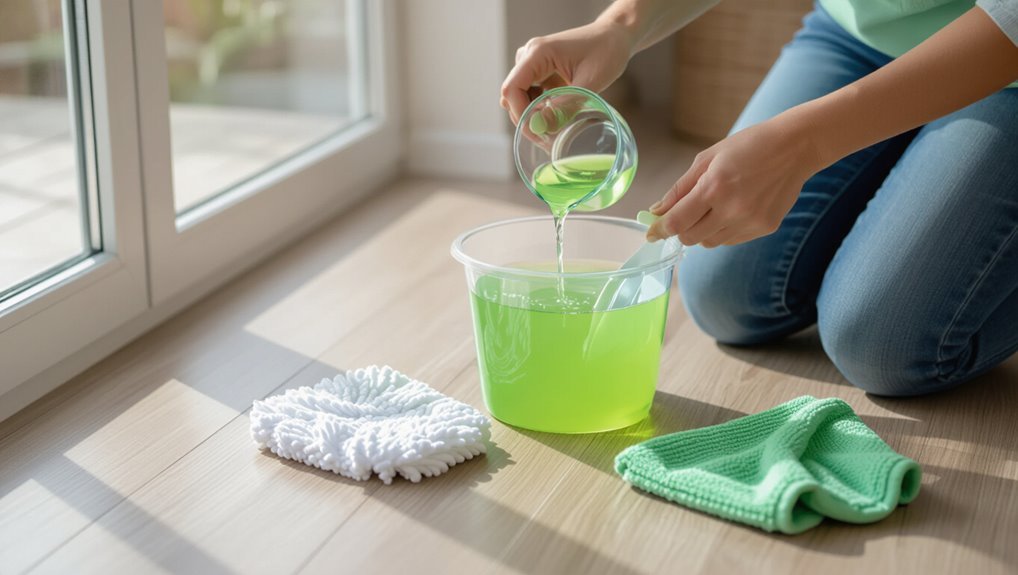
Mix your cleaner to the manufacturer’s dilution (or a mild soap solution) and apply it sparingly with a damp—not wet—microfiber mop, wringing the head well so water doesn’t seep into seams or joints.
Move with the grain, use light pressure, and rinse or flip the microfiber often.
Finish by drying any remaining moisture with a dry microfiber cloth to prevent swelling or streaks.
Step 4 Remove stubborn stains (targeted methods)
Tackle stubborn stains with targeted methods so you don’t over-wet or damage the laminate finish.
For dried spills, gently scrape with a plastic putty knife, then spot-clean with a damp microfiber and mild detergent.
For ink or marker, use rubbing alcohol on a cloth, testing first in an inconspicuous area.
Rinse the spot with a damp cloth and buff dry immediately.
Step 5 Drying and preventing moisture damage
When you’ve finished cleaning, dry the floor promptly to prevent warping and edge swelling; use a clean, absorbent microfiber or towel and work in the direction of the planks to remove all surface moisture.
Then air-dry by opening windows or using a fan, avoid steam cleaners, lift rugs until fully dry, and check seams and baseboards for trapped dampness to prevent mold and buckling.
Step 6 Periodic deep cleaning and maintenance schedule
Once the surface is dry and you’ve checked seams and baseboards, set a schedule for deeper care to keep laminate looking and performing its best.
Every 1–2 months, vacuum or sweep, mop with manufacturer-approved cleaner, and inspect for wear.
Every 6–12 months, buff scuffs, replace worn mats, trim door seals, and refinish edges if recommended.
Log tasks and adjust for traffic.
Situations Where Bleach Might Be Considered (and How to Do It Safely)
If you’re facing severe mold, sewage, or other biohazard situations, get professional guidance before touching the floor.
If a pro clears spot bleach as unavoidable, use a controlled, highly diluted application, then thoroughly rinse, neutralize, and dry the area to protect the laminate.
Also check warranties and liability—using bleach can void coverage or create risks you’ll want documented.
Severe mold or biohazard scenarios professional guidance
Because severe mold or biohazard contamination can pose real health risks, you’ll want to involve a professional before reaching for bleach.
A certified remediation team assesses structural damage, contains contamination, and uses appropriate disinfectants and PPE.
They’ll advise whether laminate must be removed, replaced, or can be safely cleaned.
Follow their recommendations—your health and flooring longevity depend on expert guidance.
Controlled, diluted spot-treatment method (if unavoidable)
When you absolutely can’t avoid treating a small, stubborn spot on laminate, use a highly diluted bleach solution and work carefully to limit contact and moisture.
Apply with a barely damp cloth or cotton swab, blotting—don’t soak. Protect surrounding areas with plastic and paper towels.
Test an inconspicuous patch first, keep exposure under a minute, and ventilate the area while you work.
Rinse, neutralize, and dry protocols after bleach use
After you’ve spot-treated with diluted bleach, rinse the area promptly to remove residue and stop the chemical action—use a barely damp cloth with clean water and blot rather than rub.
Then neutralize with a mild vinegar solution (1 part vinegar to 4 parts water) if recommended, rinse again, and dry thoroughly with a clean towel or fan.
Avoid soaking seams or leaving damp.
Liability and warranty considerations
Once you’ve rinsed and dried a bleached spot, check your flooring warranty and any building rules before proceeding further—using bleach can affect coverage and landlord or HOA responsibilities.
If damage occurred, document dates, photos, and cleaning steps. Notify your landlord or insurer before repairs to avoid disputes.
If you’re a homeowner, follow manufacturer guidance; get written approval for any unconventional cleaning to protect claims.
Common Mistakes That Ruin Laminate When Cleaning
Don’t grab undiluted bleach or ammonia-based cleaners — they can strip finishes and discolor laminate.
You shouldn’t over-wet the floor or use steam cleaners, and avoid abrasive pads or harsh scrubbing that’ll scratch the surface.
Always follow the manufacturer’s care instructions to prevent costly damage.
Using undiluted bleach or ammonia-based cleaners
If you reach for undiluted bleach or ammonia-based cleaners thinking they’ll disinfect and brighten faster, you’ll likely damage the protective wear layer and cause discoloration, warping, or dullness on laminate floors.
Don’t use strong chemicals full strength; they strip finishes, fade color, and can etch seams.
Instead, dilute as directed or choose manufacturer-approved cleaners to protect appearance and warranties.
Over-wetting and steam cleaning
After avoiding harsh chemicals, you still need to watch how much water you use: over-wetting and steam cleaning can force moisture into seams and the core, causing swelling, warping, and lifting.
Don’t mop with puddles or use steam cleaners. Wring mops thoroughly, spot-clean spills quickly with a damp cloth, and dry floors immediately to protect the locking system and prevent lasting damage.
Abrasive tools and scrubbing pads
While you might think a tough brush or scouring pad will get laminate spotless, abrasive tools can scratch the wear layer and dull the finish, leaving permanent marks and making the floor more vulnerable to moisture.
Don’t scrub with steel wool or harsh pads; use a soft microfiber mop or non-abrasive sponge. Gentle, circular motions remove grime without damaging the protective surface.
Ignoring manufacturer care instructions
Because manufacturers design cleaning guidelines specifically for your laminate’s wear layer and finish, ignoring those instructions can void warranties and lead to premature damage.
You should follow recommended cleaners, dilution ratios, and frequency. Skipping guidance or using unapproved solvents—like strong bleach mixes or oil-based products—can strip coatings, cause discoloration, or warp boards.
Check labels, register your floor, and keep records.
Prevention and Best Practices to Keep Laminate Looking New
You can keep laminate floors looking new with a few simple habits and the right protections, so you won’t need harsh cleaners like bleach as often.
Start with regular sweeping and spot mopping, add mats and furniture pads, and monitor humidity to prevent warping. For seasonal upkeep or major damage, know when to call a pro for restoration.
- Establish daily sweeping and a weekly damp-mopping routine
- Use entry mats, area rugs, and felt furniture pads to prevent scratches
- Maintain indoor humidity between 30–50% to avoid swelling or gaps
- Perform seasonal checks for gaps, wear, or water damage and address issues early
- Contact a flooring professional for deep restoration, seam repairs, or extensive water damage
Daily and weekly cleaning habits
When you make small daily and weekly habits a priority, laminate floors stay cleaner and last longer.
Sweep or vacuum high-traffic areas daily to remove grit. Wipe spills immediately with a damp cloth.
Mop weekly with a manufacturer-approved, pH-neutral cleaner and a well-wrung microfiber mop. Dry floors quickly to prevent standing moisture and maintain appearance.
Protective measures (mats, furniture pads, humidity control)
A few simple protective measures—entry mats, felt furniture pads, and stable indoor humidity—can dramatically extend the life and appearance of your laminate floors.
Use absorbent mats at doors to trap grit and moisture, stick felt pads under chair and table legs to prevent scratches, and keep indoor humidity between about 30–50% to avoid warping or gaps without overusing humidifiers.
Seasonal and long-term care tips
Although seasonal changes and daily traffic demand different approaches, sticking to a few simple routines will keep your laminate looking new for years.
Sweep or vacuum weekly, mop with a damp microfiber cloth, and wipe spills immediately.
Use humidity control in winter and ventilation in summer.
Rotate rugs, inspect seams seasonally, and avoid harsh cleaners or excessive water to prevent warping and finish wear.
When to call a professional for restoration
If damage goes beyond surface scratches or routine cleaning, call a professional to assess and restore your laminate before problems worsen.
You’ll want help for warping, deep gouges, widespread discoloration, or water intrusion that compromises the core.
A pro can evaluate repair versus replacement, match planks or refinish surfaces, and prevent mold or structural issues, saving time and avoiding costly mistakes.
Comparison: Bleach vs. Recommended Cleaners for Laminate
You’ll want to weigh bleach against recommended cleaners by balancing effectiveness with potential surface and health risks. Below is a quick comparison of effectiveness vs. safety, plus cost and ease of use to help you choose. Use this snapshot to pick the option that fits your priorities.
| Aspect | Bleach vs. Recommended Cleaners |
|---|---|
| Effectiveness vs. Safety | Bleach: high stain removal but higher risk to finish and fumes; Recommended: moderate-to-high cleaning with lower risk |
| Cost & Ease of Use | Bleach: cheap and common but needs dilution/ventilation; Recommended: varied price, often ready-to-use and gentler |
Effectiveness vs. safety matrix
When you compare bleach to cleaners specifically made for laminate, the trade-offs between cleaning power and surface safety become clear: bleach kills germs and lifts stains fast but can dull, discolor, or warp laminate finishes.
Whereas laminate-formulated products clean effectively with far less risk to the floor’s protective layer.
You should weigh stain removal needs against long-term finish preservation and choose gentler, tested options.
Cost, availability, and ease of use
One clear difference is cost: bleach and basic diluted bleach solutions are cheap and widely available at most stores, but they carry hidden risks to laminate that can end up costing you in repairs or refinishing.
Laminate-specific cleaners cost more per bottle but are formulated to protect the finish, are sold at hardware stores and online, and often require less frequent application.
You’ll also find cleaners labeled pH-balanced, easy to use, and safer for long-term maintenance.
FAQ Common Questions About Bleach and Laminate Flooring
You’ll find answers here to common questions like whether diluted bleach removes mold, if it can strip laminate color, and when it’s safe to disinfect during illness.
You’ll also learn about using bleach on grout or threshold strips and how to restore a spot damaged by bleach.
Use these FAQs to decide when and how bleach is appropriate for your floors.
Can diluted bleach remove mold on laminate?
Curious whether diluted bleach will get mold off your laminate? You can use a mild bleach solution (about 1 cup bleach to 1 gallon water) to kill surface mold.
Test a hidden spot first, apply gently, then rinse and dry thoroughly.
Bleach removes mold on nonporous laminate surfaces but won’t penetrate adhesive or deeply embedded growth—address moisture source too.
Will bleach strip the color from laminate?
Wondering if bleach will strip the color from your laminate? It can—especially at high concentrations or with prolonged contact.
Laminate’s printed surface and wear layer resist mild cleaners, but strong bleach or repeated use can fade patterns and discolor edges.
Test an inconspicuous spot first, dilute properly, rinse thoroughly, and avoid soaking to reduce the risk of color loss.
Is it safe to disinfect laminate during illness outbreaks?
Can you safely disinfect laminate floors during an illness outbreak? Yes—you can, but avoid straight bleach.
Use a diluted disinfectant approved for hard, sealed floors or a bleach solution at the manufacturer’s recommended low concentration, applied briefly and wiped dry.
Test a hidden area first, guarantee good ventilation, and don’t let liquids pool to prevent swelling, delamination, or finish damage.
Can I use bleach on laminate floor grout or transition strips?
If you followed the earlier guidance about diluted bleach on the floor surface, you’ll still need to be careful around grout lines and metal or vinyl junction strips—these areas react differently than the sealed laminate plank.
Don’t pour bleach directly; test a small hidden spot first. Use a softly dampened cloth, rinse thoroughly, and dry.
For metal, avoid prolonged contact to prevent corrosion.
How do I restore a spot damaged by bleach?
How do you fix a small bleach spot without replacing the plank?
You can sand gently, then apply a matching laminate repair kit or tinted marker to blend color.
For deeper damage, use a wood-tone filler or epoxy, sand smooth, and finish with a clear sealant.
Test products on an inconspicuous area first, and replace the plank if color match or texture can’t be restored.
