
Best Floor Cleaner for Laminate: Top Picks That Won’t Cause Damage
You want a laminate cleaner that lifts dirt without swelling, dulling, or leaving residue, so pick a pH-neutral, low-moisture formula labeled safe for laminate. Avoid ammonia, bleach, oil-based or abrasive products, and skip steam mops and waxes. Top safe choices include Bona Hardwood Cleaner, Black Diamond Stoneworks, Method Squirt + Mop, Rejuvenate, and Zep Neutral pH. Use a damp microfiber mop, change solution when dirty, and follow simple maintenance tips to keep floors lasting longer if you want more guidance.
Quick Answer Best Floor Cleaner for Laminate Floors
Want the short list? I recommend Bona Hardwood Cleaner, Black Diamond Stoneworks, Murphy Oil Soap (diluted), Method Squirt + Mop, and Zep Neutral pH—each works well without leaving residue or damaging the wear layer.
I’ll give a brief reason for each pick so you can compare performance, safety, and price.
One quick buying rule: choose a pH-neutral, low-residue cleaner labeled safe for laminate.
Direct recommendations (top 5 picks with short rationale)
Here are five top laminate floor cleaners that deliver great results without damaging your finish, so you can pick the one that matches your needs and budget.
You might wonder what’s the best floor cleaner for laminate — here are concise picks and why they work:
- Bona Hardwood Cleaner — streak-free, safe.
- Black Diamond — deep clean, gentle.
- Method Squirt + Mop — convenient, plant-based.
- Rejuvenate — restores shine, nonabrasive.
One-sentence buying rule for safe laminate cleaners
If you’re choosing a laminate floor cleaner, pick a pH-neutral, water-based formula labeled safe for laminate (no wax, oil, or abrasive ingredients) and avoid anything that leaves residue or requires soaking.
In short, buy a gentle, residue-free cleaner explicitly marked for laminate, avoid DIY solvent mixes or oily products, and choose sprays or mops that use minimal moisture to prevent swelling or finish damage.
Understanding Laminate Floors: What Makes Them Sensitive
Laminate flooring is made of layered materials with a decorative surface and a core that swells if it soaks up moisture, so you’ll avoid excess water and harsh scrubbing.
Different finishes—like textured, gloss, or aluminum-oxide coated surfaces—respond differently to cleaners and abrasion, so pick products that match your floor’s finish.
Knowing the construction and finish helps you choose gentle, effective cleaning methods that protect the board and appearance.
What laminate flooring is made of and why moisture/abrasion matters
Think of laminate flooring as a layered sandwich: a dense fiberboard core, a photographic decor layer that gives the wood-look, a clear wear layer that resists scratches, and a stabilizing backing.
Because the core swells with water, you’ll avoid excess moisture and standing water.
The thin wear layer limits abrasion resistance, so you’ll use gentle cleaners and soft tools to prevent surface damage and edge separation.
Common types of laminate finishes and cleaning implications
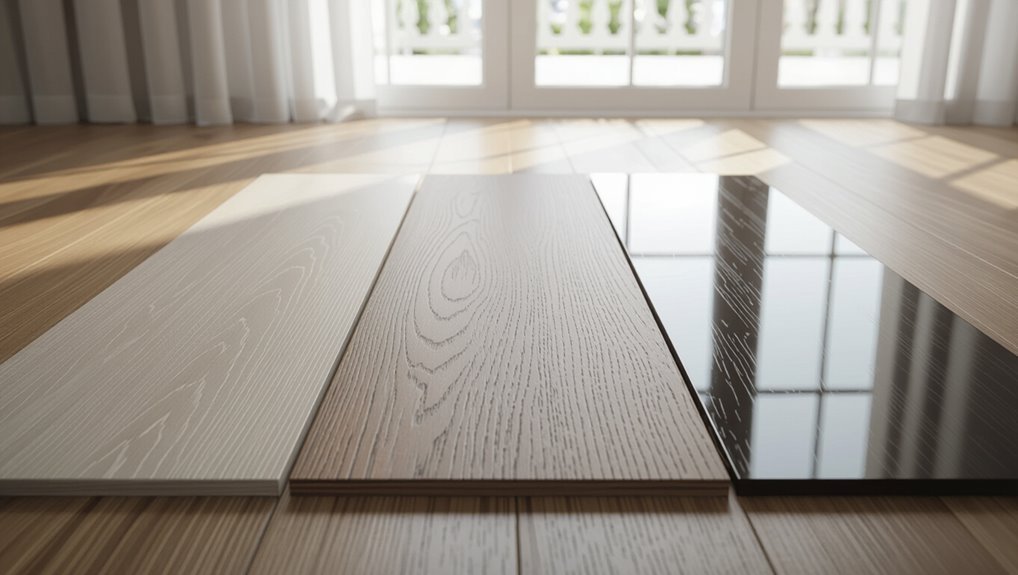
Because finishes determine how the surface handles wear and moisture, you need to know which type your laminate has before choosing cleaners and tools.
Smooth, UV-cured or melamine finishes resist spills and tolerate mild cleaners; textured or embossed surfaces trap dirt and need soft brushes.
Glossy coatings show streaks and require gentle, streak-free solutions.
Avoid wax, oil-based products, and excessive water.
How to Choose a Floor Cleaner for Laminate (Buying Guide)
When choosing a laminate cleaner, look for pH-neutral, low-moisture, no-wax formulas that leave no residue.
Avoid products with ammonia, bleach, oil-based ingredients, or abrasive particles that can damage the surface.
Decide between commercial cleaners for tough stains and DIY solutions for regular maintenance based on how dirty your floors get and manufacturer recommendations.
Key product features to look for (pH, moisture level, no-wax, residue-free)
While shopping, focus on a few key product features that actually affect laminate longevity and appearance: pH balance, low-moisture formulas, no-wax claims, and residue-free performance.
- pH-balanced cleaners prevent finish dulling.
- Low-moisture sprays reduce swelling risk.
- No-wax formulas keep texture true.
- Residue-free cleaners avoid streaks and buildup.
Choose products matching these traits for safer, longer-lasting laminate.
Ingredients and formulations to avoid (ammonia, bleach, oil-based, abrasive particles)
Now that you know which features to look for, you also need to steer clear of certain ingredients and formulas that can damage laminate.
Avoid ammonia and bleach — they strip finishes and dull boards.
Skip oil-based cleaners and waxes; they leave residues and make floors slippery.
Don’t use abrasive powders or scrubbing pads that scratch.
Choose gentle, residue-free options instead.
When to choose commercial cleaners vs. DIY solutions
If you prefer convenience and consistent results, commercial laminate cleaners are a safe bet—formulated to clean without harming the finish and often available in spray, spray-mop, or concentrated forms for different needs.
Choose commercial for stubborn grime, warranty compliance, or time savings.
Opt for DIY (vinegar diluted, mild soap) for light maintenance, cost savings, or non-toxic preferences—test first on a hidden spot.
Top Picks and Detailed Reviews
Now I’ll walk you through my top picks for laminate cleaners and what makes each one stand out.
You’ll get a quick product profile, clear pros and cons, and the ideal use for each option—from best overall and budget picks to natural, no-rinse, and professional-strength formulas.
Use this to match the right cleaner to your priorities and flooring needs.
Best overall laminate floor cleaner product profile, pros/cons, ideal use
When you want a single go-to product that balances cleaning power, safety, and value, the best overall laminate floor cleaner delivers streak-free shine without damaging the wear layer or leaving residues that attract dirt.
You’ll get effective grime removal, gentle pH-balanced formula, and a pleasant scent.
Pros: safe, versatile, fast-drying.
Cons: pricier than generics.
Ideal for daily to weekly maintenance.
Best budget laminate cleaner product profile, pros/cons
1 smart pick can save you money without sacrificing safety or results: budget laminate cleaners focus on basic stain and dirt removal with pH-balanced, low-residue formulas you can use regularly, and they usually come in larger bottles or concentrated forms to cut cost per use;
pros include affordability and straightforward effectiveness, while cons are milder grease-cutting power, fewer scent options, and occasional need for a follow-up spot treatment on stubborn grime.
You’ll get dependable routine cleaning, but plan a stronger product for heavy buildup.
Best natural/eco-friendly option product profile, pros/cons
If you’re trying to keep costs down but prefer greener ingredients, natural and eco-friendly laminate cleaners offer a middle ground: they clean daily dirt with plant-based surfactants, biodegradable solvents, and low-VOC fragrances while avoiding harsh chemicals like ammonia or bleach.
You’ll get safe, streak-free results and gentler scent profiles; trade-offs include slower stain removal on heavy grime and typically higher per-ounce prices.
Best no-rinse/quick-dry formula product profile, pros/cons
Because you want fast, streak-free results with minimal fuss, no-rinse/quick-dry laminate cleaners are formulated to evaporate or buff away without leaving residue or requiring a second pass.
You’ll like sprays and microfiber mops that cut drying time, prevent streaks, and refresh finish.
Pros: speed, convenience, low moisture.
Cons: less deep-cleaning power, may need repeat use for stubborn grime.
Best professional-strength cleaner product profile, pros/cons
Powerful cleaners cut through grime, build-up, and scuff marks that everyday sprays can’t handle, so you’ll want a professional-strength formula when laminate needs a deeper reset.
Pick a pH-balanced, low-residue concentrate designed for sealed surfaces. You’ll dilute per instructions, apply sparingly, and agitate stubborn spots with a microfiber pad.
Pros: fast restoration, deep cleaning.
Cons: stronger fumes, careful dilution required.
Comparison table of top picks (price, ingredients, best for, caution)
Here’s a quick, side-by-side look at our top laminate cleaners so you can compare price, key ingredients, ideal uses, and important cautions before you buy. You’ll find price points, active ingredients, best uses, and warnings to help pick safely.
| Product | Best for | Caution |
|---|---|---|
| Cleaner A | Stains | Avoid excess water |
| Cleaner B | Shine | Test small area |
| Cleaner C | Pets | Keep away from kids |
Step-by-Step Cleaning Routine for Laminate Floors
Start with daily dry cleaning using a soft broom or microfiber dust mop to pick up grit and prevent scratches.
Once a week, mop with a diluted laminate-safe cleaner following the label directions, and tackle stubborn spots immediately with stain-specific methods like rubbing alcohol for ink or a paste of baking soda for scuffs.
Every few months do a deeper maintenance pass—check seams, tighten junction strips, and apply recommended protective treatments to extend the floor’s life.
Step 1 Daily/regular dry cleaning (tools and technique)
1–2 minutes of daily dry cleaning keeps dirt and grit from scratching your laminate; grab a microfiber dust mop or a soft-bristled broom and sweep the surface thoroughly, paying attention to corners and under furniture.
Move in the direction of the planks, use short, overlapping strokes, lift debris with a dustpan, and spot-check high-traffic areas to prevent buildup before deeper cleaning.
Step 2 Weekly wet cleaning with recommended cleaners (dilution and method)
Once you’ve removed loose dirt with your daily sweep, plan a weekly wet clean to tackle grime that dry methods leave behind.
Mix a manufacturer-approved laminate cleaner or mild dish soap at the recommended dilution (usually a few drops per bucket).
Use a damp microfiber mop—wring until barely damp—mop with the grain, change solution if dirty, and let floors air-dry.
Step 3 Spot cleaning stubborn stains (stain-specific approaches)
Although stubborn stains can be frustrating, you can usually remove them with a targeted approach that preserves your laminate finish.
For food or drink spills, blot then gently scrub with a mild detergent solution.
Use a baking soda paste for scuffs, applying lightly and rinsing.
For ink or nail polish, try rubbing alcohol sparingly.
Always test in an unseen spot first.
Step 4 Periodic deep maintenance and protective treatments
When you schedule periodic deep maintenance every few months, you’ll extend your laminate’s life and keep the finish looking fresh.
Strip dust and debris, mop with a manufacturer-safe deep cleaner, and dry thoroughly.
Reapply recommended protective treatments—laminate polish or floor protectors—only if approved.
Inspect seams and edges, repair minor gaps, and replace damaged planks to prevent moisture and wear.
DIY Cleaners and Recipes That Won’t Damage Laminate
You can make safe homemade cleaners with exact ratios—like a mild soap solution or a vinegar-free mix using rubbing alcohol, water, and a few drops of dish soap—for laminated floors.
Before you use any DIY recipe across a room, test it on a hidden corner or inside a closet and wait 24 hours to check for discoloration or swelling.
If the spot looks fine, you can proceed with confidence using the same measured recipe.
Safe homemade cleaner recipes with exact ratios (vinegar-free option included)
Because laminate’s finish can be sensitive to harsh chemicals and excess moisture, it’s smart to stick to gentle, measured homemade cleaners you can mix quickly at home.
Here are four precise recipes:
- 1 cup warm water + 1 tsp mild dish soap.
- 2 cups water + 1 tbsp rubbing alcohol.
- 4 cups water + 1 tbsp castile soap.
- Vinegar-free: 2 cups water + 2 tbsp baking soda.
How to test DIY solutions on a hidden area before full use
Although testing a DIY cleaner on an out-of-sight spot may feel tedious, do it every time so you can spot discoloration, finish dulling, or warping before treating the whole floor.
Apply a small amount, wait the manufacturer’s recommended drying time, then inspect under different light angles.
If no change appears after 24–48 hours, proceed; if any damage shows, discard that formula.
Common Mistakes That Damage Laminate Floors
Watch the amount of water you use and skip steam cleaners, because excess moisture can warp the boards.
Don’t scrub with steel wool or pour harsh chemicals on the surface, and avoid waxes, polishes, or oil-based products that leave a sticky residue.
Follow gentle, laminate-safe methods to keep your floor looking new.
Over-wetting and steam cleaning pitfalls
If you soak laminate or run a steam mop over it, the joints can swell and the core can delaminate, leaving permanent gaps or warped boards.
You should blot spills quickly, use a barely damp microfiber mop, and avoid puddles.
Test any cleaner in an inconspicuous spot and follow manufacturer limits.
Steam and excess water accelerate edge lifting and cupping—don’t risk it.
Using abrasive tools or harsh chemicals
When you scrub with steel wool, scouring pads, or any gritty tool, you’ll scratch the wear layer and leave dull streaks that won’t come back.
Don’t use bleach, ammonia, or concentrated solvents; they strip finishes, discolor boards, and weaken seams.
Instead, opt for pH-neutral cleaners and soft microfiber mops.
Test any product in a hidden spot before full use to avoid irreversible damage.
Waxing, polishing, or oil-based products that leave residue
Scrubbing and harsh chemicals aren’t the only hazards — applying waxes, polishers, or oil-based cleaners can leave a cloudy, sticky film that traps dirt and dulls laminate’s protective wear layer.
You shouldn’t wax laminate or use oil-based products; they’ll build residue, attract grime, and mimic damage.
Instead, choose pH-neutral, water-based cleaners and dry quickly to preserve finish and prevent long-term clouding.
Prevention and Best Practices to Prolong Laminate Life
To keep your laminate looking great, adopt simple daily habits like using entry mats, felt pads on furniture, and regular pet nail care.
Adjust your routine for seasons and heavy-traffic areas—more frequent sweeping and targeted spot cleaning will cut wear.
Know when damage is beyond cleaning: minor scratches can be repaired, but deep gouges or warped boards usually mean replacement.
Daily habits (mats, furniture pads, pet care)
If you want your laminate floors to stay looking new, adopt a few simple daily habits: place absorbent doormats at entries, use low-profile furniture pads to prevent scratches, wipe spills immediately with a soft cloth, and trim pet nails regularly.
Sweep or vacuum daily with a hard-floor setting to remove grit. These small routines cut wear and keep finishes vibrant longer.
Seasonal and high-traffic care strategies
Those daily habits set a strong foundation, but seasonal changes and heavy use call for different tactics to keep laminate looking its best.
You should increase sweeping during snowy, muddy seasons, use dry mops to remove grit, place washable runners in entrances, rotate furniture to prevent wear patterns, and schedule deeper cleanings with manufacturer-safe cleaners more often in high-traffic zones to extend flooring life.
When to refinish or replace damaged laminate
When wear, deep scratches, swelling from moisture, or delamination start compromising your laminate’s appearance or stability, you’ll need to decide whether to refinish, repair, or replace sections of flooring; choosing the right option depends on the damage’s depth, spread, and the product’s construction and warranty.
Assess extent: repair small scratches or boards, refinish only compatible products, replace widespread or water-damaged areas to prevent recurring problems.
Troubleshooting: Problems, Causes, and Quick Fixes
If your laminate swells or warps after cleaning, it’s usually from too much water—stop using liquid and dry the area immediately while propping boards to air out.
When you see streaks or a cloudy film, it often comes from residue left by cleaners or hard water—wipe with a microfiber cloth and a diluted vinegar solution to remove it.
For scratches and surface wear, try temporary fixes like colored markers or wax sticks and consider professional resurfacing for deeper, permanent damage.
Swelling or warping after cleaning causes and emergency fixes
Because laminate’s core swells when it soaks up moisture, you’ll notice cupping, buckling, or soft spots soon after using too much water or a wet cleaning solution.
Act quickly: stop cleaning, dry the area with towels and fans, lift furniture to ventilate, and run a dehumidifier.
For minor warping, weight the board flat once dry; replace badly warped planks to prevent structural damage.
Streaking or cloudy residue why it happens and how to remove it
Streaks or a cloudy film on laminate usually come from leftover cleaner, hard-water minerals, or too much soap, and you can clear it without harsh scrubbing.
Dilute a pH-neutral cleaner, mop with plain water, then buff dry with a microfiber cloth.
For mineral buildup, mix equal parts water and white vinegar, spot-test first, rinse thoroughly, and dry to prevent recurrence.
Scratches and surface wear temporary and permanent solutions
When everyday traffic leaves fine scratches or dulls the finish on your laminate, you can often restore its look with simple, nonabrasive fixes before considering replacement.
For light scratches, buff gently with a microfiber cloth and a laminate polish or a dab of olive oil.
Deeper gouges may need a touch-up kit or replacement plank.
Prevent future wear with pads and rugs.
FAQ Frequently Asked Questions
You’ve got practical questions about caring for laminate, like whether vinegar or multipurpose cleaners are safe and if steam mopping can harm the surface.
You’ll also want to know how often to deep-clean and whether water spots will return after cleaning.
Below are clear, concise answers to help you protect your floors.
Can I use vinegar on laminate floors?
Can you use vinegar on laminate floors? Yes, diluted white vinegar (about 1/4 cup per gallon of water) can remove grime without harming the wear layer if you avoid soaking.
Wring the mop well, clean small sections, and dry promptly.
Don’t use straight vinegar, harsh scrubs, or let moisture sit—those can dull finish or seep into seams and cause swelling.
Is steam mopping safe for laminate?
If diluted vinegar works because it limits moisture, you’ll want to be careful with steam mops for the same reason: they release hot vapor that can force water into seams and soften the laminate core or damage the wear layer.
You can use low-heat, low-moisture steam cautiously on well-sealed floors, but most manufacturers advise against it.
Stick to damp mopping for safety.
How often should I deep-clean laminate floors?
Although regular sweeping and quick mopping handle everyday dirt, you should deep-clean laminate floors roughly every 1–3 months depending on traffic, pets, and spills.
Focus on removing build-up: use a manufacturer-safe cleaner, a microfiber mop, and spot-treat stains.
Don’t over-wet the floor. Adjust frequency for high-traffic areas or after heavy soiling, and always dry surfaces promptly to protect the finish.
Will water spots come back after cleaning?
When you remove water spots properly, they usually won’t return—unless the underlying cause isn’t fixed.
If spots came from hard water, leaks, or trapped moisture, address that first. Dry floors quickly after cleaning, fix leaks, and use mats in high-moisture areas.
Regularly check seals and edges; persistent staining may need a gentle specialized cleaner or professional advice to prevent recurrence.
Can I use multipurpose cleaners on laminate?
Curious whether that all-purpose bottle will do the job? You can use some multipurpose cleaners on laminate if they’re pH-neutral and labeled safe for sealed floors.
Avoid ammonia, bleach, waxy or oil-based formulas and anything overly sudsy. Test a small area first, dilute per directions, and mop with minimal water.
Harsh cleaners can dull or lift the finish.
