The Best Rug Backings That Are Safe for Vinyl Plank Flooring
You should choose rug backings that grip without PVC or harsh chemicals so your vinyl plank won’t stain, slip, or get permanent dents. Good options are natural felt, cork or cork-felt hybrids, TPU or silicone non-slip pads, low-tack adhesive mats, and natural rubber for high-traffic areas. Keep thickness around 1/16″–1/8″, test a small area first, and lift rugs regularly to check for moisture. If you want specifics on products, placement, and care, keep going.
Quick Answer Best Rug Backings Safe for Vinyl Plank Flooring
Here’s a quick list of rug backings that are safe for vinyl plank flooring and why they work.
Felt-backed rugs: they’re soft, breathable, and won’t trap moisture or react chemically with vinyl.
Natural rubber or latex-free PVC pads: they grip without sticky residues, and low-VOC rug pads provide non-slip protection without harmful off-gassing.
Short list of recommended backings
Quick answer: choose a felt or rug pad made from natural felt, a non-slip PVC-free rubber (like TPU or silicone blend), or a low-tack pressure-sensitive adhesive mat designed for vinyl plank; these options protect the floor finish, prevent slipping, and avoid chemical staining.
You’ll want to know what rug backing is safe for vinyl plank flooring—here’s a short list:
- Natural felt pad
- TPU/silicone non-slip pad
- Cork with felt layer
- Low-tack adhesive mat
One-sentence rationale for each recommended option
Choose a backing that protects the finish and prevents movement: natural felt cushions and spreads wear, TPU/silicone non-slip pads grip without PVC plasticizers, cork with felt adds firm cushioning and breathability, and low-tack adhesive mats hold the rug in place while avoiding permanent residue.
You’ll pick felt for comfort and protection, TPU/silicone for nonreactive grip, cork for stability, and low-tack for temporary anchoring.
Why Rug Backing Matters on Vinyl Plank Flooring
You need to pick the right rug backing because some materials can cause discoloration, react with the vinyl’s adhesive, leave permanent indentations, or make rugs slip.
Vinyl planks vary in sensitivity based on finish type, wear layer thickness, and whether they’re glued, click‑locked, or floating.
Knowing those differences helps you choose a backing that protects appearance and performance.
How rug backing can damage vinyl (discoloration, adhesive reaction, indentations, slippage)
Because vinyl plank finishes are sensitive to chemicals, the wrong rug backing can stain or discolor your floor, react with the wear layer, leave permanent indentations from concentrated pressure, and cause unsafe slipping when the rug shifts.
You should avoid rubberized or PVC backings, inspect adhesives and dyes, use barrier pads, and choose low-profile, nonstaining options to protect appearance, integrity, and safety.
Vinyl plank sensitivity factors (finish type, wear layer, installation method)
While vinyl plank looks tough, its reaction to rug backings depends a lot on finish type, wear-layer thickness, and how it was installed.
You should check finish coatings—urethane or aluminum oxide resist stains better. Thicker wear layers tolerate pressure and abrasion from textured backings.
Installation method matters: floating floors can shift under heavy pads, glued planks resist movement but react differently to adhesives.
Choose compatible backing.
Basic Types of Rug Backings Overview
You’ll want to know the common rug backings so you can pick one that protects your vinyl plank floors and stays put.
Natural options like latex and jute feel different and breathe, while synthetic latex/rubber, non-slip PU, and PVC or vinyl backs offer varying grip and moisture resistance.
Felt and fiber backings add cushioning but may need a pad or treatment to prevent slipping and staining.
Natural latex and jute backings
If you want an eco-friendly, budget-conscious rug backing that still grips vinyl plank flooring, natural latex and jute are solid options.
You’ll get biodegradable jute’s breathability and natural latex’s tacky grip without heavy chemicals. They resist slipping when dry, but avoid prolonged moisture and direct sunlight to prevent breakdown.
Choose low-moisture areas and test compatibility first to protect your vinyl.
Synthetic latex / rubber backings
Synthetic latex and rubber backings offer durable, slip-resistant support that’s widely used on vinyl plank floors.
You’ll find they grip well without adhesive, resist moisture, and tolerate cleaning. Choose low-VOC, manufacturer-approved options to avoid chemical reactions with your flooring.
They’re ideal where traction and easy maintenance matter, but test any rug on a small area first to verify no discoloration.
Felt and fiber backings
Felt and fiber backings give rugs a soft, cushioned layer that protects both your vinyl plank floor and the rug itself.
You’ll appreciate their breathability and gentle grip, which reduce abrasion and prevent color transfer.
They’re lightweight, often made from recycled fibers, and work well under low-traffic areas.
Use a gripper pad if you need extra slip resistance without harming the flooring.
Non-slip PU (polyurethane) backings
When you want firm traction without added height, non-slip PU (polyurethane) backings deliver a thin, grippy layer that keeps rugs from sliding on vinyl plank flooring.
You’ll find them lightweight, low-profile, and resistant to moisture and mildew. They won’t usually stain or discolor vinyl, but test a small area first.
Ideal for high-traffic zones and simple maintenance.
PVC and vinyl-backed rugs
PVC and vinyl-backed rugs give you a durable, waterproof barrier that grips vinyl plank flooring and resists moisture and stains. You’ll find them easy to clean, inexpensive, and good for high-traffic areas, though they can trap heat and may discolor some floors over time. Choose breathable options or use a pad to prevent long-term adhesion.
| Feature | Benefit | Caution |
|---|---|---|
| Waterproof | Protects floor | Can trap moisture |
| Grip | Prevents slipping | May leave residue |
| Cost | Affordable | Varies by quality |
| Maintenance | Easy cleaning | Avoid harsh chemicals |
| Durability | Long-lasting | Possible discoloration |
Best Rug Backings for Vinyl Plank Flooring Detailed Recommendations
Now we’ll look at specific backing options so you can pick what’s safest and most practical for your vinyl plank floors.
You’ll get pros, cons, and best-use tips for felt pads, natural or rebonded rubber (with safe formulations), PU non-slip backing, and woven jute with a protective barrier.
I’ll also explain when a separate underpad is needed and which rug-pad types to choose.
Felt (non-slip felt pads) pros, cons, best uses
Although felt pads aren’t as grippy as rubber, they protect vinyl plank floors from scratches and compress slightly to reduce wear from foot traffic.
You’ll find felt pads lightweight, quiet, and great under furniture or low-traffic rugs. They can shift without an anti-slip layer and absorb moisture if untreated, so use them with a safe non-slip underlay or adhesive for stability and protection.
Natural rubber or rebonded rubber with safe formulation pros, cons, best uses
If felt gives you cushioning and scratch protection but lacks traction, natural rubber or rebonded rubber backings will give your rugs the grip and stability vinyl plank floors need.
They’re durable, non-slip, and typically free of harmful plasticizers when certified; they can prevent movement and protect finish.
Cons: heavy, may trap moisture under rugs.
Best for high-traffic areas with proper ventilation.
PU (polyurethane) non-slip backing pros, cons, best uses
When you want a lightweight, grippy option that won’t off-gas like some plastics, PU (polyurethane) non-slip backing is a strong choice for vinyl plank floors.
You’ll get thin, flexible grip that resists slipping and won’t stain finish.
Cons: less cushioning, can trap moisture under rugs, and lower longevity than rubber.
Best for low-traffic areas and layered rugs.
Woven jute with protective barrier pros, cons, best uses
Because woven jute adds natural texture and breathability, you’ll like it for its lightweight, eco-friendly feel—just make sure it has a protective barrier so the coarse fibers don’t abrade or stain your vinyl plank finish.
Pros: durable, breathable, sustainable.
Cons: can be rough, may shed, and needs barrier treatment.
Best uses: low-traffic living rooms, bedrooms, and under furniture where moisture is limited.
Rugs requiring an underpad (recommended types of rug pads)
Woven jute showed why some rugs need extra protection, but many other rug types will require an underpad to keep your vinyl planks safe and stable.
You should choose pads that prevent slipping, stop staining, and cushion without trapping moisture. Pick materials compatible with vinyl and low-VOC.
- Felt with non-slip microfiber
- Natural rubber with fabric barrier
- PVC-free gel grip
- Cork-felt hybrid
How to Choose a Rug Backing Step-by-Step Guide
Start by checking your vinyl plank finish and any warranty restrictions so you don’t void coverage.
Then confirm manufacturer guidance and VOC/chemical safety before matching backing type to room use and foot traffic.
Finally, test a small patch for staining and pick a rug pad with the right thickness and material.
Step 1: Identify your vinyl plank finish and warranty constraints
Before you pick a rug backing, check your vinyl plank’s finish and warranty so you don’t accidentally void coverage or damage the floor—look for manufacturer guidance on protector pads, adhesives, and stain- or scratch-prone materials.
Note any finish type (UV-cured, urethane, or factory-applied wear layer) that may react to certain rug pads or tape.
Then document finish type, warranty limits, and prohibited products.
Step 2: Check manufacturer recommendations and VOC/chemical safety
Manufacturer guidance and chemical safety matter as much as fit and style when you’re choosing a rug backing.
Check your vinyl plank warranty and manufacturer bulletins for approved adhesives or barrier materials. Prefer non‑PVC, low‑VOC backings and avoid rubberized or latex pads that can off‑gas or stain.
When unsure, contact the flooring maker and choose certified low‑emission products to protect finish and indoor air.
Step 3: Match rug backing type to room use and traffic levels
With manufacturer guidance and VOC concerns handled, think about how the room will actually be used and how much foot traffic the rug will see.
For high-traffic spaces, pick dense felt or rubber-backed pads to prevent slipping and wear.
In low-traffic areas, you can choose lightweight felt or woven backings for comfort and breathability.
Consider pets and furniture movement when deciding.
Step 4: Test a small patch for colorfastness and staining
Wondering how to be sure a rug backing won’t stain or bleed onto your vinyl plank floor?
Place a small corner of the rug backing face-down on an inconspicuous spot, press with a damp white cloth for 24–48 hours, then check for color transfer or residue.
If any staining appears, discard that backing; only keep backings that leave the cloth and floor pristine.
Step 5: Select proper rug pad thickness and material
After you confirm the backing won’t bleed onto your vinyl, pick a rug pad that matches both the rug’s thickness and your floor’s needs.
Choose low-profile felt for thin rugs, thicker felt for cushioning, or cushioned PVC-free rubber for heavy traffic. Avoid PVC or latex pads that can discolor vinyl.
Make sure the pad provides grip without trapping moisture and allows easy cleaning.
Comparison of Top Rug Backings for Vinyl Planks
You’ll find a performance matrix helpful for comparing slip resistance, floor safety, durability, and cost across common rug backings.
Use it to see which options protect your vinyl planks and match your budget and usage.
It’ll also show when a non-slip rug pad is better than a bonded backing and vice versa.
Performance matrix: slip resistance, floor safety, durability, cost
While shopping for rug backings, focus on four practical metrics—slip resistance, floor safety (finish protection and moisture barriers), durability, and cost—so you can weigh what matters most for your vinyl plank floors. Use this quick matrix to compare options and choose based on your priorities.
| Metric | Notes |
|---|---|
| Slip resistance | Grips reduce movement |
| Floor safety | Nonstaining, moisture-safe |
| Durability | Longevity under traffic |
| Cost | Budget vs. performance |
When to choose a rug pad vs. a bonded backing
If you want maximum grip and a breathable cushion that protects both rug and vinyl, choose a rug pad; if you need a low-profile, semi-permanent solution that locks directly to the backing and resists curling, opt for a bonded backing.
You’ll weigh permanence, thickness, and cleaning needs to match traffic and maintenance.
- Easier removal: rug pad
- Low profile: bonded
- Better cushioning: rug pad
- Less shifting: bonded
Common Mistakes That Damage Vinyl Plank Flooring
Don’t place PVC- or vinyl-backed rugs directly on your vinyl planks without a protective barrier, because plasticizers can cause staining and discoloration.
Avoid rubber backing with unknown chemical makeup and rugs that are overly heavy or have coarse backs, as they can chemically react with or abrade the surface.
Always check your flooring manufacturer’s warranty and cleaning recommendations before adding a rug so you don’t accidentally void coverage.
Using PVC/vinyl-backed rugs without a barrier
Because PVC- or vinyl-backed rugs can trap plasticizers and moisture against your vinyl planks, you shouldn’t place them directly on the floor without a proper barrier.
Doing so can cause discoloration, adhesive breakdown, and warping over time.
Use a certified breathable rug pad or a felt pad with a nonreactive film layer to prevent chemical transfer and allow ventilation, protecting finish and longevity.
Choosing rubber with unknown chemical composition
After protecting your vinyl planks from PVC-backed rugs, you still need to be careful about rubber pads whose composition isn’t disclosed.
You shouldn’t assume all rubber is inert; some contain plasticizers or sulfur compounds that can stain or degrade vinyl.
Always choose pads labeled non-staining, phthalate-free, or tested safe for vinyl.
When in doubt, contact the manufacturer for chemical details.
Opting for excessively heavy or coarse-backed rugs
If you place overly heavy or coarse-backed rugs on your vinyl planks, they can trap moisture, create uneven pressure, and abrade the surface over time.
You should choose lighter, low-profile rugs with smooth, nonabrasive backings or use a thin protective pad designed for vinyl.
Regularly lift and inspect rugs to prevent indentations, wear patterns, and hidden moisture damage.
Ignoring manufacturer warranty and cleaning/maintenance interactions
When you skip the manufacturer’s care guidelines or use cleaning products they don’t approve, you can void the warranty and accelerate wear on vinyl plank flooring.
Always follow recommended cleaners, adhesives, and rug pad specs to keep coverage valid.
Check stain‑removal instructions before treating spills, and avoid harsh solvents, steam cleaners, or waxes.
Document maintenance to support any future warranty claims.
Prevention, Maintenance, and Best Practices
You should regularly inspect and rotate rugs to distribute wear and prevent trapped dirt from harming your vinyl planks.
Use gentle cleaning methods, avoid harsh solvents or rubber-backed products, and choose breathable barrier pads designed for vinyl.
Also monitor temperature and direct sunlight to reduce off-gassing and fading.
Regular inspections and rotating rugs
Because small problems usually show up before they become stains or gouges, check your rugs and vinyl plank flooring at least once a month for dirt buildup, curling edges, or trapped moisture.
Rotate rugs periodically to even wear and sun exposure, lift them to inspect the backing and floor, and address issues promptly to prevent discoloration, adhesive breakdown, or misplaced grit that can scratch the surface.
Cleaning recommendations for rugs on vinyl plank (products to avoid)
If you want to protect your vinyl plank floor, clean rugs carefully and steer clear of cleaners and treatments that can damage either surface.
Avoid bleach, ammonia, petroleum-based solvents, rubber-backed adhesive sprays, and oil soaps.
Use mild detergent, water, or manufacturer-recommended cleaners; test a small area first.
Rinse thoroughly, air-dry completely, and avoid steam cleaning or harsh scrubbing that can harm fibers or finish.
Using barrier pads or breathable rug pads
A breathable rug pad provides a thin, nonreactive barrier between your rug and vinyl plank flooring, preventing discoloration, trapping grit, and reducing slippage without trapping moisture.
Choose natural rubber or felt-core pads labeled safe for vinyl. Cut to fit, confirm edges lie flat, and lift periodically to clean.
Replace pads if they become stiff, oily, or start shedding to protect your floor.
Temperature and sunlight considerations to prevent off-gassing or discoloration
Many factors—especially prolonged heat and direct sunlight—can speed up off-gassing and cause vinyl plank flooring or rug backings to discolor.
So keep rugs and pads out of sustained sun and avoid placing heat sources close to the floor. You should rotate rugs, use UV-filtering curtains, and choose breathable, low-VOC pads.
Monitor room temperature, avoid radiant heaters, and air out new rugs regularly.
Installation and Placement Tips
When you install a rug over vinyl plank flooring, choose an underlay with the right thickness and follow the manufacturer’s installation technique to avoid telegraphing or uneven wear.
Use non-adhesive methods like rug grippers or corner anchors to keep rugs from shifting without risking glue damage to the floor.
In high-traffic areas and beneath furniture feet, pick denser backings or added pads and check edges regularly to prevent premature wear.
Proper underlay thickness and installation technique
Choose an underlay thickness that matches both your vinyl plank’s specifications and the subfloor’s condition—typically 1/16″ to 1/8″ for most floating vinyl planks, up to 3/16″ only if the manufacturer allows—so the floor stays stable, the locking system engages properly, and you avoid telegraphing subfloor imperfections.
Install underlay flat, seam-taped where recommended, trim edges neatly, and lay rugs so seams don’t align with plank joints.
Securing rugs to prevent movement without adhesives
Because rugs can slip on smooth vinyl plank surfaces, you’ll want non-adhesive methods that hold them securely without risking the floor finish or voiding warranties.
Use rug grippers, non-slip pads cut to size, or thin rubber-backed felt underlays.
Anchor corners with weighted rug corners or furniture placement.
Regularly check pads for wear and replace them to maintain traction and protect your flooring.
Special considerations for high-traffic zones and furniture feet
If you place rugs in high-traffic zones or under heavy furniture, plan for extra durability and stable backing so the rug won’t shift or wear through the vinyl plank finish.
Choose low-profile, dense backings like felt with an attached non-slip layer or rubber-free grips rated for heavy use.
Use furniture coasters to spread weight, rotate rugs periodically, and inspect backing for wear.
Cost, Availability, and Where to Buy Safe Rug Backings
You’ll find rug backings across a range of price points, from budget felt pads to higher-end non-staining and cushioned options that offer the best value for vinyl plank floors.
Look for trusted brands at specialty flooring stores and reputable online retailers, where product specs and reviews are easy to compare.
Check labels for low VOC, non-staining or colorfast claims, and pH-neutral wording to protect your flooring.
Price ranges and value picks
When shopping for rug backings for vinyl plank floors, balance cost with proven features—like non-slip grip, PVC- or felt-free materials, and moisture resistance—so you don’t pay for useless extras.
Expect budget pads around $10–$25, midrange $25–$60, and premium $60+.
Look for value picks that combine thin, nonabrasive construction with good grip and warranty to protect flooring without overspending.
Trusted brands and retailer types (specialty flooring stores, online)
Start with a shortlist of reliable brands—RugPadUSA, Mohawk, Gorilla Grip, and Natural Fiber Rugs—and prioritize retailers that clearly state compatibility with vinyl plank flooring.
Shop specialty flooring stores for expert guidance and guaranteed returns, and use reputable online retailers for selection and reviews.
Compare prices, shipping, and return policies, and buy from sellers who offer clear material specs and customer support.
What to look for on labels (VOC, non-staining, pH-neutral)
Although labels can look technical, they tell you exactly whether a rug backing is safe for vinyl plank floors.
So always check for VOC content, non-staining claims, and pH-neutral or acid-free wording before buying. You’ll also look for low-VOC certification (GreenGuard), stain-resistant assurances, and neutral pH to prevent discoloration.
If unsure, ask retailers for test data or material specs.
FAQ Rug Backings and Vinyl Plank Flooring
You probably have a few quick questions about rug pads and vinyl plank floors—what types are safe, whether felt pads work, and if rubber can cause staining or void warranties.
Test any backing on a hidden spot with a damp white cloth before placing it down, and inspect rugs periodically for discoloration or damage.
We’ll cover how to check for staining risk, warranty concerns, and recommended inspection intervals next.
Can I use any rug pad on vinyl plank flooring?
Wondering whether any rug pad will work on vinyl plank flooring? You shouldn’t assume all pads are safe.
Skip rubber or latex-backed pads that can discolor or react with vinyl. Choose pads labeled vinyl-safe, made from felt, natural fibers, or non-staining PVC-free materials.
Confirm the pad provides grip without adhesive contact, allows airflow, and won’t trap moisture that could damage the planks.
Are felt rug pads safe for all vinyl floors?
If you liked felt pads for their cushioning and non-staining reputation, you’ll want to check whether they’re right for your specific vinyl planks.
Felt’s soft layer protects against dents and abrasion, but thickness, adhesive, and moisture can affect performance.
Use pads designed for vinyl, avoid tacky adhesives, and confirm compatibility with your manufacturer’s guidelines to preserve warranty and finish.
How do I test a rug backing for staining risk?
How can you quickly check whether a rug backing will stain your vinyl plank flooring?
Place the rug backing face down on a clean, white paper towel and dampen a corner with distilled water.
Press with moderate weight for 24 hours.
If color transfers or the towel stains, avoid direct contact or use a nonstaining barrier; no transfer likely means low staining risk.
Will a rubber pad void my vinyl flooring warranty?
Curious whether a rubber rug pad will void your vinyl plank warranty? It depends on your manufacturer.
Some prohibit direct-contact rubber or non‑breathable pads because chemicals can stain or warp planks.
Check warranty terms and contact the maker. If they forbid rubber, choose an approved felt or polymer pad labeled safe for vinyl.
Keep documentation of approval to protect any future claims.
How often should I check rugs for damage or staining?
When should you check rugs for damage or staining?
Inspect high-traffic rugs weekly for spills, pet accidents, or edge wear; rotate them monthly to equalize wear.
For low-traffic or protected rugs, check every one to three months.
Always lift rugs after spills and clean promptly to prevent staining or adhesive breakdown on vinyl planks.
Keep records of issues and actions taken.
Visual Guide and Quick Reference
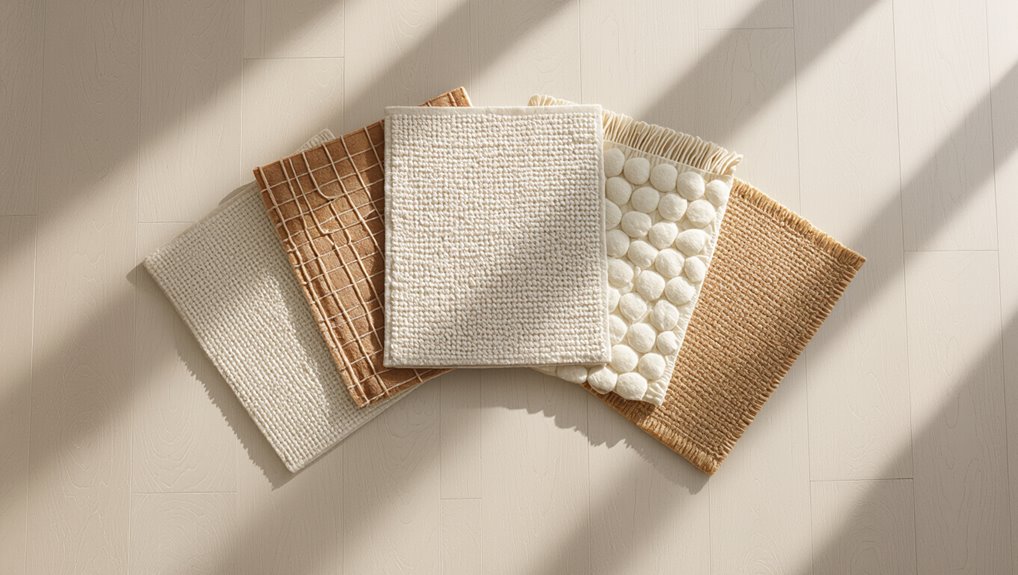
You’ll find clear photo examples showing the recommended rug backings and safe underpads for vinyl plank floors.
Use the accompanying infographic to see quick do’s and don’ts for what to use and what to avoid.
These visuals make it easy to pick the right backing at a glance.
Photo examples of recommended backings and underpads
Photos make choosing the right rug backing and underpad much easier, so this visual guide shows clear examples of the most reliable options for vinyl plank floors.
You’ll see labeled shots of felt pads, non-slip PVC-free grippers, low-profile memory foam underlays, and thin natural rubber alternatives.
Each photo highlights texture, thickness, and edge detail so you can match protection and grip to your flooring.
Infographic: do’s and don’ts for rug backing on vinyl planks
Want a quick visual cheat-sheet for what to do — and what to avoid — with rug backings on vinyl plank floors?
Follow a simple infographic:
do use breathable, non-staining pads, low-VOC materials, and grippers designed for vinyl;
do keep rugs dry and clean.
Don’t use rubber, PVC, or acidic latex backings;
don’t trap moisture or let rugs curl—prevent damage.