How to Clean COREtec Flooring and Keep It Looking Brand New
You can keep COREtec floors looking brand new by sweeping or vacuuming (no beater bar) daily, wiping spills immediately, and damp-mopping weekly with a manufacturer‑approved cleaner diluted in warm water to avoid overwetting. Use entry mats, soft furniture pads, and avoid harsh chemicals, steam cleaners, or abrasive tools to protect the wear layer and seams. Deep-clean monthly, monitor humidity and temperature, and follow warranty guidelines—keep going to find specific stain fixes, product picks, and troubleshooting tips.
How to Clean COREtec Flooring and Keep It Looking Brand New
You’ll get a quick answer and a concise set of best-practice steps to keep your COREtec floor looking brand new.
This guide covers routine cleaning, stain removal, and tips to prevent scratches and wear.
Follow these simple, practical actions and you’ll protect your floor’s finish and longevity.
Quick Answer Best Practice Summary
Start with regular sweeping or vacuuming (no beater bar) to remove grit, then mop with a manufacturer-recommended cleaner diluted in warm water; spot-treat spills immediately and use felt pads on furniture to prevent scratches.
For quick reference, follow manufacturer directions, avoid harsh chemicals, blot liquids, rinse residue, and dry promptly.
If you wonder how do you clean coretec flooring, stick to these routine steps.
What This Guide Covers
While cleaning COREtec flooring is straightforward, this guide shows exactly what to do and why—covering routine care, stain and spill response, deep-cleaning methods, and prevention tips to keep your floors looking new.
You’ll get clear steps, product recommendations, and timing cues so you can act confidently.
- Daily and weekly maintenance
- Immediate spill and stain response
- Periodic deep cleaning and protection
Understanding COREtec Flooring: Basics You Need to Know
COREtec is a waterproof, layered luxury vinyl product with a rigid core and a protective wear layer that affects how you should clean it.
You’ll need gentler, low-moisture methods for the surface finish while still taking advantage of the planks’ water resistance.
Different COREtec lines have smooth, textured, or embossed finishes, so check your floor’s surface before choosing cleaners or tools.
What COREtec Flooring Is
Think of COREtec flooring as a high-performance vinyl plank system that gives you the look of real wood or stone without the maintenance headaches.
It layers realistic photographic surfaces, a durable wear layer, and a rigid core for stability. You get easy installation, scratch resistance, and dimensional consistency, so your floors stay attractive and practical in everyday use without frequent repairs or refinishing.
Why Cleaning Method Matters for COREtec (water resistance, wear layer)
Because COREtec’s waterproof technology and protective wear layer work together to keep your floor looking new, the way you clean it directly affects its performance and lifespan.
You should avoid harsh chemicals, abrasive tools, and excess water that can degrade the wear layer or seep into seams.
Use pH-neutral cleaners, soft mops, and quick drying to preserve warranty and appearance.
Common COREtec Surface Types and Finishes
Flooring comes in several COREtec surface types and finishes, and knowing the differences helps you choose the right care and look for your space. You’ll find embossed, smooth, matte, and glossy options that affect cleaning and appearance.
| Type | Finish | Care |
|---|---|---|
| Luxury | Matte | Gentle mop |
| Vinyl | Embossed | Soft brush |
| Core | Glossy | Microfiber only |
Safety and Preparation Before Cleaning
Before you start cleaning COREtec, gather recommended tools like a soft broom, microfiber mop, and pH-neutral cleaner, and keep harsh chemicals and abrasive pads far away.
Move furniture and secure pets, and open windows or run a fan to guarantee good ventilation while you work.
Taking these simple precautions will protect the floor and make cleaning easier.
Recommended Tools and Supplies
Gather a few basic tools and the right supplies so you can clean COREtec flooring safely and efficiently.
You’ll want gentle, nonabrasive items that won’t harm the wear layer. Keep everything handy to work quickly and reduce moisture exposure.
- Microfiber mop and soft broom
- Neutral pH floor cleaner and spray bottle
- Bucket, microfiber cloths, and rubber gloves
Products to Avoid (chemicals, abrasive tools)
Now that you’ve got the right tools, know what to skip so you don’t damage the COREtec wear layer or void warranties.
Don’t use bleach, ammonia, waxes, oil-based cleaners, or acidic solutions.
Avoid scouring pads, steel wool, abrasive brushes, and harsh powder cleansers.
These chemicals and tools can dull, scratch, or delaminate the surface—stick to manufacturer-approved cleaners and soft microfiber.
Preparing the Room (furniture, pets, ventilation)
While you move furniture out or to the room’s center, protect heavy legs with sliders or lift them with a dolly to prevent dents and scratches; keep pets in a secure area and open windows or run fans to ventilate any cleaning fumes so you can work safely and comfortably.
Clear small items, unplug electronics, roll up rugs, and mark wet zones; wear gloves and keep children away.
Step-by-Step Cleaning Routine (Daily, Weekly, Monthly)
Start with simple daily tasks like sweeping and spot-cleaning to keep grit and spills from damaging your COREtec.
Once a week you’ll damp-mop with a manufacturer-approved cleaner and a microfiber mop to remove built-up grime.
Do a monthly deep clean (and seasonal checks like grout or seal inspections) to tackle stubborn dirt and prevent long-term wear.
Daily Maintenance Quick Steps (sweeping, spot cleaning)
Sweep or vacuum your COREtec floor daily to remove grit and dust that can scratch the surface.
Then spot-clean spills immediately with a damp microfiber cloth and mild cleaner. Don’t let liquids sit.
- Wipe up spills right away.
- Use a soft-bristled broom or vacuum with hard-floor setting.
- Inspect high-traffic areas and spot-treat as needed.
Weekly Cleaning Damp Mopping Procedure
For weekly care, damp-mop your COREtec floors to remove settled dirt and light grime without over-wetting the surface.
Use a microfiber mop slightly dampened with a manufacturer-approved cleaner diluted per instructions. Mop along the plank grain, rinsing and wringing frequently.
Change solution if it looks dirty. Dry any remaining moisture with a clean microfiber pad to prevent streaks and water exposure.
Monthly Deep Clean When and How to Do It
Once a month, give your COREtec floors a deeper clean to remove embedded dirt, scuffs, and residue that weekly damp-mopping won’t catch.
Clear the area, vacuum corners and edges, then mop with a manufacturer-approved pH-neutral cleaner using a microfiber pad.
Spot-treat stubborn marks with a soft cloth. Rinse with clean water, dry thoroughly, and replace furniture once floors are fully dry.
Seasonal or Annual Maintenance Tasks
Monthly care keeps your COREtec looking good, but you’ll also want a few seasonal or annual tasks to protect the floor’s finish and address wear that builds over time.
Every season, inspect seams, trim pads under furniture, and replace worn mats.
Annually, deep-clean with manufacturer-approved cleaner, check grout/caulk, and reseal thresholds or connecting strips to prevent moisture and prolong life.
Removing Common Stains and Spills
When spills and stains happen, you’ll want quick, targeted steps to remove food and drink marks without harming the COREtec surface.
Follow simple methods for oil, grease, adhesive, ink, marker, paint, pet messes and odors, and for lifting tough scuffs and surface marks.
I’ll walk you through safe, step-by-step actions for each type so you can restore your floor fast.
Food and Drink Stains Step-by-Step Removal
Spills happen — and you’ll want to act quickly to prevent stains from setting into your COREtec floor; blot liquids with a clean cloth, don’t rub.
Mix mild dish soap with warm water, damp-mop the spot, then rinse with plain water.
For sticky residues, gently scrub with a soft-bristle brush.
Dry thoroughly.
Repeat once if needed, and avoid harsh chemicals.
Oil, Grease, and Adhesive Residue
If food and drinks can leave marks, oil, grease, and adhesive will require a slightly different approach because they’re thicker and clingier.
Blot excess with a paper towel, then apply a mild degreaser or dish soap diluted in warm water. Scrub gently with a soft cloth or nylon brush, rinse, and dry.
For sticky residue, use a plastic scraper and repeat as needed.
Ink, Marker, and Paint Spots
Ink, marker, and small paint spots can look scary, but you can usually remove them without harming COREtec flooring if you act carefully and use the right products.
Blot fresh ink, then rub gently with a soft cloth and isopropyl alcohol.
For dried marks, soften with warm water and a mild floor cleaner, then scrape gently with a plastic scraper.
Rinse and dry.
Pet Messes and Odor Control
After handling ink and paint, you’ll likely face pet accidents sooner or later, so it’s good to know how to act quickly to protect COREtec flooring and control odor.
Blot liquids immediately with paper towels, then clean with a pH-neutral floor cleaner diluted per instructions.
For solid waste, lift gently, rinse area, and dry.
Use enzyme spray for persistent odors; ventilate until fully dry.
Tough Scuffs and Surface Marks
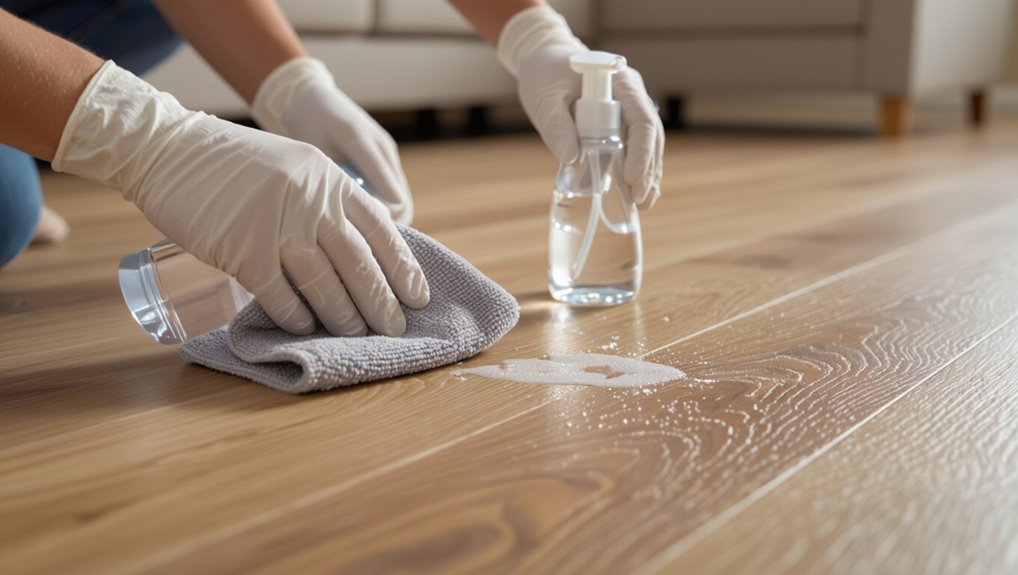
Tackle tough scuffs and surface marks on COREtec flooring promptly to prevent them from settling in: blot spills immediately, then wipe with a damp microfiber cloth using mild detergent.
For scuffs, rub gently with a soft eraser or a non-abrasive scrub pad. Avoid harsh chemicals and waxes.
Rinse, dry thoroughly, and repeat if necessary. Test cleaners in an inconspicuous spot first.
Dealing with Damage and Repair Options
You’ll want to learn how to tell surface wear from permanent damage so you can choose the right fix.
Try simple DIY scratch repairs first, but be ready to replace a plank or call a pro for deeper damage.
Check your warranty and the manufacturer’s guidelines before making repairs to avoid voiding coverage.
Identifying Wear vs. Permanent Damage
When you spot scuffs, dents, or discoloration on COREtec flooring, take a closer look before assuming it’s permanent damage; many surface issues—like light scratches or dirt buildup—can be cleaned or buffed out, while deeper gouges or moisture-related swelling need repair.
Check texture, depth, and finish continuity; press test for soft spots and inspect seams for lifting to decide on patching or professional assessment.
Minor Scratch Repair Techniques (DIY)
Start by evaluating the scratch’s depth and location so you can choose the right DIY fix—surface scuffs usually vanish with cleaning or a mild buff.
Shallow scratches respond well to colored repair pens or putty, and deeper gouges may need a fill-and-seal approach.
For minor marks, clean, dry, then apply a matching repair pen or putty; blend gently and finish with a protective polish.
When to Replace Planks or Call a Professional
If repairs like pens or putty don’t restore the appearance or the damage affects the plank’s core or locking system, it’s time to contemplate replacement or professional help.
You should replace planks that warp, split, delaminate, or compromise seams.
Call a pro for complex subfloor issues, widespread damage, or if you’re unsure about uninstalling and reinstalling planks to avoid voiding the floor’s stability.
Warranty Considerations and Manufacturer Guidelines
Because warranties vary by product line and by what caused the damage, you should always check your COREtec warranty and the manufacturer’s care guidelines before attempting repairs or replacements. Follow approved cleaners, document damage, and contact support for covered repairs. If out of warranty, compare DIY fixes vs. professional replacement to protect long-term performance.
| Issue | Action |
|---|---|
| Scratch | Buff or replace |
| Water damage | Assess warranty |
| Stain | Use approved cleaner |
| Wear | Consult support |
Preventive Measures to Keep COREtec Looking New
To keep COREtec looking new, you’ll want straightforward habits like using entry mats, furniture pads, and the right casters while planning your layout to minimize wear.
Control humidity and temperature to prevent expansion or gaps, and stick to a simple cleaning schedule that removes grit and spills promptly.
These preventive steps will cut down on repairs and help your floor stay attractive for years.
Entryway and Matting Strategies
When you focus on entryway and matting strategies, you cut down on grit, moisture, and stains before they ever reach your COREtec floors.
Place a heavy-duty outdoor mat at each exterior door and a low-profile indoor mat inside to trap debris.
Clean and shake mats weekly, replace them when worn, and create a no-shoe zone to minimize tracked-in dirt and moisture.
Furniture Pads, Casters, and Layout Tips
Start by fitting every chair, table, and movable piece with quality furniture pads or soft casters so you don’t scratch or dent your COREtec floors when you shift things around.
- Check and replace pads quarterly to avoid grit buildup.
- Use felt pads for static items, soft casters for rolling furniture.
- Plan furniture layout to minimize heavy traffic over seams and reduce frequent rearranging.
Humidity and Temperature Control Best Practices
Besides protecting floors from furniture damage, you’ll also want to control the room’s humidity and temperature to keep your COREtec looking new.
Maintain indoor humidity between 30–50% and temperatures between 60–80°F. Use a humidifier, dehumidifier, or HVAC to stabilize conditions.
Avoid rapid temperature swings and direct heat sources. Monitor with a hygrometer to prevent warping, gaps, or buckling over time.
Recommended Cleaning Schedule and Habits
A simple, consistent routine will keep your COREtec floors looking new and prevent small issues from becoming big repairs.
Sweep or dry-mop daily to remove grit, spot-clean spills immediately, damp-mop with manufacturer-approved cleaner weekly, and deep-clean monthly.
Use pads or soft brushes, protect high-traffic areas with rugs, and trim pet nails to avoid scratches—follow these habits to extend your floor’s life.
Common Cleaning Mistakes to Avoid
Don’t overwet the floor or leave standing water, since moisture can damage seams and backing.
Avoid harsh chemicals, abrasive pads, and improper tools that can dull or scratch the wear layer.
Always follow the manufacturer’s instructions to keep your COREtec performing and warranty intact.
Overwetting and Standing Water Risks
When you use too much water or leave puddles on COREtec flooring, moisture can seep into seams and edges and cause swelling, warping, or adhesive failure; wipe up excess liquid promptly and use damp—not soaked—mopping methods to prevent damage.
Don’t let water pool near baseboards, under rugs, or by appliances. Dry spills quickly, ventilate the area, and check seams after cleaning.
Using Harsh Chemicals or Abrasives
If you use harsh chemicals or abrasive tools on COREtec, you can strip its wear layer, dull the finish, or etch the surface.
So stick to manufacturer-approved cleaners and soft microfiber mops. Don’t use bleach, ammonia, or scouring pads.
Test any product in an inconspicuous spot first. Rinse residues thoroughly and avoid repeated use of strong solvents that degrade protective coatings.
Improper Tools and Techniques
One common mistake is reaching for the wrong tools or using the wrong techniques, which can scratch, warp, or leave streaks on COREtec floors.
Don’t use abrasive scrubbers, steel wool, or overly wet mops. Choose soft microfiber cloths, a damp mop with recommended cleaners, and gentle, consistent motions.
Test any new tool in an inconspicuous spot first.
Ignoring Manufacturer Instructions
Because manufacturers set care guidelines based on materials and finishes, ignoring their instructions can void warranties and cause preventable damage.
You should read and follow COREtec’s cleaning recommendations, use approved products, and stick to suggested routines.
Don’t improvise with harsh chemicals, steam cleaners, or abrasive tools.
If unsure, contact the manufacturer—following their guidance protects your floor and your warranty.
Product Recommendations and Comparisons
You’ll want to stick to cleaners approved for COREtec and I’ll name a few trusted brand examples so you can compare.
I’ll also weigh the pros and cons of simple homemade solutions versus commercial products.
Finally, I’ll recommend the best tools—mops, vacuums, and microfiber cloths—to keep your floor looking its best.
Approved Cleaners for COREtec Brand Examples
When choosing a cleaner for COREtec flooring, pick products that’re specifically formulated for luxury vinyl or are explicitly approved by COREtec to avoid dulling the finish or voiding warranties. You’ll want gentle, pH-neutral options that clean well without residue. Recommended examples:
| Brand | Product | Feeling |
|---|---|---|
| COREtec | COREtec Cleaner | Confident |
| Bona | Bona Stone, Tile & Laminate | Reassured |
| Armstrong | Armstrong Care | Satisfied |
Homemade Cleaning Solutions vs. Commercial Products (pros/cons)
Curious whether to mix your own cleaner or stick with a store-bought formula? You can save money with mild homemade solutions—water, a touch of vinegar or dish soap—safe for COREtec when diluted.
Commercial products offer consistent pH-balanced formulas and stain-fighting agents but cost more.
Choose DIY for light maintenance, commercial for tougher grime; always test any cleaner in an inconspicuous spot first.
Recommended Tools (mops, vacuums, microfiber cloths)
Tools matter for keeping COREtec flooring looking its best, so pick mops, vacuums, and cloths that clean effectively without scratching or leaving residue.
Choose lightweight, soft-bristle vacuums with hard-floor settings, flat microfiber mops that rinse easily, and lint-free microfiber cloths for spot cleaning.
Don’t use beater bars or abrasive pads.
- Vacuum
- Microfiber mop
- Microfiber cloth
Troubleshooting Guide: Quick Fixes for Common Problems
If your COREtec floor feels sticky after cleaning, check for soap residue or over-wetting and re-clean with a damp mop and plain water.
If the finish looks dull, you can restore shine by using a manufacturer-approved cleaner and buffing gently.
For persistent odors, follow a stepwise approach: spot-clean spills, ventilate, and use an enzymatic cleaner for organic smells.
Floor Feels Sticky After Cleaning Causes and Fixes
When your COREtec floor feels sticky after cleaning, it’s usually because residue from cleaners, too much water, or an improper product was used.
You can often fix it quickly without professional help. Rinse with plain warm water and a microfiber mop, change mop water often, and dry thoroughly.
If sticky persists, wipe with a diluted vinegar solution, then rinse and dry.
Dulling or Loss of Shine Restoring Appearance
Sticky residue can also make your COREtec look dull, but loss of shine can come from other causes too—like abrasive cleaners, excess wear, or built-up dirt in textured grooves.
To restore appearance, gently clean with a pH-neutral cleaner and soft mop, rinse thoroughly, and buff dry with a microfiber cloth.
For scuffed areas, use a nonabrasive cleaner and light circular motion.
Persistent Odors Stepwise Treatment
1 straightforward approach can help you track down and neutralize persistent odors in COREtec flooring: identify the source, clean with appropriate products, and ventilate to dry and disperse trapped smells.
Inspect seams, edges, and underlay for spills or mold. Use enzyme cleaners for organic stains, mild vinegar solutions for general odors, then air out thoroughly.
Repeat as needed and replace damaged underlayment.
FAQs About Cleaning COREtec Flooring
You probably have a few quick questions about cleaning and caring for your COREtec floors, so let’s answer the essentials.
We’ll cover how often to mop, whether you can steam clean or use vinegar, how to protect floors from heavy furniture, and what to expect if water sits on the surface.
Read on for clear, practical answers you can use right away.
How often should I mop COREtec floors?
Wondering how often to mop COREtec floors? Aim for a light damp mop weekly for normal traffic to remove dust and light soil.
In high-traffic areas or with pets and kids, mop two to three times weekly. Always use a pH-neutral cleaner and wring the mop well—excess water can harm edges.
Spot-clean spills immediately to prevent staining.
Can I steam clean COREtec flooring?
Curious about using a steam cleaner on COREtec floors? You shouldn’t.
Steam can force moisture into seams or the core, risking swelling or adhesive failure. Instead, use a damp mop with manufacturer-approved cleaning solutions and dry promptly.
If you’re unsure, check COREtec’s care guidelines or contact their support before trying any high-heat or high-moisture cleaning methods to protect your warranty.
Is vinegar safe for COREtec floors?
Is vinegar safe for COREtec floors? You shouldn’t use undiluted vinegar or frequent acidic cleaners on COREtec.
Occasional very diluted vinegar (one part vinegar to ten parts water) for spot cleaning is usually safe, but test in an inconspicuous area first.
Better: use manufacturer-approved pH-neutral cleaners to avoid dulling the wear layer and guarantee warranty compliance.
How do I protect COREtec from heavy furniture?
When you move heavy furniture onto COREtec, protect the floor by using wide, weight-distributing pads or furniture cups under each leg and by laying down a durable runner or plywood sheet during moves to prevent point loads and scuffs.
Also lift rather than drag items, use felt pads for slight repositioning, check pads periodically for wear, and replace them to avoid indentations and scratches.
Will water damage COREtec flooring?
Although COREtec is water-resistant and can handle spills and routine mopping, you shouldn’t let water sit on it for long or flood the floor.
Prolonged standing water can seep into seams or damaged edges, causing swelling or warping. Wipe up spills promptly, fix leaks, and dry wet areas.
Use mats at entrances and avoid steam cleaners to preserve the core and finish.
Additional Resources
For more detailed care steps and warranty info, check COREtec’s official care guides and warranty links so you’re following manufacturer recommendations.
If you spot persistent stains, warping, or installation issues, it’s smart to consult a flooring professional. They can confirm whether the problem is covered by warranty or needs repair.
Manufacturer Care Guides and Warranty Links
Because manufacturer instructions cover product-specific care and warranty details, consult COREtec’s official care guides and warranty documents before you start any deep cleaning or repairs.
- Review cleaning products and methods approved by COREtec so you don’t void the warranty.
- Note warranty coverage periods and exclusions for moisture or improper maintenance.
- Keep proof of purchase and maintenance records to support any future warranty claims.
When to Consult a Flooring Professional
If you find issues that fall outside COREtec’s care guidance or warranty coverage, call a flooring professional for an assessment.
They’ll diagnose damage, recommend repairs, and confirm warranty applicability.
You should consult a pro when you notice:
- Significant warping, lifting, or gaps after moisture exposure.
- Deep scratches or wear through the wear layer.
- Persistent odors, mold, or subfloor concerns.