
Is Pergo Laminate Flooring Good? An Honest Review for Homeowners
Yes — Pergo laminate is a solid choice if you want durable, affordable, wood-look flooring that’s easy to install and maintain. You’ll get good scratch and stain resistance, DIY-friendly click-lock planks, and several lines from budget to premium, including water-resistant options. It’s best for living areas, kitchens, and busy households but avoid older non-waterproof lines in bathrooms or wet basements. Keep spills wiped and follow prep steps, and you’ll see why many homeowners prefer it; more details follow.
Quick Answer Is Pergo Laminate Flooring Good for Your Home?
Short answer: Pergo laminate is a solid choice for many homes—it’s durable, affordable, and easy to maintain.
You’ll get the best results in high-traffic rooms, living areas, and bedrooms where moisture is limited.
If you need waterproof flooring for bathrooms or basements, consider Pergo’s waterproof lines or another material.
One-sentence verdict
If you want durable, affordable floors that mimic wood without the maintenance, Pergo laminate is a solid choice for most homes, offering good wear resistance, easy installation, and a range of styles—though you’ll want to pick a water-resistant line for kitchens or basements and avoid it where you need real hardwood or luxury vinyl performance.
Best use cases at a glance
When you want wood-look floors that stand up to everyday life without draining your budget, Pergo laminate is a smart pick—especially in living rooms, bedrooms, hallways, and other low- to medium-traffic areas where moisture isn’t a constant concern.
You’ll get durable, easy-to-clean flooring that’s affordable. Consider these ideal spots:
- Living areas and bedrooms
- Home offices and corridors
- Finished basements (with moisture control)
What Is Pergo Laminate Flooring?
Pergo laminate starts with a high-density fiberboard core topped by a printed decor layer and a durable wear layer, so you can see how construction affects performance.
You’ll find Pergo’s lines—from the original budget-friendly ranges to the Outlast+ water-resistant and the higher-end Sensation styles—are built on that same basic sandwich but vary in thickness, wear rating, and moisture protection.
Knowing those construction differences helps you pick the right Pergo product for your room and lifestyle.
How laminate flooring is made Pergo’s construction specifics
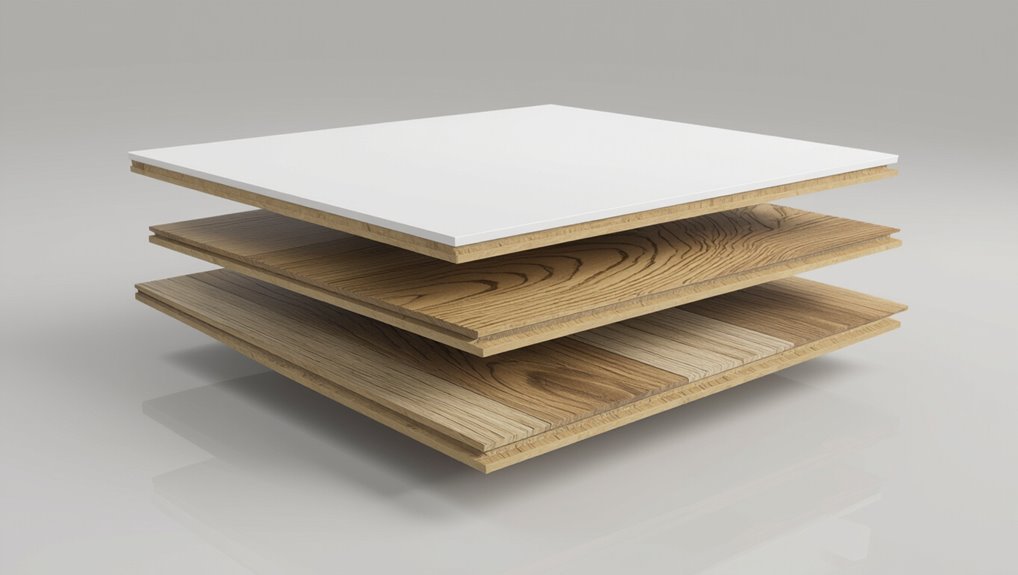
Think of Pergo laminate as a layered engineered plank designed to mimic wood while boosting durability and ease of care.
You get a transparent wear layer resisting scratches and stains, a printed decorative layer for realistic grain, a high-density fiberboard core for stability, and an attached backing that controls moisture and balance.
Click-lock edges let you install it floating without nails or glue.
Pergo product lines and where they fit (Original, Outlast+, Sensation, etc.)
Although all Pergo laminates share the same layered build, their product lines target different needs so you can pick the right balance of durability, realism, and price. You’ll choose Original for basics, Outlast+ for water resistance, Sensation for premium realism. Match usage: high traffic, moisture, or aesthetics to save money and get performance.
| Line | Best for |
|---|---|
| Original | Budget rooms |
| Outlast+ | Wet areas |
Key Benefits of Pergo Laminate Flooring
You’ll like how Pergo combines tough, wear-resistant surfaces (rated by AC levels) with options that handle moisture for kitchens and basements.
The planks mimic real wood through varied textures, embossing, and colors while costing less than hardwood or many vinyls.
And because Pergo locks together, you can often install it yourself without special tools.
Durability and wear resistance (AC ratings explained)
Because Pergo laminate is built with a tough wear layer and a dense core, it stands up well to daily foot traffic, scratches, and stains.
You’ll choose AC ratings to match use: AC3 for homes and moderate traffic, AC4 for busy households, AC5 for commercial-grade durability.
Higher AC means thicker wear layers and longer life, so pick based on room activity and lifespan expectations.
Water resistance and suitability for moisture-prone rooms
Besides wear resistance, you’ll also want to contemplate how Pergo handles moisture—especially if you’re installing in kitchens, bathrooms, or basements.
Pergo offers water-resistant and some waterproof laminate lines; these resist spills and brief exposure better than standard laminate.
You’ll still need proper underlayment, sealed seams, and quick cleanup for high-moisture areas to prevent edge swelling or long-term damage.
Appearance and design variety (textures, embossing, color options)
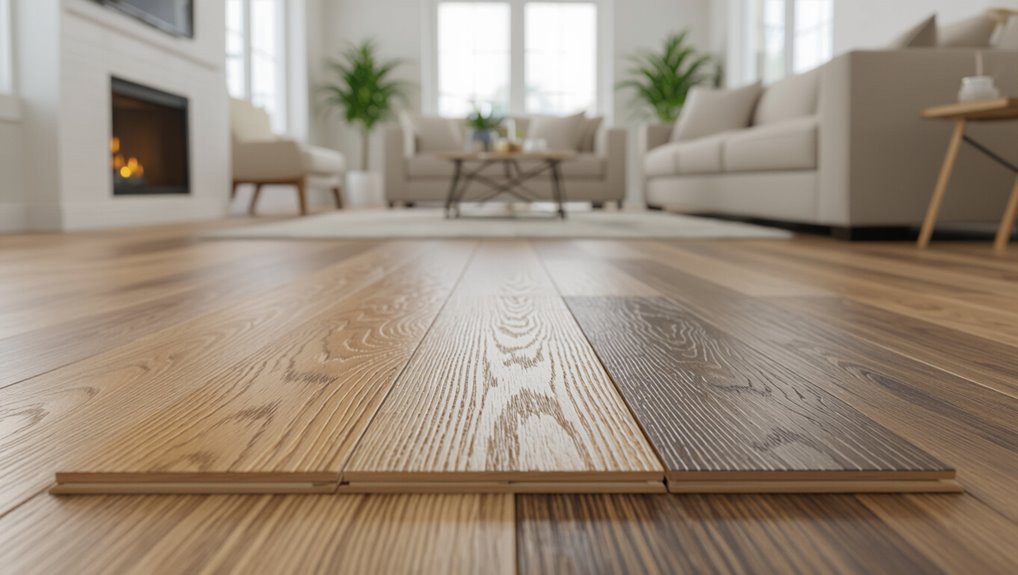
Variety matters when you want a floor that matches your style, and Pergo delivers with a wide range of realistic textures, embossing patterns, and color options.
You’ll find deep hand-scraped looks, subtle wire-brushed finishes, and multi-tone planks that mimic real wood grain. Options span pale to dark hues, matte to satin sheens, letting you choose a cohesive, modern, or rustic aesthetic.
Cost and value compared to hardwood and vinyl
When you compare Pergo laminate to hardwood and luxury vinyl, you’ll see it strikes a middle ground on price and long-term value: it costs considerably less than most hardwoods up front and installs faster, yet often delivers a more realistic wood look and better scratch resistance than basic vinyl at a similar price point.
You get durable boards, lower maintenance, and strong value for money over years.
Ease of installation and DIY friendliness
Ever wonder how much of the job you can do yourself? Pergo’s click-lock planks make DIY straightforward: you’ll measure, undercut door frames, lay an underlayment, and click boards together without glue.
With basic tools and patience, most homeowners finish rooms in a weekend. Tight cuts and connections need care, but the system’s forgiving design keeps installation accessible and cost-effective.
Potential Drawbacks and Limitations
You’ll want to weigh some drawbacks before choosing Pergo.
It won’t last or refinish like real hardwood, some product lines are vulnerable to standing water, and damaged planks can be harder to repair than solid wood.
Also consider environmental factors and possible VOC emissions when comparing options.
Longevity vs. real hardwood
Although Pergo laminate holds up well to everyday wear and can look like wood for years, it doesn’t match real hardwood’s lifespan or long-term refinishing options.
You’ll likely replace laminate after decades rather than sand and refinish it repeatedly. Expect eventual wear layer breakdown, visible seams, and limited repairability.
If you want a floor that ages gracefully and can be restored, choose real hardwood.
Vulnerability to water in certain lines
If long-term refinishing isn’t an option for Pergo like it’s with hardwood, you should also consider how some Pergo lines handle moisture.
You’ll find waterproof models, but older or budget lines swell and delaminate when exposed to standing water or high humidity.
In kitchens or basements, pick verified water-resistant Pergo, install proper underlayment, and avoid prolonged wet conditions to reduce risk.
Repairability and refinishing limitations
Because Pergo laminate has a thin wear layer over a printed core, you can’t sand and refinish scratches the way you’d with hardwood, so repairs are more limited.
You’ll rely on patch kits, replacement planks, or surface coats for minor damage. Matching patterns can be hard, and repeated repairs may show.
Plan for replacement rather than refinishing long-term.
Environmental and VOC considerations
When you’re weighing Pergo laminate, consider its environmental footprint and indoor air emissions: many laminates use composite wood cores bonded with formaldehyde-based resins and a printed decorative layer plus a protective wear coat, so off-gassing and end-of-life disposal can be concerns.
Check for low-VOC certifications (CARB, GREENGUARD), prefer water-based adhesives, and plan recycling or responsible disposal to reduce impacts.
Detailed Performance Comparison
Now you’ll compare Pergo’s real-world performance side-by-side with engineered hardwood, luxury vinyl plank (LVP), and other laminate brands.
You’ll look at durability, water resistance, feel underfoot, and cost to see where Pergo stands out or falls short.
That comparison will help you decide which option matches your priorities.
Pergo vs. engineered hardwood
Although they can look similar at a glance, Pergo laminate and engineered hardwood perform quite differently under everyday use, so you should weigh specific performance factors rather than just appearance. Pergo is more scratch‑resistant and moisture‑tolerant; engineered hardwood offers real wood wear and refinishing potential. Choose based on durability needs, resale value, and budget.
| Trait | Pergo vs Engineered |
|---|---|
| Durability | Pergo wins |
| Moisture | Pergo better |
| Refinishing | Engineered wins |
| Cost | Pergo cheaper |
Pergo vs. luxury vinyl plank (LVP)
How do Pergo laminate and luxury vinyl plank (LVP) stack up for daily use? You’ll find Pergo harder and more scratch-resistant; LVP beats it for waterproofing and softer underfoot. Choose Pergo for budget-friendly durability, LVP for moisture-prone rooms.
| Feature | Pergo Laminate | Luxury Vinyl Plank |
|---|---|---|
| Water resistance | Low | High |
| Durability | High | Medium |
| Comfort | Medium | High |
| Installation ease | High | High |
Pergo vs. generic laminate brands what sets Pergo apart
Comparing Pergo to generic laminate brands will show where its engineering and quality control make a real difference for everyday performance.
You’ll notice tougher wear layers, more consistent color matching, tighter locking systems, and better moisture resistance. That means fewer scratches, seams that stay snug, and less warping.
Installation’s easier and long-term upkeep demands less, so you get reliable value over time.
Buying Guide How to Choose the Right Pergo Product
When choosing the right Pergo, think about each room’s needs—living rooms tolerate softer finishes, kitchens and basements need higher moisture resistance, and bathrooms require waterproof options.
Match AC rating and plank thickness to your traffic level, and pick finishes, edge profiles, and underlayment that suit comfort and durability.
Finally, set a budget that covers installation and compare warranties so you know what’s protected.
Room-by-room recommendations (living room, kitchen, bathroom, basement)
Wondering which Pergo product fits each room best?
For living rooms, choose stylish, durable laminate with scratch resistance and realistic texture.
In kitchens, pick water-resistant lines and beveled edges for spills.
For bathrooms, use Pergo’s waterproof collections or avoid high-moisture zones.
In basements, select engineered or moisture-rated laminates and install a proper vapor barrier to prevent warping.
Matching AC rating and thickness to traffic levels
Because foot traffic and family life vary, you’ll want to match Pergo’s AC wear rating and plank thickness to how the room gets used: higher AC ratings (AC3–AC5) and thicker AC-rated laminates suit busy areas like entryways and living rooms, while lower ratings and thinner boards work fine in low-traffic bedrooms or guest rooms.
- AC3: moderate traffic, budget-friendly
- AC4: family rooms, good durability
- AC5: commercial or very busy homes
Finishes, edge profiles, and underlayment choices
After you’ve matched AC rating and thickness to traffic, you’ll next pick the surface look and installation details that define both style and performance.
Choose matte, hand-scraped, or high-gloss finishes for the wear pattern and maintenance you prefer.
Select micro-bevel or square edges to influence seam visibility.
Pick underlayment for sound, moisture barrier, or added cushion compatible with Pergo’s click system.
Budget planning and warranty considerations
When planning your budget for Pergo, prioritize the total installed cost—not just the sticker price—so you can compare product tiers, underlayment, and any subfloor prep or trim work you’ll need; also review Pergo’s warranty details up front, since coverage varies by product line, finish, and whether installation is DIY or professional. Balance upfront cost, expected lifespan, and warranty limits to avoid surprises.
| Item | Typical Cost | Warranty Impact |
|---|---|---|
| Entry-level plank | Low | Limited |
| Mid-range | Moderate | Better |
| Premium | High | Best |
Installation Overview (Step-by-Step)
Before you start, you’ll acclimate the boards and check the subfloor for level, clean, and dry conditions.
Gather the right tools and choose an underlayment and moisture barrier suited to your room.
Then follow the floating-install method step by step and finish with trims, connections, and thresholds for a professional look.
Pre-installation prep: acclimation and subfloor inspection
To guarantee a smooth Pergo laminate installation, you’ll need to acclimate the planks and thoroughly inspect the subfloor so they’ll perform correctly from day one.
You’ll let planks sit in the room 48–72 hours and check moisture, level, and cleanliness. Address any issues before laying.
- Measure moisture levels
- Confirm subfloor is flat
- Remove debris and bumps
Step 1: Tools and materials needed
Now that your planks are acclimating and the subfloor’s been checked for moisture, level, and debris, gather the right tools and materials so installation goes quickly and cleanly.
You’ll need spacers, tapping block, pull bar, mallet, utility knife, saw (miter or jigsaw), tape measure, pencil, straightedge, pry bar, and a vacuum.
Keep extra planks and trim for cuts and mistakes.
Step 2: Underlayment and moisture barrier options
Once you’ve prepped the subfloor, choose the right underlayment and moisture barrier so your Pergo planks perform and last — they cushion, reduce sound, and block moisture that can warp laminate.
Select foam or cork underlayment for cushion and sound control; use a polyethylene vapor barrier over concrete.
Match thickness to Pergo recommendations, overlap seams, tape edges, and trim flush before installing planks.
Step 3: Floating installation steps and tips
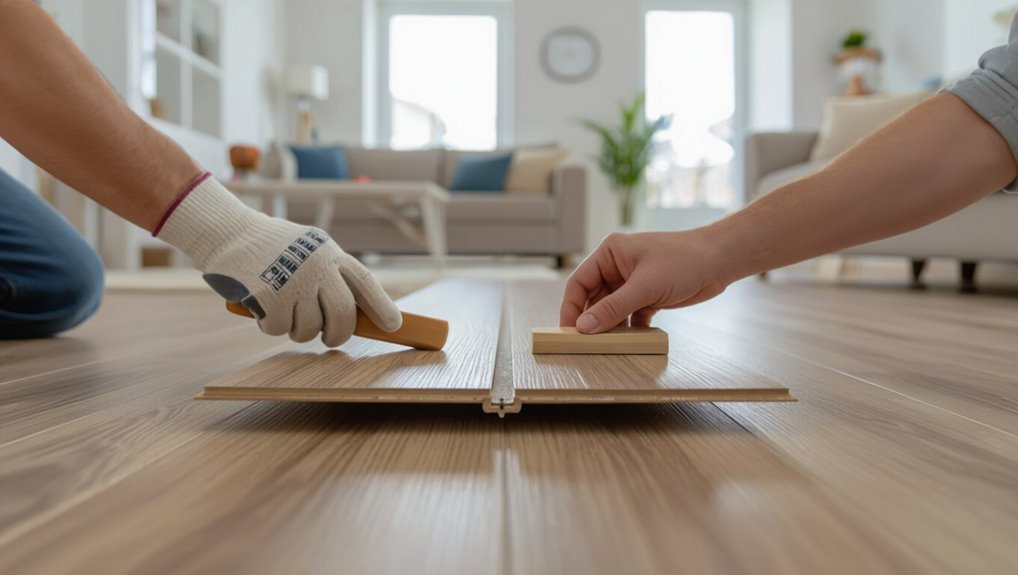
With the underlayment and moisture barrier in place, you’re ready to start the floating installation.
Lay the first row with tongues facing the wall, use spacers, and stagger end joints at least 12 inches. Click planks together, tapping gently with a block. Trim final row to fit.
Keep these tips in mind:
- Work left to right for consistency
- Check alignment frequently
- Use pull bar for tight fits
Step 4: Finishing touches: trims, transitions, and thresholds
After you’ve laid the last plank and checked alignment, finish the job by installing trims, connections, and thresholds to protect edges and create smooth joins between rooms and flooring types.
You’ll fit baseboards, quarter-rounds, and reducer strips, allowing expansion gaps. Measure, cut, and fasten pieces neatly; use junction profiles where heights change and seal thresholds against moisture for a clean, durable finish.
Common Problems and Mistakes to Avoid
When you install Pergo, don’t skip proper subfloor prep — uneven or dirty surfaces cause gaps and premature wear.
Make sure the boards acclimate, leave expansion gaps, and use the correct underlayment and adhesives for your model.
Also, read water-resistance specs carefully so you don’t assume it’s fully waterproof.
Incorrect subfloor preparation
If you skip proper subfloor prep, your Pergo laminate can cup, gap, or wear unevenly far sooner than it should.
You need a clean, level, dry surface; failing that causes movement, squeaks, and premature plank failure.
Remove debris, repair dips or high spots, and guarantee moisture barriers where needed.
Proper prep saves time, prevents callbacks, and protects your investment.
Ignoring acclimation or expansion gaps
Because laminate expands and contracts with temperature and humidity, you need to let Pergo acclimate and leave proper expansion gaps or the floor will buckle, cup, or push against walls.
Don’t skip acclimation time or jam boards tight to trim. Follow manufacturer guidelines for days, room conditions, and gap width.
Proper gaps protect joints, avoid warping, and guarantee long-term performance.
Using wrong underlayment or adhesives
Although you might think any underlayment or adhesive will do, choosing the wrong products can ruin a Pergo installation fast.
You should use Pergo-approved underlayment for cushioning, sound control, and moisture barriers.
Don’t substitute cheap foam or incompatible adhesives that impede locking profiles or trap moisture.
Follow manufacturer specs—wrong materials cause squeaks, gaps, delamination, and voided warranties.
Misinterpreting water-resistance claims
How water-resistant do you really think Pergo floors are?
Don’t assume “water-resistant” means waterproof. You’ll still get swelling or edge damage from standing water or leaks.
Follow manufacturer limits, acclimate panels, seal joints, and clean spills fast.
For bathrooms or basements, choose products rated for moisture or pick waterproof vinyl.
Misreading labels can cost you repairs and warranty disputes.
Maintenance, Care, and Longevity Tips
To keep Pergo laminate looking its best, you’ll want simple daily and weekly cleaning habits plus a few preventive steps to cut down on scratches and dents.
Act quickly on spills and pet messes to avoid stains or warping, and use pads, rugs, and proper pet trimming to reduce wear.
I’ll also cover how to judge when a board can be repaired versus when replacement makes more sense.
Daily and weekly cleaning routines
When you stick to simple daily and weekly routines, your Pergo laminate will stay cleaner and last longer with less effort; wipe spills immediately, sweep or vacuum daily with a soft attachment, and mop weekly using a damp (not wet) microfiber mop and manufacturer-recommended cleaner.
- Sweep or vacuum daily
- Spot-clean spills right away
- Damp-mop weekly with a gentle cleaner
Preventive measures to avoid scratches and dents
One simple step you can take is to protect high-traffic areas and furniture legs before scratches or dents happen: use felt pads under chair and table legs, lay down runners or area rugs in walkways, and put protective caps on furniture casters.
Also keep pet nails trimmed, use floor-friendly mats at entryways, lift rather than drag heavy items, and replace worn pads promptly.
Handling spills and pet-related issues
Spills and pet accidents demand quick action to protect Pergo laminate’s wear layer and seams, so blot liquids immediately with a soft cloth and avoid letting moisture sit more than a few minutes.
Wipe residue with a damp (not wet) microfiber, dry thoroughly, and use pet-specific enzymatic cleaners for odors.
Trim nails, place pads under bowls, and clean paws to prevent scratches and staining.
When to repair vs. when to replace
If minor scratches, chips, or edge lifting are confined to a few planks, you can usually repair them yourself or with a pro and extend the floor’s life without a full replacement.
Replace panels when damage spans multiple areas, boards swell from moisture, or wear exposes the core.
Consider age, warranty status, and matching concerns—older styles may force full replacement for a uniform look.
Cost, Warranties, and Value Over Time
You’ll want to weigh upfront costs — typical Pergo planks run affordably per square foot, with installation adding to the total depending on labor and complexity.
Check Pergo’s specific warranties so you know what’s covered for wear, moisture, and manufacturing defects.
Finally, consider resale impact and ROI: durable, well-installed Pergo can boost appeal, but match quality and style to your market.
Typical price ranges (materials and installation)
A Pergo laminate floor usually costs between $1.50 and $5.00 per square foot for materials, with premium lines and specialty finishes pushing toward $6–$8, while professional installation typically adds $2 to $5 per square foot depending on room complexity and underlayment needs; factor in removal of old flooring, trim work, and changes, which can raise the total project cost noticeably.
| Item | Low | High |
|---|---|---|
| Materials | $1.50/ft² | $8.00/ft² |
| Installation | $2.00/ft² | $5.00/ft² |
| Extras | $0 | Varies |
Understanding Pergo warranties and what they cover
Curious what Pergo’s warranty actually covers and how it affects your long-term costs?
You’ll get limited residential or commercial coverage depending on the line, typically protecting against wear, staining, and structural defects for set years.
It won’t cover improper installation, moisture damage from floods, or normal wear and tear.
Register your purchase, keep receipts, and follow maintenance to preserve protection.
Resale value and homeowner ROI considerations
How will Pergo laminate affect your home’s resale value and return on investment?
You’ll likely see modest gains: Pergo is durable, attractive, and cheaper than hardwood, making it appealing to budget-conscious buyers.
Expect good short-term ROI, especially if warranties transfer.
For premium markets, hardwood may fetch higher prices, but Pergo balances cost, longevity, and appeal for many resale scenarios.
Real-World Case Studies and User Scenarios
Think about how Pergo performs in a busy family home with kids and pets, where scratches and spills are constant.
Consider a basement install where moisture control and underlayment choices make or break the outcome.
Also look at rental units to see how Pergo holds up under high turnover and varying tenant care.
High-traffic family home scenario
When you’re juggling kids, pets, and constant foot traffic, Pergo laminate often stands out for its durability and low maintenance; its wear layer resists scratches and scuffs better than many laminates, and spills wipe up quickly so you don’t spend evenings fussing over stains.
You’ll appreciate easy cleaning, quick installation, and realistic wood looks that handle daily wear, though protect high-impact zones with rugs.
Basement installation and moisture challenge
Moving from busy family rooms to below-grade spaces, basement installs bring a new set of moisture challenges you’ll need to handle differently.
You should test concrete for dampness, use a vapor barrier or waterproof underlayment, and choose Pergo lines rated for basements.
Seal perimeter gaps, maintain dehumidification, and monitor humidity.
With proper prep and drainage, Pergo can perform well below grade.
Rental property durability case
Because rental units face constant turnover and varied tenant habits, durability becomes the primary concern when choosing Pergo for investment properties.
You’ll appreciate scratch resistance, quick installation, and easy cleaning that reduce downtime between tenants.
Still, you should pick higher AC-rated styles, install proper underlayment, and enforce basic care rules—these choices protect resale value and cut long-term maintenance costs.
Buyer Checklist Final Decision Flowchart
Now that you’ve seen real-world use, here’s a quick checklist to guide your final choice.
Compare Pergo’s durability, water resistance, and price against alternatives for your home’s traffic and moisture levels.
If you need high scratch and spill resistance on a budget, pick Pergo; if you need waterproof flooring for constant wet areas, consider other options.
Quick checklist for homeowners
When you’re ready to decide, use this quick checklist to compare Pergo laminate against your must-haves—durability, water resistance, warranty, appearance, and installation ease—so you can make a confident, final choice.
Use the flowchart steps below to finish your decision quickly:
- Confirm moisture exposure and required water rating.
- Match style samples to room lighting.
- Verify warranty terms and installation options.
When to choose Pergo vs. alternatives
If you’re weighing Pergo against other flooring, follow this final flowchart to match product strengths to your priorities:
- Choose Pergo if you want durable, scratch-resistant, budget-friendly planks for busy areas.
- Pick vinyl if you need superior water resistance and softer underfoot comfort.
- Opt for hardwood when resale value and authentic look matter most, accepting higher cost and maintenance.
Frequently Asked Questions
You probably have a few quick questions about Pergo, like whether it’s waterproof, suitable for bathrooms or basements, or how long it lasts.
You’ll also want to know if you can refinish it and whether it boosts your home’s resale value.
Below are concise answers to each of those common concerns.
Is Pergo laminate waterproof?
Curious whether Pergo laminate can handle spills and humidity?
Pergo offers water-resistant and some waterproof laminate lines, so short-term spills and routine humidity are usually fine.
You’ll still wipe up moisture quickly—seams and edges can allow water in over time.
Check the specific Pergo product specs and warranty for its waterproof rating before installing in moisture-prone areas.
Can Pergo be installed in bathrooms and basements?
Wondering whether Pergo works in bathrooms and basements? You can install certain Pergo waterproof lines in bathrooms and below-grade spaces, but you’ll need proper underlayment, tight seams, and careful moisture management.
Avoid full immersion areas and check manufacturer guidelines for specific product ratings.
For basements, control humidity and use moisture barriers to prevent warping and warranty issues.
How long does Pergo laminate last?
Lifespan for Pergo laminate typically ranges from 10 to 25 years depending on the product line and how well you maintain it.
You’ll get closer to the upper end with moderate traffic, prompt spill cleanup, protective pads, and regular cleaning.
Heavy wear areas or moisture exposure shorten life.
Warranties vary, so check the specific Pergo line to match expected longevity with your household needs.
Can you refinish or sand Pergo laminate?
Because Pergo laminate has a thin printed decor layer and a hard wear layer bonded to a composite core, you can’t sand or refinish it the way you’d hardwood; doing so would remove the decorative surface and ruin the floor.
Instead, you repair or replace damaged planks, use spot touch-ups or overlays, and follow manufacturer care recommendations to extend lifespan without sanding.
Does Pergo increase home resale value?
Does Pergo flooring boost your home’s resale value? You’ll likely see modest gains: Pergo offers durable, attractive surfaces buyers like, especially in kitchens and living areas.
It won’t command luxury-level premiums, but it can make your home appear updated and well-maintained.
Choose neutral styles, guarantee proper installation, and highlight low maintenance to maximize buyer appeal and perceived value.
