
Can You Use a Steam Mop on Vinyl Flooring? The Honest Answer
You can use a steam mop on some vinyl floors, but only if the manufacturer OKs it and the planks or tiles are well sealed. Use the lowest steam setting, make short passes, and keep the mop moving to avoid heat and moisture buildup. Avoid steam on older sheet vinyl, damaged seams, or glued-down floors. Test a hidden spot first and dry thoroughly afterward. Keep going to learn the risks, precautions, and safer alternatives.
Can You Use a Steam Mop on Vinyl Flooring?
Yes — you can use a steam mop on many vinyl floors, but only when the manufacturer approves it.
It’s safe for well-sealed, luxury vinyl planks or tiles and when you use low-heat, sparse steam settings; it’s unsafe for older, glued-down sheet vinyl, unsealed seams, or any vinyl with damage.
Check your flooring warranty and test a small hidden area first to avoid warping or adhesive failure.
Direct short verdict
You can use a steam mop on many vinyl floors, but only if the manufacturer explicitly says it’s safe and you adjust the settings and technique accordingly.
If the label permits, use low heat, minimal moisture, and gentle passes to avoid warping or seams lifting.
If instructions prohibit steam, don’t risk it—choose a damp mop or approved cleaner for safe vinyl care.
Summary of conditions when it’s safe or unsafe
When the vinyl manufacturer explicitly permits steam cleaning and you set the mop to low heat with minimal moisture, steam mops can be safe; if the product label warns against steam, if the vinyl is older, loose, textured, or has unsealed seams, or if the floor already shows signs of lifting or damage, don’t use steam.
Otherwise, test a small hidden area, monitor for warping, and avoid prolonged exposure.
Basic Understanding of Vinyl Flooring
To decide whether a steam mop is right for your floors, you should first know what vinyl is and the common formats it comes in—sheet, tile, and luxury vinyl plank (LVP).
Each type is built differently, with layers like a wear layer, printed design, and a core that affect durability and moisture resistance.
Also note that many vinyl floors have protective surface coatings that influence how they handle heat and steam.
What is vinyl flooring? (types: sheet, tile, luxury vinyl plank)
Vinyl flooring is a durable, water-resistant surface made from synthetic materials that comes in three main forms: sheet, tile, and luxury vinyl plank (LVP).
Sheet vinyl is a continuous, seamless roll ideal for moisture-prone areas.
Vinyl tile mimics ceramic squares and’s easier to replace.
LVP replicates hardwood planks with realistic visuals and straightforward click or glue installation for DIY-friendly results.
Construction and common surface coatings
Having covered the main formats—sheet, tile, and LVP—you should know that each type shares a layered construction that influences performance and cleaning.
You’ll find a wear layer (transparent, protective), a printed design layer, a vinyl core, and often a backing.
Many wear layers carry urethane or ceramic bead coatings for scratch and stain resistance, which affect steam tolerance and cleaning recommendations.
How Steam Mops Work and Why They Matter for Flooring
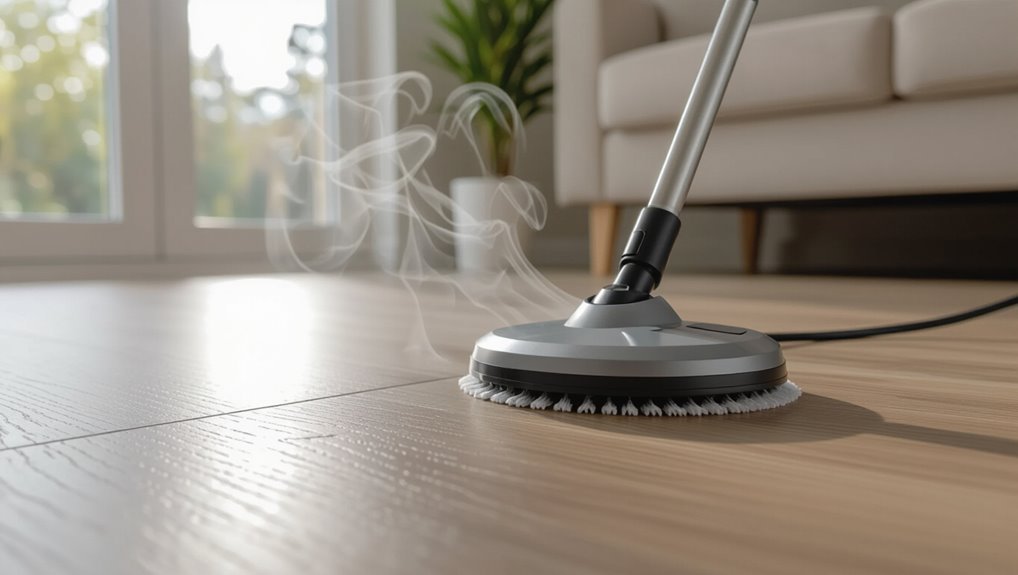
A steam mop cleans by combining high heat and a controlled burst of moisture to loosen grime and sanitize surfaces.
Most models emit steam around 200–220°F (93–104°C) with low wetness designed to evaporate quickly.
You should know how that heat and moisture interact with vinyl — too much can warp or lift seams, while the right balance can safely clean and disinfect.
Steam cleaning mechanism (heat + moisture)
Think of a steam mop as a small, swift cleaning system that combines high heat and controlled moisture to loosen dirt and sanitize surfaces.
You guide concentrated steam across vinyl; heat softens grime and kills microbes while minimal moisture lifts residues for the pad to absorb.
That combo cleans without harsh chemicals, but you must control exposure to avoid warping or loosening seams.
Typical temperature and moisture output of steam mops
Most steam mops emit steam at roughly 200–220°F (93–105°C) and release only a small, measured amount of moisture—typically a few grams per minute—so you get high heat with limited wetting.
You’ll usually see adjustable flow settings and short bursts designed for sanitizing and light cleaning.
Manufacturers rate output and dwell time—check specs to match a mop’s steam profile to your vinyl type and cleaning needs.
How heat and moisture affect flooring materials
Those steam temperature and moisture specs matter because heat and water interact with flooring materials in specific ways that change performance and longevity.
You’ll find heat softens vinyl layers, loosens adhesive, and can warp boards, while excess moisture soaks seams and subfloor, promoting swelling or mold.
Controlled, low-moisture steam can sanitize, but you should test, use manufacturer guidelines, and avoid prolonged exposure.
Risks of Using a Steam Mop on Vinyl Flooring
You should be cautious because steam can cause heat-related damage like warping, bubbling, or loosening adhesives.
Moisture can also seep into seams or the subfloor, leading to swelling and long-term problems.
Plus, steam may dull or discolor surface coatings and could void your warranty or create safety issues.
Heat-related damage (warping, bubbling, adhesive failure)
When exposed to the high temperatures steam mops generate, vinyl flooring can warp, bubble, or lose its adhesive bond, causing sections to lift or buckle.
You risk permanent deformations and visible gaps where planks separate. Heat softens the vinyl and weakens glue, so avoid high-heat steam, test a small hidden area first, and follow manufacturer temperature guidelines to prevent costly repairs.
Moisture-related damage (seam swelling, subfloor issues)
Although steam mops seem convenient, excessive moisture can seep into seams and under the planks, causing swelling, cupping, and damage to the subfloor; you’ll end up with raised edges, buckling, or even mold if water gets trapped.
You should avoid steam on vinyl seams, dry spills quickly, and use minimal moisture.
Inspect edges and joints regularly to catch early swelling before repairs are needed.
Finish and surface coating damage (dulling, discoloration)
If you rely on a protective wear layer to keep your vinyl looking fresh, steam can strip or dull that finish over time and leave the surface looking washed out or discolored.
You’ll notice loss of sheen, patchy tones, or accelerated wear where steam repeatedly contacts the floor.
To preserve appearance, avoid high-heat steam and test small inconspicuous areas before broader use.
Manufacturer warranty voiding and safety concerns
Because many vinyl manufacturers explicitly exclude steam cleaning from care instructions, using a steam mop can void your warranty and leave you responsible for repair or replacement costs.
You’ll also risk warping, delamination, and hidden moisture damage that compromises floor integrity and indoor air quality.
Check warranty terms, follow manufacturer cleaning guidelines, and choose approved cleaners or gentle methods to protect coverage and safety.
When It’s Generally Safe Conditions and Precautions
You can usually steam-clean luxury vinyl plank/tile (LVP/LVT) more safely than older sheet vinyl because engineered pieces resist heat and moisture better.
Use the lowest steam setting, short passes, and a dry microfiber pad to limit exposure.
Also check room temperature, grout or seam condition, and how well the flooring is adhered before you start.
Vinyl types most tolerant of steam cleaning (LVP/LVT vs. sheet vinyl)
When you’re choosing whether to steam-clean vinyl, know that luxury vinyl plank (LVP) and tile (LVT) are generally more steam-tolerant than traditional sheet vinyl because they’re thicker, have a stronger wear layer, and often feature tighter seams.
Still, check manufacturer guidance and avoid high-heat, prolonged exposure to prevent warping or adhesive failure.
You should favor LVP/LVT, test a small area, and avoid older or loosely glued sheet vinyl.
Steam mop settings and steam control to minimize risk
Having chosen LVP/LVT or confirmed that your sheet vinyl is in good condition, focus next on steam settings and control to reduce risk.
Use the lowest effective steam level, keep the mop moving—don’t pause in one spot—and avoid soaking seams.
Test a hidden area first, use short passes, and allow quick drying.
If steam feels intense, lower the setting or stop.
Environmental and installation factors that influence safety (temperature, adhesion, seams)
Although steam mops can be safe on vinyl under the right conditions, you’ll need to account for room temperature, how well the flooring is glued or welded, and the condition of seams and edges before you proceed.
Check adhesive integrity, seam heat-welding, and manufacturer temperature limits.
In cooler, stable rooms with secure adhesion and tight seams, use low steam; avoid steaming lifted, loose, or poorly bonded planks.
Step-by-Step: How to Steam Mop Vinyl Flooring Safely (If You Decide To)
Before you start, check your floor’s manufacturer guidelines and warranty, then test the steam mop in an inconspicuous spot to make sure it won’t cause damage.
Sweep and spot-clean the floor, dry any damp areas, and fit the mop with the recommended settings and attachments.
While cleaning, keep the mop moving and avoid soaking seams or edges to protect the vinyl.
Step 1 Check manufacturer guidelines and warranty
Because vinyl formulations vary, check your flooring manufacturer’s care instructions and your home warranty first to see if steam cleaning is allowed.
If the manufacturer forbids steam or voids warranties for heat/moisture exposure, don’t steam.
Note model-specific limits, recommended temperatures, and approved cleaning methods.
Keep documentation for future claims and contact the manufacturer if guidance is unclear before proceeding.
Step 2 Test in an inconspicuous area
When you’ve confirmed steam cleaning won’t void your warranty, pick a hidden spot—like inside a closet or behind a piece of furniture—and try the mop there first.
Use the lowest steam setting, pass once, and wait 24–48 hours.
Inspect for discoloration, lifting, or softening. If you see damage, stop; if not, you can cautiously proceed to treat visible areas.
Step 3 Prepare the floor (sweep, spot-clean, dry)
Although you’ve verified steam won’t harm the floor, you still need to prepare the surface: sweep or vacuum to remove grit, spot-clean sticky residues with a gentle cleaner and soft cloth, and guarantee the floor is completely dry.
Remove rugs, furniture pads, and pet bowls. Proper prep prevents scratches, streaks, and trapped moisture, making steam mopping safer and more effective.
Step 4 Adjust steam mop settings and use recommended attachments
Step 4: Set the steam mop to the lowest safe steam level and attach the softest pad recommended for vinyl—this minimizes heat and moisture exposure while still loosening dirt.
Test on an inconspicuous area first.
Use distilled water if advised, and avoid brushes or abrasive attachments.
Replace pads when soiled to prevent scratching and maintain gentle, even contact across the floor.
Step 5 Technique during cleaning (keep mop moving, avoid soaking seams)
Keep the mop head moving in steady, overlapping passes and never linger on one spot—this prevents heat buildup and excess moisture that can warp vinyl or seep into seams.
Glide at a moderate pace, keeping the pad barely damp. Cross-hatch stubborn areas with quick, repeated passes rather than soaking.
Avoid directing steam straight into grout lines or seams, and change pads when they get too wet.
Step 6 Post-cleaning care (ventilate, dry thoroughly)
Once you’ve finished the final pass, don’t walk away — proper post-cleaning care makes the difference between a clean floor and one that ends up warped or stained.
Open windows and run fans to speed drying, wipe any remaining damp seams with a microfiber cloth, and avoid heavy traffic until completely dry.
Inspect for residue and re-dry spots as needed to prevent damage.
Alternatives to Steam Mops for Vinyl Flooring
If you prefer to skip steam, you can damp-mop vinyl with a mild, pH-neutral cleaner to lift dirt without soaking the floor.
Use a microfiber mop with a no-rinse solution for quick, streak-free results, and keep a separate kit for spot-cleaning stubborn stains.
For tough marks, try recommended products like a gentle vinyl cleaner or a baking soda paste applied carefully with a soft cloth.
Damp-mopping with mild cleaners
Although steam mops can be tempting, damp-mopping with a mild, pH-neutral cleaner is a safer way to keep vinyl floors clean without risking warping or finish damage.
You should wring the mop until it’s just damp, work in small sections, and rinse the mop often.
Spot-test cleaners first, avoid abrasive scrubbers, and dry the floor quickly to prevent moisture seepage at seams.
Microfiber mops and no-rinse solutions
When you want a safe, effective alternative to steam mopping, a microfiber mop paired with a no-rinse vinyl floor solution gives you fast cleaning without soaking the floor.
You’ll glide dirt and dust into the pad, then spray or apply a manufacturer-approved no-rinse cleaner to dissolve grime.
Change pads often, avoid abrasive pads, and buff dry to restore shine without water damage.
Spot-cleaning tough stains (recommended products and methods)
1 smart approach to tough spots on vinyl is to treat them promptly with the right products and gentle technique. You’ll avoid damage by testing cleaners, blotting rather than scrubbing, and using soft tools.
Try mild dish soap, isopropyl alcohol for ink, baking soda paste for scuffs, and commercial vinyl cleaners when needed.
- Test
- Blot
- Gentle scrub
- Rinse
Common Mistakes and Problems to Avoid
Don’t use high-heat or continuous steam settings, since excessive moisture and heat can warp vinyl and loosen glued seams.
Don’t leave the steam mop stationary on one spot, and don’t ignore the manufacturer’s instructions about safe temperature and seam care.
Also avoid abrasive pads or harsh chemicals afterward, which can scratch or strip the finish.
Using high-heat or continuous steam settings
Although steam mops can seem like a quick fix, using high-heat or continuous-steam settings on vinyl can warp seams, soften adhesive, and strip the wear layer faster than gentle cleaning.
You should choose low or intermittent steam, keep mop moving, and test a hidden area first. That prevents bubbling, delamination, and premature surface dulling while still sanitizing and removing grime safely.
Leaving steam mop stationary on one spot
If you leave a steam mop sitting on one spot, the concentrated heat and moisture can quickly damage vinyl—causing warping, bubbling, or adhesive breakdown—so keep the mop moving instead.
Don’t hover; glide steadily and use short passes. Check treated areas for softening or discoloration as you go.
If you see damage, stop immediately and dry the area to limit further harm.
Skipping manufacturer instructions or ignoring glued seams
That same need to keep the mop moving applies to following the flooring maker’s guidance: ignoring manufacturer instructions or glued seams invites damage you can’t easily undo.
Don’t override recommended temperature, steam settings, or approved cleaning tools. Steam can loosen adhesive, lift seams, or void warranties.
Read instructions, test a hidden area, and consult the maker before using a steam mop on glued vinyl.
Using abrasive pads or harsh chemicals afterward
When you scrub a freshly steamed vinyl floor with abrasive pads or rinse it with harsh chemicals, you can erase the benefits of careful steam cleaning in minutes.
Don’t grab scouring pads, steel wool, or bleach-based cleaners afterward. They scratch, dull finish, and can strip protective coatings.
Instead, wipe with a soft microfiber and pH-neutral cleaner to preserve appearance and longevity.
Best Practices and Maintenance Tips for Longevity
Keep a regular cleaning schedule using mild, vinyl-safe products and a steam mop on its lowest recommended setting to protect the finish.
Use preventive measures like felt floor protectors, area rugs in high-traffic zones, and a dehumidifier or venting to control humidity.
For minor damage, fix scratches or gaps with a vinyl repair kit and replace individual planks if repairs won’t restore appearance.
Regular cleaning schedule and suitable products
Although vinyl’s durable surface makes it forgiving, you should stick to a regular cleaning schedule and use gentle, manufacturer-approved products to keep it looking its best and lasting longer.
Sweep or vacuum weekly, mop with a damp microfiber pad and mild pH-neutral cleaner as needed, and spot-clean spills promptly.
Avoid harsh chemicals, abrasive scrubbers, and oil-based cleaners that can dull or damage the finish.
Preventive measures (floor protectors, rugs, humidity control)
To protect your vinyl for years, take simple preventive steps: add felt or rubber floor protectors to chair and table legs, place nonstaining rugs or mats in high-traffic and entry areas, and maintain indoor humidity between about 35–55% to prevent warping or seams from gapping.
Also lift heavy furniture when moving, use doormats to trap grit, and avoid rubber-backed rugs that can discolor.
How to handle minor damage (repair kits, replacing planks)
1 simple repair can often save you from a full replacement: smaller scratches, gouges, and lifting seams are usually fixed with a vinyl repair kit or by swapping out individual planks, and knowing which to choose cuts downtime and cost.
Test color-matched filler, follow curing instructions, and replace planks when damage affects locking edges or large areas.
Seal seams to prevent moisture intrusion.
Comparison: Steam Mop vs. Other Cleaning Methods for Vinyl
When you’re choosing how to clean vinyl, weigh the steam mop’s fast sanitizing and streak-free finish against its potential to damage poorly sealed floors.
A damp mop is gentler and safer for older vinyl but can leave residue if you use too much water or the wrong cleaner.
Combine regular vacuuming and spot-cleaning to remove grit and spills quickly, reducing the need for aggressive wet methods.
Steam mop pros and cons
Although steam mops can cut cleaning time and sanitize without chemicals, they’re not always the best choice for every vinyl floor—so it helps to weigh their strengths (speed, sanitizing power, low chemical use) against limitations like possible finish damage, warranty issues, and the need for careful temperature control.
You’ll appreciate fast grime removal and reduced chemicals, but must monitor heat, test a small area, and follow manufacturer guidance.
Damp mop pros and cons
If you’re weighing steam mops against gentler options, plain damp mopping offers a low-risk way to clean vinyl without the heat and pressure steam brings.
You’ll avoid moisture damage and warping, control cleaning solution strength, and remove surface dirt effectively.
Downsides: it won’t sanitize deeply or lift stubborn grime as well as steam, so you may need more elbow grease or periodic deeper cleaning.
Vacuuming and spot-clean pros and cons
Vacuuming and spot-cleaning give you fast, low-risk ways to keep vinyl floors looking good without the heat or moisture of a steam mop. You’ll avoid warping and finish damage, handle spills quickly, and use less effort. Vacuuming picks up grit; spot-cleaning treats stains without over-wetting. Use gentle cleaners and soft tools to protect the wear layer.
| Method | Benefit |
|---|---|
| Vacuum | Removes grit |
| Spot-clean | Targets stains |
FAQ
You’ll want clear answers to common concerns like whether steaming voids your warranty and if LVP/LVT can handle steam.
We’ll cover safe frequency and temperature settings plus what to do if your vinyl warps or bubbles after cleaning.
Keep these points in mind before you fire up a steam mop so you don’t risk damage.
Will a steam mop void my vinyl floor warranty?
Wondering whether a steam mop will void your vinyl floor warranty?
Check your manufacturer’s warranty terms—many explicitly ban high-heat steam cleaners because heat and moisture can warp or delaminate vinyl. If the warranty forbids steam, using one may void coverage.
Keep receipts, follow recommended cleaning methods, and contact the manufacturer before using a steam mop to avoid risking repairs or replacement.
Can I use a steam mop on luxury vinyl plank (LVP/LVT)?
Can you use a steam mop on luxury vinyl plank (LVP/LVT)? You can, but only if the manufacturer explicitly approves it.
Check product guidelines and warranty terms first. Avoid high-heat settings, prolonged exposure, and standing water to prevent warping or adhesive damage.
Test a small, inconspicuous area before full use. When allowed, use gentle passes and minimal moisture to protect seams and finish.
How often can I safely steam-clean vinyl if allowed?
How often you can steam-clean vinyl depends on the manufacturer’s recommendations and the floor’s condition; generally, limit steam-cleaning to occasional deep cleans—about every 1–3 months—rather than frequent weekly use.
Spot-clean regularly with a damp mop and mild cleaner.
If you notice wear, swelling, or seam lifting, stop steam-cleaning and consult the manufacturer or a flooring professional for guidance.
What temperature or steam setting is safe for vinyl?
Although vinyl can tolerate some warmth, you should always use the lowest steam setting that still loosens dirt—typically a cool-to-warm steam around 120–140°F (49–60°C) or a manufacturer-recommended “low” or “delicate” setting—so you don’t soften the vinyl wear layer or adhesive.
Test an inconspicuous spot first, keep the mop moving, avoid high-heat boosts, and follow your flooring maker’s guidelines to prevent damage.
What to do if vinyl floor warps or bubbles after steaming?
If your vinyl floor starts to warp or bubble after steaming, act quickly to minimize damage: remove heat and moisture source, open windows, and use fans to dry the area.
Press bubbles flat with a heavy board once cool, or puncture tiny bubbles and roll out air, then apply adhesive if needed.
For major warping, call a professional or replace affected planks.
