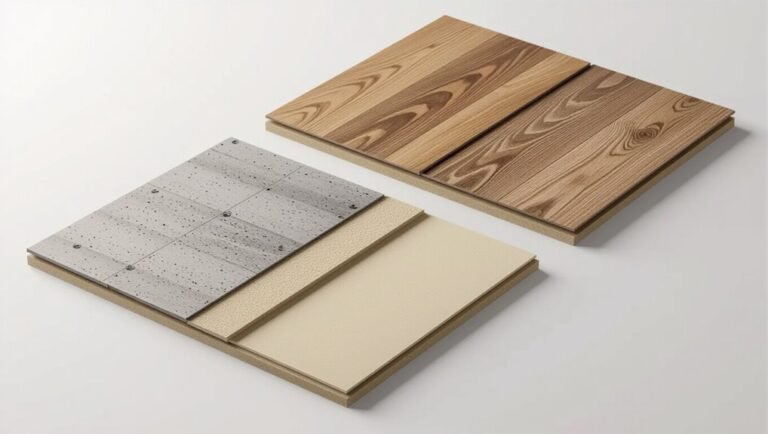
Engineered Hardwood vs Laminate Flooring: Are They Really the Same?
They’re not the same. You’ll see similar looks, but engineered hardwood uses a real wood veneer over plywood while laminate stacks a photographic image over HDF. You’ll get refinishing and higher resale potential with engineered hardwood, while laminate gives tougher scratch resistance, lower cost, and easier DIY installs. Moisture tolerance, sound, and lifespan also differ, so pick by room and budget — keep going to get the specific pros, cons, and practical tips.
Quick Answer Are Engineered Hardwood and Laminate Flooring the Same?
They’re not the same: engineered hardwood has a real wood veneer over plywood, while laminate uses a photographic wood image over fiberboard.
You’ll notice differences in feel, refinishing options, and durability. Use those contrasts to pick what fits your budget and lifestyle.
Direct comparison summary
While both mimic wood, engineered hardwood and laminate aren’t the same: engineered hardwood has a real wood top layer over plywood, giving authentic grain and the option to refinish, whereas laminate uses a printed image sealed under a protective wear layer and can’t be sanded down. You’ll ask: is engineered hardwood flooring the same as laminate? See quick traits:
| Feature | Difference |
|---|---|
| Material | Real wood vs printed image |
| Durability | Refinishable vs wear-layer limited |
| Cost | Higher vs lower |
| Appearance | Natural grain vs replicated |
What Each Product Actually Is
You’ll want to know that engineered hardwood is real wood on a top veneer bonded to stacked plywood for stability, while laminate flooring is a photographic wood-look layer fused to high-density fiberboard and sealed with a protective wear layer.
They look similar at a glance but differ in materials, construction, and how they respond to moisture and refinishing.
Understanding those core differences helps you pick the right product for your space.
What is Engineered Hardwood?
Engineered hardwood is a multi-layered flooring product that pairs a real hardwood veneer on top with plywood or high-density fiberboard layers beneath, giving you the look of solid wood with added dimensional stability.
You get authentic wood grain, can refinish thin veneers a limited number of times, and enjoy better resistance to humidity and subfloor movement than solid planks, making it versatile for many rooms.
What is Laminate Flooring?
If engineered hardwood gives you a real wood surface over a stable core, laminate takes a different approach: it’s a manufactured plank made from high-density fiberboard topped with a photographic image of wood (or stone) sealed under a clear wear layer.
You’ll get consistent visuals, strong surface protection, and easy installation. It resists scratches and moisture better than raw wood but isn’t solid timber.
Key material and construction differences
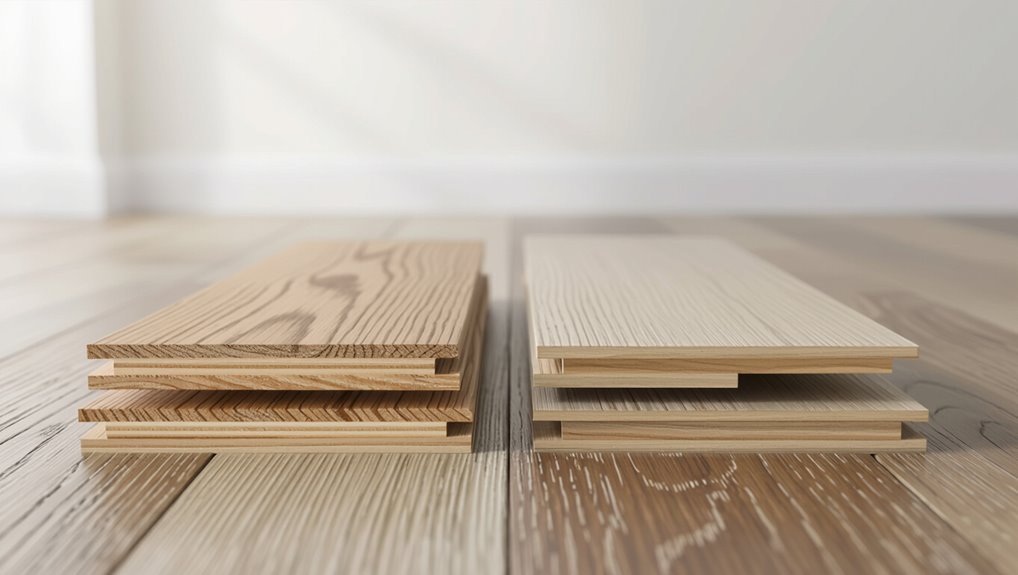
Think of these floors as layered systems: engineered hardwood uses a real wood veneer glued over stacked ply or HDF core layers, while laminate is built from a high-density fiberboard core topped with a photographic layer and a durable clear wear coating.
You’ll notice engineered offers authentic wood texture and refinish options; laminate emphasizes wear resistance, pattern consistency, and typically lower cost and moisture tolerance.
Side-by-Side Comparison: Performance and Characteristics
Now you’ll compare engineered hardwood and laminate across key performance areas like appearance, durability, moisture resistance, and how they handle scratches, dents, and impacts.
You’ll also look at acoustic differences and how each option transmits sound in your space.
This side-by-side will help you weigh real-world pros and cons for your project.
Appearance and Aesthetics
Appearance shapes how a room feels, and you’ll notice key differences between engineered hardwood and laminate at a glance. You’ll see real grain, texture, and depth with engineered planks; laminate mimics wood with printed patterns and smoother surfaces. Choose based on budget and authenticity preferences.
| Engineered Hardwood | Laminate |
|---|---|
| Real wood veneer | Printed design |
| Natural texture | Uniform finish |
| Color variation | Consistent tones |
| Higher authenticity | More affordable |
Durability and Wear Resistance
While both engineered hardwood and laminate can handle everyday traffic, they perform differently under heavy use and moisture; engineered hardwood resists dents and can be refinished, while laminate offers superior scratch and stain resistance thanks to its tough wear layer.
| Feature | Which to Choose |
|---|---|
| Dents | Engineered hardwood |
| Scratches | Laminate |
| Refinishing | Engineered hardwood |
| Surface wear | Laminate |
Water and Moisture Resistance
Because moisture is one of the biggest factors that determines where you can install flooring, it’s important to compare how engineered hardwood and laminate perform when exposed to water and humidity.
Engineered hardwood tolerates brief spills and higher humidity better than solid wood but can warp with prolonged exposure.
Laminate resists surface moisture well, though seams and core swelling can occur if water penetrates.
Scratch, Dent, and Impact Resistance
When you compare scratch, dent, and impact resistance, engineered hardwood and laminate show different strengths: engineered hardwood has a real wood surface that can dent and scratch more easily under heavy use, while laminate’s tough wear layer resists surface scratches and impacts but can’t be refinished once damaged.
You’ll choose based on traffic, furniture, repair options, and long-term appearance.
Acoustic Properties and Sound Transmission
Sound plays differently on engineered hardwood and laminate, and that matters if you care about footsteps, echoes, or noise between rooms.
You’ll notice engineered hardwood often transmits warmer, less hollow sounds due to real wood layers, while laminate can sound brighter or slightly hollow.
Underlayment choice, plank thickness, and installation method change transmission, so pick flooring and underlayment to meet your noise-control needs.
Thermal Performance and Feel Underfoot
If you care about how floors feel and how they hold heat, engineered hardwood and laminate offer noticeably different experiences:
Engineered hardwood tends to feel warmer and more solid underfoot thanks to its wood layers and greater thermal mass, while laminate often feels cooler and slightly firmer because of its composite core and thin wear layer.
You’ll notice hardwood retains warmth longer; laminate works better with radiant heat.
Installation, Maintenance, and Lifecycle
You’ll want to compare how each floor is installed—floating click systems, glue-down or nail-down methods vary in complexity and cost.
Consider repairability and refinishing: engineered boards can often be sanded a few times while laminate needs panel replacement for damage.
Finally, weigh expected lifespan and warranties alongside routine cleaning and long-term maintenance to see which fits your lifestyle and budget.
Installation Methods and Complexity
Because installation methods affect time, cost, and long-term performance, choosing between engineered hardwood and laminate comes down largely to how each installs and what that process demands of you.
You’ll assess subfloor prep, moisture barriers, adhesive versus click-lock, and skill level required; some jobs you can DIY, others need pros.
- subfloor prep needs
- moisture mitigation
- adhesive vs floating
- tool and skill demands
- installation time/cost
Repairability and Refinishing Options
Installation choices affect more than just upfront time and cost; they shape how you can repair and refresh the floor over its life.
You can sand and refinish engineered hardwood a few times depending on veneer thickness, repairing scratches and stains.
Laminate resists wear but you’ll replace damaged planks rather than refinish them.
Both allow spot repairs, but methods and outcomes differ.
Expected Lifespan and Warranty Differences
When you’re weighing engineered hardwood against laminate, expected lifespan and warranty terms tell you how long the floor should perform and who’s on the hook if it doesn’t. You’ll find engineered often lasts longer and has longer structural warranties; laminate offers decent wear guarantees but limited refinishing coverage.
| Feature | Typical Range |
|---|---|
| Engineered lifespan | 20–50 years |
| Laminate lifespan | 10–25 years |
| Warranty focus | Structural vs wear |
Routine Cleaning and Long-term Maintenance
If you want your floor to look and perform its best for years, follow cleaning routines tailored to each type: engineered hardwood benefits from gentle sweeping, damp mopping with hardwood-safe products, and periodic refinishing of the top veneer when needed;
laminate tolerates more vigorous cleaning with water-safe cleaners but can’t be sanded, so you’ll need to address wear with replacement planks or protective measures like mats and felt pads.
Vacuum edges, wipe spills promptly, avoid steam cleaners, rotate rugs, and check joints for gaps to prevent moisture damage and extend lifespan.
Cost, Value, and Resale Impact
You’ll want to weigh upfront material and installation costs against how long the floor will hold up.
Consider long-term value and return on investment—some options cost more now but boost resale appeal later.
Think about how each choice shapes buyer perception and your home’s marketability.
Upfront Material and Installation Costs
Comparing upfront material and installation costs for engineered hardwood versus laminate will help you decide which delivers the best value for your budget and long-term resale goals. You’ll find laminate materials and DIY-friendly installation cost less; engineered hardwood costs more but may justify higher resale. Consider labor, underlayment, and finish choices when estimating total project price.
| Item | Typical Cost |
|---|---|
| Laminate material | $1–$4/sq ft |
| Laminate install | $1–$3/sq ft |
| Engineered material | $3–$10/sq ft |
| Engineered install | $3–$8/sq ft |
Long-term Value and Return on Investment
Because resale value and long-term costs matter more than initial price alone, weigh how each floor will perform over time and what buyers expect in your market.
Engineered hardwood usually holds value longer, can be refinished, and appeals to buyers; it’ll cost more upfront but may yield higher ROI.
Laminate is cheaper, low-maintenance, and replaceable, offering lower risk but typically lower long-term return.
How each affects home resale and buyer perception
After weighing long-term value and ROI, consider how each option shapes buyer perception and resale prospects—what buyers see often guides what they’ll pay.
You’ll find engineered hardwood often commands higher offers because buyers perceive authenticity and longevity.
Laminate can deter picky buyers despite durability and savings, though high-quality laminate in secondary rooms won’t hurt resale.
Choose based on target market expectations.
Use Cases and Best Applications
Think about where moisture, traffic, and resale value matter most in your home so you can pick engineered hardwood for living areas and basements with controlled humidity, or laminate for high-traffic, wet-prone spots like mudrooms and kids’ playrooms.
You’ll want to choose engineered hardwood when you prioritize authentic wood and long-term value, and laminate when budget and durability are top priorities.
Many homeowners use a hybrid approach—mixing both materials by zone—to balance cost, performance, and style.
Rooms and Environments Suited to Engineered Hardwood
While engineered hardwood looks and feels like solid wood, it’s built to handle conditions where solid planks struggle.
So it’s a smart choice for many rooms—from busy living areas and bedrooms to basements and kitchens—where you want real-wood aesthetics plus better moisture and temperature tolerance.
You can install it in entryways, dining rooms, and finished lower levels; avoid constantly wet areas like showers.
Rooms and Environments Suited to Laminate
Laminate works best in high-traffic, moisture-prone, and budget-conscious spaces where you want the look of wood or tile without the maintenance—think kitchens, mudrooms, hallways, and family rooms.
You can install it in basements with proper underlayment, rental units, playrooms, and commercial entryways.
It resists scratches, cleans easily, and offers quick replacement options when damage occurs.
When to Choose One Over the Other
Now that you know where laminate shines, it’s easier to pick when engineered hardwood makes more sense: choose engineered for rooms where appearance, resale value, and the option to refinish matter—living rooms, dining areas, master bedrooms, and open-concept spaces where the floor will be a focal point.
Pick laminate for budget, moisture-prone zones, or high-traffic utility areas.
- Living room focal floors
- Moisture-prone basements
- Budget-conscious renovations
- High-traffic entryways
- Bedrooms needing refinishing option
Hybrid Approaches (mixing both in a home)
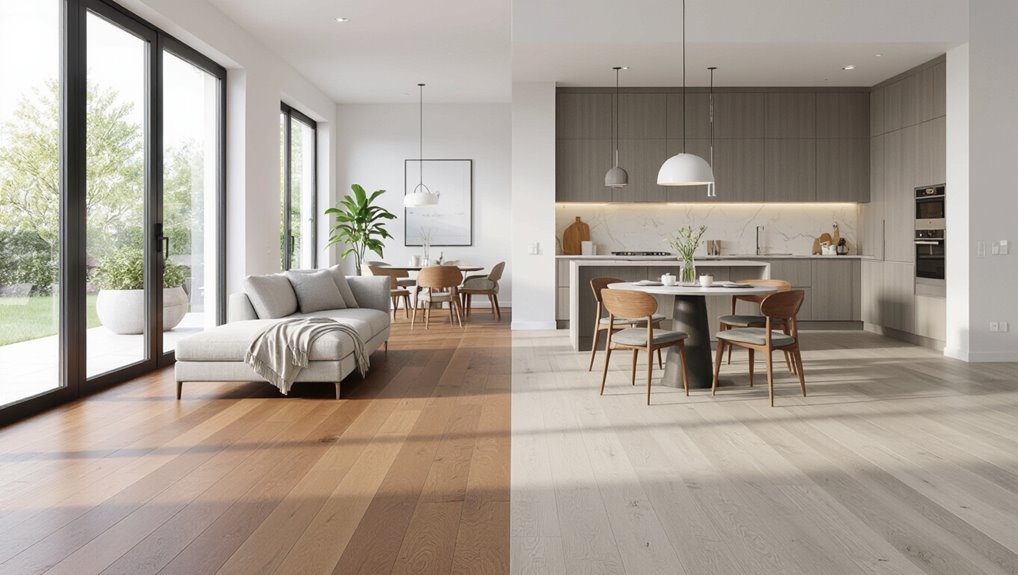
If you want the look and value of real wood where it counts but need durability and budget savings elsewhere, mixing engineered hardwood and laminate lets you tailor floors room-by-room.
Use engineered in living areas and bedrooms for resale appeal and repairability; install laminate in kitchens, mudrooms, and basements for moisture resistance and easy maintenance.
Shift thoughtfully to match heights and styles.
Common Mistakes and Pitfalls to Avoid
Don’t mix up engineered hardwood and laminate or accept mislabeled products, because the wrong choice can cost you performance and resale value.
Pay close attention during installation—poor subfloor prep, incorrect acclimation, or wrong fasteners will shorten the life of either floor.
And follow maintenance guidelines exactly, since improper cleaning or neglect can void warranties and create costly repairs.
Misidentifying materials and mislabeling products
Because visual similarities can be deceiving, you might mistake engineered hardwood for laminate (or vice versa) and end up with the wrong product for your needs.
Check labeling, ask sellers for core, wear layer, and backing details, and request samples.
Verify certifications and return policies.
Don’t assume appearance equals performance—confirm material specs to avoid costly replacements or mismatched warranties.
Installation mistakes that reduce performance
When installers skip proper acclimation, ignore subfloor prep, or rush changes, you’ll see gaps, buckling, and premature wear that no warranty will fully cover.
You should insist on moisture testing, flat, clean substrates, correct underlayment, and manufacturer-recommended fasteners or adhesives.
Avoid improper connections, tight perimeter fits, or uneven nail patterns—those errors compromise stability, sound control, and long-term appearance.
Maintenance errors that void warranties
1 common maintenance mistake that voids warranties is using the wrong cleaning products or techniques — and manufacturers will often deny coverage if you’ve used harsh chemicals, abrasive tools, or steam cleaners that strip finishes or swell cores.
Don’t neglect recommended cleaners, protective mats, or humidity control.
Avoid DIY refinishes, improper repairs, or excessive moisture; document care to support any future claims.
Tips and Best Practices for Choosing Between Them
Start by comparing samples and finishes in the room where they’ll be installed so you can judge color, texture, and under different lighting.
Ask manufacturers and installers about warranties, moisture resistance, installation methods, and maintenance requirements.
Use a simple budgeting checklist and decision framework to weigh upfront cost, lifespan, and resale value before you commit.
How to evaluate samples and finishes
Curious how a small sample can settle a big decision? You’ll want to view samples in your room light, test texture underfoot, and compare edge profiles.
Bring samples home, stack them against trim, and inspect wear layers.
- Check color in morning and evening light
- Feel surface texture barefoot
- Compare plank edges and bevels
- Test sample against trim
- Inspect finish sheen and durability
Questions to ask manufacturers and installers
Once you’ve compared samples in your space and felt the finishes underfoot, you’ll want to ask targeted questions that clarify performance, installation, and long-term care.
Ask about warranties, moisture tolerance, recommended underlayment, required installation methods, and maintenance routines. Consider manufacturer certifications and installer references.
- Warranty details and exclusions
- Moisture and acclimation limits
- Underlayment and subfloor requirements
- Installation method and timeline
- Cleaning and refinishing guidance
Budgeting checklist and decision framework
While your budget will often decide the obvious choice, weigh short- and long-term costs—material price, installation, maintenance, and resale value—so you can compare engineered hardwood and laminate on total ownership, not just sticker price.
Use this checklist to decide confidently and avoid surprises.
- Initial material cost
- Installation and subfloor prep
- Maintenance and refinishing needs
- Warranty and lifespan
- Expected resale impact
Case Studies and Real-World Examples
You’ll see how different choices play out in three real situations: a high-traffic family home, a condo with moisture concerns, and a luxury renovation aimed at resale.
Compare durability, maintenance, and cost outcomes to match the flooring to your needs.
Use these examples to guide the specific trade-offs you’re weighing.
Example 1 High-traffic family home
Although kids, pets, and constant foot traffic put serious demands on a home’s flooring, this case shows how choosing the right material makes a big difference:
You picked durable laminate in play areas and engineered hardwood in living spaces.
Laminate handled spills and scuffs with minimal maintenance; engineered hardwood offered warmth and easier refinishing.
Together they balanced longevity, aesthetics, and budget for your busy family.
Example 2 Condo with moisture concerns
Because condos often sit over parking garages or ground-level units, moisture can be a constant worry.
So you chose materials that resist humidity without sacrificing style. You compared engineered hardwood with waterproof cores and laminate with high-density, moisture-resistant layers.
You favored an engineered option with a tight tongue-and-groove and proper underlayment to minimize swelling while keeping authentic wood look and long-term durability.
Example 3 Luxury renovation for resale
For a luxury renovation aimed at maximizing resale value, pick flooring that signals premium quality and broad appeal.
You’ll favor engineered hardwood for authentic grain, real finish options, and stronger resale perception. Choose wide planks, neutral tones, and high-quality installation.
Laminate can mimic luxury affordably, but buyers often prefer genuine wood’s longevity and repairability when evaluating top-tier properties.
FAQs
You probably have practical questions like whether engineered hardwood can be refinished as often as solid hardwood and if laminate is truly waterproof.
You’ll also want to know which works best with underfloor heating, how warranties compare, and whether either can be installed over existing flooring.
Let’s answer these clearly so you can pick the right option for your home.
Can engineered hardwood be refinished as many times as solid hardwood?
How many times an engineered hardwood floor can be refinished depends mainly on the thickness of its wear layer and how it was made.
If it has a thick (3–6mm) real-wood top, you can sand and refinish it several times, approaching solid hardwood limits.
Thin veneers (0.6–2mm) allow only one or two light sandings.
Check manufacturer specs before refinishing.
Is laminate flooring waterproof?
Having covered refinishing limits for engineered hardwood, let’s look at laminate—many people ask whether laminate is waterproof.
Most standard laminate resists spills briefly but isn’t fully waterproof; seams and core can swell with prolonged exposure.
Waterproof laminate varieties exist with sealed joints and water-resistant cores, so check product specs and installation quality to guarantee protection in moisture-prone areas.
Which option is better for underfloor heating?
Curious which floor handles underfloor heating best?
You’ll often find engineered hardwood works well because its layered construction resists warping and transfers heat evenly, but choose stable species and follow manufacturer limits.
Laminate also performs reliably, heats quickly, and’s usually cheaper.
Check compatibility, maximum surface temperatures, and installation methods—both can work if you match product specs to your heating system.
How do warranties differ between engineered hardwood and laminate?
If you’ve checked compatibility and temperature limits for underfloor heating, the next thing to compare is warranty coverage—because what’s covered and for how long can affect long-term value and peace of mind.
Engineered hardwood often carries longer structural and finish warranties but may exclude moisture or improper installation.
Laminate warranties focus on wear and fading, usually shorter; both require following manufacturer care and installation rules to remain valid.
Can I install either product over existing flooring?
Wondering whether you can lay engineered hardwood or laminate over your current floor?
You can often install both over sound, level surfaces like existing hardwood, vinyl, or tile, but subfloor condition matters. Engineered tolerates minor imperfections better; laminate needs a flat underlayment.
Always check manufacturer guidelines, moisture barriers, and connections. Removing damaged or uneven flooring is usually safer and guarantees warranty compliance.