
How to Clean a Floor Rug Deeply Without Shrinking or Fading It
You can deep-clean your rug without shrinking or fading it by matching cleaner and water temperature to the fiber, vacuuming both sides, spot-testing a mild, pH‑neutral detergent, and pre-treating stains gently. Use cool water for wool and silk, warm for synthetics, scrub lightly with a soft brush, rinse thoroughly without soaking, then dry flat in shade with good airflow. Rotate and use a rug pad to prevent wear — keep going to learn detailed steps and tips.
How to Deep-Clean a Floor Rug Without Shrinking or Fading (Quick Answer)
Start by vacuuming, testing a hidden spot, and using a gentle, water-based cleaner or professional shampoo to deep-clean without shrinking or fading.
If a spill happens, blot immediately with a clean cloth and avoid rubbing or soaking the fibers.
For stubborn stains, treat spotwise with a mild detergent solution and rinse lightly, then air-dry flat away from direct heat or sunlight.
One-sentence summary of safe deep-cleaning steps
If you want to deep-clean a floor rug without shrinking or fading, vacuum thoroughly, pre-treat stains with a gentle detergent or enzyme cleaner, test a hidden spot for colorfastness, use cool water and a soft brush or low‑speed machine to clean, rinse well, blot excess water, and dry flat away from direct sun or heat.
When you follow these steps for how to clean a floor rug, you’ll protect fibers and color.
Best immediate actions for spills and stains
When a spill happens, act fast: blot excess liquid with a clean, white cloth (don’t rub), work from the edges toward the center to prevent spreading, and sprinkle baking soda or cornstarch on greasy spots to lift oil while you prepare a gentle cleaner.
Then test cleaner on a hidden corner, apply sparingly, blot with clean cloths, rinse lightly, and air-dry flat away from direct heat.
Understanding Rug Fibers and Why Shrinkage or Fading Happens
You’ll want to know what your rug is made of—wool, cotton, synthetics, silk, or jute—because each fiber reacts differently to water, heat, and cleaning agents.
Fiber type determines safe temperatures and methods, and incorrect washing, agitation, or drying can cause shrinkage.
Fading happens when dyes break down from sunlight, harsh chemicals, or alkaline cleaners, so choose products and exposure carefully.
Common rug materials (wool, cotton, synthetic, silk, jute)
Because different fibers react to water, heat, sunlight, and cleaning chemicals in distinct ways, knowing whether your rug is wool, cotton, synthetic, silk, or jute helps you avoid shrinkage, color loss, and surface damage. You’ll identify fiber traits and risks quickly.
| Fiber | Typical traits | Common risk |
|---|---|---|
| Wool | Soft, absorbent | Felting/shrinkage |
| Cotton | Durable, breathable | Color bleeding |
| Synthetic | Stain-resistant | Melting/fading |
| Silk | Delicate sheen | Color loss |
| Jute | Coarse, natural | Water damage |
How fiber type affects cleaning methods and temperature sensitivity
Knowing your rug’s fiber tells you how to clean it and what temperatures to avoid: wool and silk tolerate low, controlled moisture but will felt or lose sheen with hot water and aggressive agitation;
cotton stands up to warmer water but can bleed dyes if heated;
synthetics handle higher temperatures and scrubbing but can warp or melt under excessive heat;
and jute swells, weakens, or warps with water and heat.
You should test cleaners, use compatible detergents, and choose temperature and agitation to match fiber resilience.
Causes of shrinkage (water, heat, agitation, improper drying)
When you expose a rug to excess water, heat, aggressive scrubbing, or slow, uneven drying, its fibers can contract, distort, or lose structural integrity—leading to visible shrinkage.
You’ll also cause felting in wool, stretched or tightened synthetic weaves, and permanent pile changes.
Control water amount, use cool temperatures, gentle agitation, and dry flat with airflow to prevent fiber collapse and size loss.
Causes of fading (dyes, sunlight, harsh chemicals, alkalinity)
Although rugs start bright, their colors can fade quickly if dyes, sunlight, or harsh cleaners attack the fibers, and you’ll notice it most where exposure is uneven.
You should test dyes for colorfastness, avoid prolonged UV exposure, and skip bleach or high-alkaline detergents.
Harsh scrubbing pulls dye from weak fibers, so use gentle cleaners and shade or rotate rugs to protect pigments.
Assessing Your Rug Before Deep Cleaning
Before you start a deep clean, check the rug’s labels and manufacturer instructions for cleaning codes and warnings.
Test a hidden corner for colorfastness and watch for any shrinkage or dye transfer.
Also inspect the fringe, backing, lining, and old stains so you can address structural issues or problem areas first.
Inspecting labels, manufacturer instructions, and cleaning codes
Anyone can skip the tag, but don’t—inspect the rug’s label and any manufacturer instructions first so you know what cleaning methods and products are safe.
Check fiber content, washing symbols (W, S, WS, X), recommended temperatures, and drying guidance.
Note warranty limitations and professional-clean-only notes. Photograph the tag for reference, and follow codes to avoid damage, shrinking, or voiding guarantees.
Spot-testing colorfastness and shrink risk
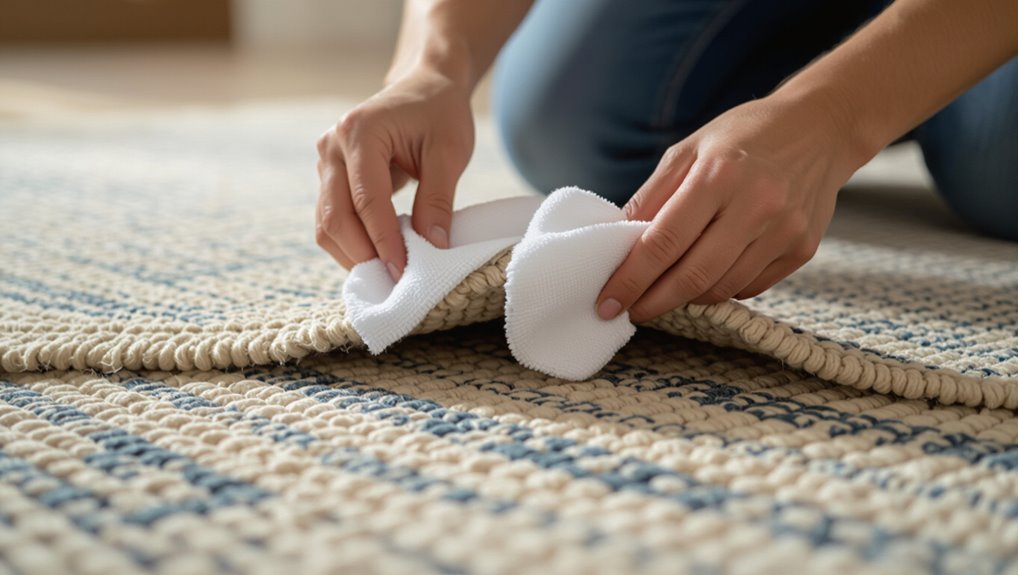
Once you’ve checked the label and manufacturer notes, test a hidden corner to make sure colors won’t run and fibers won’t shrink when wet.
Dampen a white cloth with your cleaning solution, blot a small area, let it dry, then inspect for color transfer and size change.
Repeat with plain water. If dye bleeds or fabric distorts, stop and seek professional care.
Identifying structural issues: fringe, backing, lining, old stains
Someone should take a close look at your rug’s structure—check the fringe for unraveling, feel the backing and lining for weak spots or delamination, and note any old stains that might be set or chemical-treated.
If fringes pull, secure or trim them; avoid aggressive washing.
Test backing adhesion; separated layers need professional repair.
For set stains, consider targeted solvent cleaning or expert restoration.
Tools and Cleaning Agents Safe for Preventing Shrinkage and Fading
Before you start cleaning, you’ll want the right tools and gentle agents to protect fibers from shrinkage and fading.
Use soft brushes, adjustable vacuums, microfiber cloths, and low-heat options like steamers or wet-dry vacs for controlled cleaning.
Stick to pH-neutral or fiber-specific cleaners (wool-safe shampoos, enzyme solutions) and avoid bleach, strong alkalis, hot water, harsh scrubbing, and abrasive tools.
- Soft-bristled brush, vacuum with suction control, microfiber cloths, wet-dry vacuum/steamer
- pH-neutral detergents, enzyme cleaners, wool-safe shampoos by fiber type
- Avoid bleach, high-alkaline cleaners, and hot water
- Don’t use harsh scrubbing or abrasive tools
Recommended tools (soft-bristled brush, vacuum with suction control, microfiber cloths, wet-dry vacuum, steamer)
Pick a few reliable tools and you’ll protect your rug from shrinkage and fading while cleaning: a soft-bristled brush for gentle agitation, a vacuum with suction control to avoid pulling fibers, microfiber cloths for blotting and drying, and optional wet-dry vacuums or steamers used cautiously on appropriate materials.
Use the brush with light strokes, set vacuum low, blot spills, and test steam or extraction on an inconspicuous spot.
Safe cleaning agents by fiber type (pH-neutral detergents, enzyme cleaners, wool-safe shampoos)
When you choose cleaning agents by fiber type, aim for products that clean effectively without altering color or causing shrinkage.
Use pH-neutral detergents for most synthetics and blends, enzyme cleaners for organic stains on cotton and wool blends, and wool-safe shampoos or cleaners labeled “wool” for pure wool.
Always spot-test, follow dilution instructions, and rinse thoroughly to prevent residue and fiber damage.
What to avoid (bleach, high-alkaline cleaners, hot water, harsh scrubbing, abrasive tools)
Choosing the right cleaner is only half the job; you also need to know what to avoid so your rug won’t fade, shrink, or suffer fiber damage.
Don’t use bleach, alkaline detergents, or enzyme mixes not labeled for your fiber. Avoid hot water, aggressive scrubbing, and metal or stiff-bristle tools.
Instead, test cleaners, blot gently, and air-dry flat to preserve color and shape.
Step-by-Step Deep Cleaning Process (Gentle, Shrink- and Fade-Protective)
Before you start, you’ll prep the rug by vacuuming, shaking out debris, and checking for stains that need spot treatment.
You’ll then pick the right water temperature and cleaning dilution for your rug fiber and follow a cleaning method suited to its type.
Finish by rinsing thoroughly without over-wetting to protect against shrinkage and fading.
Step 1 Preparation: vacuuming, shaking, and debris removal
Start by removing loose dirt and grit so they don’t abrade fibres during deeper cleaning.
You’ll vacuum both sides, shake outside if possible, and inspect for trapped debris. Work toward edges and fringes gently to avoid damage.
- Vacuum at low suction with a brush attachment
- Shake or beat outdoors
- Brush out fringes by hand
- Sweep up loosened particles
Step 2 Pre-treating stains with appropriate spot cleaners
1. You’ll treat stains before washing: blot fresh spills with a clean cloth, don’t rub.
Test a mild, pH-neutral spot cleaner in an unseen corner. Apply sparingly, work outward from the stain, and lift with gentle blotting.
For oil, use a small amount of dish soap; for protein stains, use an enzymatic cleaner. Rinse treated areas lightly and blot dry.
Step 3 Choosing the right water temperature and dilution ratios
Because fibers respond differently to heat and chemistry, you’ll choose water temperature and cleaner dilution based on your rug’s material and colorfastness.
Test a hidden corner: warm water for synthetics, cool for wools and silks.
Use mild detergent at manufacturer-recommended dilutions or 1 tsp per quart for general cleaning.
Rinse thoroughly and blot; avoid soaking to prevent shrinkage and dye bleed.
Step 4 Cleaning methods by rug type
Now you’ll match cleaning steps to the rug fiber so you don’t cause shrinkage, color loss, or other damage.
For wool and natural fibers use low-moisture or dry-clean methods with a wool-safe soap; synthetics tolerate cool water and gentle agitation with a thorough rinse.
For silk and other delicates, seek professional help and use minimal moisture, and for jute or seagrass stick to spot cleaning without saturating the fibers.
Wool and natural fiber technique (dry-clean preferable, low-moisture, wool-safe soap)
When caring for wool and other natural-fiber rugs, choose low-moisture or dry-clean methods to prevent shrinking, felting, or color loss; these fibers tolerate gentle, wool-safe soaps but don’t stand prolonged wetting.
Vacuum first, spot-test a wool-safe cleaner, then gently agitate with minimal water. Blot, not rub. Rinse sparingly, extract moisture, dry flat away from direct sun, and fluff fibers once dry.
Synthetic fiber technique (cool water, gentle agitation, rinse thoroughly)
Treat synthetic rugs gently but confidently: they tolerate more water and agitation than wool, so you can clean them with cool water, a mild detergent, and careful scrubbing.
Test a hidden corner first. Use a soft brush or sponge, work in small sections, then rinse thoroughly until suds are gone.
Squeeze excess water, blot with towels, and air-dry flat away from direct sun.
Delicate/silk technique (professional cleaning recommended, minimal moisture)
If your rug is silk or otherwise very delicate, handle it with far less water and a much lighter touch than you did with synthetics.
Silk fibers can shrink, lose sheen, or bleed with heavy moisture or vigorous scrubbing.
Test a hidden corner with diluted wool/silk detergent, dab gently with a barely damp cloth, blot dry, and air flat.
Prefer professional cleaning for major stains.
Jute/sea-grass technique (avoid saturation, spot clean only)
Jute and seagrass rugs demand a light touch—you’ll avoid saturation and stick to spot cleaning to prevent warping, shrinkage, or mildew.
Blot spills immediately with a dry cloth, then use a damp (not wet) cloth with mild soap for stubborn spots.
Test a hidden area first, work toward the center, and dry thoroughly with air and fans to prevent odor or mold.
Step 5 Rinsing thoroughly without over-wetting
Start rinsing with clean, cool water and a gentle, even flow to remove soap without soaking the rug; you want to lift suds and residue while keeping moisture shallow enough to prevent backing saturation, shrinkage, or color bleed.
Work in sections, blotting with a microfiber towel and using a wet-dry vacuum or sponge to extract water until suds are gone and fibers feel only slightly damp.
Step 6 Safe drying methods to prevent shrinkage and fading (flat drying, shade, airflow)
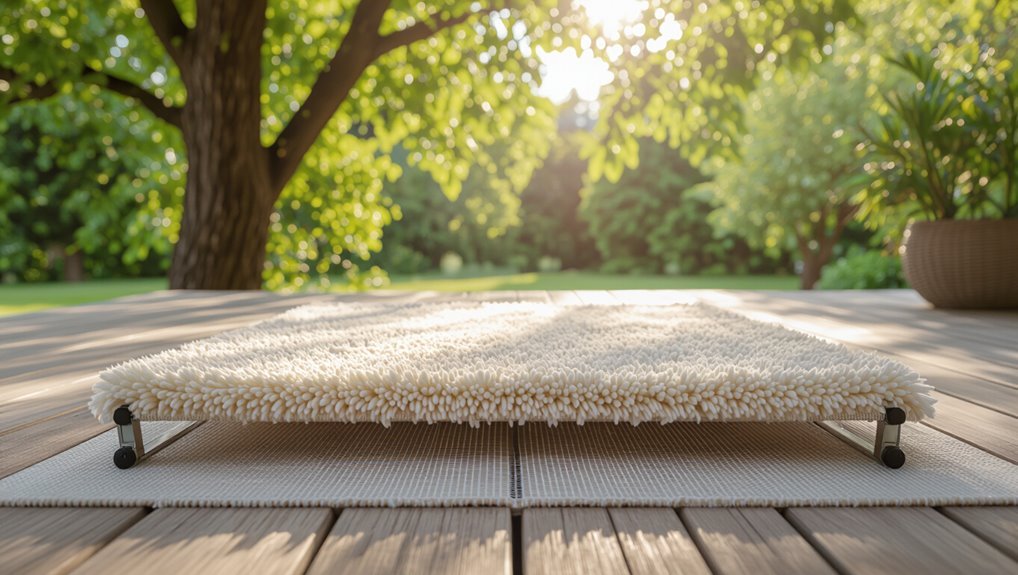
Once you’ve removed the suds and most moisture, dry the rug flat in a shaded, well-ventilated area to prevent shrinkage and color fading.
Turn it periodically for even drying. Avoid direct sunlight, high heat, or hanging by edges.
Use fans for steady airflow and elevate corners on blocks to let air circulate underneath until the rug is bone-dry before returning it indoors.
Step 7 Final grooming: brushing pile, restoring nap, reinstalling rug pad
Gently brush the pile with a soft-bristled brush to lift fibers and restore the nap, working along the grain in short, even strokes.
After brushing, let the rug sit flat until completely dry, then replace the rug pad and reposition the rug, smoothing edges and checking alignment so it lays evenly and securely.
Fluff fibers with a final pass, trim stray threads, and vacuum lightly.
Alternative Cleaning Options and When to Use Them
You can choose low‑moisture options like encapsulation, dry foam, or bonnet when you need quick drying and minimal water, but each has tradeoffs in soil removal and residue.
Know when to call a pro—stains that don’t lift, delicate fibers, large or valuable rugs, or persistent odors are good reasons to hire one.
If you consider steam cleaning, be aware of shrinkage, dye bleeding, and backing damage, and follow safe practices or leave it to a trained cleaner for risky fibers.
Low-moisture cleaning (encapsulation, dry foam, bonnet) pros and cons
Although low‑moisture methods like encapsulation, dry foam, and bonnet cleaning don’t soak rugs, they still lift surface soils quickly and let you get back to foot traffic fast.
You’ll enjoy fast drying, lower shrink/fade risk, and good maintenance cleaning.
Downsides: they won’t remove deep-embedded dirt, can leave residues, and may require repeated passes or follow-up extraction for truly deep cleaning.
Professional cleaning vs DIY indicators you should hire a pro
When should you call a pro instead of tackling a rug yourself?
If the rug is antique, valuable, heavily soiled, stained with pet urine or dye, has persistent odors, or shows fiber damage, hire a professional.
Also call a pro if the rug’s label warns against DIY methods, your cleaning attempts haven’t worked, or you lack equipment—professionals prevent shrinking, color loss, and structural harm.
Steam cleaning: risks, safe practices, and exceptions
If a professional visit isn’t practical or the rug’s label allows wet cleaning, steam cleaning can refresh fibers and remove deep grime—but it carries risks you should know.
You should test a hidden corner for colorfastness, use low heat and minimal moisture, avoid prolonged saturation, and dry thoroughly.
Skip steam for fragile, antique, hand‑knotted, or natural‑dye rugs; call a pro instead.
Common Mistakes That Cause Shrinking or Fading
When you clean a rug the wrong way you can quickly cause shrinking or color loss, so it’s important to avoid common pitfalls.
Pay attention to water temperature, how much moisture you leave in the fibers, which chemicals you use, and how you dry and agitate the rug. Follow the simple precautions below to protect shape and color.
- Using hot water or high heat
- Over-wetting and improper rinsing
- Using bleach or high-alkaline cleaners
- Drying in direct sunlight or on high heat
Using hot water or high heat
Because high temperatures break down fibers and dyes, using hot water or high heat is one of the quickest ways to shrink or fade a rug.
Don’t blast carpets with hot steam cleaners, dryers, or boiling water.
Test a hidden spot first, use lukewarm or cold water, and dry flat away from direct heat or sunlight to preserve shape and color.
Over-wetting and improper rinsing
Although it seems logical to soak a badly stained rug, over-wetting and poor rinsing can lock in detergent and water, which weakens fibers, attracts dirt, and causes dyes to bleed or fade.
You should blot excess moisture, use minimal water, rinse thoroughly with clear water until suds vanish, and speed drying with fans or air to prevent prolonged dampness and color migration.
Using bleach or high-alkaline cleaners
If you reach for bleach or strong alkaline cleaners thinking they’ll erase tough stains, you’ll often do more harm than good to your rug’s fibers and dyes.
These chemicals can break down natural and synthetic fibers, strip color, and weaken backing, increasing shrinkage risk.
Instead, test gentler pH-neutral cleaners on a hidden spot and follow manufacturer recommendations to protect texture and color.
Drying in direct sunlight or on high heat
After cleaning, don’t rush to dry your rug in direct sunlight or on high heat—those conditions can bleach fibers and warp backing, leading to permanent fading and shrinkage.
Instead, air-dry in shade or a well-ventilated room, lay flat or hang evenly, and flip occasionally.
Use low-heat settings only if manufacturer permits, and test a hidden edge first to avoid surprises.
Aggressive scrubbing or mechanical machines not suited to the rug
Scrub gently—vigorous brushing, stiff-bristled scrubbers, or heavy-duty carpet cleaners can strip dyes, fray fibers, and pull the rug out of shape.
You should test a small area first, choose soft brushes or hand-cleaning, and use machines only when manufacturers recommend them.
Move tools with the pile, avoid over-wetting, and stop if colors bleed or fibers fuzz to prevent permanent damage.
Prevention and Best Practices to Keep Rugs Colorful and Sized Correctly
To keep your rug vibrant and sized right, stick to a regular maintenance schedule—vacuum, rotate, and treat spots promptly.
Use protective measures like rug pads, UV window film, and periodic rotation to prevent uneven wear and fading.
When storing, roll it loosely in a breathable cover, avoid damp areas and sunlight, and follow a seasonal care checklist to prevent shrinkage and color transfer.
Regular maintenance schedule (vacuuming, rotating, spot care)
A simple, consistent maintenance routine keeps your rug looking vibrant and sized correctly.
Vacuum high-traffic areas twice weekly and the whole rug once a week with a gentle setting.
Rotate the rug monthly to even wear.
Treat spills immediately: blot, apply a mild cleaner suitable for the fiber, then blot again.
Schedule a deep clean every 12–18 months to preserve color and shape.
Protective measures (rug pads, UV-protective window film, rotating for even wear)
Because prevention is easier than repair, start with a few simple protective measures that keep colors bright and edges true: use a quality rug pad to reduce friction and stretching, apply UV-protective window film to cut fading, and rotate your rug every three to six months for even wear.
These steps preserve fibers, prevent edge curling, and maintain original size and color.
Proper storage tips to avoid shrinkage and color transfer
Keep one rule in mind when storing rugs: control moisture and light to prevent shrinkage and color transfer.
Roll rugs with pile inward, wrap in breathable cotton or muslin, and avoid plastic that traps humidity.
Store flat or upright on a rack, elevated from floors.
Add silica gel packets for dry climates, and label contents so you handle each rug gently when retrieving it.
Seasonal care checklist
After you’ve stored rugs correctly, plan a simple seasonal checklist to prevent fading, shrinkage, and wear before problems appear.
Each season, rotate rugs, vacuum both sides, check for sun exposure and move or add UV barriers, inspect fringe and backing, spot-treat stains promptly, and air out to prevent moisture buildup.
Schedule professional deep cleaning annually or as needed.
Quick Troubleshooting: Fixes for Common Post-Cleaning Problems
If your rug shrinks slightly, you can often reshape it while damp and weigh the edges down to stretch it back into place.
To restore faded or uneven color, try spot-treating with a color-safe fabric dye or use a gentle brightening shampoo and test a hidden area first.
Remove detergent residue by rinsing thoroughly and blotting until water runs clear, then use a diluted vinegar rinse to prevent re-soiling.
What to do if the rug shrinks slightly
A slight shrinkage is common after washing natural-fiber or loosely woven rugs, but you can usually restore most of the original size:
Lay the damp rug flat on a clean surface, gently stretch it back to shape, and pin edges with rustproof tacks or heavy objects.
Let it air-dry fully while periodically re-stretching.
Repeat until dimensions stabilize; avoid heat.
How to restore faded color and minimize uneven fading
Though some fading is irreversible, you can often revive much of your rug’s color and reduce patchy spots with targeted treatments and careful sun/dry management.
Test a hidden corner with a color-restoring dye or fabric-safe upholstery ink.
Blend faded areas using diluted fabric paint or tea staining for natural fibers.
Always air-dry away from direct sunlight and rotate the rug to even future exposure.
Removing detergent residue and preventing re-soiling
Having revived color and managed sunlight exposure, you’ll now want to make sure your cleaning hasn’t left behind soapy residue that attracts dirt and causes rapid re-soiling.
Rinse thoroughly with clear water or a vinegar rinse (1 cup white vinegar per gallon) to neutralize soap. Blot dry and air-dry flat.
Vacuum after completely dry to lift fibers and prevent soil buildup.
FAQ
You’ll find answers to key concerns like safely deep-cleaning wool without shrinkage, testing dyes for colorfastness, and whether steam cleaning suits your rug.
I’ll explain ideal drying times to prevent mildew but avoid shrinkage, and when to call a professional.
Use these FAQs to decide the safest cleaning steps for your rug.
Can I deep-clean a wool rug at home without shrinking it?
Can you deep-clean a wool rug at home without shrinking it? Yes — if you use low-moisture methods, cool water, and gentle wool-safe detergent.
Work in small sections, avoid soaking, rinse minimally, and blot dry with towels.
Dry flat, out of direct heat or sun, and reshape while damp.
When in doubt, consult a pro to prevent damage.
How can I test if my rug’s dyes are colorfast?
Want to know if your rug’s dyes will run? Pick an inconspicuous spot, dampen a white cloth with cool water and mild detergent, then press firmly and rub gently.
If color transfers to the cloth, dyes aren’t colorfast. Repeat with vinegar solution (1 tbsp white vinegar to 1 cup water) to confirm.
No transfer means it’s safer to proceed with cleaning.
Is steam cleaning safe for all rugs?
Is steam cleaning safe for your rug? It depends on fibers and construction.
You shouldn’t steam delicate or natural fibers like silk, some wools, or antique rugs without professional advice.
Synthetic, low-pile rugs usually tolerate steam if dyes are colorfast.
Always check labels, test a hidden area, and consult a pro for valuable or fragile pieces to avoid damage.
How long should a rug take to dry to avoid mildew but not shrink?
While drying time varies by material and thickness, aim to get most rugs dry within 24 hours to prevent mildew and avoid prolonged exposure that can cause shrinking or fiber damage.
Thinner synthetic rugs often dry in 4–8 hours; wool and dense knotted rugs may need 12–24.
Use air circulation, low heat, and flip or prop edges to speed even drying without stressing fibers.
When is professional cleaning necessary?
If your rug has deep-set stains, persistent odors, delicate fibers like antique wool or silk, or a large size that makes home cleaning impractical, call a professional—these situations need specialized equipment and expertise to avoid damage and get the rug fully clean.
You should also hire pros for water damage, moth infestation, or valuable heirlooms to guarantee safe, effective restoration.
