How to Clean Dog Pee From a Floor Before It Stains or Smells
Act fast: blot fresh urine with paper towels or a clean cloth, pressing firmly to absorb as much as you can, then rinse the spot with water and dry thoroughly. Sprinkle baking soda to lift odors, then apply an enzymatic cleaner per instructions and dab again. For porous floors, test cleaners first and avoid over-wetting; for carpets or rugs, consider full washing or pros if large. Keep following steps to learn specific floor tips and troubleshooting.
Quick Answer How to Clean Dog Pee from a Floor Immediately
Grab paper towels to blot the urine, then rinse the spot with water.
In the first five minutes: blot, apply a pet-safe cleaner or diluted vinegar solution, scrub gently, and blot dry.
Act fast to prevent stains and odors from setting.
One-sentence immediate action
Blot up the urine with paper towels or a clean cloth, pressing firmly to absorb as much as you can.
Then rinse the area with water and dry thoroughly.
After that, sprinkle baking soda, spray an enzyme cleaner, and let it sit briefly; dab again and ventilate the space.
Follow these steps to quickly stop odor and stain when learning how to clean dog pee from floor.
Fast checklist for first 5 minutes
If you’ve just found fresh urine, act fast: press a clean cloth or paper towels into the spot to absorb as much liquid as possible, then rinse the area with a little water and dry it with another cloth.
Then follow this quick checklist for the first five minutes:
- Blot thoroughly, don’t rub.
- Apply a pet-safe enzymatic cleaner.
- Air-dry and ventilate the area.
Basic Understanding Why Speed and Method Matter
You should act fast because urine’s ammonia, urea, and bacteria start breaking down tissue and pigments, which creates stains and lingering odors.
The right method matters since porous surfaces like hardwood and carpet absorb fluids and compounds differently than nonporous tile, vinyl, or sealed concrete.
Knowing your floor type lets you choose cleaners and techniques that stop staining and stop smells at the source.
How urine causes stains and odors (chemical overview)
Urine starts causing stains and odors within minutes because its mix of water, proteins, salts, and waste compounds like urea and uric acid reacts with surfaces and bacteria.
Acting quickly matters because those components can bond with fibers and chemically change, making removal harder over time.
You should blot, neutralize acids and enzymes, and prevent bacterial breakdown into foul-smelling ammonia before it sets.
Differences by floor type: hardwood, laminate, tile, vinyl, concrete, carpet
Because different floors absorb and react to dog pee in distinct ways, you’ll need to act faster on some surfaces and use specific techniques for each. Hardwood and laminate wick and stain; tile and vinyl resist but need grout/edges cleaned; carpet and concrete soak and hold odor—treat accordingly.
| Floor type | Concern |
|---|---|
| Hardwood/laminate | Staining, swelling |
| Carpet/concrete | Absorption, odor |
Materials and Tools You Need Before You Start
Before you start, gather essential supplies like absorbent towels, a pet-safe cleaner or enzyme solution, and gloves so you can act fast and protect surfaces.
For stubborn stains or soaked carpets, you might also use optional tools such as a steam cleaner, wet-dry vac, or air purifier/ozone unit.
Don’t use ammonia, mix bleach with other cleaners, or apply oil-based products, since they can worsen odors or damage floors.
Essential supplies (absorbents, cleaners, enzymes, gloves)
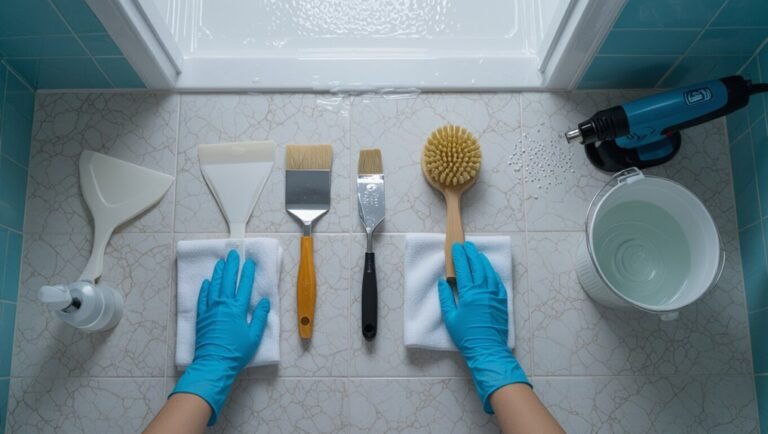
You’ll want a few key items on hand before you start: absorbents (paper towels or microfiber cloths), a pet-safe enzymatic cleaner, an all-purpose floor cleaner, disposable gloves, and a small scrub brush or sponge.
- Paper towels or microfiber cloths
- Pet-safe enzymatic cleaner
- Disposable gloves
Use absorbents first, blot gently, apply enzyme cleaner per instructions, scrub lightly, then rinse or wipe with the floor cleaner.
Optional tools for stubborn cases (steam cleaners, wet-dry vacs, ozone/air purifiers)
If a fresh clean doesn’t cut it, consider stronger tools like a steam cleaner, wet-dry vac, or air purifier/ozone unit to pull stains and odors from deep in grout or porous flooring.
Use a wet-dry vac to extract moisture after enzymatic treatment, a steam cleaner for deep sanitizing on sealed surfaces, and an air purifier or ozone unit to reduce lingering odors—follow safety guidelines.
What NOT to use (ammonia, bleach combinations, oil-based cleaners)
When you’re prepping to clean dog pee, skip products that can make stains or fumes worse: never mix ammonia or bleach with other cleaners, avoid ammonia-based sprays (they can mimic urine to pets), and steer clear of oil-based or waxy cleaners that trap odor in porous flooring.
Use enzyme cleaners or mild detergent and water instead, and ventilate well.
Don’t use harsh abrasives.
Step-by-Step Cleaning Process
Start by acting fast: contain the area and blot up fresh urine to prevent it from soaking in.
Then follow the right sequence for your floor—surface cleaners for hard floors, deeper methods for porous wood or laminate, and a specific carpet/rug protocol with blotting, enzyme cleaner, rinse, and thorough drying.
For dried or older stains and odors, use targeted enzyme treatments or oxidation products to break down residue and neutralize smells.
Step 1 Act fast: contain and blot fresh urine
Because fresh urine soaks in fast, you want to act immediately to limit damage and odor.
Block pets from the area, then press clean, absorbent towels or paper toward the spot—don’t rub. Replace soaked layers until no more liquid transfers.
For carpets, lift with a wet vacuum or carpet extractor if available.
Finish by airing the area to speed drying.
Step 2 Surface cleaning for hard floors (safe cleaner sequence)
After you’ve blotted up as much as you can, move on to cleaning the hard floor surface with a safe, stepwise approach that removes urine without harming finishes.
Start with plain water and a microfiber cloth, then mild dish soap diluted in warm water.
Rinse thoroughly, dry, and finish with a vinegar-water wipe if odor remains.
Avoid abrasive scrubbing or bleach.
Step 3 Deep cleaning for porous floors (wood, laminate)
Tackle porous floors carefully, since urine can soak into wood and laminate and cause stains or lingering odors if it isn’t fully removed; you’ll need a gentle, step-by-step process that lifts urine from pores without damaging finishes.
Start by blotting, then dilute with a mild enzymatic cleaner made for wood, work gently with a soft brush, rinse minimally, dry thoroughly, and repeat until odor and stain are gone.
Step 4 Carpet and rug protocol (blot, enzyme cleaner, rinse, dry)
If you cleaned porous floors first, switch focus to carpets and rugs, which absorb urine more deeply and need a different approach.
Blot up as much moisture as possible with clean towels, pressing firmly.
Apply an enzyme cleaner per instructions, working it into fibers.
Rinse lightly with water, blot again, then air-dry or use fans until completely dry to prevent odor recurrence.
Step 5 Treating dried or older stains and odors (enzymes, oxidation)
1 key difference with dried or older urine stains is that they’ve often set into fibers and finishes, so you’ll need stronger, targeted methods—enzymatic cleaners to break down proteins and oxidation treatments to neutralize color and odor—applied in a specific order to avoid damaging surfaces.
Test products in an inconspicuous spot, apply enzyme cleaner per label, blot, then use a controlled oxidizer if needed, ventilate.
Step 6 Final rinse and drying techniques to prevent residue
Once you’ve removed the stain and neutralized odors, finish by rinsing the area thoroughly with clean water to remove any cleaner residues that can attract dirt or irritate pets.
Use a damp cloth or a low-pressure spray, then blot or squeegee excess moisture.
Then air-dry fully or speed it with fans, open windows, or a dehumidifier, checking for damp spots to prevent mildew and lingering smells.
Floor-Specific Instructions and Precautions
Different floors need different care, so check your surface—hardwood may need pH-safe cleaners and resealing or refinishing if stained, while laminate and vinyl require gentler methods to avoid warping.
For tile and grout, focus on grout cleaning and sealing, and on concrete or unfinished surfaces use neutralizers then seal to stop odors; area rugs might only need spot treatment or a full wash.
If damage or persistent odor remains, consider hiring a professional cleaner.
Hardwood floors sealing, pH-safe cleaners, refinishing if needed
If your hardwood finish is worn or the urine soaked through the sealant, you’ll need to address sealing and cleaner choice before anything else: blot thoroughly, dry, then test a pH-safe cleaner on an inconspicuous spot.
Use cleaners labeled pH-neutral for wood, avoid ammonia or alkaline products.
If stains or odor persist, sand and refinish affected boards or call a pro to restore sealant and prevent recurrence.
Laminate and vinyl avoiding warping and surface damage
Because laminate and vinyl layers can swell or delaminate when exposed to moisture, act quickly to blot urine and avoid saturating the seams; use only barely damp cloths and a pH-neutral cleaner formulated for these surfaces.
Rinse lightly, dry immediately with a microfiber towel, and lift edges to check for seepage.
If odor lingers, use a manufacturer-recommended enzymatic product sparingly.
Tile and grout grout cleaning and sealing advice
Laminate and vinyl need gentle handling, but tile reacts differently—its grout can trap urine and odor if you don’t act correctly.
Blot promptly, scrub grout lines with a pH-neutral cleaner or enzyme-based product, then rinse thoroughly.
After drying, inspect for lingering smell; if gone, apply a breathable grout sealer per label directions to prevent future absorption and simplify cleanup.
Concrete and unfinished surfaces neutralizers and sealing
When urine soaks into concrete or other unfinished surfaces, you’ll need to act differently than you’d on sealed floors: concrete is porous and can trap both stain and odor deep below the surface, so neutralizers and proper sealing are essential to fully remove contamination and prevent recurrence.
Use an enzymatic or pH neutralizer, scrub and rinse thoroughly, let dry, then apply a penetrating sealer to lock out future odors.
Area rugs spot vs full wash, professional cleaning considerations
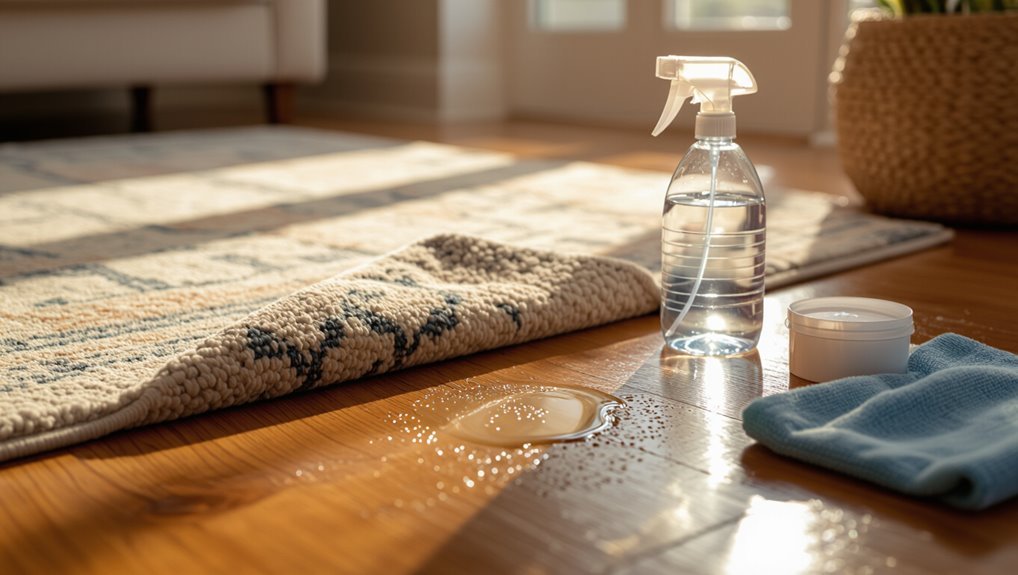
If the accident only hit a small area of an area rug, spot-cleaning with an enzymatic cleaner and gentle blotting can save the rest of the rug; for larger or older stains, a full wash or professional cleaning is usually the safer choice.
You should check fiber care labels, test cleaners on a hidden spot, and hire pros for delicate, antique, or high-value rugs to avoid shrinking or color loss.
Homemade Remedies vs Commercial Products
You can tackle fresh spots with simple DIY mixes—try 1 cup white vinegar to 1 cup water, sprinkle baking soda once it’s dry, or use a 3% hydrogen peroxide spot test for stubborn stains.
Use enzyme cleaners when odors persist or pets re-mark, since they break down urine proteins instead of just masking smells.
Below I’ll compare enzyme cleaners, odor neutralizers, and stain removers so you can pick what’s best for your floor and situation.
Effective DIY solutions (vinegar, baking soda, hydrogen peroxide) with proportions
Although commercial enzymatic cleaners often work fastest, you can mix effective DIY solutions at home using common ingredients like white vinegar, baking soda, and hydrogen peroxide.
These combinations target urine odor, neutralize ammonia, and help lift stains when used in the right proportions.
- Vinegar mix: 1 cup white vinegar + 1 cup water; spray, blot.
- Baking soda: sprinkle, let sit 15–30 minutes, vacuum.
- Peroxide booster: 1 cup 3% hydrogen peroxide + 1 tsp dish soap; test first.
When to use enzyme cleaners and how they work
Because urine contains proteins and bacteria that keep breaking down into smelly ammonia, enzyme cleaners are the go-to when odors persist or stains have soaked into porous surfaces; they actually digest the organic matter rather than just masking it.
Use them for older, deep, or scented accidents and on carpets, upholstery, and wood.
Apply per instructions, allow dwell time, then blot and ventilate.
Product comparison table: enzyme cleaners, odor neutralizers, stain removers
Now that you know when enzyme cleaners work best, compare options so you can pick the right approach for different accidents and surfaces. Choose enzyme cleaners for deep breaks, odor neutralizers for lingering smells, and stain removers for visible marks. Decide between homemade remedies and commercial products based on severity, surface, and time.
| Type | Best for | Pros/Cons |
|---|---|---|
| Enzyme | Organic stains | Effective, slower |
| Odor neutralizer | Smell only | Fast, may mask |
| Stain remover | Visible marks | Quick, may bleach |
Common Mistakes That Make Stains or Odors Worse
Watch out for common mistakes that can actually set stains and odors permanently: using ammonia cleaners or running a steamer on urine can reactivate or set the smell, and rubbing spread the mess instead of blotting it.
If urine soaked into subflooring or padding and you don’t treat or replace those layers, the odor will keep coming back.
Don’t rely on heavy fragrances to hide the smell—they mask it but don’t remove the source.
Using the wrong cleaners (ammonia, steam on urine)
If you grab the wrong cleaners—especially ammonia-based products—or use steam on fresh or dried urine, you can actually make stains and odors worse.
Ammonia mimics urine scent, attracting pets back. Steam drives proteins and salts deeper, setting stains and locking odors.
Use enzymatic cleaners formulated for pet urine instead, follow instructions, and air-dry thoroughly to prevent repeat marking.
Rubbing instead of blotting
One quick swipe might feel like progress, but rubbing a urine spot can actually push liquid deeper into flooring and spread bacteria and odor around.
Instead, grab absorbent paper towels or a clean cloth and press down to lift urine up. Blot, lift, and repeat with fresh towels until dampness stops.
Finish with a pet-safe enzymatic cleaner to neutralize odor.
Not treating urine that soaked into subfloor or padding
Blotting surface urine is only the first step; when liquid soaks into padding or the subfloor, you’ll still have a hidden source of odor and bacteria.
If you skip lifting soaked materials or treating beneath flooring, smells and stains return.
Pull up affected carpet or padding, dry and clean the subfloor with an enzymatic cleaner, and replace or fully sanitize materials to prevent recurrence.
Overuse of fragrances that mask but don’t remove odor
When you douse a room in air fresheners or carpet sprays, you’re covering up dog urine instead of getting rid of it—scents can hide ammonia and bacterial odors but do nothing to break down urine compounds.
You should stop masking smells. Clean with enzymatic cleaners, rinse thoroughly, and dry completely. Masking delays proper treatment, lets bacteria grow, and can make odors rebound stronger over time.
Preventing Future Accidents and Odor Buildup
Start by reinforcing training and routines so your dog has fewer indoor accidents, and keep an eye on behavior that might mean a vet visit instead of a cleaning problem.
Set a regular maintenance cleaning schedule for known trouble spots and consider sealers or floor protectors on vulnerable surfaces.
Together these steps will cut down odors, protect your floors, and help you spot when a medical issue needs attention.
Training and behavior tips to reduce indoor peeing
Because preventing repeat accidents is as much about routine and communication as it’s about cleanup, you’ll want to focus on clear, consistent training and addressing any medical or stress-related causes.
Use positive reinforcement, regular potty breaks, and consult a vet if patterns persist.
- Reward correct outdoor toileting immediately
- Schedule frequent walks and bathroom opportunities
- Rule out infections or anxiety with professional help
Maintenance cleaning schedule for problem areas
If you’ve had repeat accidents in the same spots, keep a focused cleaning schedule for those areas so odors don’t attract repeat incidents and stains don’t become permanent.
Clean promptly after every incident, do a deep enzymatic treatment once weekly, vacuum and mop surrounding floors twice weekly, and launder nearby rugs and bedding every one to two weeks.
Monitor scent with sniff tests.
Sealing and protective products for vulnerable floors
A few well-chosen sealers and protective products can make vulnerable floors far less attractive to repeat accidents and stop residual urine from soaking into cracks and grout.
Use a penetrating sealer for stone and grout, a water-resistant polyurethane for wood, and washable floor mats or vinyl runners in high-traffic spots.
Reapply as directed, and clean promptly to maintain protection and neutralize odor.
When to call a vet vs when it’s a cleaning issue
When accidents keep happening despite consistent cleaning and training, you should consider a vet visit to rule out medical causes; otherwise, treat isolated incidents as cleaning and behavior issues you can manage at home.
Look for sudden changes, frequency, blood, pain, or straining—these need prompt veterinary attention.
For occasional mishaps, reinforce house training, adjust schedules, and use enzymatic cleaners to remove odor and prevent repeat spots.
Troubleshooting Scenarios
If the odor sticks around after cleaning, you’ll need to escalate your steps from re-cleaning to enzymatic treatments and possibly professional ozone or steam options.
If yellow stains won’t lift on hardwood, you’ll want to contemplate sanding and refinishing or spot-staining to match the floor.
For repeated accidents in the same spot, check for hidden dampness in subflooring or baseboards and address any lingering odor sources before treating the surface again.
Persistent smell after cleaning stepwise escalation
Because lingering urine odor often means the source wasn’t fully removed, you’ll want to escalate cleaning steps methodically:
Start with a targeted enzymatic cleaner, then move to stronger products or professional treatments only if the smell persists.
Test stronger cleaners in an inconspicuous spot, reapply enzyme treatment afterward, air the area, and consider a professional odor removal service if repeated attempts fail.
Yellow stains that remain on hardwood refinishing options
You’ve tried enzymes and stronger cleaners, but yellow stains can persist on hardwood because urine has penetrated the finish and discolored the wood itself.
You’ll need to assess stain depth: light surface discoloration may sand out and refinish; deep staining could require board replacement or bleaching with oxalic acid before refinishing.
Test a small area first and consider a pro for matching finish.
Multiple accidents in same spot detecting and addressing hidden odor sources
When accidents keep happening in the same spot, it usually means there’s an underlying scent or mark you haven’t fully removed—so you’ll need to hunt down hidden odor sources and address them directly.
Check baseboards, grout, seams, and beneath rugs; lift floorboards if possible.
Use enzymatic cleaners, repeat treatments, and dry thoroughly.
Block the area temporarily and retrain your dog to break the habit.
Quick Reference: 60-Second Action Plan for Fresh Accidents
Act fast: grab paper towels, blot up as much urine as you can, and keep pressure on the spot to soak it out—don’t rub or spread it.
Act fast—blot urine with paper towels, applying steady pressure to soak it up without rubbing.
Then follow these steps immediately:
- Spray diluted enzyme cleaner or water-vinegar mix, let sit 30–60 seconds.
- Blot again with clean towels until nearly dry.
- Air-dry or use fan; avoid heat that can set odor.
FAQ
You probably have a few quick questions, so let’s answer the common ones about stains, cleaners, and long-term damage.
You’ll learn how soon a stain can set, whether bleach or enzymes are safe, and how to check if urine reached the subfloor or padding.
We’ll also cover how often to deep-clean trouble spots to prevent odors and stains from returning.
How long after an accident will my floor be permanently stained?
How quickly a urine accident turns into a permanent stain depends on the floor type and how fast you act; hard surfaces like tile or sealed hardwood can usually be cleaned up with no lasting mark if you treat them within minutes to a few hours.
In contrast, porous materials—unfinished wood, concrete, or some natural stone—can absorb urine and show discoloration within an hour or two if left untreated.
You should blot, rinse, and sanitize promptly; deep penetration may require sanding or professional restoration to remove stains and odor.
Can I use bleach to remove dog pee stains and odor?
Can bleach remove dog pee stains and odor?
You can use diluted bleach on nonporous, colorfast surfaces to disinfect and lighten urine stains, but it won’t neutralize urine enzymes that cause lingering odor.
Test a hidden spot first, ventilate, and never mix bleach with ammonia or vinegar.
For porous materials, choose enzyme cleaners instead to break down urine at the source.
Will enzyme cleaners damage floor finishes?
Although enzyme cleaners are designed to break down urine proteins rather than strip finishes, they can affect some floor coatings if left on too long or used at full strength.
Test in an inconspicuous spot first. Dilute per label, apply briefly, then blot and rinse thoroughly.
For delicate or waxed surfaces, use manufacturer-approved products or consult a flooring pro to avoid dulling or softening the finish.
How can I tell if urine reached the subfloor or padding?
If you suspect urine may have soaked beyond the surface—especially after using cleaners—look for signs like a persistent sour odor, dark or discolored spots that don’t lift with cleaning, or a damp feeling underfoot after the top layer seems dry.
Press a white cloth; if it picks up yellow or odor, or staining persists after cleaning, the padding or subfloor is likely compromised.
How often should I deep-clean areas where my dog pees?
How often you deep-clean areas your dog pees depends on frequency and severity—daily spot-cleaning with an enzymatic cleaner is wise for frequent accidents, while a thorough deep clean every 1–3 months usually keeps odors and bacteria under control for occasional incidents.
Adjust timing if you smell ammonia, see discoloration, or notice repeat accidents. Use steam, enzyme treatments, and inspect subflooring when needed.