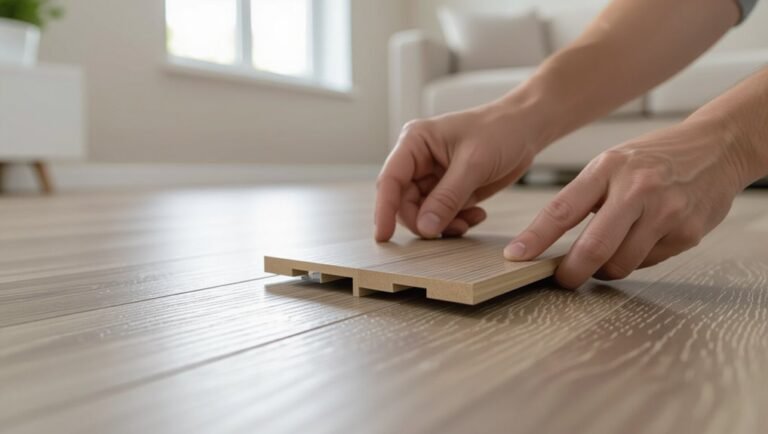
Can You Install Laminate Flooring Over Linoleum?
Yes — you can install laminate over linoleum if the old floor is flat, clean, dry, and firmly glued down. You’ll save time and disposal costs, but you must check for bubbles, loose edges, moisture, and thickness so the laminate’s locking system and underlayment work properly. Patch low spots, use a suitable underlayment or vapor barrier, and confirm manufacturer guidelines to avoid voiding warranty. Keep going to learn the steps, risks, and best practices.
Can You Install Laminate Flooring Over Linoleum? Quick Answer
Yes — you can install laminate over linoleum in many cases, as long as the linoleum is flat, clean, and firmly adhered.
Doing so saves time and reduces waste, but it can hide moisture or subfloor problems and may raise the floor height.
Check for damage, level any uneven areas, and confirm local building codes before you proceed.
Direct yes/no summary and when it applies
If the linoleum is firmly adhered, level, and free of cushioning or heavy wear, you can install laminate over it; otherwise you shouldn’t.
You can install laminate flooring over linoleum when it’s stable, low-profile, and clean.
Don’t try this over cushioned, gouged, or loose linoleum.
Also avoid rooms with moisture issues.
When in doubt, test adhesion and levelness or remove the old floor.
One-sentence overview of benefits and risks
You can save time, labor, and waste by laying laminate over a firm, low-profile linoleum, but doing so risks trapping moisture, hiding damage, and compromising long-term adhesion or stability if the old floor isn’t sound.
You’ll get quicker installation, lower disposal costs, and minimal subfloor prep, yet you must inspect, repair, and use proper underlayment to prevent future buckling or mold.
Basic Understanding What Are Laminate and Linoleum?
You’ll want to know that laminate is a multi-layered, wood-look product with a protective wear layer and a core made from high-density fiberboard, while linoleum is a resilient sheet or tile made from natural materials like linseed oil and cork dust.
They perform differently: laminate resists scratches and looks like hardwood but can swell with moisture, whereas linoleum is more flexible, water-tolerant, and can be softer underfoot.
Understanding these structural and performance differences helps you decide how well laminate will lay over existing linoleum.
What is laminate flooring?
Laminate flooring is a multi-layered product that mimics wood or stone with a photographic layer sealed under a clear, durable wear layer.
It clicks together over a backing board for easy installation. You’ll appreciate its affordability, durability, and simple floating installation.
Consider these basics:
- Appearance realism
- Wear-resistance
- Floating click system
- Cost-effectiveness
What is linoleum?
If laminate gives you a modern, low-maintenance look, linoleum offers an older-but-still-practical option made from natural materials.
You’ll find it’s mainly cork dust, linseed oil, wood flour and pigments compressed onto a jute backing. It’s resilient, biodegradable, and often used in kitchens or schools.
Consider:
- Natural composition
- Durable surface
- Cushioned feel
- Eco-friendly choice
How they differ structurally and performance-wise
While they both serve as resilient floor coverings, linoleum and laminate are built very differently and act differently underfoot.
Linoleum is a single-sheet, natural product that’s flexible, breathable, and slightly softer; it tolerates moisture but can dent.
Laminate is a multi-layer, rigid composite with a wear layer and click-lock core; it’s firmer, more scratch-resistant, and needs a stable, dry subfloor.
Is It Technically Possible? Key Factors to Consider
Yes—you can often install laminate over linoleum, but you’ll need to check a few technical factors first.
Inspect the subfloor for levelness and secure adhesion, confirm the linoleum won’t interfere with a floating floor system, and plan for moisture protection where needed.
Also measure total height for thresholds, changes, and door clearances so everything fits properly.
Subfloor condition and levelness
Because the subfloor beneath your linoleum has to be solid and flat, checking its condition and levelness is the essential first step before you even think about laying laminate.
Inspect for rot, loose boards, soft spots, moisture damage, and squeaks. Use a straightedge and level to spot dips or high spots.
Repair, replace, or level with appropriate underlayment before proceeding.
Adhesion and floating floor compatibility
If your linoleum is firmly adhered, clean, and level, you can often install laminate as a floating floor over it—but you’ll need to verify a few technical factors first.
Check that the linoleum is securely bonded, free of cushioning or wax, and not prone to movement.
Confirm the laminate’s locking system tolerates the existing surface; minor repairs or a thin underlayment may be required.
Moisture and vapor barriers
When you’re installing laminate over linoleum, moisture control becomes one of the most important technical considerations because trapped vapor can warp the boards or delaminate the flooring.
You’ll need to assess subfloor moisture levels, the porosity and condition of the linoleum, and whether an appropriate vapor or moisture barrier is required between layers.
Test with a moisture meter, seal seams, use breathable underlayment where recommended, and follow manufacturer specs.
Height, transitions, and door clearances
Moisture control affects more than just board stability; it also influences how many layers you can add before floor height causes problems.
You’ll measure changes to adjacent flooring, adjust thresholds, and shim door jambs so doors clear the new surface.
Check appliance and cabinet clearances, threshold ramping, and code limits.
Plan underlayment thickness to keep smooth, safe changes and proper door operation.
When You Should Install Laminate Over Linoleum (Pros)
If the existing linoleum is flat, firmly bonded, and in good condition, you can save time and money by installing laminate right over it.
You won’t have to tear out flooring, which cuts demolition labor and keeps dust and debris to a minimum.
This approach works well in rooms where the linoleum provides a smooth, stable underlayer and the height change won’t cause problems.
Time and cost savings
Because you can lay laminate directly over a sound sheet of linoleum, you’ll save both time and money compared with pulling up the old flooring first.
You avoid disposal fees, skip subfloor repairs in many cases, and cut labor.
Consider these savings:
- Reduced labor hours
- Lower disposal costs
- Fewer materials needed
- Faster project completion
Less demolition and reduced mess
Saving time and money also means you’ll deal with less demolition and a lot less mess when you lay laminate over intact linoleum.
You skip tearing out old adhesive, hauling debris, and dust clouds that come with full removal. That reduces cleanup time, lowers disposal costs, and lets you finish the room faster, so you’ll live with minimal disruption and resume normal use sooner.
Situations where linoleum is an acceptable underlayer
When the existing linoleum is firmly bonded, level, and free of soft spots or water damage, you can confidently install laminate over it; this works especially well on single-layer, non-cushioned sheets that sit flat with no bubbling or loose seams.
You’ll save time, avoid disposal, and maintain a stable substrate in rooms with minimal moisture and even subfloors—ideal for living areas and hallways.
When You Should Remove Linoleum First (Cons and Risks)
If the linoleum is uneven, loose, or bubbling, you should remove it first to avoid telegraphing and instability under your new laminate.
You’ll also want to pull up old linoleum if there’s any chance of hidden moisture, mold, or subfloor damage that could ruin your floor later.
Finally, check for adhesive residue, backing problems, and your laminate’s warranty requirements—manufacturers often require a clean, solid subfloor to honor coverage.
Issues with uneven or loose linoleum
Because uneven or loose linoleum can telegraph imperfections and cause your new laminate to squeak, you should usually remove it before installing a floating floor.
If the linoleum lifts, bubbles, or isn’t firmly adhered, it’ll create an unstable substrate that shortens laminate life and voids warranties.
Removing and leveling the subfloor guarantees a solid, quiet installation and proper plank alignment.
Hidden moisture, mold, or damage risks
Although linoleum can look intact, trapped moisture, hidden mold, or underlying rot can lurk beneath and compromise both your new laminate and your health.
You should remove linoleum if you detect musty odors, staining, soft spots, or past water damage. Leaving compromised substrate invites mold spread, adhesive failure, and structural decay.
Inspect thoroughly and fix problems before installing laminate for a safe, lasting result.
Problems with adhesives and residual backing
When you plan to float laminate over old linoleum, remember that leftover adhesive and backing can cause major trouble: they may prevent planks from locking properly, create uneven surfaces, and trap moisture that weakens joints and finishes.
You should remove stubborn glue and any cushioned backing: they compress, bruise click systems, and hide debris that causes gaps, squeaks, and premature wear.
Warranty and manufacturer requirements
If your laminate maker requires a clean, hard substrate, you’ll need to remove linoleum before installing—otherwise you risk voiding the warranty and eating the cost of future repairs.
Check your warranty and installation guide, and don’t guess.
Consider these steps:
- Verify substrate requirements.
- Document current floor condition.
- Follow approved underlayment specs.
- Get written manufacturer approval if unsure.
Step-by-Step Guide How to Install Laminate Over Linoleum
You’ll start by inspecting and preparing the linoleum, repairing any low spots and using a self-leveling compound where needed.
Next you’ll clean and degloss the surface, choose a primer if required, and roll out the correct underlayment for your laminate.
Finally, you’ll lay the planks with proper expansion gaps and a staggered pattern for a stable, professional-looking floor.
Step 1: Inspect and prepare the linoleum surface
- Inspect the linoleum for damage, loose edges, bubbles, or seams; you’ll need a stable substrate.
- Clean thoroughly—sweep, vacuum, then degrease with a mild cleaner.
- Check adhesion by pressing and tapping; mark any loose areas.
- Measure thickness and confirm it’s compatible with underlayment and junctions before proceeding.
Step 2: Repair and level the floor (patching and self-leveling compound)
Now that the linoleum is clean and you’ve marked any loose spots, address surface imperfections so the laminate lays flat and the joints stay tight.
Patch holes and gouges with a fast-setting compound, sand smooth once cured, and apply a self-leveling compound for low spots.
Follow product cure times, then recheck flatness.
- Patch
- Sand
- Level
- Inspect
Step 3: Clean and degloss the linoleum (priming options)
Before laying any underlayment, clean and degloss the linoleum so the adhesive or underlayment bonds properly and the laminate won’t shift.
Remove dirt, wax, and grease with a degreasing cleaner, then sand glossy finishes lightly with fine-grit sandpaper.
Wipe residue with a damp cloth.
If needed, apply a manufacturer-recommended primer for nonporous surfaces and let it cure before proceeding.
Step 4: Install appropriate underlayment (types and installation tips)
With the linoleum clean, deglossed, and primed if required, you’re ready to lay the underlayment that will cushion, level, and insulate your new laminate floor.
Choose compatible types and follow installation tips:
- Foam: cheap, simple underlayment.
- Cork: sound dampening, eco-friendly.
- Felt: better thermal insulation.
- Vapor barrier: required over concrete, prevents moisture damage.
Step 5: Lay the laminate planks (expansion gaps, staggering)
Begin laying the first row by placing the tongues toward the wall, leaving the manufacturer-recommended expansion gap (usually 1/4″ to 1/2″) and using spacers to keep it consistent; this gap lets the floor expand and prevents buckling.
- Click planks tightly together.
- Stagger end joints at least 12–18″.
- Trim final plank to fit.
- Tap seams with a pull bar; keep spacers in place.
Step 6: Install transitions, moldings, and thresholds
Once your planks are down and gaps are verified, it’s time to fit junctions, moldings, and thresholds to create smooth, secure edges and hide expansion spaces.
You’ll measure, cut, and attach pieces, matching profiles and height. Follow this order:
- Measure openings and doorways precisely.
- Cut moldings to fit.
- Secure with adhesive or trim screws.
- Test connections for flush fit.
Step 7: Post-installation checks and maintenance tips
After you’ve fitted moldings and thresholds, check the entire floor for gaps, loose planks, and uneven sections. Then address any issues before regular use.
Walk the floor, tighten or replace problematic pieces, and guarantee expansion gaps remain.
Clean with a damp mop and laminate-safe cleaner, avoid excessive water, use felt pads on furniture, and monitor seams periodically for moisture or shifting to catch problems early.
Materials, Tools, and Costs
Before you start, gather a clear materials checklist—underlayment, threshold strips, adhesive or vapor barrier if needed—and make sure your linoleum is sound.
You’ll also want recommended tools like a laminate cutter or saw, tapping block, spacers, and a rubber mallet.
Finally, compare estimated costs for an over-lay versus full linoleum removal so you can decide which option fits your budget and timeline.
Materials checklist
You’ll need a clear list of materials and tools to keep the laminate-over-linoleum project efficient and on budget:
- Underlayment compatible with laminate and linoleum
- Moisture barrier (if required)
- Laminate planks and molding pieces
- Adhesive or floor preparation supplies
Measure room area, buy 5–10% extra planks, and budget for disposal and unexpected repairs.
Recommended tools
With your material list and measurements in hand, gather the right tools to keep installation smooth and fast: a quality laminate cutter or saw for clean cuts, a tapping block and pull bar to lock planks without damage, spacers to maintain expansion gaps, a rubber mallet, measuring tape, carpenter’s square, utility knife, chalk line, and a pry bar for removing trim;
also have safety gear (glasses, gloves, knee pads) and a vacuum or broom to keep the subfloor clean.
- Saw/cutter
- Tapping block/pull bar
- Spacers/mallet
- Measuring/marking tools
Estimated cost comparison: over-lay vs. removal
Comparing the costs of overlaying laminate on linoleum versus removing the old floor first comes down to materials, labor, and a few key tools: overlaying usually saves you time and money because you skip demolition and subfloor repairs, while removal adds waste disposal fees and potential hidden repair costs that can quickly erase any upfront savings.
| Option | Typical cost | Time |
|---|---|---|
| Overlay | $1–$4/ft² | 1–2 days |
| Remove | $3–$8/ft² | 2–4 days |
| Hidden repairs | Variable | + time |
Common Mistakes to Avoid
Don’t install laminate over loose or bubbled linoleum—you’ll need a flat, secure surface first.
Don’t skip underlayment or use the wrong type, and don’t ignore moisture issues that can warp the boards.
Also plan for finished height and connections so doors and thresholds fit correctly.
Installing over loose or bubbled linoleum
If you try to lay laminate over loose or bubbled linoleum, the flooring won’t lock together properly and you’ll end up with uneven boards or premature gaps.
You should remove or firmly reattach any loose sections, flatten bubbles, and guarantee the surface is stable and level.
Otherwise movement beneath the laminate will cause noise, joint failure, and a short-lived finish.
Skipping underlayment or using wrong type
While it might seem quicker to skip underlayment or grab the cheapest foam you find, doing so undermines your laminate’s stability, sound control, and moisture protection.
You should choose an appropriate underlayment rated for laminate over existing flooring, one that offers vapor barrier where needed and adequate cushioning.
Wrong or missing underlayment leads to premature wear, creaks, and loose joints—avoid cutting corners.
Ignoring moisture issues
Because moisture can silently ruin a laminate floor from beneath, you need to check and address all sources before installation.
Test the linoleum and substrate with a moisture meter, fix leaks, and guarantee proper drying.
Don’t assume existing flooring blocks dampness. Use a vapor barrier when recommended, and maintain ventilation.
Ignoring moisture risks swelling, warping, mold, and premature failure.
Not accounting for height and transitions
1 common oversight that can derail a clean laminate installation is ignoring height differences and connection needs between rooms.
You’ll need to measure finished floor heights, plan changes at doorways, and pick appropriate reducers or thresholds. Failing to do so causes trip hazards, gapped seams, and uneven wear.
Account for underlayment thickness and adjust door clearances before you finish installation.
Best Practices and Professional Tips
You’ll want to know when a job is within your skill set and when to call a pro to avoid costly mistakes.
Follow practical tips—proper subfloor prep, acclimation, correct underlayment, and tight seams—to make the installation last.
Also check manufacturer instructions and warranty terms so your work doesn’t void coverage.
When to call a pro vs. DIY
While many homeowners can handle laying laminate over linoleum, call a pro if your floor has severe unevenness, water damage, or adhesive residue that won’t scrape off easily—those conditions require specialized tools and expertise to guarantee a stable, long-lasting installation.
If subfloor repairs, complex changes, or matching patterns are needed, hire a professional; otherwise, you can tackle straightforward, level rooms yourself with proper preparation.
Tips for ensuring long-lasting installation
If you decide to tackle the job yourself or hire a pro, following a set of best practices will keep your laminate flooring looking and performing its best for years.
You should prep surfaces, control moisture, use proper underlayment, and follow installation spacing.
- Clean and level subfloor
- Install moisture barrier
- Use recommended underlayment
- Leave expansion gaps
Manufacturer and warranty considerations
Because manufacturers set specific installation and maintenance requirements, you should read their guidelines closely before starting—doing so protects your warranty and avoids costly voids.
Check whether your laminate maker approves installation over existing resilient flooring, required underlayment types, moisture thresholds, and acclimation times.
Keep receipts, registration, and photos of prep work. If unsure, contact the manufacturer for written confirmation before proceeding.
Comparison: Install Over Linoleum vs. Remove Linoleum First
You’ll weigh durability and longevity when choosing to lay laminate over linoleum or pull it up first.
Consider cost and time—leaving linoleum can save money now but might shortchange future performance.
Also factor in risk and maintenance: removal reduces hidden issues, while keeping it can hide problems that raise upkeep later.
Durability and longevity
Longevity depends on the condition of the linoleum and how well you prep it: leaving a smooth, firmly-adhered linoleum in place can yield a durable laminate installation, but trapped damage or unevenness shortens the floor’s life. You’ll get longer performance by removing compromised linoleum and fixing subfloor issues before installing.
| Scenario | Longevity impact |
|---|---|
| Intact linoleum | Good if prepped |
| Damaged linoleum | Shortened life |
| Removed/repairs done | Best durability |
| Poor prep | Early failures |
Cost and time
Having decided whether to keep or strip the existing linoleum, next compare the cost and time implications of each choice. Keeping linoleum saves removal labor and disposal fees, speeding installation. Removing adds prep time and cost but can improve subfloor condition and long-term value.
| Option | Impact |
|---|---|
| Install over | Lower cost, faster |
| Remove first | Higher cost, longer time |
Risk and maintenance
While installing laminate over linoleum can cut upfront work, it raises a few long-term risks and maintenance needs you should weigh: you may trap moisture, hide subfloor damage, and face uneven wear that needs frequent repairs or replacement; removing linoleum lets you inspect, level, and install moisture barriers for lower maintenance.
| Issue | Install Over Linoleum | Remove Linoleum |
|---|---|---|
| Moisture | Higher risk | Lower risk |
| Repair frequency | More often | Less often |
| Inspection | Hidden problems | Full access |
Case Scenarios and Real-World Examples
If you’re doing a small kitchen remodel and the linoleum is flat and well-adhered, an overlay can be a fast, cost-effective option.
In an older home with an unknown or questionable subfloor you’ll want to remove the linoleum and inspect the substrate first to avoid future problems.
For a rental unit, weigh the quick upgrade and lower cost of overlay against the potential for shorter lifespan and tenant-caused damage.
Small kitchen remodel overlay is acceptable
Because your kitchen is small and the existing linoleum is flat and firmly adhered, doing an overlay with laminate is often a practical, cost-effective choice.
You’ll save time and money by avoiding tear-out, and you’ll get updated aesthetics.
Prep by cleaning, repairing seams, and using an underlayment for moisture and sound.
Expect an easier DIY or quick pro install with minimal disruption.
Older home with unknown subfloor removal recommended
Small kitchens on solid linoleum often let you skip a demo, but older homes with unknown subfloors call for a different approach.
You should remove the linoleum to inspect for rot, mold, uneven joists, or multiple existing layers.
Demo lets you confirm subfloor thickness and fix issues before installing laminate, preventing squeaks, failures, and warranty voids.
Rental unit quick upgrade pros and cons
When you need a fast, budget-friendly refresh for a rental, laying laminate over intact linoleum can be a smart short-term play, but it carries trade-offs: you save time, tenant disruption, and demo costs, yet risk unevenness, trapped moisture, and potential warranty or future repair headaches.
You’ll attract tenants quickly and minimize turnover downtime, but plan for possible callbacks and limited lifespan.
FAQ
You’ll find answers here to common concerns like whether you can glue laminate to linoleum and if doing so affects your warranty.
We’ll also cover practical issues such as added floor height and door trimming, bathroom installations, and how to check if existing linoleum might contain asbestos.
If you have a specific situation, bring it up and we’ll address it.
Can laminate be glued to linoleum?
Can you glue laminate to linoleum? You can, but it’s generally not recommended unless the linoleum is firmly bonded, clean, and level.
Adhesive installation can trap moisture and prevent floating movement, so choose an appropriate adhesive and follow manufacturer guidance.
Test a small area first, verify compatibility, and consider professional advice to avoid problems like delamination or uneven seams.
Will installing over linoleum void laminate warranty?
Curious whether laying laminate over linoleum will void your warranty? It depends on the manufacturer.
Many allow installation over existing resilient floors if they’re flat, dry, and well-adhered. You should check warranty terms and follow their preparation requirements.
If you skip prep or ignore specs, you could void coverage. When in doubt, contact the manufacturer or retailer for written guidance.
How much extra height does overlay add and how to handle doors?
Expect the overlay to add roughly 1/4″ to 3/4″ of height depending on your underlayment and the laminate thickness; stacked underlayment, padding, and junction strips raise the finished floor more than the planks alone.
Check clearances at doors, trim 1/8″–3/8″ off door bottoms or plane edges if needed, and reuse or replace thresholds to guarantee smooth changes and proper door swing.
Can you install laminate over linoleum in bathrooms?
Wondering whether you can lay laminate over linoleum in a bathroom? You can, but you should be cautious: laminate isn’t waterproof, so guarantee the existing linoleum is dry, firmly adhered, and level.
Install a moisture barrier and choose water-resistant laminate. Seal joints and use proper underlayment.
Expect tight maintenance—wipe spills quickly and monitor edges to prevent water damage and swelling.
How do you tell if linoleum is asbestos-containing before overlaying?
How can you tell if your linoleum contains asbestos before laying laminate over it?
You can’t reliably tell by appearance or age alone. Have a certified asbestos inspector take a small sample for lab testing.
If testing isn’t feasible, assume it may contain asbestos and hire professionals for encapsulation or safe removal.
Don’t sand, cut, or disturb the floor yourself.
Visual Guide and Resources
You’ll find a photo checklist helpful for documenting the linoleum’s condition and spotting problem areas before you start.
Use the images to compare moisture spots, seams, and unevenness, and mark anything that needs repair.
I’ll also link to manufacturer installation guides and further reading so you can follow their specific prep and warranty requirements.
Photo checklist for inspection and problem areas
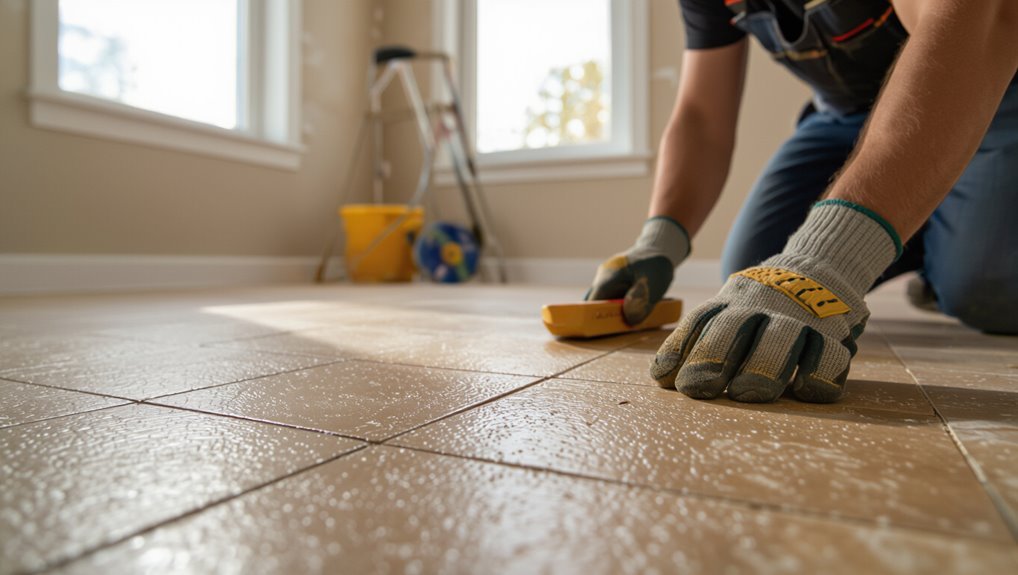
Start by photographing the entire room from several angles. Then focus on specific problem areas so you can document conditions before you remove the linoleum.
Capture close-ups of seams, bubbles, adhesive residue, moisture stains, cracks, and uneven spots. Photograph thresholds, changes, and subfloor access points.
Timestamp or label photos, note measurements, and save backups for reference during prep and contractor discussions.
Links to manufacturer installation guides and further reading
1 essential resource for a smooth laminate-over-linoleum installation is the manufacturer’s installation guide, so gather the specific manuals for your laminate, underlayment, and adhesives before you begin.
Use these links and readings to confirm warranties, moisture limits, and approved substrates.
- Manufacturer laminate guide
- Underlayment specs
- Adhesive and junction instructions
- Moisture and warranty policies