Can You Install Carpet Over Laminate Flooring?
Yes — you can install carpet over laminate if the laminate and subfloor are flat, dry, and securely fastened. You’ll want to check for warping, loose boards, and moisture first, since trapped damp can cause mold and damage. Use an appropriate underlay or vapor barrier and choose low‑pile carpet with a thin, dense pad for stability. Plan for changes and door clearances, and follow local codes; keep going to learn the step‑by‑step considerations and options.
Quick Answer Can You Install Carpet Over Laminate Flooring?
Yes — you can install carpet over laminate in some cases, but it’s not always the best choice.
It’s acceptable when the laminate is flat, securely installed, and in good condition, or for temporary updates, but it’s not recommended if the laminate is warped, damaged, or under warranty restrictions.
Consider moisture, changes, and the need for proper underlayment before you proceed.
Short, direct recommendation
You can install carpet over laminate, but only if the laminate is level, securely glued or locked, and undamaged; lay an appropriate underlayment to prevent moisture and cushioning issues, and confirm local building codes or manufacturer warranties won’t be voided.
If you’re wondering can you install carpet over laminate flooring, proceed only after inspection, moisture testing, and using proper padding and edge strips.
Situations where it’s acceptable vs not recommended
If the laminate is flat, firmly locked or glued, and free of water damage, you can install carpet over it with the right padding and moisture barrier; however, don’t cover warped, loose, or buckled laminate, or floors with active moisture problems, because the carpet will hide but not fix those issues and could trap moisture that leads to mold or further damage.
You should proceed only after inspecting seams, connections, and subfloor stability.
Basic Understanding What Are Laminate and Carpet Layers?
Before you start, you’ll want to know what laminate flooring is—typically a multi-layered, floating surface with a hard wear layer and a printed design over a fiberboard core.
You should also understand common carpet types (like loop, cut pile, and frieze) and padding options, since pile and pad thickness affect comfort and height.
Finally, consider how the laminate’s construction and the condition of the subfloor influence whether you can stretch or glue carpet over it and what prep you’ll need.
What is laminate flooring?
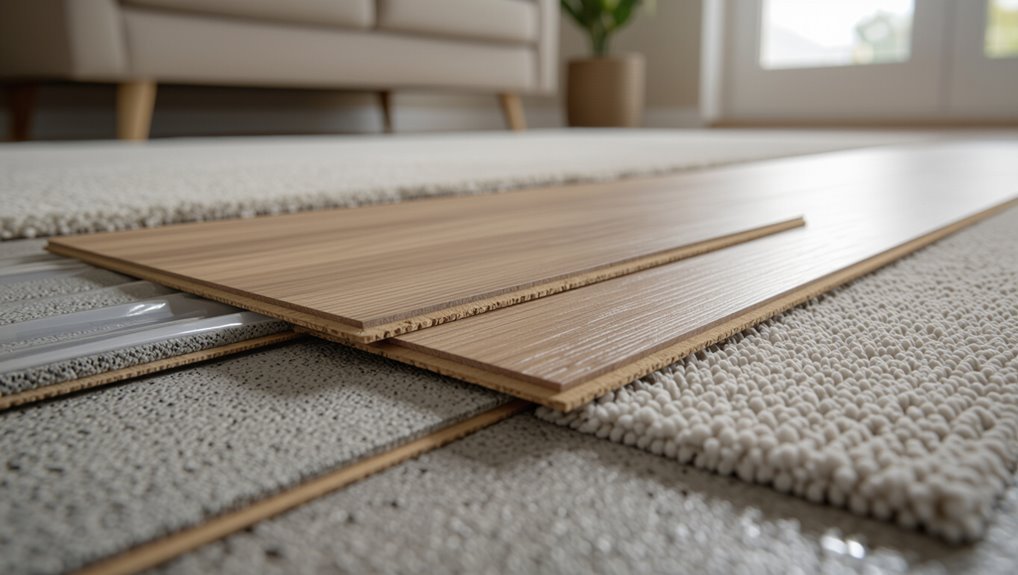
Laminate flooring mimics the look of wood or stone with a layered construction: a wear-resistant top layer, a decorative photographic layer, a dense fiberboard core, and a stabilizing backing.
You’ll find it installed as floating planks that click together, offering durability and easy maintenance.
It resists scratches and moisture moderately well, but it isn’t solid wood and can’t be refinished like hardwood.
What are common carpet types and padding options
Carpet comes in several common types—looped Berber, cut-pile plush, cut-and-loop, and textured saxony—each offering different looks and durability, while padding choices like foam, rebond, and rubber affect comfort, insulation, and how the carpet performs over laminate.
You’ll pick Berber for durability, plush for softness, and matching pad density for support, moisture control, and to protect the laminate surface.
How floor construction and subfloor affect carpet installation
Think of your floor as a layered system: the visible laminate sits atop underlayment, an often-hidden subfloor, and the structural joists below, and each layer affects how carpet will perform and be installed.
You’ll assess subfloor flatness, moisture, and rigidity; uneven or damaged underlayment can telegraph through carpet.
Proper padding and possibly a plywood underlayment guarantee durability, comfort, and secure installation.
Key Factors to Consider Before Installing Carpet Over Laminate
Before you install carpet over laminate, check the structural and subfloor integrity and watch for moisture or vapor issues that could damage either floor.
Consider how the added height will affect doorways, thresholds, changes, warranties or return policies, and whether local building codes or insurance rules apply.
Addressing these points up front will help you avoid costly mistakes and guarantee a compliant, long-lasting installation.
Structural and subfloor integrity
Foundation matters: you’ll need to verify the laminate and subfloor are sound, level, and dry before laying any carpet, because hidden issues like loose boards, uneven seams, or moisture can ruin the new flooring and void warranties.
Inspect for movement, squeaks, soft spots, and water stains. Repair or replace damaged sections, confirm seams are tight, and use a suitable underlayment for stability.
Height and transition issues at doorways and thresholds
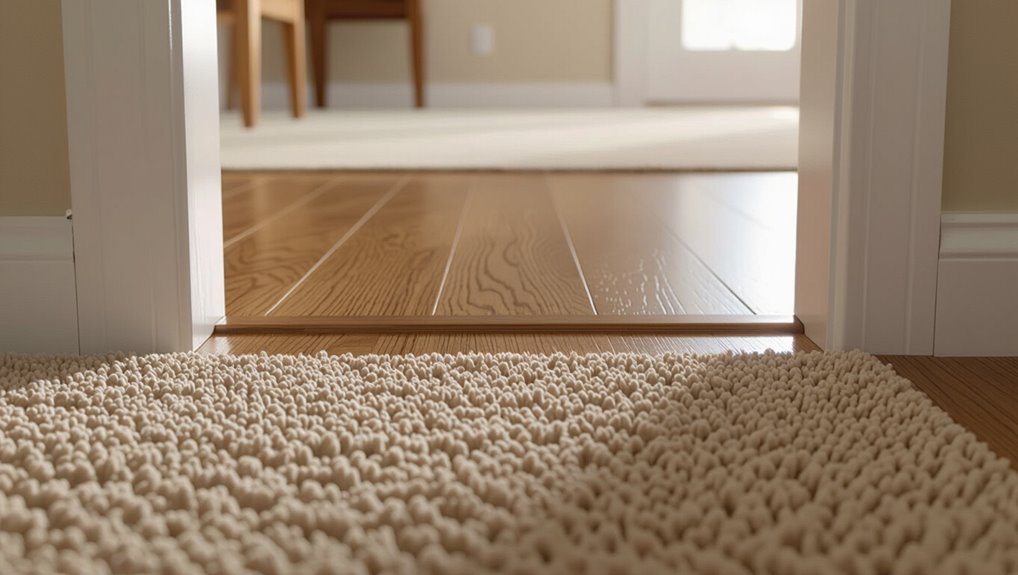
When you cover laminate with carpet, the added pile and underlay will raise the floor height at doorways and thresholds.
So plan for smooth changes to avoid binding doors, tripping hazards, and visible gaps. Measure clearance, trim door bottoms if needed, and choose transition strips or tapered thresholds to create a gradual slope.
Confirm adjacency to other flooring for consistent sightlines and safe passage.
Moisture and vapor concerns
Because laminate flooring can trap moisture beneath a carpet and underlay, you need to address vapor risk up front to prevent mold, buckling, and adhesive failure.
Test for moisture with a meter, guarantee subfloor dryness, choose breathable underlay or vapor barriers appropriately, and maintain room humidity.
If moisture’s present, fix leaks or improve ventilation before installing carpet to protect both layers.
Manufacturer warranties and flooring return policies
Before you lay a single tack strip, check the warranties and return policies for both your laminate and carpet—ignoring them can void coverage or leave you stuck with nonreturnable goods.
Confirm that carpet installation over laminate doesn’t breach laminate warranty, note required underlayment or adhesives, keep receipts and photos, and verify return windows and restocking fees so you can act quickly if issues arise.
Local building codes and insurance considerations
You’ve already checked warranties and returns, but you’ll also want to confirm local building codes and insurance rules before installing carpet over laminate.
Check fire, egress, and moisture regulations—some jurisdictions limit coverings that alter floor performance.
Notify your insurer if installation changes fire resistance or underlayment type; failing to disclose modifications could affect claims.
Get permits when required to avoid fines or coverage gaps.
How-To: Step-by-Step Process for Installing Carpet Over Laminate
Start by inspecting and prepping the laminate, and fix or replace any damaged boards or subfloor before you begin.
Pick a carpet and padding meant for installation over laminate, then choose your method—direct glue-down, stretch-in with tack strips, or a floating underlayment.
Finish by installing perimeter changes and door thresholds to secure edges and guarantee a clean, safe seam.
Step 1 Inspect and prepare the laminate surface
Inspect the laminate for loose boards, gaps, scratches, or moisture damage—any of these issues can undermine a new carpet installation.
Walk the room, tap seams to detect movement, and smell for mildew.
Remove baseboards and thresholds, clean thoroughly, and vacuum grooves.
Confirm the surface is dry, level, and free of debris so carpet padding and adhesive will bond properly.
Step 2 Repair or replace damaged laminate or subfloor
Fix any damaged laminate or subfloor before you lay carpet—skipping repairs will lead to uneven padding, premature wear, or dips that show through the carpet.
Remove loose boards, replace buckled planks, and repair gaps or water damage. Level low spots with a suitable filler or plywood patch.
Verify the subfloor is clean, dry, and structurally sound before proceeding to the next step.
Step 3 Choose appropriate carpet and padding for installation over laminate
3 things matter most when choosing carpet and padding to install over laminate: durability, thickness, and moisture resistance.
Pick a low-pile, tightly woven carpet for stability and easy cleaning.
Use a thin, dense foam or rubber pad that won’t compress unevenly or trap moisture.
Choose materials rated for high-traffic areas and check warranties for compatibility with existing flooring.
Step 4 Decide between direct glue-down, stretch-in with tack strips, or floating underlayment
Now you’ll choose the installation method: direct glue-down, stretch-in with tack strips, or a floating underlayment—each has distinct steps, costs, and performance traits you’ll want to match to your laminate’s condition and the room’s use.
Glue-down bonds permanently for stability, stretch-in suits neat edges and replacement, and floating underlayment isolates and cushions without adhesives.
Pick based on traffic, subfloor flatness, and permanence.
Step 5 Install perimeter transitions and door thresholds
Prepare the edges so your new carpet meets existing flooring cleanly and stays secure: install junction strips at room entries and screw or adhesive-mount door thresholds where laminate meets carpet.
Measure openings, cut connectors to fit, and fasten per manufacturer instructions. Leave slight clearance for carpet and underlay thickness.
Check door swing and trim doors if needed so thresholds sit flush and function smoothly.
Step 6 Final trimming, seaming, and clean-up
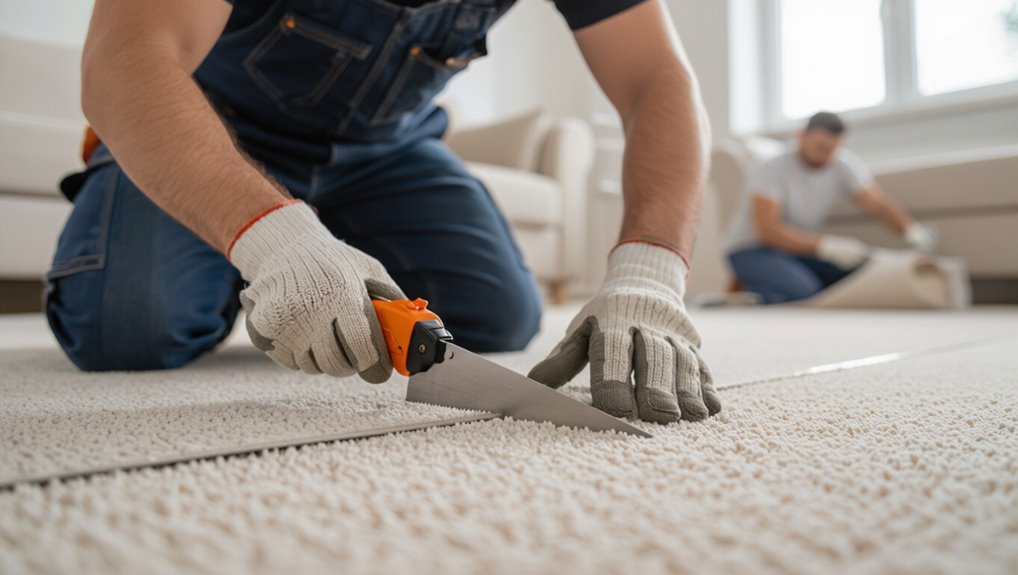
Once the carpet’s been anchored at the edges and changes are in place, finish trimming and seaming so the installation looks seamless and performs well.
Trim excess with a sharp carpet knife, tuck edges under junctions, and secure with seam tape and a seaming iron.
Vacuum thoroughly, remove debris, check seams for gaps, and reinstall baseboards or thresholds to complete a clean, professional finish.
Comparison of Installation Methods
You’ll weigh glue-down versus stretch-in with tack strips, noting that glue-down gives a low profile while stretch-in can be easier to replace.
You’ll also compare adding underlayment or plywood for stability and insulation against installing carpet directly over the laminate.
Finally, you’ll get a clear pros-and-cons summary to help you pick the method that fits your budget, room use, and long-term goals.
Glue-down carpet vs. stretch-in with tack strips
When you’re choosing how to install carpet over existing laminate, you’ll mainly decide between glue-down and stretch-in (tack-strip) methods; each affects installation time, durability, and the laminate beneath. You’ll prefer glue-down for low profiles and firm adhesion; stretch-in lets you replace carpet easier but risks tack-strip damage to edges.
| Method | Trade-off |
|---|---|
| Glue-down | Low profile, harder removal |
| Stretch-in | Easier replacement, potential edge damage |
Using an underlayment/plywood layer vs. installing directly over laminate
If you want a smoother, more durable carpet installation, adding a thin underlayment or plywood layer over the laminate gives you a solid, uniform surface that reduces telegraphing of seams and improves pad performance; you’ll get better cushioning, less noise, and a flatter look.
Installing directly saves time and cost but risks unevenness, seam show-through, and reduced padding effectiveness, so choose based on condition and budget.
Pros and cons summary for each method
Although installing carpet directly over laminate saves time and money, adding a thin underlayment or plywood layer yields a more durable, comfortable result.
- Direct: cheaper, quicker, risks unevenness and shorter carpet life.
- Underlayment: smoother feel, better insulation, slightly higher cost and install time.
- Plywood sublayer: best stability and longevity, more labor and expense, may raise floor height requiring trim adjustments.
Common Problems and Mistakes to Avoid
When you install carpet over laminate, watch for height and changeover issues that can create tripping hazards or jam doors.
Don’t skip a proper underlayment and moisture barrier, and make sure the laminate is secure and free of loose or damaged boards before you start.
Also check warranties—some installations can void either the laminate or carpet coverage if you don’t follow manufacturer guidelines.
Ignoring height and transition complications
Because carpet adds thickness and underlay can shift floor levels, you’ve got to plan for height and alteration issues before installing over laminate.
Measure door clearances, trim doors if needed, and check appliance and threshold fit.
Choose appropriate transition strips to prevent trip hazards and allow smooth movement between rooms.
Don’t assume seamless edges—test mockups to confirm alignment.
Installing without proper underlayment or moisture barrier
If you skip a proper underlayment or moisture barrier, you risk trapped moisture, uneven wear, and a shorter carpet lifespan.
You’ll also feel imperfections through the carpet and hear hollow spots.
Use recommended padding and a moisture barrier to cushion, equalize wear, and block dampness from below.
Installing without them voids warranties and increases maintenance, odors, and premature replacement.
Failing to check laminate condition or loose boards
Before laying carpet, inspect the laminate closely and walk the room to spot loose, buckled, or damaged boards—you’ll regret skipping this step.
If you ignore unstable sections, the carpet will hide issues while movement causes squeaks, uneven wear, or tripping hazards.
Secure or replace problematic planks, level thresholds, and guarantee a stable subfloor so your new carpet performs safely and lasts longer.
Voiding laminate or carpet warranties
When you cover laminate with carpet without checking the manufacturers’ rules, you can unintentionally void both warranties and leave yourself responsible for repairs.
Always read warranty terms for moisture barriers, adhesive use, and installation methods. If you ignore guidelines, manufacturers may deny claims for damage, cupping, or staining.
Contact both manufacturers first, document approvals in writing, and keep receipts to protect coverage.
Best Practices and Tips for a Durable Result
To get a durable carpet install over laminate, you’ll want to choose the right padding (type and thickness) and plan solid junctions at doorways, stairs, and thresholds.
Know when it’s smarter to remove the laminate—especially if it’s buckled or uneven—rather than covering it up.
Finally, weigh a pro versus DIY with a clear checklist of tools, time, and skills so you don’t end up fixing mistakes later.
Recommended padding types and thicknesses
Although your carpet will look and feel different depending on the pad you choose, pick a high-density foam or rebond pad designed for laminate subfloors to get the best balance of comfort, support, and longevity.
Use 6–8 pound rebond or 7–10mm foam for general rooms; choose 10–12mm memory foam only for low-traffic areas.
Avoid rubber pads that trap moisture.
How to handle doorways, stairs, and transitions
After choosing the right pad, you’ll need to address doorways, stairs, and other junctions where carpet meets different surfaces—these spots see extra wear and need specific methods to look good and last.
Use threshold strips at thresholds, secure edges with tack strips, and install resilient nosing on stairs.
Seal seams tightly, trim carpet neatly, and test movement to prevent snags and trips.
When to remove laminate instead of covering
If the laminate is buckling, uneven, or installed over a damp subfloor, you should remove it instead of covering it—doing so prevents trapped moisture, instability, and early carpet failure.
Remove when planks are loose, swollen, or glued down over damaged underlayment. Also pull up vapor-damaged or moldy laminate.
Ensuring a flat, dry, and secure substrate avoids odor, wear, and adhesive or padding problems beneath your new carpet.
Hiring a pro vs. DIY checklist
Whether you tackle the job yourself or hire a pro, weigh your skill level, tools, and time against the complexity of installing carpet over laminate. Doing so helps you avoid costly mistakes and guarantees a durable result.
Check surface flatness, moisture, and changes. Decide on padding, tack strip placement, and seam layout.
- Assess skills and tools
- Get accurate measurements
- Verify warranty and permits
Cost, Timeframe, and Practical Considerations
You’ll want to weigh typical cost ranges for different approaches—removing the laminate, installing underlayment over it, or using a floating carpet—so you can budget accurately.
Consider the time each option takes too: DIY might take a weekend, while hiring a pro could be a day or two plus scheduling.
Also think about long-term maintenance differences, since carpet over laminate can change cleaning needs and replacement timing.
Typical cost ranges for each installation option
Installing carpet over laminate can cost quite a bit less than ripping out flooring, but exact prices depend on the method you choose: stretching carpet over tack strips, using carpet tiles, or laying a glued-down broadloom with underlayment each carry different material and labor costs, timeframes, and practicality trade-offs you’ll want to weigh before deciding.
Expect roughly $2–$6/ft² for stretched, $3–$10/ft² for tiles, and $4–$12/ft² installed for glued broadloom.
Estimated time to complete the project (DIY vs. pro)
If you tackle the job yourself, expect a stretched carpet job to take a competent DIYer 4–8 hours for a single room.
Carpet tiles about 3–6 hours, and glued broadloom with underlayment 6–12 hours because of adhesive setup and trimming.
Hiring a pro typically cuts those times roughly in half and adds coordination for crew arrival, cleanup, and any needed subfloor prep that can extend the schedule.
Plan for breaks, tool setup, and measuring.
Long-term maintenance implications
Because carpet changes how the floor behaves, plan for different upkeep costs, time commitments, and practical trade-offs compared with laminate: expect higher recurring cleaning costs (vacuuming more frequently, periodic deep cleaning or steam extraction), faster wear in high-traffic zones that may require patching or replacement sooner than laminate, and potential moisture or odor issues if spills soak through to the laminate below.
You’ll also need periodic padding replacement, spot treatments, and more vigilant moisture control.
Case Scenarios When Installing Over Laminate Makes Sense
If you’re renting or need a short-term fix, laying carpet over laminate can be a practical, nonpermanent option.
It’s also sensible when the laminate is in good shape and the height difference to adjacent rooms is minimal.
And if you want a quick aesthetic update without tearing out flooring, this approach saves time and reduces demolition.
Temporary rental or short-term solution
When you’re renting or need a quick update that won’t outlast your lease, installing carpet over laminate can be a practical short-term fix: it hides wear, adds warmth, and can be removed later with minimal damage if you prepare the surface and use nonpermanent adhesives or loose-lay methods.
Use lightweight rug pads or double-sided tape designed for rentals, trim edges carefully, and document the floor for your landlord.
Laminate in good condition with low height difference
Although you can install carpet over laminate in many situations, it makes the most sense when the existing laminate is flat, firmly locked, and only raises the floor height slightly—conditions that let you lay padding and carpet without compromising door clearance, thresholds, or molding.
You’ll want to check for squeaks, verify the subfloor is stable, and choose low-profile padding to maintain changes and door functionality.
Quick aesthetic update with minimal demolition
Because you want a fresh look without tearing up the floor, installing carpet over laminate is a smart choice for quick aesthetic updates that require minimal demolition.
You’ll save time and avoid dust by leaving the laminate in place, just prep the surface, add appropriate underlay, and guarantee door clearances.
It’s a practical, reversible way to change style fast.
When You Should Remove Laminate First
If the laminate or the subfloor is damaged or loose, you should remove it before laying carpet to avoid unevenness and future problems.
Also take out the laminate if floor height will cause major doorway or passageway issues that can’t be fixed with trim or underlay.
Finally, remove it when warranties, moisture barriers, or manufacturer recommendations require a full replacement rather than covering.
Damaged or loose laminate or subfloor issues
1 key rule: don’t lay carpet over damaged or loose laminate or a compromised subfloor.
If boards flex, buckle, or separate, remove the laminate so you can repair or replace the subfloor properly.
Loose panels trap moisture, mold, and odors under carpet and shorten its life.
Fix structural issues, secure joists, and guarantee a stable, dry base before installing any carpet.
Major height and doorway complications
After you’ve addressed loose or damaged boards, check floor heights and door clearances before laying carpet; significant height differences between rooms or at doorways can cause doors to stick, thresholds to sit awkwardly, and alterations to look unprofessional.
If carpet plus padding raises the floor enough to bind doors, compromise trim, or create uneven changes, remove the laminate first to guarantee smooth operation and clean sightlines.
Warranty or moisture concerns that require removal
When you’re planning carpet over laminate, check the flooring’s warranty and any moisture barriers first, because many manufacturers void coverage if you install another floor on top or trap moisture beneath a new carpet and pad.
If the warranty or built-in moisture membrane prohibits covering, remove the laminate to preserve protection.
Also remove damaged or cupped planks to prevent mold and carpeting failure.
FAQ
You probably have a few practical questions before covering your laminate with carpet, like whether glue will hold, if padding can go straight on top, and how doors will fit afterward.
You’ll also want to know about moisture or mold risks and whether you can return to laminate later. Below are clear answers to each concern to help you decide.
Will carpet stick to laminate if I glue it down?
Curious whether carpet will stick to laminate if you glue it down? You can glue carpet to laminate, but adhesion is tricky: laminate’s smooth finish repels many adhesives, and glue can damage the surface or void warranties.
Use an adhesive formulated for laminate and carpet, test a small area, and expect limited long-term hold.
Consider professional guidance to avoid irreversible harm.
Can I install carpet padding directly on laminate?
Can you install carpet padding directly on laminate? Yes, you can, but prep matters.
Clean the floor, guarantee laminate is undamaged, and avoid adhesives that might seep or react.
Use a breathable, thin padding designed for floating floors and lay a moisture barrier if needed.
Don’t staple into laminate; use tape meant for floating surfaces and follow manufacturer recommendations for both flooring and padding.
How will installing carpet over laminate affect door clearances?
Because adding carpet and padding raises the floor surface, you’ll need to check door clearances and may have to trim or adjust doors and frames to prevent scraping.
Measure the new floor height under each door, then test swing and gap. If clearance is tight, plane the door bottom, raise hinges, or modify threshold.
Small adjustments preserve function without replacing doors.
Does installing carpet over laminate cause mold or moisture problems?
If you install carpet over laminate without addressing moisture risks, you can trap dampness and encourage mold growth; however, proper preparation and materials largely prevent that.
You should test for existing moisture, seal gaps, and guarantee adequate underlayment with a vapor barrier.
Maintain ventilation, fix leaks promptly, and choose breathable padding and mildew-resistant carpet to minimize mold risk and preserve flooring.
Can I revert to laminate later if I install carpet over it?
Wondering whether you can switch back to laminate after laying carpet? Yes—you can usually revert, but plan carefully.
Remove carpet, padding, and adhesive residue without damaging the laminate beneath. If you installed a breathable carpet with clips or tack strips, restoration’s easier.
Expect some surface wear; you may need light sanding or replacement planks. Keep original flooring pieces and document layout for smoother reinstall.