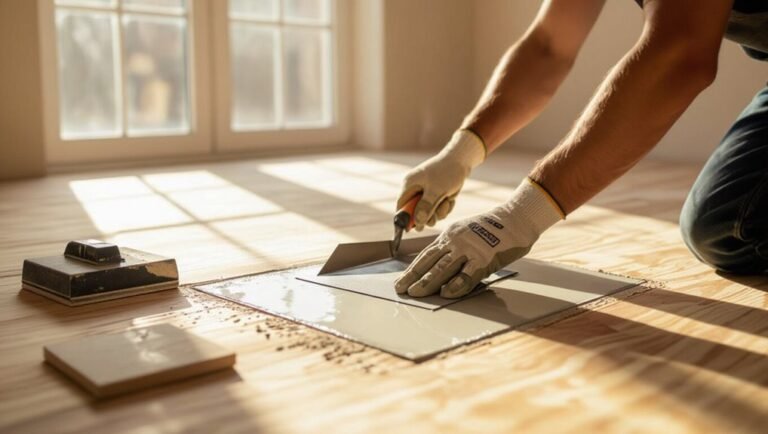
Can You Put Laminate Flooring in a Bathroom? Here’s the Truth
You can put laminate flooring in a bathroom, but you’ll need to be careful and realistic about limits. Choose a water-resistant or waterproof-rated product, install a continuous moisture barrier and sealed seams, and keep ventilation and cleanup habits strict to prevent swelling and mold. Full baths with frequent water exposure still favor vinyl or tile. If you want to know practical installation steps, costs, and when laminate is or isn’t worth the risk, keep going.
Can You Put Laminate Flooring in a Bathroom? Quick Answer
Yes—you can install laminate in a bathroom, but only if you choose water-resistant products and take strict moisture-control precautions.
You’ll face risks like swelling, warping, and mold if water gets under the seams or planks.
Consider waterproof vinyl or tile as safer alternatives for high-moisture areas.
Direct short answer (Yes/No and main caveat)
You can—but only with precautions: standard laminate isn’t waterproof, so use water-resistant or specially rated waterproof laminate and seal all seams and edges to prevent moisture damage.
Yes, you can put laminate flooring in a bathroom if you choose appropriate products and install them carefully.
Expect vigilant maintenance and immediate cleanup of spills to avoid swelling, warping, or mold around vulnerable seams and thresholds.
One-sentence summary of risks and alternatives
Although standard laminate resists everyday traffic, it swells and delaminates when exposed to standing water.
So choose waterproof or water-resistant plank products, tightly seal seams and junctions, and consider true waterproof alternatives like vinyl plank, tile, or sealed natural stone for higher-moisture bathrooms.
You’ll face moisture damage, warped boards, and mold if you don’t seal properly, so prioritize waterproof materials and careful installation.
Understanding Laminate Flooring and Moisture
You’re working with a product made of a dense core (usually HDF or MDF), a printed design and wear layer on top, and a backing for stability.
That layered construction looks good but the core and joints will swell, the wear layer can peel, and trapped moisture can lead to mold if water gets in.
What is laminate flooring?
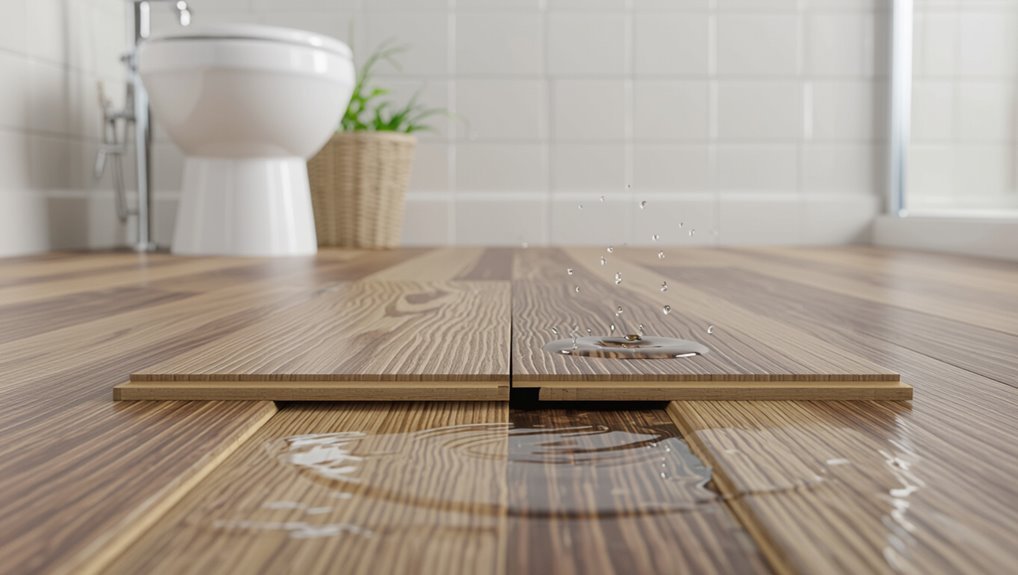
Laminate flooring mimics wood or stone by layering a photographic image and a tough wear layer over a compressed fiberboard core, and it’s engineered to be durable and affordable.
You’ll find it resists scratches and handles everyday spills better than real wood, but it isn’t waterproof.
You should expect some susceptibility to standing water and moisture-driven swelling if not properly installed and maintained.
How laminate is constructed (core, wear layer, backing)
Since laminate isn’t fully waterproof, it’s helpful to know what it’s made of so you can judge how it handles moisture.
You get a dense fiberboard core that gives strength, a printed decorative layer that mimics wood or tile, a tough wear layer that resists scratches, and a backing layer that stabilizes and adds some moisture resistance.
Each layer affects performance.
Why moisture is a problem for laminate (swelling, delamination, mold)
Although each layer of laminate is engineered for durability, moisture still poses serious risks you need to understand: water can swell the fiberboard core, weaken the glue lines that hold layers together, and create conditions where mold and mildew take hold.
If moisture reaches seams or damaged edges, boards warp, cup, or delaminate, and mold can grow under the surface, forcing costly replacement.
When Is Laminate Appropriate in a Bathroom?
You can use laminate in a bathroom when the space is low-moisture—like a powder room or a rarely used en-suite—with excellent ventilation and quick cleanup after splashes.
For full bathrooms with frequent showers or tubs, laminate isn’t the best choice because prolonged dampness and leaks will warp the boards.
If you can’t guarantee good ventilation, waterproof underlayment, and routine maintenance, choose a truly water-resistant floor instead.
Types of bathrooms (full bathroom vs powder room vs en-suite)
Bathrooms come in several common layouts—full baths, powder rooms, and en-suites—and each type affects whether laminate makes sense.
In a full bathroom with shower or tub, you’ll face higher water exposure.
Powder rooms see minimal splashing, making laminate more viable.
En-suites vary: proximity to shower matters.
Consider traffic, spill risk, and maintenance needs for each layout before choosing laminate.
Conditions where laminate can work (low-moisture bathrooms, excellent ventilation)
If your bathroom stays relatively dry and gets good airflow, laminate can be a practical choice. You should choose water-resistant boards, seal seams, and use tight connections at thresholds.
Install underlayment that resists moisture and maintain ventilation—exhaust fans and open windows. With quick spill cleanup and routine checks for leaks, laminate performs well in low-moisture, well-ventilated bathrooms.
Situations where laminate is strongly NOT recommended
While laminate can work in drier, well-ventilated bathrooms, there are clear situations where you should steer clear.
Don’t use laminate in full bathrooms with frequent showers, tubs, or kids; in rooms lacking exhaust fans or with chronic humidity; on floors prone to standing water or leaks; or in basements with moisture intrusion.
In those cases, choose waterproof tile, vinyl, or sealed concrete.
Alternatives to Laminate for Bathrooms
If you’re worried about moisture, there are solid water-resistant and waterproof choices that work better than standard laminate in bathrooms.
You’ll want to compare vinyl plank, ceramic or porcelain tile, and engineered wood on durability, maintenance, cost, and aesthetics to pick what fits your needs.
Below are five quick points to guide that comparison.
- Waterproof vinyl plank: highly water-resistant, easy install, budget-friendly
- Ceramic/porcelain tile: fully waterproof, very durable, can be cold and requires grout maintenance
- Engineered wood: more moisture-tolerant than solid wood, looks warmer, still needs careful installation
- Pros vs cons: balance waterproofing, comfort underfoot, longevity, and cost
- Installation and maintenance: factor in underlayment, sealing, and long-term care requirements
Water-resistant and waterproof flooring options (vinyl plank, tile, engineered wood)
Moisture is the main challenge in bathrooms, so you’ll want flooring that stands up to spills, steam, and wet feet—think vinyl plank, ceramic or porcelain tile, and engineered wood designed for damp areas.
Vinyl plank offers true waterproof performance and easy installation.
Tile is fully waterproof and durable.
Engineered wood tolerates humidity better than solid wood but still needs proper sealing and underlayment.
Pros and cons comparison of alternatives
Because bathrooms demand waterproofing and durability, you’ll want to weigh each laminate alternative by how it handles water, installation complexity, cost, and long-term maintenance. Consider pros and cons clearly to match your budget and style.
| Option | Quick pros/cons |
|---|---|
| Vinyl plank | Waterproof, DIY-friendly; can look less premium |
| Tile | Durable, stylish; grout upkeep, harder install |
How to Install Laminate in a Bathroom Step-by-Step (If You Decide to Proceed)
If you decide to proceed, start by choosing water‑resistant or bathroom‑rated laminate and check the subfloor for proper slope and soundness.
Next, install a moisture barrier and underlayment, plan layout with expansion gaps and changeover zones, then cut and fit planks around fixtures, shower bases, and vanities.
Follow each step carefully to keep moisture out and allow the floor to move.
Step 1: Choose water-resistant or specifically rated laminate products
When you’re planning to install laminate in a bathroom, start by choosing products that are expressly water-resistant or rated for high-humidity spaces; standard laminate isn’t built to withstand frequent splashes or steam.
Pick planks with tight locking systems and waterproof cores, check manufacturer bathroom ratings, and buy proper connectors and trim pieces.
- Waterproof core (HDF or SPC)
- Sealed edges
- Manufacturer bathroom rating
- Durable wear layer
- Compatible underlayment
Step 2: Prepare the subfloor and slope for drainage
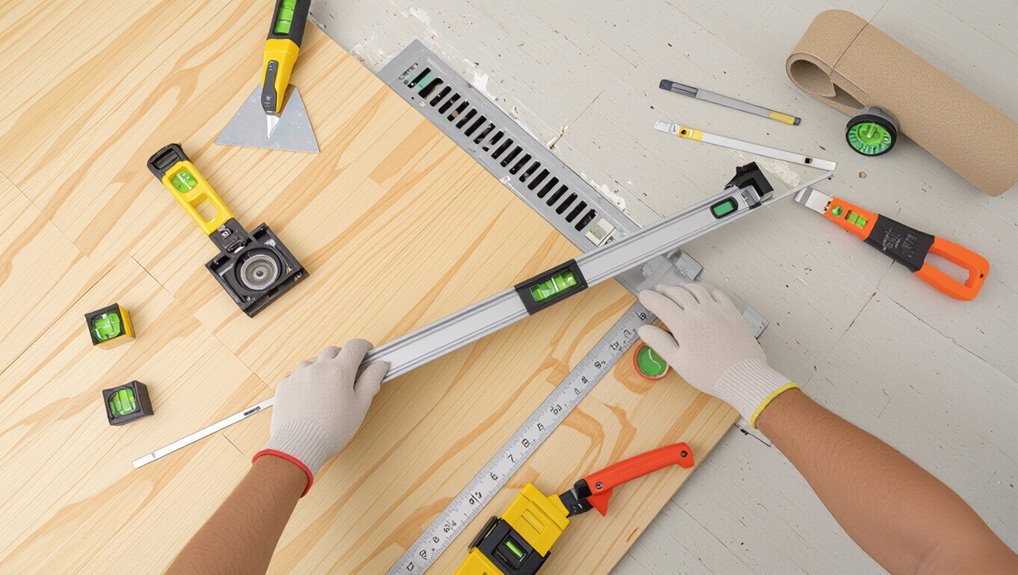
Step 2 is all about getting the subfloor flat, stable, and pitched so water won’t pool under your laminate. You’ll level any dips, repair or replace damaged sections, and guarantee a slight slope toward the drain or tub area using a self-leveling compound or shims as needed.
Remove loose material, screw down squeaky areas, sand high spots, and confirm the slope with a level before proceeding.
Step 3: Install appropriate moisture barrier and underlayment
3 things matter most for protecting laminate in a bathroom: a continuous moisture barrier, a compatible underlayment, and careful sealing at edges and penetrations.
Lay a waterproof membrane over the prepared subfloor, overlap seams, and tape them.
Install an underlayment rated for high-moisture areas to cushion and vapor-manage.
Seal around drains, fixtures, and walls to prevent water intrusion before you click planks together.
Step 4: Layout planning expansion gaps and transition areas
With the moisture barrier and underlayment in place and edges sealed, you’re ready to plan the layout and allow for movement.
Measure room dimensions, stagger joints for stability, and orient planks toward the main entrance for visual flow.
Leave consistent 1/4–1/2 inch expansion gaps at walls and around fixed objects.
Plan junction strips at doorways and thresholds to handle height changes and moisture breaks.
Step 5: Cut and fit around fixtures, shower bases, and vanities
Measure carefully before cutting—accurate fits around toilets, shower bases, and vanities make the difference between a durable floor and costly leaks.
Mark cut lines, dry-fit planks, and use a jigsaw or coping saw for curves.
Remove trim and toe-kicks for tight clearances. Cut access notches for pipes, test-fit repeatedly, then reinstall fixtures to guarantee stable, even seating without forcing joints.
Step 6: Seal joints, seams, and perimeter (recommended sealants and methods)
Before you finish, seal every joint, seam, and the perimeter to keep water out and protect the core of your laminate.
Use a high-quality silicone or polyurethane bathroom-grade sealant for edges and around fixtures.
Apply thin, continuous beads, tooling them smooth.
For plank seams, use manufacturer-approved seam sealer or liquid wax.
Allow full cure before any moisture exposure or foot traffic.
Step 7: Install transitions and thresholds to other rooms
Step 7: Install connections and thresholds to create a watertight, smooth link between your bathroom laminate and adjoining floors.
Choose profiles that match floor heights—reducer, T-molding, or threshold—and cut to fit.
Apply sealant under thresholds where water could travel, fasten according to manufacturer instructions, and leave expansion gaps as directed.
Test connections for stability and clean excess sealant for a neat finish.
Step 8: Post-installation checks and curing time
Now that your thresholds and connections are secure, inspect the entire installation for gaps, loose planks, and uneven joints.
Tighten or replace problem pieces, apply sealant at perimeters if recommended, and clean debris.
Allow the floor to cure per manufacturer guidelines—usually 24–72 hours—before heavy traffic or placing furniture.
Maintain ventilation and avoid moisture during curing to guarantee proper adhesion and stability.
Common Problems and Mistakes When Using Laminate in Bathrooms
When you use laminate in a bathroom, you’ll most often see failure modes like buckling, cupping, and edge swelling from trapped or repeated moisture.
Many installation mistakes—poor seams, inadequate expansion gaps, or skipping a proper underlayment—speed up those problems.
And if you pick regular laminate instead of a water-rated product, you’ll be inviting trouble no matter how well you install it.
Typical failure modes (buckling, cupping, edge swelling)
Three common failure modes you’ll see with laminate in bathrooms are buckling, cupping, and edge swelling, and each points to moisture or installation issues that weren’t properly addressed.
You’ll notice boards lifting or gaps forming (buckling), boards cupping with raised centers from trapped moisture, and swollen edges where joints open.
These signs mean water intrusion or inadequate vapor management that needs correction.
Installation mistakes that accelerate failures
If you skip proper underlayment, ignore expansion gaps, or install over a damp subfloor, you’ll dramatically shorten laminate’s life in a bathroom.
You also risk improper plank alignment, tight seams that trap moisture, and failing connections at thresholds.
Don’t seal joints with incompatible caulk, overtighten fasteners, or neglect perimeter ventilation.
Follow manufacturer spacing and substrate prep to prevent rapid warping and delamination.
Product selection errors (buying non-water-rated laminate)
Because bathroom conditions are harsh, buying standard laminate instead of a water-rated product is a common—and costly—mistake.
You’ll face swelling, delamination, and mold when moisture infiltrates seams or damaged edges.
Choose products explicitly rated for moisture, review core composition and locking systems, and verify manufacturer warranties for wet-area use.
Don’t gamble on appearance alone—pick durability and water resistance.
Prevention and Best Practices to Maximize Longevity
You can extend your laminate’s life by controlling humidity with exhaust fans, a dehumidifier, and good airflow.
Stick to gentle, non-abrasive cleaners, wipe up spills immediately, and avoid steam mops or soaking the floor.
Use rugs or waterproof mats in high-risk areas like in front of the tub and sink to protect seams and entry points.
Ventilation and humidity control strategies
When moisture levels stay controlled, your laminate bathroom floor will fend off warping, cupping, and mold much more effectively. Good ventilation and sensible humidity habits are the foundation of long-term performance.
Use these strategies to keep dampness low:
- Install and run an exhaust fan during and after showers
- Open windows when possible
- Use a dehumidifier if needed
- Seal edges and junctions
- Avoid leaving wet mats or towels on the floor
Regular maintenance and cleaning tips (what to avoid)
Controlling humidity and keeping water at bay are only part of the story—regular care stops small problems from becoming big ones.
Wipe spills quickly, use a damp—not soaking—mop, and avoid steam cleaners. Don’t use abrasive scrubbers, waxes, or oil-based cleaners that damage seals.
Place mats at entry points and trim pet nails to prevent scratches; inspect seams periodically for wear.
Quick-response measures for spills and leaks
If a spill or leak happens, act fast: blot standing water with absorbent towels, lift soaked rugs or mats, and use a wet/dry vacuum to extract moisture from seams and joints.
Open windows, run a fan, and use a dehumidifier to dry the area within 24–48 hours.
Inspect edges and underboards for swelling; tighten loose planks and document damage for repairs or insurance.
When to use area rugs and protective mats
After you’ve handled spills and checked for any swelling, think about where area rugs and protective mats will actually help protect your laminate.
Place mats by sinks, tubs, and doorways to catch drips and reduce foot traffic wear. Use non-slip, breathable pads that allow joints to dry.
Remove and dry rugs regularly, and avoid long-term moisture trapping to prevent warping and mold.
Cost, Durability, and Lifespan Considerations
You’ll want to weigh laminate’s lower upfront cost against pricier waterproof options that offer stronger long-term protection.
Expect laminate in a bathroom to last less time than vinyl or tile unless you choose water-resistant products and keep moisture strictly controlled.
Check warranties carefully for water damage exclusions, coverage period, and any required installation or maintenance conditions.
Comparative cost overview: laminate vs waterproof alternatives
While laminate often costs less upfront than true waterproof options like luxury vinyl plank (LVP) or tile, you should weigh that savings against long-term performance and replacement costs. You’ll compare initial price, water resistance, and maintenance to decide.
| Option | Avg. Cost | Water Resistance |
|---|---|---|
| Laminate | $1–3/sq ft | Low |
| LVP | $2–5/sq ft | High |
| Tile | $3–10/sq ft | Very High |
Expected lifespan in bathroom conditions
Because bathrooms expose flooring to frequent moisture, spills, and humidity swings, laminate’s expected lifespan is usually shorter than in dry rooms.
You can expect quality laminate to last roughly 5–15 years in a bathroom, depending on installation, water exposure, maintenance, and product quality.
Prompt cleanup, good ventilation, and moisture barriers extend life, but frequent standing water will drastically shorten it.
Warranty considerations and what to check
If you’re weighing laminate for a bathroom, check the warranty closely so you know what’s actually covered and for how long.
Confirm moisture, spill, and flood exclusions; see if coverage requires specific underlayment, installation methods, or professional fitting.
Note transferability, pro-rated terms, and claim processes.
Keep receipts, photos, and installation records to support any future warranty claim.
Case Examples and Scenarios
You’ll look at three practical situations to decide if laminate’s right for your space.
For a small powder room, a primary bathroom with tub and shower, and a high-humidity condo, I’ll outline recommended approaches and moisture-mitigation steps.
Use these scenarios to match product choice and installation details to your needs.
Scenario A: Small powder room—recommended approach
When fitting laminate in a small powder room, aim for practicality first: seal all joints, slope the subfloor slightly toward the drain or away from fixtures, and choose a moisture-resistant laminate with tight-locking edges so you won’t trap water under the surface.
Use vapor barrier beneath, trim thresholds tightly at the door, raise baseboards slightly, and keep cleaning routine frequent to catch spills before they penetrate seams.
Scenario B: Primary bathroom with tub and shower—recommended approach
Because a primary bathroom combines heavy daily use with concentrated moisture around tubs and showers, you’ll want a more robust strategy than you’d use in a powder room:
Choose waterproof vinyl plank or engineered tile instead of standard laminate, seal junction points, install a moisture barrier and proper underlayment, slope areas near shower drains, and maintain prompt cleanup.
Consider professional installation for durability and warranty compliance.
Scenario C: Condo with high humidity—recommended approach
If you live in a condo with persistently high humidity, prioritize fully waterproof flooring like vinyl plank or ceramic tile instead of standard laminate, and focus on ventilation, vapor barriers, and strict moisture-control routines to prevent warping and mold.
Choose waterproof thresholds and sealants, install a continuous vapor barrier, run exhaust fans on timers, use a dehumidifier, and inspect seals regularly to catch leaks early.
Pros and Cons Summary
You’ll want a quick checklist to decide if laminate fits your bathroom needs, weighing durability, water risk, cost, and upkeep. Below is a compact pros/cons guide to help you compare the main factors at a glance. Use it to decide whether to proceed with laminate or pick a more moisture-resistant option.
| Pros | Cons |
|---|---|
| Affordable | Vulnerable to standing water |
| Easy to install | Seams can swell |
| Wide style options | Not best for high humidity |
| Low maintenance | May need prompt repairs |
Quick checklist to decide: Is laminate right for your bathroom?
Wondering whether laminate belongs in your bathroom? Use this quick checklist to decide—think about moisture risk, ventilation, installation quality, water-resistant product options, and maintenance commitment.
- High humidity or frequent spills?
- Good ventilation and drying time?
- Waterproof or water-resistant laminate?
- Tight seams and proper underlayment?
- Will you maintain seals and promptly fix leaks?
Frequently Asked Questions
You’ve probably got questions about water resistance, overflow damage, lifespan with good ventilation, installing vinyl over laminate, and which brands to trust.
We’ll answer whether sealing helps, how susceptible laminate is to warping from a tub overflow, and what realistic longevity to expect.
You’ll also get guidance on overlaying vinyl plank and labels or certifications to look for.
Can laminate flooring be sealed to make it waterproof?
Can laminate be sealed to make it truly waterproof? You can add edge sealers and surface treatments to improve water resistance, but standard laminate isn’t fully waterproof.
Sealing helps short spills and humidity, yet seams and core remain vulnerable. For wet areas, choose waterproof-rated products like vinyl or waterproof laminate alternatives instead of relying solely on sealants to prevent long-term damage.
Will laminate flooring warp if a bathtub overflows?
Sealing can help short-term spills, but a bathtub overflow exposes laminate to far more water and for longer periods.
You’ll likely see buckling, swelling, or peeling if water soaks the seams and core. Act quickly: remove standing water, dry with fans and dehumidifiers, lift affected planks to inspect, and replace damaged boards.
Prolonged saturation ruins the tongue-and-groove joints.
How long will laminate last in a bathroom with good ventilation?
Lifespan depends on product quality, installation, and how well you control moisture: with good ventilation and careful maintenance, click-lock laminate can last 7–15 years in a bathroom, while higher-end, water-resistant rigid-core options may reach 15+ years.
You’ll prolong life by wiping spills promptly, using mats near wet zones, keeping grout/seals intact, and monitoring seams for swelling so you can repair early.
Can I use vinyl plank over existing laminate in a bathroom?
Wondering if you can put vinyl plank over your existing laminate in a bathroom?
Yes, you can often install vinyl plank over laminate if the surface is flat, dry, and securely fastened.
Remove trim, address any height differences, and use recommended underlayment if needed.
Verify transitions and door clearances work, and follow manufacturer installation guidelines to maintain warranties and performance.
Are there specific brands or product labels to look for?
If you decide to install vinyl plank over existing laminate, you’ll want to choose products labeled for bathroom or wet-area use and from reputable manufacturers.
Look for SPC or WPC core options, waterproof certification, and an abrasion class (AC) rating suitable for bathrooms.
Check warranties that cover moisture damage and read installer instructions.
Brands like Shaw, COREtec, and Armstrong often offer suitable lines.