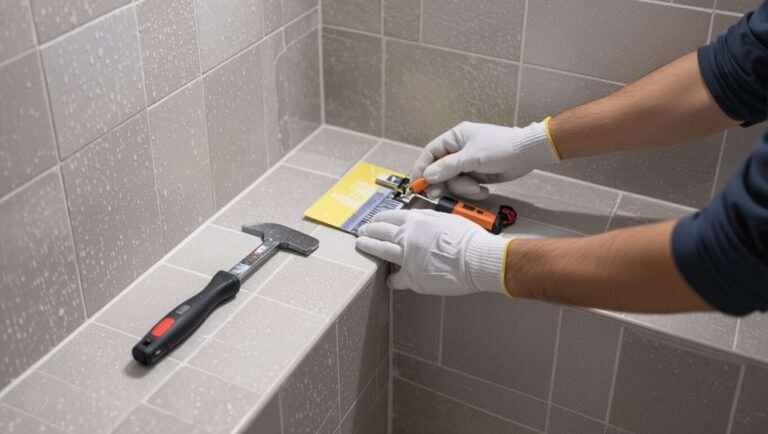
Ceramic vs Porcelain Tile: How to Tell the Difference Instantly
You can tell ceramic from porcelain instantly by checking weight, density, and water absorption: porcelain feels heavier and denser, absorbs ≤0.5% water, and resists chips and stains better; ceramic is lighter, more porous, easier to cut, and usually cheaper. Visually, porcelain often mimics stone or wood with crisper details and can be rectified for thin grout lines, while ceramic shows softer glazes. Keep looking and you’ll find tips for uses, installation, and buying.
Which Is Which and When It Matters
You’ll want to know the key difference: porcelain is denser and less porous than ceramic.
For quick guidance, pick ceramic for low-traffic, budget-friendly walls and porcelain for high-traffic floors and wet areas.
Knowing that tradeoff makes it easier to choose the right tile for each job.
One-sentence summary: key difference
While both look similar at a glance, the key difference is that porcelain is denser and less porous—so it resists moisture and heavy wear better—whereas ceramic is softer, easier to cut, and often cheaper, making it a better choice for light‑traffic areas and DIY projects.
You’ll spot how to tell the difference between ceramic and porcelain tile by testing weight, water absorption, and edge hardness quickly.
Quick recommendation: best uses for ceramic vs porcelain
When deciding which tile to use, think about where it will live and how much wear and moisture it’ll face. You’ll pick ceramic for low-traffic, dry areas and porcelain for high-traffic or wet zones. Match finish and slip resistance to use.
| Area | Best Tile | Why |
|---|---|---|
| Bathroom floor | Porcelain | Moisture, durability |
| Kitchen backsplash | Ceramic | Style, cost |
| Entryway | Porcelain | Wear resistance |
| Living room | Ceramic | Comfort, economy |
What Are Ceramic and Porcelain Tiles?
You’ll learn that ceramic tiles are made from clay and other natural materials that are shaped and fired to form a durable surface.
Porcelain is a denser, more refined type of tile made from finer clay and fired at higher temperatures for greater hardness and water resistance.
Understanding the raw materials and firing differences helps you pick the right tile for your project.
Definition of ceramic tile
Ceramic tile is a hard, kiln-fired product made from clay and other natural materials that’s glazed or unglazed for different looks and durability.
You’ll find it in varied colors, patterns, and thicknesses, suited for walls and light-traffic floors.
It’s generally more porous and less dense than porcelain, easier to cut and install, and often more budget-friendly for home projects.
Definition of porcelain tile
If ceramic tiles are made from clay and fired to offer affordable, decorative options, porcelain takes that process further: it’s made from denser, more refined clays and fired at higher temperatures to create a harder, less porous product.
You’ll find porcelain is more durable, resists moisture and staining better, and suits high-traffic or outdoor areas where strength and low absorption matter most.
How they’re made: raw materials and firing process
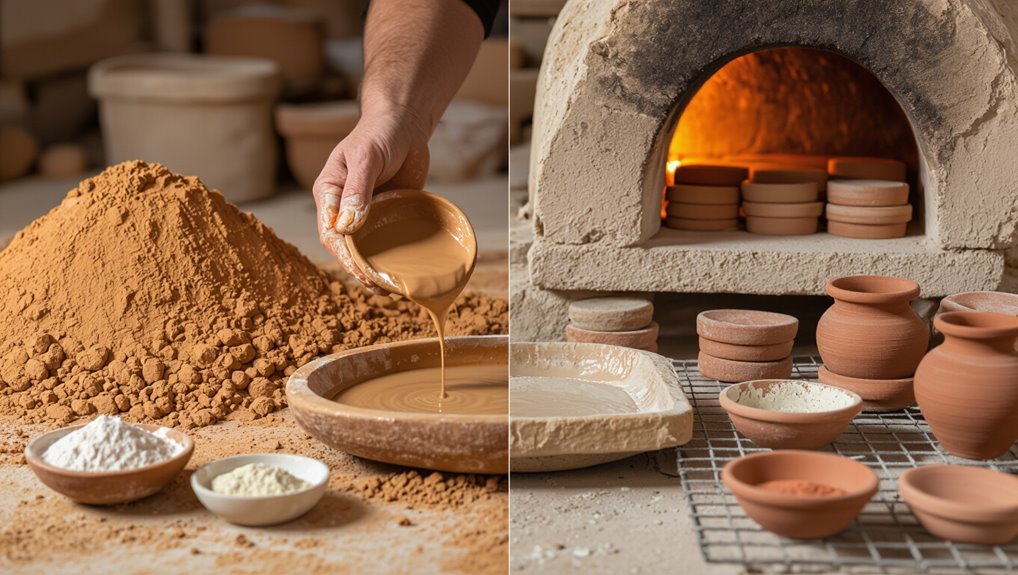
1 key difference in how they’re made comes down to the raw mix and the kiln: manufacturers blend clays, minerals, and sometimes sand or feldspar, then shape the mixture and fire it at controlled temperatures to transform it into hard tile.
You’ll find ceramic uses softer clays and lower firing temps, producing more porous tiles; porcelain uses refined clay, often kaolin, fired hotter for denser, water-resistant results.
Core Physical and Performance Differences
Now you’ll compare the core physical and performance differences that matter when choosing tile.
Pay attention to density, porosity and water absorption, plus how hardness and scratch resistance affect longevity and chip resistance.
You’ll also want to take into account weight and thickness because they impact installation and structural limits.
Density, porosity, and water absorption rates
Because tile density and porosity determine how much water a piece will absorb, you’ll see clear performance differences between ceramic and porcelain in wet or freeze-thaw conditions.
Porcelain is denser, less porous, and absorbs ≤0.5% water, so it resists staining, frost, and moisture-related failures.
Ceramic absorbs more, so it suits dry indoor spaces; sealants can reduce absorption but won’t match porcelain’s baseline.
Hardness and scratch resistance
When you compare ceramic and porcelain for hardness and scratch resistance, you’ll find porcelain generally wins: it’s fired at higher temperatures and often made from finer, denser clay, producing a tougher, more abrasion-resistant surface.
You’ll notice porcelain resists surface wear and everyday scratching better, while glazed ceramic can scratch more easily; finishes and additives also influence real-world performance and maintenance.
Durability and chip resistance
Although both ceramics can handle daily foot traffic, porcelain usually holds up better to impacts and chipping thanks to its denser body and higher firing temperature.
You’ll find porcelain resists edge and corner damage, making it ideal for high-use areas.
Ceramic may chip more easily under heavy impact, so you’ll want to protect vulnerable zones or choose thicker glaze and quality installation to reduce risks.
Weight and thickness considerations
If you’re choosing between ceramic and porcelain, consider how their weight and thickness affect handling, installation, and the structural load on your subfloor. Porcelain is denser and often thicker, so you’ll need stronger support and more effort to cut and set. Ceramic is lighter and thinner, easier for DIY installs but less suited for heavy-load areas.
| Tile | Typical Thickness | Relative Weight |
|---|---|---|
| Ceramic | 6–8 mm | Light |
| Porcelain | 8–12 mm | Heavy |
Visual & Aesthetic Differences
Now let’s look at how ceramic and porcelain differ visually so you can pick the right look for your space.
Consider their surface finishes and glazing options, the realism of wood or stone patterns and color depth, and how grout lines, sizing consistency, and rectified edges affect the final appearance.
These factors determine whether a tile achieves the aesthetic you want and how easy it’s to install a seamless layout.
Surface finishes and glazing options
When you compare surface finishes and glazing options, the visual differences between ceramic and porcelain become immediately clear: ceramic often offers a softer, more varied glaze suited to hand-crafted looks, while porcelain delivers crisper, more consistent finishes and can mimic natural stone or polished concrete with greater realism.
You’ll choose glazed ceramics for matte, reactive looks and porcelain when you want durable, finely tuned surface effects.
Color, patterns, and realism in wood/stone looks
1 clear advantage of porcelain over ceramic is how convincingly it replicates wood and stone: you’ll find finer veining, sharper texture definition, and more consistent color runs in porcelain, while ceramic tends to show softer, more varied patterns that read as handcrafted.
When choosing, consider how realistic grain, subtle color shifts, and printed surface resolution affect your design intent and room scale.
Grout lines, sizing consistency, and rectified edges
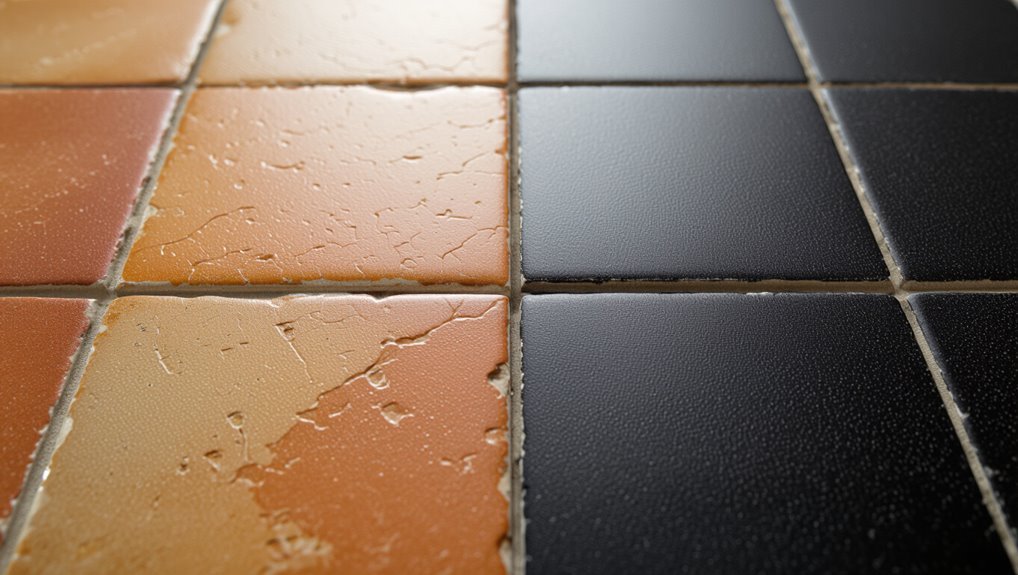
Beyond pattern realism, how tiles meet at their edges and the gaps between them has a huge visual impact.
You’ll notice porcelain’s tighter sizing and rectified edges let you run minimal grout lines for a sleek, continuous look. Ceramic often needs wider grout.
Consider:
- Porcelain: uniform size, rectified option
- Ceramic: slight size variance
- Narrow grout: modern seamless
- Wider grout: hides irregularities
Where to Use Each Best Applications and Room-by-Room Guide
You’ll pick different tile types depending on where you’re installing them—ceramic often works well for indoor floors like living rooms and bedrooms, while porcelain handles wet areas and heavy use better.
For bathrooms, showers, and laundry rooms choose low-absorption, slip-resistant porcelain; for patios, walkways, and freeze/thaw climates use frost-rated porcelain or specially rated outdoor ceramic.
In commercial and high-traffic spaces, prioritize durable, dense porcelain or commercial-grade ceramic designed to resist wear.
Indoor floors (living rooms, kitchens, bedrooms)
When choosing between ceramic and porcelain for indoor floors, think about how each room gets used and what matters most—durability, slip resistance, warmth underfoot, or style.
Use porcelain in high-traffic kitchens and living areas for toughness and low water absorption.
Choose ceramic in bedrooms or low-traffic spaces for cost savings and warmer feel underfoot.
Match finishes to furniture and maintenance needs.
Wet areas (bathrooms, showers, laundry rooms)
Bathrooms, showers, and laundry rooms demand tiles that stand up to constant moisture, frequent cleaning, and occasional spills.
You’ll prefer porcelain for wet floors and shower walls—it’s denser, less porous, and resists staining.
Use ceramic for decorative wall accents or low-traffic laundry areas where reduced cost and easier cutting matter.
Seal ceramic in wet zones; grout choice and slope matter for safety.
Outdoor use (patios, walkways, freeze/thaw climates)
Although outdoor tiles face harsher conditions than indoor ones, choosing the right material makes patios, walkways, and pool surrounds both durable and attractive.
You should pick porcelain outdoors—its low water absorption and frost resistance handle freeze/thaw cycles and heavy foot traffic.
Use textured, slip-resistant finishes and proper installation with flexible adhesives and appropriate grout.
Glazed ceramic is best kept for covered, mild climates.
Commercial and high-traffic spaces
Because high-traffic commercial spaces demand durability and safety, you should match tile type to use: choose porcelain for heavy foot traffic, wet areas, and outdoor-facing zones, and reserve ceramic for light-duty, low-moisture rooms where cost and design variety matter.
Use porcelain in lobbies, corridors, restrooms, kitchens, and exterior entrances; use ceramic in private offices, meeting rooms, and decorative wall applications.
How to Tell the Difference Instantly Quick Tests and Practical Checks
You can spot key differences fast by following a few practical checks: inspect the glaze, shade consistency, and size, then look at the edge and thickness for clues.
Do a simple water absorption test (drop a little water and watch if it soaks in) and compare weight.
Finally, tap tiles to hear the sound—denser porcelain rings more than ceramic.
Visual inspection checklist (glaze, shade, size)
When you inspect tiles up close, a quick visual checklist—glaze feel and shine, shade consistency, and exact dimensions—lets you spot whether a tile is ceramic or porcelain without special tools.
Run fingers over glaze: porcelain often has thinner, harder glaze.
Check shade: porcelain shows uniform color through body; ceramic may vary.
Measure thickness and edge regularity for precise identification.
Water absorption test step-by-step
1 simple water-drop test will tell you a lot: place a few drops on an unglazed edge or a cut-back area, wait 60–90 seconds, then blot—porcelain will repel and keep beads on the surface, while ceramic will absorb and darken quickly.
Repeat at several spots, note consistency, and dry between tries. Use this quick check when you need a fast, reliable distinction.
Tap/sound and weight checks
Curious how a few taps can tell you more than looks alone? Tap the tile with your knuckle or a coin—porcelain sounds higher, clearer; ceramic gives a duller thud.
Lift a sample or edge: porcelain feels denser and heavier for its size, ceramic lighter.
Combine sound and heft to judge density quickly, especially when visual cues are inconclusive.
Edge and thickness inspection
Sound and heft give you a quick feel for density, but the edges and thickness tell the rest of the story fast.
You’ll inspect cut edges and measure depth to differentiate ceramic from denser porcelain. Check for uniformity, glaze penetration, and feel.
- Thin, uniform body = porcelain
- Thicker, varied body = ceramic
- Glaze through edge = porcelain
- Clear glaze line = ceramic
Installation, Cutting, and Maintenance Differences
When you work with ceramic versus porcelain, you’ll notice porcelain needs tougher blades and more effort for cutting and drilling.
Pay attention to substrate, thinset, and grout choices during installation so tiles bond properly and perform long term.
For cleaning and repairs, ceramic is generally easier to maintain whereas porcelain resists stains better but can be harder to fix if damaged.
Cutting and drilling: tools and difficulty
Cutting and drilling tile usually feel harder with porcelain than ceramic because porcelain’s higher density and harder glaze demand stronger bits and slower, steadier work.
Use diamond blades, carbide or diamond-tipped drill bits, water cooling, and low RPM to prevent cracking and overheating.
Ceramic cuts faster with standard carbide tools and less cooling, but you’ll still score and support pieces to avoid chipping.
Installation tips: substrate, thinset, and grout choices
1 key to a lasting tile job is matching the right substrate, thinset, and grout to your tile type and location: porcelain needs a denser, well-bonded backer and an ANSI-graded polymer-modified thinset rated for large-format or impervious tile, while ceramic can tolerate standard cement board and basic thinset in many interior applications.
Choose grout based on joint width and exposure—sanded for wider joints, unsanded for narrow, and epoxy or urethane grouts where stains and moisture are a concern.
You should also allow proper curing, use correct trowel notches, and employ movement joints to prevent cracks.
Routine cleaning and stain resistance
After you’ve set and cured tile properly, keeping it looking good comes down to routine cleaning and understanding stain resistance differences between ceramic and porcelain.
You should sweep and mop regularly with pH-neutral cleaner; avoid harsh acids on glazed ceramics.
Porcelain resists stains and water better, so you can clean more aggressively when needed.
Promptly blot spills on both to prevent grout staining.
Long-term maintenance and repairs
When it comes to long-term upkeep and repairs, you’ll find that the installation and cutting choices you make now directly affect how easy maintenance will be down the road; porcelain’s density and hardness mean fewer chips and less frequent resealing, while ceramic tiles—especially softer-bodied or unglazed varieties—can need more careful handling, occasional grout touch-ups, and gentler cutting methods to avoid cracks.
You should plan for grout sealing, proper substrate, and matching replacement tiles to simplify repairs.
Cost, Value, and Lifespan Comparison
You’ll see a wide price range between ceramic and porcelain, with tile quality, size, finish, and labor driving cost.
Think about how upfront expense versus durability affects return on investment and what buyers in your market expect.
Also compare expected lifespans and warranty terms so you can choose the option that gives the best long-term value.
Typical price ranges and factors that drive cost
Typical projects can cost anywhere from a few dollars to well over $10 per square foot for the tile itself. Your final bill will depend on material choice, tile size and finish, installation complexity, and labor rates.
Porcelain usually costs more than ceramic. Larger or textured tiles raise price, premium glazes add cost, and difficult layouts, substrates, or specialized installers increase labor and total expense.
Return on investment and resale considerations
One clear way to think about tile choices is to weigh upfront cost against long-term value: porcelain usually costs more up front but can outlast ceramic in high-traffic or wet areas, while ceramic can deliver a lower initial spend and still appeal to many buyers when well-installed and maintained.
For resale, pick finishes that match neighborhood expectations; neutral, durable tiles typically boost perceived home value.
Longevity and warranty expectations
While porcelain often outlasts ceramic in heavy-use or moisture-prone areas, your actual lifespan will hinge on factors like installation quality, traffic patterns, and maintenance habits. Warranties vary: porcelain often carries longer commercial-backed terms; ceramic warranties can be shorter. Choose quality installation and regular sealing (if needed) to maximize life.
| Tile | Typical Lifespan | Typical Warranty |
|---|---|---|
| Porcelain | 50+ years | 10–25 years |
| Ceramic | 20–50 years | 5–15 years |
Common Mistakes When Choosing or Identifying Tiles
Don’t assume a shiny glazed ceramic is the same as porcelain — they look similar but perform differently.
Make sure you pick tiles rated for outdoor and freeze–thaw conditions if you’ll use them outside.
Also, don’t underestimate your subfloor and installation needs, since poor preparation can ruin even the best tile.
Confusing glazed ceramic for porcelain
Because glazed ceramic and porcelain can look nearly identical at first glance, you might easily assume they’re the same—especially when a shiny finish hides differences in composition and strength.
Check the tile’s body and water absorption rating: porcelain is denser and absorbs less.
Don’t rely on appearance or sheen alone; ask the seller, inspect the unglazed edge, and verify technical specs before buying.
Choosing wrong tile for outdoor/freeze environments
Mistaking glazed ceramic for porcelain can leave you with a tile that looks fine indoors but fails outdoors—especially where freezing and thawing occur.
You need frost-resistant, low-porosity porcelain or specially rated outdoor ceramic. Don’t assume any glazed surface is suitable.
Check PEI, water absorption (<0.5%), and freeze-thaw ratings. Pick tiles rated for exterior use to avoid cracking, spalling, and costly replacements.
Underestimating subfloor and installation needs
If you skip evaluating the subfloor or assume any installer can handle tile work, you’ll face grout cracks, lippage, and premature failures.
You need proper substrate prep, waterproofing, and skilled setting for ceramic or porcelain. Don’t cut corners—inspect, level, and choose qualified installers.
Consider:
- Cement backer board or uncoupling membrane
- Moisture barrier where needed
- Proper thinset and trowel size
- Experienced tile setter
Best Practices and Buying Tips
When you’re buying tile, ask suppliers about slip resistance, frost rating, and delivery timelines so you get exactly what your project needs.
Learn to read specs like PEI, water absorption, and AC ratings to match tiles to traffic and moisture conditions.
Always test samples in the designated space and order at least 10% extra for cuts and potential damage.
Questions to ask suppliers and dealers
What should you ask before buying tile?
Ask about stock availability, lead times, return and breakage policies, and delivery options.
Confirm recommended grout and adhesive, installation support or certified installers, and warranty details.
Request samples to check color and finish in your space, and ask about production batch consistency to avoid visible variations across your installation.
How to read technical specs (PEI, water absorption, AC ratings)
Because technical ratings translate into real-world performance, you should learn the key specs—PEI, water absorption, and AC ratings—so you can match tile to the room’s traffic, moisture exposure, and expected wear.
Check PEI for foot traffic durability, water absorption to confirm suitability for wet areas (porcelain <0.5%), and AC rating for surface abrasion resistance in commercial contexts.
Use specs to choose confidently.
Sample testing and ordering extra for cuts/damage
If you want the finished floor to look and perform as expected, order samples and test them in the actual space before committing—and plan to buy extra to cover cuts, waste, and breakage.
Try tiles in different light, test grout color, and confirm durability. Buy 10–15% extra for cuts; more for patterns or outdoor use.
- test samples in place
- check grout match
- measure waste percentage
- account for breakage
Quick Decision Flow Which Tile Should You Pick?
Start by checking your budget, where the tile will go, how much foot traffic it will get, and the look you want.
If you’re on a tight budget, ceramic usually fits; for an upscale renovation pick porcelain for durability and premium finishes.
For outdoor or high-moisture projects, choose porcelain rated for exterior use.
Decision checklist (budget, location, traffic, aesthetics)
When you’re choosing between ceramic and porcelain, run through a quick checklist of budget, location, foot traffic, and appearance to narrow your options fast.
Consider cost limits, indoor versus wet or freeze-prone areas, expected wear, and desired look.
Pick ceramic for lower cost and light traffic; choose porcelain for durability, moisture resistance, and high-traffic or exterior spots with a refined finish.
Three scenario-based recommendations (budget home, upscale renovation, outdoor project)
Now that you’ve run through the checklist — budget, location, traffic, and look — you can apply those answers to three common scenarios: a tight-budget home, an upscale renovation, and an outdoor project.
For a tight budget, choose glazed ceramic for low cost and easy install.
For upscale, pick porcelain for durability and high-end finishes.
For outdoors, use frost-resistant, textured porcelain for safety and longevity.
FAQ
You probably have practical questions like whether ceramic can go outdoors or if porcelain always costs more.
You’ll want to know how to tell glazed porcelain from ceramic, which works best with underfloor heating, and how much extra to order for cuts and breakage.
Let’s answer these clearly so you can pick confidently.
Can I use ceramic tile outdoors?
Can you use ceramic tile outdoors? You can, but choose frost-resistant, low-porosity ceramic rated for exterior use.
Avoid glazed pieces that trap moisture and pick tiles with slip-resistant finishes for wet areas.
Install on a stable, well-drained substrate with proper adhesive and grout designed for outdoor exposure.
Regular sealing and maintenance extend lifespan and prevent cracking from freeze-thaw cycles.
Is porcelain always more expensive than ceramic?
How much more will porcelain cost compared to ceramic?
It isn’t always pricier. Porcelain often costs more due to higher density, durability, and firing temperatures, but factors like brand, size, finish, and country of origin change prices.
You’ll sometimes find ceramic that’s more expensive than basic porcelain.
Compare specs, warranties, and retailer marks to judge value rather than assuming cost.
How can I identify porcelain if it’s glazed like ceramic?
Wondering whether a glazed tile is porcelain or ceramic? Check density and water absorption: porcelain is denser and absorbs <0.5% water.
Inspect the unglazed edge or back—porcelain has a more uniform, often darker body; ceramic shows a more porous, lighter clay.
Tap it: porcelain gives a firmer, higher-pitched sound.
Manufacturer markings or PEI/ISO ratings also confirm porcelain.
Which tile is better for underfloor heating?
If you’ve been checking edges and density to tell porcelain from ceramic, you’ll want to apply that same attention when choosing tile for underfloor heating because material and construction directly affect heat transfer and durability.
Porcelain conducts heat efficiently, resists thermal shock, and tolerates temperature cycles better than many ceramics.
Choose rectified, dense porcelain for faster, more even warming and long-term reliability.
How much extra should I order for cuts and breakage?
Order about 10–15% extra tile to cover cuts, breakage, and pattern matching—more if your layout is diagonal, you have many small cuts, or the tiles are rectified where matching matters.
Also add 5% for future repairs. Measure carefully, round up to the nearest full box, and keep leftovers stored safely.
If you’re unsure, ask your supplier for guidance before ordering.