How to Remove Hair Dye From Vinyl Flooring Fast and Effectively
Act fast: blot fresh dye with a clean cloth, then wash the spot with mild detergent and warm water to lift pigment. For tougher marks, make a baking soda paste or dab with rubbing alcohol/isopropyl alcohol, working gently with a soft cloth or plastic scraper to avoid scratching. Rinse and blot dry after each try, and always test products in an unseen area first. Keep protective gloves and ventilation handy — continue for step‑by‑step tips and deeper fixes.
Quick Answer Remove Hair Dye from Vinyl Flooring Fast
Act quickly: blot fresh dye, then gently scrub with a mild detergent and a baking soda paste to lift stains.
If the dye has soaked in, faded methods haven’t worked, or the floor’s finish looks damaged, call a professional cleaner. They’ll prevent further harm and restore your vinyl safely.
One-sentence solution
Blot up any excess dye, then gently scrub the spot with a mixture of water and a few drops of dish soap or rubbing alcohol until the stain lifts.
For a one-sentence solution, keep working in small circles, rinse often, and blot dry; if residue remains, repeat with a stronger alcohol solution while testing an inconspicuous area—this is the quickest way to learn how to remove hair dye from vinyl flooring.
When to call a professional
If simple scrubbing with soap or alcohol doesn’t remove the dye, or if the stain covers a large area, you should call a professional—especially when DIY methods risk damaging the vinyl’s finish or seal.
Call a flooring specialist when the dye has deeply set, color has bled into seams, you’re unsure about chemical compatibility, or the floor has textured or luxury vinyl that needs careful restoration.
How Hair Dye Stains Vinyl Flooring Basic Understanding
You’ll see hair dye stick to vinyl because its pigments and chemicals bond with the flooring’s surface, especially if the dye contains peroxide or strong colorants.
Permanent dyes and darker shades soak in faster and cause tougher stains than semi-permanent or natural dyes like henna.
Also note that glossy or urethane‑coated vinyl resists staining better than matte or unsealed finishes, so your floor’s finish affects how hard the stain will be to remove.
Why hair dye stains vinyl (chemical and pigment behavior)
Because hair dye combines strong pigments with reactive chemicals, it can bind quickly to vinyl surfaces and leave stubborn stains.
You’ll find dye molecules penetrate tiny surface pores and latch onto polymer chains in the vinyl.
Alkaline developers and oxidizers open pigments and promote fixation, making removal harder.
Acting fast and using appropriate solvents helps prevent deep bonding and eases cleanup.
Types of hair dye and stain severity (permanent, semi-permanent, natural)
Different dye formulations create different stain risks, so knowing whether the color is permanent, semi-permanent, or natural helps you judge how hard it’ll be to remove from vinyl.
Permanent dyes penetrate and bond tightly, causing deep, stubborn stains.
Semi-permanent coats surface fibers and often wipes away if treated quickly.
Natural dyes like henna can still stain intensely but usually respond to prompt, repeated cleaning.
Vinyl flooring finishes and susceptibility
Knowing the type of dye you’re dealing with helps, but the finish on your vinyl flooring largely determines how easily that color will stick around.
Smooth, glossy vinyl resists staining better; textured or matte finishes trap pigment in grooves and wear layers vary.
If your floor has a strong protective wear layer, stains wipe away faster.
Older or damaged finishes absorb dye more readily.
Safety and Preparation Before You Start
Before you start, put on gloves and eye protection and make sure the area is well ventilated so you don’t inhale fumes.
Gather a checklist of tools and supplies—cleaners, soft cloths, a plastic scraper, and a bucket—so you won’t need to stop mid-job.
Always test your chosen cleaner on a hidden spot first to confirm it won’t damage the vinyl.
Personal protective equipment (gloves, ventilation, eye protection)
You’ll want at least nitrile gloves, good ventilation, and eye protection before you start—these will protect your skin, lungs, and eyes from dyes and cleaners.
Put on snug gloves, open windows or run a fan, and wear safety glasses or goggles.
If you have respiratory sensitivity, use a mask rated for chemical vapors.
Check gloves for tears and replace if needed.
Tools and supplies checklist
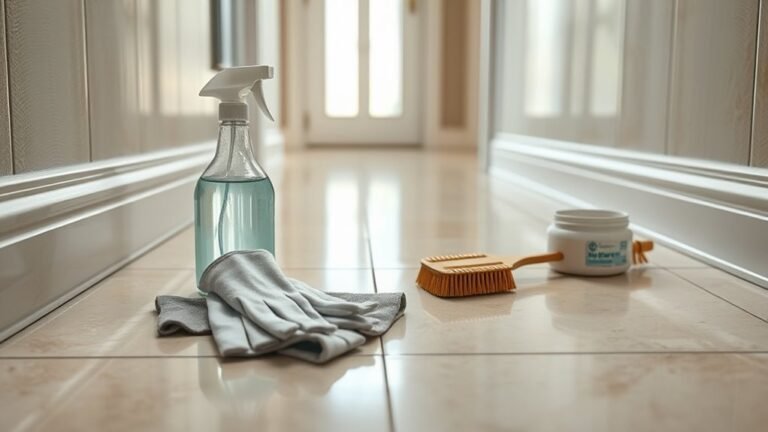
Gather the right tools and supplies so you can work quickly and safely: nitrile gloves, safety glasses, a respirator or mask if you’re sensitive to fumes, a soft microfiber cloth, non-abrasive sponge, plastic scraper or old credit card, mild dish soap, isopropyl alcohol (70%+), acetone or nail polish remover (test first), a vinyl-safe cleaner, paper towels, a bucket of warm water, and a small tray to hold liquids.
- Gather protective gear
- Collect cleaning materials
- Prepare disposal materials
Test-spot protocol and why it’s essential
Why test a small area first? You’ll confirm the cleaner won’t discolor or damage vinyl.
Apply your chosen product to an inconspicuous spot, wait recommended time, then blot and inspect. If vinyl shows no harm, proceed.
If you see fading, swelling, or residue, stop and try a milder option. Testing saves time, money, and prevents irreversible damage.
Fast Emergency Methods (Immediate Actions for Fresh Spills)
If dye just spilled, act fast: blot up excess with a clean cloth to prevent it from setting.
Try the gentlest fix first — mild soap and warm water — and if that doesn’t lift the stain, move to a small test spot with rubbing alcohol or hydrogen peroxide following step-by-step application.
Choose alcohol for temporary/acid-free dyes and hydrogen peroxide for stronger permanent dyes, always testing in an inconspicuous area first.
Blotting and initial cleanup steps
Act quickly: blot fresh dye with a clean, white cloth or paper towel to lift as much pigment as possible without rubbing, which can spread the stain.
Work outward from the edges to prevent spreading. Replace saturated cloths, use blotting pressure rather than scrubbing, and keep the area ventilated.
If residue remains, proceed to targeted stain treatments immediately to avoid setting.
Mild soap and water method step-by-step
1. You’ll act fast: mix a few drops of mild dish soap with warm water.
Dip a clean cloth, wring it well, and gently blot the dye—don’t scrub. Rinse the cloth frequently and repeat until color lifts.
Finish by wiping with plain water to remove soap residue, then dry the area with a dry towel to prevent slipping and water damage.
Rubbing alcohol or isopropyl alcohol quick method step-by-step
For immediate dye spills, reach for rubbing alcohol (70% isopropyl) to break down the color fast; it evaporates quickly and won’t soak into the vinyl if you work promptly.
Blot excess dye with a paper towel, apply alcohol to a cloth, gently rub stain in circular motions, replace cloth as it lifts color, then rinse area with mild soapy water and dry.
Hydrogen peroxide quick method step-by-step
If rubbing alcohol doesn’t fully lift the dye or you don’t have any on hand, hydrogen peroxide (3% household solution) offers a stronger alternative for fresh stains.
Dampen a clean cloth, blot the stain gently, let peroxide sit 1–2 minutes, then blot. Repeat until color lifts.
Rinse area with water, dry thoroughly, and ventilate the room. Test first in an inconspicuous spot.
Which emergency method to choose based on dye type
Because different dyes react differently to cleaners, you’ll want to match your emergency method to the dye type before you start scrubbing.
If it’s semi‑permanent, blot with mild soap and water, then rinse.
For permanent dye, apply a diluted peroxide spot test, then blot.
For vegetable or henna, use vinegar solution gently.
Always test a hidden area first and act quickly.
Deep Cleaning Methods for Set-In Stains (Step-by-Step)
When you’re ready to tackle set-in hair dye, start by gathering gloves, towels, a soft brush, baking soda, a vinyl-safe commercial stain remover, and acetone or nail polish remover for extreme spots.
Make a baking soda paste and apply it for the recommended time, then follow with the commercial product per label instructions and safety precautions.
If stains persist, you can carefully use acetone on a test patch and repeat treatments while monitoring progress until the dye lifts.
Step 1: Gather materials and prepare area
Start by collecting everything you’ll need so the cleaning goes smoothly and safely: rubber gloves, a soft-bristle brush or sponge, clean microfiber cloths, a mild detergent, isopropyl alcohol or a vinyl-safe stain remover, baking soda, and a bucket of warm water.
Clear the area, ventilate, and test products on an inconspicuous spot.
You’ll also want:
- protective gloves
- ventilation
- test patch
Step 2: Use baking soda paste instructions and timing
Make a thick paste by mixing baking soda with just enough water to form a spreadable, toothpaste-like consistency.
Then apply it directly to the stained area using a cloth or soft-bristle brush.
Let it sit 10–15 minutes to lift dye, scrubbing gently in a circular motion.
Wipe away residue with a damp cloth, repeat once if needed, then dry the floor.
Step 3: Use commercial stain remover for vinyl instructions and precautions
Reach for a commercial vinyl-safe stain remover when baking soda and gentle scrubbing can’t budge set-in dye.
Test it on a hidden spot first, follow label dilution and dwell-time instructions, and wear gloves.
Apply with a soft cloth, blot—don’t rub—then rinse thoroughly with water to remove residue.
Ventilate the area and repeat only if manufacturer permits to avoid damage.
Step 4: Use acetone or nail polish remover safely when it’s appropriate
If the commercial remover didn’t lift the dye, you can try acetone or an acetone-based nail polish remover as a stronger option—but only on vinyl that’s labeled acetone-safe.
Test in an inconspicuous spot first. Dampen a cloth, blot gently, don’t scrub, and rinse immediately with water.
Ventilate the area, wear gloves, and stop if the finish softens or discolors.
Step 5: Repeated treatment and monitoring progress
Step 5 may take patience: repeat your chosen treatment in short, controlled cycles and check the stain after each pass so you can stop as soon as it’s lifting.
Work from edges inward, avoid over-saturating vinyl, and blot—don’t rub—to prevent spreading.
Record progress photos, note products used and times, and pause between cycles to assess color change before continuing.
Step 6: Final rinse and neutralize cleaners
Once the stain shows consistent lightening, give the area a thorough final rinse to remove all cleaner residue and neutralize any remaining chemicals.
Use clean warm water and a neutral pH cleaner or a vinegar-water mix (1 cup vinegar to 1 gallon water) to balance alkalinity.
Rinse twice, blot dry with a microfiber cloth, and air-dry fully before replacing furniture.
Comparison of Cleaning Agents and When to Use Them
When choosing a cleaner, you’ll want to weigh mild detergents, solvents, and oxidizers based on how tough the dye is and how delicate your vinyl is.
Mild cleaners are safest but may need more elbow grease. Solvents remove stubborn stains faster but can harm finish. Oxidizers break down dye chemically with higher risk if used incorrectly.
I’ll explain each option’s effectiveness, vinyl safety, and surface-damage risk so you can pick the right approach.
Mild cleaners vs. solvents vs. oxidizers
Although mild cleaners are your safest first choice, stronger options—solvents and oxidizers—have their place for stubborn dye stains. You’ll start gentle, escalate if needed, and always test a hidden spot. Use solvents for greasy or set-in dye and oxidizers for organic pigments, but follow label instructions and ventilate.
| Type | Typical use |
|---|---|
| Mild | Fresh spills |
| Solvent | Grease/set-in |
| Oxidizer | Organic pigment |
Effectiveness, safety for vinyl, and surface damage risk
While you’ll usually try gentler products first, choosing the right cleaner depends on how well it removes dye, how safe it’s for vinyl, and how likely it’s to damage the finish.
Test mild detergents first—they’re safest but may need scrubbing.
Use solvents sparingly; they remove stubborn stains but can dull or lift vinyl.
Oxidizers work fast but risk bleaching; rinse thoroughly.
Common Mistakes and How to Avoid Them
Don’t scrub so hard that you abrade the vinyl—gentle pressure usually does the trick.
Never use bleach or strong alkalis that can discolor or weaken the flooring, and always try a small test spot first.
And don’t mix cleaners or chemicals, since that can create hazardous fumes or reduce effectiveness.
Scrubbing too hard and causing surface abrasion
Scrub gently — pushing too hard can wear away the vinyl’s protective finish and leave dull spots or scratches that won’t come back.
Use a soft cloth or nonabrasive sponge, apply light pressure, and work in small circles.
If a stain resists, switch to a gentler solvent or repeat gentle strokes.
Test any tool in an inconspicuous area first to avoid permanent damage.
Using bleach or strong alkalis that damage vinyl
If you reach for bleach or strong alkalis to lift dye quickly, know they can strip the vinyl’s finish, discolor the material, and make the surface brittle over time.
Don’t use concentrated household bleach, drain cleaners, or lye-based solutions. Instead, choose mild cleaners, diluted hydrogen peroxide, or commercial vinyl-safe stain removers.
Rinse thoroughly and ventilate to prevent residual damage.
Skipping a test spot
Because vinyl varieties and finishes react differently, always test your chosen cleaner on an inconspicuous spot first; doing so lets you confirm it won’t discolor, dull, or lift the finish before you treat the visible stain.
Skipping this step risks ruining large areas. You should wait a few minutes, inspect for changes, and choose an alternative method if any damage appears.
Mixing chemicals dangerously
While trying to speed things up, you might be tempted to combine cleaners—but don’t. Mixing bleach, ammonia, or acids can create toxic gasses and ruin your vinyl.
Use one tested product at a time, ventilate the area, and wear gloves and a mask.
If a stain resists, stop and consult manufacturer guidance or a professional rather than escalating chemical risks.
Prevention and Best Practices to Protect Vinyl Flooring
You can prevent stains by cleaning spills immediately and keeping a damp cloth or gentle cleaner within reach.
Set up a protected workstation with drop cloths, a plastic tray, and well-fitted mats to catch drips and loose dye.
Keep a small kit of recommended products—mild detergent, isopropyl alcohol, and a non-abrasive scrub pad—so you’re ready if something lands on the floor.
Immediate cleanup habits
Want to stop dye stains from setting into your vinyl? Act immediately: blot spills with paper towels, avoid rubbing, and dilute remaining dye with a damp cloth.
Rinse the area with mild soap and water, then dry thoroughly.
Keep a cleanup kit nearby—gloves, absorbent towels, gentle cleaner—so you can respond fast and minimize staining before deeper treatment is needed.
Protective coverings and workstation setup for hair coloring
Because spills happen fast, set up a protected workstation before you mix any dye: place a waterproof drop cloth or plastic sheeting over the floor, secure edges with painter’s tape, and cover nearby surfaces.
Work on a stable table, keep towels handy for immediate blotting, and wear gloves and an apron.
Position dye bottles over a tray to contain drips and limit movement.
Recommended products to keep on hand
Keep a small kit ready with the essentials so you can act fast after a spill: absorbent paper towels, a gentle pH-neutral floor cleaner, isopropyl alcohol (70%), a soft microfiber cloth, a plastic scraper, and a container of baking soda for odor and light stain lifting.
Keep these handy:
- Stain remover suitable for vinyl
- Latex gloves and masking tape
- Small spray bottle for diluted cleaner
When to Seek Professional Restoration
If the dye has etched or cloudy the finish, you’ll want to contemplate professional help.
A pro can assess whether low-cost repairs or refinishing will work, explain typical costs and methods, and show when temporary fixes won’t hold.
That appraisal will also tell you if full replacement is the only practical option.
Signs the stain has damaged the finish
When a dye stain penetrates beyond the surface, you’ll see more than a discoloration—look for dull patches, peeling or bubbling of the vinyl, and areas that feel rough or sticky to the touch.
You should also note persistent color after cleaning, surface cracks, or seams lifting. These signs mean the protective wear layer’s compromised, and continuing DIY fixes could worsen the damage.
Cost and methods of professional vinyl repair
1 clear sign you need a pro is visible structural damage or persistent staining that home methods can’t remove.
Expect repair costs ranging from $100 for spot repairs to $800+ for extensive plank replacement and refinishing.
Professionals can color-match, seam-repair, and replace sections, using heat welding or adhesives.
Get written estimates, ask for warranties, and hire certified flooring technicians to guarantee lasting results.
Temporary fixes vs. replacement considerations
Although short-term fixes can hide stains and scuffs, you’ll want a professional if damage is structural, widespread, or won’t respond to household treatments.
You can try spot cleaning, color-matching markers, or adhesive patches for minor dye marks.
Call a pro when seams lift, subflooring swells, or stains penetrate wear layers—replacement or skilled restoration prevents recurring problems and preserves value.
FAQ Common Questions About Hair Dye on Vinyl Flooring
You probably have a few quick questions about what chemicals and techniques are safe for your vinyl, like whether bleach or acetone will help or harm the floor.
You’ll also want to know if dye can be permanent, how long to wait between repeat treatments, and whether you can restore the gloss afterward.
Below are clear, practical answers to those common concerns.
Can I use bleach to remove hair dye from vinyl?
Wondering whether bleach will lift hair dye from vinyl? You can use diluted household bleach cautiously for stubborn dye, but test an inconspicuous spot first.
Mix one part bleach to ten parts water, apply briefly with a cloth, then rinse thoroughly.
Don’t let bleach sit or scrub aggressively—prolonged exposure can dull or damage vinyl’s finish.
Will hair dye permanently stain vinyl forever?
Will hair dye soak into vinyl forever? Not usually. If you act quickly and use appropriate cleaners, most dyes come out without permanent damage.
Porous, worn, or textured vinyl can trap pigments, making removal harder and sometimes leaving faint discoloration.
Test cleaners in an inconspicuous spot, blot rather than rub, and repeat treatments promptly to maximize chances of full removal.
Is acetone safe for all vinyl floors?
How safe is acetone for vinyl floors? You shouldn’t assume it’s safe for every vinyl.
Acetone can dissolve finish, dull color, or warp cheaper vinyl. Test in an inconspicuous spot first and dilute if possible.
If damage appears, stop and use gentler options—soap, baking soda paste, or a vinyl-safe cleaner.
Wear gloves and ventilate the area.
How long should I wait between repeated treatments?
Wait at least 10–15 minutes between aggressive treatments so you can see whether the stain lifts and to avoid overworking the vinyl’s surface.
After that, pause 30–60 minutes before repeating milder attempts. If there’s no change after a couple of cycles, stop and reassess product strength or consult a pro.
Always dry the area and inspect under good light before proceeding.
Can I restore gloss after stain removal?
Although removing dye can dull the finish, you can often restore gloss with the right steps and products.
After cleaning, buff the area dry, apply a vinyl-specific polish or restorative cleaner per instructions, and work in small sections with a soft cloth or pad.
Test first in an inconspicuous spot, avoid abrasive compounds, and repeat polish applications until the sheen matches surrounding flooring.