
What Is Luxury Vinyl Flooring and Is It Worth the Investment?
Luxury vinyl flooring (LVF) gives you realistic wood or stone looks with durable, water-resistant PVC layers that cost far less than hardwood or tile. You’ll get scratch resistance, easy cleaning, comfortable underfoot options, and fast installation choices like click-lock or glue-down. Prices vary by quality, but higher-end planks last longer and repay the investment in busy homes, kitchens, and basements. Keep going to see costs, maintenance tips, and when LVF makes the most sense.
What Is Luxury Vinyl Flooring Quick Answer
Luxury vinyl flooring is a durable, water-resistant synthetic plank or tile that mimics wood or stone.
You’ll get strong wear layers and easy maintenance at a lower price than many natural materials.
For most homes, it’s a smart, cost-effective investment that balances looks, durability, and value.
One-sentence definition
Think of luxury vinyl as a durable, waterproof synthetic flooring made of layered vinyl and a high-resolution printed surface that mimics wood, stone, or tile while offering easy installation and low maintenance.
In one sentence, what’s luxury vinyl flooring? It’s a resilient, affordable, and low-care option that gives you realistic looks, sound insulation, and scratch-resistant wear suitable for busy homes and moisture-prone rooms.
Short verdict: Is it worth the investment?
Wondering if vinyl’s realistic look and easy upkeep justify the cost?
You’ll likely find luxury vinyl worth it if you want durable, water-resistant flooring that mimics wood or stone without high maintenance.
It’s cost-effective compared with hardwood or tile, installs easily, and holds up in active homes.
Choose higher-quality planks for better lifespan and appearance.
Basic Understanding Materials, Types, and Construction
You’ll learn that luxury vinyl flooring is made from multiple PVC-based layers that mimic wood or stone while adding durability.
You’ll see key types—LVP, LVT, WPC, and SPC—differ mainly in core material and rigidity.
Then you’ll cover the layered construction: a wear layer, printed vinyl design/core, and a backing that together determine performance and comfort.
What luxury vinyl flooring (LVF) is made of
Luxury vinyl flooring combines durable synthetic layers to mimic wood or stone while standing up to daily wear, so you get realistic looks without the maintenance those natural materials demand.
You’ll find four core layers: a wear layer for scratch and stain resistance, a printed design layer, a resilient vinyl core for stability, and an underlayment or backing for sound control and moisture protection.
Types of luxury vinyl: LVP vs LVT vs WPC vs SPC
While they all fall under the LVF umbrella, LVP, LVT, WPC, and SPC differ in composition and performance, so choosing the right type means matching those traits to your space. You’ll pick LVP/LVT for realism and budget; SPC for rigidity and water resistance; WPC for comfort and insulation.
| Type | Strength | Best use |
|---|---|---|
| LVP/LVT | Realistic look | Living areas |
| SPC | Rigid, waterproof | High-moisture |
| WPC | Cushioned | Comfort, basements |
Layered construction explained: wear layer, vinyl core, backing
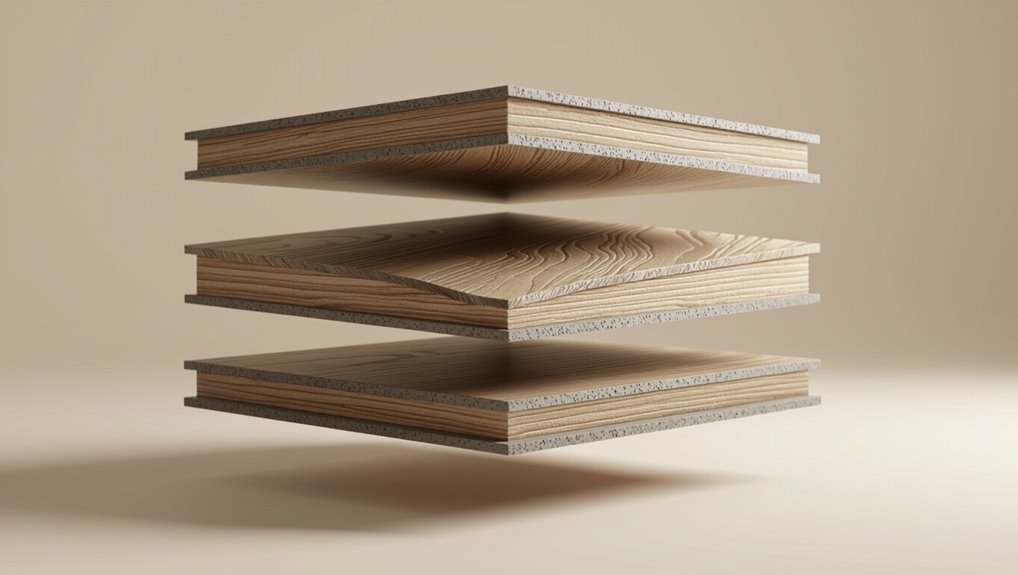
Now that you’ve matched type to space — realism with LVP/LVT, rigidity with SPC, cushioning with WPC — it helps to look inside the plank to see what actually delivers those qualities.
You’ll find a clear wear layer resisting scratches and stains, a printed vinyl design and core providing stability and realism, and a backing that adds moisture protection and dimensional support for long-lasting performance.
Benefits and Advantages of Luxury Vinyl Flooring
You’ll appreciate how luxury vinyl stands up to daily wear with excellent scratch and water resistance, while feeling softer underfoot and cutting sound compared with harder floors.
It offers realistic wood and stone looks so you don’t have to sacrifice style for performance.
You’ll also like fast installation options—click-lock, glue-down, or loose-lay—and the simple cleaning and maintenance that keep it looking great.
Durability and scratch/water resistance
Because luxury vinyl uses a tough wear layer and dense core, it stands up to daily life without fuss—resisting scratches, dents, and spills more effectively than many hard-surface floors.
You’ll find it holds up under pets, kids, and high foot traffic. Waterproof and low-maintenance options prevent warping and staining, so you won’t need frequent repairs or special cleaners to keep floors looking good.
Aesthetic versatility and realistic visuals
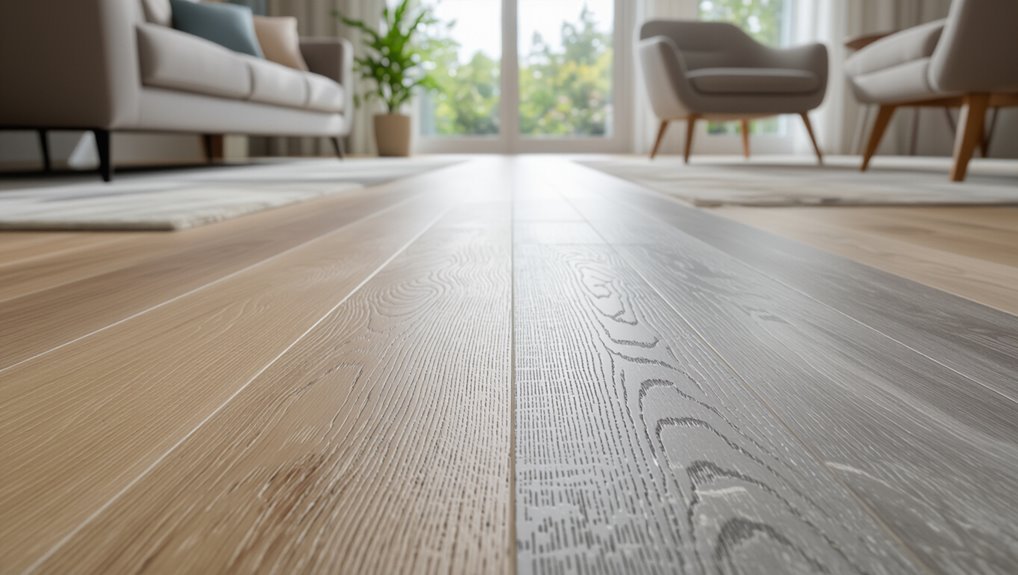
Appearance matters, and luxury vinyl gives you convincing wood, stone, and tile looks without the cost or upkeep of the real thing.
You’ll find a wide range of colors, grains, and plank or tile sizes that mimic natural materials closely.
Advanced printing and embossing create texture and depth, so rooms feel authentic and cohesive while matching any décor or design vision.
Comfort and sound absorption
Alongside its convincing looks, luxury vinyl also makes rooms more comfortable underfoot and noticeably quieter.
You’ll feel softer, warmer surfaces compared with tile or hardwood, reducing fatigue during long standing.
Built-in cushion layers and dense cores absorb impact and footfall noise, while underlayment options further dampen sound.
That combination improves daily comfort and creates a calmer, less echo-prone living space.
Installation speed and options (click-lock, glue-down, loose lay)
One of the biggest advantages of luxury vinyl is how quickly and easily you can get it down: click-lock planks snap together for fast, tool-light installs; glue-down sheets give a permanent, seamless finish; and loose-lay options let you fit floors with minimal adhesive and fast removal when needed.
You’ll choose based on subfloor condition, traffic, permanence, and budget to match project needs.
Maintenance ease and cleaning
Because vinyl’s wear layer resists stains, scratches, and moisture, you’ll spend far less time on upkeep than with many other floors.
You’ll vacuum or sweep regularly, mop with a damp microfiber and mild cleaner, and spot-treat spills immediately.
No waxing or polishing is needed, and professional deep cleaning is rare.
That simplicity saves time and reduces maintenance costs over years.
Costs Pricing, Value, and Lifespan
You’ll want to know typical price ranges for materials and installation so you can budget accurately.
Expect lifespan to vary by grade and wear layer, with commercial-grade planks lasting much longer than budget options.
We’ll compare long-term value versus initial cost to help you pick the best option for your needs.
Typical price ranges (material and installation)
A typical budget for luxury vinyl flooring spans from about $2 to $7 per square foot for the material, with installation adding roughly $1.50 to $6 per square foot depending on whether you choose glue-down, click-lock, or loose-lay methods; higher-end, thicker planks or designer patterns can push material costs to $8–$12 per square foot and total installed prices into the $10–$15+ range.
| Type | Material $/ft² | Installed $/ft² |
|---|---|---|
| Entry | 2–3 | 3.5–6 |
| Mid | 4–6 | 6–10 |
| High | 8–12 | 10–15+ |
Lifespan by grade and wear layer
When you compare luxury vinyl by grade and wear-layer thickness, you’ll see lifespan vary considerably: entry-level floors with 6–8 mil wear layers often last 5–10 years under normal use.
Mid-grade 12–20 mil options can run 10–20 years, and commercial-grade 20–28+ mil planks commonly endure 20 years or more.
Your traffic, maintenance, and installation quality also affect longevity; heavier wear and poor seams shorten life.
Long-term value vs initial cost
Knowing how grade and wear layer affect lifespan helps you weigh upfront price against long-term value.
You’ll pay more for commercial-grade planks with thicker wear layers, but they resist scratches and need replacing less often.
Factor installation, maintenance, and expected use—higher initial cost can mean lower lifetime expense.
Choose based on traffic, budget, and desired longevity to maximize value.
Is Luxury Vinyl Flooring Worth the Investment? Decision Factors
Think about where and how you’ll use luxury vinyl flooring—it’s ideal for high-traffic areas, moisture-prone rooms, and renters who want a wood or tile look without the upkeep.
You’ll choose LVF over hardwood, laminate, or tile when budget, durability, and ease of installation matter more than maximum resale pull, though good-looking LVF can still boost appeal.
Compare aesthetics, lifespan, maintenance needs, and how each option affects your resale value before deciding.
Use-case scenarios where LVF is ideal
1 practical reason to contemplate luxury vinyl flooring (LVF) is its versatility: it performs well in high-traffic areas, moisture-prone rooms, and spaces where you want the look of wood or stone without the upkeep.
You’ll find LVF ideal when you need durable, low-maintenance flooring that’s affordable and attractive.
- Entryways
- Kitchens
- Bathrooms
- Basements
- Rental units
When to choose LVF over hardwood, laminate, tile (comparison)
Those use-case examples show where LVF shines, but you’ll want to weigh it against hardwood, laminate, and tile before deciding. Choose LVF when you need water resistance, softer underfoot, easy upkeep, and fast installation. Compare feelings below to match priorities.
| Feature | Feeling |
|---|---|
| Water resistance | Relief |
| Comfort | Warmth |
| Maintenance | Freedom |
| Installation speed | Satisfaction |
Budget, aesthetics, durability, resale value considerations
While price often drives the decision, you should weigh budget against long-term value: luxury vinyl can cost less upfront than hardwood or tile yet still deliver convincing looks and strong durability.
It may be the smarter investment if you prioritize cost-effective aesthetics and low maintenance. You’ll balance grade, wear layer, and installation quality against expected lifespan and how buyers perceive flooring when selling.
How to Choose the Right Luxury Vinyl Flooring
When choosing luxury vinyl, you’ll want to check wear layer thickness and AC/industry ratings to match durability with traffic levels.
Pick the core—WPC for comfort and SPC for extreme rigidity—based on the room’s moisture and impact needs, and match style and texture to your interior so the floor complements the space.
Also consider VOC emissions and recyclability to protect indoor air quality and the environment.
Assessing wear layer thickness and AC/industry ratings
Because the wear layer and industry ratings tell you how a vinyl plank will perform over time, they should be one of the first things you check when choosing luxury vinyl flooring.
Look for thicker wear layers (20–30 mil for high traffic), and the appropriate AC or SPC/VINyl commercial ratings for your space. Higher numbers mean better scratch, dent, and stain resistance.
Choosing core type (WPC vs SPC) based on room needs
Beyond wear layers and ratings, the plank’s core determines how the floor feels, performs, and handles moisture.
Choose WPC if you want softer, quieter underfoot and some dimensional stability—great for living spaces and bedrooms.
Pick SPC for ultra-rigid, denser floors that resist heavy traffic, dents, and temperature changes—ideal for kitchens, entryways, and basements with higher moisture or commercial use.
Matching style and texture to interior design
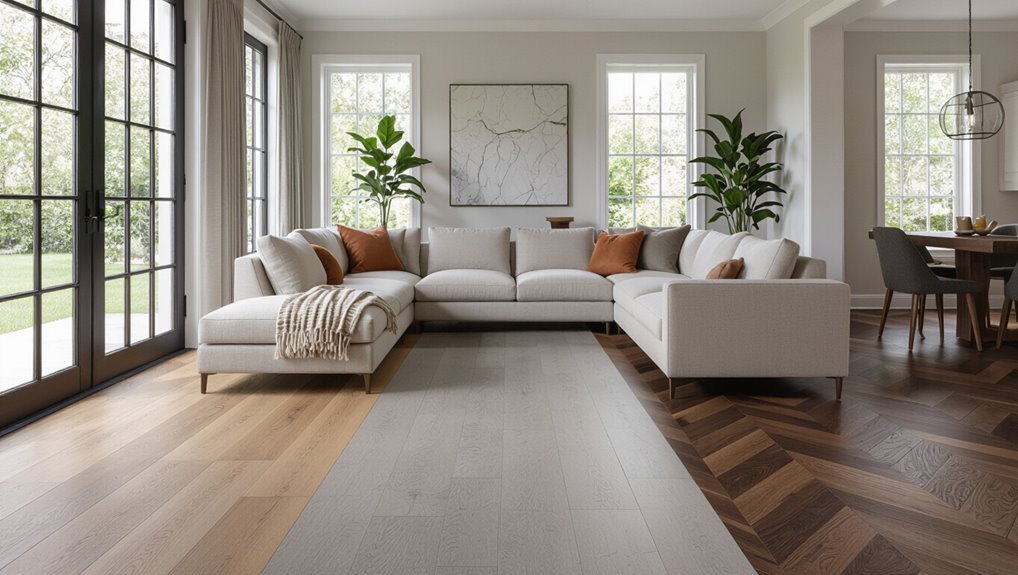
Style shapes the mood of a room, and your vinyl choice should reinforce that: pick wider, weathered-look planks for a relaxed farmhouse vibe, narrow, smooth grains for a sleek contemporary feel, and textured, hand-scraped finishes to add rustic warmth.
Balance color, plank width, and finish with existing furniture and trim; test samples in different light, then commit to a cohesive palette and texture.
Environmental and health considerations (VOC, recyclability)
When you’re choosing luxury vinyl, consider both indoor air quality and end-of-life impacts: low-VOC products reduce off-gassing that can irritate occupants, and recyclable or PVC-free options cut long-term environmental harm.
Check certifications like FloorScore or GREENGUARD, ask manufacturers about recycling programs, and favor products with clear ingredient disclosures so you can balance durability, indoor health, and lower environmental footprint.
Installation Guide Options and Step-by-Step Overview
Before you start, you’ll want a quick subfloor checklist—clean, level, dry, and free of old adhesives—so your installation goes smoothly.
I’ll walk you through the key steps for click-lock floating, glue-down, and loose-lay methods so you can pick the right approach.
Finally, I’ll note when a pro is worth hiring versus when you can confidently DIY.
Preparing the subfloor (checklist)
1 essential step before laying luxury vinyl is preparing the subfloor to be flat, clean, dry, and structurally sound; follow this checklist to identify and fix issues like high spots, low spots, loose boards, moisture, and debris so your installation goes smoothly and your floor performs as designed.
- Remove debris and old adhesive
- Repair or replace damaged boards
- Sand high spots, fill low spots
- Check and address moisture levels
- Confirm subfloor is level within manufacturer tolerance
Click-lock floating installation key steps
Choosing a click-lock floating installation makes laying luxury vinyl fast and forgiving. This guide walks you through the key options and step-by-step actions so you can install confidently and correctly.
Measure and acclimate planks, lay underlayment, plan staggered seams, click edges together row by row, trim end pieces, maintain expansion gaps, fit around obstacles, and finish with trim and connections.
Glue-down and loose-lay installation key steps
Get ready to tackle glue-down and loose-lay installations by understanding their core differences and the precise steps each requires.
For glue-down, clean and level subfloor, spread adhesive per manufacturer, lay planks, roll and allow cure.
For loose-lay, guarantee ultra-flat surface, dry-fit pieces, place planks with edge alignment, use perimeter adhesive or double-sided tape if specified.
When to hire a pro vs DIY
If you’re comfortable with basic tools and your subfloor is flat and dry, you can save money by installing luxury vinyl yourself; however, call a pro when the job involves complex layouts, glued installations, extensive floor prep, moisture issues, or when you need an exact finish fast.
You should DIY for simple click-lock rooms, straightforward cuts, and modest budgets; hire pros for speed, warranty, or risk.
Common Problems, Mistakes, and How to Avoid Them
When you install luxury vinyl, common mistakes like improper subfloor prep or incorrect acclimation can cause gaps, buckling, or peeling later on.
During use you might see issues such as lifting, fading, or seam separation, but most can be fixed or prevented with proper adhesive, moisture control, and gentle cleaning.
Also check warranty fine print so you don’t void coverage by using the wrong underlayment, cleaners, or installation methods.
Typical installation mistakes and prevention
Mistakes during luxury vinyl flooring installation are common but mostly avoidable if you follow a few key steps: prepare the subfloor thoroughly, acclimate the planks properly, maintain correct expansion gaps, stagger seams, and use the right adhesive or locking technique for your product.
- Check and level the subfloor
- Let boards acclimate per manufacturer
- Measure and leave expansion gaps
- Stagger end joints correctly
- Use recommended adhesive/lock system
Issues during use (peeling, buckling, fading) and fixes
Although luxury vinyl is durable, you can still run into problems like peeling, buckling, and fading if installation, maintenance, or environmental conditions aren’t right; identifying the root cause quickly lets you apply the correct fix and prevents further damage.
Check adhesive and re-glue edges for peeling, relieve moisture and re-level subfloor for buckling, and reduce UV exposure plus use UV-resistant cleaners to slow fading.
Warranty pitfalls to watch for
Curious what the fine print on your luxury vinyl warranty really means?
Read exclusions, coverage length, and transferability closely. Don’t assume moisture, installation, or shade issues are covered.
Keep proof of purchase, acclimation records, and installation photos to support claims.
Note prorated terms and required maintenance; missing these can void benefits.
Ask the dealer for written clarification before buying.
Maintenance, Care, and Best Practices
You’ll keep your luxury vinyl looking its best with simple daily and weekly cleaning routines that remove grit and spills before they cause wear.
For tougher spots, use gentle spot treatments and recommended stain removers to avoid damaging the finish.
In high-traffic areas and homes with pets, add protective mats, felt pads, and regular maintenance to prevent scratches and premature deterioration.
Daily and weekly cleaning routines
When you stick to simple daily and weekly routines, your luxury vinyl flooring will stay clean and last longer; a quick daily sweep or dry mop removes abrasive grit, and a gentle weekly damp mop handles normal soil without damaging the finish.
- Sweep or dry-mop high-traffic areas daily
- Use a microfiber mop for weekly damp cleaning
- Rinse mop frequently to avoid residue
- Avoid excess water pooling
- Place mats at entrances to trap dirt
Stain removal and spot treatment
If a spill happens, act quickly to prevent stains from setting—blot liquids with a clean, absorbent cloth and wipe solids with a soft scraper or paper towel before they dry.
For stubborn marks, use a mild detergent solution or a vinyl-safe cleaner, gently rub with a soft cloth, then rinse.
Avoid abrasive pads and harsh chemicals; test cleaners in an inconspicuous spot first.
Protecting LVF in high-traffic and pet homes
Because high-traffic areas and homes with pets put extra wear on luxury vinyl flooring, you should take targeted steps to protect it—use entry mats, felt pads, and area rugs in busy zones.
Trim pet nails regularly, and clean up dirt and spills promptly to prevent scratches and abrasion.
Rotate rugs, avoid harsh cleaners, use a soft broom or vacuum with a hard-floor setting, and consider protective sealers where recommended.
Comparative Evaluation LVF vs Competing Floors
Now let’s compare luxury vinyl to hardwood, laminate, and ceramic/porcelain tile so you can weigh durability, cost, and appearance.
You’ll see where LVF outperforms others in water resistance and maintenance, and where it trades off authenticity or resale value.
Use these contrasts to decide which floor fits your lifestyle and budget.
Luxury vinyl vs hardwood
When you’re weighing luxury vinyl against hardwood, focus on the practical differences—appearance, durability, cost, and maintenance—so you can pick the flooring that fits your lifestyle and budget. LVF resists moisture, scruffs, and costs less; hardwood offers timeless value and refinishing. Choose LVF for active households, hardwood for resale and character.
| Feature | LVF | Hardwood |
|---|---|---|
| Cost | Low | High |
Luxury vinyl vs laminate
While both luxury vinyl flooring (LVF) and laminate mimic hardwood and tile, they differ in construction and performance in ways that affect durability, moisture resistance, and feel underfoot. You’ll find LVF is more water-resistant, softer underfoot, and easier to install; laminate is often cheaper and scratch-resistant but swells with moisture.
| Feature | Quick take |
|---|---|
| Moisture | LVF wins |
| Feel | LVF softer |
Luxury vinyl vs ceramic/porcelain tile
Although both luxury vinyl flooring (LVF) and ceramic or porcelain tile can deliver the look you want, they differ sharply in weight, feel, installation, and performance under moisture and impact. You’ll prefer LVF for warmth, easier install, and resilience; choose tile for hardness, heat tolerance, and longevity.
| Feature | LVF | Tile |
|---|---|---|
| Weight | Light | Heavy |
| Comfort | Softer | Rigid |
| Moisture | Highly resistant | Excellent |
Cost-Saving Strategies and Where to Spend
You’ll want to spend more on higher wear layers or an SPC core in high-traffic rooms where longevity pays off.
You can save on installation by getting multiple quotes, prepping the subfloor yourself, or choosing efficient click-lock systems without cutting corners on moisture protection.
Time purchases around sales or slower contractor seasons to get better pricing and scheduling.
When to invest in higher wear layers or SPC core
If your household sees heavy foot traffic, pets, or frequent furniture moves, invest in a thicker wear layer or an SPC core to get real longevity and protect your floors from dents, scratches, and moisture.
Choose thicker wear for surface durability; pick SPC when stability and water resistance matter.
Spend more here, save elsewhere—this prevents premature replacement and higher long‑term costs.
Saving on installation without compromising quality
While you want to save money, smart choices—like prepping the subfloor yourself, grouping cuts to reduce waste, and scheduling installers during their slow season—let you cut installation costs without sacrificing quality.
You’ll also save by providing clear measurements, choosing straightforward layouts, keeping rooms cleared, and buying adhesives or underlayment yourself.
Invest saved funds into higher-quality planks and a reputable installer for key areas.
Timing purchases (sales, contractor seasons)
Because demand and discounts fluctuate through the year, timing your vinyl flooring purchase can shave hundreds off the total without cutting quality.
Shop during end-of-season clearances, major holiday sales, or showroom remodels.
Book installers in their off-peak months for lower rates and faster scheduling.
Compare contractor quotes, ask for bundled discounts, and be ready to buy when prices and availability align.
FAQs
You probably have a few key questions about luxury vinyl — like how long it lasts, whether it’s waterproof, and if you can use it in bathrooms or basements.
You’ll also want to know if it boosts your home’s resale value and whether scratches can be repaired or the floor refinished.
Below we’ll answer each of these clearly so you can make the right choice.
How long does luxury vinyl flooring last?
How long will luxury vinyl flooring last in your home? Expect 10–25 years for residential wear, sometimes longer with high-quality materials and careful upkeep.
Durability depends on wear layer thickness, installation, traffic, and maintenance. Regular cleaning, felt pads, and prompt spill cleanup extend life.
Commercial-grade LVT can last 10–20+ years under heavier use, but replacement timing varies by condition and appearance.
Is luxury vinyl flooring waterproof?
Curious whether luxury vinyl flooring is waterproof? Many luxury vinyl products are highly water-resistant and several are fully waterproof thanks to a waterproof core and sealed wear layer.
You can clean spills without panic, but seams, changes, and subfloor conditions matter. Proper installation and maintenance prevent moisture-related issues; always check manufacturer specs and warranties for true waterproof ratings.
Can luxury vinyl be installed in bathrooms and basements?
Many luxury vinyl products are waterproof or highly water-resistant, so they can work well in bathrooms and basements when you follow installation guidelines and choose the right product.
You should use waterproof cores, properly seal seams and connections, acclimate planks, and install over a flat, dry subfloor.
Avoid loose-lay in high-moisture areas unless manufacturer permits it.
Regular maintenance prevents damage.
Will luxury vinyl increase my home resale value?
While luxury vinyl alone won’t guarantee a higher sale price, it can make your home more attractive to buyers by offering durable, low-maintenance, and stylish flooring that competes with real wood or tile at a lower cost.
Buyers often appreciate updated, practical finishes; well-chosen luxury vinyl can speed sale timelines and justify modest price improvements, especially when matched to your home’s overall quality and market.
Can I refinish or repair luxury vinyl flooring?
Can you refinish luxury vinyl flooring? You can’t sand and refinish it like hardwood; wear layers and vinyl planks don’t respond to sanding.
You can repair minor damage—replace individual planks or use filler and color-matched repair kits for scratches.
Deep gouges or extensive wear usually require plank replacement.
Proper maintenance and protective pads prevent most issues and extend lifespan.
