Is Laminate Flooring Toxic? What the Research Actually Says
Laminate flooring isn’t highly toxic once it’s installed and cured, but you will usually get some short-term off-gassing—more from cheaper boards and during installation. Studies show formaldehyde and VOCs can be present at low to moderate levels, typically below health-based limits in ventilated spaces, though sensitive people should be cautious. Choose low‑VOC or certified products, ventilate and let boards acclimate. Keep going and you’ll find practical tips, standards, and buying checklists to reduce risk.
Is Laminate Flooring Toxic?
Overall, laminate flooring is generally considered low in toxicity once it’s installed and cured.
You should be more cautious if you or household members are especially sensitive—like young children, pregnant people, or those with respiratory issues—because off-gassing can irritate vulnerable lungs.
Check product labels and choose low-VOC or certified options to reduce any risk.
One-sentence summary of safety
Although laminate flooring can off-gas small amounts of chemicals like formaldehyde, properly made and installed products that meet current emissions standards and are well-ventilated aren’t likely to pose a significant health risk for most people.
If you choose certified low-emission laminate, follow installation and ventilation guidance, and avoid damaged or cheap panels, you’ll minimize exposure and answer the question: is laminate flooring toxic?
Who might be at higher risk (sensitive groups)
Who’s most likely to feel effects from laminate off‑gassing? You might, if you’re especially sensitive — children, pregnant people, infants, the elderly, and those with asthma, allergies, or chemical sensitivities.
If you have compromised immunity or spend long hours indoors, you’re more exposed.
Consider low‑VOC products, guarantee ventilation, and let new flooring air out before prolonged occupancy to reduce risk.
What Laminate Flooring Is and How It’s Made
You’ll learn that laminate flooring is a layered product—usually a wear layer, a printed decorative layer, a high-density fiberboard core, and a backing—that’s manufactured, not sawn from a single plank.
Because it’s made, manufacturers use adhesives, resins and finishes that can contain formaldehyde and other VOCs, which affects indoor air quality.
I’ll also compare how laminate differs from hardwood, vinyl, and engineered wood in materials, construction, and typical chemical profiles.
Composition and layers of laminate flooring
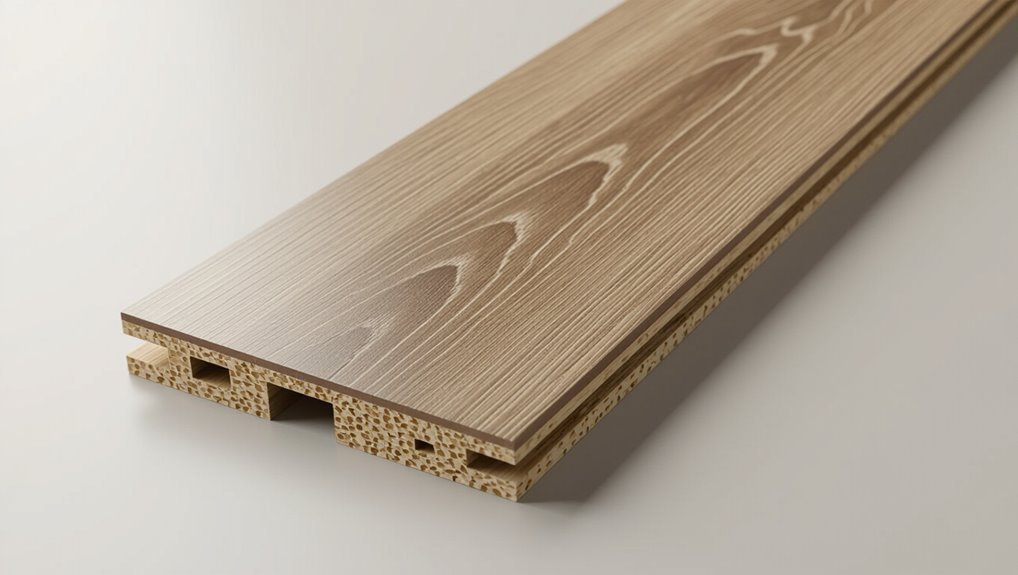
When you look closely at laminate flooring, you’ll see it’s a multi-layered engineered product built for durability and appearance: a protective wear layer on top, a printed decorative layer that mimics wood or stone, a high-density fiberboard (HDF) core that gives structure and stability, and a backing layer that resists moisture and balances the board.
You’ll also find core density, thickness, and locking profiles affect performance and sound.
Common chemicals used (formaldehyde, VOCs, adhesives, finishes)
After you understand the layers that make up laminate boards, it helps to look at what’s actually in those layers: manufacturers use a mix of resins, adhesives, inks and finishes that can release chemicals during manufacturing, installation, or over time.
You should know common culprits:
- Formaldehyde-based resins
- VOCs from finishes and inks
- Adhesive solvents
- Plasticizers and stabilizers
Differences between laminate, hardwood, vinyl, and engineered wood
Think of these four flooring types as different approaches to covering a floor: laminate stacks printed decorative layers over a high-density fiberboard core and seals them with a protective wear layer, while hardwood uses solid planks milled from a single piece of wood; vinyl is a synthetic, flexible sheet or plank made from PVC and plasticizers; and engineered wood sandwiches a real wood veneer over plywood or HDF for added stability.
| Type | Material | Stability |
|---|---|---|
| Laminate | HDF + film | Moisture-sensitive |
| Hardwood | Solid wood | Can warp |
| Vinyl | PVC | Water-resistant |
| Engineered | Veneer + core | Dimensionally stable |
What the Research Actually Says Health Evidence
You’ll find that peer-reviewed studies generally show laminate releases low to moderate VOCs, with formaldehyde often the main chemical of concern.
Short-term exposures usually fall below health-based limits, but a few studies suggest chronic exposure — especially in poorly ventilated spaces or with older products — could raise risks.
Research is still limited by varying test methods, product types, and few long-term human studies, so conclusions aren’t definitive.
Summary of peer-reviewed studies on VOC emissions from laminate
Although many people worry that laminate flooring releases harmful chemicals, peer-reviewed studies generally show a more nuanced picture: short-term spikes in volatile organic compounds (VOCs) can occur after installation, but concentrations typically fall quickly to low or acceptable levels in well-ventilated spaces.
Long-term indoor air studies rarely link laminate-specific VOCs to measurable health effects in healthy adults. You should ventilate initially, choose low-VOC products, and monitor sensitive occupants.
Formaldehyde exposure studies and chronic risks
A specific concern people raise about laminate flooring is formaldehyde, a common adhesive component in engineered wood products that can off-gas into indoor air.
After noting general VOC patterns, it’s important to look at what studies say about formaldehyde exposure and long-term health risks.
You should know chronic-risk research links prolonged high exposures to irritation and cancer risk, but typical laminate emissions usually fall well below hazardous thresholds.
Short-term vs long-term exposure evidence
When you move into a home with new laminate flooring, the most likely effects you’ll notice are short-term—mild eye, nose, or throat irritation and occasional headaches—because most studies show elevated VOCs and formaldehyde levels peak soon after installation and then decline over days to months.
Long-term studies show lower, variable chronic exposures; persistent symptoms are uncommon unless ventilation is poor or materials continually emit.
Evidence limitations and gaps in current research
Because the bulk of studies are small, short-term, or industry-funded, you should treat conclusions about laminate flooring and health with caution.
You’ll find inconsistent methods, few long-term cohort studies, limited vulnerable-population data (kids, asthma sufferers), sparse real-world exposure measurements, and little independent replication.
These gaps mean you can’t confidently assess chronic risks or causal links—more rigorous, transparent research is needed.
Emission Standards and Certifications
When you’re comparing laminate options, check regulatory limits like EPA, EU, CARB, and WHO guidelines for VOCs and formaldehyde.
Look for certifications such as FloorScore, GREENGUARD, or E0/E1 ratings that confirm lower emissions.
Testing methods (chamber tests, emission rate measurements) tell you what chemicals were measured and whether results meet those limits.
Key regulatory limits (EPA, EU, CARB, WHO)
As you evaluate laminate flooring, pay close attention to the regulatory limits and certifications that define acceptable emissions.
You should compare standards: EPA’s formaldehyde guidance, EU’s E1/E2 thresholds, California CARB Phase 2 formaldehyde limits, and WHO indoor air quality recommendations for VOCs.
These benchmarks help you assess product compliance, predict indoor concentrations, and choose lower-emitting options confidently.
Relevant certifications to look for (FloorScore, GREENGUARD, E0/E1)
Want to know which labels actually matter when you’re shopping for laminate flooring?
You should prioritize independent certifications that limit VOCs and formaldehyde.
Check these:
- FloorScore — indoor air quality for hard surface flooring
- GREENGUARD — low chemical emissions across products
- E0 — very low formaldehyde emission class
- E1 — low formaldehyde, common in certified European products
How testing is done and what the results mean
Because certifications only mean something if testing is rigorous, you should know how labs measure emissions and what the numbers actually tell you.
Labs use chamber tests to measure VOC release over time, reporting micrograms per cubic meter. Standards set allowable limits and test conditions; lower values mean fewer emissions.
Check test duration, surface area normalization, and whether results reflect real-world aging before trusting labels.
Factors That Affect Toxicity in Real Homes
When you assess toxicity in a real home, product quality and how the flooring was made matter as much as the brand label.
Installation choices — the adhesive, underlayment, and techniques — plus the flooring’s age and its off-gassing timeline will change what chemicals you’re exposed to.
Finally, your ventilation, temperature, and humidity levels can speed up or slow down emissions, so manage those to reduce risk.
Product quality and manufacturing differences
Although laminate looks similar across brands, the chemicals and manufacturing steps behind each product vary a lot, and that variation directly affects indoor air quality.
You should check formaldehyde emissions ratings, VOC certifications, and resin types; higher-grade boards and stricter controls usually emit less.
Factory finishes, quality control, and origin influence off-gassing, so prioritize certified manufacturers and transparent material disclosures.
Installation methods, adhesives, and underlayment impact
If you want your laminate floor to stay low-emitting, pay close attention to how it’s installed: floating click systems, glued planks, and underlay choices all change what chemicals end up in your home air.
Choose floating installs with low-VOC adhesives when needed, pick certified low-emission underlayments, and insist on solvent-free glues.
Proper sealing at edges and ventilation during installation further reduces indoor exposures.
Age of flooring and off-gassing timeline
Because most of the chemical emissions from laminate are highest right after installation, you’ll see the steepest drop in off-gassing during the first days to weeks.
After that, emissions typically taper off over months to a few years depending on product and conditions.
Older, well-cured floors usually emit negligible VOCs, though specific formulations and wear can cause low-level releases that decline further with age.
Environmental factors: ventilation, temperature, humidity
When you control ventilation, temperature, and humidity, you directly change how much laminate flooring off-gasses and how those chemicals move through your home.
Increase fresh air and lower temperature/humidity to reduce emission rates and airborne concentrations.
High heat or moist conditions boost off-gassing and mold risk.
Use exhaust fans, open windows, dehumidifiers, and thermostatic control to minimize exposure and keep indoor air safer.
Practical Steps to Minimize Risk (Pre-Purchase to Post-Installation)
Before you buy, choose laminate from reputable brands and look for low-VOC labels and safer core materials.
During installation, pick low-emitting adhesives, let boards acclimate, and after installation ventilate well and clean surfaces.
For the long term, use mild cleaners, maintain HVAC filters, and consider an air purifier to keep indoor VOCs low.
Step 1 Choosing safer products (labels, materials, reputable brands)
How do you pick laminate that won’t compromise indoor air quality?
Look for low-VOC certifications (FloorScore, GREENGUARD), prefer HDF or MDF with formaldehyde limits, choose water-based or no-added-formaldehyde cores, and buy from brands with transparent testing.
Compare labels, request lab reports, and prioritize retailers who offer documented emissions data.
- Certifications
- Core material
- Adhesive claims
- Brand transparency
Step 2 Safer installation practices (adhesive selection, acclimation)
Because installation choices directly affect indoor air quality, you should plan safer practices from the moment your flooring arrives: select low-emission adhesives, let planks acclimate in the installation space, and ventilate during and after work.
Also verify adhesive VOC ratings and MSDS, use recommended trowel sizes to avoid excess glue, keep HVAC off during glue cure, and store unopened cartons flat until acclimated.
Step 3 Immediate actions after installation (ventilation, cleaning)
After the last plank is set and adhesives have been given their initial time to cure, act quickly to reduce lingering emissions and dust: open windows and run fans to create a cross-breeze, keep HVAC off or set to recirculate only with fresh-air intake minimized during the first 48–72 hours, and avoid heavy traffic so vibrations don’t release particulates.
Then wipe surfaces with a damp microfiber, vacuum with a HEPA-filter unit, and discard debris outdoors.
Step 4 Long-term maintenance to reduce VOCs (cleaners, HVAC, air purifiers)
Once the initial off-gassing period is over, keep VOC levels low by adopting simple, regular habits:
use pH-neutral, low-VOC cleaners and damp-mop rather than harsh chemicals;
run HVAC with fresh-air intake and clean/replace filters per schedule;
add HEPA or activated-carbon air purifiers in occupied rooms;
control humidity to prevent breakdown;
inspect seals and repair gaps to limit emissions over time.
Comparison: Laminate Flooring vs Alternatives (Health Perspective)
When you compare laminate to alternatives, look at typical emissions, moisture resistance, and installation materials for each option.
Vinyl (PVC) often has higher VOC and plasticizer concerns. Solid or engineered hardwood can off-gas finishes or adhesives. Tile and carpet bring their own issues like grout sealants or trapped allergens.
Use that framework to weigh short- and long-term health tradeoffs for your home.
Laminate vs vinyl (PVC)
Curious which flooring poses fewer health risks? You’ll find laminate often emits fewer long-term VOCs than vinyl (PVC), but manufacturing additives and off-gassing vary. Choose low-VOC-certified products, guarantee ventilation, and avoid cheap PVC with phthalates.
| Feature | Laminate | Vinyl (PVC) |
|---|---|---|
| Typical VOCs | Lower | Higher |
| Additives concern | MDF adhesives | Plasticizers |
Laminate vs hardwood (solid and engineered)
Although both look similar at a glance, laminate and hardwood (solid or engineered) pose different health trade-offs you should weigh:
Laminate can off-gas formaldehyde from adhesives and resins, but higher-quality options meet strict emissions standards.
Solid hardwood off-gasses less but can be finished with VOC-emitting varnishes; engineered wood may contain adhesives.
Choose low-VOC finishes or certified low-emission products and ventilate during installation.
Laminate vs tile and carpet
Because each flooring type brings different materials and maintenance needs, you should weigh laminate’s chemical and dust trade-offs against tile and carpet’s own risks.
Laminate can emit VOCs initially and shed particles; regular cleaning and ventilation cut exposure.
Tile stays inert but grout can trap mold; carpet holds allergens, dust, and VOCs from spills.
Choose by allergy risk, moisture, and cleaning habits.
Common Mistakes and Misconceptions
You shouldn’t assume laminate is an immediate health hazard—real exposure is usually lower and depends on product and ventilation.
Don’t rely solely on buzzwords or misread labels and certifications; they can be misleading.
Also, improper cutting, sealing, or underlayment choices during installation can raise emissions, so follow manufacturer guidelines and use proper techniques.
Overstating immediate danger vs realistic exposure
How likely is your new laminate to make you sick right away?
You’ll rarely face acute poisoning from off-gassing; symptoms usually stem from high, prolonged exposures, not normal home use.
You should ventilate after installation, avoid prolonged close contact with strong odors, and follow manufacturer instructions.
Don’t assume immediate danger—assess realistic exposure levels and take simple, practical steps to reduce them.
Misreading labels and certifications
Wondering what those stickers and labels really mean? You’ll see certifications and buzzwords that hint at low emissions, but they’re not equal.
Learn which programs test formaldehyde or VOCs specifically, and don’t assume “green” or “low” guarantees thorough testing.
Check scope, test methods, and expiration. Rely on certified reports rather than marketing claims to judge safety.
Installation errors that increase emissions
When installers rush the job or skip manufacturer guidelines, they can unintentionally boost formaldehyde and VOC off-gassing from laminate floors.
If you cut boards improperly, omit proper underlayment, or seal seams poorly, adhesives and core materials release more pollutants.
You should follow ventilation, acclimation, and installation steps, use recommended adhesives, and hire trained installers to minimize emissions and long-term indoor air risks.
Cost, Performance, and Health Trade-offs
You’ll notice cheaper laminate often comes with higher risks of VOCs and formaldehyde, while premium options tend to use lower-emitting materials.
Consider how durability and maintenance affect long-term exposure and replacement costs.
You’ll need to balance looks, budget, and indoor air quality when choosing what’s right for your home.
Price differences tied to toxin risk
Although cheaper laminate often looks similar to higher-end options, the price gap usually reflects real differences in materials and manufacturing that affect toxin risk.
You’ll find low-cost panels often use cheaper resins, higher formaldehyde emissions, and less rigorous quality controls.
Paying more can get certified low-emission products, better sealing, and transparent VOC testing—reducing health risk without guaranteeing perfection.
Durability and maintenance considerations
Because durability affects long-term costs, performance, and indoor-air quality, pick laminate that balances wear resistance with safe materials.
You’ll favor AC ratings, moisture-resistant cores, and tight locking systems to limit repairs and emissions from degraded surfaces.
Maintain floors with pH-neutral cleaners, avoid harsh solvents, and promptly fix damage to prevent off-gassing and mold, reducing health risks and replacement frequency.
Balancing aesthetics, budget, and indoor air quality
Durability and maintenance choices already shape how often you’ll spend on repairs and how much the floor off-gasses over time.
So now weigh those factors alongside looks and cost. Choose low-VOC or certified laminate if indoor air matters, balance upfront price against replacement frequency, and prefer finishes that resist wear.
Prioritize rooms where appearance trumps emissions, and ventilate during installation.
Case Studies and Real-World Examples
You’ll see two contrasting real-world examples: a new home where low-emission laminate was installed correctly and caused no air-quality issues, and a case where improper installation led to odors and VOC complaints.
We’ll look at what went wrong in the second example and the practical remediation steps that fixed it. This will help you spot risks and choose or install laminate to minimize health concerns.
Example 1 Low-emission installation in a new home
When a family chose low-emission laminate for their newly built home, they prioritized products certified for low volatile organic compound (VOC) emissions and worked with the contractor to install a continuous vapor barrier and allow extended airing before moving in.
You’d notice minimal odor, steady indoor air quality readings, and satisfaction with comfort; routine cleaning maintained floors without needing harsh chemicals or extra treatments.
Example 2 Problems after improper installation and remediation steps
If installers skip the manufacturer’s instructions or cut corners on subfloor prep, you can end up with warped boards, bubbling seams, persistent odors, and mold growth that won’t go away with simple cleaning.
You should remove affected planks, dry and remediate mold with professionals, repair or replace the subfloor, reinstall per specs, and ventilate thoroughly.
Test indoor air before and after remediation.
Checklist for Buying and Installing Safer Laminate Flooring
Because the materials and installation choices you make determine indoor air quality and long-term exposure, use a clear checklist to pick and install safer laminate flooring.
Because materials and installation affect indoor air quality, use a clear checklist to choose and install safer laminate flooring
Follow these steps:
- Choose low-VOC or CARB-compliant products.
- Verify formaldehyde-free core and water-resistant finish.
- Use low-VOC adhesives and underlayment.
- Guarantee proper acclimation, ventilation, and professional installation.
Frequently Asked Questions
You’ll likely have questions about kids, pets, and how long new laminate keeps off‑gassing.
This FAQ will cover health risks, typical off‑gassing timelines, whether purifiers and ventilation help, how “low‑VOC” options compare, and what to do if you suspect symptoms.
If you’re worried, these answers will help you decide next steps.
Is new laminate flooring harmful to children and pets?
Worried that new laminate flooring might harm your kids or pets? You’ll usually be fine: modern laminate meets safety standards and emits low VOCs.
Reduce any initial exposure by airing the room, using cleaners recommended by the manufacturer, and keeping children and pets off the floor during installation.
If anyone has chemical sensitivities, consult product VOC data and choose certified low-emission options.
How long does laminate off-gassing last?
How long does laminate off-gassing last?
You’ll usually notice the strongest smell and highest VOC levels in the first few days to weeks after installation.
Emissions then decline steeply over several weeks and often drop to near-background levels within three months.
Though trace off-gassing can persist at very low levels for months to a year depending on product and conditions.
Can I reduce VOCs with air purifiers and ventilation?
Yes — you can cut laminate VOCs considerably by combining good ventilation with the right air purifier.
Open windows and run fans during and after installation to dilute emissions.
Use a HEPA filter plus activated carbon purifier rated for VOCs to remove particulates and gases.
Maintain airflow for days to weeks, check purifier CADR for room size, and replace carbon cartridges as recommended.
Are “green” or low-VOC laminates completely safe?
Think “green” or low‑VOC laminate means it’s totally harmless? You should still be cautious.
Low‑VOC products reduce, not eliminate, emissions; adhesives, underlayment, and finishes can still off‑gas. Certifications (FloorScore, GREENGUARD) help, but check full product specs and installation materials.
If you’re sensitive, choose formaldehyde‑free resins, ventilate during installation, and prefer reputable manufacturers with transparent testing.
What should I do if I suspect symptoms from flooring?
Notice symptoms like headaches, dizziness, throat irritation, or persistent allergies after new flooring?
First, ventilate the space and avoid the area. Document symptoms and timing, and check product labels or VOC certificates.
See your healthcare provider if symptoms persist or worsen; mention possible chemical exposure.
Contact the installer or manufacturer for product info and consider air testing or replacement if issues continue.
Sources and Further Reading
Because you’ll want to verify claims and dig deeper, this section lists reliable studies, government guidelines, industry standards, and advocacy resources about laminate flooring and indoor air quality.
Use these to check sources, compare exposure limits, and find testing or remediation guidance:
- EPA guidance on VOCs and indoor air
- Peer‑reviewed studies on laminate emissions
- ASTM and ISO flooring standards
- Consumer and health advocacy reports