How to Clean a Balcony Floor Without Water Damage or Residue
You can clean your balcony without causing water damage or residue by sweeping debris, spot-treating stains with a damp microfiber and mild cleaner, and rinsing only with a barely-wet cloth. Work in small sections, wring tools until nearly dry, blot spills immediately, and finish each area with a dry microfiber to prevent streaks and warping. Seal gaps, protect drains, and use low‑moisture or rinseless methods; keep going to find step‑by‑step tips and product picks.
Quick Answer How to Clean a Balcony Floor Without Water Damage or Residue
You can clean a balcony floor without causing water damage or leaving residue by using minimal liquid, quick-drying cleaners, and targeted tools like microfiber mops or soft brushes.
Use this method on wood, composite, tile, or concrete balconies and whenever drainage is poor, there are nearby electrical outlets, or you’re dealing with delicate finishes.
If your balcony is heavily soiled or has stubborn stains, consider a spot treatment or professional cleaning instead of saturating the surface.
One-sentence summary
Start by sweeping debris away. Then spot-clean stains with a damp microfiber mop and mild detergent. Rinse sparingly with a barely-wet cloth, and dry immediately to prevent water damage or residue.
You’ll tackle how to clean a balcony floor by working in small sections, avoiding puddles, blotting excess moisture, and using gentle tools so you remove dirt without harming finishes or leaving streaks.
When to use this method (materials and balcony types)
After sweeping and spot-cleaning as described, apply this low-moisture method on balconies finished with sealed wood, composite decking, painted concrete, ceramic or porcelain tile, and most outdoor rugs—surfaces that can stain or warp if left wet.
Use it when drainage is poor, neighbors or building rules limit runoff, or plants and furniture nearby could be damaged by excess water.
Basic Understanding What Causes Water Damage and Residue on Balconies
Before you start cleaning, know what your balcony is made of—wood, tile, concrete, or composite each reacts differently to moisture and cleaners.
Water damage and residue usually come from failed seals, standing water, soap scum, or mineral deposits from hard water.
Check for peeling sealant, stains, soft spots, or efflorescence so you can choose the right cleaning and repair steps.
Common balcony floor materials and their vulnerabilities
When water, dirt, and everyday use meet a balcony surface, each common material—wood, concrete, tile, composite, or metal—reacts differently and shows distinct signs of damage or residue; knowing those differences helps you pick the right cleaning and prevention steps. You’ll spot swelling or rot on wood, efflorescence on concrete, grout staining on tile, fading on composites, and corrosion on metal.
| Material | Vulnerability |
|---|---|
| Wood | Rot, swelling |
| Concrete | Efflorescence, cracking |
Sources of water damage and residue (sealing failure, pooling, soap scum, mineral deposits)
If seals fail, water can sneak under finishes, pool in low spots, and leave behind soap scum and mineral deposits that stain and degrade materials.
Understanding these common sources—sealing failure, poor drainage and pooling, residue from cleaners, and hard-water minerals—lets you target cleaning and preventive fixes before damage sets in.
Inspect drainage paths, replace compromised sealants, avoid sudsy cleaners, and use descalers for mineral buildup.
Signs of prior water damage to inspect before cleaning
Start by looking for visible clues that tell you water has been a problem here: peeling or bubbled paint, warped or soft decking, discolored grout or concrete, and persistent damp spots.
Check for musty odors, rusted fasteners, mold or algae streaks, efflorescence (white powder), and loosened tiles.
Note slope issues, clogged drains, and compromised sealants before you clean.
Essential Tools and Materials (Water-minimizing and Residue-free Options)
You’ll want a compact set of tools—a stiff-bristle broom, a squeegee, a soft scrub brush, and a bucket with a wringer—to clean efficiently while using minimal water.
Choose eco-friendly, low-residue cleaners with neutral or slightly alkaline pH to cut grime without leaving deposits or harming finishes.
Protect drains and fixtures with covers, trays, or absorbent pads so runoff and concentrated cleaners don’t cause staining or clogs.
Recommended cleaning tools
Choose tools that cut water use and leave no sticky residues: a soft-bristled broom, a microfiber mop or flat pad, a stiff nylon scrub brush for grout, a spray bottle for diluted cleaner, and a small bucket or basin for rinsing.
Use them efficiently to avoid over-wetting and residue buildup.
- Soft-bristled broom
- Microfiber mop or flat pad
- Stiff nylon grout brush
- Spray bottle
- Small bucket/basin
Safe cleaning solutions and detergents (eco-friendly, low-residue, pH considerations)
Now that you’ve picked water-saving, residue-free tools, pick cleaners that work with them: mild, pH-appropriate solutions that cut grime without leaving film or harming surfaces.
You’ll choose biodegradable, low-foaming detergents, diluted vinegar for tile, neutral pH cleaners for stone, enzyme cleaners for organic stains, and alcohol-based spot cleaners for grease—always test a small area first.
- Biodegradable low-foam detergent
- Diluted white vinegar (tiles)
- Neutral pH stone cleaner
- Enzyme-based stain remover
- Isopropyl alcohol spot cleaner
Protective materials for fixtures and drains (covers, trays, absorbent pads)
Because water and cleaners can easily run into fixtures and drains, protect them with simple, low-profile covers and trays that keep runoff contained and don’t trap residues.
You’ll also use absorbent pads or microfibre mats to catch splashes and chemical drips. Choose nonreactive, washable materials; avoid porous sponges that hold cleaners.
Remove and rinse covers promptly to prevent buildup and odors.
Preparation Protecting Surfaces and Preventing Water Entry
Before you start scrubbing, check drains, seams, and the rail base for cracks or loose caulking so you won’t push water where it shouldn’t go.
Temporarily seal any gaps with tape or a waterproof patch and cover vulnerable areas to stop infiltration.
Lay drop cloths and set up a simple catchment or bucket system to control runoff and protect lower surfaces.
How to inspect drains, seams, and rail base for leaks
When you inspect drains, seams, and the rail base for leaks, work methodically from the highest point down so you don’t miss where water can enter or channel.
Check drain grates for clogs, run water briefly to confirm flow, look for gaps or cracked sealant at seams, and probe rail base edges for soft spots.
Note and photograph any damage for repair.
Temporary sealing and covering techniques to avoid water infiltration
If you want to keep water out while you work, use temporary seals and covers that are quick to apply and easy to remove. You’ll block gaps, protect thresholds, and direct moisture away.
Choose breathable tapes and non-slip mats to avoid trapped humidity. Remove materials promptly to inspect for leaks.
- Self-adhesive flashing tape
- Rubber threshold dams
- Weatherproof caulk strips
- Painter’s tape + plastic
- Non-slip peel-and-stick mats
Setting up drop cloths and water catchment (minimizing runoff)
Having sealed gaps and protected thresholds, you’ll want to control any water and debris that runs off while you clean.
Lay heavy-duty drop cloths angled toward a designated catch basin or buckets. Secure edges with tape or weights to prevent slipping and gaps.
Use a shallow tray under drains, and funnel runoff into containers for proper disposal, avoiding neighbor or building entry points.
Step-by-Step Cleaning Method (Minimal Water, No Residue)
Start by sweeping and vacuuming loose dirt so you’re not trapping grit when you clean.
Treat spots with concentrated, low‑moisture cleaners, then use damp microfiber mops and cloths to lift soil without excess water.
For tougher grime choose low-water steam or targeted chemicals as appropriate, and finish with rinseless techniques and fast drying to leave no residue.
Step 1: Dry debris removal and vacuuming
Begin by sweeping the entire balcony surface with a stiff broom to dislodge leaves, dirt, and grit.
Then follow with a vacuum (or shop-vac) using a crevice tool to pick up what’s left, paying special attention to corners, drains, and the threshold where debris accumulates.
Check under furniture, lift mats, and remove stubborn pebbles by hand so surfaces are fully clear.
Step 2: Spot-clean stains with concentrated, low-moisture cleaners
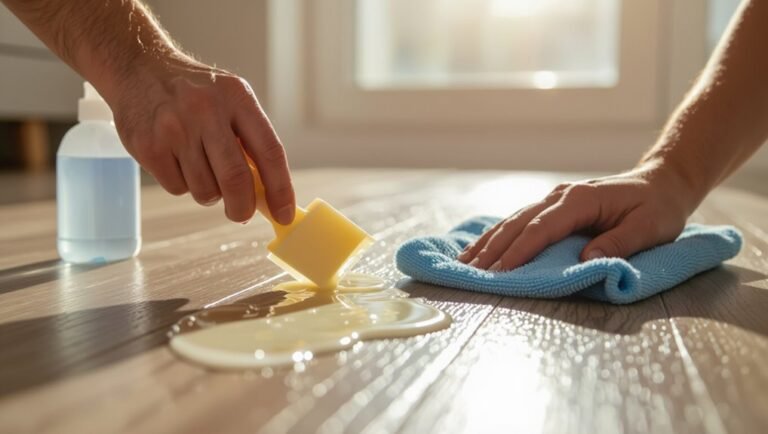
Tackle stains next using concentrated, low‑moisture cleaners that lift grime without soaking the floor—apply a small amount directly to the stain, let it dwell per the label, then agitate with a soft brush or nylon pad and blot up residue with a microfiber cloth so you use minimal water and leave no film.
Test cleaners on an inconspicuous spot first, work outward from the center, and repeat sparingly.
Step 3: Using damp mops and microfiber cloths technique to avoid excess water
Now that stubborn spots are handled, move on to cleaning the rest of the surface with as little water as possible.
Dampen a microfiber mop or cloth lightly—wring until nearly dry—and work in overlapping passes. Rinse and wring frequently to avoid pooling.
For corners and railings, use a dampened microfiber hand cloth.
Finish by drying with a clean, dry microfiber to remove any remaining dampness.
Step 4: Steam cleaning vs. chemical cleaning low-water steam method (when appropriate)
If you’re dealing with stubborn grime or want a deep clean without puddles, choose between low-water steam cleaning and targeted chemical cleaners based on surface type and stains.
Use low-water steam on sealed tile, concrete, or vinyl to loosen dirt without soaking.
Pick pH-neutral, balcony-safe cleaners for organic stains or paint spots, test small areas first, and ventilate while you work.
Step 5: Rinseless cleaning and residue-free drying procedures
When you want a clean balcony without puddles or streaks, use a rinseless cleaning method that combines a concentrated, low-foam cleaner with microfiber tools so you lift grime and trap dirt rather than spreading it.
Apply cleaner sparingly, work small sections, agitate with a damp microfiber pad, then immediately buff dry with a clean, absorbent microfiber cloth to prevent residue and accelerate drying.
Step 6: Final inspection and touch-ups
After you’ve cleared residue with rinseless cleaning and dried each section, take a systematic pass to inspect the whole floor for missed spots, streaks, or trapped debris.
Focus on edges, corners, and grout lines. Use a microfiber cloth and a spray bottle with diluent if needed for tiny spots.
Recheck for slip hazards, reposition furniture, and enjoy a clean, dry balcony ready for use.
Alternative Methods by Floor Type
Different balcony floors need different care, so you’ll use grout-safe, low-water techniques for tile, gentle cleaners with minimal moisture for wood and composite decking, and pH-neutral, low-residue solutions for natural stone.
For concrete and painted concrete, you’ll focus on preventing efflorescence and stains with targeted cleaners and quick drying.
I’ll outline simple, floor-specific steps you can follow for each material.
Tile and grout grout-safe low-water techniques
Tile and grout need careful, low-water cleaning to protect grout lines and prevent moisture damage, so you’ll focus on targeted, grout-safe techniques that use minimal liquid.
Use gentle agitation, spot-cleaners, and quick-dry methods to lift dirt without saturation.
- Microfiber mop with spray bottle
- Baking soda paste for stains
- Soft brush, light scrubbing
- Steam at low moisture, brief passes
- Seal grout after drying
Concrete and painted concrete preventing efflorescence and staining
When you’re caring for concrete or painted concrete, preventing efflorescence and stains means keeping moisture out, addressing salt deposits quickly, and protecting the surface with the right treatments.
Sweep and vacuum debris, spot-clean salts with a damp cloth and mild vinegar solution, then dry thoroughly.
Apply a breathable masonry sealer or acrylic paint sealer per instructions to block water while allowing vapor escape.
Wood and composite decking gentle cleaners and minimal moisture methods
Shifting from concrete to wood or composite decking means changing your approach: these materials hate excess water and harsh chemicals.
You’ll vacuum or sweep loose debris, spot-clean stains with a microfiber cloth and diluted mild detergent, and use a damp — not wet — mop or sponge.
Apply decking cleaner for composites per label, rinse sparingly, then dry promptly to prevent warping or mold.
Stone (natural) pH-neutral, low-residue cleaning approaches
Because natural stone reacts to acids and residues, you’ll want pH-neutral, low-residue cleaners that won’t etch or leave film behind.
Use a commercial stone-safe cleaner or mix a few drops of mild dish soap in warm water, apply sparingly with a microfiber mop, then rinse with minimal clean water and blot dry.
Test in an inconspicuous spot first and reseal porous stone regularly.
Common Mistakes That Cause Water Damage or Residue
Don’t blast delicate surfaces with too much water or pressure, since that can erode grout, strip finishes, or force moisture into the structure.
Don’t use harsh or incompatible detergents that leave a film or wreck sealants.
And don’t ignore clogged drains or cracks—fix drainage and structural issues before you clean.
Overusing water or pressure washing on vulnerable materials
While a good rinse can freshen your balcony, overusing water or blasting it with a pressure washer can damage delicate surfaces like wood, painted concrete, or older grout, and leave behind stubborn residues.
You should test a small area, use low-pressure settings, and limit soaking.
Mop or wipe instead of blasting, redirect runoff, and dry surfaces promptly to prevent swelling or erosion.
Using wrong detergents that leave films or damage sealants
If you grab the wrong detergent, you can leave a greasy film, strip protective sealants, or accelerate water penetration into grout and wood.
Test cleaners on an inconspicuous spot first, choose pH-balanced, manufacturer-recommended products, and avoid harsh solvents or bleach.
Rinse thoroughly with minimal water and blot dry.
If sealant looks dull afterward, reseal per product instructions.
Ignoring drainage and structural issues before cleaning
Before you start scrubbing, check the balcony’s drainage and structural soundness so you don’t trap water or miss cracks that will worsen with cleaning.
Inspect drains, slope, joints, and rail anchors; clear blockages and note hairline fractures.
If water pools or substrate looks compromised, repair or consult a pro before washing.
That prevents hidden leaks, mold, and residue from trapped moisture.
Prevention and Best Practices for Long-Term Care
Set a simple maintenance schedule—quick daily sweeps, a monthly rinse, and seasonal deep cleans—to catch dirt and moisture before they cause damage.
Apply appropriate protective treatments like breathable sealants or water repellents and treat spots promptly so stains and mold don’t take hold.
If heavy staining, persistent mold, or structural concerns appear, call a professional to assess and repair before the problem worsens.
Routine maintenance schedule (daily, monthly, seasonal)
A simple, consistent schedule keeps your balcony floor looking good and prevents small issues from becoming costly repairs.
You’ll check for debris daily, mop with minimal water as needed, inspect drains monthly, deep-clean grout or joints seasonally, and address stains promptly to avoid buildup.
- Daily: sweep and spot-clean
- Monthly: inspect drains and fittings
- Seasonal: deep clean joints
- As needed: treat stains
- After storms: clear debris
Protective treatments: sealants, water repellents, and breathable coatings
When you want your balcony floor to last, protective treatments—sealants, water repellents, and breathable coatings—are the most effective preventative step you can take.
Choose a product compatible with your surface: penetrating sealers for concrete, acrylics for tile, and silanes for natural stone.
Apply per instructions, guarantee good ventilation, recoat on schedule, and spot-test to avoid discoloration while maintaining moisture escape.
How to handle heavy stains and mold proactively
1 smart habit you can adopt is treating heavy stains and mold as recurring maintenance tasks rather than one-off problems; you’ll prevent buildup by inspecting regularly, addressing spills immediately, and using targeted cleaners plus proper drying to stop mold spores from taking hold.
Follow up with gentle scrubbing, breathable sealers where appropriate, quick ventilation after cleaning, and scheduled spot-treatments to keep stains from returning.
When to call a professional
If stains, mold, or structural issues keep coming back despite your regular cleaning and preventative steps, call a professional to assess the root cause and recommend long-term fixes.
You should also hire an expert if water pooling, persistent odors, or flaking surfaces appear, or if drainage, waterproofing, or railing attachments seem compromised.
Professionals can prevent costly repairs and guarantee safe, lasting results.
Quick Troubleshooting Guide
If you spot a stubborn film or residue that won’t come off, try a targeted scrub with a mild abrasive or a diluted vinegar solution.
For stains left by past improper cleaning, test a small area with a specialized cleaner or poultice before treating the whole floor.
If your drain clogs after rinsing, clear debris, flush with hot water, and use a plumber’s snake or enzyme drain cleaner if needed.
Removing persistent residue or film
Scrub gently with a stiff brush and a suitable cleaner when a cloudy film or sticky residue won’t come off with routine sweeping and mopping.
Test cleaner on a small area, then work in circular motions, rinsing with minimal water and blotting dry.
For stubborn spots, repeat with a diluted degreaser or isopropyl alcohol, then neutralize and dry to prevent haze.
Fixing staining from previous improper cleaning
1 clear step can often reverse stains caused by harsh cleaners or wrong pH: identify the stain type and the cleaner that caused it before you act.
Test a small area with the mildest solvent—water, diluted vinegar, or rubbing alcohol—working up to pH-neutral cleaner or a poultice for mineral/acid burns.
Rinse, dry, and repeat as needed; patch-test first.
Dealing with clogged drains after cleaning
When water won’t drain after you clean the balcony, act quickly to prevent standing water and odors: clear visible debris, lift the grate and remove leaves, then flush the drain with a bucket of hot water.
Use a simple plumbing snake or coat hanger to dislodge clogs. If still blocked, try a biodegradable enzymatic drain cleaner.
Call a pro if problems persist or water backs up.
Tools, Product Recommendations, and Cost Considerations
You’ll want to weigh budget vs. premium tools and pick eco-friendly cleaners that work for your surface. Below is a quick comparison and buying notes to help you choose efficiently.
| Item | Notes |
|---|---|
| Budget mop/brush | Affordable, good for occasional cleaning |
| Premium tools | Longer-lasting, better performance |
| Eco-friendly cleaners | Plant-based options available at grocery or online stores |
Budget vs. premium tool comparison
Deciding between budget and premium tools comes down to how often you’ll clean, the surface types on your balcony, and how much time you want to save.
Budget options can handle occasional light work, while premium tools pay off for frequent, heavy-duty use.
Choose budget for simple brooms, basic scrub brushes, and DIY cleaners; choose premium for ergonomic handles, durable bristles, cordless scrubbers, and longer warranties when you clean often.
Eco-friendly product picks and where to buy
Because eco-friendly choices keep your balcony clean without harming plants, pets, or local waterways, prioritize biodegradable cleaners, compostable wipes, and tools made from recycled or sustainably sourced materials.
Choose enzyme-based floor sprays, castile soap, and refillable concentrate packs. Buy at co-ops, eco sections of big retailers, or online green shops.
Expect moderate prices; DIY dilutions cut costs while keeping impact low.
FAQ
You’ll find quick answers below to common concerns like using a pressure washer, how much water is safe on balconies with exposed undersides, and which cleaners won’t leave residue on stone.
You’ll also learn fast drying tips to avoid streaks and whether steam cleaning is suitable for wooden decking.
If you still have specific conditions, ask and I’ll give tailored guidance.
Can I use a pressure washer on my balcony?
Wondering whether you can use a pressure washer on your balcony? You can, but proceed cautiously.
Use a low-pressure nozzle, keep the wand at least a foot away, and test a small hidden area first.
Avoid delicate finishes, cracked tiles, or weak grout. Protect nearby walls, railings, and seals.
If in doubt, opt for gentle scrubbing or consult your building rules.
How much water is safe to use on a balcony with an exposed underside?
If your balcony has an exposed underside, limit water use to small, controlled amounts so runoff doesn’t drip onto whatever’s below—aim to mop or spot-clean with a damp mop or sponge rather than flooding the surface.
Use buckets or a spray bottle to control volume, work in sections, and blot spills immediately. Avoid hose spraying; dry thoroughly to prevent staining or drips.
Which cleaners leave no residue on stone surfaces?
After keeping water use controlled to avoid drips below, you’ll want cleaners that won’t leave a filmy residue on stone, since residue attracts dirt and can alter the stone’s appearance.
Use pH-neutral stone cleaners or mild dish soap diluted in water, applying sparingly with a soft brush. Rinse lightly and blot excess; avoid waxes, oil-based cleaners, and acidic solutions that dull or stain stone.
How do I dry the balcony quickly without leaving streaks?
1 simple trick speeds drying and prevents streaks: work in sections and use a squeegee plus a microfiber towel, pushing water toward the drain or off the edge.
Then follow with the towel to catch remaining moisture and buff any streaks.
Open windows or doors, run a fan across the area, and change towels as they get damp so you don’t smear residue.
Is steam cleaning safe for wooden decking?
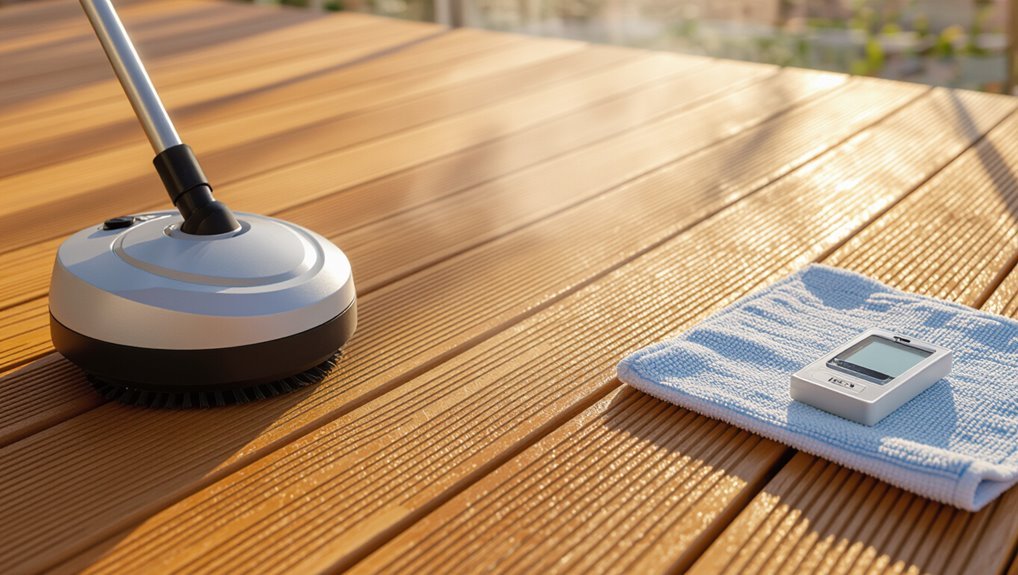
Wondering whether steam cleaning will harm your wooden decking? You can use low-pressure steam sparingly, but avoid high heat and prolonged exposure that can warp, lift finishes, or raise grain.
Test a hidden area, keep the nozzle moving, and wipe up moisture quickly.
For older, untreated, or delicate wood, stick to gentle detergent and a soft brush to protect the surface.