How to Remove Stains From Laminate Flooring Without Streaks
You can remove stains from laminate flooring without streaks by using gentle, pH-neutral cleaners, minimal moisture, and targeted spot treatments. Blot fresh spills immediately, then wipe with a microfiber cloth dampened with mild dish soap or a diluted vinegar solution sparingly. For tougher marks, use isopropyl alcohol on a cloth and rinse the area with plain water, drying thoroughly to avoid residue. Wring mops well and test cleaners first—keep going to learn specific recipes, stain fixes, and prevention tips.
Quick Answer Best Way to Remove Stains from Laminate Flooring Without Streaks
You can remove most stains from laminate flooring quickly by using a gentle cleaner, a microfiber mop, and a soft cloth to avoid streaks.
I recommend a pH-neutral laminate cleaner or a mix of water and a small amount of mild dish soap, plus rubbing alcohol for tough spots.
Gather a microfiber cloth, a flat mop, a spray bottle, and clean water before you start.
One-line summary
When you want a quick, streak-free fix, mix warm water with a few drops of mild dish soap. Wipe with a microfiber mop, then dry immediately with a clean cloth.
If you’re asking how do you remove stains from laminate flooring, gently scrub stubborn spots with a soft cloth and diluted cleaner. Avoid soaking, and dry promptly to prevent streaks and damage.
Recommended materials and tools
A few basic tools and gentle cleaners will get most laminate stains out without leaving streaks: a microfiber mop or cloth, a soft nonabrasive scrub pad, a spray bottle with warm water, mild dish soap, and a diluted vinegar solution for tougher spots.
- Microfiber mop/cloth
- Soft nonabrasive pad
- Spray bottle (warm water)
- Mild dish soap
- Diluted white vinegar
Basic Understanding Laminate Flooring and Stains
Laminate flooring is a wood-look surface with a protective finish that can be sensitive to harsh cleaners, so you’ll want to choose products that won’t strip or dull it.
Common stains you’ll face include spills, scuffs, grease, ink, and pet messes, each needing a slightly different approach.
Streaks usually come from leftover residue, water marks, or using the wrong cleaner, so proper technique is key.
What laminate flooring is and how its finish reacts to cleaners
Think of your laminate floor as a layered surface: a decorative printed image under a clear protective wear layer glued to a fiberboard core.
That wear layer determines how cleaners interact with the floor. You’ll treat it differently than wood or tile—avoid abrasive scrubbing and harsh solvents that can dull or lift the wear layer.
Use pH-neutral, low-moisture cleaners and test first.
Common types of stains on laminate (spills, scuffs, grease, ink, pet stains)
Stains on laminate come in a few predictable varieties, and knowing which you’re facing helps you act fast and safely.
You’ll spot common types and choose the right approach:
- Spills: food, coffee, wine
- Scuffs: shoe marks, furniture
- Grease: cooking oil, butter
- Ink: pens, markers
- Pet stains: urine, tracked mud
Identify quickly and treat accordingly.
Why streaks form on laminate (residue, water marks, wrong cleaners)
While streaks might look like permanent damage, they usually come from surface residue—cleaner film, hard-water minerals, or leftover soap—that refracts light differently than the surrounding finish.
You create streaks by using too much cleaner, wringing mops improperly, or letting water pool and evaporate.
Harsh or oily products leave films, and uneven drying highlights streaks, so use minimal, pH-neutral cleaners and microfiber.
Preparation Before Cleaning
Before you start, check safety recommendations and the manufacturer’s cleaning guidelines so you don’t void the warranty or damage the floor.
Test any cleaner in an inconspicuous spot by applying a small amount, waiting a few minutes, and wiping it away to confirm there’s no discoloration or finish damage.
Gather your tools—microfiber cloths, a mop and bucket, and the approved cleaner—so you’re ready to work efficiently.
Safety and manufacturer guidelines to check
Because your floor’s finish and warranty can be affected by the wrong cleaner, always check the manufacturer’s care instructions and any warranty restrictions before you start.
Note recommended cleaners, temperature and moisture limits, and prohibited products like wax, oil, or abrasive agents.
Wear gloves, maintain good ventilation, and unplug or cover electrical cords.
If unsure, contact the manufacturer for guidance.
How to test a cleaner in an inconspicuous spot (spot test steps)
When you’ve chosen a cleaner, always try it in an inconspicuous spot first to confirm it won’t damage the finish or discolor the laminate.
Follow these quick spot-test steps:
- Wipe area clean and dry.
- Apply a small amount of cleaner.
- Wait 5–10 minutes.
- Blot with a soft cloth.
- Inspect for sheen, color, or residue changes.
Gather and prepare tools (microfiber cloths, mop, bucket, cleaner)
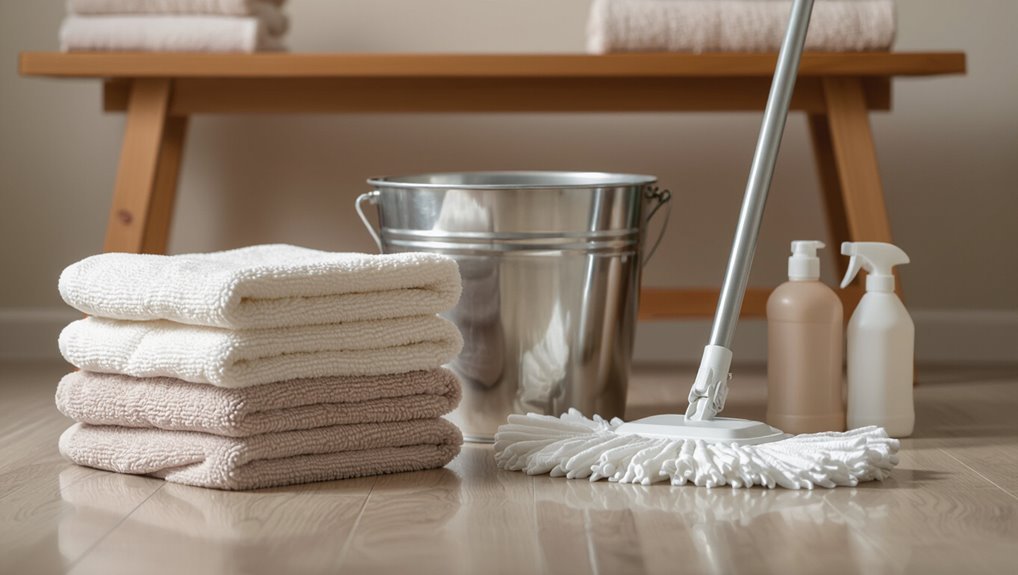
Grab a few microfiber cloths, a flat mop, a bucket, and the cleaner you spot-tested so you’re ready to tackle stains efficiently.
Gather everything nearby, dampen one cloth for testing, and fill the bucket with warm water.
Prepare these tools:
- Soft microfiber cloths
- Flat mop with washable pad
- Bucket with wringer or separate rinse
- Spot-tested cleaner diluted per label
- Gloves and a small brush
Step-by-Step Stain Removal Process
Now that you’ve prepped the floor, follow a clear step-by-step process to tackle stains efficiently.
Start with dry cleaning to remove dust, blot fresh spills quickly, and use gentle solutions for common stains before addressing scuffs and adhesive.
Finish with a careful rinse and streak-free drying to restore the laminate’s look.
Step 1 Dry cleaning for dust and loose dirt
Start by removing loose grit and dust so you don’t grind particles into the laminate while cleaning.
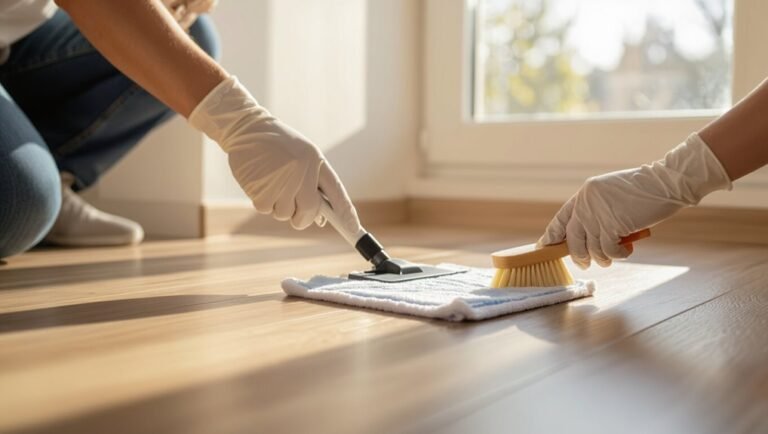
Sweep or vacuum with a soft-brush attachment, working toward one exit to avoid recontamination.
Use a microfiber dust mop for fine debris and pet hair.
Check edges and under furniture, and empty the vacuum or shake out the mop outside to prevent reintroducing dirt indoors.
Step 2 Tackling fresh liquid spills quickly
With loose dirt removed, deal with fresh liquid spills immediately to prevent staining and swelling.
Blot—don’t rub—with a clean, absorbent cloth or paper towel, working outward to avoid spreading.
For sticky or colored liquids, dampen the cloth with plain water and blot again.
Dry the area thoroughly to stop moisture seeping into seams.
Repeat blotting until no residue remains.
Step 3 Removing common stains with gentle solutions
Now you’ll tackle common stains one at a time so you can use the gentlest effective method for each.
For water-based spills like juice or coffee you’ll start with a mild detergent; for grease, ink, nail polish, paint, and pet urine you’ll move to targeted, gentle solutions and blotting techniques.
Follow the step-by-step tips below to remove the stain without damaging your laminate or finish.
Water-based stains (juice, coffee)
1 cup of warm water and a mild dish soap will handle most juice and coffee spills on laminate without damaging the finish.
Blot immediately with a soft cloth, don’t rub.
For dried spots, dampen microfiber, let sit briefly, then wipe gently.
Rinse with plain water and dry completely to prevent streaks or swelling.
Repeat if residue remains.
Grease and oil stains
Because grease and oil sit on the surface rather than soaking in, you can usually lift them without harsh chemicals; start by blotting excess with a dry paper towel.
Then apply a small amount of mild dish soap diluted in warm water to a microfiber cloth and gently work the spot in circular motions.
Rinse with a damp cloth, dry thoroughly, repeat if needed, and finish with a dry microfiber to prevent streaks.
Ink and permanent marker
If grease lifts with soap and water, ink and permanent marker will need a different approach because they can bond more tightly to the finish; start by testing any product on an inconspicuous spot.
Use a cotton swab with isopropyl alcohol or a gentle commercial ink remover, blotting lightly.
Rinse with damp microfiber and dry promptly to avoid streaks or finish damage.
Nail polish and paint spots
A small dab of nail polish or a stray paint spot can look disastrous, but you can often lift it from laminate without harsh scrubbing by working quickly and carefully.
Dampen a microfiber cloth with nail polish remover (non-acetone) or rubbing alcohol, blot gently, then wipe with a damp cloth.
Repeat minimally; finish with a dry cloth to prevent streaks and finish evenly.
Pet urine and odor
When you catch pet urine quickly, you can usually prevent stains and lingering odor on laminate by blotting and neutralizing the area right away; act fast and avoid rubbing, which can spread moisture into seams.
Blot with paper towels, mix a mild enzymatic cleaner or diluted white vinegar solution, apply briefly, blot dry, then air-dry fully.
Repeat if odor persists.
Step 4 Dealing with scuff marks and adhesive residue
Step 4 focuses on removing scuff marks and adhesive residue without harming your laminate’s finish, so you’ll use targeted, gentle methods rather than heavy scrubbing.
Use a soft cloth with a little water and mild dish soap for scuffs; try a pencil eraser for light marks.
For adhesive, apply a bit of rubbing alcohol on a cloth, test first, then rub gently until residue lifts.
Step 5 Final rinse and streak-free drying technique
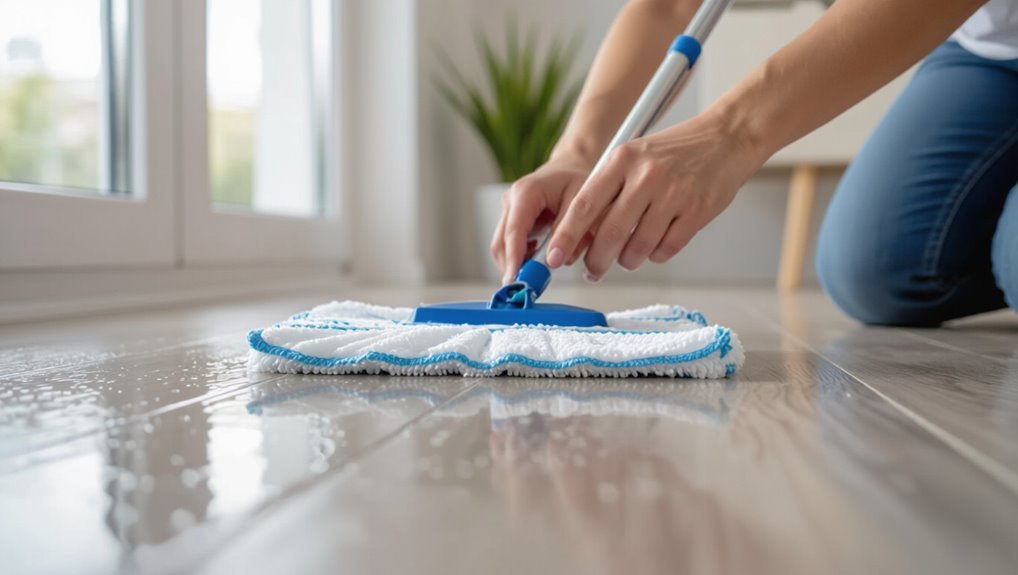
5. Rinse the floor with clean water to remove detergent residue; use a microfiber mop and change the water frequently.
Work in small sections, rinsing and wringing until no suds remain.
Dry immediately with a clean, dry microfiber towel or mop, moving with the grain to avoid streaks.
Guarantee good ventilation to speed drying and prevent water damage.
DIY Cleaner Recipes That Won’t Cause Streaks
You can make several streak-free cleaners at home, starting with a mild dish soap solution (a few drops in a gallon of water) for routine cleaning.
Use diluted white vinegar sparingly—it’s great for greasy spots but avoid it on worn or unsealed laminate—and mix isopropyl alcohol with water for targeted spot cleaning.
If you prefer ready-made products, look for pH-neutral, non-abrasive laminate cleaners and avoid waxes or oil-based formulas.
Mild dish soap solution (recipe and usage)
A simple mix of mild dish soap and warm water makes an effective, streak-free laminate cleaner you can whip up in minutes.
Use one teaspoon of soap per quart of warm water in a spray bottle. Lightly mist a small area, then wipe with a microfiber mop or cloth, rinsing the cloth often.
Dry immediately to prevent water damage and streaks.
Vinegar solutions when to use and when to avoid
While diluted white vinegar can cut grease and disinfect laminate without leaving streaks, you should use it sparingly and at the right strength: mix 1/4 cup vinegar per quart of warm water for routine cleaning, but avoid stronger concentrations that can dull the finish or seep into seams.
Test an inconspicuous area first, never soak joints, and skip vinegar on waxed, unfinished, or water-sensitive floors.
Isopropyl alcohol blends for spot cleaning
Because isopropyl alcohol evaporates quickly and lifts oily residues without leaving streaks, it’s ideal for spot-cleaning laminate when you dilute it properly.
Mix 1 part 70% isopropyl alcohol with 3 parts water, add a drop of mild dish soap, and test in an inconspicuous area.
Dab with a microfiber cloth, avoid soaking, and rinse residue with a damp cloth to prevent dulling.
Commercial cleaners recommended for laminate (what to look for)
Look for commercial laminate cleaners that specify “no-wax” and “non-abrasive” formulas, since they clean without leaving residue or dulling the finish; choose pH-neutral, streak-free labels and test a small area first. Prefer sprays or ready-to-use blends over concentrates that can be overapplied.
| Feature | Why it matters |
|---|---|
| pH-neutral | Protects finish |
| No-wax | Prevents buildup |
Tools and Products Comparison
You’ll want to pick the right tool for the stain and traffic level, since microfiber, cotton, and traditional mop heads each handle dirt and moisture differently.
Think about convenience and control when choosing spray cleaners, concentrated solutions, or wipes—some work faster, others save money or reduce waste.
Below we’ll compare pros and cons so you can match the best tool and product to your laminate.
Microfiber cloth vs cotton vs mop head (pros/cons)
When choosing between a microfiber cloth, cotton rag, or mop head for cleaning laminate floors, consider absorbency, scratch risk, and how easy each is to wring and launder. You’ll prefer microfiber for streak-free pickup, cotton for cheap absorbency, and mop heads for large areas.
| Tool | Pros | Cons |
|---|---|---|
| Microfiber | High pickup | Needs wash |
| Cotton | Inexpensive | Lints |
| Mop head | Covers area | Bulky |
Spray cleaners vs concentrated solutions vs wipes
Because each product type handles spills and maintenance differently, it’s worth weighing spray cleaners, concentrated solutions, and wipes against your floor’s needs and your cleaning habits. Spray gives quick spot control, concentrates cover large areas economically, wipes handle small messes without runoff. Choose based on stain size, frequency, and drying time.
| Type | Best for |
|---|---|
| Spray | Quick spots |
| Concentrate | Whole rooms |
| Wipes | Small spills |
Common Mistakes That Cause Streaks or Damage
Don’t soak laminate or leave puddles — excess water can warp the core and leave streaks.
Avoid harsh cleaners, steel wool, or abrasive pads that scratch the finish, and don’t polish or wax laminate since that creates buildup and a slick, uneven surface.
Always follow the manufacturer’s care instructions to prevent voiding warranties and causing avoidable damage.
Using too much water or leaving puddles
If you soak laminate floors or let puddles sit, you risk warping, swelling, and dull spots because the core is moisture-sensitive.
Don’t flood the surface; use a damp microfiber mop and wring it well. Blot spills immediately and dry the area with a clean cloth.
Frequent standing water breaks seals over time, so work quickly and check seams for trapped moisture.
Harsh cleaners and abrasive tools to avoid
While it might seem like stronger cleaners or scrubbers will get laminate spotless faster, they can strip the protective finish and leave permanent scratches or cloudy streaks.
Don’t use bleach, ammonia, oven cleaners, steel wool, or scouring pads. Avoid abrasive brushes and harsh solvents.
Instead, choose pH-neutral laminate cleaners or a mild dish soap solution and a soft microfiber mop to protect finish and prevent streaking.
Polishing or waxing laminate why it’s harmful
Because laminate has a thin, factory-applied wear layer, applying polish or wax can leave a hazy buildup, sticky residue, or uneven sheen that won’t bond and may attract dirt.
You’ll end up with streaks, cloudy patches, or a permanently altered finish instead of extra protection.
Don’t polish or wax—use manufacturer-approved cleaners and a microfiber mop to preserve appearance and avoid damage.
Ignoring manufacturer care instructions
When you skip the care instructions that came with your laminate, you’re inviting streaks, dulling, and even warping that could’ve been avoided.
Follow the manufacturer’s recommended cleaners and tools to protect the finish. Using harsh chemicals, excess water, or abrasive pads can void warranties and cause irreversible damage.
Read guidelines, test products in a hidden spot, and stick to approved methods for streak-free results.
Prevention and Best Practices for Spot-Free Laminate
Keep a simple daily and weekly cleaning routine—sweeping or vacuuming crumbs daily and mopping with a damp, manufacturer-approved cleaner weekly—to prevent buildup.
Use mats at entryways, felt pads on furniture, and a humidifier or dehumidifier as needed to protect the surface.
When spills or heavy traffic occur, blot liquids immediately and spot-clean stubborn areas to stop stains from setting.
Daily and weekly maintenance routine
A simple daily and weekly routine will prevent most stains and keep your laminate looking new.
You should act quickly on spills, dust daily, and mop weekly with a damp (not wet) microfiber mop. Rotate tasks so nothing is missed.
- Wipe spills immediately
- Sweep or vacuum daily
- Damp-mop once weekly
- Use gentle, pH-neutral cleaner
- Dry any damp spots promptly
Protective measures (mats, felt pads, humidity control)
Anyone can cut down on stains and scratches by using a few simple protective measures: place absorbent mats at entryways and under sinks, attach felt pads to furniture legs, and keep indoor humidity between about 35–55% to prevent warping and gaps.
You should also rotate mats, clean pads regularly, use nonrubber-backed rugs to avoid discoloration, and monitor humidity with a hygrometer for consistent protection.
Quick-response steps for spills and high-traffic areas
When spills happen, act fast: blot liquids with an absorbent cloth or paper towel, don’t rub, and remove solids with a plastic spatula to prevent grinding them into the surface.
Then mop damply with a pH-neutral cleaner, dry immediately, and treat stubborn marks with a vinegar-water mix or baking soda paste.
For high-traffic zones, schedule regular quick cleanings and use runners to minimize wear.
Troubleshooting Persistent or Old Stains
If a stain doesn’t lift after a careful second cleaning, you’ll need to decide whether to try stronger, safe techniques or call a professional.
Use nonabrasive cleaners, gentle scrubbing, and spot testers to avoid damaging the laminate.
When discoloration has penetrated the wear layer or the surface is warped, replacement or refinishing may be the only reliable fix.
When to repeat cleaning vs when to call a professional
Because some stains respond to simple follow-up cleaning while others need expert treatment, you’ll want to judge persistence and risk before repeating steps.
If a stain lightens after one safe repeat, try once more with the same mild method.
Call a professional if stains are deep, widespread, smell, involve chemicals, or if repeated attempts risk finish damage—don’t keep scrubbing blindly.
Safe techniques for stubborn discoloration
After you’ve tried gentle repeats and decided the stain won’t budge, move on to targeted, low-risk methods that protect the finish while tackling deep or old discoloration.
Use a soft melamine sponge dampened lightly to lift embedded grime, try a paste of baking soda and water applied briefly, and spot-test dilute hydrogen peroxide.
Rinse thoroughly and dry—repeat once if needed.
When replacement or refinishing is the only option
When stubborn stains have resisted every safe cleaning step, you’ll need to contemplate replacing or refinishing the affected planks to restore a uniform look and protect the floor’s integrity.
You’ll assess damage: surface wear can be sanded and sealed only on real wood–veneer laminates; HDF or melamine laminates need plank replacement.
Match color, acclimate pieces, and follow manufacturer installation for a seamless repair.
FAQ Laminate Stain Removal (35 common questions)
You’ll find answers to 35 common laminate stain questions here, like whether vinegar is safe and how often you should deep-clean to prevent buildup.
I’ll also cover removing sticky residue without streaks, whether steam mops can damage laminate, and which household items should never touch your floor.
Read on for short, practical fixes you can use right away.
Can I use vinegar on laminate flooring?
Curious if vinegar’s safe for your laminate floors? You can use a mild vinegar solution (one cup white vinegar to a gallon of warm water) for occasional cleaning.
Don’t pour undiluted vinegar or let puddles sit — acidity can dull the finish. Wring your mop until damp, not wet, and test an inconspicuous spot first to confirm no finish change.
How do I remove sticky residue without streaks?
How can you lift sticky residue from laminate without leaving streaks?
Use a soft cloth dampened with warm water and a few drops of dish soap to rub residue gently.
Rinse the cloth and wipe again to remove soap.
For stubborn spots, try a diluted isopropyl alcohol spot-clean, then dry immediately with a microfiber cloth to prevent streaking.
Will steam mops ruin laminate floors?
Wondering whether steam mops are safe for laminate floors? You should avoid them.
Steam can warp seams, delaminate boards, and damage the protective wear layer by forcing moisture into joints.
If you must use one, choose a low-steam setting, use minimal passes, and keep microfiber pad damp rather than wet.
Still, stick with recommended damp mopping for safest results.
How often should I deep-clean laminate to avoid buildup?
When should you deep-clean laminate to prevent grime from building up?
You should deep-clean every 1–3 months, depending on traffic, pets, and spills. High-traffic or pet homes need monthly attention; low-traffic areas can stretch to every three months.
Deep-cleaning removes residue sticky mops leave, prevents dulling, and makes regular quick cleans more effective.
Adjust frequency as needed.
What household items should never touch laminate?
Keeping up with regular and deep-cleaning helps prevent buildup, but you also need to watch what touches your laminate in the first place.
Don’t let bleach, wax, oil-based cleaners, or abrasive powders contact the surface. Avoid steam mops, razor blades, and rubber-backed mats that can trap moisture or discolor.
Clean spills quickly and use manufacturer-approved products to preserve finish and prevent damage.
Quick Reference Cheat Sheet
Cheat sheets save you time, so here’s a compact guide to tackling common stains on laminate:
| Stain | Quick fix |
|---|---|
| Dirt/Grime | Damp mop, mild detergent |
| Coffee/Tea | Vinegar solution, blot |
| Ink/Marker | Rubbing alcohol, dab gently |
Follow with gentle pressure, test solutions in a hidden spot, and dry thoroughly to avoid streaks.