Can You Use Murphy’s Oil Soap on Vinyl Flooring Without Causing Damage?
You can use Murphy’s Oil Soap on vinyl if you dilute it heavily (about 1 tablespoon per gallon), test a hidden spot first, and mop with a microfiber while rinsing promptly to avoid residue. It’s pH-neutral and mild, but overuse or full-strength solution can dull or leave a film that attracts dirt. Avoid abrasive tools and harsh solvents, and consider vinyl-specific cleaners for high-traffic areas — learn practical steps and fixes ahead.
Can You Use Murphy’s Oil Soap on Vinyl Flooring? Quick Answer
Yes—you can use Murphy’s Oil Soap on most vinyl floors, but use it sparingly and diluted.
Test a small, hidden area first to confirm no dulling or residue.
If the floor looks clean and free of film after drying, it’s safe to proceed.
Direct, concise verdict for homeowners
If you want a quick answer: you can use diluted Murphy’s Oil Soap occasionally on vinyl, but don’t use it full-strength or as your regular cleaner because the oil can leave a slippery residue and dull the finish over time.
For homeowners wondering can you use murphy’s oil soap on vinyl flooring — use a weak mix, rinse well, and reserve it for occasional deep cleans only.
Understanding Murphy’s Oil Soap and Vinyl Flooring
You’ll want to know that Murphy’s Oil Soap is a gentle, soap-based cleaner formulated for wood but often used on other surfaces.
Vinyl flooring comes in several types and finishes—luxury vinyl plank, sheet vinyl, and vinyl tiles—with different surface coatings that affect how they respond to cleaners.
Pay attention to a cleaner’s pH, solvent content, and potential for residue, because those factors determine whether it’ll harm, dull, or safely clean your vinyl.
What is Murphy’s Oil Soap?
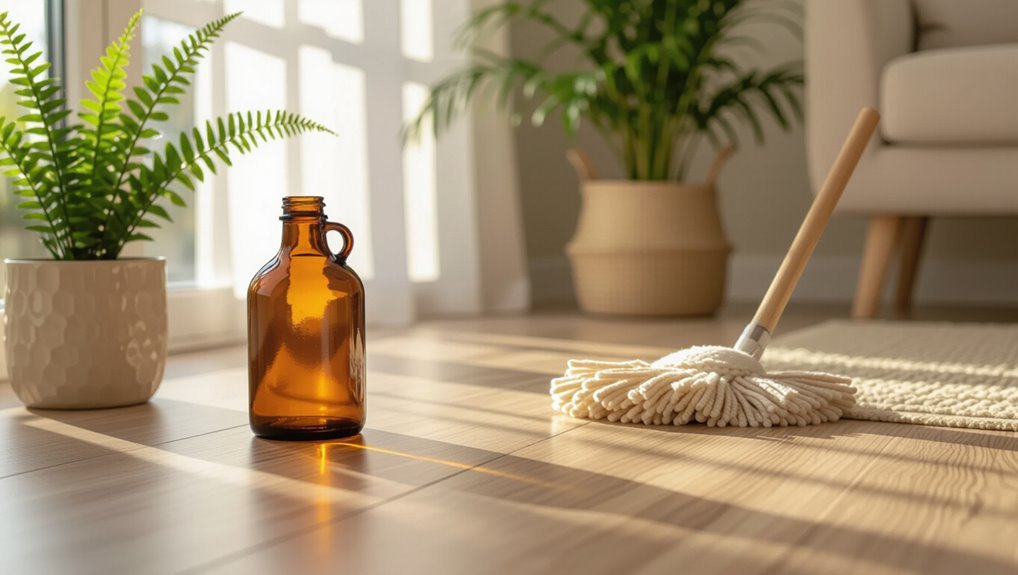
Murphy’s Oil Soap is a plant-based cleaning solution that’s been used for over a century to clean wood and many hard surfaces. It’s made from natural oils (mostly soybean) and mild surfactants rather than harsh alkalis or solvents.
You’ll find it in liquid form, mild and pH-neutral, designed to lift dirt and grime without stripping finishes, leaving surfaces clean with minimal residue.
What is vinyl flooring? Types and surface finishes
Vinyl flooring is a durable, low-maintenance synthetic floor covering made from layers of PVC and plasticizers. It comes in several forms—sheet, tile, and luxury vinyl plank (LVP).
You’ll find wear layers of varying thickness, printed design layers mimicking wood or stone, and different surface finishes like matte, semi-gloss, and embossed textures that affect appearance and slip resistance.
How cleaning agents interact with vinyl materials (pH, solvents, residue)
Now that you know the basic construction and finishes of vinyl flooring, it helps to understand how cleaning agents interact with those layers—especially regarding pH, solvents, and residue.
You should use neutral pH cleaners to avoid weakening wear layers. Avoid strong solvents that can dissolve plasticizers or finish.
Residue can attract dirt and dull shine, so rinse and dry thoroughly after cleaning.
Safety and Compatibility Analysis
Check Murphy’s Oil Soap and your vinyl manufacturer’s care guidelines before cleaning to make sure the product is approved for hard floors and won’t void warranties.
You should note that Murphy’s contains surfactants, glycerin, and fragrance, which can affect finish or leave residue on some vinyl surfaces.
Test a small, inconspicuous area first and follow dilution instructions to minimize any compatibility issues.
Manufacturer recommendations for Murphy’s Oil Soap use on hard floors
Because manufacturers set cleaning guidelines to protect finishes and warranties, you should follow their specific recommendations when using Murphy’s Oil Soap on hard floors.
Check your floor maker’s care label for approved cleaners, dilution instructions, and frequency limits.
If the manufacturer advises against oil-based or waxy products, don’t use Murphy’s; doing so may void warranties or harm sealed surfaces.
Vinyl flooring manufacturer care guidelines
When you’re caring for vinyl floors, follow the manufacturer’s cleaning guidelines closely to protect the wear layer and warranty; manufacturers will typically specify which cleaners, dilutions, and application methods are safe, and whether oil-based or waxy products like Murphy’s Oil Soap are allowed. You should check labels, test a small area, and keep records.
| Trust | Test | Protect |
|---|---|---|
| Read | Spot | Warranty |
| Care | Mild | Longevity |
Chemical components in Murphy’s Oil Soap relevant to vinyl (glycerin, surfactants, fragrance)
Understanding what’s in Murphy’s Oil Soap helps you judge whether it’s safe for vinyl: its main ingredients—glycerin, mild surfactants (plant-derived alkyl ether sulfates and similar detergents), and added fragrance—each affect vinyl differently.
You’ll find glycerin mildly hydrating yet can leave residue; surfactants lift dirt but may dull finish if overused; fragrances and additives risk plasticizers or staining, so rinse and spot-test first.
Step-by-Step Guide: How to Use Murphy’s Oil Soap on Vinyl Safely
Before you start cleaning, you’ll want to pre-test Murphy’s Oil Soap in an inconspicuous spot to check for color change or finish damage.
Then mix the soap to the proper dilution, choose an appropriate application method (microfiber mop, soft mop, or spray-and-wipe), and work in small sections so you can rinse away residue.
Finish by thoroughly rinsing, drying, and buffing to restore the vinyl’s finish.
Step 1 Pre-test in an inconspicuous area
Because vinyl finishes can react differently, always pre-test Murphy’s Oil Soap in an out-of-the-way spot first.
Use these quick steps to confirm safety:
- Pick a hidden corner or inside closet seam.
- Apply a small drop, don’t soak the floor.
- Wait 24 hours; check for discoloration or tackiness.
- If unchanged, proceed cautiously with cleaning.
Step 2 Dilution ratios and correct mixing
Start with a mild mix: add one tablespoon of Murphy’s Oil Soap to one gallon of warm water for general cleaning, and increase to two tablespoons per gallon only for tougher grime.
Stir gently to avoid excess suds. Use fresh solution each time; don’t concentrate beyond recommendations.
For spot cleaning, dilute one teaspoon in a pint of water.
Test again if unsure.
Step 3 Application methods (mop types, microfiber, spray-and-wipe)
1 good method is to match your tool to the job: use a damp microfiber mop for everyday cleaning, a sponge or terry mop for heavier grime, and a spray-and-wipe approach for spot treatments.
Work small sections, apply diluted Murphy’s lightly, and glide the mop without scrubbing aggressively.
Change or rinse mop heads often to avoid redistributing dirt and streaks.
Step 4 Rinsing and removing residue
Once you’ve cleaned a small section with diluted Murphy’s Oil Soap, rinse promptly to prevent a soapy residue from dulling the vinyl or attracting dirt.
Wring a clean microfiber mop or cloth in clear warm water, wipe the area thoroughly, and change rinse water often. Repeat until suds are gone.
Inspect seams and edges for trapped soap and flush them as needed.
Step 5 Drying and buffing to restore finish
After rinsing, dry the vinyl promptly with a clean, lint-free mop or microfiber cloth to prevent water spots and trapped moisture that can dull the finish.
Once dry, buff small sections with a soft, dry microfiber pad or cloth using circular motions to revive sheen.
Don’t over-buff; stop when the surface looks uniform and feels smooth to the touch.
Alternatives and Comparison
You can also use gentler options like a dilute vinegar solution or a pH-neutral cleaner that’s formulated for vinyl.
Compare Murphy’s Oil Soap to these products by looking at residue, shine, and long-term effects on the finish.
Choose a commercial vinyl-specific cleaner when the floor needs stain removal, protection, or the manufacturer recommends it.
Safer cleaning alternatives for vinyl (vinegar solution, pH-neutral cleaners)
While Murphy’s Oil Soap can be tempting for its grease-cutting power, gentler options like a diluted vinegar solution or a pH-neutral cleaner protect vinyl’s finish and seams better.
Mix one cup of white vinegar with a gallon of warm water for routine mopping, or choose a labeled pH-neutral vinyl cleaner for tougher soils to avoid dulling or warping the floor.
- Vinegar solution
- pH-neutral cleaner
- Microfiber mop
- Spot test area
Comparison: Murphy’s Oil Soap vs. pH-neutral vinyl cleaners
Because vinyl needs balanced cleaning that removes grime without stripping its factory finish, choosing between Murphy’s Oil Soap and a pH-neutral vinyl cleaner matters. You’ll find Murphy’s cleans gently but can leave residue or add shine buildup; pH-neutral products rinse clean and preserve finish. Compare quickly:
| Murphy’s Oil Soap | pH-neutral Cleaner |
|---|---|
| Gentle, oil-based | Balanced, non-stripping |
| Possible residue | Rinses clean |
| Adds sheen | Preserves finish |
| Risk of buildup | Safer long-term maintenance |
When to choose a commercial vinyl-specific product
If maintaining your vinyl’s original finish matters and you want predictable results, choose a commercial vinyl-specific cleaner—these formulas balance cleaning power with protective agents so you remove dirt without softening the vinyl or leaving residues that attract grime.
Use them when floors are high-traffic, have stubborn stains, or when manufacturer warranty requires specific products. They save time and reduce risk compared with home remedies.
Common Problems and How to Fix Them
You might notice Murphy’s Oil Soap can leave vinyl looking dull, sticky, or even slippery if it’s overused or not rinsed properly.
If that happens, you can strip residue with a gentle vinegar-and-water rinse or a commercial vinyl cleaner, followed by a clean water rinse and dry.
To restore shine and fix surface dullness, use a vinyl-safe polish or a light buffing with a microfiber cloth after the floor is fully clean.
Potential damage from Murphy’s Oil Soap (dulling, residue buildup, slipperiness)
When Murphy’s Oil Soap is used too frequently or left un-rinsed, it can dull vinyl’s finish, leave a filmy residue, and make floors slippery.
You might notice loss of shine, a sticky or cloudy film that attracts dirt, and reduced traction creating slip risks.
These effects accumulate with repeated use or heavy concentrations, so monitor application frequency and dilution to minimize harm.
How to remove Murphy’s-induced residue or film
Because residue from Murphy’s Oil Soap can build up over time, you’ll want to tackle it promptly to restore shine and safety.
Mix warm water with a few drops of mild dish soap, mop and rinse twice with clean water, then dry thoroughly.
For stubborn film, use a 50/50 white vinegar and water solution, scrub gently, rinse, and dry to remove residue.
Restoring shine and repairing surface dullness
If Murphy’s Oil Soap has left your vinyl looking dull, you can often restore shine without harsh chemicals by cleaning, buffing, and protecting the surface in a few targeted steps.
Start with a gentle vinegar solution rinse, dry thoroughly, then buff with a microfiber cloth or a soft buffing pad.
Finish with a vinyl-safe restorer or a light application of paste wax, following product instructions.
Best Practices and Preventive Tips
Set a simple routine—sweep daily, mop weekly with diluted Murphy’s Oil Soap, and spot-clean spills immediately to keep vinyl looking its best.
Don’t use abrasive pads, wax-based cleaners, or ammonia/bleach products that can damage the finish.
Protect high-traffic areas with mats, add felt pads to furniture, and control humidity to prevent warping and gaps.
Routine maintenance schedule for vinyl flooring
When you follow a simple, consistent routine, vinyl floors stay cleaner and last longer; aim for daily quick-cleaning, weekly deeper cleaning with a mild product like Murphy’s Oil Soap diluted per instructions, and monthly inspections for wear, loose edges, or grout problems so you can address issues before they worsen.
- Daily: sweep or dry-mop
- Weekly: damp-mop with diluted cleaner
- Monthly: inspect seams and edges
- As-needed: spot-treat spills immediately
Tools and products to avoid
Although vinyl is durable, you shouldn’t use abrasive tools or harsh chemicals that can dull, scratch, or lift the surface.
Don’t use scouring pads, steel wool, or stiff-bristle brushes. Avoid ammonia, bleach, wax-based cleaners, or solvent-based strippers.
Skip oil soaps left undiluted or abrasive powdered cleaners.
Choose soft microfiber, pH-neutral cleaners, and follow manufacturer guidelines to prevent damage.
Protective measures (mats, felt pads, humidity control)
Because vinyl’s finish can be damaged by wear, moisture, and trapped grit, use simple protective measures like entry mats to catch dirt, felt pads under furniture legs to prevent scratches, and a humidifier or dehumidifier to keep indoor humidity within the manufacturer-recommended range.
Also sweep regularly, wipe up spills promptly, rotate rugs to even wear, and replace worn pads to maintain the floor’s appearance and longevity.
Quick Decision Checklist for Homeowners
Need a quick yes-or-no on using Murphy’s Oil Soap on your vinyl floors? Use this checklist to decide fast:
- Is your vinyl sealed and manufacturer-approved for oil-based cleaners?
- Are stains light and not requiring abrasive treatment?
- Can you dilute and spot-test on an inconspicuous area first?
- Will you rinse and dry thoroughly to avoid residue?
If any answer is no, skip it.
FAQ
You probably have quick questions about safety and compatibility, like whether Murphy’s will strip your vinyl finish or work on LVP and vinyl tile.
You’ll also want to know how often a diluted solution is safe, what to do if the floor feels sticky, and whether it’s okay on newly installed or sealed vinyl.
Read on for short, practical answers to each point.
Will Murphy’s Oil Soap strip the finish off my vinyl floor?
Will Murphy’s Oil Soap strip the finish off your vinyl floor? Unlikely if you dilute it properly and avoid soaking.
Use the recommended concentration, a damp mop, and rinse with clean water. Harsh scrubbing, undiluted product, or repeated heavy use can dull or weaken a finish over time.
Test in an inconspicuous spot first and follow manufacturer care instructions to be safe.
Can I use Murphy’s Oil Soap on luxury vinyl plank (LVP) or vinyl tile?
Curious whether Murphy’s Oil Soap is safe for luxury vinyl plank (LVP) or vinyl tile? You can use diluted Murphy’s on LVP and vinyl tile sparingly—it’s mild and won’t usually harm wear layers.
Test a small, hidden area first to check for residue or dulling. Avoid saturation, rinse or buff dry after cleaning, and follow manufacturer care recommendations to keep warranties intact.
How often is it safe to use Murphy’s Oil Soap if diluted?
Generally, you can safely use diluted Murphy’s Oil Soap on vinyl about once every 1–2 weeks for routine cleaning, depending on traffic and soil levels.
For high-traffic areas, clean weekly; low-traffic spaces can wait two weeks.
Always follow dilution instructions, rinse or wipe with clear water, and dry promptly.
If you notice residue or dulling, reduce frequency.
What should I do if my floor becomes sticky after using Murphy’s Oil Soap?
If your vinyl floor feels sticky after using Murphy’s Oil Soap, start by rinsing the area with clean warm water and a microfiber mop or cloth to remove any leftover soap film; stubborn tackiness often comes from overuse or insufficient rinsing.
Repeat rinses, dry thoroughly, then clean with a mild vinegar-water solution (one cup vinegar per gallon) to cut residue.
Test a small spot first.
Is Murphy’s Oil Soap safe for vinyl that’s recently installed or sealed?
Wondering whether Murphy’s Oil Soap is safe for newly installed or freshly sealed vinyl?
You should wait: give new vinyl or a fresh sealcoat the manufacturer’s recommended cure time before using any cleaners.
If you must clean sooner, use a mild, pH-neutral cleaner and test a small area first.
Avoid oil-based products until sealing is fully cured to prevent finish softening or residue.