Is Laminate Wood Flooring Waterproof? The Honest Answer
Short answer: no — standard laminate isn’t waterproof, though many newer lines are water-resistant or fully waterproof. You can use water-resistant laminate for brief spills and kitchens if you mop spills quickly, but it will swell and warp with standing water unless it has a waterproof core and sealed joints. Waterproof laminate uses special cores and edge seals to block moisture, but installation and maintenance still matter. Keep going to learn how to pick and care for the right type.
Quick Answer Is Laminate Wood Flooring Waterproof?
Short answer: most standard laminate flooring isn’t fully waterproof, though some waterproof-rated lines exist.
If you’re a homeowner, plan for moisture protection in bathrooms or basements unless your product specifically says it’s waterproof.
Check the manufacturer’s specs and warranty before you buy or install.
Short, direct verdict
While laminate resists everyday spills better than solid hardwood, it isn’t fully waterproof—you can expect good short-term protection, but prolonged exposure or standing water will warp the core and damage the floor.
One-sentence summary for homeowners
Quick answer for homeowners: laminate isn’t waterproof—it’s water-resistant for short spills, but you should wipe up moisture quickly and avoid using it in areas prone to standing water.
You can use laminate in kitchens or living rooms if you prevent leaks, mop carefully, and choose water-resistant or SPC options; expect swelling and warping if water sits, so act fast to protect the floor.
What Laminate Flooring Is and How It’s Made
You’ll see that laminate is a layered product: a rigid core, a printed decorative layer under a clear wear layer, and a backing for stability.
Manufacturers make several types—traditional, water-resistant, and fully waterproof-rated—by changing core materials and seals.
A simple cross-section diagram usually labels those four layers so you can compare how each type handles moisture.
Composition: core, wear layer, decorative layer, backing
Laminate flooring is built like a layered sandwich: a dense core gives stability, a printed decorative layer provides the wood-look pattern, a clear wear layer protects against scratches and stains, and a backing layer keeps the board balanced and moisture-resistant.
You’ll find cores of HDF or MDF, wear layers rated by AC scale, printed papers for realism, and treated backings that resist cupping and moisture.
Types of laminate: traditional, water-resistant, waterproof-rated
When you’re choosing laminate, know there are three main types to match different needs:
Traditional boards with HDF cores that resist everyday wear but can’t handle standing water,
water-resistant options that slow moisture absorption and give you more installation flexibility in damp areas,
and waterproof-rated products that combine waterproof cores and sealed joints so they tolerate spills and occasional wetting without cupping or delamination.
Choose based on room use.
Cross-section diagram showing layers
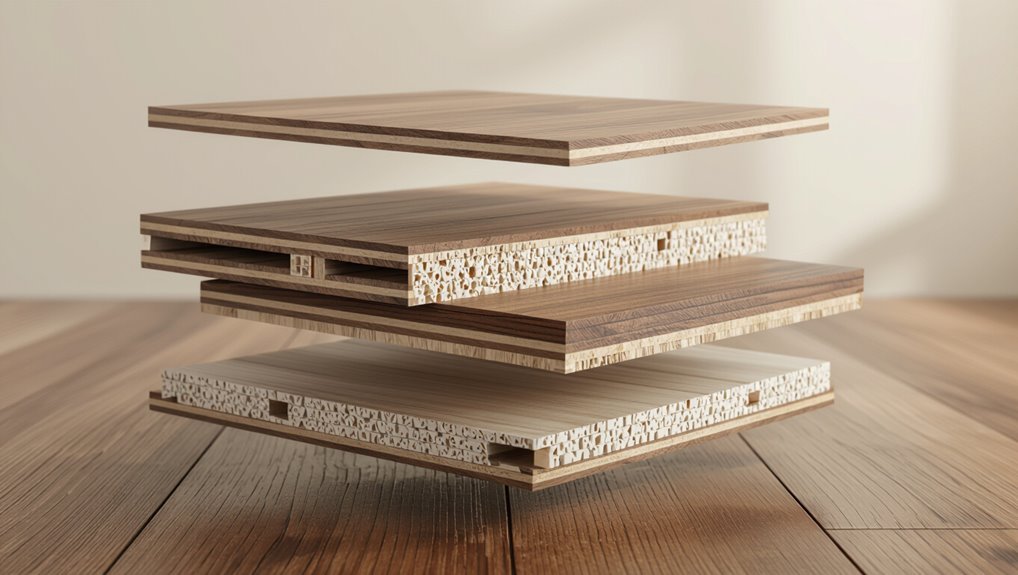
Think of a laminate plank like a layered cake: each thin, purpose-built layer works together to deliver durability, appearance, and moisture resistance.
You’ll see a wear layer (protects against scratches), a decorative photographic layer (wood look), a high-density fiberboard core (structural stability), and a backing layer (moisture balance).
Some waterproof variants add a sealed core or treated HDF to resist intrusion.
Difference Between Water-Resistant and Waterproof Laminate
You’ll want to know the clear definitions and industry standards that separate water-resistant from waterproof laminate so you can pick the right option.
Water resistance usually comes from surface coatings, denser core materials, and sealed edges, while waterproof products use specialized cores and tighter joint systems to block moisture entirely.
Each type has limits—traditional laminate swells quickly, water-resistant delays damage, and waterproof tolerates spills but still needs proper installation and maintenance.
Definitions and industry standards
Definitions matter: water-resistant and waterproof laminate describe different designs and performance levels, so you should know what each term legally and practically means before choosing flooring.
Industry standards (like ASTM and ISO tests) define resistance thresholds, warranty language, and suitable installations.
Read technical datasheets and warranties carefully so you’ll match product claims to your room’s moisture risks and avoid surprises.
How water resistance is achieved (coatings, core materials, edge treatments)
When you compare water-resistant and waterproof laminate, the difference comes down to three engineered layers working together: surface coatings, core materials, and edge treatments.
You’ll see tough UV-cured wear layers repel spills, high-density or HDF cores infused with water blockers resist swelling, and sealed or profiled edges prevent capillary entry.
Together they control moisture intrusion and durability.
Limitations of each type
Although both water-resistant and waterproof laminate handle moisture better than traditional laminate, each has clear limits you should know:
Water-resistant tolerates spills and humidity briefly but can swell at seams or with prolonged exposure.
Waterproof withstands surface water and frequent cleaning but can fail if water penetrates damaged edges, improper installation, or prolonged pooling.
You should still dry spills promptly.
Comparison: traditional vs water-resistant vs waterproof laminate
Because they’re built differently, traditional, water-resistant, and waterproof laminate perform very differently around moisture — and those differences should guide your choice. You’ll pick traditional for dry areas, water-resistant for occasional spills, and waterproof for wet rooms. Compare key traits below:
| Type | Best Use |
|---|---|
| Traditional | Dry rooms |
| Water-resistant | Kitchens, brief spills |
| Waterproof | Bathrooms, basements |
How Water Interacts with Laminate Flooring
Water usually finds its way into laminate at weak spots like edges, seams, joints, and where the underlayment meets the subfloor.
You’ll see short-term spills often wipe up with no damage, but long-term exposure swells boards and breaks down seams.
A proper subfloor and moisture barrier greatly reduce risk by keeping moisture from reaching those failure points.
Common failure points: edges, seams, joints, underlayment
Most leaks start at a few predictable weak spots: edges, seams, joints, and the underlayment beneath the planks.
You’ll find water tracks along unsealed edges, see seepage through imperfect tongue-and-groove seams, and notice swelling where joints fail.
Underlayment absorbs and spreads moisture, hiding damage until mold or cupping appears.
Inspect these points after spills and seal or replace compromised sections promptly.
Short-term vs long-term exposure
Those vulnerable edges and seams tell you where moisture will cause trouble, but the duration of exposure determines how bad that trouble gets.
Short spills you’ll mop up quickly and usually won’t warp boards, though edges can swell if left.
Prolonged dampness seeps in, softens cores, delaminates layers, and triggers mold.
Act fast for short incidents; prolonged exposure needs replacement.
Role of subfloor and moisture barriers
While laminate boards handle surface spills, the subfloor and any moisture barrier decide how much water actually reaches the core; you’ll want a dry, level substrate and a proper vapor retarder underlay to stop ground or concrete moisture from wicking into seams and swelling the panels.
You should also check for leaks, use waterproof connectors in wet zones, and replace compromised underlayment promptly.
Testing and Ratings to Look For
When you’re evaluating waterproof claims, check for IEC/EN or ASTM test standards that specify how panels resist moisture and swelling.
Don’t rely solely on manufacturer marketing—look for independent test results and real-world reviews to compare claims with performance.
Trust products with recognized labels or third-party certifications, since they back up the test data.
IEC/EN and ASTM standards (brief)
Standards from IEC/EN and ASTM give you objective ways to compare laminate flooring’s moisture and wear resistance, so look for their test codes and ratings when evaluating products.
IEC/EN cover European durability, swelling and abrasion tests (EN 13329/ISO equivalents).
ASTM standards detail moisture, dimensional stability and wear (e.g., ASTM F3261).
Use those codes to verify lab-tested performance, not marketing.
Manufacturer claims vs real-world performance
Lab test codes give you a clearer picture, but manufacturer claims can still be misleading unless you know what to check.
You should compare stated resistance (water, swelling, wear) with independent test results, look for specific test conditions and durations, and consider installation, underlayment, and real-use variables.
Don’t assume marketing equals performance; verify specifics before trusting waterproof claims.
Labels and certifications to trust
Which labels should you trust when shopping for laminate that claims waterproofing?
Look for AC ratings for durability, the ASTM D4060 abrasion test, and water-resistance standards like EN 13329 or ISO 24343 where applicable.
Certifications from independent labs (SGS, Intertek) and manufacturer-backed warranties specifying water exposure limits matter.
Verify third-party test reports and clear installation guidelines to guarantee real-world performance.
When Laminate Is a Good Choice vs When It’s Not
You’ll find laminate works great in living rooms, bedrooms, and other low‑moisture spaces where you want the look of wood without high cost or maintenance.
You shouldn’t use standard laminate in bathrooms, basements, or laundry rooms unless you choose waterproof-rated products or install better alternatives.
Compare laminate to vinyl, engineered hardwood, and tile on water resistance, durability, and aesthetics to pick the best fit for each room.
Ideal rooms and use-cases (living rooms, bedrooms, low-moisture areas)
While laminate isn’t fully waterproof, it’s a smart choice for living rooms, bedrooms, and other low‑moisture spaces because it gives you durable, attractive floors at a lower cost than hardwood and resists everyday wear and spills when you clean them promptly.
You’ll enjoy easy maintenance, wide style choices, and resistance to scratches and fading, making laminate ideal for daily traffic and family rooms.
High-moisture areas to avoid or consider alternatives (bathrooms, basements, laundry)
Because laminate isn’t fully waterproof, it’s a poor fit for rooms that routinely see standing water or high humidity like bathrooms, basements, and laundry areas.
You’ll risk swelling, warping, and mold if moisture penetrates seams. If you must install in damp spaces, choose true water-resistant products, add a moisture barrier, and plan for rapid cleanup—or pick a more suitable floor type to avoid repeated repairs.
Comparison with vinyl, engineered hardwood, tile
When comparing laminate to vinyl, engineered hardwood, and tile, think about how you use the room and what trade-offs you’ll accept: choose laminate for cost, looks, and moderate traffic; pick vinyl for water resistance; engineered hardwood for resale and warmth; tile for wet zones and durability.
| Option | Strength | Best Use |
|---|---|---|
| Laminate | Affordable look | Living rooms |
| Vinyl | Waterproof | Bathrooms |
| Engineered | Resale value | Bedrooms |
| Tile | Durable | Kitchens/basements |
Installation Best Practices to Maximize Water Resistance
You’ll want to start by testing and preparing the subfloor so moisture won’t undermine the installation.
Use proper underlayment and moisture barriers, seal edges and connections, and follow the manufacturer’s recommended methods for waterproof or water-resistant laminate.
Doing these steps in the right order will keep seams tight and reduce the chance of water damage.
Preparing the subfloor and moisture testing
Before laying any laminate, make sure the subfloor is clean, level, and dry—you want a stable base to prevent gaps, buckling, or moisture damage.
Check for soft spots, repair or replace damaged areas, and use a straightedge to find unevenness.
Test moisture with a reliable meter in multiple spots and compare readings to the flooring manufacturer’s limits before proceeding.
Using moisture barriers and proper underlayment
After confirming the subfloor’s dryness and level, install a moisture barrier and the right underlayment to protect your laminate from vapor and minor spills.
Choose a vapor-retardant sheet or peel-and-stick membrane for concrete, and foam or cork underlayment with integrated moisture protection for wood subfloors.
Lay seams tight, overlap per manufacturer instructions, and trim neatly so the barrier covers the entire floating floor area.
Sealing edges and transitions
Although the core panels repel some moisture, sealing edges and connections is what prevents water from seeping into seams and under the floor.
So you should focus on tight joints, proper adhesives, and moisture-blocking trims. Run sealant along perimeter gaps, install threshold strips at doorways, and use waterproof foam or backer where walls meet flooring.
Check and re-seal vulnerable spots regularly.
Recommended installation methods for waterproof variants
1 key to getting the most water resistance from waterproof laminate is following installation methods designed for moisture control: you’ll want a clean, level subfloor, an appropriate underlayment or vapor barrier, tight-clicked or glued seams per manufacturer instructions, and sealed perimeters and junctions to stop water at its source.
Also stagger joints, leave expansion gaps, slope wet areas toward drains, and test seals before finishing.
Maintenance, Cleaning, and Emergency Response
Keep your laminate dry with simple daily and weekly habits like sweeping and using a barely damp mop to prevent moisture damage.
If a spill or flood happens, act fast: blot up liquid, lift furniture, and ventilate the area to stop swelling and mold.
For long-term protection, inspect and maintain seams, replace worn seals, and address gaps promptly.
Daily and weekly cleaning tips to prevent moisture damage
When you wipe up spills right away and follow a simple weekly routine, you’ll cut the risk of moisture seeping into laminate seams and causing swelling or warping.
Clean daily with a dry microfiber mop; tackle sticky spots with a barely damp cloth. Avoid soaking floors and harsh cleaners.
Maintain humidity 30–50% and use mats at entrances.
- Dry microfiber mop daily
- Barely damp spot cleaning
- Use entrance mats
What to do immediately after spills or floods
Act quickly: blot up fresh spills with absorbent towels, roll from the edges toward the center to avoid pushing liquid into seams, and remove standing water with a wet/dry vacuum or towels so the surface dries fast.
Then lift baseboards, open windows and fans, and use a dehumidifier.
Inspect for cupping or discoloration; dryboard or consult a pro if moisture persists to prevent mold.
Long-term maintenance to preserve seals and joints
For long-term protection you’ll want to routinely inspect and maintain the seals and joints on laminate flooring so gaps, swelling, and moisture intrusion don’t develop.
Check edges and junctures quarterly, tighten loose moldings, replace damaged seals, and reapply compatible sealant where needed.
Keep humidity stable, avoid wet-mopping, and address minor gaps immediately to prevent bigger repairs or irreversible water damage.
Common Problems and Mistakes to Avoid
Don’t skip a moisture test before installation, because subfloor dampness can wreck your new laminate.
Use only recommended cleaning methods and follow the manufacturer’s installation guidelines to avoid warping or voiding the warranty.
Also pick a product rated for the room—bathrooms and basements need different performance than living rooms.
Mistake 1: Installing without moisture testing
If you skip moisture testing before installing laminate flooring, you’re risking cupping, warping, and premature failure because moisture from concrete slabs or subfloors will travel into the boards.
You should measure concrete moisture and RH, check wood subfloor moisture content, and follow manufacturer limits.
Don’t guess—use a reliable meter, let the subfloor dry, and document results to avoid costly replacements.
Mistake 2: Using improper cleaning methods
A mop soaked in soapy water might seem harmless, but using the wrong cleaning methods can ruin laminate flooring fast.
Don’t drench boards or use steam cleaners; excess moisture warps joints and swells cores.
Use a damp, well-wrung microfiber mop and mild, manufacturer-approved cleaners.
Wipe spills immediately, avoid abrasive scrubbers, and test new products on a hidden seam first.
Mistake 3: Ignoring manufacturer installation guidelines
Because manufacturers design installation steps to protect your warranty and the floor’s performance, skipping them can cost you time and money.
You should follow recommended underlayment, acclimation, expansion gaps, and fastening methods. Ignoring specs can void warranties, cause buckling, gaps, or moisture issues.
Read instructions, ask the installer questions, and keep documentation to guarantee proper performance and warranty coverage.
Mistake 4: Choosing the wrong product for the room
Choosing the wrong laminate for a room can cost you comfort, appearance, and money—so pick based on where it’ll live and how you’ll use it.
Don’t install standard laminate in damp areas; choose water-resistant or waterproof options for kitchens, bathrooms, and basements.
Match wear ratings to foot traffic, pick suitable textures for slip resistance, and guarantee the warranty covers the designated room.
Upgrading or Replacing Flooring After Water Damage
After water damage, you should first assess whether the flooring and subfloor can be salvaged or need full replacement.
For localized issues, you can often repair or replace affected planks, but extensive warping or mold usually means removing the whole floor.
If you’re replacing, choose materials suited for high-moisture areas—like waterproof vinyl, tile, or engineered wood with proper underlayment—to prevent repeat problems.
Assessing damage: salvage vs replace
When you’re deciding whether to salvage or replace water-damaged laminate, start by inspecting the scope and source of the damage: check for swelling, delamination, persistent dampness, mold growth, and whether the subfloor was affected.
If boards buckle, smell mold, or subfloor integrity is compromised, replace.
If damage is isolated, dry, and core remains stable, you can often salvage sections after fixing the leak.
Repair options for localized damage
If your laminate has only a few affected boards and the subfloor’s sound, you can often repair or upgrade without redoing the whole room; remove damaged planks, dry and treat the subfloor, and fit matching replacements or compatible junction pieces.
You can also refinish trim, replace underlayment where needed, and inspect seams for resealing to prevent recurrence and extend the floor’s life.
Best replacement choices for high-moisture areas
Replacing only the damaged planks can work in some cases, but for areas prone to moisture you’ll want materials that tolerate water rather than just resist it.
Choose vinyl plank or tile, waterproof engineered hardwood, or ceramic/porcelain tile. These handle spills, humidity, and occasional flooding.
Install proper underlayment, maintain seals, and consider slightly elevated thresholds to prevent moisture intrusion and future damage.
Cost Considerations and Value Comparison
You’ll want to compare price ranges for traditional laminate versus waterproof options to see what fits your budget.
Consider lifespan and warranty differences, since longer-lasting products can lower long-term costs.
Finally, weigh upfront and installation costs against alternatives—like vinyl or engineered hardwood—based on expected longevity and maintenance.
Price ranges for traditional vs waterproof laminate
Expect to pay more up front for waterproof laminate than for traditional options, but the price gap has narrowed as demand and manufacturing have grown.
You’ll typically see basic traditional laminate from $1 to $3 per sq ft, mid-range $3 to $5, while waterproof or SPC laminate often starts around $2.50 and runs $4 to $8 per sq ft depending on construction and finish.
Lifespan and warranty implications
1 key factor in comparing traditional and waterproof laminate is how long they actually last and what the warranty covers, since shorter lifespans or limited warranties can raise your true cost over time.
You’ll want to check warranty length, what’s covered (moisture, wear, installation), and transferability. Stronger warranties and longer lifespans lower replacement risk and protect your investment.
Cost-benefit vs alternatives (installation, longevity, maintenance)
Knowing how long flooring lasts and what warranty covers helps frame the next question: is waterproof laminate the best value compared with other options? You’ll weigh upfront install cost, expected lifespan, and upkeep. Laminate often costs less to install and maintain but may not last as long as engineered wood.
| Option | Strength |
|---|---|
| Laminate | Low install cost |
| Engineered wood | Longer lifespan |
Buying Guide: What to Look For When Choosing “Waterproof†Laminate
When choosing “waterproof” laminate, focus on core type, edge seal, and wear layer so you know what really handles moisture and traffic.
Ask manufacturers and retailers clear questions about testing standards, warranty limits, and installation requirements.
Use a simple checklist to compare samples in-store and specs online before you buy.
Key features to prioritize (core type, edge seal, wear layer)
Start by focusing on three features that actually determine how well a laminate resists water and wear: the core type, the edge seal, and the wear layer.
Choose a high-density, moisture-resistant core (HDF or SPC), tight sealed or beveled edges to block seepage, and a durable wear layer with high AC rating.
These combine to extend performance and longevity.
Questions to ask manufacturers and retailers
Which questions should you ask to separate true waterproof laminate from marketing hype?
Ask about tested water resistance standards, warranty specifics for water damage, and recommended installation/maintenance. Insist on written answers and data sheets.
- What lab tests back the waterproof claim?
- Does the warranty cover standing water and for how long?
- Are there required seals, underlayment, or trims for the claim to hold?
Sample checklist for in-store and online comparison
After you’ve pressed manufacturers for lab results and written warranty terms, use this checklist to compare products side‑by‑side in store or online.
Check core type (HDF vs MDF), water resistance rating, edge seal quality, plank thickness, AC/PEI wear rating, installation method, underlayment needs, warranty specifics for moisture, return policy, and real customer photos/reviews to verify performance before buying.
Real-World Scenarios and Case Studies
You’ll look at three common situations to see how “waterproof” laminate performs: a kitchen with occasional spills, a basement with potential seepage, and a bathroom with high humidity.
For each case you’ll weigh product specs, installation details, and practical limits of water resistance. That will help you pick the right materials and tactics for your space.
Scenario 1: Kitchen with occasional spills
Ever spill a glass of juice while cooking and worry about the laminate catching water?
In a kitchen with occasional spills, you’ll usually be fine if you wipe promptly. Laminate resists surface moisture but isn’t waterproof; standing liquid can seep at seams.
Use mats near sinks, clean spills within minutes, and consider water-resistant or sealed edges for extra protection.
Scenario 2: Basement with potential seepage
Because basements often face groundwater and humidity, you shouldn’t assume laminate will hold up there without extra precautions.
You’ll need a moisture barrier, elevated installation, and inspect for past dampness. If seepage is possible, choose true waterproof plank or tile instead of standard laminate.
Regular monitoring and prompt drying after any water intrusion will protect the floor and prevent costly damage.
Scenario 3: Bathroom installation considerations
If a basement with seepage gives you pause, a bathroom presents a different set of water risks and installation choices.
You’ll face frequent splashes, humidity, and occasional spills, so choose waterproof or water-resistant laminate rated for bathrooms.
Seal edges, use proper underlayment, slope toward drains where needed, and keep grout or thresholds at wet zones.
Regular ventilation and prompt drying prevent damage.
FAQs
You probably have a few quick questions about waterproof laminate, like whether it’s completely waterproof or suitable for bathrooms and basements.
You’ll also want to know how long it lasts with regular moisture, whether water damage voids the warranty, and if you can make existing laminate more water-resistant.
Let’s answer each of these clearly so you can make an informed choice.
Is laminate flooring completely waterproof?
Wondering whether laminate flooring is completely waterproof? Not usually.
Most laminate resists spills briefly thanks to a protective wear layer, but cores and seams can swell if water soaks in.
Some “waterproof” or “water-resistant” models handle longer exposure, yet no product is invulnerable.
You should follow manufacturer care, wipe spills promptly, and choose appropriate grades for moisture-prone areas.
Can waterproof laminate be installed in bathrooms and basements?
Curious whether waterproof laminate works in bathrooms and basements? You can install it there if you pick true waterproof varieties, seal seams, and use proper underlayment and perimeter sealing.
Bathrooms need good ventilation and quick cleanup of spills.
Basements require a moisture barrier and subfloor prep to prevent damp-related issues.
Follow manufacturer instructions and warranties for wet-area installation.
How long will waterproof laminate last with regular moisture exposure?
How long will waterproof laminate hold up with regular exposure to moisture?
You’ll typically get 10–25 years from quality waterproof laminate under normal, consistent moisture like occasional spills or bathroom humidity.
Lifespan depends on product grade, installation, underlayment, and maintenance.
Frequent standing water, poor seams, or subfloor issues shorten life.
Regular cleaning and quick spill cleanup maximize durability and appearance.
Will water damage void the warranty?
Knowing how long waterproof laminate can last with regular moisture helps you assess risk, but you also need to understand how water damage affects your warranty.
Manufacturers usually exclude damage from standing water, floods, or improper installation. You’ll need proof of proper maintenance and installation to file a claim.
Document incidents promptly, follow care guidelines, and contact the manufacturer for specific coverage and claim procedures.
Can I make existing laminate more water-resistant?
Want to keep your existing laminate flooring safer from spills and humidity? You can’t make it fully waterproof, but you can improve resistance.
Seal seams with a compatible silicone or seam sealer, add door mats, use area rugs in wet zones, control humidity with a dehumidifier, and wipe spills promptly.
Consider replacing damaged planks with water-resistant or waterproof alternatives for best protection.
Conclusion Practical Takeaways and Next Steps
You should choose laminate when you need a cost-effective, low-maintenance floor for dry areas or when you opt for water-resistant variants in kitchens or entryways.
Before installing, check product specs for water ratings, measure moisture levels in subfloors, and plan for proper underlayment and seals.
If you’re unsure, get a professional assessment to confirm suitability and avoid costly moisture damage.
Summary of when laminate is appropriate
If you’re weighing options, choose laminate when you need an affordable, attractive floor for low- to moderate-moisture areas—think living rooms, bedrooms, hallways, and basements with good humidity control.
You’ll want laminate if you prioritize scratch resistance, easy maintenance, and a variety of styles.
Avoid it in wet rooms or where frequent standing water occurs; opt for true waterproof flooring instead.
Immediate action checklist for homeowners considering laminate
Now that you know where laminate works best, take a few practical steps to confirm it’s the right choice for your home and to set the project up for success.
Inspect moisture levels, pick a water-resistant product, and plan installation timing.
- Test subfloor moisture and levelness.
- Choose an AC rating and water-resistant core.
- Schedule installation when humidity’s stable.