How to Clean Parquet Flooring Without Warping or Dulling the Wood
Keep dirt and moisture off your parquet by sweeping or vacuuming with a soft brush, then mop with a barely damp microfiber and a pH‑neutral cleaner—wring the mop well so water doesn’t sit on the wood. Blot spills immediately, buff scuffs with a soft cloth or approved polish, and dry floors quickly with airflow to prevent warping. Avoid steam, bleach, and abrasive tools; control humidity and sun exposure. Continue for detailed tips on finishes, stains, and fixes.
How to Clean Parquet Flooring Without Warping or Dulling the Wood
You can protect your parquet by using a simple, safe five-step cleaning routine that won’t warp or dull the wood.
Follow gentle products, minimal water, and quick drying, and you’ll maintain the finish.
Clean when you see dirt buildup, scuffing, or dull spots, and do routine light cleaning weekly with deeper care as needed.
Quick Answer Safe, effective cleaning in 5 steps
Five simple steps will keep your parquet floors clean without warping or dulling the finish.
Follow this quick routine to learn how to clean parquet flooring safely and effectively.
- Sweep or vacuum gently to remove grit.
- Use a damp mop with pH-neutral cleaner.
- Wring mop thoroughly to avoid excess water.
- Dry immediately with a soft cloth.
- Apply polish sparingly when needed.
When to clean parquet: frequency and signs it’s time
When should you tackle parquet cleaning?
Clean weekly by sweeping or dust-mopping, and damp-mop monthly or as needed.
Increase frequency in high-traffic zones, pet areas, or during allergy season.
Clean spills immediately to prevent stains and warping.
Watch for dullness, sticky residue, or visible grit—those signs mean it’s time for a gentle, thorough cleaning to protect the finish and wood.
Understanding Parquet Flooring
Parquet is made of small wood pieces arranged in patterns and usually finished with oil, lacquer, or wax, each needing different care.
You’ll want to know which finish you have because oil soaks in, lacquer forms a hard film, and wax sits on the surface.
Parquet warps or dulls from moisture, abrasive cleaners, sunlight, and using the wrong tools, so avoid those to keep your floor looking its best.
What parquet flooring is and common finishes (oil vs lacquer vs wax)
Think of parquet as a patterned hardwood floor made from small wood pieces arranged in geometric designs; it’s prized for visual warmth and durability but needs the right finish to perform well. You’ll choose oil for depth and DIY repairability, lacquer for protective sheen, or wax for soft luster and easy buffing.
| Finish | Look | Maintenance |
|---|---|---|
| Oil | Natural | Reapply |
| Lacquer | Glossy | Recoat |
Why parquet warps or dulls: causes (moisture, abrasive cleaners, sunlight, improper tools)
Now that you’ve picked a finish—oil for depth, lacquer for sheen, or wax for soft luster—you’ll want to know what can make that surface fail over time.
Parquet warps or dulls from moisture penetration, steam, or spills; abrasive cleaners or scrubbing that strip finish; UV sunlight that bleaches and breaks fibers; and improper tools like wet mops or metal scrapers causing scratches and lifting.
Preparing to Clean
Before you start, gather the right tools: a soft mop or flat microfiber mop, microfiber cloths, a pH-neutral cleaner, and a humidifier if your home is very dry.
Test any cleaner on a small, inconspicuous area and wait for it to fully dry to check for finish reaction. If the finish changes color or texture, stop and try a different product.
Tools and supplies you need (mop types, pH-neutral cleaners, microfibre cloths, humidifier)
When you’re getting ready to clean parquet, gather the right tools so you won’t have to stop mid-job: a soft microfibre mop or flat mop with replaceable pads, a few lint-free microfibre cloths for edges and spills, a pH-neutral hardwood cleaner, and a humidifier or spray bottle to control moisture.
- Soft microfibre mop
- Flat mop pads (replaceable)
- Lint-free microfibre cloths
- pH-neutral hardwood cleaner
- Humidifier or spray bottle
How to test a cleaner and spot-check finish compatibility (small-area test)
Pick a small, inconspicuous spot and try your cleaner there first to make sure it won’t dull, streak, or damage the finish.
Apply diluted cleaner per label, wait the recommended time, then blot dry with a microfiber cloth.
Inspect for discoloration, dulling, or raised grain. If unchanged after 24 hours, it’s safe to proceed; if not, choose a milder product or consult manufacturer guidance.
Step-by-Step Safe Cleaning Routine
Start by dry cleaning—dust and vacuum carefully to keep scratches away.
Then use a barely damp mop with the correct water-to-cleaner ratio and a well-wrung cloth for sticky spots and stains, treating them gently to protect the finish.
Finish by drying the floor thoroughly (airflow and towels, no steam) and plan periodic deeper cleanings to maintain the parquet.
Step 1 Dry cleaning: dusting and vacuuming techniques to avoid scratches
Sweep or vacuum your parquet regularly to remove grit that can scratch the finish, and always use tools and techniques that protect the wood.
You’ll avoid damage by choosing soft brushes, felt attachments, and careful motions.
Follow these quick tips:
- Use a microfiber dust mop daily
- Vacuum with a hardwood-safe nozzle
- Lift debris—don’t drag
- Check wheels for grit
- Protect feet and furniture legs
Step 2 Damp mopping: correct water-to-cleaner ratio and wringing method
Once you’ve removed loose grit, it’s time to damp-mop to lift dirt without soaking the wood.
Mix a mild pH-neutral cleaner with warm water per label directions—usually a few drops per bucket.
Wring your microfiber mop thoroughly so it’s damp, not dripping.
Work in small sections, rinse and wring often, and dry each area quickly with a clean, dry cloth.
Step 3 Dealing with sticky spots and stains without damaging finish
Treat sticky spots and stains promptly and gently to avoid damaging the parquet finish. Blot spills with a soft cloth, don’t rub.
For sticky residue, use a damp microfiber with a pH-neutral cleaner diluted per label; test in an inconspicuous spot first.
For stubborn spots, gently work a soft nylon brush or cotton swab with cleaner, then wipe dry immediately to protect the finish.
Step 4 Drying properly to prevent warping (airflow, towels, no steam)
After you’ve removed sticky spots and wiped the area dry, make sure the floor dries completely and evenly to prevent warping.
Open windows or run fans for gentle airflow, and blot remaining dampness with clean microfiber towels.
Don’t use steam cleaners or wet mops that leave excess water.
Check seams and corners, repeating blotting until the wood feels uniformly dry.
Step 5 Periodic deeper cleaning and maintenance schedule
If you want your parquet to stay beautiful long-term, set a simple maintenance schedule for deeper cleaning and inspections.
Every 3–6 months, vacuum with a soft attachment, mop with a manufacturer-approved cleaner, and check for scratches, gaps, or finish wear.
Annually, consider professional buffing or recoating where needed.
Address spills and humidity issues immediately to prevent lasting damage.
Cleaning Specific Situations and Materials (Supporting Step-by-Step)
Now you’ll tackle common parquet finishes and trouble spots so you can pick the right products and steps.
For oiled, lacquered/polyurethane, and waxed boards I’ll note recommended cleaners, buffing or re-oiling schedules, and step-by-step re-waxing where needed.
I’ll also cover protection and a simple spot-clean protocol for high-traffic areas and entryways.
Oiled parquet: recommended products and re-oiling frequency
Because oiled parquet draws and holds oils differently than sealed wood, you should use products made specifically for oil-finished floors and re-oil at intervals that match wear, typically every 6–18 months depending on traffic.
Use mild, pH-neutral oil cleaners and maintenance oils from trusted brands; spot-test first.
Reapply thin maintenance coats when sheen fades or water no longer beads, not on a fixed calendar.
Lacquered/parquet with polyurethane: safe cleaners and buffing tips
When your parquet has a lacquer or polyurethane finish, stick to mild, pH-neutral cleaners and soft tools to avoid dulling or scratching the protective layer.
Use a barely damp microfiber mop, avoid steam or abrasive pads, and blot spills promptly.
For scuffs, gently buff with a soft cloth and a manufacturer-approved polish.
Test any product in an inconspicuous spot first.
Waxed parquet: cleaning, buffing, and re-waxing steps
If your parquet is waxed, you’ll clean and maintain it differently than lacquered floors: wax builds a soft, protective layer that needs gentle care, periodic buffing to restore shine, and occasional re-waxing to replenish protection.
Vacuum or sweep, then mop sparingly with a damp cloth and pH-neutral wax cleaner. Buff with a soft cloth or machine at low speed.
Re-wax thinly, let cure, then buff.
High-traffic areas and entryways: matting, spot-clean protocol
High-traffic areas and entryways demand targeted care, so you’ll combine preventative measures with fast spot-cleaning to keep parquet looking its best.
Place absorbent, non-abrasive mats both outside and inside to trap grit and moisture.
Sweep daily, vacuum with a soft-brush head, and blot spills immediately with a damp microfiber.
For stains, use a manufacturer-safe cleaner sparingly and dry promptly to prevent warping.
Mistakes That Cause Warping or Dulling (What to Avoid)
Don’t pour on excess water or use steam cleaners, since moisture can warp the parquet.
Avoid harsh chemicals, abrasive tools, and the wrong mops or vacuum attachments that can dull or scratch the finish.
Also control indoor humidity and limit direct sunlight to prevent cupping and fading.
Using excess water or steam cleaners
When you soak parquet or run a steam cleaner over it, water can seep into the seams and lift the veneers, causing warping and permanent damage.
Don’t flood the floor; use a barely damp mop and wring cloths thoroughly.
Wipe spills immediately, dry areas with a soft towel, and avoid prolonged moisture exposure.
Proper ventilation helps drying and prevents cupping.
Harsh chemicals and abrasive tools
Excess moisture isn’t the only threat—what you clean with matters just as much.
Don’t use bleach, ammonia, citrus-based cleaners, or oil soaps; they strip finishes and dull grain. Avoid steel wool, scrubbing pads, or abrasive powders that scratch and expose wood.
Instead, pick pH-neutral wood cleaners and soft microfiber cloths to preserve finish, color, and structural integrity.
Incorrect mops and vacuum attachments
If you grab the wrong mop or a vacuum head with stiff bristles, you can quickly dull the finish or force water into seams and cause warping.
Use microfiber mops and vacuum attachments labeled for hardwood with soft felt or rubberized edges. Avoid string mops, steam cleaners, and brush rolls that scrape.
Wring mops thoroughly and check wheels for grit before rolling.
Ignoring humidity control and sunlight exposure
You’ve already learned how the wrong tools can damage finishes; now pay the same attention to the environment around your parquet.
Don’t ignore humidity — use a humidifier or dehumidifier to keep levels stable (30–50%) so boards won’t swell or gap.
Also limit direct sunlight with blinds or UV film to prevent fading and drying.
Monitor conditions regularly.
Prevention and Best Practices
To keep your parquet looking great, control humidity (around 40–60%) with a humidifier or dehumidifier and monitor seasonal swings.
Use rugs, felt pads, and furniture glides to prevent scratches, follow a simple regular maintenance checklist, and adjust care with the seasons.
Call a professional for deep damage or persistent warping, but handle routine cleaning and minor repairs yourself.
Humidity and climate control: ideal ranges and devices
Because wood reacts to moisture, keeping parquet within stable humidity and temperature ranges prevents warping, gaps, and cupping.
Aim for 40–60% relative humidity and 60–75°F (15–24°C). Use a hygrometer to monitor and a humidifier or dehumidifier to adjust levels seasonally.
Maintain steady conditions—avoid rapid swings—and ventilate after spills to protect finish and structural integrity.
Protective measures: rugs, felt pads, furniture glides
When you place rugs, felt pads, and furniture glides under heavy items, they absorb impact, prevent scratches, and reduce friction that causes finish wear—protecting your parquet without altering its look.
Choose breathable, nonstaining rug backings, replace felt pads when compressed, and use glides sized for load.
Lift rather than drag furniture, and check pads periodically to avoid trapped grit that can abrade the finish.
Regular maintenance checklist and seasonal care
1 simple checklist, followed by seasonal tasks, keeps your parquet looking its best year-round.
You’ll do quick daily sweeps, weekly damp mops, monthly inspections, and seasonal deep cleans to prevent buildup and humidity damage.
- Sweep or vacuum daily
- Damp-mop with approved cleaner weekly
- Inspect for gaps or scratches monthly
- Deep-clean and buff seasonally
- Monitor indoor humidity and adjust as needed
When to call a professional vs DIY
Those regular checks and seasonal deep-cleans will prevent most problems, but you’ll still face moments where a DIY approach isn’t the best choice.
Call a professional for water damage, persistent cupping, large stains, structural issues, or when sanding and refinishing are needed.
Do DIY for routine cleaning, minor scratches, and spot repairs if you have proper products and steady hands.
Comparison: Popular Cleaners and Their Effects on Parquet
Choosing the right cleaner matters because different products interact with parquet finishes in distinct ways, and using the wrong one can dull, strip, or warp your floor. You’ll prefer pH-neutral cleaners or diluted wood soaps; avoid ammonia, vinegar, and oil-heavy polishes. Compare options below:
| Cleaner | Effect | Best Use |
|---|---|---|
| pH-neutral | Gentle, safe | Regular cleaning |
| Vinegar | Can dull | Occasional only |
| Ammonia | Strips finish | Avoid |
| Oil polish | Builds residue | Refinish prep |
Troubleshooting Common Problems
You’ll learn quick DIY fixes for minor scratches and dull spots that usually don’t need a pro.
For small warped boards, you’ll learn how to assess the damage and decide between repair options.
For deep stains or water damage, we’ll compare restoration techniques versus full replacement so you can choose the right path.
Minor scratches and dull spots: DIY fixes
When small scratches or dulled areas appear, you can often restore the finish yourself with a few simple steps and minimal tools.
Clean the spot, rub a matching wood marker or wax stick into scratches, then buff gently.
For dulled patches, apply a thin coat of compatible parquet polish or oil, let it dry, and buff to blend.
Test first in an inconspicuous area.
Small warped boards: assessment and repair options
Inspect the warped board closely to determine how severe the cupping or buckling is and whether it’s isolated or affecting a wider area.
If it’s minor, loosen surrounding boards, dry the area, and clamp the board flat until it stabilizes.
For persistent warping, remove and replace the board, matching grain and finish.
Always check subfloor moisture before reinstalling to prevent recurrence.
Deep stains and water damage: restoration vs replacement
How bad is the damage, and can the wood be salvaged?
Inspect depth: surface stains, cupping, or rot. Light stains you can sand and refinish; deep discoloration may need targeted bleaching or replacement of affected blocks.
For water-damaged, check subfloor and odors; replace soaked parquet. Hire pros for structural rot.
Prioritize drying, mold prevention, and matching grain when replacing.
FAQ
You probably have quick questions like whether vinegar or steam cleaning will harm your parquet, how often to refinish or re-oil it, which mop to use, and if sunlight causes permanent fading.
We’ll answer each of those clearly and simply so you can protect your floor.
Read on for short, practical FAQ responses.
Can I use vinegar to clean parquet?
Curious whether vinegar’s a safe, effective cleaner for parquet? You can use diluted white vinegar (about 1/2 cup per gallon of water) for occasional spot cleaning, but avoid soaking the floor.
Wring your mop well, clean small areas, and dry promptly. Test first in an inconspicuous spot—acid can dull some finishes.
For regular care, use pH-neutral products.
Is steam cleaning safe for parquet floors?
If you’ve used vinegar sparingly, remember steam cleaning introduces a lot more moisture and heat, which can warp, lift, or loosen the adhesive on parquet and damage some finishes.
Don’t use steam cleaners on solid or engineered parquet unless manufacturer explicitly allows it.
Instead, stick to damp mopping with recommended cleaners, blot spills quickly, and dry thoroughly to protect joints, veneers, and sealants.
How often should I refinish or re-oil parquet?
How often you should refinish or re-oil parquet depends on traffic, finish type, and wood species. Aim to re-oil every 6–18 months for oiled floors.
Refinish sealed or lacquered parquet every 7–12 years under normal use.
Monitor wear: dull spots, water absorption, or visible scratches signal maintenance.
Light sanding and a fresh coat restore protection; consult pros for deep damage.
What’s the best mop for parquet floors?
Refinishing or re-oiling restores protection, but daily cleaning keeps that work lasting longer—so choose a mop that cleans gently without damaging the finish.
Use a microfiber flat mop with a wrung-out damp pad for light soil; avoid soaking. For tougher spots, a slightly damp microfiber with a pH-neutral wood cleaner works.
Skip abrasive pads, steam mops, and harsh chemicals.
Will sunlight permanently fade my parquet?
Will prolonged sun exposure change your parquet’s color for good?
Sunlight can lighten or darken wood over time, especially near windows or doors.
You can slow fading by using UV-blocking window film, curtains, or area rugs, and rotating furniture to even out exposure.
Refinish or touch up affected areas if discoloration becomes noticeable to restore a uniform appearance.
Visual Guide and Quick Reference
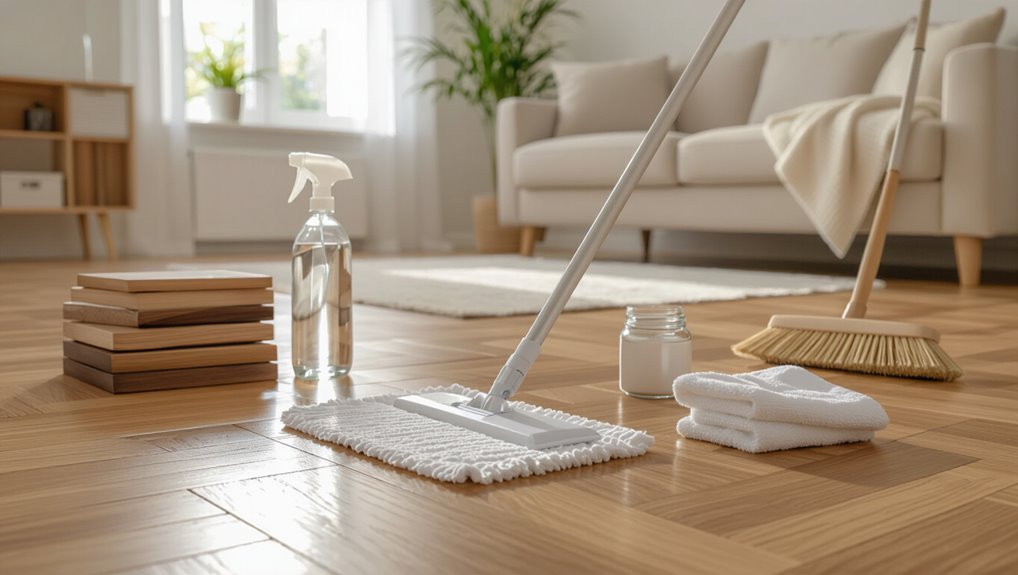
A simple visual guide gives you at-a-glance steps and quick checks to keep parquet floors looking their best; follow the icons and short captions to move from daily care to stain treatment and periodic maintenance without getting bogged down in details.
You’ll see symbols for sweeping, damp mopping, immediate blotting, safe cleaners, and refinishing intervals—use them as a fast checklist to protect finish and grain.