
Can You Use Bleach on Vinyl Flooring Without Damaging It?
You can use diluted bleach on some vinyl floors without ruining them, but you’ll need the right concentration, short contact time, and a thorough rinse. Test a hidden spot first, avoid older or decorative vinyl, and never use undiluted chlorine bleach or leave it in sunlight. Oxygen bleach is gentler for stains. Follow manufacturer advice and neutralize residue to prevent fading. Keep going to learn safe ratios, techniques, and alternatives that protect your floor.
Can You Use Bleach on Vinyl Flooring Without Damaging It? Quick Answer
Yes — you can use diluted bleach on some vinyl floors, but only in low concentrations and for short contact times to avoid discoloration or surface damage.
Use it for mold, mildew, or tough stains on sealed commercial-grade vinyl, but skip bleach on older, unsealed, or printed decorative vinyl where it can strip color and finish.
Always spot-test first, rinse thoroughly, and follow manufacturer guidelines.
Direct short answer (yes/no and caveats)
You can use diluted household bleach on most vinyl floors for occasional disinfecting, but you should never apply it full-strength or leave it to sit for long.
Yes — diluted bleach can work, but test a hidden spot, rinse thoroughly, neutralize with water, avoid colored or patterned vinyl, and don’t use it repeatedly.
Follow manufacturer guidance to prevent fading or damage.
When bleach is appropriate vs when it’s not
Although diluted bleach can disinfect vinyl in specific situations, it’s only appropriate for occasional spot treatment of stains, mold, or after illness — not for routine cleaning or on decorative/printed vinyl.
Use a weak solution, test an inconspicuous area, rinse thoroughly, and ventilate.
Avoid frequent use, high concentrations, or abrasive scrubbing, since those cause fading, warping, and adhesive breakdown over time.
How Bleach Interacts with Vinyl Flooring Basic Understanding
You should know that common bleach comes in two types—chlorine bleach (sodium hypochlorite) and gentler oxygen bleach (peroxide-based)—while vinyl flooring is primarily PVC with a printed design, wear layer, and protective finish.
Chlorine bleach can chemically break down PVC and strip or discolor finishes, whereas oxygen bleach is less aggressive but can still affect coatings if used improperly.
Damage risk depends on bleach concentration, how long it sits, ventilation during use, and sun exposure, so you’ll want to control those factors when cleaning.
What is bleach (types: chlorine bleach, oxygen bleach)
Bleach is a broad term for chemical cleaners that strip color and kill microbes, and the two common kinds you’ll meet for household use are chlorine bleach (sodium hypochlorite) and oxygen bleach (peroxide- or percarbonate-based).
You should know their differences:
- Chlorine: powerful disinfectant, strong whitener, more corrosive and fuming.
- Oxygen: gentler, lifts stains, safer on many surfaces.
Use concentrations and rinse thoroughly.
What is vinyl flooring made of (PVC, wear layer, finishes)
Knowing what type of bleach you’re using helps when you consider the floor it will contact.
Vinyl flooring is primarily PVC (polyvinyl chloride) with printed designs and a protective wear layer. That wear layer and any factory-applied finishes resist stains and scratches.
You should identify if your vinyl has a clear wear coating or textured finish so you can choose cleaning methods that won’t strip protection.
How bleach can chemically affect vinyl and finishes
Chemicals in bleach can attack both the PVC in vinyl and the protective wear layers, so you’ll want to understand what happens on contact.
Bleach oxidizes organic additives and can break polymer chains, causing discoloration, whitening, brittleness, or surface etching.
It may also strip finishes, dull protective coatings, and expose raw vinyl, increasing susceptibility to stains and mechanical wear over time.
Factors that influence damage risk (concentration, dwell time, ventilation, sun exposure)
When you use a strong solution or leave it sitting, the risk to vinyl rises sharply—higher bleach concentration and longer dwell time speed up oxidation and polymer breakdown, while poor ventilation and direct sunlight can amplify fading and surface damage.
You should dilute properly, limit contact time, ventilate well, avoid treating sun‑warmed floors, test discreetly, and neutralize residue to reduce harm.
Safe Use Guidelines Step-by-Step Process for Cleaning with Bleach
Before you start, check your vinyl type and any manufacturer guidance so you don’t void warranties or cause damage.
Test a diluted bleach solution in an inconspicuous spot, then follow the proper dilution ratios and application methods—using the right tools, technique, dwell time, and gentle agitation for the task.
Proceed step-by-step and adjust as needed based on the test area’s results.
Step 1: Identify your vinyl type and manufacturer recommendations
Which type of vinyl do you have and what does the manufacturer say about bleach?
Check product documentation, labels, or the manufacturer’s website for cleaning guidelines and approved chemicals.
Differentiate between vinyl plank, sheet, and luxury vinyl tile; some finishes resist bleach while others recommend mild cleaners only.
Follow recommended concentrations, contact times, and warranty conditions to avoid voiding coverage or causing damage.
Step 2: Test in an inconspicuous area
Since finishes and dyes react differently, always test a diluted bleach solution in an out-of-sight spot (like a closet threshold or under a cabinet) first—apply the solution, let it sit for the manufacturer‑recommended contact time, then rinse and dry to check for color loss, warping, or finish dulling before treating larger areas.
If you see damage, stop and choose a milder cleaner or consult the manufacturer.
Step 3: Dilution ratios for common tasks
3 simple dilution ratios will cover most vinyl-floor cleaning tasks: use 1 tablespoon of household bleach per gallon of water for routine disinfecting, 1/2 cup per gallon for tougher stains or mildew (apply briefly and rinse), and no stronger than 1 cup per gallon only for heavy-duty sanitizing on durable, manufacturer‑approved vinyl—always mix in cool water, label the solution, and never combine bleach with ammonia or other cleaners.
| Task | Ratio |
|---|---|
| Routine | 1 tbsp/gal |
| Mildew | 1/2 cup/gal |
| Heavy | 1 cup/gal |
| Note | Cool water |
Step 4: Proper application methods (tools, technique)
Now that you’ve mixed the correct dilution for your task, gather the right tools and use a controlled technique to protect your floor and yourself.
Wear gloves and eye protection, ventilate the area, and avoid soaking seams.
Apply with:
- A microfiber mop or cloth for even coverage
- A spray bottle for spot treatment
- A bucket-and-mop for larger areas, wringing excess moisture
Step 5: Dwell time and agitation recommendations
Allow the bleach solution to sit on the vinyl just long enough to disinfect—typically 5 to 10 minutes—then agitate only as needed to remove stains.
Prolonged soaking can harm seams and finishes, and vigorous scrubbing can scratch the surface, so use a soft brush or microfiber pad and gentle, circular motions.
Check a hidden area first, work small sections, and avoid excessive pressure.
Step 6: Thorough rinsing and neutralizing
Step 6: After the dwell time, rinse the area thoroughly to remove any bleach residue—use clean water and a mop or microfiber cloth, changing rinse water frequently—because leftover bleach can continue to discolor vinyl and irritate skin or respiratory systems.
Then neutralize remaining bleach with a diluted vinegar solution or a commercial neutralizer, rinse again, and wipe surfaces to guarantee no caustic residue remains.
Step 7: Drying and ventilation best practices
After you’ve rinsed and neutralized the bleach, make certain the area dries completely and stays well-ventilated to prevent lingering fumes and moisture damage.
Open windows and run fans to speed drying, and use a dehumidifier in humid conditions.
Wipe puddles with a clean microfiber cloth, avoid walking on damp vinyl, and wait at least 24 hours before replacing rugs or furniture to guarantee full drying.
Alternatives to Bleach for Vinyl Flooring
If you want safer options, start with mild detergents or pH-neutral cleaners that won’t strip vinyl’s finish.
Consider oxygen bleach or enzyme cleaners for tougher stains—they’re gentler than chlorine bleach but work differently.
You can also try DIY mixes like vinegar or baking soda for light cleaning, keeping in mind they’ve limits on heavy stains and grout discoloration.
Mild detergents and pH-neutral cleaners
While bleach can be harsh, mild detergents and pH-neutral cleaners offer a gentler way to keep vinyl floors clean without stripping finishes or causing discoloration.
You can safely remove dirt and stains with gentle solutions, using minimal water and quick drying.
Try these options:
- Diluted dish soap for routine cleaning
- pH-neutral vinyl floor cleaners per label
- Microfiber mop to avoid abrasives
Oxygen bleach and enzyme cleaners comparison
Though both oxygen bleach and enzyme cleaners avoid the harshness of chlorine, they work differently: oxygen bleach releases oxygen to lift stains and brighten without damaging vinyl, while enzyme cleaners break down organic soils like food, grease, and pet messes at a molecular level. You’ll choose oxygen for whitening and enzyme for biological stains.
| Choice | Feeling |
|---|---|
| Oxygen bleach | Relief |
| Enzyme cleaner | Trust |
| Combined use | Confidence |
| Avoid chlorine | Calm |
DIY natural alternatives (vinegar, baking soda) and limitations
Now that you know how oxygen bleach and enzyme cleaners work, you might want gentler, budget-friendly options for everyday cleaning—enter vinegar and baking soda.
You can mix a cup of vinegar with a gallon of warm water for light mopping and sprinkle baking soda to scrub stains gently.
Avoid undiluted vinegar, abrasive scrubbing, and prolonged contact to prevent dulling or seam damage.
Common Mistakes That Cause Damage
Don’t use undiluted or overly strong bleach, and don’t let it sit too long or bake in sunlight—both will eat away finish and color.
Never mix bleach with ammonia or acidic cleaners, and avoid abrasive scrubbing or wrong tools that can scratch the surface.
Check and follow the manufacturer’s care instructions so you don’t void warranties or cause preventable damage.
Using undiluted or overly strong bleach
Using undiluted or overly strong bleach can quickly ruin vinyl floors: it strips protective finishes, fades color, and can embrittle the material over time.
You shouldn’t pour full-strength bleach directly on vinyl. Always dilute to manufacturer-recommended ratios, test a hidden area first, and rinse thoroughly.
Overconcentration accelerates wear and voids warranties, so stick to mild solutions and safer cleaners.
Leaving bleach to sit too long or under sunlight
If you let bleach sit on vinyl too long—or leave treated areas exposed to direct sunlight—you risk rapid discoloration, surface dulling, and weakening of the flooring’s wear layer.
Don’t let solutions air-dry; rinse promptly with water and dry with a soft cloth.
Check small, hidden spots first, use diluted bleach only briefly, and avoid prolonged sun exposure until the surface’s appearance is confirmed safe.
Mixing bleach with other cleaners (ammonia, acids)
When you mix bleach with ammonia or acidic cleaners, you can create toxic gases—like chloramine or chlorine—that’re dangerous to breathe and can permanently damage vinyl’s surface; always use bleach alone, rinse thoroughly between different products, and ventilate while cleaning.
Don’t assume dilution removes risk: residues react. Test and wait after rinsing, wear gloves and good ventilation, and store cleaners separately to prevent accidents.
Abrasive scrubbing or wrong tools
Scrub with a wire brush or harsh pad and you can strip the wear layer, dull the finish, or gouge the vinyl in minutes; instead, pick soft-bristled brushes, nonabrasive pads, or microfiber cloths and test any new tool on an inconspicuous spot first.
Use gentle, even pressure, avoid abrasive powders, and swap to a soft mop for larger areas to prevent scratches.
Ignoring manufacturer care instructions
Because the manufacturer knows the product’s limits and recommended cleaners, ignoring those instructions can cause avoidable damage to your vinyl.
You’ll risk voiding warranties, stripping protective coatings, or causing discoloration by using bleach or other harsh chemicals they advise against.
Always check care labels, follow dilution and application guidance, and contact the manufacturer if unsure to protect your floor and coverage.
Prevention, Maintenance, and Best Practices
Keep a simple maintenance routine—sweeping, mopping with a mild cleaner, and spot-treating spills—to cut down on the need for bleach.
Use mats, area rugs, and UV-blocking window coverings to protect high-traffic areas and slow fading.
If stains or discoloration don’t respond to gentle care, call a professional before trying stronger chemicals.
Regular maintenance routine to reduce need for bleach
If you follow a simple weekly and monthly cleaning schedule, you’ll cut down on stains, odors, and the occasions when you think you need bleach.
Stick to gentle cleaners, prompt spot cleaning, and routine deep wipes to preserve finish and hygiene.
- Sweep or vacuum high-traffic areas weekly
- Mop with pH-neutral cleaner monthly
- Blot spills immediately to prevent staining
Protective measures (mats, area rugs, avoid UV exposure)
When you place mats at entrances, use area rugs in high-traffic zones, and limit direct sun on vinyl, you’ll greatly reduce wear, fading, and surface damage; these simple barriers catch grit, absorb moisture, and cut UV exposure so you don’t have to rely on harsh cleaners later.
Choose nonstaining rug backings, clean mats regularly, rotate rugs to even wear, and use UV-blocking window treatments.
When to call a professional for stains or discoloration
Those preventive steps will cut down on spills and sun damage, but some stains and discoloration need professional attention.
Call a pro if stains resist gentle cleaning, if bleach or cleaners altered color, if seams lift, or if odors persist.
A technician can assess substrate damage, perform specialized cleaning, or replace affected planks safely, preventing further harm and preserving your warranty and floor appearance.
Real-World Scenarios and Case Examples
When you’re tackling mold or mildew on vinyl, start with a mild, vinyl-safe cleaner and a soft brush before considering stronger solutions.
For stubborn stains like pet urine or ink, follow a clear decision flow—try targeted stain removers, spot-testing first, then escalate to enzyme treatments or professional help if needed.
If bleach has faded the color, you’ll want to know which remedies (recoloring kits, sealer) can help and where limitations mean replacement is the only realistic option.
Removing mold and mildew from vinyl safe approach
1 clear rule to follow: test a small, hidden area and ventilate the room before you apply any cleaner to vinyl floors affected by mold or mildew.
Use a mild detergent or diluted bleach (1 part bleach to 10 parts water) on stubborn growths, scrub gently with a soft brush, rinse thoroughly, and dry fully.
Repeat if needed, and always wear gloves and eye protection.
Dealing with stubborn stains (pet urine, ink) decision flow
Stains like pet urine or ink can look hopeless, but you can often remove them by following a clear decision flow: identify the stain type and age, test a hidden spot with your chosen cleaner, try the gentlest method first (blotting and a mild detergent), then step up to targeted treatments—enzymatic cleaners for urine, rubbing alcohol or diluted bleach for ink—only if the test area shows no damage.
Rinse and dry between steps, and stop if the finish dulls or the vinyl softens.
Start by blotting fresh spots, then consult product labels and re-test before wider application.
Restoring color after bleach damage possible remedies and limitations
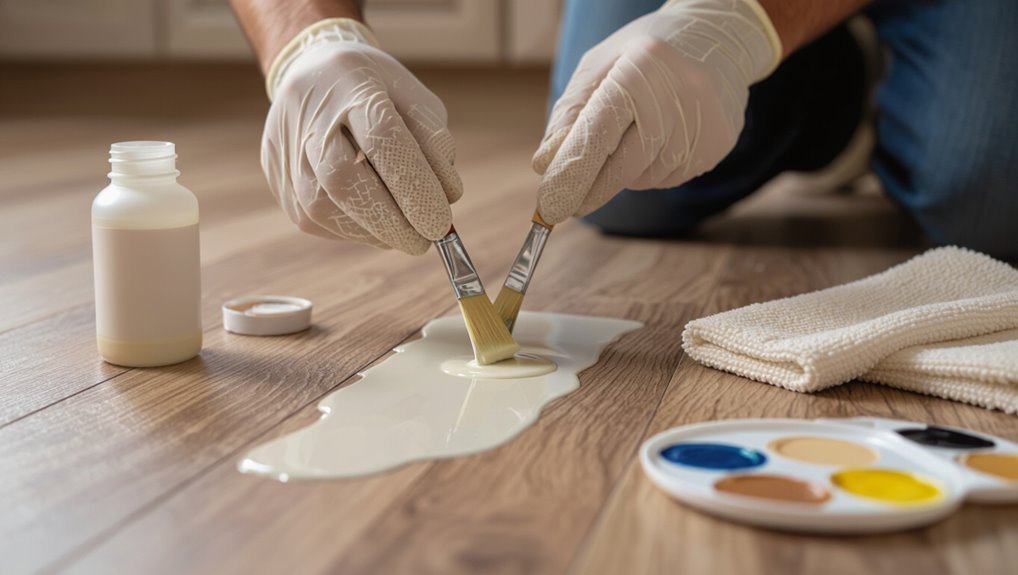
If you tried stronger cleaners like diluted bleach to lift ink or urine and now see faded or bleached patches, you can sometimes improve the look but full restoration is limited.
You can try color-matching vinyl repair kits, furniture markers, or professional recoating for localized spots.
Test discreetly, blend carefully, and accept that deep chemical bleaching may be irreversible without replacing affected planks.
FAQs
You’ll find answers here to common concerns like whether diluted bleach removes mold without fading color, if bleach can strip the wear layer, and how long a solution should sit before you rinse.
We’ll also cover oxygen bleach safety for different vinyl types and what to do if bleach causes discoloration or sticky residue.
Read on to get clear, practical steps and precautions.
Will diluted bleach remove mold from vinyl without bleaching color?
Can diluted bleach remove mold from vinyl without fading the color?
You can usually remove surface mold with a mild bleach solution (1 cup bleach to 1 gallon water) applied briefly, rinsed, and dried.
Test a hidden spot first. Avoid prolonged soaking and strong concentrations, which raise fading risk.
Use ventilation and gloves, and repeat spot checks to verify color stays intact.
Can bleach strip the wear layer off vinyl flooring?
Although a brief, diluted bleach rinse won’t usually eat through a modern vinyl wear layer, strong concentrations or repeated heavy applications can damage it over time.
You should avoid using undiluted bleach, frequent scrubbing with harsh pads, or long exposures that break down protective coatings.
If you must treat stains, test a hidden area first and use milder cleaners or manufacturer-recommended products to protect the wear layer.
How long should bleach solution sit on vinyl before rinsing?
For routine cleaning, let a properly diluted bleach solution sit on vinyl for no more than 5–10 minutes before rinsing; longer exposure increases the risk of dulling or degrading the wear layer.
For stains, you can spot-treat up to 15 minutes while closely monitoring color.
Always rinse thoroughly with clean water, dry promptly, and test an inconspicuous area first to avoid surprises.
Is oxygen bleach safe for all vinyl floors?
If you’re considering oxygen bleach after using diluted chlorine solutions, know it’s gentler on most vinyl floors and widely used for stains and brightening.
However, not all vinyl is identical—check manufacturer guidelines and test in an inconspicuous spot first.
Avoid prolonged exposure and high concentrations, and rinse thoroughly.
When in doubt, consult the flooring maker to prevent finish damage or color loss.
What to do if bleach causes discoloration or sticky residue?
When bleach leaves discoloration or a sticky film, act quickly: blot up any excess, rinse the area thoroughly with clean water, and dry it with a soft cloth to limit further damage.
Test a mild cleaner (dish soap or vinegar solution) on a hidden spot; gently scrub and rinse.
If marks persist, try a manufacturer-approved vinyl restorer or consult a professional before using stronger chemicals.
