How Much Does a Box of Laminate Flooring Weigh? What to Know Before You Buy
You’ll typically find a box of laminate flooring weighs between about 25 and 85 pounds depending on pack size, plank thickness (6–12mm), and core density, with common 20–30 sq ft packs around 30–70 lb and larger 40–50 sq ft cartons hitting 80–100+ lb. Heavier boxes mean fewer cartons per trip but tougher lifts, higher shipping costs, and more careful staging. Keep these factors in mind and you’ll get a better sense of total project weight as you read on.
How Much Does a Box of Laminate Flooring Weigh? Quick Answer
A standard box of laminate flooring usually weighs between 30 and 70 pounds for 20–30 square-foot packs, while larger 40–50 sq ft cartons or thicker, stone-look planks can run 80–100+ pounds.
You’ll most often see mid-range packs around 40–60 pounds depending on plank thickness and density.
For buyers: check the box weight before lifting — heavier boxes mean fewer cartons per trip but more strain per lift.
Direct weight ranges by common pack sizes and plank types
Several common pack sizes and plank types produce predictable weight ranges, so you can estimate what you’ll lift or haul. If you’re wondering how much does a box of laminate flooring weigh, typical ranges help plan transport.
| Pack Size | Plank Type | Weight Range |
|---|---|---|
| 10 sq ft | Thin (6mm) | 25–35 lbs |
| 20 sq ft | Standard (8mm) | 40–55 lbs |
| 30 sq ft | Thick (12mm) | 60–85 lbs |
One-sentence summary for buyers
Those typical pack weights mean you can expect most boxes of laminate flooring to fall between about 25 and 85 pounds.
So plan for one person to handle smaller 10–20 sq ft packs and two people or equipment for larger 30 sq ft, thicker boards.
You’ll want to check pack weight, room square footage, and board thickness before buying, and arrange help or a dolly if needed.
Understanding Laminate Flooring Basics
To understand box weight, you’ll first want to know what laminate is made of—typically a decorative paper layer, a wear layer, and an HDF or MDF core with a backing.
Planks usually come in standard lengths and widths with thicknesses from about 6mm to 12mm, and packs list square-foot coverage. The core type, wear layer thickness, and any added backing directly affect the weight per plank and per box.
What is laminate flooring made of?
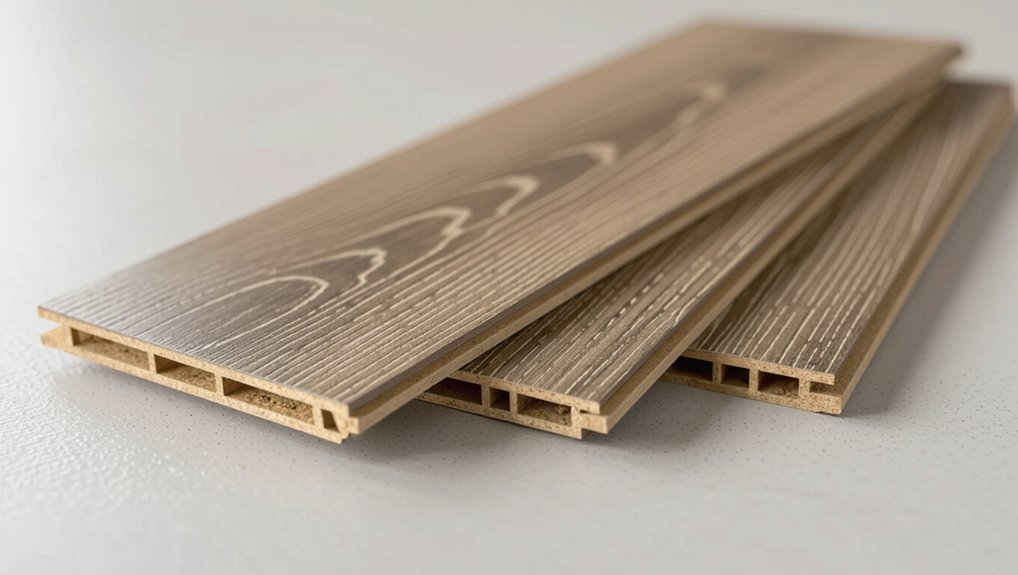
Laminate flooring packs multiple layers into a durable, affordable product: a dense fiberboard core, a photographic decorative layer that mimics wood or stone, a clear wear layer that resists scratches and stains, and often a backing layer that adds stability and moisture resistance.
You’ll also find water-resistant cores, embossed textures for realism, and factory-applied undercoatings that improve installation and lifespan.
Typical plank dimensions, thicknesses, and pack coverage
Planks come in a few standard lengths and widths, and choosing the right size affects both the look and how much material you’ll buy.
Typical widths range 4–9 inches, lengths 36–72 inches. Thicknesses usually run 6–12 mm; thicker planks feel sturdier and can span uneven subfloors better.
Packs list square feet covered; always add 5–10% for waste and pattern matching.
How weight relates to construction (HDF/MDF core, wear layer, backing)
Once you’ve chosen sizes and added for waste, you’ll also want to contemplate how weight reflects what’s inside each pack.
Heavier boxes usually mean denser HDF cores, thicker wear layers, and sturdier backings—better durability, impact resistance, and moisture control.
Lighter packs often use MDF or thinner wear layers, saving cost but sacrificing longevity.
Match weight to expected traffic and budget.
Detailed Weight Breakdown
You’ll see meaningful weight differences when you compare planks by thickness—6mm to 12mm—so we’ll note how each step up adds pounds per box.
We’ll also compare formats (wide vs long, click-lock vs tongue-and-groove) and give examples of square footage per box to show how coverage affects total weight.
Finally, you’ll get a quick contrast between domestic, waterproof, and commercial-grade laminates so you know what to expect for heavier or lighter options.
Weight by plank thickness (6mm, 8mm, 10mm, 12mm)
Thickness makes a big difference in how much a box of laminate flooring will weigh, so we’ll break down typical weights for 6mm, 8mm, 10mm, and 12mm planks.
Expect roughly 20–25 lbs per box for 6mm, 25–30 lbs for 8mm, 30–40 lbs for 10mm, and 40–50 lbs for 12mm.
Heavier boards increase shipping and handling needs.
Weight by plank size and format (wide, long, click-lock vs tongue-and-groove)
Having covered how thickness affects box weight, let’s look at how plank size and joining style change the numbers: wider and longer boards pack more material per plank, so boxes of 7–9 inch wide planks typically weigh 10–25% more than standard 5–6 inch widths.
Long-format planks (e.g., 7–9 feet) add another 15–30% compared with shorter lengths because fewer air gaps fit in the box.
Click-lock profiles often add slightly more mass and packaging density than traditional tongue-and-groove, so expect modest weight increases per box when choosing wide, long, or click-lock formats.
Weight by box coverage (sq ft per box examples)
Boxes of laminate flooring list coverage in square feet, and that figure lets you quickly estimate how much each box will weigh once you know the per-square-foot mass. Use examples to plan hauling and storage.
| Coverage (sq ft) | Estimated box weight |
|---|---|
| 12 | 18–30 lb |
| 20 | 30–50 lb |
| 36 | 54–90 lb |
| 50 | 75–125 lb |
Weight differences: domestic vs waterproof vs commercial-grade laminates
You’ve seen how coverage affects box weight; now compare how different laminate types change that per-square-foot mass.
Domestic laminates are lighter—standard HDF cores, thinner wear layers—so expect ~3–4 lbs/ft² packed.
Waterproof options add polymer layers and backing, rising to ~4–5 lbs/ft².
Commercial-grade planks use denser cores and thicker wear layers, reaching ~5–6+ lbs/ft² per installed square foot.
Why Box Weight Matters Before You Buy
Before you buy, check a box’s weight because it affects shipping costs and which delivery options are available to you.
Heavier boxes also change how you plan handling—whether you’ll move them yourself or hire pros—and how many people or what equipment you’ll need.
Finally, consider structural load and storage limits in your home during renovation so you don’t overload floors or closets.
Shipping costs and delivery options
Shipping costs hinge largely on how much each box of laminate flooring weighs, so checking box weight upfront can save you from surprise fees at checkout.
Heavier boxes raise freight rates and may require curbside or liftgate delivery, which cost more.
You should compare carrier rules, delivery windows, and any residential or appointment surcharges so you can budget accurately before buying.
Handling and labor considerations for DIY vs pro installers
Those delivery details also matter when you think about who’s moving the boxes into your home and installing the floor.
If you’re DIYing, heavier boxes mean you’ll need help carrying, maneuvering stairs, and pacing daily workload to avoid injury.
Pro installers price labor and bring helpers or equipment; heavier materials can raise installation time and cost, so factor weight into hiring decisions.
Structural load and storage limitations during renovation
Because your floors and storage areas can only hold so much weight, you should check load limits before ordering heavy laminate boxes.
Assess attic, garage, and upper-story floor capacity; spread boxes evenly to avoid point loads. Consult structural plans or a pro if unsure.
Limit stacks, use pallets or floor protectors, and plan deliveries to match install pace to prevent overload and damage.
How to Estimate and Calculate Total Weight for Your Project
Start by measuring your room and calculating how many boxes you’ll need based on the square footage and coverage per box.
Multiply the number of boxes by the per-box weight, then add a percentage for waste, cuts, and an extra buffer to get the total shipment weight.
For reference, I’ll show example calculations for common room sizes like 100, 300, and 600 sq ft so you can see typical totals.
Step 1: Measure area and determine boxes needed
Begin by measuring the floor area you’ll cover so you can calculate how many boxes of laminate you’ll need — measure length and width in feet (or meters), multiply to get square footage (or square meters), and add about 5–10% for waste and cuts.
Then follow these steps:
- Divide total area by coverage per box.
- Round up to whole boxes.
- Note room layout and waste factors.
Step 2: Use per-box weight to calculate total shipment weight
Now that you know how many boxes you need, multiply that count by the per-box weight (usually listed on the box or the manufacturer’s spec sheet) to get your total shipment weight, and don’t forget to include extra boxes for waste in your calculation.
Then:
- Confirm per-box weight from label or spec sheet.
- Multiply boxes × weight.
- Round up for transport limits and handling.
Step 3: Account for waste, cuts, and extra weight buffer
After you’ve confirmed per-box weight and totaled the shipment, factor in waste, cuts, and a safety buffer so your weight estimate matches real-world needs.
You should add a contingency percentage and adjust for cut-offs and damaged boards.
Use this simple checklist:
- Waste allowance (5–10%).
- Extra boxes for pattern/cuts (1–2).
- Buffer for damage/returns (5%).
Example calculations for common room sizes (100, 300, 600 sq ft)
For three common room sizes—100, 300, and 600 sq ft—you’ll calculate needed boxes by dividing area by the coverage per box, then multiply by the per-box weight and add your waste and buffer percentages to get the total project weight.
| Room size | Example total weight |
|---|---|
| 100 sq ft | 120–150 lb |
| 300 sq ft | 360–450 lb |
| 600 sq ft | 720–900 lb |
Buying and Delivery Tips Based on Weight
When ordering, ask suppliers for per-box and per-pallet weight specs so you can confirm freight charges and handling limits.
Choose a delivery method—curbside, liftgate, or white-glove—that balances cost with the risk of damage from heavy pallets.
On site, plan a dry, level staging area and limit vertical stacking to the manufacturer’s recommended heights to prevent warping or crushing.
How to ask suppliers for accurate weight specs
Want the exact shipping weight so you can plan delivery and handling?
Ask suppliers for gross and net weight per box, pallet weight, and pallet count.
Request documentation: spec sheets, packing lists, or photos of scale readings.
Confirm whether weights include packaging and protective materials.
Verify tolerance ranges and who covers overweight charges.
Get responses in writing before ordering.
Choosing delivery method to minimize damage and cost
Choosing the right delivery method cuts both damage risk and cost, so weigh your options against box and pallet weights before you buy.
Choose curbside for lighter loads, lift-gate or tailgate for heavy pallets, and white-glove for fragile or multi-room installs.
Confirm vehicle capacity, handling fees, and insurance.
Schedule deliveries when you can accept and inspect materials to avoid claims and returns.
Onsite storage and staging recommendations
After you pick the right delivery option, plan where and how you’ll store the boxes onsite to protect the material and make installation smoother.
Keep boxes flat, off damp floors, and away from direct sunlight or heat sources. Stack no more than manufacturer’s recommended height, label bundles by room, and stage near work areas to reduce carrying.
Maintain room temperature for 48 hours before acclimation.
Installation Considerations Related to Weight
When handling heavy packs, you’ll follow two-person lift rules and basic safe-handling techniques to prevent injury and damage.
Keep stacked boxes off damp floors and use pallets or boards to avoid moisture and compression.
Allow heavy packs to acclimate unopened for the recommended time, then unbox carefully to move planks individually.
Two-person lift rules and safe handling tips
Because laminate boxes can be bulky and awkward even if they’re not extremely heavy, you should use two-person lift techniques for any load you can’t comfortably carry alone.
Communicate, bend knees, keep back straight, and coordinate steps. Follow these rules:
- Agree on timing and route.
- Lift together on count of three.
- Use handle points and keep load close.
Protecting flooring from moisture and compression when stacked
If you stack boxes of laminate, protect them from moisture and long-term compression to avoid warped planks and damaged edges.
Store packs off the ground on pallets or blocking, cover with breathable plastic to keep damp out, and avoid heavy loads on top.
Rotate stacks periodically and limit stacking height to manufacturer’s recommendations so boards stay flat and edges remain intact.
Best practices for acclimation and unboxing heavy packs
After you’ve stored packs properly, plan for acclimation and safe unboxing of heavy bundles so weight won’t damage planks or injure anyone.
Let packs sit closed in the room for 48–72 hours to equalize moisture and temperature.
Use a dolly and at least two people to move bundles.
Open boxes on a flat surface, lift boards by the edges, and stack loosely to avoid warping.
Common Mistakes and Problems Linked to Weight
Don’t assume shipping and handling will be cheap—those fees can add up quickly when you’re ordering multiple boxes.
Make sure you don’t overload your vehicle or upper floors, since too much weight can create safety hazards or structural strain.
Store boxes flat and avoid sudden drops to prevent warped planks and edge damage.
Underestimating shipping/handling costs
One common mistake homeowners make is assuming shipping and handling will be a small, fixed fee regardless of how many boxes of laminate they order.
You’ll pay more as weight and pallet requirements rise, plus residential delivery, liftgate, and inside placement fees.
Get accurate freight quotes, confirm per-box vs. per-shipment pricing, and factor these costs into your budget before placing a large order.
Overloading vehicles or upper floors
When you pile too many boxes of laminate into a car, truck bed, or onto an upper floor, you risk exceeding safe weight limits and causing damage or injury.
Check your vehicle’s payload and your building’s floor load rating before loading. Distribute weight evenly, avoid stacking beyond recommended heights, and get help for heavy lifts so you don’t compromise structural integrity or vehicle handling.
Damage from improper storage or sudden drops
Beyond load limits, how you store and handle boxes matters just as much: improper stacking, leaning packs against walls, or dropping a pallet can crush edges, warp boards, and break the protective wear layer.
You should keep boxes flat on a level surface, avoid high stacks, use pallets and straps, and lift carefully.
Inspect packaged boards before installation to catch hidden damage.
Prevention, Safety and Best Practices
Before you accept or move boxes, use a simple checklist to confirm safe delivery, proper storage location, and clear pathways.
Use dollies, pallet jacks, and straps to cut down on manual lifting and stabilize loads.
If deliveries are oversized, very heavy, or you don’t have the right gear, hire pros to avoid injury and damage.
Checklist for safe delivery, storage, and handling
Start with a simple checklist you’ll actually use: verify delivery weight and box count, inspect boxes for damage, confirm the storage location is clean and dry, and plan how you’ll move each bundle without straining.
Use these steps to stay safe and organized:
- Note weight, box count, and delivery time.
- Reject or document damaged boxes.
- Stack bundles flat, off the floor, with air circulation.
Tools and equipment that reduce manual lifting (dollies, pallet jacks)
Anyone handling bundles of laminate should use the right tools—dollies, hand trucks, and pallet jacks cut the heavy lifting and reduce injury risk.
You should choose equipment rated for the load, secure stacks with straps or shrink wrap, and use ramps for curbs.
Wear gloves and slip-resistant shoes, position wheels toward your path, and inspect gear before each use to prevent accidents and damage.
When to hire professionals for heavy or large deliveries
If your delivery involves multiple pallets, long stair carries, tight hallways, or loads that exceed about 50–75 pounds per bundle, hire pros who’ve the equipment and training to move them safely.
You’ll avoid injury, property damage, and delays.
Professionals handle scheduling, permits, and heavy lifts with dollies, straps, and spotters.
Call a licensed delivery team when in doubt.
Comparison: Laminate vs Alternatives by Weight and Practical Impact
When choosing flooring, you’ll want to compare how laminate stacks up against engineered hardwood in weight and feel.
You’ll also see clear differences between laminate and vinyl plank flooring, with vinyl generally lighter and engineered hardwood heavier.
Those weight differences affect how you handle installation, transport, and shipping costs, so factor them into your budget and planning.
Laminate vs engineered hardwood
Although both look similar at a glance, laminate and engineered hardwood differ noticeably in weight and how that weight affects installation and floor performance; you’ll find laminate panels are generally lighter per plank, making them easier to handle and quicker to float over subfloors, while engineered hardwood’s heavier construction—real wood veneer over plywood—adds stability and can influence underlayment choice, transport costs, and structural load considerations.
| Feature | Laminate | Engineered |
|---|---|---|
| Weight per plank | Lighter | Heavier |
| Handling | Easier | Requires care |
Laminate vs vinyl plank flooring
Because both laminate and vinyl plank aim to mimic hardwood, you’ll notice they differ more in construction and weight than in look: laminate uses a dense fiberboard core with a photographic layer, making planks heavier and stiffer, while vinyl plank relies on lighter PVC-based layers and sometimes foam backing, so it’s generally lighter and more flexible—differences that affect handling, underlayment needs, sound transmission, and how easy they are to float or glue down.
| Feel | Laminate | Vinyl |
|---|---|---|
| Weight sensation | Solid | Light |
| Footfall | Firm | Softer |
| Installation vibe | Confident | Easy-going |
| Emotional pull | Traditional | Casual |
| Long-term mood | Durable | Relaxed |
Weight implications for installation and shipping costs
Now that you’ve seen how laminate and vinyl differ in construction and heft, let’s look at what that weight means for installation and shipping.
Heavier laminate raises labor time and risk when moving boxes upstairs, possibly increasing installation costs. Shipping fees climb with weight too, so compare per-box pounds.
Lighter vinyl often lowers freight and handling charges, which can reduce overall project expenses.
Frequently Asked Questions (FAQ)
You probably have a few quick questions about weight, like how heavy a box typically is and whether you can carry one upstairs alone.
You’ll also want to know if heavier planks mean better quality, how much extra to order for waste, and whether the total weight will stress your floor joists.
Let’s answer those FAQs so you can plan transport, purchase, and installation confidently.
How heavy is one box of laminate flooring on average?
A typical box of laminate flooring weighs between 35 and 50 pounds, depending on plank thickness, board length, and the number of square feet per carton.
You’ll usually find standard boxes around 40–45 pounds for 12mm planks covering 18–25 sq ft.
Lighter options (about 35 lb) use thinner planks; heavier premium boxes can reach 50+ lb when boards are longer or denser.
Can I carry a box of laminate flooring upstairs by myself?
Wondering whether you can carry a box of laminate flooring upstairs by yourself? You might, if the box is light (around 20–45 pounds), the stairs are clear, and you’re comfortable lifting.
Use proper lifting technique, bend your knees, hold the box close, and take breaks.
For heavier boxes, tight turns, or mobility limits, get help or use a dolly to avoid injury and damage.
Does heavier laminate mean higher quality?
Could heavier laminate actually mean better quality? Sometimes, yes—you’ll often see heavier boards with denser cores, thicker wear layers, or better backing that resist dents and sound transmission.
But weight alone isn’t definitive: check AC rating, wear-layer thickness, core material, and warranties.
Balance weight with installation needs and price to pick flooring that actually performs for your space.
How much extra weight should I order for waste and mistakes?
When ordering laminate, plan to buy about 5–10% extra by area to cover cutting waste, mistakes, and pattern matching.
For complex layouts or diagonal installs, bump that to 10–15%.
Convert that extra area into boxes using the square footage per box on the packaging.
Round up to whole boxes, factor in a few spare planks for future repairs, and avoid underbuying mid-project.
Will the weight of laminate flooring affect my floor joists?
Ordering extra boxes helps avoid shortages, but you might also wonder whether that added mass will strain your floor structure.
Laminate is relatively light—typically 2–4 pounds per square foot—so standard joists handle it easily.
If your joists are already undersized, damaged, or supporting heavy loads, consult a structural pro. They’ll check span, spacing, and total dead/live loads before you install.