
What Is Ceramic Tile? Types, Uses, and How to Choose the Right One
Ceramic tile’s a hard, kiln-fired clay product you’ll find glazed or unglazed for floors, walls, backsplashes, and counters. You’ll pick from porcelain (denser, low-absorbency) or non-porcelain options, glazed for color and easy cleaning or unglazed for grip and a natural look. Check PEI, porosity, and slip ratings for traffic and wet areas, and plan sealing and maintenance. Match style, budget, and installer expertise for best results — keep going to learn specific choices and tips.
What Is Ceramic Tile?
Ceramic tile is a hard, fired clay product that’s typically glazed for color and protection or left unglazed for a more natural look.
You’ll find it on floors, walls, countertops, and backsplashes because it’s durable, water-resistant, and easy to clean.
Common materials include earthenware, stoneware, and porcelain, each differing in clay composition and firing temperature.
Direct definition in one clear paragraph
Because they’re made from natural clay that’s shaped and fired at high temperatures, ceramic tiles are durable, water-resistant coverings used for floors, walls, and countertops; they often have a glazed surface for color and protection and come in many sizes, textures, and styles to suit both practical and decorative needs.
When you ask what’s ceramic tile, know it’s a manufactured, versatile, low-maintenance surfacing option.
summary of common uses and materials
Tiles made from fired clay serve many roles in homes and commercial spaces, and you’ll find them covering floors, walls, backsplashes, countertops, and even outdoor patios.
You can choose glazed, unglazed, porcelain, or earthenware based on durability, slip resistance, and maintenance.
Match tile type to traffic, moisture, and style needs so your selection performs well and looks cohesive in each space.
Basic Understanding Ceramic Tile Fundamentals
Now that you know what ceramic tile is, you’ll want to understand how it’s made—clay and minerals are shaped and fired to create products with different porosity and durability.
You’ll also learn the key properties that matter for performance and upkeep: water and slip resistance, maintenance needs, and how porosity affects use.
Finally, get familiar with common sizes, shapes, and surface finishes so you can match tile selection to the room and traffic.
What ceramic tile is: composition and manufacturing process
Think of ceramic tile as a carefully engineered slab of fired clay and minerals: it’s made from a mix of natural clays, feldspar, silica and additives that get shaped, dried, and then vitrified in a kiln to create a hard, water-resistant surface.
You’ll see tiles formed by pressing or extruding, sometimes glazed for color and protection, then precision-fired to lock structure and finish.
Key properties: durability, porosity, water resistance, slip resistance, maintenance
Because ceramic combines fired clay and glassy minerals, you’ll judge its suitability by a few measurable traits: durability (how it resists wear and impact), porosity (how much water it soaks up), water resistance (how it performs in wet areas), slip resistance (how safe it’s underfoot when wet), and maintenance (how much care it needs to stay attractive).
Check PEI ratings, porosity percentages, and R or COF ratings, balance care needs with traffic and moisture.
Common sizes, shapes, and surface finishes
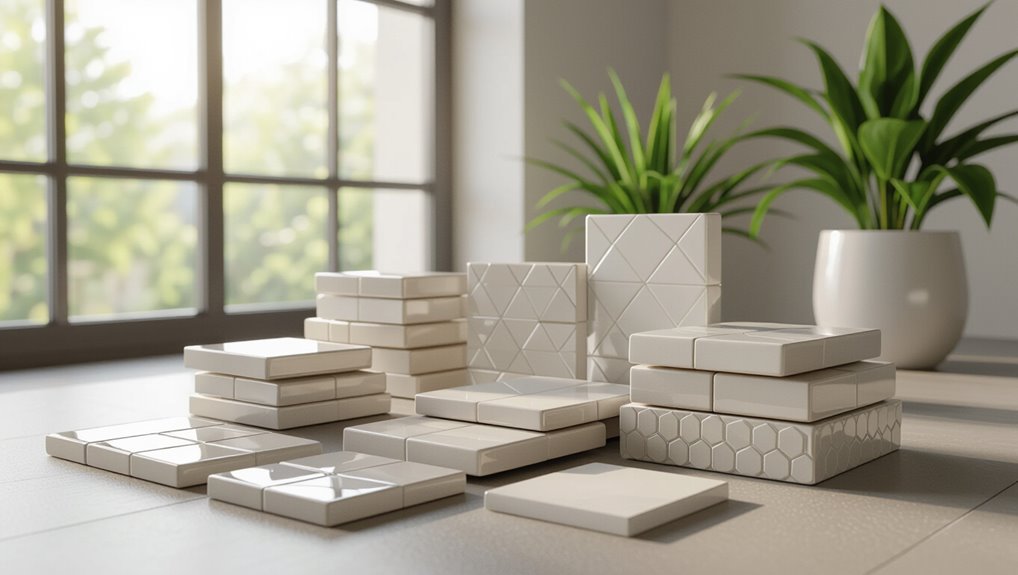
Durability, porosity, water and slip resistance all influence what tile you should pick, but size, shape, and surface finish determine how that tile will look and perform in a space.
You’ll find large formats for fewer grout lines, mosaics for curves and accents, squares and subway for classics, and textured, matte, polished or glazed finishes that affect grip, sheen and maintenance.
Types of Ceramic Tile
Now you’ll compare porcelain and non-porcelain ceramics to see which suits your space.
You’ll also look at glazed versus unglazed options, plus quarry, mosaic, and encaustic-style tiles for different uses.
Finally, you’ll consider decorative and specialty choices like textured, hand-painted, and rectified-edge tiles for that finishing touch.
Porcelain vs. Non-porcelain ceramic tile
When you’re choosing ceramic tile, the key decision is whether to pick porcelain or non-porcelain (often called traditional or red-body) tile, since their manufacturing, performance, and cost differ in ways that matter for where you install them. Porcelain is denser, less porous, and better for high-traffic or wet areas; non-porcelain is lighter, less costly, and fine for walls or low-traffic spaces.
| Feature | Best use |
|---|---|
| Porcelain | Floors, outdoors |
| Non-porcelain | Walls, low-traffic areas |
Glazed ceramic tile: characteristics and uses
Glaze gives ceramic tile its color, finish, and a protective surface, so you’ll find glazed tiles in a wide range of looks—from glossy to matte and solid colors to intricate patterns—while still being easier to clean and more stain-resistant than unglazed options.
You’ll choose glazed tile for kitchens, bathrooms, backsplashes, and light-traffic floors where aesthetics, water resistance, and easy maintenance matter.
Unglazed ceramic tile: characteristics and uses
Unglazed ceramic tile offers a raw, natural look and a durable surface because it lacks the glassy coating found on glazed tiles.
You’ll get better slip resistance and a matte, earthy finish ideal for rustic or industrial interiors.
It’s porous, so you’ll need sealing for wet areas.
Choose it where toughness and understated texture matter, like entryways and outdoor patios.
Quarry tile, mosaic tile, and encaustic-style ceramic tile
Think of quarry, mosaic, and encaustic-style tiles as three distinct ways ceramic can shape a space.
Quarry tiles are tough, slip-resistant choices for high-traffic floors.
Mosaic tiles give you intricate patterns and curved surfaces, ideal for showers and accents.
Encaustic-style ceramics mimic layered, patterned inlay for bold, vintage-inspired floors without true inlay maintenance.
Decorative and specialty tiles (textured, hand-painted, rectified edge)
Texture, paint, and precision turn ordinary ceramic into statement-making tile you’ll notice the moment you walk in.
You can choose textured tiles for tactile depth, hand-painted pieces for unique color and charm, or rectified-edge tiles for slim grout lines and a seamless look.
Each specialty option lets you tailor mood, scale, and maintenance to fit your room and lifestyle.
Uses and Applications
You’ll find ceramic tile works anywhere from home floors and backsplashes to countertops and full wall coverings.
For commercial and high-traffic spaces like retail, hospitality, and healthcare you’ll want tougher, more durable options, while wet areas such as bathrooms, showers, and pools often call for porcelain or specially rated ceramic.
If you’re using tile outdoors, check frost resistance and slip ratings to guarantee long-term performance and safety.
Residential uses: floors, walls, backsplashes, countertops
Whether you’re renovating or building new, ceramic tile gives you durable, low-maintenance surfaces for floors, walls, backsplashes, and countertops.
You can pick slip-resistant porcelain for entryways, glazed tiles for easy-clean bathrooms, and decorative subway or mosaic tiles to accent kitchens.
Installations resist stains, heat, and moisture, making them practical and stylish—just match tile size, finish, and grout color to each room’s needs.
Commercial and high-traffic uses: retail, hospitality, healthcare
Anyone specifying tile for retail, hospitality, or healthcare spaces should prioritize durability and safety: these high-traffic environments demand porcelain or commercial-grade ceramic with strong abrasion ratings, slip-resistant finishes, and grout systems that withstand heavy cleaning and moisture.
You’ll also consider large-format tiles to reduce joints, impact-resistant edges, colorfast glazes for appearance retention, and maintenance-friendly sealants to minimize lifecycle costs.
Wet-area suitability: bathrooms, showers, pools (porcelain vs. ceramic)
Because wet areas demand both water resistance and slip safety, choosing between porcelain and ceramic hinges on where and how you’ll use the tile.
Use porcelain for pools, steam rooms, and shower floors where low absorption and durability matter.
Ceramic suits bathroom walls and light-duty floors if glazed and sealed.
Always pick textured or slip-rated finishes and proper grout/sealants for safe, lasting performance.
Outdoor use considerations: frost resistance and slip rating
When you’re choosing tile for patios, walkways, or entryways, focus first on frost resistance and slip rating so your installation stays safe and intact through freeze–thaw cycles and wet conditions.
Choose vitrified porcelain or frost-rated ceramics with low water absorption. Check PEI and R ratings for durability and slip resistance; textured surfaces and proper drainage reduce hazards.
Install with flexible, weatherproof grout.
How to Choose the Right Ceramic Tile
Start by evaluating your space and how it’ll be used so you can match durability and water resistance to the room.
Then pick the right material and absorption rating, choose size and layout, and select a finish with appropriate slip resistance.
Finally, decide on grout type, color, and the maintenance level you’re willing to handle.
Step 1 Assess the space and usage requirements
Wondering which ceramic tile fits your project? You’ll assess traffic, moisture, and aesthetics to match performance to purpose.
Think about maintenance, budget, and safety needs before choosing a style.
- High-traffic vs. low-traffic
- Wet areas and slip resistance
- Visual style and scale
- Cleaning and upkeep requirements
Step 2 Select the right material and water absorption rating
Because tile performance hinges on both material and porosity, you’ll want to match the clay body and water absorption rating to the room’s conditions and traffic.
Choose porcelain (low absorption) for wet or high-traffic areas, and glazed or terracotta (higher absorption) for dry, low-traffic rooms.
Check PEI and porosity ratings, and pick frost- or moisture-resistant tiles where needed.
Step 3 Choose size, format, and layout pattern
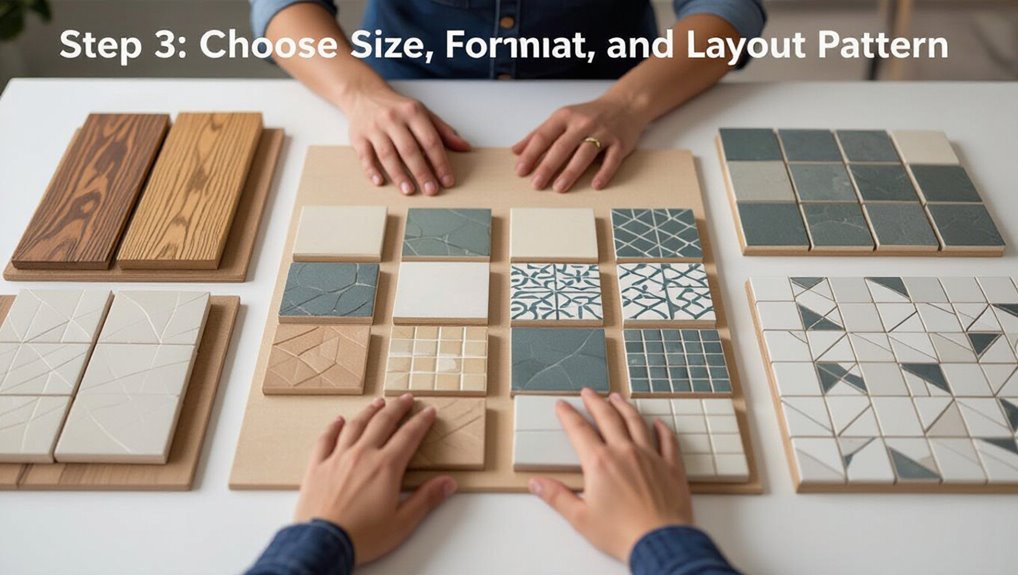
When choosing tile size, format, and layout pattern, think about how scale and grout lines will influence the room’s perceived proportions and traffic flow.
Larger tiles with minimal grout create a more seamless, spacious feel, while smaller tiles or mosaic formats add texture and grip.
Balance tile dimensions with room size, choose formats that complement fixtures, and use layout patterns to emphasize focal points or disguise imperfections.
Step 4 Pick a suitable finish and slip resistance for safety
Safety starts with the finish: choose a tile surface and slip-resistance rating that match how the space will be used.
For wet areas pick textured, matte, or anti-slip tiles with higher R or COF ratings. In dry, low-traffic rooms you can use polished or glossy tiles.
Consider barefoot comfort, cleaning needs, and local code requirements to guarantee safety without sacrificing style.
Step 5 Decide on grout type, color, and maintenance needs
As you finalize your tile plan, pick a grout type and color that balance appearance with long-term maintenance so your floors and walls stay attractive and functional.
Choose sanded grout for wider joints, unsanded for narrow seams, and epoxy for high-moisture or stain-prone areas.
Match or contrast color to hide dirt, and consider sealed grout to simplify cleaning and extend durability.
Step 6 Budgeting: cost ranges and lifecycle costs
Step 6 focuses on the real costs: both what you’ll pay up front for tile, installation, and materials, and what you’ll spend over the years on maintenance, repairs, and replacement.
Estimate tile per square foot, labor, underlayment and grout.
Factor durability: glazed porcelain costs more but lasts longer; ceramic is cheaper but may need earlier replacement.
Include sealing, cleaning, and expected lifespan.
Comparison: Ceramic Tile vs. Other Flooring Materials
When you’re weighing ceramic against other floors, consider how porcelain’s density and firing make it better for heavy traffic and wet areas while standard ceramic can be more affordable and easier to cut.
Compare ceramic to natural stone by thinking about look, porosity, and sealing needs—stone is unique and luxurious but often requires more upkeep.
And if cost, DIY installation, or softer underfoot feel matter, vinyl or laminate can beat ceramic on price and ease, though they won’t match tile’s long-term durability.
Ceramic vs. Porcelain (technical differences and when to choose each)
Although they look similar at a glance, ceramic and porcelain tiles differ in composition, manufacturing, and performance, so you’ll want to pick based on where and how the tile will be used. Porcelain is denser, less porous, and tougher—choose for high-traffic or wet areas. Ceramic is lighter, easier to cut, and cheaper—good for walls and low-traffic rooms.
| Feature | Best use |
|---|---|
| Porosity | Wet floors |
| Durability | Heavy traffic |
| Cost | Budget projects |
| Cutting | DIY installs |
Ceramic vs. Natural stone (marble, granite, travertine)
Because natural stone brings unique veining, color variations, and a tactile weight you can’t replicate, you’ll want to compare its look, durability, maintenance, and cost directly against ceramic before deciding.
Ceramic offers consistent color, lower porosity, and simpler upkeep, while marble, granite, and travertine deliver unmatched natural beauty and prestige but need sealing, careful cleaning, and often higher installation and material costs.
Ceramic vs. Vinyl and laminate (cost, durability, maintenance)
Pick ceramic if you want a hard, long-lasting surface that’s tougher against scratches, heat, and moisture than most vinyl or laminate options, but be ready to invest more up front and in professional installation.
Vinyl and laminate cost less and install faster, but they scratch, dent, and warp more easily.
Ceramic demands grout care and occasional sealing, yet lasts decades with minimal upkeep.
Common Problems and Mistakes When Choosing or Installing Ceramic Tile
When you pick or lay ceramic tile, small mistakes can lead to big problems—using a porous or low‑durability tile outdoors or in wet areas, for example, will fail quickly.
Skipping proper subfloor prep or making installation errors creates cracks, lippage, and loose tiles.
And choosing the wrong grout, ignoring waterproofing, or mismatching scale, pattern, or color will harm performance and look.
Wrong tile selection for location (porosity/frost/durability errors)
If you choose a tile without matching its designated environment, you’ll quickly face problems like cracking, staining, or premature wear.
Pick low-porosity, frost-resistant tiles for exterior or freeze-thaw areas, and durable PEI-rated tiles for heavy-traffic floors.
Don’t use wall-only or glazed decorative tiles where moisture, abrasion, or freeze cycles occur—those choices will cost you time and money.
Poor subfloor preparation and installation mistakes
Choosing the right tile won’t save you from failure if the subfloor and installation are sloppy; a solid substrate and proper methods make the tile perform as planned.
You must guarantee a level, clean, dry subfloor, correct underlayment, and proper mortar coverage. Avoid hollow spots, improper trowel size, and inadequate movement joints.
Hire experienced installers or follow manufacturer specs to prevent cracks and delamination.
Incorrect grout choice and waterproofing failures
Because grout and waterproofing are your last lines of defense, picking the wrong grout or skimping on waterproofing can undo even a well-set tile job.
Choose grout suited to joint width and exposure, seal porous grout, and use proper waterproof membranes in wet areas.
Neglecting these lets moisture penetrate, causing mold, adhesive failure, and costly repairs — don’t cut corners.
Aesthetic mistakes: scale, pattern, and color mismatches
When you ignore scale, pattern, or color relationships, even high-quality tile can make a room feel cramped, chaotic, or off-balance.
You’ll want to match tile size to room proportions, align patterns with sightlines, and coordinate color tones with light and furnishings.
Test samples in place, consider grout contrast carefully, and avoid competing motifs to keep the design cohesive and visually calming.
Prevention, Maintenance, and Best Practices
To keep your tile looking great and lasting longer, follow proven installation best practices and hire a qualified installer when needed.
Seal grout, stick to recommended cleaning routines, and address small repairs promptly to prevent bigger problems.
Also consider long-term care and sustainable options—choose tiles with recycled content or eco-friendly manufacturing to reduce environmental impact.
Installation best practices and choosing a qualified installer
Although proper tile installation takes planning and skill, following clear best practices and hiring the right installer will keep your floors and walls looking great for decades.
You should verify experience, confirm warranties, and insist on proper substrate preparation and grout techniques. Protect finished work and get a written contract.
- Verify licensed, insured installers
- Check references and portfolios
- Confirm substrate prep standards
- Require written warranty
Sealing, cleaning, and routine maintenance guidelines
Because ceramics resist stains and wear best when you act proactively, start maintenance with correct sealing and a simple cleaning routine you can keep up long-term.
Seal porous tiles and grout per manufacturer timing, mop with pH-neutral cleaner, and blot spills promptly.
Use soft tools to avoid scratches, clean grout periodically with a gentle brush, and reapply sealer as needed to maintain protection.
Long-term care: repairs, replacement, and preserving appearance
Keeping up with sealing and routine cleaning will prevent many problems, but you’ll still need a plan for long-term repairs, replacement, and preserving appearance as tiles age.
Inspect grout and tile regularly, replace cracked tiles promptly, and keep spare tiles for color matches.
Regrout when joints fail, use appropriate adhesives, and consider professional help for large areas to maintain value and appearance.
Sustainable choices: recycled content and eco-friendly manufacturing
When you choose tiles with recycled content and from manufacturers that use greener processes, you cut the environmental impact of your project without sacrificing durability or style.
Look for post-consumer glass, reclaimed clay, and certified low‑emission glazes. Verify eco-labels, responsible sourcing, and energy-efficient firing.
You’ll support circular materials, reduce landfill waste, and often save energy and costs over the tile’s lifetime.
Cost, Lifespan, and ROI
You’ll want to weigh typical price ranges for different tile types and quality levels when budgeting your project.
Consider expected lifespan and what shortens it—installation, traffic, and maintenance—to set realistic replacement timelines.
Finally, think about resale value and ROI so you choose tiles that match your home’s market and long-term goals.
Typical price ranges by tile type and quality
Tile prices range widely depending on material and grade, so knowing typical ranges helps you budget and compare long-term value. Expect basic ceramic at $1–$5/ft², porcelain $3–$10/ft², and premium or designer tiles $8–$25+/ft². Factor installation, grout, and substrate into total cost.
| Tile Type | Typical Price/ft² |
|---|---|
| Basic ceramic | $1–$5 |
| Porcelain/premium | $3–$25+ |
Expected lifespan and factors that affect longevity
Those price differences matter because they influence how long a floor or wall will hold up and what kind of return you can expect on your investment.
Lifespan varies: glazed ceramic lasts 20–50 years, porcelain 50+ years with proper care. Longevity depends on quality, installation, grout/sealant, foot traffic, moisture, and maintenance.
Choose materials and installation that match use and upkeep routines.
Resale value and ROI considerations for homeowners
When you’re weighing tile choices, think beyond upfront cost to how long the material will perform and how it affects resale value—well-chosen, well-installed ceramic or porcelain can boost appeal and save money over time.
Choose neutral styles, durable finishes, and professional installation to maximize ROI.
Factor maintenance, regional preferences, and room function to estimate payback and marketability for future buyers.
Practical Examples and Design Ideas
You’ll learn layout and pattern ideas that suit small versus large spaces and how borders or accents can change the feel of a room.
You can mix tile types—like matte and gloss or different sizes—to create contrast and guide the eye.
Then we’ll walk through real-world scenarios for a bathroom remodel, kitchen backsplash, and outdoor patio so you can see those choices in action.
Layout and pattern ideas for small vs. large spaces
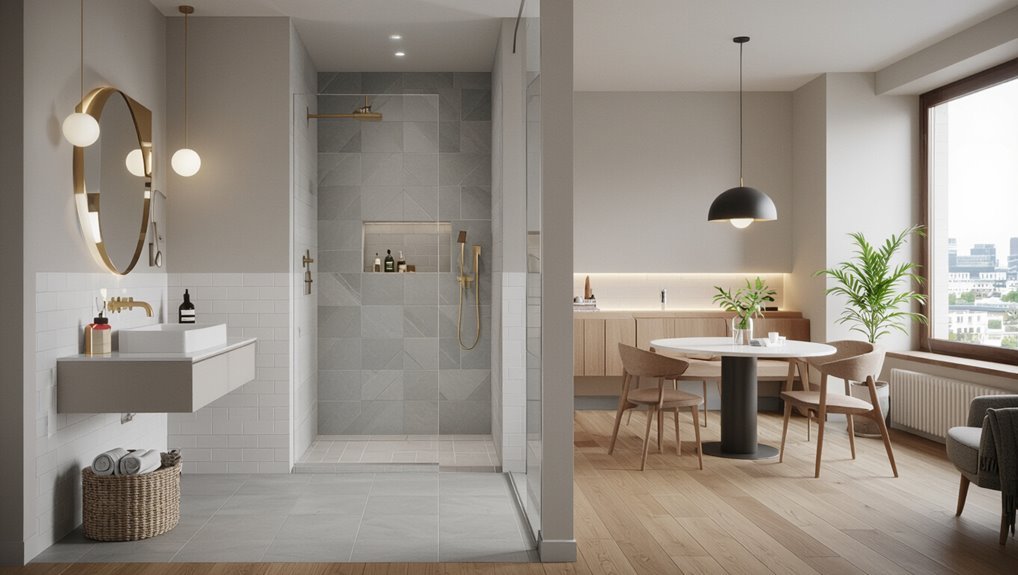
Looking to make the most of your room with tile? In small spaces, use larger-format tiles, light colors, and straight layouts to reduce grout lines and visually expand the area.
In large rooms, try diagonal, herringbone, or mixed-size patterns to add movement and define zones.
Keep scale proportional: avoid tiny tiles in big spaces and oversized tiles in cramped areas.
Mixing tile types and using borders/accents
After balancing scale and pattern for your room, mixing tile types and adding borders or accents will let you personalize those layouts without overwhelming the space.
Pair larger field tiles with smaller mosaic accents to define zones, use contrasting grout to highlight shapes, and add narrow border tiles to frame showers or floors.
Keep material and color consistent for cohesion.
Real-world case scenarios: bathroom remodel, kitchen backsplash, outdoor patio
Concrete examples help turn tile theory into practical plans: in a bathroom remodel, kitchen backsplash, or outdoor patio you’ll balance durability, slip resistance, and style to meet each space’s demands.
Choose glazed porcelain for wet floors, textured stone-look for patios, and easy-clean ceramic for backsplashes.
Coordinate grout color, scale, and pattern to unify aesthetics and simplify maintenance while prioritizing safety and weather resistance.
FAQ
Got questions about showers, porcelain vs. ceramic, sealing, cleaning, or tiling over old tile?
You’ll get clear, practical answers to help you choose and care for the right tile.
Read on to find quick solutions and avoid common mistakes.
Is ceramic tile suitable for showers and wet areas?
Can ceramic tile handle constant moisture in showers and wet areas? Yes — glazed ceramic and porcelain resist water when properly installed with waterproof backing, cement board, or a membrane.
You’ll need grout sealed regularly and slopes for drainage. Avoid unglazed, highly porous tiles unless you apply a suitable sealer.
Proper installation and maintenance keep ceramic waterproof and durable in wet environments.
How do I know if a tile is porcelain or regular ceramic?
Wondering whether a tile is porcelain or regular ceramic? Check density and water absorption: porcelain is denser, less porous, and heavier.
Look at the body color through a chip—porcelain’s body is usually uniform; ceramic often has a different-colored clay body.
Porcelain tolerates higher firing temperatures and is harder to scratch.
Manufacturer labels or PEI ratings also confirm type and durability.
Do ceramic tiles need to be sealed?
Do you need to seal ceramic tiles?
You usually don’t seal the glazed face because glazing blocks moisture, but unglazed ceramic, porous grout and cutters often benefit from a penetrating sealer.
Sealing prevents stains and simplifies upkeep, especially in high-traffic or wet areas.
Check manufacturer recommendations and test a small area before applying a sealer across larger surfaces.
What is the best way to clean and maintain ceramic tile?
Keeping ceramic tile looking great is mostly about regular, simple care: sweep or vacuum daily to remove grit, mop weekly with a pH-neutral cleaner, and wipe up spills quickly to avoid stains.
For grout, scrub occasionally with a soft brush and baking soda paste. Avoid harsh acids or bleach, use mats in high-traffic areas, and dry floors to prevent water buildup.
Can I install ceramic tile over existing tile?
Yes—you can often install new ceramic tile over existing tile, but only if the old surface is sound, level, and well-bonded.
Inspect for cracks, loose tiles, or lippage; remove any damaged areas. Clean thoroughly, degloss glazed tiles, and use a proper bonding mortar or membrane.
Consider weight, door clearances, and manufacturer warranty; when in doubt, remove the old tile.
Next Steps and Resources
When you’re ready to move forward, get at least three quotes and ask installers about substrate prep, waterproofing, timelines, and warranty details.
Check recommended resources like industry standards, buying guides, and care manuals so you know what materials and maintenance to expect.
If you want, I can list specific questions to ask and link reliable standards and guides.
How to get quotes and what to ask installers
How do you get accurate, comparable quotes from tile installers without wasting time?
Ask for written bids with timelines, material allowances, and labor breakdowns. Verify licensing, insurance, and references. Confirm cleanup, grout sealing, and warranty terms.
Compare per-square-foot costs and change-order policies.
- Request itemized written estimates
- Check credentials and references
- Clarify scope and timelines
- Confirm warranties and clean-up procedures
Recommended resources: standards, buying guides, and care manuals
Now that you know what to ask installers and what to compare, you’ll want trusted references to guide purchases, installation standards, and long-term care.
Use authoritative sources to confirm ratings, procedures, and maintenance schedules so your tile lasts.
- ANSI/ISO standards and technical specs
- Manufacturer installation and warranty guides
- Independent buying guides and reviews
- Care manuals and stain removal charts

