Best Cleaning Solution for Ceramic Tile Floors: What Actually Works
You’ll get the best results with a mild pH-neutral cleaner diluted in warm water for everyday cleaning, switching to diluted vinegar (about 1 cup per gallon) only on sealed ceramic, and using a baking soda paste for grout stains. For oily messes, add a little dish soap then rinse well to avoid residue. Adjust strength for glazed versus unglazed tiles, always spot-test first, and follow safety and rinsing steps—keep going to find product picks, DIY recipes, and tips.
Quick Answer Best Cleaning Solution for Ceramic Tile Floors
For a quick answer, you’ll usually get the best results with a mild pH-neutral cleaner diluted in warm water.
For everyday dirt use that mix, for grout stains try a baking soda paste, for oily messes use a small amount of dish soap, and for sealed vs. unsealed tiles adjust concentration and avoid harsh chemicals on unsealed surfaces.
Keep solutions minimal and spot-test first so you don’t damage the finish.
One-line summary of the best overall solution
Mix equal parts warm water and a mild pH-neutral cleaner (or a few drops of dish soap) in a bucket.
Mop with that solution, then rinse with clean water and dry to keep ceramic tile floors clean without harming the grout or glaze.
When wondering what’s the best cleaning solution for ceramic tile floors, use this simple, pH-neutral routine—it’s effective, safe, and easy to maintain.
Best solutions by common conditions (everyday dirt, grout stains, oily messes, sealed vs unsealed tiles)
When you’re tackling different messes on ceramic tile, use targeted cleaners and methods so you don’t damage the glaze or grout—daily dirt needs a gentle, pH-neutral mop; grout stains call for a baking soda paste or a commercial grout cleaner and a stiff brush; oily spills respond to a degreasing dish soap solution or a diluted vinegar-free cleaner; and sealed tiles can handle stronger cleaners while unsealed tiles and grout need milder, non-acidic products and immediate rinsing.
| Condition | Fix |
|---|---|
| Everyday dirt | Gentle mop, rinse |
| Grout stains | Baking soda paste, scrub |
| Oily messes | Dish soap degreaser, rinse |
Why Tile Type and Finish Matter
Your tile’s material and finish determine which cleaners work and which can cause damage: glazed ceramic, unglazed ceramic, porcelain, and natural stone all react differently.
Sealants and grout type also change how often you clean and whether you need pH-neutral or specialty products.
You can usually identify tile and grout with simple tests—water absorption for porosity and a close visual inspection or scratch test—to pick the right routine.
Differences between glazed ceramic, unglazed ceramic, porcelain, and natural stone
Four main tile categories—glazed ceramic, unglazed ceramic, porcelain, and natural stone—have very different porosities, finishes, and durability, so the cleaning products and techniques that work on one can damage another.
You’ll use milder, pH-neutral cleaners on glazed surfaces; stronger scrubbing for unglazed ceramic; denser porcelain tolerates harsher cleaners; natural stone needs gentle, stone-safe solutions to avoid etching or discoloration.
How sealants and grout type change cleaning needs
Because sealants and grout vary so much in composition and porosity, they directly affect how often you clean and what products you can use; sealed tile and epoxy grout resist stains and harsh cleaners, while unsealed grout and cement-based mixes absorb moisture and require gentler, more frequent maintenance.
You’ll choose pH-neutral cleaners for sealed surfaces, avoid acids on unsealed grout, and re-seal as needed.
Identifying your tile and grout (simple tests)
If you’re not sure what kind of tile and grout you’re dealing with, a few quick tests will tell you whether you need gentle cleaners or stronger solutions.
Scratch a discreet edge to check glaze hardness, drip vinegar to see if unglazed or sealed reacts, and press a damp cotton swab to test grout porosity.
Label results before cleaning.
What Makes a Cleaning Solution Effective
To choose the right cleaner, you’ll want to focus on key properties like pH balance, surfactants, degreasers, solvents, and antimicrobial agents that actually break down dirt and stains.
You’ll also need to weigh safety factors — toxicity, slip risk, residue, and potential harm to grout or sealant.
Finally, consider environmental impact and any pet or household sensitivities so your solution is effective without causing new problems.
Key properties: pH, surfactants, degreasers, solvents, antimicrobial agents
While a single ingredient rarely does all the work, the right mix of pH balance, surfactants, degreasers, solvents, and antimicrobial agents determines how well a cleaner tackles tile dirt, grease, and germs.
You should choose a near-neutral pH for ceramic, use surfactants to lift soils, include degreasers for oily grime, solvents for stubborn spots, and antimicrobials to reduce microbes.
Safety factors: toxicity, slip risk, residue, effect on grout and sealant
Safety matters as much as cleaning power, so you should weigh toxicity, slip risk, residue, and impacts on grout and sealants when choosing a tile cleaner.
Check labels for harmful chemicals, avoid slick formulas or rinse thoroughly, and favor low-residue solutions.
Test cleaners on grout and sealed areas first to confirm they don’t etch, strip sealant, or discolor joints.
Environmental and pet/kid considerations
Beyond chemical hazards and slip risks, you’ll also want to contemplate environmental impact and how cleaners affect pets and kids in your home.
Choose biodegradable, low-VOC formulas and avoid phenols, ammonia, bleach, and essential oils toxic to animals. Rinse thoroughly to remove residues, store products securely, and ventilate while cleaning.
Consider fragrance-free, plant-based options and spot-test for safety.
Best Ready-Made Commercial Cleaners (Top Picks)
You’ll want to start with a neutral-pH daily cleaner for regular maintenance because it’s safe on tile and sealant and won’t strip finishes.
For greasy kitchen floors, reach for a heavy-duty degreaser but use it sparingly and follow precautions to protect grout and finishes.
Keep grout-specific cleaners on hand for stubborn stains, and consider natural eco-friendly commercial options if you prefer gentler, low-toxicity products.
Neutral-pH daily cleaners (benefits and use cases)
While neutral-pH daily cleaners won’t strip sealers or dull your grout, they’ll remove everyday dirt and spills gently and efficiently; they’re the go-to pick when you want spotless ceramic tile without fuss.
You can use them for routine mopping, quick spot cleaning, and maintaining finish longevity. Pick one formulated for tile, dilute per label, and avoid abrasive tools.
- Routine mopping
- Spot cleaning
- Finish preservation
Heavy-duty degreasers for kitchens (benefits and precautions)
Neutral-pH cleaners handle day-to-day grime without harming sealers, but kitchens often need stronger action for baked-on grease and oil.
You’ll use heavy-duty degreasers sparingly to dissolve fats, cut residue, and restore slip resistance, but follow label directions and ventilate.
Protect finishes and skin; test a hidden spot first.
- Choose dilution per surface
- Wear gloves and ventilate
- Rinse thoroughly
Grout-specific cleaners and when to use them
1 key reason to reach for a grout-specific cleaner is that grout is porous and traps dirt, mold, and stains that general floor cleaners can’t fully remove.
Use them when grout shows discoloration, mildew, or embedded grime. Pick enzymatic or oxygen-based formulas for safety. Test in a small area first.
- Targeted stain removal
- Mold and mildew control
- Safe for sealed grout
Natural/eco-friendly commercial options
If you want an effective, low-toxicity option, ready-made eco-friendly cleaners give you powerful cleaning without harsh chemicals.
You’ll find plant-based surfactants, biodegradable formulas, and nonabrasive enzymes that lift dirt and grime while protecting grout and finishes.
Look for pH-neutral labels for ceramic tile, third-party certifications (Ecologo, Safer Choice), and concentrated blends to save money and reduce packaging waste.
DIY Cleaning Solutions That Actually Work
You can tackle most tile problems with a few DIY cleaners—just know when each is appropriate.
Use diluted vinegar or Castile soap for routine mopping, baking soda paste or hydrogen peroxide on grout and stubborn stains, and follow clear dilution ratios and safety notes for each.
I’ll give simple recipes, exact mixes, and precautions so you don’t damage tiles or harm yourself.
Vinegar-based mixtures when to use and when to avoid
While vinegar’s acidity makes it a powerful, inexpensive cleaner for many ceramic tile floors, you should know when it helps and when it can harm your surfaces.
Use diluted white vinegar (1 cup per gallon) for sealed ceramic and routine dirt removal.
Avoid vinegar on unsealed natural stone, waxed finishes, or damaged grout, since acidity can etch, dull, or weaken surfaces over time.
Baking soda paste for grout and stubborn stains
Because baking soda’s mild abrasiveness and alkalinity lift grime without harming most glazed ceramic, a simple paste becomes your go-to for dingy grout lines and stuck-on stains.
Mix baking soda with water to form a spreadable paste, apply, let sit 10–15 minutes, then scrub with a stiff brush. Rinse thoroughly and repeat for persistent spots; it’s safe and inexpensive.
Castile soap and water for regular cleaning
Anyone can keep ceramic tile floors gleaming with a simple mix of liquid Castile soap and warm water.
Dilute a teaspoon per gallon, mop lightly, then rinse with clean water to avoid residue. You’ll remove everyday dirt and film without harsh chemicals, preserve grout sealers, and leave a subtle, neutral scent.
Dry with a microfiber mop for streak-free shine.
Hydrogen peroxide for grout whitening and stain treatment
Hydrogen peroxide is a safe, effective option for brightening grout and tackling stains without harsh chemicals.
You can apply it directly to discolored grout or stubborn spots, let it sit briefly, then scrub with a brush to lift grime.
It oxidizes organic stains and whitens grout lines without bleaching tile finishes, making it a practical, low-risk choice for targeted stain treatment.
Recipes, dilution ratios, and safety notes
If you’ve used hydrogen peroxide to lift grout stains, you’ll find other DIY mixtures just as effective when mixed and applied correctly. Use: 1 cup white vinegar to 1 gallon water for routine cleaning; ½ cup baking soda paste for grout; 3% hydrogen peroxide undiluted on stains. Test first, ventilate, wear gloves, avoid mixing bleach with acids, and store solutions safely.
| Solution | Ratio |
|---|---|
| Vinegar mix | 1 cup:1 gallon |
| Baking soda paste | ½ cup:as needed |
Step-by-Step Cleaning Guide (How-To)
Before you start, gather a simple tools-and-materials checklist so you’ve got the right mop, cleaner, scrub brush, bucket, and microfiber cloths.
Follow a compact daily-to-weekly routine (Step 1–Step 5) to keep tiles looking good, and use the step-by-step deep-clean process (Step 1–Step 8) for stubborn dirt and grout.
Finish with proper post-cleaning care—thorough rinsing, drying, and buffing—to protect the finish and prevent residue.
Tools and materials checklist
When you’re getting ready to clean ceramic tile floors, gather the right tools and materials so the job goes smoothly and you don’t have to stop mid-task.
You’ll need essentials that protect surfaces, remove grime, and finish with shine without damaging grout or glaze.
- Microfiber mop, bucket, soft scrub brush
- pH-neutral cleaner, diluted vinegar for spot use
- Grout brush, microfiber towels, rubber gloves
Daily/weekly routine for maintaining ceramic tile floors (Step 1Step 5)
Now that you’ve gathered your tools, set aside a regular routine to keep ceramic tile floors looking their best with minimal effort.
Sweep or vacuum daily to remove grit. Spot-clean spills immediately with a damp microfiber.
Mop weekly using a mild pH-neutral cleaner and warm water, rinsing the mop often.
Dry high-traffic areas to prevent streaks and slips.
Deep-clean process for heavily soiled tile and grout (Step 1Step 8)
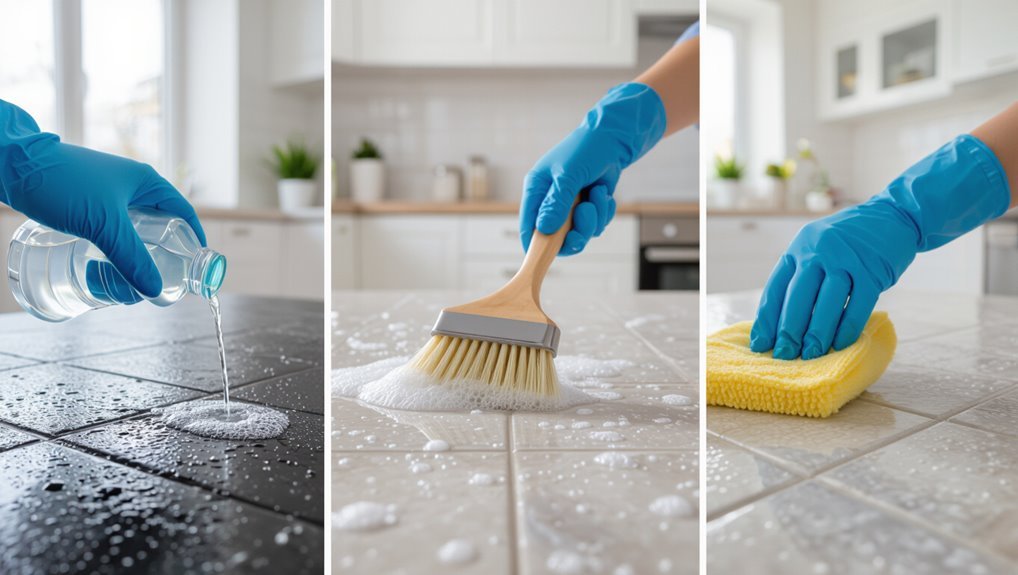
1. You’ll tackle heavy grime by vacuuming, sweeping, then applying a tile-safe degreaser or diluted oxygen bleach to grout.
Let sit 10–15 minutes, scrub grout with a stiff brush, and agitate tiles with a nylon-bristle brush or rotary scrubber.
Repeat stubborn spots, spot-treat stains, then mop up loosened soil.
Wear gloves and ventilate throughout.
Post-cleaning care: rinsing, drying, and buffing
After you’ve loosened and removed grime, finish by thoroughly rinsing, drying, and buffing to restore shine and prevent residues.
Rinse with clean water using a mop or microfiber to remove cleaner traces.
Squeegee excess water, then dry with a soft towel or microfiber mop to avoid streaks.
Once dry, buff gently in circular motions to revive gloss and remove any remaining haze.
Comparison: Commercial vs DIY Solutions
You’ll want to weigh how commercial cleaners and DIY mixes handle specific problems—dirt, grease, and grout stains—since performance can vary by issue.
Consider the trade-offs in cost, time, and effort: store-bought products can save time but cost more, while DIY options are cheaper but may need more work.
For renters, homeowners, and high-traffic areas, pick the option that matches your budget, convenience, and stain severity.
Effectiveness comparison by issue (dirt, grease, grout stains)
When choosing between commercial cleaners and DIY mixes, think about the specific problem you’re tackling—loose dirt, baked-on grease, or stained grout—because each formula targets different soils and won’t perform equally across all issues.
| Issue | Best option |
|---|---|
| Loose dirt | DIY mild detergent |
| Grease | Commercial degreaser |
| Grout stains | Commercial grout cleaner |
Cost, time, and effort trade-offs
Although commercial cleaners often save time by cutting through grime faster, DIY solutions usually cost less up front and let you control ingredients.
So you’ll trade money for convenience and effort. You’ll pay more for specialized formulas, but clean quicker with less elbow grease.
DIY mixes need testing and extra scrubbing, yet they’re cheaper and customizable if you’re willing to invest time.
Best choice scenarios (renters, homeowners, high-traffic areas)
Since living situations and wear patterns vary, choosing between commercial and DIY cleaners comes down to who you’re and what your floors face:
Renters often prefer DIY mixes that avoid altering finishes and keep costs low for short stays. Homeowners typically benefit from commercial products that save time and protect long-term investments.
High-traffic areas usually need stronger, professionally formulated cleaners to cut grime quickly and reduce labor.
For renters, pick gentle, inexpensive DIY options; homeowners should favor tested commercial cleaners with sealant-safe labels; for high-traffic zones, choose concentrated commercial formulas and follow dilution and ventilation guidelines.
Common Mistakes and How to Avoid Them
Don’t use acidic cleaners on unglazed tiles or sensitive grout, because they can etch and weaken the surface.
Avoid overusing soap—residue builds up and attracts dirt, but you can fix it with a clear-water rinse or a vinegar solution on suitable tiles.
Don’t scrub with abrasive pads or ignore the manufacturer’s care instructions, since those actions can damage glaze and void warranties.
Using acidic cleaners on unglazed tiles or certain grouts
If you use acidic cleaners on unglazed tiles or acid-sensitive grout, you can quickly etch the surface and strip protective sealants, leaving the floor dull and porous.
Don’t assume all tiles tolerate vinegar or citrus cleaners. Test in an inconspicuous spot, use pH-neutral products, and rinse thoroughly.
For sealed grout, stick to mild cleaners or manufacturer’s recommendations to avoid irreversible damage.
Overuse of soap/residue buildup and how to fix it
Residue buildup from overusing soap leaves ceramic tile floors looking dull, sticky, and more prone to attracting dirt, and you can prevent that by changing how you clean.
Use a pH-neutral cleaner sparingly, rinse with clean water after mopping, and dry with a microfiber mop.
For existing residue, mop with a vinegar-water rinse or a commercial residue remover, then rinse thoroughly.
Abrasive scrubbing that damages glaze or grout
Just as rinsing prevents sticky soap film, being too aggressive with scrubbing can harm your tiles—scrubbing pads, steel wool, or harsh brushes wear the glaze and grind grout away.
Use soft microfiber mops, nylon brushes, or nonabrasive sponges instead. Test cleaners in an inconspicuous spot, apply gentle circular motions, and let solutions soak briefly to lift dirt so you don’t have to scrub hard.
Ignoring manufacturer recommendations
When you ignore the tile or cleaner manufacturer’s instructions, you risk voiding warranties and causing damage that could’ve been prevented; follow their guidance on cleaners, dilution, and application to keep your floors safe and covered.
Read labels, note pH recommendations, and use approved products.
Test cleaners in a discreet spot, follow dwell times, and store instructions for future reference to avoid costly mistakes.
Prevention, Maintenance, and Best Practices
To keep your ceramic floors looking their best, adopt simple daily habits like using entry mats, sweeping regularly, and spot-cleaning spills right away.
Schedule routine grout checks and reseal grout as recommended, and run a seasonal deep-clean checklist to tackle buildup.
Store cleaners safely in labeled, childproof containers and follow product instructions to protect both surfaces and people.
Daily habits to minimize dirt and wear (mats, sweeping, spot cleaning)
One simple habit can cut daily dirt and wear on your ceramic tile: put durable mats at every entry, sweep high-traffic areas, and handle spills immediately.
You should shake or vacuum mats weekly, sweep or dust-mop daily, and spot-clean spills with a damp microfiber cloth and mild cleaner.
Address grit and stains promptly to prevent scratching and grout discoloration.
Routine sealing and grout maintenance schedule
Because grout and sealant protect both appearance and longevity, you should follow a simple routine for sealing and grout care:
Inspect grout lines monthly, spot-seal or repair damaged areas as soon as you see cracks or staining, and reseal high-traffic floors every 1–3 years depending on wear.
Clean grout with pH-neutral cleaner before resealing, use proper sealer for your grout type, and document dates.
Seasonal deep-clean checklist
When seasons change, give your ceramic tile floors a focused deep-clean to prevent buildup, protect grout, and keep finishes looking new.
Start by sweeping and vacuuming thoroughly, then mop with a pH-neutral cleaner, targeting grout lines with a soft brush.
Rinse well, dry to avoid water spots, inspect for damage, and reseal grout or tiles as needed.
Schedule quarterly deep-cleans.
Safe storage and handling of cleaning products
Start by grouping cleaners by type and hazard so you know at a glance what needs special care: flammables, acids, bases, and concentrated detergents should stay separate to prevent dangerous reactions.
Store them in labeled, ventilated cabinets out of reach of children and pets. Keep original containers, secure lids, and follow disposal instructions.
Wear gloves and ventilate when mixing or using products.
When to Call a Professional
If your grout is crumbling, stains won’t lift, or tiles are loose or cracked, it’s time to call a professional for tile or grout restoration.
They’ll inspect the damage, perform deep cleaning or repair, and reseal as needed while explaining the expected results.
Get quotes upfront, compare contractors’ reviews and warranties, and weigh cost against the scope of work.
Signs you need professional tile or grout restoration
1 clear sign you should call a professional is persistent staining or discoloration that won’t respond to regular cleaning; it usually means contaminants have penetrated the grout or tile surface and need specialist tools or treatments to remove.
Other signs include crumbling or missing grout, widespread etching, loose or hollow tiles, and odors or mold you can’t eliminate—issues that demand trained assessment and repair.
What to expect from professional cleaning or resealing
When you hire a pro for tile cleaning or resealing, expect a clear, step-by-step process: they’ll assess tile and grout condition, run targeted cleaning tests to choose the right chemicals and tools, deep-clean and extract embedded soils, repair or replace damaged grout or tiles as needed, and finish with a compatible sealer applied evenly to protect pores and ease maintenance.
You’ll get post-service care instructions, curing time guidance, and realistic expectations about restored appearance and longevity.
Cost considerations and choosing a contractor
Before you hire someone, understand how they’ll charge and what affects the price so you can compare bids confidently.
Ask for written estimates, hourly vs. flat rates, and itemized costs for deep cleaning, grout repair, or resealing.
Check licenses, insurance, references, and photos of past work.
Choose a contractor with clear terms, transparent pricing, and a warranty for satisfactory results.
Frequently Asked Questions
You probably have specific questions like whether vinegar’s safe for ceramic tile, how often grout needs a deep clean, and what cleaner’s best for homes with pets and kids.
You may also wonder if steam cleaning can damage tile or grout and how to tackle stubborn oil, rust, or paint stains.
Below are concise answers to each of these common concerns.
Can I use vinegar on ceramic tile floors?
Wondering if vinegar’s safe for your ceramic tile floors? You can use diluted white vinegar for routine cleaning on glazed ceramic tiles — mix one part vinegar with four parts water, mop, then rinse with plain water.
Avoid undiluted vinegar, prolonged soaking, and use caution on unglazed tiles or natural stone; test a small area first to guarantee no dulling or damage.
How often should I deep-clean grout?
How often you should deep-clean grout depends on traffic, appearance, and moisture levels.
For low-traffic rooms, every 12–18 months works.
Moderate-traffic areas benefit from cleaning every 6–12 months.
High-traffic or damp spaces, like entryways and bathrooms, need deep cleaning every 3–6 months.
If grout looks stained or musty sooner, clean it immediately to prevent permanent discoloration and mold buildup.
What’s the safest cleaner for homes with pets and children?
Which cleaner keeps your home safe for kids and pets without sacrificing performance?
Use a mild, pH-neutral floor cleaner or a diluted vinegar solution (1/2 cup vinegar per gallon) for routine cleaning.
Rinse thoroughly and dry to prevent slips.
Avoid ammonia, bleach, or strong fragrances.
Store cleaners securely, ventilate while cleaning, and keep pets and children away until floors are fully dry.
Will steam cleaning harm ceramic tiles or grout?
If you’re concerned about using a steam mop after choosing a pet- and child-safe cleaner, rest assured steam can be a powerful, chemical-free option for ceramic tile and grout when used correctly.
You shouldn’t use excessive heat on damaged or loose grout, fragile sealants, or unglazed tiles. Test a small area, follow manufacturer guidelines, keep sessions brief, and dry surfaces to prevent moisture damage.
How do I remove stubborn stains like oil, rust, or paint?
Wondering how to tackle stubborn oil, rust, or paint stains on ceramic tile?
Act fast: blot oil, apply a degreaser or baking soda paste, scrub, rinse.
For rust, use a commercial rust remover or a lemon juice and salt paste, let sit, then scrub.
For paint, soften with a paint remover suitable for tiles or carefully scrape and clean.
Always test first.