Can You Use Pine-Sol on Laminate Floors? The Safe Cleaning Truth
You can use Pine-Sol on laminate floors if you dilute it per the label and mop with a barely damp microfiber to avoid soaking seams; don’t use it full strength or let liquid pool, and dry any residue quickly to protect the fiberboard core and wear layer. Test a hidden spot first, avoid abrasive tools, and rinse if residue remains. Follow your floor maker’s care instructions for warranty safety — keep going to learn safe mixes, alternatives, and damage fixes.
Can You Use Pine-Sol on Laminate Floors? Quick Answer
Yes—you can use Pine-Sol on laminate floors, but only when it’s properly diluted and you avoid soaking the seams.
Use a damp mop or microfiber cloth and dry any residue quickly to prevent swelling or warping.
Don’t use straight Pine-Sol, abrasive scrubbing, or excessive water on damaged or unsealed laminate.
Direct, concise verdict
You can use Pine-Sol on laminate floors, but only when it’s properly diluted and you avoid soaking the surface.
If you’re asking can you use pine sol on laminate floors, the direct verdict is: yes, in dilution, sparingly, and with quick drying.
Don’t pour concentrate, don’t let water pool, and always test a hidden spot first to ascertain finish compatibility.
When it’s safe and when it’s not
When diluted to the label’s recommendation and applied with a barely damp microfiber mop, Pine-Sol is safe for most laminate floors; avoid using it full strength, letting liquid pool, or scrubbing aggressively, which can damage the wear layer or seam adhesives.
- Use sparingly, wipe up excess
- Test a hidden spot first
- Don’t soak seams
- Avoid abrasive tools
- Rinse if residue remains
Understanding Laminate Floors and Cleaners
Your laminate floor is a layered product with a fiberboard core and a wear layer or sealed coating that protects the printed design.
You should avoid cleaners that leave excess moisture, contain harsh solvents, or deposit waxes, because those can swell the core, strip the coating, or leave a sticky film.
Pine-Sol’s formulation often includes detergents, solvents, and fragrance that can affect laminate differently depending on concentration and dilution.
What laminate flooring is (construction and surface coating)
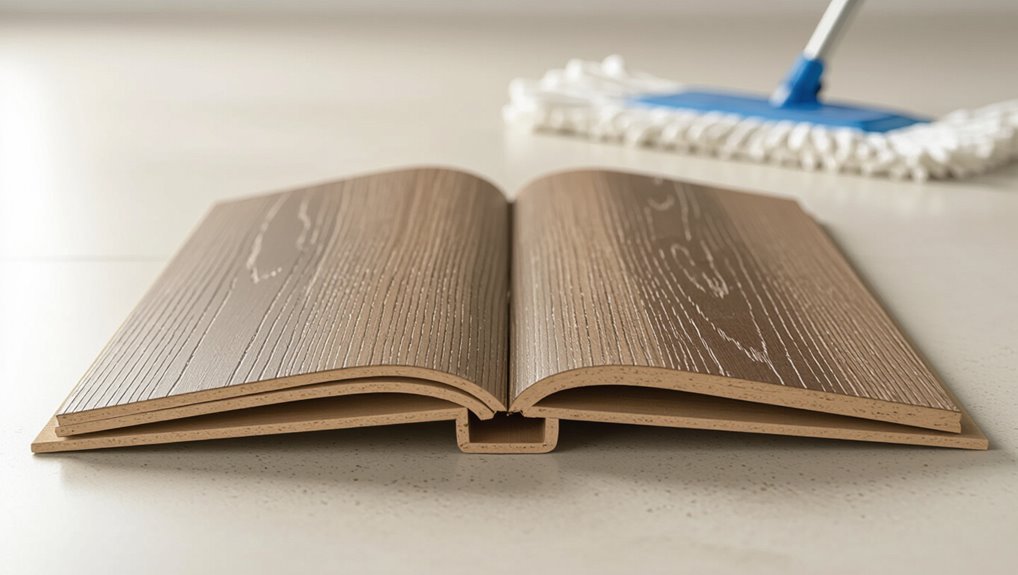
Laminate flooring is a multi-layered product built to mimic real wood or stone while staying affordable and durable.
You get a wear layer (clear protective coating), a decorative printed layer for the look, a high-density fiberboard core for stability, and a backing layer for moisture resistance.
Surfaces are factory-sealed with melamine or aluminum oxide, so you should clean gently to preserve that finish.
Why some cleaners damage laminate (moisture, solvents, waxes)
Because laminate relies on a sealed wear layer over a fiberboard core, certain cleaners can harm it quickly: you’ll warp the core with excess moisture, strip or dull the protective coating with strong solvents, and leave sticky residue from waxy products that attracts dirt and impairs finish integrity.
Use pH-neutral, low-moisture cleaners and microfiber mops to protect the surface and seams.
Common ingredients in Pine-Sol and their effects on laminate
Cleaning products vary, and Pine-Sol’s common ingredients—surfactants, solvents like glycol ethers, fragrances, and small amounts of acids or bases—can affect laminate differently than a neutral floor cleaner.
You should know surfactants lift grime but can leave residue, solvents may dull or warp edges with excess moisture, fragrances are cosmetic, and acids/bases risk finish damage.
Use diluted, minimal contact.
Detailed Safety Analysis of Pine-Sol on Laminate
Before you use Pine-Sol on laminate, you’ll want to compare formulas—original, multi-surface, and scented—because their ingredient lists differ.
Check each active component (ammonia, acids, oils, solvents) for potential finish stripping, swelling, or residue.
Also confirm the manufacturer’s cleaning recommendations and any warranty limitations to avoid voiding coverage.
Pine-Sol formulations overview (original, multi-surface, scented)
Pine-Sol comes in several formulations—original (pine-scented), multi-surface, and a variety of scented versions—and each has a different ingredient profile that affects how safe it is for laminate floors. You should choose gentler formulas, dilute per label, and test a hidden area first.
| Formulation | Typical Use | Notes |
|---|---|---|
| Original | Deodorize/clean | Strong scent |
| Multi-surface | General cleaning | Balanced |
| Scented | Fragrance-focused | Varies |
Ingredient-by-ingredient risk assessment (ammonia, acids, oils, solvents)
How do the individual ingredients in Pine-Sol affect laminate floors?
You should watch for ammonia (can dull finish, weaken sealants), acids (can etch or strip protective coatings), oils/fragrances (can leave residue, attract dirt), and solvents (can soften adhesives or finish).
Dilute properly, limit contact time, and spot-test first to avoid finish damage or seam swelling.
Manufacturer recommendations and warranty concerns
You’ve already seen how individual ingredients can harm laminate finishes, so now check what the floor manufacturer and Pine-Sol recommend before you clean.
Follow manufacturer care guides and warranty terms: using unapproved cleaners can void coverage.
If Pine-Sol’s label conflicts with your flooring instructions, contact the floor maker or use a recommended product.
Keep records of approvals for warranty protection.
How to Use Pine-Sol Safely on Laminate
Before you start, check your floor manufacturer’s care instructions and make sure Pine-Sol is allowed.
Pick the proper Pine-Sol formulation and dilute it as recommended, then test the solution in a hidden spot and look for discoloration, swelling, or finish dulling.
When cleaning, use a damp mop or spot-clean with a microfiber cloth, rinse with clean water, and dry promptly to prevent damage.
Step 1: Check floor manufacturer guidelines
Even if Pine-Sol is a popular cleaner, always start by checking your laminate floor’s manufacturer guidelines—these will tell you whether any solvents, oils, or strong detergents are allowed and what dilution or application methods they recommend.
Follow warranty rules, note prohibited ingredients, and record approved cleaning frequencies. If instructions forbid certain chemicals or methods, don’t use them to avoid voiding warranty or damaging finish.
Step 2: Choose the right Pine-Sol product and dilute properly
After you’ve confirmed the manufacturer’s guidance, pick a Pine-Sol formula that’s appropriate for laminate and dilute it exactly as directed on the label.
You’ll want to:
- Use the mildest Pine-Sol variant available
- Measure concentrate with a cap or measuring cup
- Follow label water ratios precisely
- Mix in a clean bucket just before use
- Label leftover solution and discard per instructions
Step 3: Test in a hidden area (what to look for)
When you’re ready to proceed, pick a hidden spot—like inside a closet or under a cabinet—so you can safely test the diluted Pine-Sol without risking visible damage.
Apply a small amount, wait 10–15 minutes, then check for discoloration, finish dulling, swelling, or warping.
Also smell for lingering chemical odor. If anything looks off, stop and rinse; don’t use on the whole floor.
Step 4: Proper application technique (mopping vs spot cleaning)
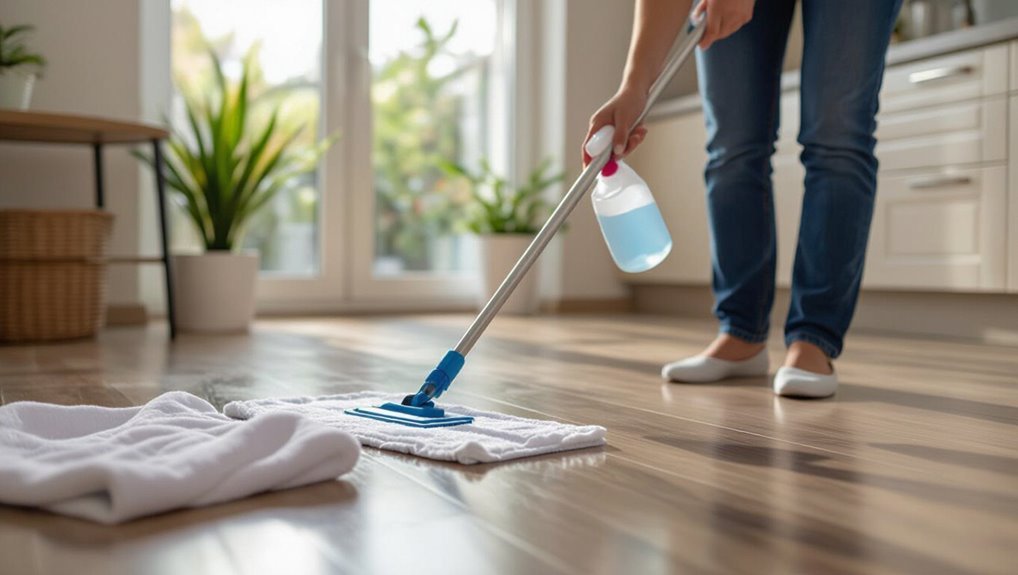
Wondering whether to mop the whole floor or just tackle spots? You’ll generally mop with a well-wrung microfiber mop for routine cleaning, using a diluted Pine-Sol solution.
Reserve spot cleaning for sticky messes or stains—apply a small amount to a cloth, dab gently, then blot.
Don’t soak seams; work lightly and avoid abrasive scrubbing to protect the laminate surface.
Step 5: Rinsing and drying to prevent damage
Although Pine-Sol can clean well, you’ll prevent damage by rinsing and drying thoroughly—dilute the cleaner as directed, mop with a well-wrung microfiber, then go over the floor once with plain water to remove residue.
After rinsing, dry immediately with a clean microfiber or towel, work in sections, and make certain seams aren’t left wet to avoid swelling or warping of laminate.
Alternative Cleaners and DIY Solutions for Laminate
If you prefer alternatives to Pine-Sol, you can use commercial cleaners formulated for laminate—look for pH-neutral, nonabrasive labels.
You can also make safe DIY mixes, like a cup of vinegar per gallon of water or a few drops of mild dish soap in a bucket, used sparingly.
Reserve plain water for light touch-ups or when a rinse is needed to avoid buildup.
Best commercial cleaners for laminate floors
When you’re choosing a commercial cleaner for laminate floors, pick products formulated specifically for laminate or labeled safe for sealed wood surfaces—these’ll remove dirt without stripping the protective wear layer or leaving slippery residue.
- pH-neutral laminate cleaners
- Spray-and-wipe formulations
- No-rinse floor concentrates
- Anti-static finishes for dust control
- Quick-dry, low-residue solutions
Choose one that matches your floor’s finish and test a small area first.
Safe DIY mixtures and formulations (vinegar ratios, mild detergent)
Because laminate floors wear down if you use harsh cleaners, stick to gentle DIY mixes that clean without stripping the seal—simple solutions like diluted white vinegar, a few drops of mild dish soap, or a pH-neutral baby shampoo work well.
Use 1 cup vinegar per gallon of warm water or just a few drops of dish soap per bucket. Wring mop well and spot-test first.
When to use water-only cleaning
Although you’ll reach for cleaners for tough spills, plain water is often the smartest first step for daily laminate care.
Use a damp microfiber mop for dust, crumbs, and light marks; wring it well to avoid pooling. For routine upkeep, water prevents residue buildup and protects the wear layer.
Only escalate to mild cleaners when water won’t remove the grime.
Common Mistakes That Damage Laminate Floors
Don’t let common missteps shorten your laminate’s life: over-wetting or leaving standing water can warp boards, and using undiluted Pine-Sol or harsh chemicals can strip the protective finish.
Avoid abrasive tools and steam cleaners, which scratch or lift layers. Always follow the manufacturer’s care instructions to keep warranty coverage and prevent damage.
Over-wetting and standing water
If you let water pool or scrub laminate with a soaking mop, you’ll risk swollen planks, warped seams, and delamination. Laminate’s protective wear layer resists spills briefly, but its core swells when exposed to standing moisture.
Wipe spills immediately, use a damp—not dripping—mop, dry seams and edges, and avoid leaving buckets or wet mats on the floor to prevent lasting damage.
Using undiluted Pine-Sol or harsh chemicals
When you pour undiluted Pine-Sol or other harsh cleaners onto laminate, you risk stripping the wear layer and softening the core, which can leave the surface dull, pitted, or permanently damaged.
You should dilute cleaners per label instructions, test in an inconspicuous spot, and use mild, pH-neutral solutions.
Rinse residue promptly and avoid repeated heavy chemical exposure to preserve finish and lifespan.
Abrasive tools and steam cleaners
Although it might seem faster to scrub away scuffs, abrasive pads, steel wool, and stiff brushes will wear down laminate’s protective top layer and leave scratches that collect dirt.
Don’t use scouring tools or steam cleaners; steam can warp seams and lift edges.
Use a soft microfiber mop and gentle cleaners instead to protect finish and prevent moisture damage.
Ignoring manufacturer care instructions
Because manufacturers know how their products perform, you should follow their care instructions for laminate floors—ignoring them can void warranties, accelerate wear, and lead to costly repairs.
If you skip recommended cleaners, use excess water, or try harsh treatments, you’ll shorten plank life. Read labels, register your floor if required, and stick to approved products and methods to protect finish and warranty.
Prevention, Maintenance, and Best Practices
To keep your laminate looking great, set a regular cleaning routine with gentle techniques that won’t strip the finish.
Use protective measures like mats, furniture pads, and humidity control to prevent scratches and warping.
For spills and stains, act fast and use safe spot-cleaning methods that remove marks without damaging the surface.
Regular cleaning schedule and techniques
When you keep a consistent cleaning schedule and use the right techniques, laminate floors stay attractive and durable longer.
You’ll prevent buildup and damage by following simple steps and using gentle cleaners. Stick to this routine:
- Sweep daily or vacuum with a hard-floor setting
- Spot-clean spills immediately with a damp cloth
- Mop weekly with a diluted, laminate-safe solution
- Dry floors promptly
- Inspect seams regularly
Protective measures (mats, furniture pads, humidity control)
Three simple protective measures—entry mats, furniture pads, and humidity control—go a long way toward preventing scratches, warping, and edge separation on laminate floors.
Place washable mats at entrances, use soft felt pads under legs, and avoid dragging heavy items.
Maintain indoor humidity around 35–55% with a humidifier or dehumidifier to keep boards stable and seams tight.
Stain removal tips without harming finish
Although spills and scuffs happen, you can remove most stains from laminate floors without damaging the finish by acting quickly and using gentle cleaners and tools.
Blot liquids, scrape dried residue with a plastic scraper, and clean with a damp microfiber and mild detergent.
For stubborn marks, try a paste of baking soda and water, rinse, then dry.
Avoid abrasive scrubbers and harsh chemicals.
Signs of Damage and What to Do Next
Watch for warped boards, bubbling, discoloration, a sticky residue, or a grainy feel underfoot—those are common signs of chemical or water damage.
If you spot any of these, dry the area immediately, neutralize cleaners with a mild rinse per the manufacturer’s guidance, and avoid heavy traffic until the floor’s stable.
Call a professional if damage spreads, boards are lifting or soft, or repairs exceed a few isolated planks—replacement may be the safest option.
Visual and tactile signs of chemical or water damage
If you’ve used a harsh cleaner or let water sit on your laminate, you’ll often spot the damage quickly: cupping or swelling at the edges, a cloudy or sticky finish, dark stains seeping into seams, or soft, spongy spots you can feel when you press.
You’ll also notice warped planks that don’t sit flat, lifted joints, persistent odors, or finish that flakes or peels.
Immediate remediation steps (drying, neutralizing cleaners)
When you spot chemical or water damage on laminate, act fast: blot up standing liquid with absorbent towels, mop the area dry, and open windows or run fans to speed evaporation so moisture doesn’t wick into seams.
Then rinse residue with a damp microfiber cloth using plain water, neutralize remaining cleaner with a mild vinegar solution if needed, and dry thoroughly to prevent swelling.
When to call a professional or consider replacement
Though you can tackle minor stains and surface residue yourself, call a professional as soon as you see warping, raised seams, buckling, persistent discoloration, or soft, spongy spots—these signs mean moisture or chemical damage has penetrated the wear layer and could be spreading beneath the planks.
A pro will assess salvageability, suggest targeted repairs, or recommend replacement; act quickly to limit cost and mold risk.
FAQs About Pine-Sol and Laminate Floors
You probably have a few quick questions about using Pine-Sol on laminate—like whether a diluted solution will remove grime without harming the floor or stripping the finish.
You’ll also want to know how it compares to vinegar, how often it’s safe to use, and what to do if you get residue or streaks.
Let’s answer those FAQs so you can clean confidently and avoid damage.
Can diluted Pine-Sol remove grime without damaging laminate?
Wondering if a diluted Pine-Sol will lift grime without harming your laminate? Yes—when properly diluted (follow label directions) it can remove everyday dirt and grease.
Apply sparingly with a damp mop or microfiber cloth, don’t soak seams, and rinse with clean water to remove residue.
Test in an inconspicuous spot first. Avoid prolonged exposure and repeated heavy use to prevent buildup.
Will Pine-Sol strip the finish on my laminate?
Having removed surface grime safely, you may worry about the stronger question: will Pine-Sol strip the finish on your laminate?
Properly diluted Pine-Sol generally won’t strip a sealed laminate finish if you rinse and don’t let it pool.
Test a hidden area first.
Avoid concentrated solutions, abrasive tools, or prolonged exposure—those are the real finish risks.
Is Pine-Sol better or worse than vinegar for laminate floors?
Which is the smarter pick for laminate — Pine-Sol or vinegar?
You’ll find Pine-Sol is gentler on factory seals when diluted, offering disinfecting power and residue control.
Vinegar’s acidity can dull or weaken laminate coatings over time if overused.
For routine cleaning, dilute Pine-Sol; reserve vinegar sparingly and never undiluted to avoid premature finish wear.
How often can I use Pine-Sol safely on laminate?
How often should you use Pine-Sol on laminate? Use it sparingly—about once every 1–2 weeks for routine cleaning, or less often if traffic is light. Always dilute per label instructions and avoid soaking the floor. For spot cleaning, dilute solution or mild soap works. Regular dry sweeping or vacuuming reduces the need for wet cleaning and preserves the finish.
What to do if Pine-Sol left a residue or streaks?
If Pine-Sol left streaks or a filmy residue on your laminate, don’t panic—most build-up comes from using too-strong solutions or not rinsing properly.
Wipe the floor with a microfiber mop dampened in clean warm water, then dry with a separate microfiber cloth.
For stubborn residue, mix one tablespoon of white vinegar per gallon of water, mop, then rinse and dry thoroughly.