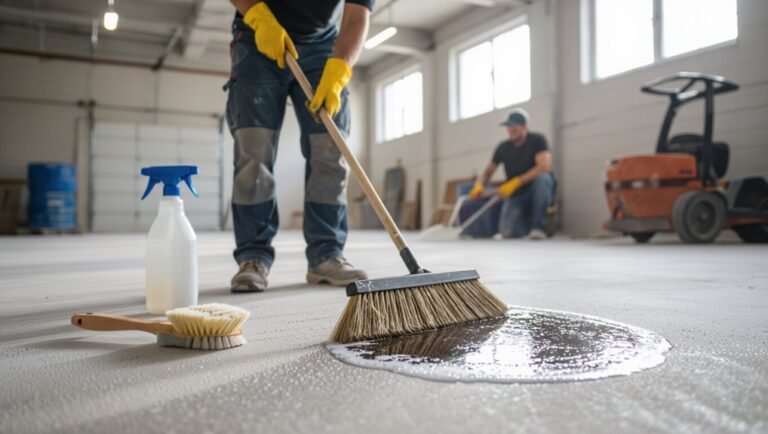
How to Clean Cork Floors Without Swelling or Surface Damage
You can keep cork floors from swelling or losing their finish by cleaning gently with a soft broom or vacuum, then damp-mopping only with distilled water and a pH‑neutral cleaner diluted per label instructions. Wring the mop well, dry the floor immediately, avoid steam mops, vinegar, abrasive pads, and harsh chemicals, and protect high‑traffic areas with mats and felt pads. Follow inspection and recoat schedules for wear, and keep humidity stable to prevent problems if you want more tips.
Quick Answer How to Clean Cork Floors Without Swelling or Surface Damage
You can clean cork floors quickly by sweeping or vacuuming, then mopping with a barely damp microfiber mop and a pH-neutral cleaner.
Don’t saturate the floor or use steam, and wipe up spills immediately to prevent swelling.
Finish by drying the surface with a soft cloth to protect the sealant and avoid surface damage.
One-paragraph direct cleaning method summary
Start by dry-mopping or vacuuming with a soft-brush attachment to remove grit.
Then damp-mop with a well-wrung microfiber pad using a pH-neutral cleaner diluted per label instructions; avoid soaking the floor.
Never use steam cleaners or harsh chemicals, and dry the surface immediately with a soft towel to prevent swelling.
Finish with periodic application of a manufacturer-approved sealant to protect the surface.
Basic Understanding: What Cork Floors Are and Why They Swell or Damage
Cork flooring is made from the bark of cork oak and usually has a protective finish like polyurethane or waxed sealers, so you’ll want to know which type you have.
Moisture, heavy abrasion, and harsh chemicals can force cork to swell, cup, or wear away the finish, while trapped water and cleaners break down adhesives and coatings.
Watch for raised seams, cupping boards, dull or discolored patches, and visible surface wear as early warning signs.
What cork flooring is made of and common finishes
Think of cork flooring as a layered composite: it’s made from crushed cork granules bound with resin and formed into tiles or planks, then finished with sealants like polyurethane, wax, or aluminum oxide coatings.
You’ll find natural cork underlayment, engineered cork with a core layer, and various surface treatments—matte or glossy polyurethanes, microcrystalline waxes, or durable aluminum oxide for high-traffic areas.
How moisture, abrasion, and chemicals cause swelling or finish loss
Those finishes protect the cork’s cellular structure, but they can only do so much when moisture, abrasion, or harsh chemicals act on the surface.
You let water sit, and cork absorbs it, swelling and loosening finish bonds. Scratches from grit abrade sealers, exposing raw cork.
Strong cleaners strip protective coatings, weakening adhesion and accelerating wear, so you must avoid prolonged wetness, rough abrasion, and caustic agents.
Signs of swelling, cupping, discoloration, and finish wear
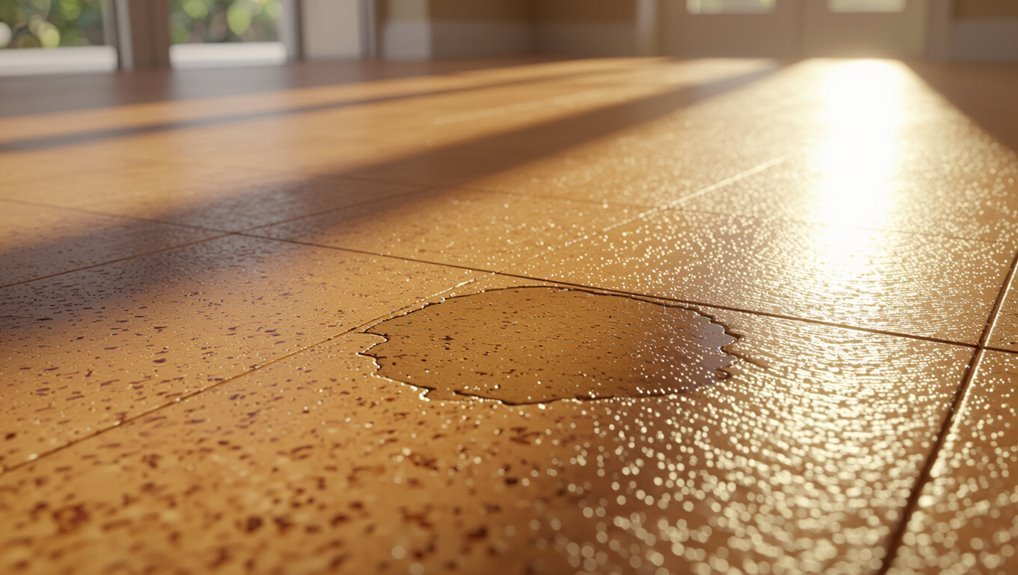
1 clear sign you’ll notice is swelling, where boards bulge or feel springy underfoot as they’ve absorbed moisture and loosened at the seams.
You’ll also spot cupping, edges rising while centers dip.
Discoloration appears as dark or bleached patches from water or sun.
Finish wear shows dull, scratched, or bare areas where protective coatings have eroded, making the cork vulnerable.
Preparation Before Cleaning
Before you start cleaning, gather a soft broom or vacuum with a soft-brush attachment, a microfiber mop, soft cloths, distilled water, and a pH-neutral cleaner.
Test any cleaner on an inconspicuous spot and wait for it to dry to confirm it won’t damage or discolor the cork.
Open windows or run a fan while you clean to guarantee good ventilation and reduce exposure to fumes.
Tools and materials to have on hand (soft broom, vacuum with soft brush, microfiber mop, pH-neutral cleaner, distilled water, soft cloths)
When you’re getting ready to clean cork floors, gather a soft broom, a vacuum with a soft-brush attachment, a microfiber mop, pH-neutral cleaner, distilled water, and a few soft cloths so you won’t need to stop mid-task hunting for supplies.
- Sweep or vacuum first to remove grit.
- Mix cleaner with distilled water per label.
- Use microfiber mop and soft cloths for gentle drying.
How to test cleaners on an inconspicuous area
Although you’ve gathered the right tools, you should always test any cleaner on an inconspicuous spot first to make sure it won’t discolor or damage the cork finish.
Apply a small amount diluted as directed, wait the recommended dwell time, blot dry, and inspect for color change, swelling, or finish dulling.
If safe, proceed; if not, try a milder solution.
Safety and ventilation considerations
Now that you’ve confirmed a cleaner won’t harm your cork, turn your attention to personal and indoor safety.
Open windows and doors for cross-ventilation, run fans, and avoid using strong chemicals in poorly ventilated rooms.
Wear gloves and eye protection, keep kids and pets out while cleaning and drying, and follow product label warnings.
Dispose of rags safely to prevent fumes or fire hazards.
Step-by-Step Gentle Cleaning Routine
Start with daily dry cleaning—sweep or vacuum gently to remove grit that can scratch cork.
Spot-clean spills right away, then do a weekly damp mop using a pH-neutral cleaner mixed with distilled water.
For tougher stains like oil, ink, or pet marks, use approved spot treatments and always dry the floor thoroughly to prevent moisture penetration.
Step 1 Daily dry cleaning: sweeping and vacuuming correctly
Because cork is soft and slightly porous, you’ll want to remove grit and dust daily to prevent scratches and wear.
Sweep with a soft-bristle broom or use a vacuum with a hard-floor setting and felt or soft brush attachment. Work along plank lines, lift rugs to clean underneath, and empty the vacuum often.
Don’t use beater bars or stiff brushes.
Step 2 Spot cleaning small spills immediately
Blot spills as soon as they happen to keep liquids from seeping into the cork’s pores and causing stains or swelling.
Gently press with a soft, lint-free cloth—don’t rub. For sticky messes, dampen the cloth lightly with plain water, then blot dry immediately.
Use a soft-bristled brush for crumbs.
Finish by airing the area briefly to guarantee complete drying and prevent moisture buildup.
Step 3 Weekly damp mopping with pH-neutral cleaner and distilled water
Once you’ve handled spills and kept crumbs off the surface, plan a gentle weekly damp-mopping routine to maintain cork’s finish and prevent dirt buildup.
Mix a pH-neutral cleaner with distilled water per label instructions, wring a microfiber mop until just damp, and work in small sections.
Rinse the mop frequently, avoid soaking the floor, and let it air-dry fully.
Step 4 Removing stubborn stains safely (oils, ink, pet stains) with approved methods
When stubborn stains like oil, ink, or pet accidents happen, you can remove them without damaging cork by following gentle, approved steps that target the specific stain type; blot fresh spills, use a soft cloth with mild dish soap and distilled water for oils, apply isopropyl alcohol sparingly for ink, and use enzymatic cleaner for pet stains.
Rinse lightly and blot dry immediately.
Step 5 Drying technique to prevent moisture penetration
Although cork resists water, you should dry it promptly and gently to prevent moisture seeping into seams or the substrate; wipe excess with a soft microfiber, follow with a dry towel, and air-dry briefly.
Maintain low humidity and gentle airflow to avoid warping.
- Blot spills immediately with microfiber.
- Follow with a dry, soft towel.
- Use gentle air circulation; avoid heat.
Products and Solutions: What to Use and What to Avoid
When cleaning cork floors, you’ll want pH-neutral commercial cleaners or simple DIY mixes (like a few drops of mild dish soap in distilled water) to protect the finish.
Use distilled rather than tap water to avoid mineral spots and residue that can dull or damage cork over time.
Avoid steam mops, abrasive pads, bleach, ammonia, and oil-based soaps, as they can warp, strip, or stain the flooring.
Recommended commercial cleaners and DIY pH-neutral recipes
Pick cleaners labeled pH-neutral or formulated specifically for cork, and you’ll protect the floor’s finish while removing dirt effectively. Use mild commercial cork cleaners or a DIY mix: a few drops of pH-neutral castile soap in a bucket of water, mop damp, not wet. Test first.
| Cleaner | Feeling |
|---|---|
| Cork-specific | Reassured |
| Castile mix | Confident |
| Mild detergent | Cautious |
| Vinegar avoid | Alarmed |
Why distilled water is preferred over tap water
Because mineral deposits and dissolved solids in tap water can leave dull spots or buildup on cork, you’ll get cleaner, longer-lasting results by using distilled water instead.
It’s free of minerals and impurities that can accumulate, stain, or alter finishes. Use distilled water for mopping, rinsing, and diluting pH-neutral cleaners to protect cork’s finish and prevent gradual clouding or residue.
Cleaners and tools to avoid (steam mops, abrasive pads, bleach, ammonia, oil soaps)
Although some common cleaning tools promise quick results, they can damage cork’s surface or finish; avoid steam mops, abrasive pads, bleach, ammonia, and oil-based soaps.
You should skip harsh chemicals and scrubbing tools that strip sealant, swell fibers, or leave residue. Instead, use pH-neutral cleaners, soft microfiber mops, and minimal water.
Test any product on a hidden spot first.
Maintenance and Protection Strategies to Prevent Swelling or Surface Damage
Keep a simple maintenance routine—sweep or vacuum daily, mop weekly with a damp (not wet) cloth, check for wear monthly, and schedule a professional inspection or deep clean annually.
Use area rugs, felt pads on furniture, entry mats, and a humidifier or dehumidifier to keep indoor humidity stable and prevent swelling or cracking.
When finish shows wear or staining, plan recoating every few years or refinishing sooner to restore protection and extend the floor’s life.
Routine maintenance schedule (daily, weekly, monthly, annually)
A simple, regular routine will keep cork floors looking great and prevent the moisture and wear that cause swelling or surface damage.
Daily: sweep or dry-mop to remove grit.
Weekly: damp-mop with manufacturer-approved cleaner.
Monthly: inspect for wear, reapply finish to high-traffic areas if needed.
Annually: deep-clean, assess seals, and schedule professional maintenance for repairs or recoating.
Protective measures (area rugs, felt pads, humidity control, entry mats)
When you combine area rugs, felt pads, entry mats, and proper humidity control, you create multiple layers of protection that stop grit, reduce abrasion, and prevent moisture-driven swelling.
Use breathable, low-pile rugs in traffic zones, install felt pads under furniture, place absorbent entry mats at doors, and keep indoor humidity between 40–60% to minimize expansion and contraction.
Recoating and refinishing: when and how to preserve the finish
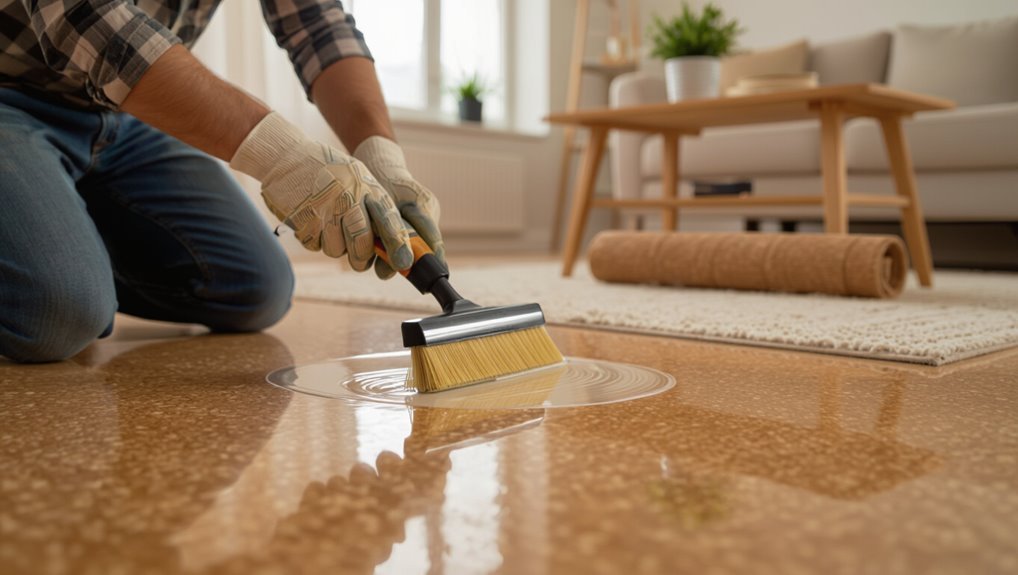
Over time you’ll notice wear in high-traffic spots or a dull sheen across your cork; recoating or refinishing restores protection and prevents moisture or scratches from reaching the core.
Check finish depth and surface damage: light scuffs call for a thin recoating after cleaning; deep gouges need sanding and refinishing.
Use manufacturer-approved sealers, follow drying times, and test a small area first.
Common Mistakes That Cause Swelling or Surface Damage
Don’t over-wet your cork floors or use harsh chemicals and abrasive tools, because those practices can strip sealant and cause swelling.
You should monitor humidity and temperature and act quickly on leaks or spills to prevent prolonged exposure.
Simple, prompt care will keep your cork stable and looking good.
Over-wetting and improper mopping techniques
Because cork is naturally porous, using too much water or a soaking mop can force moisture into seams and the core, causing boards to swell, warp, or delaminate.
You should wring mops until damp, mop with microfibers, and work small sections.
Dry spills promptly, avoid steam cleaners, and let floors air-dry fully to prevent cupping and finish damage.
Using harsh chemicals or abrasive tools
While you can’t see damage happening right away, harsh chemicals and abrasive tools quickly strip cork’s protective finish and can wear into the porous core, causing swelling, discoloration, or surface scratches.
Don’t use bleach, ammonia, or strong detergents; avoid scrubbing pads, steel wool, or stiff brushes.
Choose pH-neutral cleaners and soft microfiber mops to clean gently and preserve the sealant.
Ignoring humidity and temperature control
If you let indoor humidity and temperature swing wildly, your cork floor will react—expanding, contracting, and eventually cupping or splitting.
You should keep relative humidity between about 35–55% and stable temperatures to prevent movement. Use humidifiers or dehumidifiers and climate control to maintain balance.
Sudden seasonal shifts stress cork, so monitor conditions and adjust gradually to protect seams and finish.
Failing to address leaks and prolonged spills promptly
When water sits on cork—whether from a leaking appliance, a pet accident, or a slow drip—you need to act fast to prevent swelling and finish damage.
Blot moisture immediately with absorbent cloths, lift furniture to dry hidden areas, and ventilate with fans or dehumidifiers.
Inspect for stains or cupping, repair seals, and fix the source to avoid recurring problems and costly repairs.
Troubleshooting Problems and Repair Options
First, you’ll want to assess whether the issue is swelling from moisture or just wear to the finish, since each needs a different fix.
For minor problems you can often dry the area, lightly buff, or spot-recoat the finish; for serious damage you may need sanding, a full refinish, or replacing planks.
If the damage is extensive or you’re not confident with repairs, call a professional.
How to assess severity: swelling vs surface finish wear
Although both swelling and worn finish can make cork look damaged, you can tell them apart by how the floor behaves and feels: swelling raises or buckles the planks and often leaves gaps or ridges at seams, while surface finish wear keeps the cork flat but looks dull, scratched, or stained.
Check plank edges, press for springiness, and note odor or moisture. Measure area size and progression.
Minor fixes: drying, light buffing, spot recoating
If your inspection shows flat planks with surface wear or only localized swelling, you can often fix the problem yourself with simple, low-cost steps.
Dry damp spots quickly with absorbent towels and a fan.
Lightly buff worn finish with a fine pad, then clean residue.
Spot-recoat with a compatible cork sealer, feathering edges.
Let cure fully before light traffic.
Major repairs: sanding, full refinishing, replacing damaged planks
Tackle major cork-floor damage by evaluating whether sanding, a full refinish, or replacing individual planks is the right fix.
Sand lightly to remove surface scratches; avoid deep sanding that exposes substrate. For widespread wear, strip and recoat with compatible sealant.
Replace warped or water-damaged planks, matching thickness and finish. Allow proper acclimation, glue, and seal seams to restore durability and appearance.
When to call a professional
When damage goes beyond surface scratches or small stains, call a professional so you don’t risk making repairs worse.
They’ll assess moisture intrusion, deep gouges, warping, or finish failure and recommend targeted fixes—localized plank replacement, moisture mitigation, or full refinishing.
Don’t attempt structural or moisture-related repairs yourself; you could void warranties or cause mold.
Get quotes and check references before hiring.
Best Practices Checklist for Long-Term Cork Floor Health
1 essential habit will keep your cork floor looking its best: follow a consistent care routine that combines gentle cleaning, protection, and prompt attention to spills or damage.
- Sweep daily, mop lightly with manufacturer-approved cleaner, and avoid soaking the floor.
- Use felt pads, area rugs, and UV protection to prevent wear and fading.
- Inspect regularly, touch up finish when needed, and address scratches or moisture quickly.
Frequently Asked Questions (FAQ)
You probably have a few quick questions about what cleaners and tools are safe for cork, like whether vinegar or steam cleaning will harm the surface.
You’ll also want to know drying times after damp mopping, if waxing or polishing is appropriate, and how indoor humidity affects the floor.
Below are concise answers to those common concerns.
Can I use vinegar or homemade cleaners on cork floors?
Curious whether vinegar or DIY cleaners are safe for your cork floors? You should avoid acidic solutions like straight vinegar—they can dull finish and weaken seal over time.
Gentle, pH-neutral cleaners diluted per label are safer. If you mix homemade cleaners, use mild ingredients (few drops of dish soap in water), test a hidden spot first, and dry promptly to prevent moisture damage.
Is it safe to steam-clean cork floors?
After avoiding acidic or homemade cleaners that can harm the finish, you might wonder about steam cleaners—don’t use them on cork floors.
Steam forces moisture into seams and sublayers, causing swelling, delamination, and finish failure.
Instead, stick to low-moisture methods: dry dusting, damp mopping with a pH-neutral cleaner, and prompt spot drying to protect cork’s integrity and lifespan.
How long does it take for a damp-mopped cork floor to dry?
How long will a damp-mopped cork floor take to dry?
Expect 20–60 minutes for light damp mopping in warm, ventilated conditions; cooler, humid rooms can extend drying to 2–4 hours.
Increase airflow with fans or open windows and avoid heavy water or puddles.
Don’t walk with shoes until fully dry to prevent marks; blot excess moisture promptly for faster drying.
Can I wax or polish cork floors?
Can you wax or polish cork floors? You generally shouldn’t use traditional waxes or solvent-based polishes—they can clog the cork’s finish and cause yellowing or peeling.
Instead, apply a manufacturer-approved water-based polish or recoating product sparingly to maintain sheen and protection.
Test in an inconspicuous spot first, follow dry time guidelines, and avoid buildup by buffing lightly when recommended.
How does indoor humidity affect cork flooring?
Because cork is a natural, hygroscopic material, indoor humidity directly affects its expansion and contraction.
So you’ll see small gaps or slight cupping if moisture levels swing widely. You should keep indoor relative humidity between about 35–55% and maintain steady temperatures.
Use a humidifier or dehumidifier as needed, allow acclimation before installation, and promptly address leaks to prevent long-term swelling or mold.