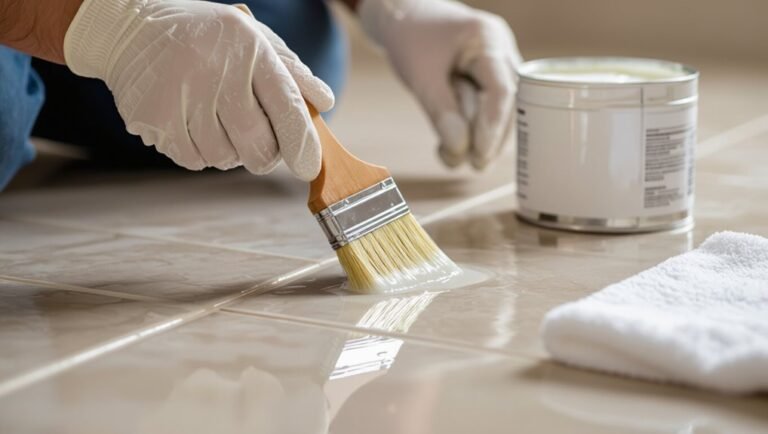
How to Clean Granite Floors Without Streaks or Surface Damage
You’ll keep granite floors streak- and scratch-free by sweeping daily, using a pH-neutral stone cleaner diluted per label, and mopping with a soft microfiber pad. Rinse with clean water, then dry immediately with a lint-free microfiber cloth to prevent spots and residue. Avoid acidic or abrasive cleaners, bleach, and dirty mop heads that can dull the finish. Seal annually and spot-treat stains gently, and keep going for tips on stain removal, polishing, and product picks.
Quick Direct Answer Best Way to Clean Granite Floors Without Streaks or Damage
You’ll want a simple, repeatable routine to clean granite without streaks or damage.
Start by sweeping or vacuuming, mop with a pH-neutral cleaner and warm water, then dry and buff with a soft microfiber cloth.
Follow those steps each time and you’ll protect the stone’s finish.
Concise step-by-step summary
1 clear routine will keep granite floors clean, streak-free, and undamaged: sweep or vacuum daily, damp-mop with a pH-neutral granite cleaner, rinse with clean water, and dry with a microfiber cloth.
For spills, blot immediately and avoid acidic cleaners.
Seal annually or as recommended.
Repeat weekly and after heavy traffic.
This answers how do you clean granite floors efficiently and safely.
Basic Understanding What Granite Floors Are and Why They Need Special Care
Granite is a natural stone made of minerals like quartz and feldspar and comes in finishes such as polished, honed, or leathered, each showing wear differently.
You’ll want to protect it from etching, scratching, and problems that come from improper sealing.
Avoid regular household cleaners, because acidic or oily formulas can leave streaks, dull the finish, or damage the sealant.
Composition and finish types (polished, honed, leathered)
Because it’s an igneous rock made of interlocking minerals like quartz, feldspar, and mica, granite is tough yet porous. Its composition affects how it wears and how it must be cared for.
You’ll encounter polished (high gloss), honed (matte), and leathered (textured) finishes. Each finish changes cleaning frequency, product choice, and buffing methods, so match care to finish.
Common vulnerabilities (etching, scratching, sealing issues)
While it stands up to heavy use, your granite floor still has vulnerabilities you should know: etching from acids, surface scratches from grit or abrasion, and problems when sealers fail or are applied incorrectly.
You should avoid acidic spills, sweep grit promptly, use soft pads under furniture, and test or reapply sealers per manufacturer guidance to maintain protection and appearance.
Why regular household cleaners can cause streaks or damage
If you use ordinary household cleaners on granite, they’ll often leave streaks, dull films, or even etch the surface because those products aren’t formulated for natural stone’s chemistry and finish.
You should avoid acidic, abrasive, or waxy formulas; they break down sealers, react with minerals, and trap residues.
Use pH-neutral, stone-safe cleaners and soft tools to preserve shine and integrity.
Preparation Before Cleaning
Before you start cleaning, walk the floor to check for chips, stains, and whether the sealant is holding up.
Gather only soft tools and granite-approved cleaners so you don’t scratch or etch the stone.
Make sure people and pets are out of the area or protected from fumes and wet floors.
Inspecting the floor for damage, stains, and sealant condition
A quick inspection helps you spot damage, stains, and whether the sealant’s held up so you can choose the right cleaning approach.
Walk the room, note chips, cracks, dull spots, and grout issues.
Test a discreet area for water absorption to gauge sealing.
Photograph problems, mark locations, and prioritize repairs or resealing before deep cleaning to avoid worsening damage.
Gathering safe tools and approved cleaning products
Now that you’ve inspected the floor and noted any damage or sealing issues, gather the right tools and cleaners so you don’t cause harm while cleaning.
Choose pH-neutral granite cleaner, soft microfiber mop, non-abrasive sponge, and a plastic scraper.
Check labels for “safe for natural stone” and avoid acids or bleach.
Store supplies nearby for efficient, careful work.
- pH-neutral cleaner
- Microfiber mop
- Non-abrasive sponge
- Plastic scraper
Safety precautions for people and pets
Since you’ll be working with liquids and moving furniture, make sure people and pets stay out of the area. Secure loose rugs and open windows for ventilation.
Wear gloves and closed-toe shoes, keep cleaners out of reach, and post a quick sign or tell household members when the floor is wet.
Notify neighbors if noise or traffic will change, supervise children, and leash pets outside.
Step-by-Step Cleaning Process
Start by removing grit with a thorough sweep or dust-mop so you don’t scratch the granite.
Pick a pH-neutral, stone-safe cleaner (or a simple DIY mix) and follow proper dilution, mop type, and technique to avoid streaks.
Finish by rinsing away residue, then dry and buff to prevent water spots and restore shine.
Step 1 Dry cleaning: sweeping and dust-mopping techniques to avoid grit
1. Start by removing loose debris: sweep with a soft-bristle broom, working toward one exit.
Follow with a microfiber dust mop, using overlapping strokes to capture grit rather than push it around.
Shake or replace the mop pad frequently. Pay special attention to corners and under furniture.
Don’t use a vacuum with a beater bar—it can scratch polished granite.
Step 2 Choosing the right cleaner: pH-neutral, stone-safe options and DIY mixes
When you move on to wet cleaning, pick a pH-neutral, stone-safe cleaner or a simple DIY mix so you don’t etch or dull the granite’s finish. Choose gentle commercial products or mix warm water with a few drops of dish soap or isopropyl alcohol for spot cleaning. Test any solution in a hidden area first.
| Type | Example | Note |
|---|---|---|
| Commercial | Stone soap | pH-neutral |
| DIY | Dish soap + water | Mild |
| Spot | Isopropyl mix | Test first |
| Avoid | Vinegar/acid | Etches |
Step 3 Wet cleaning: proper dilution, mop types, and mopping technique to prevent streaks
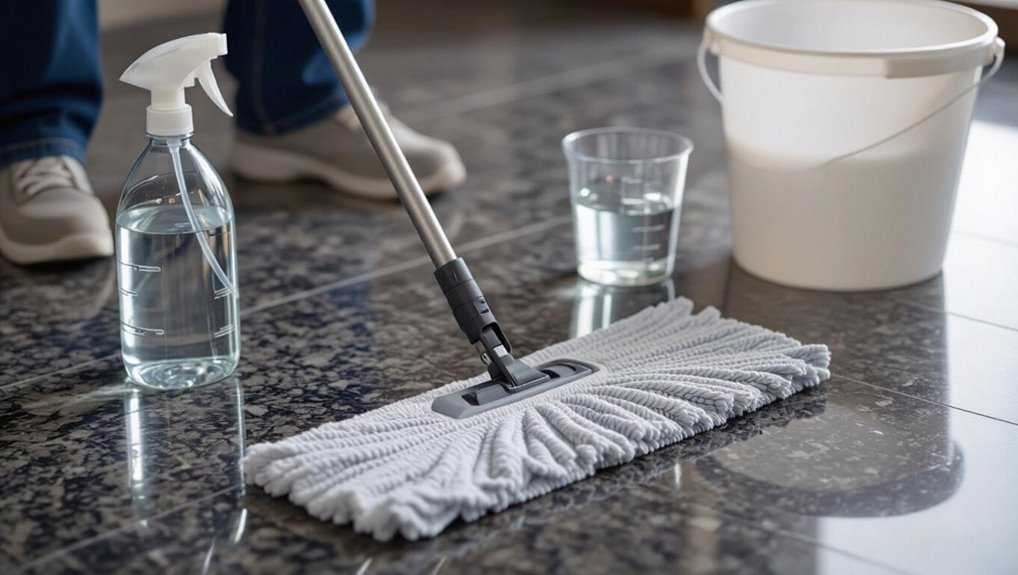
Before you mop, dilute your cleaner exactly as the label or recipe directs and choose a soft, absorbent mop (microfiber or a well-wrung cotton) so you won’t leave excess water or streaks on the granite; work in small sections, rinsing or changing the solution frequently and dragging the mop in straight, overlapping passes to avoid puddles and uneven drying.
Use light pressure, flip or replace the mop when dirty, and keep the floor barely damp to prevent streaking.
Step 4 Rinsing: how and when to rinse to remove residue
After you’ve mopped a small area, go back over it with clean, warm water so any cleaner residue doesn’t sit on the stone; this quick rinse prevents dulling and streaks while restoring the granite’s natural sheen.
Rinse in sections, changing water often, and use a separate, damp mop or microfiber to lift remaining film.
Don’t over-wet seams or grout.
Step 5 Drying and buffing: preventing water spots and restoring shine
5. After rinsing, dry the granite immediately with a clean microfiber mop or towels to prevent water spots.
Work in small sections, blotting rather than dragging.
Once dry, buff with a soft, dry microfiber cloth or a low-speed floor buffer using a clean pad to restore shine.
Finish by inspecting for streaks and repeat buffing where needed.
Dealing with Common Problems and Stains
You’ll learn how to remove water spots and mineral deposits without harming the sealant.
I’ll show simple fixes for oil, grease, food, organic (coffee, wine) and dye-based stains, plus when a poultice will help.
Finally, you’ll get clear guidance on spotting etching versus staining and when it’s time to call a pro.
Removing water spots and mineral deposits
When hard water leaves cloudy spots or white rings on your granite, don’t panic—you can usually remove them without harsh chemicals.
Mix equal parts distilled water and white vinegar for mild deposits, apply briefly with a soft cloth, rinse thoroughly, then dry.
For stubborn mineral buildup, use a poultice of baking soda and water, cover, let sit until dry, then rinse and buff.
Treating oil, grease, and food stains
Oil, grease, and food stains can sink into granite’s pores quickly, but you can lift most of them with the right approach.
Blot fresh spills; don’t scrub. Use a pH-neutral cleaner and warm water for mild residue.
For set stains, apply a poultice (baking soda and water or a commercial poultice), cover, let dry, then gently remove and rinse.
Repeat if needed.
Tackling organic stains (coffee, wine) and dye-based stains
1 common culprit for granite stains is organic spills like coffee or wine.
Dye-based stains from markers or brightly colored foods can be just as stubborn; act quickly by blotting excess liquid, then treat with a gentle, pH-neutral cleaner before moving to a poultice for any set-in discoloration.
Test cleaners in an inconspicuous spot, apply poultices per instructions, and rinse thoroughly, drying afterward.
Handling etching vs. staining: when to call a pro
You’ve learned how to blot spills and pull out stains, but some marks on granite aren’t stains at all — they’re etches caused by acids that dull the surface.
You can test by rubbing with a damp cloth; stains often lift, etches remain.
Minor etches polish out with a stone-safe polishing powder, but deep etching or widespread damage needs a professional refinisher to avoid further harm.
Maintenance Routine and Schedule
Keep a simple maintenance routine with daily spot-cleaning, a weekly wet mop with a pH-neutral cleaner, and monthly checks for grout, polish, and wear.
Watch for dulling, water beading failure, or stains as signs it’s time to reseal, then clean, dry, apply sealer per product instructions, and buff.
Adjust frequency and add protective mats or more frequent cleaning in seasonal or high-traffic zones.
Daily, weekly, and monthly care checklist
A simple, consistent routine will keep your granite looking its best:
- Daily: sweep or dry-mop to remove grit.
- Weekly: damp-mop with pH-neutral cleaner, then dry to avoid streaks.
- Monthly: inspect for stains, spot-treat with stone-safe cleaner.
- Quarterly: deep-clean grout lines and edges, using soft brushes and gentle solutions.
When and how to reseal granite floors (signs it’s needed and resealing steps)
After your routine checks and cleanings, watch for signs that your granite needs resealing—water beading unevenly, dark spots after spills, or worn shine are clear indicators.
Test small areas yearly. Clean, dry, then apply a manufacturer-recommended penetrating sealer with a microfiber pad, following dwell times.
Wipe excess, let cure fully, and recheck bead test before resuming regular use.
Seasonal and high-traffic area strategies
While seasons shift and foot traffic rises, you should tighten your cleaning cadence for high-traffic zones and adjust products to match changing conditions.
Mop weekly with pH-neutral cleaner, spot-clean spills immediately, and use entry mats to reduce grit.
Deep-clean and buff quarterly, inspect grout and sealant biannually, and increase frequency during wet or snowy months to prevent staining and abrasion.
Mistakes to Avoid That Cause Streaks or Damage
Don’t use acidic or alkaline cleaners, bleach, or harsh soaps that can etch or dull your granite.
Avoid over-wetting the floor or leaving cleaners to sit, and don’t scrub with abrasive tools or dirty mop heads that can scratch the surface.
Always follow the manufacturer’s or installer’s recommendations to keep your finish looking its best.
Using acidic or alkaline cleaners and bleach
Because granite’s natural seal and mineral composition react with strong pH chemicals, using acidic or highly alkaline cleaners — and bleach — can etch, dull, or discolor the surface quickly.
Don’t use vinegar, citrus cleaners, oven cleaners, or undiluted bleach.
Choose pH-neutral granite cleaners, test any product in a hidden spot, and rinse thoroughly.
Wear gloves and ventilate the area.
Over-wetting or letting cleaners sit too long
If you leave cleaners puddled on granite or drenched with water, you’ll risk stains, mineral deposits, and weakened sealant.
Don’t soak the floor or let solution sit; blot spills and rinse promptly with a damp microfiber mop.
Work in small sections, dry immediately, and avoid prolonged exposure to any cleaner.
Quick removal preserves finish and prevents discoloration.
Using abrasive tools or dirty mop heads
When you scrub with abrasive brushes or keep using a grimy mop head, you’ll scuff the granite’s polish and spread dirt instead of removing it.
Use soft microfiber mops and clean or replace heads frequently. Rinse tools often to avoid redepositing grit.
For stubborn spots, gently agitate with a nonabrasive pad and pH-neutral cleaner to protect finish and prevent streaks.
Ignoring manufacturer or installer recommendations
Although your granite looks sturdy, skipping the care instructions from the installer or manufacturer can undo that durability fast.
You should follow recommended cleaners, sealers, and maintenance intervals so you don’t void warranties or cause etching, staining, or seal failure. If you’re unsure, contact the installer for guidance.
Following their guidelines preserves finish, prevents streaks, and avoids costly repairs.
Best Practices, Tips, and Professional Options
For streak-free granite you’ll want the right tools and microfiber techniques, and I’ll explain what works best.
I’ll compare natural and commercial cleaners so you can weigh their pros and cons.
Finally, I’ll outline when it’s worth hiring professional stone restoration or polishing services.
Recommended tools and microfiber techniques for streak-free results
Because tiny particles and residue show up easily on polished stone, using the right tools—and mastering microfiber technique—makes streak-free granite cleaning fast and reliable.
You’ll want soft microfiber pads, a flat mop, a squeegee for edges, and a lint-free buffing cloth.
Practice these steps:
- Sweep with a soft-bristle broom.
- Damp-mop with wrung microfiber.
- Squeegee excess water.
- Buff dry in small sections.
Natural versus commercial cleaners: pros and cons
Once your microfiber routine keeps granite streak-free, you’ll want to choose the right cleaner—natural options are gentle and inexpensive, while commercial products promise stronger stain removal and protective additives. You’ll prefer natural mixes for routine care and commercial for tough spots; always test first and avoid acids.
| Type | Pros | Cons |
|---|---|---|
| Natural | Gentle, cheap | Less powerful |
| Commercial | Strong, protective | Cost, chemicals |
| Hybrid | Balanced | Variable results |
When to hire professional stone restoration or polishing services
When should you call in a pro? If your granite has deep scratches, etching, large chips, uneven wear, or a dulled finish despite proper care, hire a stone restoration specialist.
Pros can hone, polish, re-seal, and repair damage safely. Consider professional service for extensive areas, historic stone, or high-value surfaces to guarantee lasting results and avoid accidental harm.
Product Comparison and Buying Guide
You’ll want cleaners that protect sealant, avoid acids, and leave no residue.
Compare stone-safe brands and simple DIY recipes so you know when to buy versus make.
Also pick mops, pads, and finishing products that match your grout and finish for the best results.
Top features to look for in granite floor cleaners
Looking for the right granite floor cleaner means focusing on a few key attributes that determine performance and safety.
You’ll want pH-neutral formulas, non-abrasive agents, and sealant-safe labels to protect finish. Look for quick-drying, low-residue formulas to avoid streaks, clear usage instructions, and eco- or stone-safe certifications.
Concentrates that dilute accurately give better value and control.
Comparison of popular stone-safe brands and DIY recipes
Compare a handful of well-reviewed stone-safe brands and a few proven DIY recipes so you can pick the option that best fits your budget and maintenance habits. Test small areas: store brands (pH-neutral sprays), premium stone cleaners (concentrates), and DIY (mild dish soap, rubbing alcohol mix). Choose what cleans without dulling or residue.
| Option | Notes |
|---|---|
| Store | Affordable, gentle |
| Premium | Concentrated, effective |
| DIY | Inexpensive, customizable |
Recommended mops, pads, and finishing products
After you’ve settled on a cleaner that won’t harm your stone, pick tools that work with it: the right mop, pads, and finishing products determine how well the solution lifts dirt, how much streaking you get, and how long seals and polishes last.
Choose microfiber flat mop heads, non-abrasive scrubbing pads, a soft buffing pad, and a stone-safe spray sealant.
- Microfiber mop
- Soft scrub pad
- Buffing pad
- Stone sealant
FAQ Common Questions About Cleaning Granite Floors
You probably have a few practical questions about granite care, like whether vinegar or ammonia are safe and how often to reseal.
You’ll also want to know if steam mopping can harm the stone, how to remove stubborn grout or adhesive, and how to restore shine without heavy polishing compounds.
I’ll answer each point clearly so you can keep your granite looking its best.
Can I use vinegar or ammonia on granite?
Wondering whether vinegar or ammonia will damage your granite? You shouldn’t use either. Their acidity and alkalinity can dull sealers, etch the stone, and leave residue.
Instead, use a pH-neutral cleaner made for natural stone or a mild dish soap diluted in warm water. Rinse thoroughly and dry with a soft microfiber to avoid streaks and protect the surface.
How often should granite floors be resealed?
A good rule of thumb is to reseal granite floors every 1 to 3 years, though high-traffic areas may need attention more often.
Test by sprinkling water—if it beads, sealing can wait; if it soaks in, reseal.
Use a penetrating granite sealer, follow manufacturer directions, and clean thoroughly before application.
Note spots and entryways may require targeted, earlier resealing.
Will steam mopping damage granite floors?
Although steam mops can be tempting for their convenience, they can harm granite if used improperly.
You shouldn’t use high heat or excessive steam on unsealed or worn granite; joints and sealant can break down.
If you insist on steam, use the lowest setting, a soft microfiber pad, and test a hidden area first.
Prefer pH-neutral cleaners for routine care.
How to remove stubborn grout or adhesive residue?
If you’ve tested steam carefully and stuck to pH-neutral cleaners, the next common headache is removing grout haze or adhesive left after tile work.
Scrape gently with a plastic razor, then dissolve residue with a 50/50 mix of warm water and isopropyl alcohol or a manufacturer-approved solvent.
Rinse well, blot dry, and test a small inconspicuous spot before full treatment.
How to restore shine on dulled granite without polishing compounds?
When your granite looks flat, you can revive its luster without polishing compounds by focusing on deep cleaning, gentle abrasion, and proper sealing; start by mopping with pH-neutral cleaner, rinse well, and dry thoroughly.
Use a microfiber pad and mild abrasive (baking soda paste) for dull spots, then re-seal with a quality granite sealer.
Buff with a dry microfiber for final shine.