
How to Clean PVC Flooring and Keep It Looking Like New
You can keep PVC flooring looking like new by sweeping or vacuuming daily to remove grit, mopping weekly with a microfiber mop and a pH-neutral cleaner or diluted vinegar solution, and wiping spills immediately to prevent stains. Use soft brushes for grout and a pencil eraser for scuffs, avoid harsh chemicals and abrasive tools, and protect floors with mats and furniture pads. Follow manufacturer care and warranty guidelines, and if you want more detailed tips you’ll find them below.
How to Clean PVC Flooring and Keep It Looking Like New
To keep your PVC flooring looking like new, start with a quick routine: sweep daily and mop weekly with a mild, pH-neutral cleaner.
For spills and high-traffic zones, clean immediately or increase frequency—entryways and kitchens will need more attention than guest rooms.
Follow those simple habits and your floor will stay bright and damage-free.
Quick Answer Best Way to Clean PVC Flooring
If you want the fastest, most reliable way to clean PVC flooring and keep it looking like new, start with a dry sweep or vacuum to remove grit.
Then mop with a gentle pH-neutral cleaner diluted in warm water.
For quick maintenance, follow these steps:
- Remove loose dirt
- Mop with diluted cleaner
- Dry to prevent streaks
This guides how to clean PVC flooring efficiently.
When to Clean: Frequency Guidelines for Different Areas
You’ve got the basic routine down—sweep, mop with a pH-neutral cleaner, and dry—but how often you do that depends on where the PVC floor is and how much foot traffic it gets.
High-traffic areas (entrances, kitchens) need daily sweeping and weekly mopping.
Moderate-traffic rooms get twice-weekly sweeping and biweekly mopping.
Low-traffic spaces can be swept weekly and mopped monthly.
Understanding PVC Flooring Basics
PVC flooring is a durable, water-resistant material sold as sheet, tile, or plank, and you’ll want to know which type you have before cleaning.
Keeping it maintained protects its appearance, extends its life, and helps you meet warranty requirements.
It’s also not the same as vinyl, laminate, or hardwood, so use methods suited to PVC rather than general floor-care advice.
What PVC Flooring Is and Common Types (sheet, tile, plank)
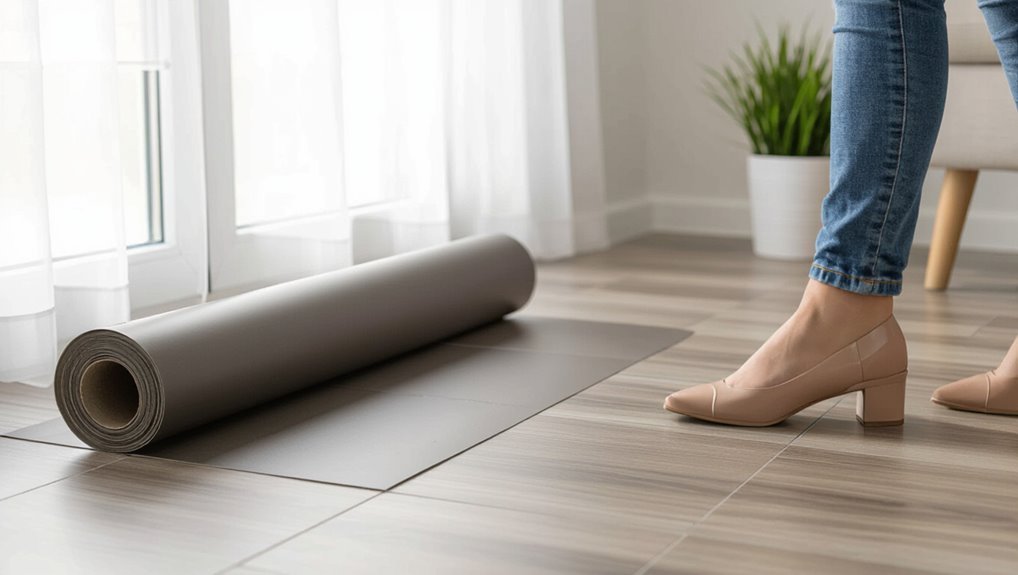
Think of PVC flooring as a family of resilient, low‑maintenance coverings made from polyvinyl chloride that suit homes and commercial spaces alike.
You’ll find three main formats: continuous sheet for seamless, water‑resistant coverage; vinyl tile for modular replacement and design flexibility; and luxury vinyl plank (LVP) that mimics wood with durable wear layers.
Each type varies in thickness, backing, and installation method.
Why Cleaning and Maintenance Matter (durability, appearance, warranty)
Longevity depends as much on care as on material—regular cleaning and proper maintenance keep your PVC flooring looking new, prevent abrasive dirt from wearing down the wear layer, and help you avoid costly repairs or early replacement.
You’ll preserve finish and color, reduce staining, and extend lifespan. Following manufacturer care guidelines also protects warranties, so document routines and use approved cleaners to avoid voiding coverage.
How PVC Flooring Differs from Vinyl, Laminate, and Hardwood
Material construction matters: PVC flooring is a resilient, manufactured product whose layered composition and wear-resistant top coats make it behave and clean differently than vinyl, laminate, or hardwood. You’ll wipe, avoid excess water, and use milder cleaners. Compare care needs:
| Type | Care focus |
|---|---|
| PVC | Gentle cleaners, low water |
| Vinyl | Similar but thinner wear layer |
| Hardwood | Refinishing, sensitive to moisture |
Supplies and Products You Need
You’ll want a few safe tools on hand, like a microfiber mop or cloth and a soft-bristle brush for spot cleaning.
Use mild DIY solutions (water with a bit of dish soap or vinegar) or a manufacturer-approved commercial cleaner for tougher grime.
Avoid harsh chemicals and abrasive tools that can dull or damage the PVC surface.
Safe Cleaning Tools (mop types, microfiber cloths, soft-bristle brush)
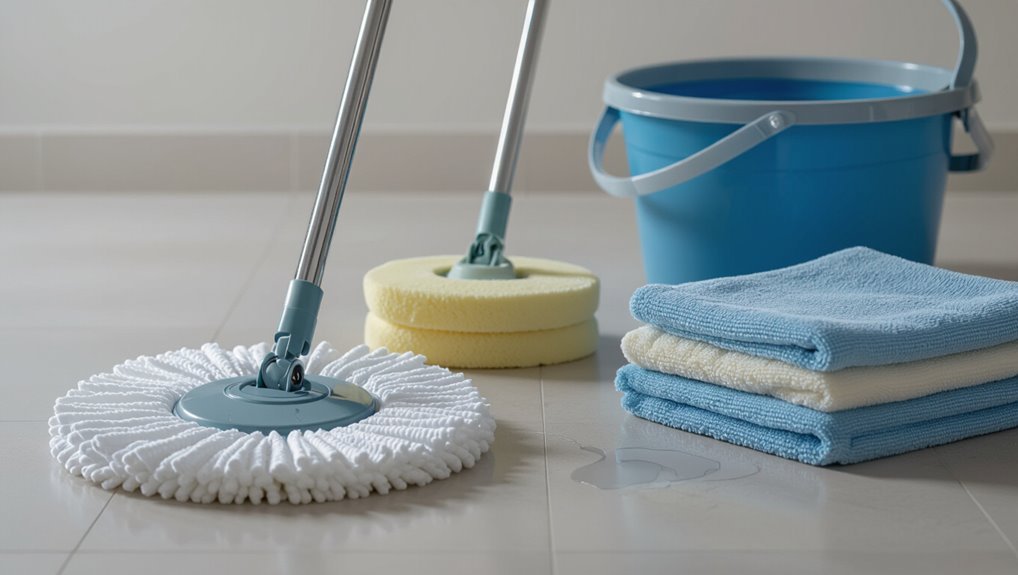
When cleaning PVC floors, choose tools that lift dirt without scratching the surface: a flat microfiber mop for everyday spills, a sponge or string mop kept just damp for heavier grime, and a soft-bristle brush for grout lines and corners.
Use lint-free microfiber cloths for spot cleaning and baseboards.
Avoid abrasive pads or wire brushes.
Rinse tools frequently and let them air dry to prevent residue.
Recommended Cleaning Solutions (DIY and commercial)
Choosing the right cleaner makes routine maintenance quick and keeps PVC looking new: mild dish soap or a pH-neutral floor cleaner works for most dirt, while a diluted white vinegar solution handles grease and mineral buildup (avoid vinegar on floors with a polyurethane finish).
Use gentle, approved products and spot-test first.
- Mild dish soap
- pH-neutral cleaner
- Diluted white vinegar
What to Avoid Harsh Chemicals and Abrasive Tools
After picking a gentle cleaner, steer clear of harsh chemicals and abrasive tools that can damage PVC’s surface.
Don’t use bleach, oven cleaners, acetone, or ammonia-based products; they can discolor or soften vinyl. Avoid scrub brushes, steel wool, and gritty scouring pads.
Instead, choose soft microfiber mops or cloths and mild, pH-neutral cleaners to preserve finish and longevity.
Step-by-Step Cleaning Routine
Start with a quick daily sweep and spot-clean to keep dirt from scratching the surface.
Once a week you’ll do a deeper mop with a mild cleaner, and once a month you can apply polish or other protective treatments.
For stubborn stains like ink, oil, grease, or scuff marks, follow specific step-by-step techniques to lift them without harming the PVC.
Daily/Regular Maintenance Quick Sweep and Spot Clean
A quick daily sweep and spot-clean routine keeps PVC floors looking fresh and prevents grit from scratching the surface.
You’ll move fast: sweep or vacuum, tackle spills, and refresh high-traffic spots.
Follow this short checklist:
- Sweep or vacuum loose dirt.
- Wipe spills with a damp microfiber cloth.
- Use a gentle pH-neutral spray for sticky spots, then dry.
Weekly Deep Clean
Once a week, give your PVC floor a deeper clean to remove ground-in dirt and restore its shine: clear the room, vacuum or sweep thoroughly, then mop with a manufacturer-approved mild detergent diluted in warm water.
Rinse with clean water to avoid residue, dry with a microfiber cloth, and inspect seams and edges.
Spot-treat stubborn marks with a soft brush and repeat rinsing as needed.
Monthly/Periodic Maintenance Polishing and Protective Treatments
When you schedule monthly maintenance, you’ll protect the PVC’s finish and extend its life by polishing and applying protective treatments that replenish wear layers and resist scuffs.
Follow a clear, step-by-step routine so each treatment is applied evenly and safely.
Start by sweeping and mopping, dry thoroughly, test product in a corner, apply polish or protective coat with a microfiber applicator, buff lightly, and allow full cure.
Special Techniques for Stubborn Stains (ink, oil, grease, scuff marks) Step-by-step
If tough marks like ink, oil, grease, or scuffs won’t lift with routine cleaning, tackle them methodically using the right solvent and a controlled technique so you remove the stain without damaging the PVC.
Test solvent in an inconspicuous spot.
Blot ink with isopropyl alcohol, lift oil/grease with a mild degreaser, gently rub scuffs with a pencil eraser, then rinse and dry.
Cleaning for Different Conditions and Rooms
When you tailor your cleaning to the room, you’ll keep PVC looking its best—use tougher scrubbing and more frequent cleaning in high-traffic zones like kitchens and entryways.
In bathrooms and other moisture-prone spots, focus on mold and mildew prevention with quick-drying techniques, proper ventilation, and targeted cleaners.
For commercial spaces expect higher frequency and sometimes stronger products than in residential settings, so choose compatible cleaners and adjust your schedule accordingly.
High-Traffic Areas (kitchen, entryway) Best Practices
Because high-traffic zones like kitchens and entryways see more dirt, spills, and wear, you’ll need a targeted cleaning routine that’s both frequent and gentle—sweep or vacuum daily to remove grit, mop with a pH-neutral cleaner weekly (or spot-clean spills immediately), and use protective mats and felt pads to reduce abrasion and scuffing.
Rotate mats, lift furniture periodically, and address stains promptly to prevent permanent marks.
Bathrooms and Moisture-Prone Areas Mold, Mildew, and Drainage Tips
Though bathrooms and other moisture-prone areas demand more vigilance, you can keep PVC flooring mold- and mildew-free with a few simple habits: wipe up standing water immediately, use a squeegee after showers, guarantee vents or exhaust fans run to reduce humidity, and place breathable mats.
Clean weekly with a mild pH-neutral cleaner, check seals around fixtures, and dry grout or seams promptly to prevent growth.
Commercial vs. Residential PVC Flooring Frequency and Product Differences
1 key difference between commercial and residential PVC floors is how often you’ll clean them and which products you should use; high-traffic commercial spaces need more frequent maintenance and stronger, manufacturer-approved cleaners, while residential floors usually do fine with gentler pH-neutral solutions and less frequent attention.
For commercial areas, follow a scheduled deep-clean cycle and use durable finish restorers; at home, spot-clean and mop weekly.
Common Problems and How to Fix Them
You’ll run into scratches, scuffs, and surface marks that need different treatments depending on depth.
If your PVC is yellowing or discolored, you’ll want to identify causes like sun exposure or chemical damage before choosing a remedy.
For lifted seams, curled edges, or small tears, there are quick fixes that can stop damage from spreading.
Removing Scratches, Scuffs, and Surface Marks
Start by evaluating the damage to determine whether marks are surface-level scuffs or deeper scratches that need repair.
For scuffs, try a soft cloth and mild cleaner; for light scratches use a PVC floor polish or scratch repair kit. If deeper, consider a professional filler.
Steps to follow:
- Clean area
- Test repair product
- Apply and buff gently
Dealing with Discoloration and Yellowing Causes and Remedies
If your PVC floor has yellowed or shows uneven color, identify the cause before treating it—sunlight, heat, chemical reactions, and dirt buildup are common culprits and each needs a different fix.
For sun or heat fading, limit exposure and use UV-safe mats.
For chemical stains, rinse and neutralize with mild detergent.
For dirt-induced discoloration, deep-clean with a recommended PVC cleaner and buff dry.
Repairing Seams, Lifting Edges, and Small Tears Quick Fixes
Repair torn seams and lifting edges quickly to prevent dirt buildup and further damage: small separations can be glued, lifted corners re-adhered, and minor tears patched with vinyl repair kits so your PVC floor stays watertight and looks tidy.
Clean area, apply adhesive or patch per instructions, clamp or weigh until set, trim excess, and finish with a color-matching compound for an invisible, durable repair.
Prevention and Long-Term Care Tips
To keep your PVC floors looking great, start with simple protective measures like entry mats, area rugs, and furniture pads to prevent scratches and grit buildup.
Get into routine habits—regular sweeping, gentle mopping, and prompt spill cleanup—to extend the floor’s life and maintain its shine.
Also adjust care seasonally and for your climate, drying quickly in humid months and checking seams in cold, dry conditions.
Protective Measures (rugs, furniture pads, entry mats)
While regular cleaning removes dirt, proactive protective measures like rugs, furniture pads, and entry mats keep your PVC floor looking new longer by preventing scratches, stains, and wear in high-traffic areas.
Use these tips:
- Place washable entry mats to trap grit.
- Add felt pads under legs to prevent dents.
- Use low-profile rugs in corridors and under furniture for even wear.
Routine Habits to Extend Life and Maintain Shine
Alongside protective items like rugs and felt pads, adopting simple daily and weekly habits will keep your PVC floor looking its best for years.
Sweep or vacuum daily to remove grit, mop weekly with a pH-neutral cleaner, and wipe spills immediately.
Rotate mats, trim pet nails, and avoid harsh abrasives or waxes.
Inspect seams regularly and address damage promptly to prevent worsening.
Seasonal Care and Climate Considerations
Because temperature and humidity swing with the seasons, you should adjust your PVC floor care to prevent warping, gaps, and surface wear.
Monitor indoor humidity with a hygrometer, use a dehumidifier or humidifier as needed, and avoid rapid temperature shifts.
Increase cleaning during wet seasons, place mats at entries, and inspect seams regularly so small issues don’t become costly repairs.
Comparison: Cleaning Products and Tools (Quick Reference)
You’ll want to weigh DIY solutions against commercial cleaners to pick what’s safest and most effective for your PVC floors. Below is a quick-reference table comparing typical pros and cons to help you decide. Use it to match your cleaning needs with the right product or tool.
| DIY Cleaners | Commercial Cleaners |
|---|---|
| Cheap and easy to mix | Formulated for specific stains |
| Gentle if used correctly | Consistent strength and results |
| Fewer harsh chemicals when homemade | May be stronger than needed |
| Requires correct dilution/knowledge | Often faster for tough jobs |
| Good for routine maintenance | Better for heavy-duty or stubborn grime |
Pros and Cons of DIY vs. Commercial Cleaners
Wondering whether to mix your own cleaner or grab a store-bought solution?
DIY blends (vinegar, water, mild soap) are cheap, eco-friendly, and customizable, but inconsistent strength can harm finish if overused.
Commercial cleaners offer tested formulas, stain-fighting power, and convenience, yet cost more and may contain harsh chemicals.
Pick based on your floor’s needs, budget, and sensitivity to residues.
Common Mistakes to Avoid
Don’t use steam cleaners, bleach, or ammonia-based products on PVC flooring since they can warp or discolor the surface.
Avoid over-wetting, abrasive scrubbing, and improper drying, because excess water and harsh action damage the wear layer and seams.
I’ll cover how to clean safely and what to do instead.
Using Steam Cleaners, Bleach, or Ammonia-Based Products
1 common mistake people make with PVC floors is reaching for steam cleaners, bleach, or ammonia-based products without checking the manufacturer’s recommendations first.
You can damage the wear layer, cause discoloration, or void warranties. Instead, test any cleaner in an inconspicuous area, use mild pH-neutral solutions, and follow label instructions to preserve finish and longevity.
Over-Wetting, Abrasive Scrubbing, and Improper Drying
While it might seem thorough, over-wetting PVC floors and scrubbing them with abrasive pads can lift the wear layer and trap moisture beneath seams.
Failing to dry the surface promptly lets water seep into joints and subfloors—so always use a damp mop, soft cloths, and quick drying to protect the finish and prevent warping or mold.
You should blot spills, avoid harsh brushes, and ventilate until fully dry.
FAQs PVC Flooring Cleaning Answers
You’ve got practical questions about caring for PVC floors, from whether steam mops are safe to removing stains like permanent marker or nail polish.
You’ll also learn the gentlest homemade cleaner, how often to polish or recoat, and whether vinegar will harm your floor.
Read on for clear, simple answers you can use right away.
Can I use a steam mop on PVC flooring?
Curious whether a steam mop is safe for your PVC flooring? You can use one cautiously: check the manufacturer’s warranty and installation guidelines first.
Use low steam settings, avoid prolonged passes, and keep the mop moving to prevent heat and moisture buildup.
Test a hidden spot for colorfastness and seams. If in doubt, stick to recommended damp-mopping methods to protect the floor.
How do I remove permanent marker or nail polish?
Need to get permanent marker or nail polish off your PVC floor? Act fast: blot excess polish with a paper towel, then apply a small amount of isopropyl alcohol or acetone on a cloth to test an inconspicuous area.
Gently rub the stain, rinse with water, and dry. For stubborn marks, repeat sparingly and avoid soaking seams or finishes to prevent damage.
What’s the safest homemade cleaner for PVC floors?
If rubbing out a marker or nail polish worked but you want a regular, safe cleaner for routine care, a simple homemade solution will do the job without harming PVC.
Mix one cup warm water, a cup white vinegar, and a few drops of mild dish soap in a spray bottle.
Spray sparingly, wipe with a microfiber cloth, then dry to prevent streaks.
How often should I polish or recoat PVC flooring?
How often you should polish or recoat PVC flooring depends on foot traffic, wear, and the product’s finish: Inspect every 3–6 months in high-traffic areas and annually in low-traffic rooms.
Recoat when sheen fades, scuffs become frequent, or cleaning no longer restores appearance.
Follow manufacturer guidelines for compatible products, proper surface prep, and recommended recoat intervals to avoid buildup or damage.
Will vinegar damage my PVC floor?
Wondering whether vinegar will harm your PVC floor? You can use diluted white vinegar (about 1 cup per gallon of warm water) for occasional cleaning—it’s effective on grime and residue.
Avoid undiluted vinegar, acidic commercial cleaners, or long soak times, which can dull or weaken some PVC finishes.
Rinse with clean water and dry to protect the floor’s appearance.
Final Checklist: Daily, Weekly, Monthly Care Plan
Start with a simple routine you can stick to: a quick daily sweep or vacuum to remove grit, a weekly damp mop with a mild PVC-safe cleaner, and a monthly deeper clean plus a spot inspection for wear or damage.
Start with a simple routine: daily sweep, weekly damp mop with PVC-safe cleaner, monthly deep clean and inspect.
Keep supplies handy, address spills fast, and track maintenance.
Follow this checklist:
- Daily sweep
- Weekly mop
- Monthly deep clean and inspection
