How to Clean Shower Tiles
Gather pH‑neutral cleaner, grout brush, microfiber cloth, gloves, bucket and a squeegee, and ventilate the space. Test any cleaner on a hidden tile, then rinse walls and squeegee after each shower to prevent buildup. For deep cleans, apply cleaner, wait 5–10 minutes, scrub grout gently, rinse thoroughly and dry seams; use diluted bleach or hydrogen peroxide on mildew and oxygen bleach for stubborn stains. Keep grout sealed and follow up for more tips and techniques.
Quick Checklist: Supplies for Shower Tile Cleaning

Before you start scrubbing, gather the essentials so you don’t interrupt the job: a pH-neutral tile cleaner, a grout brush or old toothbrush, a soft sponge or microfiber cloth, a mop or long-handled brush for floors, rubber gloves, a spray bottle for homemade solutions, a bucket, and mildew-safe bleach or hydrogen peroxide for tough stains.
Keep a small container for testing hidden areas, a towel for drying, and safety goggles.
Match supplies to your tile patterns and grout colors to avoid discoloration. Choose gentle tools for textured tiles, stiffer brushes for square grout lines, and measure cleaners precisely to protect finishes.
How to Test Your Tile and Grout Safely
Before you clean the whole area, spot test your chosen cleaner on an inconspicuous tile to make sure it won’t damage the surface.
Check the grout’s porosity by applying a few drops of water—if it soaks in, use a gentler, pH-neutral cleaner or consider sealing afterward.
These quick steps protect your tiles and help you pick the right cleaning method.
Spot Test First
Because cleaners and sealers can react differently with various tiles and grout, you should always do a small spot test first. Pick an inconspicuous area near a corner or behind a fixture.
Clean gently, apply the product per instructions, wait the recommended time, then rinse.
Inspect for discoloration, dulling, or finish changes, noting any color contrast shifts or altered tile patterns. Test both grout and tile separately if they differ.
If damage appears, stop and choose a milder product or consult the manufacturer.
Record which products worked so you’ll avoid repeats and protect your shower surfaces.
Check Grout Porosity
Wondering whether your grout will absorb cleaners or sealers? Test grout porosity by placing three small drops of water on different grout lines.
If water beads, the grout’s low porosity resists cleaners and you may skip immediate tile sealing.
If water soaks in within a minute, the grout is porous and will absorb solutions—plan for gentle cleaners and a quality sealer after cleaning.
For mixed results, treat the most porous areas first.
Always blot test spots after 24 hours to confirm no discoloration.
This quick check protects your tiles and guarantees cleaners and tile sealing work as planned.
Prevent Buildup: Daily Rinse and Squeegee Routine
If you spend just a minute rinsing the walls and squeegeeing water away after each shower, you’ll cut soap scum and hard-water spots before they form.
Do the rinse while warm water’s still running, then drag a rubber squeegee top-to-bottom on tiles and glass.
Focus on corners and grout lines to aid mildew prevention; dry with a microfiber cloth if needed.
Keep a small hook for the squeegee inside the stall so you’ll use it habitually.
Pair this routine with regular grout sealing as recommended to reduce moisture absorption and make daily maintenance effortless and more effective.
Quick Deep-Clean Steps for Shower Tile
Once you’ve got a daily rinse-and-squeegee habit, schedule a quick deep clean to tackle residue that builds up between upkeep sessions. Gather a mild cleaner, a soft brush, and a sponge. Test any product on an inconspicuous tile to protect tile durability and preserve grout color.
Work top to bottom, spot-treat soap scum, then rinse thoroughly.
- Apply cleaner, let sit 5–10 minutes.
- Scrub grout lines gently with a nylon brush.
- Rinse with warm water and squeegee away excess.
Finish by drying grout seams with a microfiber cloth to prevent staining and speed drying.
Deep Clean: Ceramic and Porcelain Tile

Before you start, protect fixtures and cover anything that could be damaged by cleaner or scrubbing.
Work on ceramic and porcelain tiles with nonabrasive cleaners and a soft brush so you don’t scratch the surface.
For grout stains, treat them separately with a grout cleaner or a baking soda paste and a stiff brush to lift the discoloration.
Prep And Protect Surfaces
Ready to protect your fixtures and make cleaning easier? You’ll prep by clearing soap trays, removing loose debris, and wiping surfaces with a mild detergent so cleaners work better.
Use Surface protection like painter’s tape and plastic wrap over faucets, drains, and hardware.
Establish Cleaning schedules to avoid heavy buildup—short weekly wipedowns plus monthly deep cleans keep tile pristine.
- Cover fixtures with plastic and tape
- Ventilate and wear gloves
- Gather nonabrasive cleaners and soft brushes
These steps minimize damage, speed cleaning, and guarantee grout and tile are ready for focused deep-cleaning treatments.
Remove Grout Stains
With fixtures protected and surfaces prepped, focus next on the grout lines—they trap soap scum and mildew and won’t respond to general tile cleaners.
Scrub grout with a stiff brush and a paste of baking soda and hydrogen peroxide for mild grout discoloration; let it sit five to ten minutes, then rinse.
For stubborn stains, apply a commercial grout cleaner or oxygen bleach following label directions, ventilate the room, and wear gloves.
Avoid wire brushes on ceramic or porcelain.
After cleaning, rinse thoroughly and inspect.
If discoloration persists, consider regrouting or sealing to prevent recurrence and simplify future stain removal techniques.
Cleaning Natural Stone Shower Tile (Marble, Travertine, Slate)
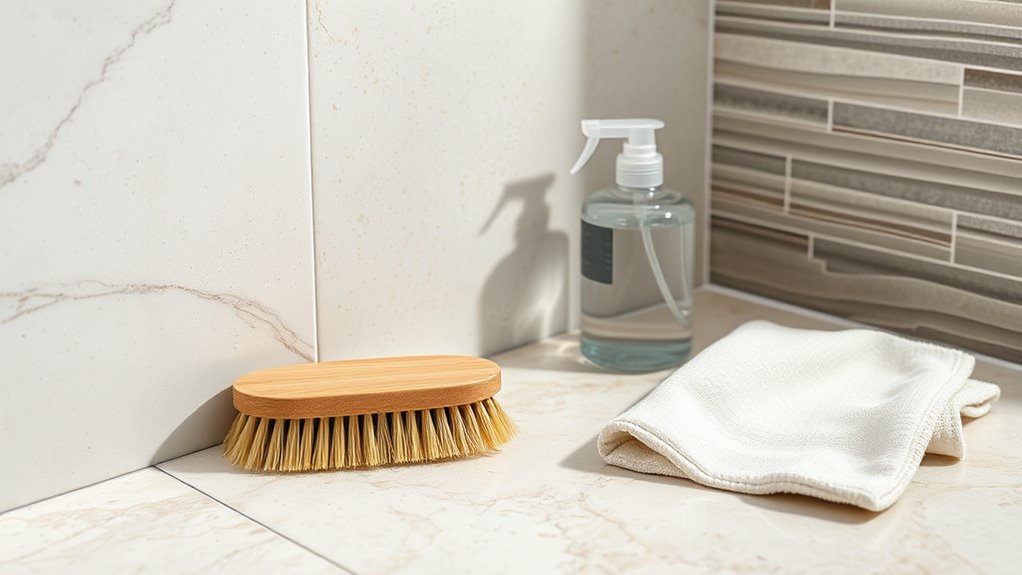
Because natural stone is porous and sensitive to acids, you’ll need to treat marble, travertine, and slate differently than ceramic tile. Test a discreet spot first, use pH-neutral cleaners, and avoid vinegar or bleach. Focus on gentle maintenance to protect finish and color.
Treat marble, travertine, and slate gently: test first, use pH-neutral cleaners, and avoid vinegar or bleach.
Consider natural stone sealing after cleaning to reduce staining and moisture penetration. For regular care, prioritize eco-friendly cleaning products designed for stone.
- Rinse thoroughly and dry with a soft cloth to prevent mineral buildup.
- Reapply sealer per manufacturer instructions, usually every 1–3 years.
- Use soft brushes; avoid abrasive pads.
DIY Cleaners for Soap Scum and Film
You can tackle soap scum with simple DIY mixes that use common pantry items. Try a vinegar-and-baking-soda paste for tough film (avoid on natural stone) or a gentle Castile soap and water solution for regular maintenance.
Both are inexpensive, easy to apply, and rinse off cleanly.
Vinegar And Baking Soda
Looking for an inexpensive, effective way to cut through soap scum and film? You can rely on vinegar and baking soda to dissolve buildup and brighten grout. Use diluted white vinegar for routine cleaning, rinse thoroughly, and observe vinegar safety—never mix vinegar with bleach or ammonia.
Sprinkle baking soda for a gentle abrasive; try different Baking soda variations (paste, powder, or mixed with lemon) to suit tile and grout. Apply, scrub with a brush, then rinse.
- Paste: baking soda + water for targeted grout cleaning
- Spray: diluted vinegar for broad tile surfaces
- Combo: vinegar spray then baking soda scrub
Castile Soap Mix
If you want a gentle, eco-friendly cleaner for soap scum and film, a Castile soap mix works well on most tile and grout without harsh fumes.
You’ll mix 1 tablespoon liquid Castile soap with 1 cup warm water and a few drops of tea tree or lavender oil for odor and mildew-fighting power.
Apply with a spray bottle or sponge, let sit one to three minutes, then scrub with a soft brush and rinse thoroughly.
As a natural cleaner, it’s safe for sealed tile and grout, but test a small area first and avoid overly concentrated solutions.
Remove Hard-Water Stains and Mineral Deposits
Though mineral buildup can seem stubborn, you can dissolve and lift hard-water stains with the right cleaners and a bit of elbow grease.
Start by wetting tiles, apply a vinegar solution or a commercial descaler to affected areas, and let it sit several minutes.
Scrub with a nonabrasive pad or toothbrush, rinse thoroughly, and blot dry to prevent new water spots.
- Use white vinegar or citric acid for light deposits.
- Try a pumice stone gently on porcelain (avoid on soft stone).
- Rinse and dry after treatment to stop residue.
Repeat as needed for persistent deposits.
Kill Mildew and Mold in Grout Safely
When mildew or mold shows up in grout, act quickly to stop it from spreading and staining. You can remove most growths safely with common household cleaners and a soft brush.
Wear gloves and ensure proper ventilation. Test cleaner on a small area first, then scrub grout with a diluted bleach solution or hydrogen peroxide for porous lines. Rinse thoroughly and dry to discourage return.
Use a mildew prevention routine: squeegee after showers, improve airflow, and fix leaks.
Learn basic mold identification—dark spots, musty smell, fuzzy texture—so you know when to treat promptly or call a pro for extensive contamination.
Restore Discolored or Stained Grout
Because grout soaks up dirt and cleaners over time, restoring discolored or stained lines takes more than a quick scrub—you’ll need a targeted approach that matches the stain and grout type.
Inspect grout to identify Grout discoloration, then test cleaners on a hidden spot.
For surface stains use a pH-balanced cleaner; for embedded grime try a paste of baking soda and water with a stiff brush.
For stubborn Stain removal consider oxygen bleach applied briefly and rinsed thoroughly.
- Identify stain type and grout material
- Use gentle abrasive paste for embedded dirt
- Rinse and seal after restoration
Steam Cleaners & Power Scrubbers: When to Use Them
If your tiles have stubborn grime or mold that regular cleaners won’t lift, consider steam cleaning to loosen residue without harsh chemicals.
Use a power scrubber for textured grout or large areas, but pick the right brush head and speed to avoid scratching tiles.
Always wear gloves and eye protection, and test a small spot first to make sure your tools and settings are safe for your surfaces.
When To Steam Clean
Although steam cleaners and power scrubbers look similar at first glance, you’ll want to choose between them based on the soil type, grout condition, and tile material.
Steam cleaning benefits include sterilizing bacteria, loosening soap scum, and reducing chemical use.
Know when to steam clean: use steam for non-porous tile, light to moderate buildup, and sealed grout.
- Use steam for mold/mildew on glazed tile
- Avoid steam on unsealed stone or damaged grout
- Combine steam with targeted scrubbing for stubborn spots
You’ll save time and avoid harsh cleaners when you match steam use to surface and soil conditions.
Using Power Scrubbers Safely
Steam cleaning can handle a lot, but for tougher grime or textured grout you’ll often rely on a power scrubber to finish the job safely and efficiently. You should wear eye protection, test brushes on a small area, and avoid excessive pressure to prevent tile damage. Follow manufacturer guidelines and keep cords away from water.
| Task | Tip |
|---|---|
| Setup | Secure grip, check battery |
| Technique | Short bursts, let cleaner loosen dirt |
| Aftercare | Rinse, dry, store safely |
These handheld tool tips help you maintain power scrubber safety while cleaning efficiently.
Tools and Brushes That Speed Up Cleaning
When you pick the right tools, scrubbing becomes faster and less tiring. Choose brushes that match your tile: soft nylon for decorative tile to avoid scratches, and stiff-bristled grout brushes for grout coloring touch-ups.
Use long-handled squeegees and extendable scrubbers to reach high spots without strain.
- Narrow grout brush for lines and corners
- Soft flat brush for smooth decorative tile surfaces
- Extendable scrubber with replaceable heads for floors and walls
Pair brushes with a non-abrasive sponge and microfibre cloths for final wipe-downs. Replace worn bristles and rinse tools after every use to keep them effective.
Safe Commercial Cleaners: What to Choose and Avoid
Wondering which commercial cleaners actually make shower tiles shine without damaging them? You’ll want pH-neutral, non-abrasive formulas labeled safe for ceramic, porcelain, or natural stone. Avoid acid-based, bleach-heavy, or ammonia products on stone and colored grout; they etch surfaces and fade finishes. Test any new cleaner on a hidden patch first.
If you prefer Eco friendly solutions, look for biodegradable ingredients and third-party certifications. Combine cautious purchases with DIY remedies like diluted vinegar (not on stone) or baking soda for general maintenance, but rely on stone-safe commercial options when needed to protect tile longevity.
Spot Treatments for Stubborn Stains and Grout
Even with the right commercial cleaner, some stains and grout lines need targeted care; you’ll save time and protect surfaces by treating trouble spots directly. Identify the stain type—soap scum, rust, or mildew—before acting. Test any product on an unseen tile.
- Use a paste of baking soda and water for gentle stain removal; scrub with a soft brush.
- Apply diluted hydrogen peroxide or oxygen bleach on grout for controlled grout bleaching; let it sit, then rinse.
- For rust, use a commercial rust remover per label instructions, ventilating the area.
Rinse thoroughly and repeat only as needed.
Seal Tile & Grout and Maintenance Schedule
Before grout or porous stone starts absorbing dirt and moisture, seal it to lock out stains and make routine cleaning easier. You’ll apply a penetrating or topical sealer after tiles and grout fully cure; follow product directions for drying and recoat intervals.
Seal grout and porous stone after curing to block stains and simplify cleaning—follow sealer directions for proper drying and recoating.
Check sealant longevity annually—rub a few drops of water on grout; beads mean protection, darkening means reseal.
Match grout color when replacing or touching up—use tintable sealers or colored grout pens for seamless repair.
Schedule light cleaning weekly, deeper scrubs monthly, and full reseal every 1–3 years depending on traffic and product specifications.
Frequently Asked Questions
How Often Should I Replace Grout or Re-Tile My Shower?
You should replace grout every 3–5 years and consider tile replacement every 10–15 years, unless damage or persistent mold demands sooner; you’ll prolong life with regular grout sealing and spot repairs to delay full renovation.
Can Cleaning Products Damage Shower Fixtures or Metal Finishes?
Like a sneaky storm, harsh cleaners can harm your fixtures: they’ll cause chemical reactions and metal corrosion, so you should avoid bleach or acid-based products, rinse thoroughly after use, and choose gentle, nonabrasive cleaners.
Are There Eco-Friendly Cleaning Services for Showers I Can Hire?
Yes — you can hire eco-friendly cleaning services that use eco friendly products and respect cleaning schedules; they’ll customize plans, avoid harsh chemicals, protect fixtures, and give recurring maintenance so your shower stays fresh without harming finishes or the environment.
How Do I Safely Remove Odors Coming From the Shower Drain?
Like flipping a switch, you can banish drain odors: pour baking soda, then vinegar, wait, flush with boiling water, scrub the trap, use enzyme cleaners weekly, and ventilate; this odor elimination routine keeps your shower smelling fresh.
Can Hard-Water Prevention Systems Reduce Shower Tile Maintenance?
Yes — you’ll see less mineral buildup and easier cleaning when you install water softening; it prevents hard-water stains, reduces soap scum, and cuts maintenance time, though occasional scrubbing and ventilation still won’t be unnecessary.
Conclusion
Think of your shower like a small garden: tend it daily with a rinse and squeegee, prune buildup with quick cleans, and dig deeper when roots (grime) set in. Test first, pick tools that don’t harm the soil, and seal like mulching to keep moisture and weeds out. Keep the routine and your tiles will stay fresh and healthy—little consistent care grows lasting results.