How to Clean Really Dirty Tile Floors and Restore Original Shine Fast
Clear the area, sweep or vacuum, then mop in sections with a pH-neutral tile cleaner and fresh water to avoid smearing dirt. Spot-treat sticky or greasy areas with warm soapy water or oil-absorbing powder, and scrub grout with a brush and a cleaner or baking soda paste for stubborn stains. Rinse thoroughly and let dry, then seal grout if needed to protect the finish. Keep going for step-by-step techniques, tools, and timing to finish the job fast.
Quick 5-Step Plan to Clean Very Dirty Tile
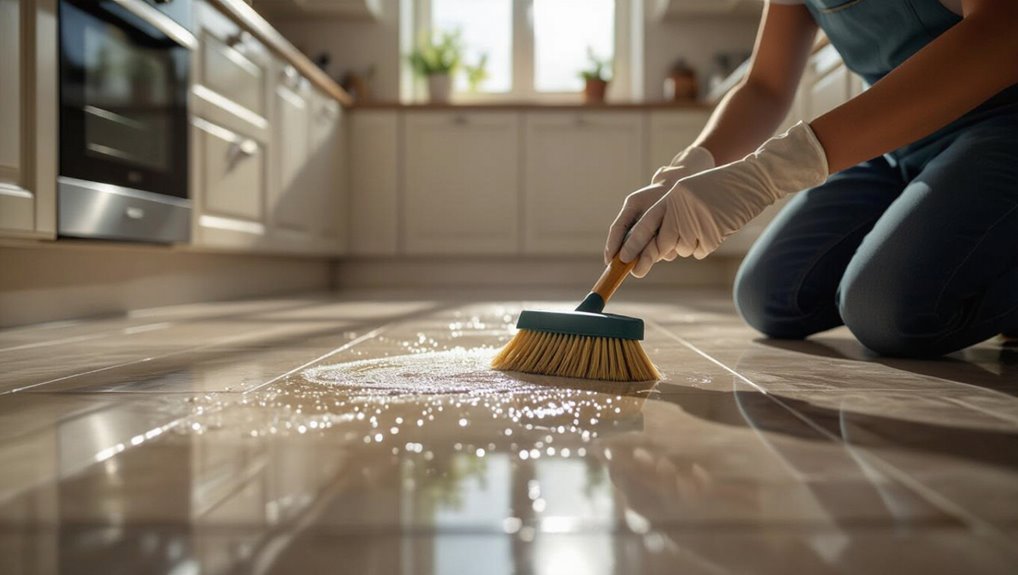
Start by clearing the floor of furniture and loose debris so you can work without obstacles.
Next, vacuum or sweep, mop with a pH-neutral cleaner, scrub grout with a paste, and rinse thoroughly.
Use targeted tile maintenance tips to prevent buildup and keep an emergency cleaning solutions kit—vinegar mix, bleach spot treatment, microfiber cloths—handy for quick touch-ups after heavy traffic.
What “Really Dirty” Tile Looks Like and Why
When your tile looks truly neglected you’ll notice dark grout lines that make the whole floor feel grimy.
You’ll also see a filmy, dull surface instead of a natural sheen.
And those stubborn, embedded stains and residue won’t come up with just a quick mop.
Dark Grout Lines
Although grout naturally darkens over time, truly dirty grout shows more than just age — it has a mottled, almost blackened appearance in the joints, often accompanied by a dull, grimy film on the tile edges and a musty odor in damp areas.
You’ll need targeted grout cleaning and grout restoration; then grout sealing prevents repeat grout discoloration.
- Use hot water and a stiff brush for grout maintenance
- Apply professional cleaners for deep stains
- Follow grout tips: seal after full cure to lock out moisture
Filmy Dull Surface
If your tile looks lifeless and feels slippery instead of smooth, a filmy dull surface is usually to blame — it’s a thin, often invisible layer of soap scum, mineral deposits, waxy cleaner residue, or airborne grime that builds up and masks the tile’s natural sheen.
You’ll notice filmy buildup causing a dull finish; adjust cleaning frequency and use proper products for shine restoration.
Embedded Stains And Residue
Beyond a filmy haze, you’ll find tile that’s truly dirty: dark, stubborn stains lodged in grout lines, grout that’s turned brown or black, and a tacky residue that won’t wipe away with a mop.
You need targeted stain removal, product selection for residue buildup, and consistent cleaning frequency to prevent dirt accumulation and restore original shine.
- Use deep cleaning techniques and proper floor care.
- Prioritize grout-specific stain prevention.
- Combine tile maintenance with correct product choice.
Identify Your Tile: Ceramic vs. Porcelain vs. Stone
Before you start scrubbing, you’ll want to know whether your floor is ceramic, porcelain, or natural stone since their looks and care needs differ.
Ceramic tiles often have a glazed surface and visible patterning. Porcelain is denser and less porous, and stone shows natural veining and variable porosity.
Knowing those visual cues and how porous the material is will help you choose the right cleaner and sealing routine.
Visual Differences
Curious which tile you’ve got underfoot? Use visual cues to guide cleaning techniques and maintenance tips, noting appearance comparison between tile materials to plan shine restoration and address dirt accumulation without guessing.
- Ceramic: glazed look, consistent color, lower cleaning frequency, simple techniques.
- Porcelain: denser appearance, subtle patterns, tougher cleaning techniques.
- Stone: natural veining, variable color, specialized maintenance tips.
Porosity And Care
Now that you can spot ceramic, porcelain, and natural stone by sight, look next at porosity—how much water and dirt the tile and grout will absorb—because that dictates both daily care and long-term maintenance.
Assess porosity effects to set cleaning frequency and tile maintenance tips. Choose sealing techniques for surface protection, improve grout longevity, prevent stains, debunk cleaning myths, and match methods to floor types for proper tile care.
Test Cleaners Safely on a Hidden Tile Spot
When you’re ready to try a new cleaner, pick a hidden spot—like under a cabinet or behind an appliance—and dampen a small area with the product to check for discoloration, gloss loss, or grout damage.
You’ll confirm product compatibility and safe testing before full application, comparing cleaning methods across tile surfaces for effective stain removal.
- Wait 10 minutes, then rinse.
- Inspect under different light.
- Record results for reference.
Tools and Supplies to Gather Before You Start
After you’ve confirmed a cleaner won’t harm your tile, gather the right tools and supplies so the job goes smoothly.
Pick cleaning tools matched to surface types, safety gear, mop, scrub brush, grout tool, and buckets.
Have recommended cleaning solutions, stain removal items, floor protection pads, and microfiber cloths.
Note tile maintenance, cleaning frequency, cleaning techniques, restoration methods, and beware cleaning myths.
Safe Household Cleaners That Cut Tile Grime
You can tackle most tile grime with everyday staples like vinegar and baking soda, which lift dirt and deodorize without harsh chemicals.
For stubborn stains and grout spots, keep hydrogen peroxide on hand as a safe, effective spot treatment. Use them sparingly and rinse well so your tiles stay clean and undamaged.
Vinegar And Baking Soda
One cup of white vinegar mixed with a tablespoon of baking soda makes a simple, effective cleaner that cuts grease and lifts grout grime without harsh chemicals.
You’ll appreciate vinegar benefits and baking soda’s mild abrasiveness and cleaning reactions as natural alternatives that aid odor elimination. Use eco friendly cleaners routinely to maintain shine.
- Apply, scrub, rinse.
- Test small area first.
- Ventilate while cleaning.
Hydrogen Peroxide Spotters
If vinegar and baking soda don’t fully lift stubborn spots, hydrogen peroxide spotters offer a gentle, effective next step for cutting tile grime without harsh chemicals.
You’ll see hydrogen peroxide benefits when it whitens grout and breaks organic stains.
For safe hydrogen peroxide application, dab 3% solution on spots, let sit a few minutes, scrub gently, then rinse.
Test hidden area first.
DIY Cleaner Recipes That Actually Work on Tile
Because commercial cleaners can be pricey or full of harsh chemicals, making effective DIY tile cleaners at home is a smart alternative.
You can mix diy vinegar solutions with water for routine cleaning, or use baking soda paste for grout. Choose natural cleaning agents to avoid residue and odors. Test small areas first, then mop and rinse thoroughly.
- Vinegar + water (1:4)
- Baking soda paste
- Castile soap blend
When to Stop and Call a Professional Tile Cleaner
When stubborn stains, deep grout discoloration, persistent odors, or damage like cracked tiles won’t respond to your DIY methods, it’s time to call a professional tile cleaner.
You should stop when repeated tile cleaning techniques fail or when cleaning risks further harm.
Hire professional services for steam extraction, grout restoration, sealing, or structural repair to guarantee safe, lasting results and preserve your floor’s value.
Pre-Clean Checklist: Clear, Dry, and Protect the Room
Before you start scrubbing, clear the room, dry any wet spots, and protect surfaces and fixtures so your cleaning goes smoothly and doesn’t cause new damage.
You’ll set up simple tile preparation and room protection steps that fit your cleaning strategy and future maintenance habits.
- Move furniture and rugs to a safe area.
- Lay down drop cloths over counters.
- Tape off vents and fixtures.
Remove Loose Debris and Surface Dust Fast
Start by sweeping high-traffic areas to pick up grit that can scratch your tiles.
Run a vacuum along corners and edges to catch trapped dust and debris.
Finish with a microfiber dust mop to trap fine particles before wet cleaning.
Sweep High-Traffic Areas
Focus on the busiest pathways first: use a stiff broom or a dry microfiber mop to quickly gather loose dirt, crumbs, and surface dust from entryways, hallways, and around sinks.
You’ll speed cleanup and protect grout with smart tile maintenance tips and efficient sweeping techniques.
- Work toward a doorway to avoid retracking
- Sweep in short, overlapping strokes
- Empty dustpan after each pass
Vacuum Corners And Edges
Grab a crevice tool or a vacuum with a brush attachment and work the edges and corners where your broom can’t reach—this picks up hair, crumbs, and gritty dust that wears grout and tiles.
Use corner vacuuming techniques: angle the nozzle, slow passes, and overlap strokes.
Choose edge cleaning tools like slim nozzles or soft brushes to protect grout while removing loose debris efficiently.
Use Microfiber Dust Mop
After vacuuming edges and corners, bring out a microfiber dust mop to sweep the rest of the floor quickly and thoroughly.
You’ll capture fine grit and hair without scratching tiles, thanks to microfiber benefits and proper dust mop techniques. Move in overlapping strokes, rinse or shake the pad often, and keep a light touch to avoid scattering debris.
- Overlap strokes
- Maintain pad cleanliness
- Use gentle pressure
Best Vacuum and Broom Techniques for Tile
Start by choosing the right tool for the job: a vacuum with a hard-floor setting or a soft-bristle broom will lift grit without scratching tile or pushing debris into grout lines.
Choose tools wisely: use a hard-floor vacuum setting or a soft-bristle broom to lift grit without scratching tile.
Test vacuum types for suction control; avoid rotating brushes.
Use broom styles that trap dust—angle brooms for corners, push brooms for large areas.
Sweep toward one collection point, then vacuum edges and grout gaps.
Mopping Methods That Remove Grime, Not Spread It
When you mop, work in manageable sections and use a clean, well-rung mop so you lift grime instead of pushing it around; dirty water only redistributes soil and dulls tile.
You’ll choose mop types for tile safety, focus on residue removal, and use cleaning techniques that combine effective scrubbing with proper cleaning frequency for long-term floor maintenance and grime prevention.
- Change water often
- Use flat or spin mops
- Rinse and wring thoroughly
Tackle Sticky Spills and Sugar-Based Residues
If sticky spills sit, they attract more dirt and become harder to remove, so tackle sugar-based messes as soon as you can. Blot excess, use warm water and mild detergent, then scrub grout gently for sticky residue removal. For sugar spills, rinse thoroughly and dry to prevent tackiness.
| Step | Action | Tip |
|---|---|---|
| 1 | Blot | Avoid rubbing |
| 2 | Wash | Warm water |
| 3 | Rinse | Dry well |
| 4 | Repeat | Check grout |
Remove Grease and Oil Stains From Tile
Grease and oil behave differently from sugary spills, so you’ll need a different approach to lift them from tile and grout.
Use oil absorption powders, degreasers and scrubbing pads for grease removal; rinse and repeat for tough stains.
Maintain cleaning frequency to prevent buildup and apply a surface treatment to aid stain prevention.
- effective products
- cleaning tools
- oil absorption
Break Up Soap Scum and Bathroom Residue
Scrub away stubborn soap scum and bathroom residue by using the right cleaners and a little elbow grease: apply a mild acid-based cleaner (like diluted vinegar or a commercial descaler) or a dedicated bathroom cleaner, let it sit briefly to dissolve film, then agitate with a nonabrasive scrub pad or nylon brush and rinse thoroughly.
For effective soap scum removal, target grout lines, repeat spot treatments, and dry surfaces to prevent buildup.
Soften and Lift Old Floor Wax and Polish
Loosen old wax and polish by applying a solvent or stripper formulated for your floor type, letting it penetrate long enough to soften the finish. Then, work it up with a mop or plastic scraper; this makes removal faster and reduces the risk of damaging the tile or grout.
You’ll use wax removal techniques and effective polish methods to prep for resealing.
- Test in an inconspicuous area first
- Work in small sections with a plastic scraper
- Neutralize residue and rinse thoroughly
Restore Shine on Glazed Ceramic Tile
Bring back the glossy finish on glazed ceramic tile by removing dulling residues and restoring the protective surface layer; start with a gentle, pH-neutral cleaner and a microfiber mop to avoid etching, then follow with a high-quality tile polish or sealer formulated for glazed ceramics to lock in shine. You’ll preserve the glazed finish and achieve lasting shine enhancement.
| Step | Product | Result |
|---|---|---|
| 1 | pH-neutral cleaner | Dirt lift |
| 2 | Microfiber mop | Scratch-free |
| 3 | Tile polish/sealer | Shine enhancement |
| 4 | Buffing pad | Gloss lock |
Deep-Clean Unglazed Porcelain Without Damage
Start by clearing the area and protecting baseboards and nearby furniture so grit and cleaners don’t cause damage.
Pick pH-neutral or manufacturer-recommended cleaners and avoid acids or bleach that can etch unglazed porcelain.
Use soft brushes or microfiber pads with gentle agitation to lift grime without scratching the surface.
Prep And Protect Area
Before you wet the floor, clear the room and protect surfaces so your deep-clean won’t spread dirt or damage nearby items.
You’ll focus on tile protection and area preparation, set up cleaning strategies, and follow maintenance tips to avoid harm. Keep traffic low and test small zones first.
- Move furniture and rugs
- Tape off baseboards
- Lay breathable floor covers
Choose Safe Cleaners
When you’re deep-cleaning unglazed porcelain, pick cleaners that remove grime without stripping the tile’s natural porosity or harming grout.
Use pH-neutral, nonabrasive formulas and test a hidden spot first.
Consider eco-friendly options like diluted vinegar alternatives for stains, enzyme cleaners for organic soils, or other alternative methods such as baking soda paste for spot treatment.
Rinse thoroughly and dry.
Gentle Agitation Methods
Although unglazed porcelain tolerates scrubbing better than some finishes, you’ll want to agitate soils gently to lift dirt without abrading the surface or tearing grout.
Use gentle scrubbing techniques with non abrasive tools to preserve the finish. Work in small sections, rinse frequently, and test an inconspicuous area first.
- Soft nylon brush for grout lines
- Microfiber mop for tiles
- Gentle circular motions
Clean Stone Tile: Avoid Acids and Etching
Because natural stone is porous and chemically sensitive, you should never use acidic cleaners like vinegar or lemon juice on it. Use stone cleaning techniques with eco friendly cleaners, protective sealant options, and safe scrubbing methods. Follow tile maintenance tips, cleaning frequency guidelines, and effective stain removers to avoid common tile mistakes.
| Do | Don’t |
|---|---|
| Test cleaner | Use acid |
| Seal regularly | Scrub hard |
| Blot stains | Ignore damage |
Steam Cleaning Tile: Pros, Cons, and Safety
You can use a steam cleaner to lift grime and sanitize tile without chemicals, but effectiveness varies by grout depth and soil type.
Be aware that high heat and pressure can damage some glazed, unglazed, or loose tiles and weaken grout if used improperly.
Follow safe operating practices—test a small area, use the correct nozzle and pressure, and wear gloves and eye protection.
Steam Cleaning Effectiveness
Steam cleaners can make tile floors look refreshed fast, using high-temperature steam to loosen dirt and sanitize without harsh chemicals.
You’ll notice steam cleaning benefits like quicker soil removal and reduced allergens, but weigh steam cleaning drawbacks such as limited grout penetration.
- Fast surface degreasing
- Chemical-free sanitizing
- Short drying time and easy upkeep
Potential Tile Risks
While steam cleaning refreshes tile quickly and cuts chemical use, it can also introduce risks you should know before starting.
You may cause tile damage on cracked, loose, or untreated surfaces, loosen grout, or force moisture into subflooring.
Check manufacturer’s guidance, test a small area, and follow maintenance tips to minimize harm.
Stop if tiles feel unstable or show discoloration.
Safe Operating Practices
1 key to safe steam cleaning is knowing your machine, the floor, and when to stop.
You’ll follow cleaning safety rules, use proper ventilation, and test a hidden spot first.
Wear gloves and eye protection, avoid excessive heat on grout, and unplug before maintenance.
- Test in an inconspicuous area
- Use low heat/settings first
- Keep airflow steady and doors/windows open
Use Commercial Tile Cleaners Safely and Efficiently
When you choose a commercial tile cleaner, read the label and match the product to your floor type so you get powerful results without damage; many cleaners are formulated for ceramic, porcelain, or natural stone and using the wrong one can etch or discolor tiles. Follow commercial product safety and effective cleaning techniques: test, ventilate, dilute, and rinse thoroughly.
| Calm | Confidence |
|---|---|
| Test | Breathe |
| Dilute | Protect |
| Rinse | Shine |
How to Deep-Clean Grout Lines Without Damage
You’ll want to pick cleaners that are safe for grout and won’t erode the joints.
Use a stiff brush and gentle pressure to scrub stains without damaging the tile edges.
Once clean, apply a grout sealer to protect against future dirt and moisture.
Choose Safe Cleaners
Before you scrub grout, pick cleaners that lift dirt without etching or discoloring the tile and grout.
You’ll choose eco friendly options and pH neutral products with safe ingredients.
Prefer natural alternatives, non toxic solutions and biodegradable cleaners.
Try homemade cleaners with essential oils for mild cleaning.
Test a small area first to verify no staining or fading.
Scrub And Seal
Scrub grout lines methodically to remove embedded dirt without damaging tile or seals: work in small sections, use a soft-bristled brush and a pH-neutral cleaner or a gentle DIY paste, and rinse frequently to prevent residue buildup.
After thorough drying, apply sealant application carefully for grout maintenance and tile restoration.
Use proper cleaning techniques to guarantee surface protection and durable protective coatings.
Remove Grout Stains: Bleach, Oxygen, and Restorers
Once grout has darkened from dirt, mold, or mildew, you’ll need the right cleaner and a careful approach to get it back to its original color.
Use grout cleaning techniques: test stain removal products, choose bleach alternatives or oxygen bleach benefits for deep cleaning strategies, then finish with restorative sealers to lock results and follow grout maintenance tips.
- grout whitening methods and grout stain removers
- eco friendly options and bleach alternatives
- stepwise deep cleaning strategies
When to Reseal Grout and When to Regrout
How do you know whether to reseal grout or tear it out and regrout? Inspect grout for staining, crumbling, or mold.
If joints are intact, follow grout resealing frequency guidelines—typically every 1–3 years—to protect and refresh.
If grout is missing, soft, or gaps grow despite sealing, use proper regrouting techniques to remove and replace damaged joints for lasting results.
Repair Cracked or Missing Grout Pieces
Catch and fix cracked or missing grout as soon as you spot it to prevent water damage and tile loosening.
You’ll assess damage, choose grout repair options, and follow grout cleaning techniques before patching. Use proper grout color and a caulk or cement mix for durability.
- Remove loose grout with a grout saw.
- Apply matching grout with a float.
- Seal after curing.
Remove Mineral Buildup and Hard-Water Deposits
After you repair grout, you’ll often notice chalky white rings or cloudy film around tile edges and fixtures—those are mineral deposits from hard water.
Use vinegar or a citric-acid cleaner on a microfiber pad for gentle mineral removal techniques; let it sit, scrub lightly, then rinse.
Apply vinegar or citric cleaner with a microfiber pad, let sit briefly, scrub gently, then rinse thoroughly.
For stubborn scale, apply a commercial descaler per instructions.
Finish with a water-softening or filtered-water hard water solution.
Get Rid of Mold and Mildew on Tile and Grout
When mildew shows up in grout lines or black spots appear in corners, tackle them quickly to prevent staining and odor. You should use targeted cleaning products for mildew removal and grout cleaning, scrub with a brush, rinse, and dry.
Prioritize moisture control, mold prevention, tile maintenance, surface protection, and overall bathroom hygiene.
- Use bleach or enzyme cleaner safely
- Ventilate and dehumidify
- Seal grout after drying
Remove Paint, Adhesive, and Permanent Marker Safely
If paint, adhesive, or permanent marker has splattered on your tile, you can usually remove it without damaging the surface by choosing the right solvent and working carefully with a soft scraper and cloth.
Use paint removal techniques suited to your tile, test adhesive solvents and marker erasers in a hidden spot, follow surface safe methods and cleaning safety precautions, and apply removal efficiency tips for best results.
Fix Stubborn Discoloration and Tile Stains
Wondering why some stains won’t budge? You’ll need targeted tile discoloration remedies and safe stain removal techniques to lift embedded grime without damaging grout.
Test solutions in an inconspicuous spot, then treat stubborn areas patiently. Use appropriate tools and follow instructions.
- Apply a poultice for deep-set stains
- Try hydrogen peroxide for organic spots
- Use diluted acid for mineral buildup
Quick Polishing Tricks to Restore Tile Shine
1 simple polishing trick can bring dull tile back to life without harsh chemicals: buff it with a microfiber cloth and a little tile-safe polish or olive oil, working in small sections until the surface gleams.
You’ll learn quick fixes like circular motions, light pressure, and alternating cloth sides.
These polishing techniques give immediate shine enhancement and practical tile rejuvenation without heavy scrubbing or abrasive products.
How and When to Use a Tile Sealant
You’ll want to seal porous tiles and grout soon after a deep clean or any time water soaks in rather than beading.
Pick a sealant formulated for your tile type—natural stone needs a different product than ceramic or porcelain.
Apply according to the manufacturer’s timing and re-seal on the schedule they recommend.
When To Seal Tiles
If your tile or grout absorbs moisture, stains, or dirt easily, it’s time to contemplate sealing them.
You should seal after deep cleaning, when grout is porous, or before high-traffic use.
Learn tile sealing techniques and compare best sealant types later.
Apply sealant on dry, cured surfaces, following manufacturer timing to maximize protection.
- After deep clean
- Porous grout detected
- Before heavy use
Choosing The Right Sealant
Now that you’ve identified when to seal, choosing the right sealant will protect your tiles and grout for years. You’ll pick based on porosity, traffic, and finish. Compare sealant types and follow application techniques precisely: clean, dry, test, apply thin coats, cure fully.
| Sealant Type | Best For |
|---|---|
| Penetrating | Porous stone |
| Topical | High shine |
| Impregnating | Grout |
| Epoxy | Heavy traffic |
Choose the Right Sealer for Porous vs. Nonporous Tile
1 clear way to protect your tile is to match the sealer to the tile’s porosity: porous tiles like natural stone or unglazed ceramic need a penetrating sealer, while nonporous tiles like glazed ceramic or porcelain benefit from a surface sealer or no sealer at all.
Choose sealer types by grout compatibility, follow application techniques, note drying times, and check maintenance frequency.
- Product recommendations for each tile type
- Proper application techniques and tools
- Grout compatibility and drying times
How Often to Deep-Clean, Mop, and Reseal Tile
Decide on a cleaning schedule based on traffic and tile type: high-traffic areas need mopping once or twice a week, low-traffic rooms can go every one to two weeks, and deep-cleaning should occur every three to twelve months depending on soil buildup and grout condition.
Set deep clean frequency and mopping schedule by tile type impacts; follow resealing guidelines, grout care, cleaning product selection, seasonal deep cleaning, maintenance tips, routine upkeep, and high traffic considerations.
Daily and Weekly Routines to Preserve Tile Shine
Because small, consistent actions prevent grime from setting, keep a simple daily and weekly routine to preserve your tile’s shine.
Small, consistent actions stop grime from settling—keep a simple daily and weekly routine to maintain tile shine.
You’ll do daily maintenance to remove dust, weekly routine cleaning for spots, and periodic checks for grout. Focus on gentle cleaners and microfiber tools for shine preservation and overall tile care.
- Sweep or vacuum daily
- Mop with pH-neutral cleaner weekly
- Inspect and spot-treat grout regularly
Quick Tile Touch-Ups for High-Traffic Zones
When you’ve got high-traffic zones that show wear between full cleanings, quick touch-ups keep tiles looking fresh without a lot of effort.
You can spot-clean with a microfibre cloth, mild detergent, and warm water, targeting scuffs and sticky spots.
Use quick fix methods like a gentle scrub brush and diluted vinegar for grout.
These high traffic solutions save time and restore shine fast.
Prevent Future Grime in Kitchens and Bathrooms
To keep kitchen and bathroom tile looking good, seal grout lines to block dirt and moisture.
Use splash guards around sinks and showers to stop water and grime from spreading.
Wipe spills immediately so stains and buildup never get a chance to set.
Seal Grout Lines
Sealing grout lines creates a protective barrier that keeps dirt, oils, and moisture from sinking into porous grout, so your kitchen and bathroom stay cleaner longer.
You’ll apply grout sealing techniques carefully, choose grout color options to match tiles, and re-seal annually to maintain results.
- Clean grout thoroughly before sealing
- Use a penetrating sealer for durability
- Test color and finish on a small area
Use Splash Guards
After you’ve sealed grout, you can further protect tile by installing splash guards around sinks, stoves, and showers to block water, grease, and food splatter before they reach tile and grout.
You’ll appreciate splash guard benefits: reduced staining, fewer cleanings, and prolonged sealant life.
Choose durable materials, position them correctly, and follow manufacturer instructions for effective installation to keep tiles cleaner longer.
Wipe Spills Immediately
Wipe up spills as soon as they happen to stop liquids, grease, and food from soaking into grout and leaving stains.
You should take immediate action for spill prevention, using cleaning tools and surface protection to control moisture on tiled surfaces.
Make it part of your routine maintenance and cleaning schedule to reduce future grime.
- Keep microfiber cloths handy
- Blot, don’t rub
- Dry thoroughly afterward
Entryway and Footwear Strategies to Reduce Dirt
Because most dirt comes in on shoes, managing your entryway and footwear is the fastest way to keep tile floors cleaner: set up durable mats outside and inside the door, create a designated shoe-removal spot, and encourage family and guests to switch to indoor slippers or socks.
Use entryway mats and shoe racks to contain debris, wipe soles before entering, and store outdoor shoes neatly.
Pet-Friendly Tile Cleaning and Grout Care
When you clean tile with pets around, choose non-toxic, fragrance-free solutions so paws and noses stay safe.
For grout, use a brush and a baking soda–vinegar paste or an enzyme cleaner to lift stains without harsh chemicals. Rinse thoroughly and dry to keep grout from trapping residue that could bother your pets.
Pet-Safe Cleaning Solutions
Keeping your tile floors clean without exposing pets to harsh chemicals is entirely doable with a few mindful swaps and simple recipes.
Use pet friendly alternatives and non toxic options like vinegar solutions, castile soap mixes, and baking soda scrubs to lift dirt safely. Test small areas, rinse well, and keep pets away until surfaces dry.
- Vinegar + water rinse
- Castile soap cleaner
- Baking soda spot scrub
Grout Deep-Clean Techniques
1 simple grout-clean routine can make your tile floors look fresh without exposing pets to harsh chemicals.
You’ll use grout cleaning tools like brushes and steamers, follow grout sealing techniques, and tackle grout stain removal safely.
Learn grout maintenance tips, grout restoration methods, and grout repair solutions while avoiding grout cleaning myths.
Choose grout color options to refresh appearance without risky products.
Kid-Safe Tile Cleaning Choices for Families
Looking for tile-cleaning options that won’t expose your kids to harsh fumes or toxic residues?
You’ll want kid friendly methods using natural ingredients and eco friendly options. Choose non toxic cleaners, safe scrubbing techniques, and gentle solutions that still work.
- Vinegar-water spot cleaner for light grime
- Baking soda paste for grout
- Castile soap mop solution for regular maintenance
Use family friendly tips and effective strategies.
Budget-Friendly Ways to Clean and Restore Tile
When you’re on a tight budget, simple household items and a little elbow grease can revive tile without expensive cleaners or professional help.
You can mix vinegar, baking soda, and warm water for grout scrubbing, use microfiber mops, and DIY poultices for stains.
Choose budget friendly products sparingly, follow tile maintenance tips like prompt spills cleanup, and seal grout occasionally to keep floors bright.
When Hiring a Tile and Grout Pro Makes Sense
If DIY methods haven’t restored your tile or the damage is extensive, it’s time to call a tile and grout pro. You’ll save time, avoid mistakes, and get lasting results using professional services that complement your tile maintenance tips.
When DIY fails or damage is extensive, hire a tile and grout pro for lasting, mistake-free restoration.
Consider pros when stains, deep grout damage, or sealing needs exceed your tools.
- deep stain removal
- grout repair and replacement
- sealing and protection
Questions to Ask Before Booking a Tile Service
Before you book a tile service, ask exactly what’s included so you know the scope of work and any prep or post-cleaning tasks you’ll be expected to handle.
Confirm pricing structure, whether it’s by square foot or per room, and ask about additional fees for stain removal or repairs.
Also check what guarantees or warranties they offer so you’re covered if results don’t meet expectations.
Service Scope Clarification
1 question can save you time and money: ask exactly what the tile service includes so you know whether the crew will clean grout, seal porous tiles, strip old finish, move appliances, or handle repairs.
You’ll set clear service expectations and guarantee customer satisfaction by confirming responsibilities, access, and timelines.
- grout cleaning vs. deep repair
- tile sealing specifics
- appliance moving policy
Pricing and Guarantees
Once you’ve clarified what the crew will and won’t do, ask specific questions about pricing and guarantees so you won’t face surprise charges or unmet expectations.
Ask for a written estimate, itemized fees, and whether hourly or flat pricing strategies apply.
Confirm satisfaction guarantees, warranty length, and remedies for damage or poor results.
Know cancellation and refund policies before booking.
Estimate Time and Cost for a DIY Deep Clean
How long will it take and what’ll it cost to do a deep clean yourself?
You’ll plan time estimates and project timelines, choose cleaning methods and equipment choices, and use budget planning with cost breakdowns.
Follow DIY strategies and supply lists to stay efficient.
- Small room: 1–2 hours, basic supplies
- Whole house: 1–2 days, rented tools
- Extras: stain treatments, sealers
Common Mistakes That Damage Tile : And How to Avoid Them
While regular cleaning keeps tiles bright, certain common mistakes can cause chips, scratches, grout erosion, or dulling—so you’ll want to know what to avoid. You’ll learn concise tile cleaning tips to prevent damage. Don’t use abrasive scrubbers, acidic cleaners, or heavy tools. Fix grout promptly and use proper mops.
| Mistake | Effect | Fix |
|---|---|---|
| Abrasives | Scratches | Soft pads |
| Acid | Dull/etch | pH-neutral cleaners |
| Heavy tools | Chips | Use gentle tools |
One-Page Checklist for Your First Full Restoration Session
Start with a single-sheet checklist that walks you through the full restoration session from prep to final inspection so you don’t miss steps or waste time.
Use concise Restoration methods and note Materials, Times, Safety. Record Maintenance tips for aftercare and schedule follow-ups.
- Prep: vacuum, degrease, test cleaner
- Restore: grout, deep-clean, seal
- Inspect: shine, touch-ups, document results
Frequently Asked Questions
Can Tile Cleaning Products Harm Radiant Floor Heating Systems?
Yes — some tile cleaners can harm radiant heat systems if they’re overly alkaline, corrosive, or leave insulating residues. You’ll choose compatible cleaners, follow manufacturer guidelines, and prioritize tile maintenance to protect wiring and heat transfer.
How to Clean Tile Edges Under Cabinets and Appliances Without Moving Them?
You can clean tile edges under cabinets and appliances without moving them by combining slow precision with bold reach: use compact cleaning tools—angled brushes, microfber mop, crevice attachments—and edge techniques like vinegar spray, scraping, and suctioning debris.
Can Hard-Water Spots Reappear After Professional Cleaning?
Yes — hard-water spots can reappear after professional cleaning if mineral deposits or water sources remain. You’ll want hard water solutions and ongoing maintenance; professionals remove buildup but can’t stop future spotting without treatment.
Is It Safe to Use a Polishing Pad on Textured or Matte Tiles?
You shouldn’t use a polishing pad on heavily textured or matte tiles; it can abrade finishes. Instead, use gentle polishing techniques suited to tile textures, test a small area, and opt for hand buffing or low-abrasion pads.
How to Match Replacement Tiles for Discontinued or Custom Patterns?
Like a puzzle piece, you’ll source replacement tile options by checking manufacturers, salvage yards, or custom reproducers. Consider custom design considerations—match size, glaze, and pattern, keep samples, and expect lead times and color variance.
Conclusion
You’ve got this — think of your tile like an old friend who just needs honest attention to look its best again. With the right identification, a safe spot test, and simple tools, you’ll strip grime and bring back the shine faster than you’d expect. Avoid harsh shortcuts, ask the right questions, and budget time. Restore one room at a time, and soon your floors will be gleaming like a welcome mat for brighter days.