
What Is SPC Vinyl Flooring? The Durable Core Explained Simply
SPC vinyl flooring is a rigid, waterproof plank that pairs a realistic vinyl surface with a dense stone-plastic (limestone + PVC) core, so you get wood- or stone-look floors that resist dents, scratches, and temperature changes. You’ll install it as click-lock or glue-down planks over most subfloors, use it in kitchens, baths, and light commercial areas, and keep it clean with simple sweeping and pH-neutral mopping. Keep going to learn useful selection and care tips.
What Is SPC Vinyl Flooring? and Overview
SPC vinyl flooring is a rigid, stone-plastic composite vinyl plank that combines a dense mineral core with a waterproof vinyl surface.
Below I’ll give a quick bulleted summary of key features—durability, waterproofing, easy installation, and low maintenance—and explain who should care about SPC and why.
If you’re a homeowner, renter, or commercial property manager wanting a hard-wearing, low-upkeep floor that resists moisture and heavy use, SPC is worth considering.
Direct Answer SPC Vinyl Flooring in One Sentence
A rigid, stone-plastic composite vinyl floor combines a dense limestone core with a printed design layer and durable wear surface, giving you waterproof, dent-resistant planks that install like laminate and perform like hard flooring.
If you’re asking what’s spc vinyl flooring, it’s a dimensionally stable, low-maintenance rigid-core vinyl that resists moisture, heavy traffic, and everyday impacts while offering realistic wood or stone looks.
Quick Bulleted Summary of Key Features
Think of SPC vinyl as a tough, waterproof plank that looks like wood or stone while resisting dents, scratches, and household moisture.
You’ll get low maintenance, stable performance, and realistic visuals. It installs easily and tolerates temperature changes.
Check these quick features:
- Waterproof core
- Scratch and dent resistant
- Attaches or clicks for simple install
- Low upkeep and long life
Who Should Care About SPC Flooring and Why
If you want durable, low-maintenance flooring that still looks like real wood or stone, SPC vinyl is worth a look.
You should care if you need waterproof floors for kitchens, bathrooms, basements, or busy homes with pets and kids.
Installers, landlords, and budget-conscious renovators benefit from its longevity, easy cleaning, and simple click-lock installation that cuts time and cost.
Basic Understanding Composition and Terminology
You’ll first want to know that “SPC” means Stone Plastic Composite, and that this mineral-rich core is what gives the boards their rigidity and waterproof performance.
Next, we’ll break down each layer of an SPC plank—from the wear layer and print film to the SPC core and backing—so you can see how they work together.
Finally, we’ll compare SPC with LVT, WPC, and laminate to highlight differences in durability, waterproofing, and installation.
What “SPC” Stands For and Why It Matters
SPC stands for Stone Plastic Composite (or Stone Polymer Composite), and knowing this helps you understand why SPC vinyl flooring is so rigid, durable, and waterproof.
Its core mixes finely ground limestone with stabilizers and polymers to create a dense, dimensionally stable layer beneath the printed vinyl and protective wear layer.
You’ll get a floor that resists dents, won’t swell with moisture, and stays flat over time.
Layer-by-Layer Breakdown of an SPC Plank
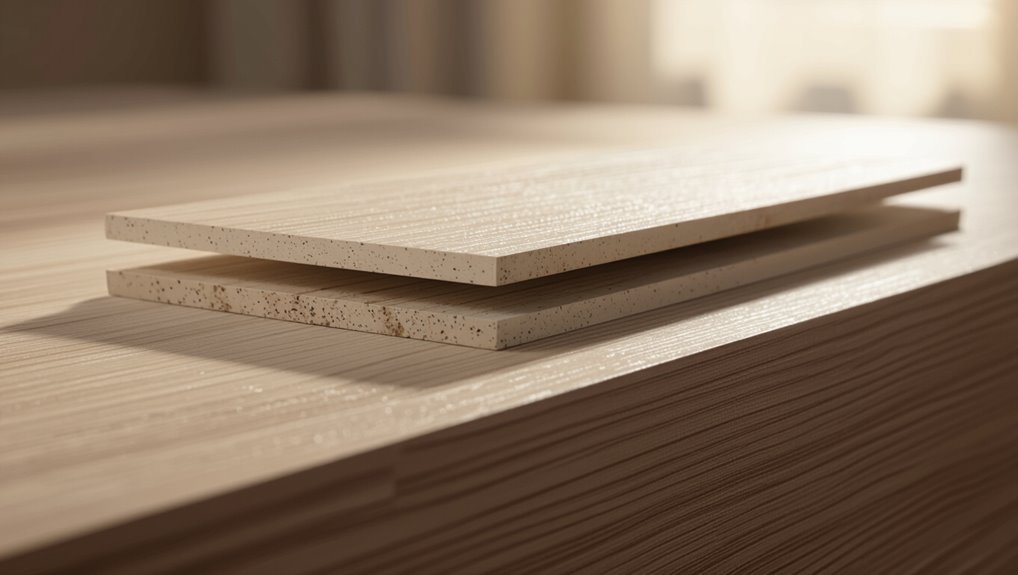
Think of an SPC plank as a stack of purpose-built layers, each doing a specific job to deliver durability, appearance, and comfort.
From top: protective wear layer shields against scratches and stains; printed design layer provides realistic wood or stone visuals; rigid SPC core (stone-plastic composite) gives stability and waterproofing; backing layer adds balance and sound dampening.
You’ll pick planks by layer thickness and quality.
How SPC Differs from LVT, WPC, and Laminate
While all four products aim to mimic real wood or stone, they use different core materials and construction methods that affect durability, waterproofing, and feel underfoot. You’ll find SPC has a rigid mineral core, LVT is flexible, WPC adds foam for cushion, and laminate uses fiberboard. Compare quickly:
| Type | Core | Water Resistance |
|---|---|---|
| SPC | Mineral | High |
| LVT | PVC | Moderate |
| WPC | Foam+PVC | High |
The Durable Core Explained Science and Benefits
You’ll learn that the stone polymer composite (SPC) core is a dense mix of limestone powder and PVC that gives the board its stability and rigidity.
That compact core resists impacts and moisture, so your floor stays dimensionally stable in changing temperatures and damp environments.
You’ll also see how the core contributes to acoustic damping, thermal comfort, and overall wear performance.
What the Stone Polymer Composite Core Is Made Of
Durability in SPC flooring comes from a dense, mineral-rich core that blends finely ground limestone with a stabilizing PVC polymer and performance additives. This mix gives the board its rigidity, waterproof properties, and dimensional stability so it resists dents, moisture, and temperature-driven expansion.
You’ll also find plasticizers for flexibility control, stabilizers to prevent degradation, and foaming agents used in manufacturing to optimize density.
How the Core Gives Stability, Rigidity, and Impact Resistance
Because the SPC core combines a high proportion of mineral fill with a rigid PVC matrix and targeted additives, it locks panels into a stable, load-bearing structure that resists bending and warping under everyday stresses.
You’ll notice superior rigidity that spreads loads across the plank, minimizes flex, and prevents dents.
That stiffness also absorbs and disperses impacts, protecting the wear layer and extending floor life.
Moisture Resistance and Dimensional Stability Explained
That same rigid SPC core that prevents bending also keeps moisture from compromising your floor’s shape and performance.
You’ll find SPC resists water absorption, so boards won’t swell, warp, or cup like traditional wood.
That dimensional stability means installations tolerate humidity changes and occasional spills with minimal movement.
You can install SPC in kitchens, basements, and bathrooms where moisture exposure is likely.
Acoustic, Thermal, and Wear Performance Traits
While the rigid SPC core gives the floor its strength, it also shapes how the floor sounds, feels, and wears over time.
You’ll notice reduced hollow noise and better impact dampening compared with thin vinyl. SPC transfers less cold underfoot and holds heat from radiant systems well.
Its dense core resists abrasion and indentation, so high-traffic areas stay looking newer longer with minimal maintenance.
Main Uses and Best Applications
You’ll see SPC shine in kitchens, bathrooms, entryways, and light-commercial spaces where durability and moisture resistance matter.
You can install it over many subfloors and with most radiant-heat systems, making it a flexible choice for renovations.
Its wide range of visuals—from realistic wood to stone—lets you match nearly any design scheme.
Ideal Rooms and Commercial Uses
Because SPC vinyl handles moisture, traffic, and frequent cleaning so well, it’s a smart choice for many rooms and commercial spaces.
You’ll find it ideal for kitchens, bathrooms, mudrooms, basements, and laundry areas.
In commercial settings, use it in retail, offices, cafés, and healthcare where durability, low maintenance, and hygienic surfaces matter.
It’s practical, long-lasting, and cost-effective.
Installation Over Subfloors and Radiant Heat Compatibility
Those practical rooms and commercial spaces also dictate where and how you install SPC vinyl—so you’ll want to evaluate subfloor type, preparation, and whether you’ll use radiant heat.
You can install SPC over concrete, plywood, or existing hard floors if flat, dry, and clean.
For radiant heat, confirm manufacturer limits on temperature and acclimate planks; avoid direct high-temperature exposure to prevent warping.
Visual Styles and Design Flexibility
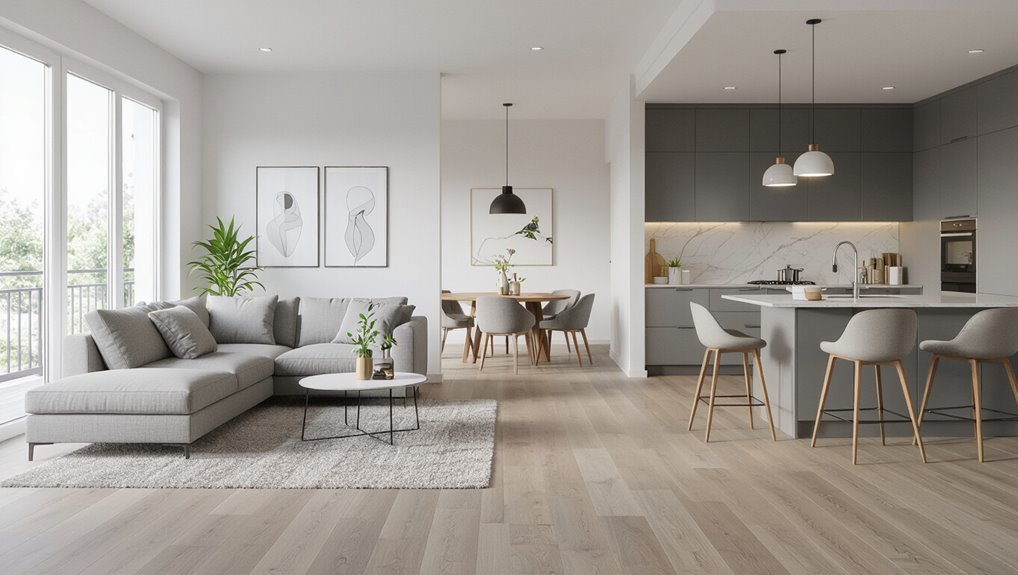
When you want a specific look—whether rustic farmhouse, sleek modern, or commercial-grade utility—SPC vinyl delivers realistic wood, stone, and tile visuals without the maintenance of natural materials.
You’ll find varied plank widths, textures, and finishes to match any room. It’s colorfast, repeatable for large projects, and easy to mix patterns or borders so your design stays consistent and practical.
Buying Guide How to Choose the Right SPC Flooring
Before you buy SPC flooring, check key specs like wear layer thickness, AC rating, and core density to match durability with your room’s traffic.
Consider cost factors and budget tiers so you get the best value without overspending.
Finally, compare top brands and product types to find the style and warranty that suit your needs.
Key Specifications to Check Before Buying
Since SPC flooring comes in many qualities and constructions, you’ll want to focus on a handful of specs that determine performance and value: wear layer thickness, core composition and density, locking system, overall plank dimensions, and warranty/ratings (commercial or residential).
Check these before buying:
- Installation method and ease
- Scratch and stain resistance
- Water resistance and spill tolerance
- Warranty length and coverage
Evaluating Wear Layer Thickness, AC Rating, and Core Density
Because the wear layer, AC rating, and core density each affect durability and feel, you should evaluate them together to match your traffic needs and budget.
Choose thicker wear layers (20–30 mil) for heavy commercial use; 8–12 mil suits homes. Higher AC ratings mean better abrasion resistance.
Denser SPC cores resist denting and moisture; balance density with underlayment for comfort and stability.
Cost Factors and Budget Tiers
Now that you’ve weighed wear layer, AC rating, and core density to match performance with comfort, cost becomes the deciding factor for many buyers.
Decide your budget by room use: entry-level boards cut upfront cost but offer thinner wear layers; mid-range balances durability and visuals; premium tiers provide thicker wear layers, better warranties, and enhanced realism.
Factor installation, underlayment, and maintenance into total cost.
Top Brands and Product Types to Consider
When you’re comparing SPC brands and product types, focus on construction details, warranty terms, and the finish options that match your style and traffic needs.
Choose proven brands, check wear layer thickness, and confirm installation compatibility. Consider sample testing before buying.
- Commercial-grade: thicker wear layer, tougher warranty
- Residential: balanced cost and durability
- Waterproof: ideal for kitchens/basements
- Luxury: premium visuals, higher price
Installation Overview
Before you start installing SPC flooring, you’ll prepare the subfloor and check for level, cleanliness, and moisture.
Next you’ll acclimate the planks, plan the layout, and choose between floating or glue-down methods.
Finally you’ll finish with trims, connections, and baseboards to guarantee a clean, professional look.
Step 1 Preparing the Subfloor
Although you’ve chosen durable SPC boards, proper subfloor prep determines how well they perform: Inspect for level, clean off debris, and remove old adhesive or loose flooring.
Repair cracks, fill low spots, and ascertain dryness and firmness. Use a moisture meter and follow manufacturer tolerances.
Install an underlayment if recommended, and vacuum thoroughly so your SPC lays flat and locks correctly.
Step 2 Acclimation and Layout Planning
With the subfloor prepped, let the SPC boards acclimate in the installation room for 48–72 hours so they settle to the ambient temperature and humidity; this prevents gaps or buckling after locking the planks.
During acclimation, plan your layout: measure room dimensions, stagger end joints, decide starting wall, and mark reference lines.
Dry-fit rows to confirm pattern alignment before you begin installation.
Step 3 Floating vs. Glue-Down Installation Methods
When you get to installing SPC, you’ll choose between floating and glue-down methods based on room size, subfloor condition, and how permanent you want the floor to be.
Floating click-lock installs fast, lets the floor expand, and’s easier for DIY.
Glue-down gives stronger adhesion, better for large commercial areas or uneven subfloors when properly prepared.
Choose by permanence, movement, and subfloor stability.
Step 4 Finishing Details: Trims, Transitions, and Baseboards
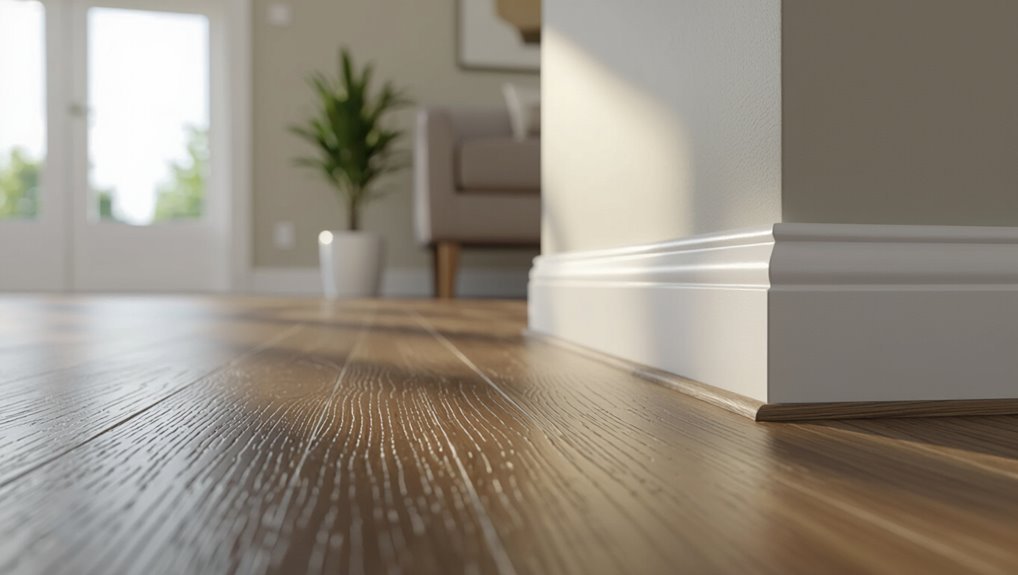
Trim pieces, connections, and baseboards finish your SPC installation and protect edges from moisture, traffic, and gaps—so plan them before you lay the last row.
Choose matching thresholds for doorways, reducer strips for height changes, and T-molds for open passages.
Leave expansion gaps, use adhesive where required, and fasten baseboards without pinning the planks so flooring can expand and contract.
Common Problems, Mistakes, and How to Avoid Them
When you install SPC flooring, common mistakes—like poor subfloor prep or incorrect acclimation—can cause big headaches.
You’ll also want to spot and fix performance issues such as buckling, gapping, or peaking quickly to prevent worsening damage.
Finally, don’t assume SPC is impervious to water or indestructible; understand its true waterproofing limits and wear characteristics so you can choose and maintain it correctly.
Typical Installation Mistakes and Prevention
Although SPC flooring is designed for straightforward installation, a few common mistakes can still cause big problems down the line, and knowing them up front lets you avoid costly fixes.
- Skip acclimation — let planks rest to prevent gaps.
- Ignore subfloor prep — level and clean first.
- Force joints — use proper tapping tools.
- Leave inadequate expansion gaps — follow manufacturer specs.
Performance Issues: Buckling, Gapping, and Peaking Causes and Fixes
If you spot buckling, gapping, or peaking in SPC flooring, act quickly to diagnose the cause so you can fix it before damage spreads.
Check for moisture, inadequate acclimation, improper expansion gaps, or heavy traffic.
Remove affected planks, dry and level the subfloor, guarantee correct underlayment, re-acclimate replacement boards, and maintain expansion perimeter to prevent recurrence.
Misconceptions About Waterproofing and Durability
Fixing buckling or gapping is only part of the story; you also need to understand what SPC really offers so you don’t make preventable mistakes.
Don’t assume “waterproof” means invincible—seams, edges, and subfloor issues still allow moisture damage.
Choose proper underlayment, seal connections, and follow manufacturer installation and maintenance instructions.
Regular checks and prompt repairs prevent costly problems and extend lifespan.
Maintenance, Repair, and Longevity Tips
Keep your SPC floor looking great by following simple daily and deep-cleaning routines, spotting and fixing scratches or dents promptly, and avoiding habits that shorten its life.
You’ll learn practical cleaning methods, how to repair or replace damaged planks, and which do’s and don’ts really matter.
With a little care and the right techniques, your flooring will stay durable and attractive for years.
Daily and Deep Cleaning Best Practices
1 simple routine you can adopt is separating daily upkeep from periodic deep cleaning so each task gets the right attention:
- Sweep or vacuum daily to remove grit that scratches the wear layer.
- Mop weekly with a pH-neutral cleaner and damp mop; avoid soaking.
- Spot-clean spills immediately to prevent staining.
- Deep-clean quarterly with manufacturer-recommended products and gentle agitation to lift embedded dirt.
Repairing Scratches, Dents, and Damaged Planks
Address scratches, dents, and damaged planks promptly to prevent minor blemishes from becoming bigger problems and to keep your SPC floor looking its best.
For light scratches, use a manufacturer-recommended repair kit or clear vinyl polish; for deeper gouges, apply color-matching filler.
Replace severely warped or cracked planks using the locking system.
Test products in an inconspicuous spot first.
Regular inspections catch issues early.
Extending Lifespan: Do’s and Don’ts
Small repairs and routine checks will only get you so far; to truly extend your SPC floor’s lifespan you should adopt a few straightforward do’s and avoidable don’ts.
Do wipe spills quickly, use felt pads under furniture, vacuum or sweep grit, place mats at entries, and maintain stable indoor humidity.
Don’t drag heavy items, use harsh chemicals, or expose floors to prolonged direct sunlight.
SPC vs Alternatives Practical Comparison
Now you’ll compare SPC to other flooring so you can pick what fits your space best.
We’ll highlight SPC vs WPC by core construction and ideal rooms, SPC vs LVT and sheet vinyl for toughness and price, and SPC vs hardwood and laminate for looks and real-world performance.
SPC vs WPC: Core Differences and Use Cases
When you’re choosing between SPC and WPC flooring, focus on the core differences—rigidity, water resistance, comfort, and cost—because those determine the best use cases for each. You’ll pick SPC for ultra-stable, water-prone areas and WPC for softer, warmer rooms. Compare quickly:
| Feature | SPC | WPC |
|---|---|---|
| Rigidity | High | Medium |
| Comfort | Lower | Higher |
| Best use | Kitchens, basements | Bedrooms, living rooms |
SPC vs LVT and Vinyl Sheet: Durability and Cost Tradeoffs
Although SPC, LVT, and vinyl sheet all give you waterproof performance, they differ sharply in durability, installation flexibility, and price, so you’ll choose based on traffic levels and budget: You get rigid, highly durable SPC for high traffic; LVT balances realism and comfort; vinyl sheet is cheapest but less impact-resistant.
| Type | Durability | Cost |
|---|---|---|
| SPC | High | Mid |
| LVT | Medium | High |
SPC vs Hardwood and Laminate: Aesthetics and Performance
Think of SPC as the practical alternative to hardwood and the tougher cousin of laminate: it gives you realistic wood looks with waterproof, dent-resistant performance that holds up in kitchens, basements, and busy homes, while hardwood offers unmatched natural beauty and resale appeal.
Laminate trades off some realism for lower cost and easier DIY installation. You’ll choose SPC for durability and moisture resistance, hardwood for character and value, and laminate for budget-friendly appearance.
Cost, Warranty, and Value Assessment
You’ll want to compare typical price ranges and installation estimates to set a realistic budget.
Check warranty types closely—look for coverage length, wear, waterproofing, and transferability.
Then calculate long-term value by factoring expected lifespan, maintenance costs, and resale impact to estimate ROI.
Typical Price Ranges and Installation Cost Estimates
SPC vinyl typically costs between $2 and $7 per square foot for the material, with premium or embossed styles reaching $8–$12/sq ft.
You’ll usually pay an extra $1.50–$4/sq ft for professional installation depending on subfloor prep, room layout, and regional labor rates.
Expect add-ons: connectors, trim, moisture barriers, and removal of old flooring can raise total project costs.
Warranty Types and What to Watch For
Want to know which warranty truly protects your investment? Check manufacturer vs. installer coverage, length (years), and what’s covered: wear, water, structural defects, and fading.
Look for transferable or prorated terms and required maintenance or installation conditions that void claims. Keep receipts, photos, and registration.
Watch exclusions for heavy commercial use and improper subfloor prep to avoid denied claims.
Calculating Long-Term Value and ROI
Now that you know how warranties can make or break a claim, it’s time to quantify what your flooring will really cost over its lifetime.
Add purchase, installation, maintenance, and repair estimates; prorate expected lifespan; factor warranty coverage and exclusions.
Compare total lifecycle cost to alternatives and resale value.
That gives you ROI per year and a clearer buying decision.
FAQs
You probably have a few key questions about SPC vinyl flooring, like whether it’s truly waterproof, suitable for bathrooms and basements, and how long it lasts.
You’ll also want to know if it feels warm and comfortable underfoot and whether it can be refinished or recycled.
Below are clear answers to those common FAQs to help you decide.
Is SPC flooring truly waterproof?
Curious whether SPC flooring stands up to spills and moisture? You’ll find SPC’s rigid core and waterproof wear layer resist surface water and common household spills.
Seams and edges determine real-world performance, so proper installation and sealed connections matter. While the plank itself won’t swell, prolonged standing water or poor installation can cause issues—prompt cleanup and correct fitting keep it protective.
Can SPC be installed in bathrooms and basements?
Because SPC has a rigid, waterproof core and a durable wear layer, you can install it in bathrooms and most basements—provided you follow proper installation and moisture-control steps to protect seams and subfloors.
You should acclimate planks, use an appropriate underlayment or vapor barrier, seal junctions and perimeter gaps, and address existing moisture issues.
Proper installation keeps SPC stable and hygienic in wet areas.
How long does SPC vinyl flooring last?
Wondering how long SPC vinyl flooring will last in your home? Expect 10–25+ years depending on quality, traffic, and maintenance.
Higher-grade planks with thick wear layers and proper installation last longest. Regular cleaning, using protectors, and avoiding sharp impacts preserve the surface.
Warranties vary—check manufacturer terms for expected lifespan and coverage to match your usage and budget.
Is SPC comfortable and warm underfoot?
How warm and comfortable does SPC feel under your feet?
SPC has a rigid, thin core, so it won’t feel as soft as carpet. You’ll get firm, stable support that’s comfortable for normal use, but it can feel cooler.
Add underlayment or rugs to boost warmth, insulation, and cushioning if you want a cozier, softer surface.
Can SPC flooring be refinished or recycled?
Can you refinish SPC flooring? You generally can’t sand and refinish SPC like hardwood because it has a thin wear layer bonded to a rigid core.
For minor surface damage, you can use repair kits or replace damaged planks.
Recycling is limited: some manufacturers accept returns, but widespread recycling infrastructure is scarce.
Choose durable, warrantied products to minimize replacement frequency.
