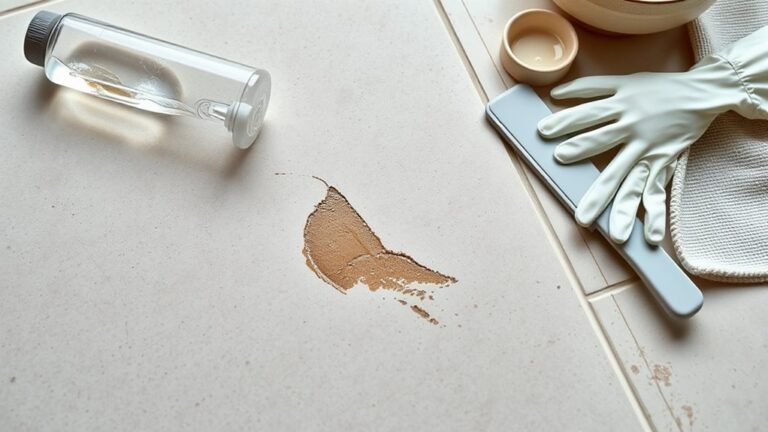
Is Laminate Flooring Good? Honest Pros, Cons, and Real-World Performance
Laminate flooring’s a practical, budget-friendly choice if you want durable, low-maintenance floors that mimic wood or stone without the high price. You’ll get tough wear layers, easy DIY installation, and good scratch resistance—great for busy homes and rentals. But it’s vulnerable to moisture, feels firmer underfoot, and won’t match real hardwood’s authenticity or resale pull. With proper subfloor prep and moisture control it performs well; keep going to see room-by-room tips and trade-offs.
Is Laminate Flooring Good? and Summary Verdict
In short, laminate is a durable, budget-friendly option that works great in many spaces.
You’ll find it’s ideal for busy households, rental units, and most living areas—especially where moisture and heavy wear aren’t constant concerns.
If you need absolute waterproofing, high-end hardwood aesthetics, or extreme longevity, you should consider alternatives.
One-sentence verdict
Though it won’t suit every room or taste, laminate flooring offers a durable, affordable, and low-maintenance option that works well for most homes.
If you’re wondering “is laminate flooring good,” the short answer: yes—provided you prioritize cost, scratch resistance, and easy upkeep over moisture tolerance and luxury feel.
It’s a practical, value-driven choice that delivers solid everyday performance.
Who laminate is best for (ideal users and rooms)
If you want a budget-friendly, hard-wearing floor that’s easy to clean and looks like wood without the upkeep, laminate is a smart pick—especially for busy households, pet owners, renters, and DIYers.
It fits high-traffic living areas, playrooms, home offices, and kitchens with proper underlayment. You’ll like its scratch resistance, quick installation, and low maintenance compared with hardwood.
When to consider alternatives
When should you skip laminate and choose something else?
If you need true hardwood authenticity, extreme moisture resistance (bathrooms, basements), or heirloom longevity, pick alternatives: engineered hardwood, tile, or luxury vinyl.
Also choose different flooring if you want to refinish repeatedly, value high resale appeal, or need a hypoallergenic, natural material like solid wood.
Consider alternatives for long-term investment.
What Is Laminate Flooring? Basic Understanding
You’ll learn that laminate is a layered product—core boards topped with a printed decor layer and a protective wear layer—made in variants like HPL and rated by AC ratings for durability.
I’ll explain the difference between water-resistant and waterproof types and how that affects performance.
Then we’ll cover typical price ranges and the main cost components so you can compare value.
How laminate flooring is made
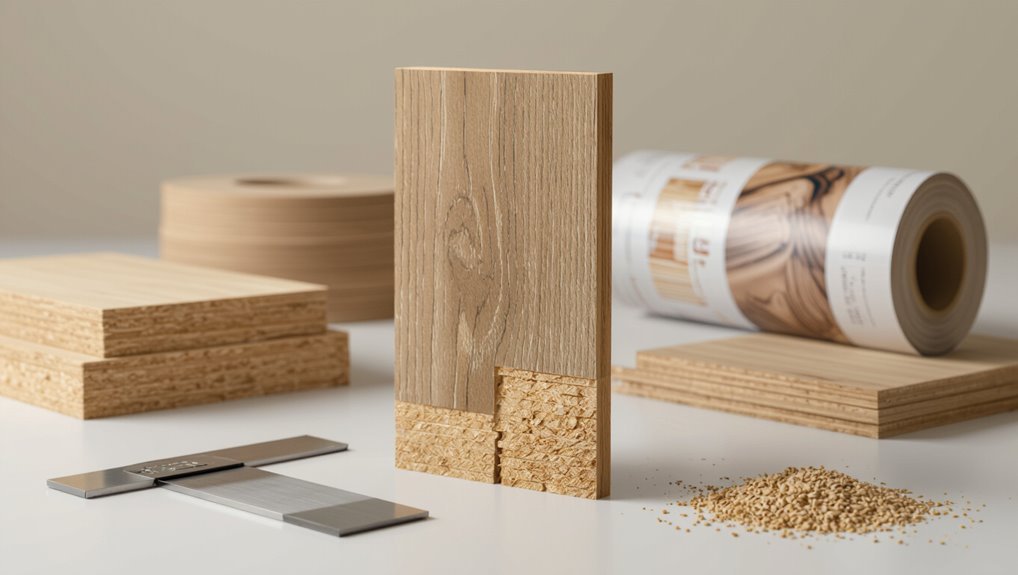
Although it looks like wood, laminate flooring is a layered product made by fusing a high-density fiberboard core with a printed decorative layer and a protective wear layer, all pressed together under heat and pressure.
You’ll see edges profiled for locking installation, backing layers added for stability, and quality controls that determine durability, appearance, and ease of installation.
Common types and construction (HPL, AC ratings, waterproof vs water-resistant)
Laminate comes in several constructions and performance levels, so you’ll want to match the type to your room’s needs. Choose HPL for durability, check AC ratings for wear, and pick waterproof versus water-resistant based on moisture risk.
| Type | Key trait |
|---|---|
| HPL | Heavy-duty wear |
| AC ratings | Wear scale |
| Waterproof | Water-safe |
| Water-resistant | Spill-tolerant |
Typical price range and components of cost
1. You’ll typically pay $0.80–$5.00 per square foot for laminate planks; premium or waterproof options climb higher.
Costs include materials, underlayment, trim, and adhesive or click-lock systems, plus labor ($1–$4/ft²).
Expect delivery, disposal, and subfloor prep fees.
Balance upfront price with durability, warranty, and installation quality to get true value.
Pros of Laminate Flooring
You’ll find plenty to like about laminate: it’s tough against scratches and wear, costs a lot less than real hardwood or many luxury vinyl options, and often installs quickly enough for a DIY weekend.
You can choose from convincing wood and stone looks, and maintenance is usually just regular sweeping and occasional damp mopping.
Below we’ll look closer at each of these practical benefits so you can weigh them against your needs.
Durability and scratch resistance
Because manufacturers use high-density fiberboard cores and tough wear layers, you get flooring that stands up to daily wear and resists scratches far better than many hardwoods.
- Wear layers protect against pets and foot traffic.
- AC ratings help you pick appropriate durability.
- Surface textures hide minor scuffs.
- Replaceable planks let you fix localized damage without full replacement.
Affordability versus real hardwood and luxury vinyl
Scratch resistance and long-lasting wear already make laminate a practical choice, and its cost advantages make it even more appealing.
You’ll pay considerably less than for real hardwood while getting similar visual appeal, and laminate usually undercuts luxury vinyl, too. That saves you money on materials and replacement over time, letting you prioritize higher-end furnishings or broader coverage without sacrificing a polished look.
Ease of installation and DIY suitability
One of the biggest draws of laminate is how straightforward it’s to install, so you can often tackle a full room over a weekend without hiring pros.
You’ll work with click-lock planks, simple underlayment, and basic tools. If you measure carefully and prep the subfloor, you’ll save labor costs and gain confidence doing repairs or replacing boards later.
Variety of styles and realistic wood/stone looks
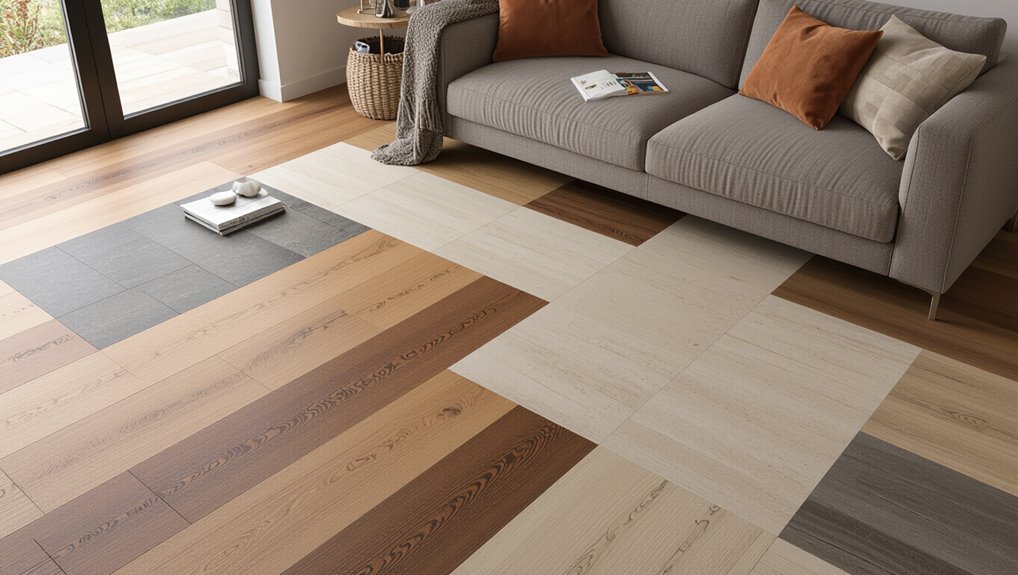
After you’ve handled the installation basics, you’ll appreciate how many looks laminate can mimic — from wide-plank oak and hand-scraped hickory to cool slate and textured travertine.
You’ll find vast color ranges, plank widths, and embossed textures that imitate real grain and grout. That variety helps you match styles across rooms and budgets, making laminate a versatile design choice without sacrificing cohesive aesthetics.
Low maintenance requirements
Because laminate combines a tough wear layer with a sealed surface, you’ll spend far less time on upkeep than with unfinished hardwood or porous stone.
You’ll just sweep or vacuum regularly and mop with a damp, well-wrung cloth. Avoid soaking, waxes, or abrasive cleaners.
Spills wipe up quickly, stains rarely set, and annual checks for edge lifting keep the floor looking new with minimal effort.
Cons and Limitations of Laminate Flooring
While laminate can look great and cost less, you should know its downsides before choosing it.
It’s prone to moisture damage and swelling, doesn’t match real wood for authenticity or resale value, and is harder to repair when panels or edges wear.
You’ll also notice a firmer underfoot feel, potential acoustic issues, and possible VOC emissions that can affect indoor air quality.
Moisture sensitivity and swelling risks
Although laminate’s sealed surface repels everyday spills, it doesn’t tolerate prolonged moisture. Exposed edges or leaks can cause rapid swelling and cupping.
You should avoid installing laminate in damp areas like bathrooms or basements unless you choose water-resistant options and follow strict moisture control.
Even small leaks or plumbing failures can warp boards, require replacements, and void warranties if moisture precautions weren’t met.
Less authenticity and resale impact compared to real wood
If you want the look and feel of real hardwood, laminate often falls short — it mimics wood visually but can’t match the texture, depth, or natural variation of genuine planks.
You’ll likely notice uniform patterns, repeating grains, and a manufactured sheen. That can make spaces feel less premium and may reduce appeal to buyers who prefer authentic hardwood, potentially affecting resale value.
Repairability and lifespan limitations
Less authentic appearance and potential resale concerns also tie into how laminate holds up over time.
You’ll find scratches, edge swelling from moisture, and delamination can be hard to fix; individual plank replacement is possible but often tricky to match.
Expect 10–25 years depending on quality and care.
When damage is extensive, you’ll likely replace rather than fully repair the floor.
Comfort, acoustics, and underfoot feel
Hardness is one of laminate’s most obvious trade-offs: you’ll feel a firmer, less forgiving surface underfoot compared with real wood or cushioned flooring, which can make long periods of standing uncomfortable and amplify footfall noise.
You’ll notice echoes in larger rooms, and thin underlayment can’t fully mask hollow sounds. Add area rugs or quality pads to improve warmth and quiet.
VOCs, indoor air quality, and edge wear over time
Some people overlook how laminate can affect indoor air quality, but you should know it can emit volatile organic compounds (VOCs) from adhesives, backing layers, and finishes—especially when new or in poorly ventilated spaces.
You can minimize exposure by choosing low-VOC products, airing rooms, and using quality underlayment.
Also expect edge swelling, delamination, and wear over years, particularly with moisture or heavy traffic.
Real-World Performance: Use Cases and Room-by-Room Evaluation
Now let’s look at how laminate actually performs in everyday spaces so you can pick the right spots for it.
You’ll see it’s great in living rooms and bedrooms, workable in kitchens and dining areas with some moisture precautions, and only suitable for bathrooms or basements if you choose water-resistant types and install them properly.
We’ll also cover durability in high-traffic rentals and how pet- and kid-friendly different laminates really are.
Living rooms and bedrooms
Wondering how laminate holds up in living rooms and bedrooms? You’ll find it durable, scratch-resistant, and low-maintenance—great for foot traffic, rugs, and furniture.
It feels stable underfoot and comes in many styles to match décor. Use quality underlayment for comfort and noise control.
Avoid heavy moisture and choose higher AC ratings for busy family or pet-filled spaces.
Kitchens and dining areas (what to watch for)
Because kitchens see spills, dropped utensils, and frequent chairs being slid around, you’ll want laminate that’s rated for moisture resistance and heavy wear.
Choose thicker AC3–AC5 boards, bevel-free edges to limit liquid ingress, and tight-lock installation.
Use protective pads under chairs and rugs by sinks and appliances. Wipe spills immediately and avoid steam cleaners to preserve the wear layer and joints.
Bathrooms and basements when it’s safe and when it’s not
Kitchens demand moisture resistance and heavy-duty wear, but bathrooms and basements pose different challenges that change when laminate is a safe choice and when it’s not.
In bathrooms, only waterproof click-lock or vinyl-core laminate works—avoid standard HDF boards.
In basements, guarantee subfloor dryness, a vapor barrier, and elevated installation; skip laminate in flood-prone, perpetually damp spaces to prevent swelling and mold.
High-traffic commercial or rental properties
When you’re choosing flooring for high-traffic commercial or rental spaces, durability and maintenance trump aesthetics—laminate can be a strong contender if you match its wear rating, moisture resistance, and installation method to the specific use.
Choose commercial-grade AC4/AC5 or enhanced SPC-style laminate, install with proper underlayment and connectors, and schedule routine cleaning and quick repairs to keep appearance and performance consistent.
Pet households and families with kids
If your space needs to stand up to kids and pets, you’ll want to weigh toughness, ease of cleaning, and safety more than style alone.
Laminate resists scratches and spills better than many woods, cleans quickly, and won’t trap allergens.
Pick a water-resistant, high-AC rating product, add area rugs and trims to protect edges, and avoid standing water to prevent swelling.
Comparison: Laminate vs Other Flooring Options
You’ll want to weigh laminate’s cost, durability, and appearance against common alternatives to pick the best fit for each room. Below is a quick visual comparison to guide the conversation as we look at engineered and solid hardwood, luxury vinyl, tile, and linoleum. Use it to spot where laminate wins or where another material might be a better choice.
| Feature/Option | Laminate vs Others |
|---|---|
| Engineered Hardwood | Cost: laminate cheaper; looks: engineered closer to real wood |
| Solid Hardwood | Maintenance: laminate easier; refinishing: hardwood wins |
| LVP/WPC | Water resistance: LVP often better; aesthetics: close call |
| Tile | Durability: tile tougher; comfort: laminate warmer |
| Linoleum | Eco-friendliness: linoleum often greener; installation: laminate faster |
Laminate vs Engineered Hardwood
Although both mimic wood, laminate and engineered hardwood differ in construction, durability, appearance, and cost, so you’ll want to weigh what matters most for your space.
Laminate uses a photographic layer over fiberboard with a tough wear layer—it’s budget-friendly, scratch-resistant, and moisture-tolerant.
Engineered hardwood has real wood veneer, offers authentic grain and refinish potential, but costs more and handles moisture less forgivingly.
Laminate vs Solid Hardwood
When choosing between laminate and solid hardwood, consider that laminate gives you a realistic wood look at a lower price and with greater scratch and moisture resistance.
On the other hand, solid hardwood offers authentic grain, the ability to be sanded and refinished multiple times, and a higher resale value. However, it demands more care and is less forgiving in damp areas.
You’ll pick laminate for budget and durability; choose hardwood for long-term value.
Laminate vs Luxury Vinyl Plank (LVP/WPC)
If you want a floor that balances cost, durability, and realism, compare laminate to luxury vinyl plank (LVP/WPC) on three fronts: appearance, water resistance, and feel underfoot.
Laminate often offers sharper woodgrain visuals and firmer feel; LVP/WPC beats laminate for waterproofing and softer, warmer underfoot comfort.
Choose laminate for cost-effective realism; pick LVP/WPC for wet areas and comfort.
Laminate vs Tile and Linoleum
While laminate gives you realistic wood looks and a warmer, softer feel underfoot, tile and linoleum each bring strengths laminate can’t match: tile offers unmatched durability and heat resistance for high-traffic or wet zones, and linoleum delivers eco-friendly resilience and a cushioned, long-lasting surface.
You’ll choose tile for moisture-prone areas and heavy wear, linoleum for sustainability and comfort, and laminate for cost-effective wood aesthetics.
Buying Guide: How to Choose the Right Laminate
When you’re choosing laminate, check key specs like AC rating, wear layer, core type, and thickness to match durability to the room.
Decide whether you need waterproof vs water-resistant options, weigh color, finish, and plank size for the look, and compare warranties to see what’s covered.
Finally, set a budget and use cost-saving tips—like buying slightly extra for waste or opting for mid-range brands—to get the best value.
Key specs to check (AC rating, wear layer, core type, thickness)
Before you shop, focus on four specs that determine performance: AC rating for durability, wear layer for surface protection, core type for moisture resistance and stability, and overall thickness for feel and sound; checking these will help you match laminate to traffic, room type, and budget.
Compare AC class for traffic, thicker wear layers for longevity, HDF cores for stability, and 8–12mm thickness for comfort and noise.
Waterproof vs water-resistant: material and installation differences
1 key distinction to grasp is that “waterproof” laminate keeps liquid out of the core, while “water-resistant” only slows water penetration.
That difference comes down to materials (sealed cores, polymer tops, waterproof cores) and installation (tight seams, moisture barriers, proper shifts).
You should choose waterproof for kitchens, baths, or basements, and insist on correct underlayment and seam treatment to guarantee performance.
Color, finish, and plank size selection tips
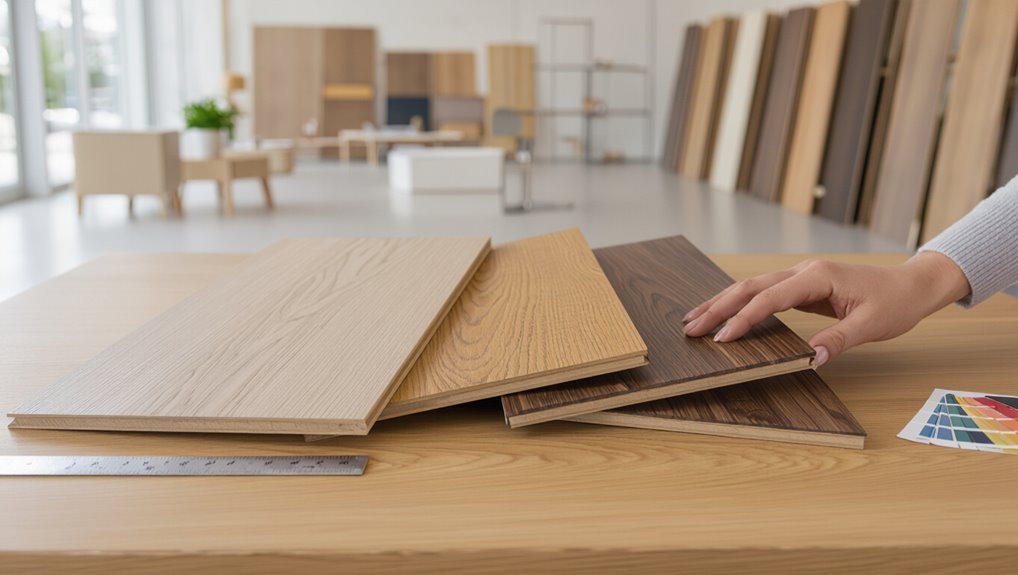
Keeping moisture concerns in mind will help you pick the right look: color, finish, and plank size all affect how a room feels and performs.
Choose lighter shades to enlarge small spaces, darker tones for warmth. Matte finishes hide scratches; gloss shows wear.
Wide planks suit open areas; narrow planks fit small or traditional rooms. Match plank direction to traffic flow for visual continuity.
Warranties to look for and what they cover
Warranties tell you what the manufacturer will actually cover if something goes wrong, so you should read them carefully before you buy.
Look for residential wear, water resistance, and structural warranties with clear durations and transferability.
Check exclusions—moisture, improper installation, and heel dents are common.
Keep receipts and register the product to guarantee claims are honored; follow maintenance guidelines to avoid denial.
Budgeting and cost-saving tips
Start by setting a clear total budget that covers materials, underlayment, tools, and installation—then prioritize where to save and where to spend.
- Compare plank grades and choose durable mid-range options.
- Buy slightly extra for cuts, avoid last-minute orders.
- Rent tools or borrow instead of buying specialty gear.
- Install DIY where feasible; hire pros for complex layouts or moisture-prone areas.
Installation Overview and Step-by-Step Considerations
Before you lay a single plank, you’ll want to prep the subfloor, let the boards acclimate, and gather the right tools.
I’ll walk you through basic floating-install steps, common mistakes to avoid, and when it’s smarter to hire a pro instead of DIY.
With a clear checklist you’ll save time, avoid costly errors, and get a better finished result.
Preparing the subfloor and acclimation
Although the planks look ready to go, you’ll get the best results by properly preparing the subfloor and acclimating the laminate first.
Clean, level, and dry the subfloor; fix squeaks, fill gaps, and remove debris.
Keep planks in the room for 48–72 hours to equalize moisture and temperature.
Proper prep prevents buckling, gaps, and warranty issues.
Basic floating installation steps
When you’re ready to lay the planks, work row by row to assemble the floating floor, snapping or clicking each board into the previous one while keeping a consistent expansion gap at walls; use spacers.
Stagger end joints by at least 8–12 inches, and check alignment frequently so the surface stays flat and joint seams stay tight.
- Measure and cut starter row.
- Install underlayment.
- Click rows, tap with a block.
- Trim last row, reinstall trim.
When to hire a pro vs DIY
After you’ve handled the basic floating installation steps, decide whether to tackle the full job yourself or call in a pro by weighing skill, time, and the room’s complexity.
You should DIY for small, simple rooms and if you’re comfortable with measuring, cutting, and connections.
Hire a pro for large areas, tricky layouts, moisture issues, or when warranty or resale value matters.
Required tools and common installation mistakes to avoid
Before you start, gather the right tools so you won’t stop mid-job: a tapping block, pull bar, spacers, a quality laminate saw or guillotine cutter, a utility knife, tape measure, carpenter’s square, chalk line, and a rubber mallet.
Check subfloor flatness, acclimate boards, maintain expansion gaps, stagger seams, and cut carefully.
Avoid forcing joints, skipping underlayment, or rushing layout—those cause gaps, buckling, and wasted planks.
Maintenance, Repair, and Longevity Strategies
To keep laminate looking its best, you’ll want simple daily and weekly cleaning habits and a clear plan for quick spill cleanup to prevent water damage.
Learn easy fixes for scratches, chips, and when a plank swap is the right call.
Using a good underlayment, entry mats, and humidity control will noticeably extend your floor’s lifespan.
Daily and weekly cleaning routines
While regular care won’t fix deep damage, a simple daily and weekly routine will keep your laminate looking new and prevent most problems from developing.
- Sweep or vacuum daily with a soft-brush tool to remove grit.
- Damp-mop weekly using a microfiber mop and manufacturer-approved cleaner.
- Use felt pads on furniture and area rugs in high-traffic zones.
- Inspect seams and edges weekly for lifting or dirt buildup; address early.
How to handle spills and minor water exposure
Daily cleaning helps prevent buildup, but spills and minor water exposure need quick attention to protect laminate’s core and seams.
Blot liquids immediately with a soft cloth, then wipe with a damp (not wet) microfiber mop. Dry the area thoroughly and ventilate.
For sticky messes use a mild cleaner; avoid steam cleaners.
Check seams for swelling and address persistent moisture sources promptly.
Repair options for scratches, chips, and plank replacement
Scratches and chips happen, but you don’t always need to replace the whole floor—small blemishes can often be fixed quickly with touch-up kits, wax pencils, or color-matched fillers.
Deeper damage or warped planks, however, call for plank replacement to restore integrity and appearance. You can swap individual boards by releasing seams, lift affected planks, and fit replacements.
Reseal seams and trim edges for a neat finish.
Tips to extend lifespan (underlayment, mats, humidity control)
If you want your laminate to last, focus on the basics: a quality underlayment, protective mats at entry points, and steady humidity control.
Use underlayment for cushioning and moisture barrier, place washable mats where dirt and grit enter, and keep indoor humidity between 30–50% with a humidifier/dehumidifier.
Clean spills quickly, use felt pads under furniture, and avoid wet-mopping to prevent warping.
Common Mistakes and Problems with Laminate Flooring
Don’t skip proper acclimation or subfloor prep, because uneven or unstable bases cause gaps and premature wear.
Avoid harsh or wrong cleaning products that can strip the wear layer, and don’t ignore moisture sources that make boards swell.
And if you put low-quality laminate in high-traffic areas, you’ll regret the fast chipping and fading.
Improper acclimation and subfloor prep
When you skip proper acclimation or rush subfloor prep, laminate planks can gap, buckle, or wear prematurely.
You’ll face uneven seams, noisy floors, and moisture trapped beneath boards. Prepare a clean, dry, level subfloor and let boards acclimate per manufacturer specs.
Take time to fix dips, high spots, or moisture issues—doing so prevents costly repairs and preserves appearance and performance.
Using wrong cleaning products and causing damage
Because some household cleaners promise shine but contain harsh solvents or abrasives, using the wrong products can strip the protective wear layer, dull the finish, or swell the core of laminate planks.
You should use manufacturer-approved cleaners or a damp microfiber mop, avoid waxes, oil soaps, or abrasive pads, and test new products in an inconspicuous spot before full application.
Ignoring moisture sources leading to swelling
If you overlook small or hidden moisture sources, your laminate can quickly swell and warp, ruining seams and locking systems.
Check appliance leaks, pet accidents, damp basements, and condensation near windows. You should use proper underlayment and maintain humidity levels; wipe spills immediately and fix plumbing promptly.
Ignoring moisture voids warranties and shortens lifespan, so address sources proactively to prevent costly repairs.
Choosing low-quality product for high-traffic areas
Although you might be tempted to save money upfront, choosing a low-quality laminate for high-traffic areas will cost you more in the long run.
You’ll face rapid wear, visible scratches, and delamination under constant foot traffic. Replace sooner, and maintenance climbs.
Invest in higher AC-rated planks or commercial-grade options, and you’ll avoid disruption, reduce lifetime costs, and keep the floor looking professional.
Best Practices and Expert Tips
To get the most from laminate, match the product to the room and your lifestyle—choose water-resistant options for kitchens and durable AC ratings for high-traffic areas.
Pair the right underlayment to improve comfort and soundproofing, manage seasonal humidity with acclimation and a humidifier/dehumidifier, and follow installation best practices.
Use realistic plank sizes, textures, and color variation to make laminate read like real wood.
Matching product to room and lifestyle
Where will the laminate live, and how will you use the space?
Choose wear layer thickness and AC rating to match traffic: AC3 for homes, AC4+ for busy areas.
Pick moisture-resistant or SPC hybrids near kitchens and entryways.
Match style to decor and resale expectations.
Consider pet claws, kids, and cleaning habits—opt for textured, durable finishes that hide scratches and dirt.
Pairing underlayment and soundproofing solutions
1 smart underlayment choice can make as much difference to comfort and noise control as the flooring itself, so match the underlayment type and thickness to your laminate, subfloor, and sound goals.
Pick foam for basic cushioning, cork or rubber for superior impact and airborne reduction, and mass-loaded vinyl or acoustical mats where code or roommates demand extra isolation.
Install seams tight and seal edges.
Seasonal and humidity management
Because laminate expands and contracts with moisture, managing seasonal humidity is the single most important step you can take to keep floors stable and gap-free.
Use a hygrometer, aim for 35–55% RH, and run humidifiers in winter or dehumidifiers in summer.
Maintain HVAC airflow, avoid wet mopping, and leave proper expansion gaps.
Check seasonal changes and adjust quickly to prevent cupping or splitting.
Design tips to make laminate look more like real wood
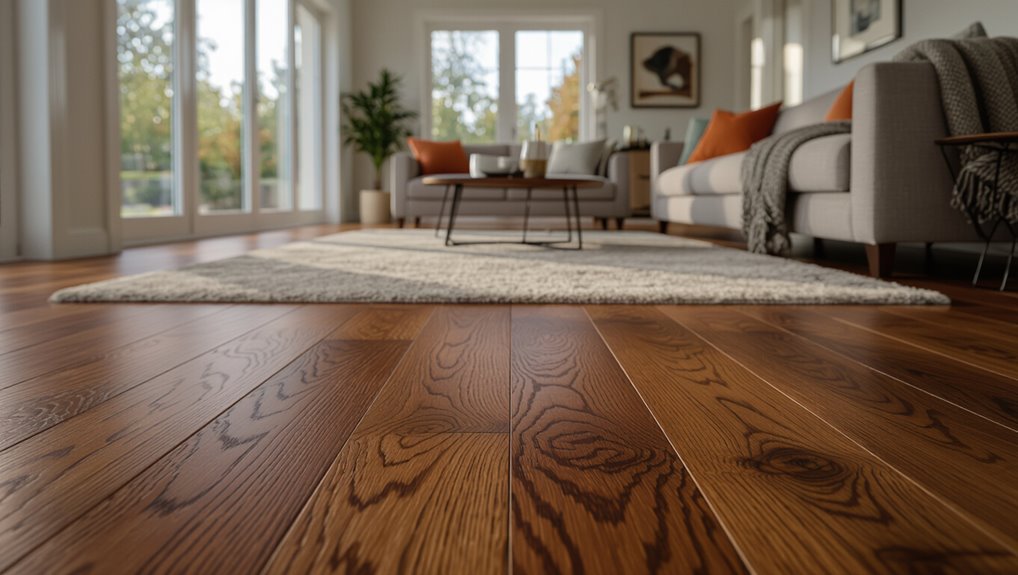
If you want laminate to pass for real wood, start by choosing planks with realistic grain patterns and varied tones—then match trim, grout, and layout to reinforce that natural look.
Stagger joints, pick wider planks for authenticity, and avoid repeating board patterns.
Use matte finishes, add area rugs, and coordinate furniture and lighting to enhance warmth and depth so the floor reads as genuine timber.
Cost vs Value: When Laminate Is Worth It
You’ll want to weigh short-term savings against long-term durability to see when laminate makes sense.
Consider ROI for resale or rental properties—laminate often boosts appeal at a lower cost than hardwood.
Compare concrete budget examples (e.g., cost per square foot and expected lifespan) to decide if the savings justify the tradeoffs.
Short-term vs long-term value scenarios
When weighing laminate’s cost against its benefits, think about how long you plan to keep the floor in place and what performance you need during that time.
For short-term needs—staging, temporary rentals, budget refresh—laminate gives quick, attractive value.
For long-term use, factor in durability, potential replacement, and maintenance; investing more durable options or real wood may save you money and hassle later.
ROI considerations for resale and rentals
Want the best return on investment from new floors? You’ll weigh upfront cost, durability, and market expectations.
Laminate often boosts appeal without high expense, especially in rentals or midrange homes where buyers value looks and low maintenance. For upscale markets, it may underperform compared with hardwood.
Consider local demand, expected tenancy, and replacement cycle to decide if laminate’s cost vs value aligns with your goals.
Budget comparison examples
If your goal is to balance upfront cost with long-term value, numeric examples help make choices concrete. You’ll see when laminate saves money and when hardwood pays back. Compare realistic scenarios:
| Option | Outcome |
|---|---|
| Low-end laminate ($2/sqft) | Cheap now, replace sooner |
| Mid-range laminate ($4/sqft) | Good durability, low maintenance |
| Engineered hardwood ($8/sqft) | Higher resale, longer life |
Frequently Asked Questions (FAQ)
You probably have a few quick questions about laminate, like whether it’s waterproof, how long it lasts, or if it can be refinished.
You might also wonder if it’s pet-friendly or whether you can install it over existing floors.
Below are clear answers to each of those common concerns.
Is laminate flooring waterproof?
Curious whether laminate flooring can handle spills and moisture? Most standard laminate resists light spills thanks to a sealed surface, but seams and core absorb water, causing swelling and damage.
Waterproof or water-resistant laminate options exist with specialized cores and tighter locking systems—these tolerate bathrooms or basements better.
Still, you should wipe up spills quickly and follow manufacturer guidelines for wet-area use.
How long does laminate flooring last?
While lifespan varies with quality, installation, and upkeep, most laminate floors last between 10 and 25 years under normal residential use.
You’ll get the upper end with thicker, higher-AC-rated planks, careful installation, and routine cleaning.
Heavy traffic, pets, moisture, or poor underlayment shorten life.
Replace damaged sections when wear shows; proper maintenance maximizes value without costly premature replacement.
Can laminate be refinished?
Wondering if laminate can be refinished? You can’t sand and recoat traditional laminate because its printed surface and wear layer are thin and fused.
Minor scratches and wear are best fixed with touch-up kits, replacement planks, or overlays.
If you want refinishable options, choose engineered hardwood or specialty thick-top laminates designed for sanding—standard laminate won’t take a true refinish.
Is laminate flooring good for pets?
How well does laminate hold up to pets? You’ll find it scratch-resistant, easy to clean, and less prone to stains than carpet, so it suits many homes with dogs or cats.
Use pads, trim nails, and pick higher AC ratings for durability.
Avoid prolonged moisture exposure from accidents; wipe promptly and consider waterproof laminate in high-risk areas.
Can I install laminate over existing flooring?
If you’ve decided laminate works for your pet-friendly home, you may be wondering whether you can lay it over your current floor.
You often can, but substrate matters: solid, level, dry surfaces like vinyl, tile, or well-adhered hardwood are usually fine.
Remove loose flooring, fix uneven spots, add underlayment for moisture and sound control, and follow manufacturer guidelines to keep warranties valid.
Conclusion: Final Recommendation and Next Steps
To wrap up, use a quick checklist—budget, room moisture, durability needs, and style—to decide if laminate is right for you.
If you’re leaning toward laminate, I’ll point you to reputable brands, certification guides, and tips for finding qualified installers.
Take those steps next to make a confident, practical choice.
Quick checklist to decide if laminate is right for you
Want a quick way to decide whether laminate fits your needs?
- Do you need budget-friendly, durable floors for high-traffic areas?
- Is moisture limited (not bathrooms or basements prone to flooding)?
- Do you want easy DIY installation and low maintenance?
- Are realistic wood/stone looks more important than authentic material feel?
If you answered mostly yes, laminate’s a strong choice; otherwise consider alternatives.
Resources for finding reliable products and installers
Where should you start when hunting for trustworthy laminate products and installers? Use reputable dealers, verified reviews, and local pros with clear warranties. Check sample boards and installation photos before committing.
- Manufacturer websites and certifications
- Independent review sites and forums
- Local showrooms and samples
- Licensed installers with written estimates and warranties