How to Keep Floors Clean With a Dog: Practical Tips That Actually Work
You can keep floors largely hair- and mud-free by combining simple habits and the right tools. Wipe your dog’s paws at the door, use sturdy entry mats, and vacuum high-traffic areas every few days. Brush your dog regularly to cut shedding, spot-clean accidents with pet-safe enzyme cleaners, and mop per your flooring type to avoid damage. Set a weekly deep-clean routine and train your dog to pause at the threshold for wipes — keep going and you’ll find practical routines and fixes that really work.
Quick Answer Can You Keep Floors Clean with a Dog?
Yes—you can keep floors clean with a dog by combining regular grooming, targeted cleaning tools, and simple habits that cut down on dirt and hair.
Start by brushing your dog weekly, using entry mats and a no-tracking routine, and vacuuming high-traffic areas every few days.
For an action plan, schedule grooming, place mats at doors, and set two short cleaning tasks (quick vacuum and spot mop) into your weekly routine.
Short, Practical Summary of What Works
You can keep floors reasonably clean with a dog by combining preventive care, regular cleaning, and smart choices: groom and wipe your dog often, use mats and a designated entry routine, vacuum and mop on a set schedule, and choose durable flooring and washable rugs.
For how to keep floors clean with a dog, stay consistent: spot-clean daily, deep-clean weekly, and train pets to minimize mess.
One- or Two-Sentence Action Plan
Keep a simple routine: wipe paws at the door, vacuum high-traffic areas daily or every other day, and mop weekly while using washable rugs and regular grooming to cut shedding.
Stick to that plan, spot-clean accidents immediately, and schedule monthly deep cleaning.
Train your dog to use entry mats, keep grooming tools handy, and adjust frequency when shedding or activity increases.
Why Floors Get Dirty When You Have a Dog
You’ll notice floors get dirty from everyday things like fur, mud, saliva, and debris your dog tracks in.
Your dog’s size, breed, and behavior—whether they shed heavily, shake off water, or run indoors—changes how quickly mess builds up.
Different floor types (hardwood, tile, carpet, laminate) also react differently to scratching, staining, and moisture, so cleaning needs vary.
Common Sources of Dirt and Damage (fur, mud, saliva, tracked debris)
Many homes with dogs collect predictable messes: loose fur, muddy paw prints, slobbery smears, and tracked-in debris from walks and yard play.
You’ll also see grass, sand, tiny stones, and leaves ground into floors. Fur clumps and saliva can mat into carpets; mud stains hardwood finishes.
Recognize these sources so you can target cleanups quickly and prevent long-term damage.
How Dog Size, Breed, and Behavior Affect Floor Cleanliness
One big factor is size: larger dogs track more dirt, shed more fur, and leave heavier paw prints than small ones, so you’ll clean more often and may need sturdier flooring.
Breed and coat matter too — double-coated or long-haired dogs shed and tangle, short-haired breeds leave oils.
Energetic, anxious, or drooly dogs increase mess; training and grooming cut cleanup time.
Flooring Types and Their Vulnerabilities
Because different materials react differently to paws, moisture, and claws, choosing the right floor matters when you have a dog. Hardwoods scratch and stain; tile handles moisture but grout traps dirt; carpet hides fur but holds odor; vinyl resists wear but can tear. Match durability, texture, and maintenance to your dog’s habits.
| Flooring | Vulnerability |
|---|---|
| Hardwood | Scratches, stains |
| Tile | Grout dirt |
| Carpet | Odor, matting |
| Vinyl | Tears, gouges |
Essential Supplies and Tools You Need
You’ll want the right cleaning tools—think a reliable vacuum, mop, and squeegee—to tackle fur, dirt, and wet messes.
Choose pet-safe cleaning products like enzyme cleaners and gentle disinfectants so you kill germs without harming your dog.
Add preventive accessories (rugs, mats, booties, paw cleaners) and look for features such as HEPA filters and wet‑dry capability when buying gear.
Cleaning Tools (vacuums, mops, squeegees)
When mud, hair, and tracked-in messes become routine, pick tools that match your dog’s habits and your floors’ needs.
You’ll want a powerful vacuum with pet attachments, a flat microfiber mop for quick pickups, a sturdy wet mop for stubborn dirt, and a rubber squeegee to push water and mud outside quickly.
- Cordless vacuum with brush roll
- Microfiber flat mop
- Heavy-duty wet mop
- Rubber squeegee
Cleaning Products Safe for Pets (disinfectants, enzyme cleaners)
Tools get the job done faster, but the cleaners you use determine how safe and sanitary your floors are for both you and your dog.
Choose pet-safe disinfectants, enzyme stain removers, and unscented, non-toxic cleaners. Always follow label directions and rinse surfaces if needed to remove residues.
- amber bottle labeled “enzyme”
- spray bottle with “pet-safe”
- soft microfiber cloth
- small measuring cap
Preventive Accessories (rugs, booties, mats, paw cleaners)
Because small changes make a big difference, adding preventive accessories helps keep floors cleaner with less effort: rugs and entry mats trap dirt, paw booties protect floors from moisture and scratches, and paw cleaners stop mud at the door.
You’ll add targeted protection and reduce cleaning time.
- A heavy-duty entry mat catching gravel
- A washable runner in high-traffic areas
- Soft paw booties for rainy walks
- A compact paw-wash cup by the door
Recommended Features When Buying (HEPA filters, wet-dry capability)
If you want cleaning gear that actually makes life easier, focus on features that tackle pet messes: HEPA filtration for allergens and dander, wet‑dry capability for puddles and tracked‑in mud, sealed dustbins to lock in odors, and brushless or tangle‑resistant heads to handle fur without constant maintenance.
- A lightweight wet‑dry vacuum scooping muddy paws
- A HEPA air purifier trapping dander
- A sealed canister locking smells
- A tangle‑free brush rolling up loose fur
Daily Routine: Simple Steps to Keep Floors Clean (Step-by-Step)
Start your day by wiping your dog’s paws at the door using microfiber towels or paw wipes to keep grit and moisture out.
When accidents happen, spot-clean immediately with a pet-safe cleaner and avoid bleach or ammonia-based products.
Finish with a quick sweep or vacuum, a scheduled mop tailored to your floor type, and a nightly check to catch messes before morning.
Step 1 Wiping Paws at Entry (techniques and products)
1 simple habit can cut most outdoor dirt before it reaches your floors: wipe your dog’s paws at the entry.
Keep a low mat, absorbent towel, or dedicated paw-cleaning station by the door. Gently lift each paw, wipe between pads, and dry to prevent tracking.
Use pet-safe wipes or a damp cloth; replace or launder mats regularly to stay effective.
Step 2 Spot Cleaning Immediately (what to use and what to avoid)
When a spill or mess happens, tackle it right away so it doesn’t set or spread—acting fast keeps stains from embedding and odors from lingering.
Blot liquids with paper towels, then use a pet-safe enzymatic cleaner for urine or vomit.
Avoid ammonia, bleach, and oil-based cleaners that can harm finishes or attract pets.
Test cleaners on a hidden spot first.
Step 3 Quick Daily Sweep or Vacuum (timing and method)
After you’ve handled any fresh accidents, keep debris and loose hair from becoming ground-in by doing a quick sweep or vacuum each day.
Do it during low-traffic times—morning or evening—so you catch shed fur before it spreads.
Use a vacuum with pet tools or a soft-bristled broom for hard floors.
Focus on entryways, feeding areas, and under furniture edges.
Step 4 Mop Schedule and Best Practices for Different Floors
Although you don’t need to mop every day, keeping a simple, regular mopping routine will prevent grime and pet dander from building up on any floor type.
Mop high-traffic areas twice weekly, wet-mop tile and sealed stone, use a damp microfiber for hardwood, and avoid excess water on laminate.
Use pet-safe cleaners, change water often, and spot-treat messes promptly.
Step 5 Nightly Quick Check and Prep for Next Day
Because a few minutes each night saves you time and scrubbing tomorrow, do a quick walk-through to spot hair, paw prints, and any damp or sticky spots—and take care of them before bed.
Shake rugs, wipe surfaces, and sweep high-traffic zones.
Set out a towel by the door, refill leash and treat station, and place a lint roller where you’ll see it in the morning.
Weekly and Monthly Deep-Clean Strategies
Once a week you’ll run a deeper checklist—vacuum under furniture, shake or wash rugs, and spot-treat tracked-in dirt.
Each month you should add tasks like steam cleaning high-traffic areas, treating stubborn stains, and checking polish or finish wear.
Change this routine seasonally for a big spring clean and extra protection during wet months.
Weekly Deep Clean Checklist (vacuum under furniture, wash rugs)
Set aside one consistent block of time each week to tackle tasks that keep pet hair and grime from building up—vacuum under and behind furniture, launder or shake out rugs, and spot-clean baseboards and upholstery where your dog frequents.
Move lightweight furniture, use attachments for crevices, wash washable mats on warm, air-dry rugs thoroughly, and replace items promptly to prevent odor and re-soiling.
Monthly Tasks (steam cleaning, treating stains, polish/finish maintenance)
When you schedule monthly upkeep, tackle deeper tasks like steam-cleaning carpets, treating stubborn stains, and checking finishes so small problems don’t turn into big repairs.
Use pet-safe stain removers, blot promptly, and test cleaners on hidden areas.
Steam clean high-traffic zones, refresh grout, and reapply floor polish or finish where wear appears.
Maintain equipment and note recurring problem spots.
Seasonal Tasks (spring cleaning, protecting for wet weather)
Although seasonal shifts bring predictable messes, you can stay ahead with a concise plan that combines spring deep-cleaning and wet-weather protection for your floors.
In spring, move furniture, shampoo rugs, and inspect finishes for repairs.
For wet seasons, set entry mats, towel stations, and waterproof boot trays.
Reapply sealant where needed and store seasonal gear to reduce tracked-in dirt.
Tailoring Cleaning to Flooring Types
Different floors need different care, so you’ll want specific tips for hardwood, laminate, vinyl, tile and grout, carpet, and outdoor entry surfaces.
You’ll learn do’s and don’ts for hardwood, best practices for laminate and vinyl, and the right tools for tile grout.
You’ll also get focused advice on managing fur, odors, stains, and keeping entryways as the first line of defense.
Hardwood Floors Do’s and Don’ts
Because hardwood shows every scratch and wet spot, you’ll need a few specific habits to keep it looking great with a dog in the house.
Wipe paws after walks, trim nails regularly, use felt pads on furniture, and clean spills immediately with a damp (not wet) microfiber cloth.
Avoid steam cleaners, harsh chemicals, and sanding unless absolutely necessary.
Protect high-traffic areas with rugs.
Laminate and Vinyl Best Practices
Laminate and vinyl floors give you durable, pet-friendly surfaces that handle scratches and moisture better than hardwood, but they each need slightly different care to stay looking their best.
Wipe spills quickly, use a microfiber mop with a manufacturer-approved cleaner, avoid excess water and steam, trim your dog’s nails, and place washable mats at entryways to reduce dirt and grit that cause wear.
Tile and Grout Effective Methods and Tools
Tile holds up well to paws and water, but grout can trap dirt, hair, and odor if you don’t clean it right.
Sweep or vacuum daily, mop with a pH-neutral cleaner, and scrub grout weekly with a stiff brush and baking soda paste.
Seal grout annually to repel stains.
Use a microfiber mop for quick cleanups and a handheld vacuum for crevices.
Carpet Managing Fur, Odor, and Stains
Once you move from hard floors to carpet, you’ll notice it traps dog hair, odors, and spills in ways tile doesn’t, so you need different care.
Vacuum high-traffic areas daily, use a rubber brush for clingy fur, treat stains promptly with enzyme cleaners, and deodorize with baking soda before vacuuming.
- tufts of fur clinging to fibers
- darkened walk paths
- damp urine edges
- faint musty smell
Outdoor/Entryway Surfaces First-line Defense
Because your entryway is the dog’s first stop, treat it as the front line: design cleaning and protection strategies that match the surface—concrete, wood, stone, or outdoor tile—so dirt, mud, and moisture don’t migrate deeper into the house.
Use durable mats, boot brushes, and absorbent runners. Seal porous surfaces, sweep daily, hose or power-wash concrete, and spot-clean wood or stone with appropriate cleaners to prevent stains and damage.
Behavior and Training to Reduce Floor Mess
Start teaching entry habits like sit, wait, and a paw wipe so your dog doesn’t track mud straight onto the floor.
Set up doorway routines and well-placed mats to cut down on indoor tracking, and keep a regular brushing schedule or see a professional groomer to manage shedding.
Also train calmer greetings and address drooling with commands and cues so excitement doesn’t end up on your floors.
Teach Proper Entry Habits (sit, wait, paw wipe)
Teach your dog to pause at the door—sit, wait, and get their paws wiped—so muddy prints and tracked-in debris never reach your floors.
Practice short, consistent drills: cue sit, open slightly, praise calm, then lift paws for a quick wipe. Reward compliance with treats or entry.
Reinforce daily, keep wipes handy, and stay patient until the routine’s reliable.
Reduce Indoor Tracking (doorway routines, mat placement)
If you want to keep dirt and mud off your floors, set up simple doorway routines and strategically placed mats so most mess gets stopped before it spreads.
Teach your dog to pause at thresholds, then step onto a textured mat.
Use layered mats (outdoor brush mat plus absorbent indoor mat), place them where traffic is highest, and clean mats regularly to maintain effectiveness.
Grooming and Shedding Management (brushing schedule, professional groomer)
Stopping dirt at the door helps, but controlling the source of that dirt—your dog’s coat—keeps floors cleaner day to day.
Brush regularly to remove loose hair before it scatters; adjust frequency for breed and season.
Schedule professional grooming for heavy shedders or coat trims.
Use a grooming spot with easy cleanup and reward your dog so brushing becomes a calm, consistent habit.
Managing Excitement and Drooling Indoors
When your dog gets excited or anxious indoors, they’ll often dribble, pant, or spin—leaving puddles and tracked saliva on your floors—so it helps to teach calm responses and manage triggers before messes start.
Teach sit‑stays, reward slow greetings, and use short desensitization to doorbells or visitors.
Wipe mouths after play, offer chew toys to redirect energy, and clean up promptly to prevent stains.
Preventive Home Setup and Design Choices
Start by setting up an entry that stops dirt at the door with double mats or a small mudroom area so less grit reaches your floors.
Place furniture and rugs to shield high-traffic paths and pick pet-friendly flooring—like vinyl or sealed tile—when you remodel.
Add smart helpers like robot vacuums and floor sensors to keep messes under control with minimal effort.
Entryway Design That Minimizes Dirt (double mats, mudroom ideas)
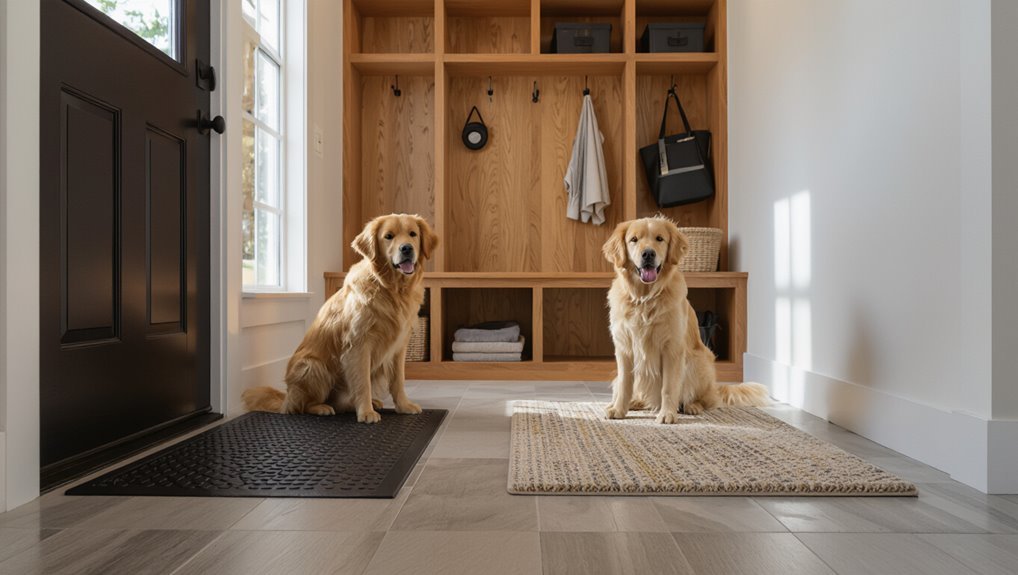
If you plan your entryway with dirt control in mind, you’ll cut the mess and make daily cleaning easier:
Create a staged barrier — outdoor scraper, heavy-duty welcome mat, then an absorbent indoor mat.
Add a bench with storage for leashes and shoe trays, hooks for coats, and washable rugs.
Consider a durable tile or vinyl floor and a designated pet towel for quick drying.
Furniture and Rug Placement to Protect Floors
After controlling dirt at the door, rethink furniture and rug placement to reduce wear and stains from your dog.
Position durable rugs in high-traffic paths and under feeding areas, secure corners with non-slip pads, and leave washable runners where your dog rests.
Raise delicate furniture on protective pads, create clear walkways to curb dirty paws, and avoid fabric choices that trap hair or moisture.
Choosing Pet-Friendly Flooring When Remodeling
Anyone can protect your remodel by picking flooring that stands up to paws, claws, and accidents—so choose materials that balance durability, traction, and easy cleanup. Opt for scratch-resistant finishes, waterproof options, and textured surfaces to prevent slips. Compare durability, maintenance, and comfort below.
| Material | Durability | Cleanup |
|---|---|---|
| Luxury vinyl | High | Easy |
| Tile | Very high | Very easy |
| Engineered wood | Moderate | Moderate |
Smart Home Devices That Help (robot vacuums, floor sensors)
Choosing durable, pet-friendly flooring is a big step, but pairing it with smart devices makes upkeep even easier.
Use robot vacuums on schedules to catch fur daily and spot-clean after muddy walks.
Floor sensors alert you to spills or excessive moisture before stains set.
Integrate devices with routines and pet zones so cleaning’s automatic, efficient, and minimally disruptive to your dog.
Common Mistakes That Make Floors Dirtier
Don’t rely on harsh chemicals that can leave residues and actually attract more dirt.
If you skip regular grooming, entry cleanup, or use the wrong tools for your floor type, you’ll just push fur and grime around.
Also check hidden traps under furniture and in corners where dirt quietly accumulates.
Using Harsh Chemicals That Attract More Dirt
Although harsh cleaners might seem like a quick fix, they can actually make your floors dirtier by leaving sticky residues that attract grime and pet hair.
You should switch to mild, pH-balanced cleaners or simple water-and-vinegar solutions for many floor types.
Rinse well, dilute according to labels, and spot-test so residues don’t build up and draw in more dirt over time.
Ignoring Regular Grooming and Entry Cleanup
If you skip regular grooming and let entryways become a drop zone, dirt, hair, and mud will spread through the house faster than you expect.
Brush and bathe your dog on a schedule, trim mats, and wipe paws after walks.
Keep a doormat, mopable runner, and a dedicated pet towel by the door so you stop messes before they reach floors.
Wrong Tools for the Floor Type
Using the right tools for your floor type matters more than you think: the wrong broom, mop, or vacuum can push dirt into cracks, scratch finishes, or leave a cloudy residue that actually attracts more grime.
Match tools to surfaces—soft-bristled broom for hardwood, microfiber mop for sealed floors, vacuum with adjustable suction for rugs.
Test cleaners on a hidden spot first.
Overlooking Hidden Dirt Traps (under furniture, corners)
When you only clean the obvious areas, hidden dirt under furniture and in corners builds up fast and drags grit across your floors every time your dog runs or you move a chair.
Check under couches, beds, and appliances weekly. Use a slim vacuum attachment or extendable duster, pull furniture occasionally, and tackle baseboards and corners to prevent abrasive buildup that scratches and dulls flooring.
Quick Wins Tips That Produce Immediate Results
You can get noticeably cleaner floors in minutes by focusing on a few high-impact tasks and the right products. Spend 10 minutes on targeted actions—wipe paws, sweep high-traffic strips, and tackle fresh spots before they set—and you’ll cut most visible dirt.
Keep a fast-acting stain and odor spray on hand so spills never get a chance to linger.
- A quick wipe of muddy paws with a microfiber cloth
- A focused 10-minute sweep or vacuum along walkways
- An enzyme spray for fresh urine or vomit spots
- Fast-foam carpet spotter for tracked-in mud
High-impact Tasks You Can Do in 10 Minutes
Five quick tasks you can do in ten minutes will keep pet hair and dirt from piling up between deep cleans.
Sweep high-traffic zones, vacuum rugs, and mop a small section.
Wipe paw-print spots, clean entrance mats, and shake out throw rugs outside.
Quickly inspect and trim hair around paws or shedding hotspots to reduce future mess.
Products That Deliver Fast Odor and Stain Removal
A few targeted products can erase odors and stains almost instantly, so you don’t have to let accidents linger.
Keep enzymatic cleaners for biological messes, a spray-and-blot carpet spotter for rugs, and a pet-safe disinfectant for hard floors.
Use microfiber towels and a wet-vac for fast extraction.
Test products on hidden spots, follow dwell times, and store cleaners within reach for quick response.
Product Comparison and Recommendations
Now let’s compare the gear that actually makes floor care with a dog easier.
You’ll get quick picks for the best vacuums for pet hair, mops and cleaners matched to different surfaces, and top doormats, paw cleaners, and entry tools.
Use these recommendations to pick tools that cut cleaning time and protect your floors.
Best Vacuums for Pet Owners
Because pet hair and tracked-in dirt vary by breed and household, choosing the right vacuum matters for keeping floors clean without constant effort. Pick models with strong suction, brushroll control, and easy-empty bins. Consider cordless for quick touchups or canisters for stairs.
| Type | Best for |
|---|---|
| Upright | Deep carpet hair |
| Canister | Hard floors, stairs |
| Stick | Quick cleanups |
| Robot | Maintenance |
| Handheld | Upholstery |
Best Mops and Floor Cleaners for Each Surface
When you pick a mop or floor cleaner, match its method to your surface—wet mops for sealed hardwood and tile, microfibers for laminate and vinyl, and spray or steam systems for quick spot cleanup—so you get effective results without damaging floors. Choose a gentle cleaner, a leak-free spray, and a sturdy microfiber pad to tame pet messes fast.
| Surface | Tool | Feeling |
|---|---|---|
| Hardwood | Damp microfiber | Relief |
| Tile | Spin mop | Confidence |
| Vinyl | Spray mop | Ease |
| Laminate | Dry microfiber | Calm |
| Quick spills | Steam or spray | Satisfaction |
Best Doormats, Paw Cleaners, and Entry Tools
Start with three entry essentials: a heavy-duty doormat to trap dirt, a reliable paw cleaner for quick rinses, and a dedicated towel or boot tray to contain moisture and debris.
Choose coarse fibers, silicone brushes, and absorbent microfibers. Keep wipes handy for quick touch-ups. Store tools near the door so you’ll act fast.
- Mud-shedding coir mat
- Silicone paw cup
- Absorbent microfiber towel
- Drip-proof boot tray
Troubleshooting Specific Problems
When a muddy paw or clump of grass hits your floor, you’ll want quick, targeted fixes to avoid stains and tracked messes.
Learn safe, effective steps for cleaning urine and feces accidents, managing heavy shedding and matting, and repairing or preventing scratches and surface damage.
I’ll walk you through practical solutions you can use right away.
Removing Mud, Grass, and Outdoor Debris
Because outdoor messes tend to come in clumps—mud, grass, and little bits of debris, you’ll want a quick routine to catch them before they spread inside.
Keep a mat and towel by the door, wipe paws immediately, and use a rubber brush or damp microfiber to lift stuck dirt.
Sweep or vacuum high-traffic zones daily to prevent buildup.
Treating Urine and Feces Accidents Safely
Accidents happen, but acting fast limits stains and smells—blot fresh urine with paper towels or a clean cloth, then apply an enzyme cleaner to break down odor-causing proteins; for solid waste, pick it up with gloves or a disposable bag, blot any residue, and treat the spot the same way.
After cleaning, air-dry, repeat treatment if needed, and avoid ammonia cleaners that can worsen odors.
Dealing with Excessive Shedding and Matting
If your dog’s fur keeps ending up all over floors and forming mats, tackle the problem at its source with regular grooming and targeted tools.
Brush daily with the right rake or slicker for their coat, vacuum high-traffic areas, use detangling spray, trim problem zones, and schedule professional grooming for severe matting.
Clean brushes and vacuum filters frequently to maintain effectiveness.
Handling Scratches and Surface Damage
When your dog’s nails or playful antics leave scratches, don’t just sigh and live with them—you can minimize and repair most surface damage with a few targeted fixes.
Keep nails trimmed and consider nail caps. Use felt pads on furniture legs and area rugs to protect high-traffic zones.
For wood, use a matching stain marker or wax filler; for tile, clean and reseal grout promptly.
Maintenance Checklist and Planner
You’ll want a compact checklist that breaks tasks into daily, weekly, and monthly actions to keep pet messes from piling up.
Use a printable routine planner template to assign who does what and when, so cleaning becomes automatic.
Start with a simple sheet you can stick on the fridge and adjust it as your dog’s needs change.
Daily, Weekly, Monthly Checklist (compact checklist)
A simple, consistent checklist keeps dog hair and dirt from piling up and makes cleaning less stressful.
Use daily, weekly, and monthly tasks to break maintenance into manageable steps. You’ll sweep and spot-tidy daily, mop and launder bedding weekly, deep-clean rugs and vacuum furniture monthly, and inspect for wear and tear to prevent bigger messes.
- Sweep entryways daily
- Quick spot-mop spills
- Wash dog bedding weekly
- Deep-vacuum rugs monthly
Printable Routine Planner Template
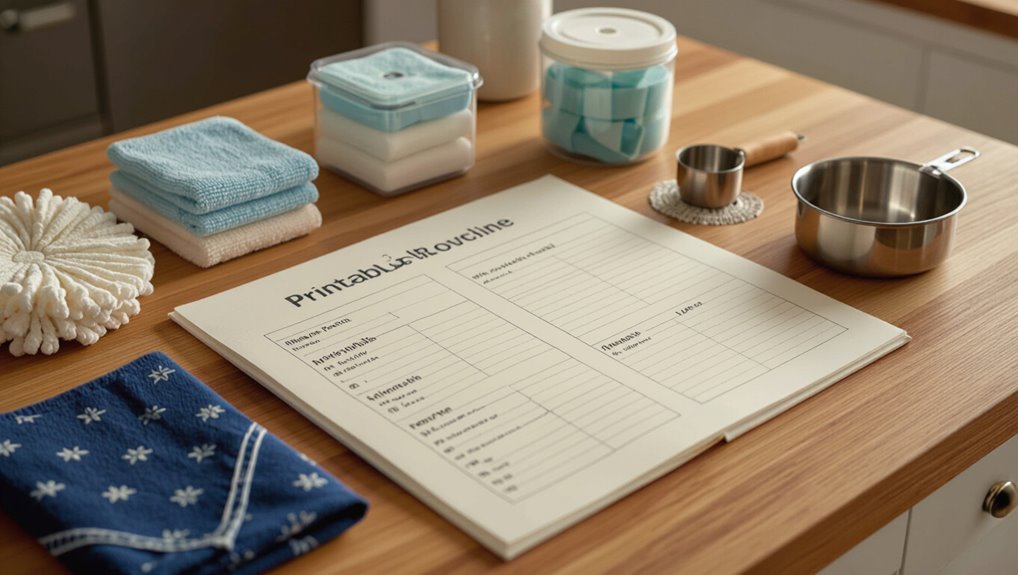
Now that you’ve got a simple daily/weekly/monthly checklist, print-ready planners make sticking to it even easier.
Download printable pages with slots for tasks, times, and pet-specific notes. Laminate or place in a clipboard for reusable check-offs.
Add monthly deep-clean targets and supply lists. Tape one near the door and one by your cleaning caddy so you’ll actually follow the routine.
Frequently Asked Questions
You’ll find quick answers here to common worries like how often to vacuum if your dog sheds heavily and whether enzyme cleaners are pet-safe and floor-effective.
I’ll also cover the best scratch-resistant flooring, tips to stop muddy paw tracks after walks, and whether steam cleaning can harm hardwood.
Use these FAQs to pick the right routines and products for your home.
How often should I vacuum if my dog sheds a lot?
How often should you vacuum if your dog sheds heavily?
Vacuum high-traffic and pet areas at least every other day to prevent hair buildup.
If you notice clumping or allergies, vacuum daily.
Use a vacuum with a pet brush and HEPA filter for best results.
Schedule a deeper weekly session for furniture edges and under beds to catch hidden fur.
Are enzyme cleaners safe for pets and effective on floors?
If your vacuuming still leaves stains or odors from accidents, enzyme cleaners can help break down the proteins that cause smell and discoloration.
They’re generally safe when used per label: choose pet-safe formulas, keep pets away while treating and until surfaces dry, and test a hidden spot for colorfastness.
For persistent messes, follow manufacturer directions or consult your vet for sensitive animals.
What flooring is best if my dog scratches?
Pet owners should pick floors that resist scratches and hide wear, like high-quality vinyl plank, porcelain tile, or textured laminate.
These materials combine surface hardness with a forgiving finish so your dog’s nails cause less visible damage.
Also consider engineered hardwood with a durable finish, commercial-grade laminate, or textured ceramic.
Choose darker or patterned tones to camouflage marks and protect edges with rugs.
How can I stop my dog from tracking mud inside after walks?
Bring a simple routine with a few tools to prevent muddy paws from turning your floors into a mess: keep a towel or microfiber cloth, a portable paw-wash bottle or pet-safe wipes, and a doormat by the door so you can quickly clean or dry paws before your dog comes inside.
Pause at the threshold, wipe each paw, dry thoroughly, and reward calm cooperation to build the habit.
Can steam cleaning damage hardwood floors?
Wiping muddy paws at the door helps, but you may still wonder about deeper cleaning methods like steam mops and whether they’re safe for hardwood.
Steam can damage finish and warp boards if moisture or heat penetrates seams.
Use manufacturer-approved steam settings, test a hidden spot, avoid unfinished or older floors, and consider damp mopping or professional refinishing for stubborn grime.
Final Action Plan 30-Day Challenge to Cleaner Floors with Your Dog
Ready for a 30-day plan to keep your floors cleaner with your dog? Start Week 1 by locking down entry routines and daily habits, Week 2 on grooming and the right tools, Week 3 for deep cleaning and maintenance, and Week 4 to customize your home setup and prevent future messes. Follow each week’s simple tasks and you’ll build habits that stick.
Week 1: Entry and Daily Habits
Since the way you enter and move through your home sets the tone for the whole challenge, start Week 1 by creating simple entry routines and daily habits that trap dirt before it spreads.
Place doormats outside and inside, set a landing zone for leashes and wipes, wipe paws after walks, sweep high-traffic areas nightly, and empty pockets of dirt-prone items each evening.
Week 2: Grooming and Tools
Week 2 focuses on grooming and the right tools to cut down on the hair, dander, and mud that make floors dirty.
You’ll establish a simple brushing and bathing routine and gather targeted supplies like a high-quality vacuum, lint rollers, paw wipes, and a squeegee for hard floors.
Brush your dog several times weekly, trim mats, bathe monthly or as needed, and keep supplies accessible for quick touch-ups.
Week 3: Deep Cleaning and Maintenance
Tackle deep cleaning and maintenance this week with a focused, practical plan that turns grooming gains into lasting results: you’ll perform targeted deep cleans, set a simple weekly maintenance routine, and finish the 30-day challenge with habits that keep floors consistently cleaner despite your dog’s activity.
Focus spots: shampoo rugs, steam hard floors, clean baseboards, and sanitize entry mats.
Schedule quick daily spot checks and a full weekly vacuum.
Week 4: Customizing Home Setup and Long-Term Prevention
As you wrap up the 30-day challenge, focus on customizing your home and building prevention habits that fit your dog’s routines and your living space.
This final week turns temporary fixes into lasting systems so floors stay cleaner with less effort. Set dedicated zones, swap rugs for washable mats, create grooming and wiping stations, schedule routine brushings, and reinforce tidy behaviors with rewards to prevent future messes.