How to Clean Marble Floors Without Causing Damage or Dullness
You can keep marble floors glossy by sweeping grit daily, blotting spills immediately, and mopping weekly with a pH-neutral cleaner or mild dish soap diluted in water. Use soft microfiber mops and towels, avoid acidic or alkaline products, abrasive pads, and over-wetting. Dry and buff gently to prevent water spots and dullness, reseal every 1–3 years in high-traffic areas, and save aggressive polishing or stain extraction for professionals—keep going to learn specific stain fixes and routines.
How to Clean Marble Floors Without Causing Damage or Dullness (Quick Answer)
Use a pH-neutral cleaner and soft mop for routine marble care to avoid etching or dulling the surface.
You’ll stick to gentle cleaning for light dirt and spills, but call a professional for persistent stains, deep scratches, or loss of shine.
Follow up with occasional polishing only when recommended to restore luster without risking damage.
One-sentence quick answer
If you want spotless marble without dulling the finish, mop with warm water and a few drops of pH-neutral stone cleaner. Blot spills immediately, avoid acidic or abrasive products, and buff dry with a soft microfiber cloth.
For quick guidance on how do I clean marble floors, follow gentle, regular care, use mats at entries, and never use vinegar, bleach, or scouring pads to protect shine.
When to use gentle cleaning vs. professional restoration
When routine care—mopping with pH-neutral cleaner, blotting spills, and avoiding acids—keeps your marble looking good, stick with gentle cleaning; call a professional when stains, etching, scratches, or widespread dullness don’t respond to spot treatments or when the finish needs honing, polishing, or sealing to restore uniform shine and protect the stone.
You should also hire pros for large areas, deep damage, or historic surfaces.
Understanding Marble: Why It’s Sensitive and Prone to Dulling
Marble is a calcium carbonate rock, not a harder silicate like granite, so it’s softer and reacts with acids.
You’ll notice it’s vulnerable to etching from acidic cleaners or spills, scratching from grit, staining from porous spots, and overall dulling from abrasive scrubbing or wrong products.
Knowing how cleaners and methods interact with its chemistry helps you avoid permanent damage.
What marble is (calcium carbonate vs. other stones)
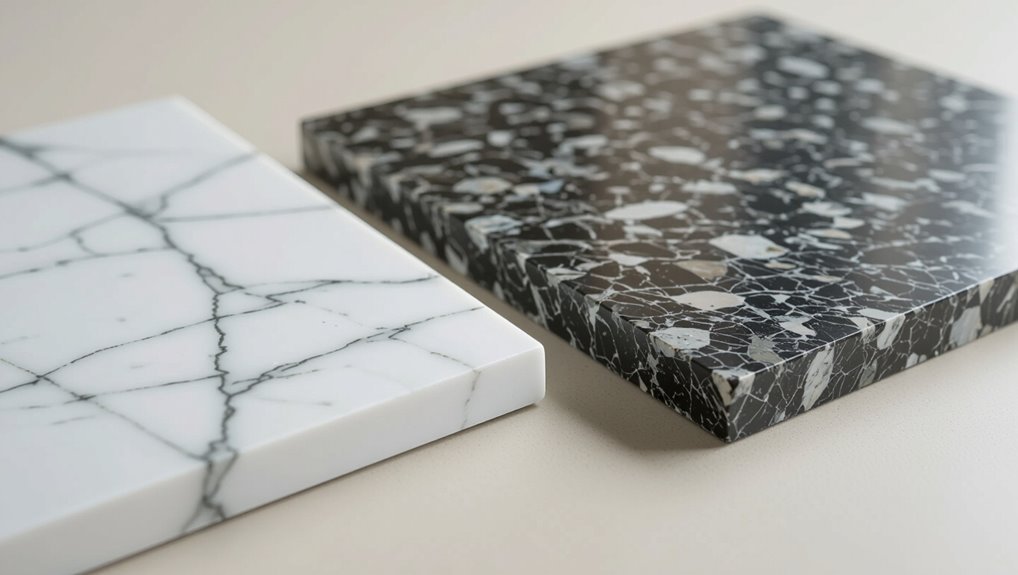
A metamorphic rock made mostly of calcium carbonate, marble forms when limestone recrystallizes under heat and pressure, and that chemistry explains a lot about how it behaves.
Unlike silicate-based stones like granite or quartzite, marble’s carbonate composition reacts differently to acids and cleaners.
You’ll treat it more gently, choose pH-neutral products, and avoid abrasive methods suited to harder, noncarbonate stones.
Common vulnerabilities: etching, scratching, staining, and dulling
Because of its carbonate chemistry and relatively soft, crystalline structure, marble reacts quickly to everyday hazards like acids, grit, and oils.
You’ll see etching from citrus or vinegar, surface scratches from grit and heavy foot traffic, and stains from oil and colored spills that penetrate pores.
Repeated abrasion and improper wear will dull the polish, so prevent contact and clean spills promptly.
How cleaning agents and methods cause damage
Although it looks sturdy, your marble reacts to many common cleaners and techniques, and using the wrong products or abrasive methods will strip polish, etch the surface, or leave dull, cloudy patches.
Acidic cleaners dissolve calcium carbonate, leaving etches. Abrasive pads and harsh scrubbing scratch and remove sealers. Excess water soaks grout and weakens adhesion.
Always use pH-neutral, nonabrasive methods.
Essential Tools and Safe Cleaning Products
You’ll want a few basic tools—microfiber mop, soft cloths, and a non-abrasive brush—plus pH-neutral cleaners or a mild DIY mix like warm water with a tiny drop of gentle dish soap.
Avoid anything acidic, abrasive pads, bleach, or ammonia, and skip vinegar and citrus-based cleaners that can etch marble.
For deep stains, worn sealant, or large jobs, call a professional marble cleaner or sealer to prevent damage.
Recommended tools and equipment
Right tools make marble care simple and safe: you’ll want soft microfiber mops and cloths, a nonabrasive sponge, a pH-neutral cleaner formulated for natural stone, a soft-bristled brush for grout, and quality floor pads or felt protectors for furniture legs.
- Microfiber mop
- Soft microfiber cloths
- Nonabrasive sponge
- Soft-bristled grout brush
- Felt furniture pads
Approved cleaners and DIY gentle solutions (pH-neutral options)
Now that you’ve got the right tools, you should pick cleaners that protect marble’s delicate surface.
Use pH-neutral commercial marble soaps or mild dish soap diluted in warm water. Test first on an inconspicuous spot, mop gently, and dry immediately to avoid water spots.
- pH-neutral marble cleaner
- Mild dish soap (diluted)
- Stone-safe microfiber mop
- Warm water
- Test patch solution
Products and tools to avoid (acidic, abrasive, bleach, ammonia)
Because marble’s calcium-rich surface reacts easily, avoid acidic, abrasive, and harsh chemical cleaners that can etch or dull the stone—this means no vinegar, lemon, bleach, ammonia, or abrasive powders and scrubbing pads.
Instead, stick to pH-neutral, stone-safe products and soft microfiber tools to protect the finish.
- Abrasive scouring powders
- Steel wool or stiff brushes
- Acidic cleaners (vinegar/lemons)
- Bleach and ammonia solutions
- Harsh degreasers or solvent-based cleaners
When to choose professional marble cleaners or sealers
If your marble shows deep etching, widespread staining, grout damage, or uneven sheen that home methods can’t fix, call a professional—these issues often need specialized cleaners, poultices, honing, or re-sealing to restore and protect the stone without causing further harm.
Hire pros when damage is extensive, warranties apply, or you need color-matched repairs, periodic maintenance, or commercial-grade sealing for high-traffic areas.
Step-by-Step Safe Cleaning Routine (Daily to Deep Clean)
Start with simple daily maintenance: sweep or dust-mop to remove grit that can scratch marble.
Each week, damp-mop with a pH-neutral cleaner, and once a month do spot checks and mild polishing as needed.
For stubborn dirt or organic stains use a safe deep-clean method, then dry, buff, and ventilate the area to finish.
Daily maintenance steps (sweeping, dust-mopping) Step 1
Daily maintenance keeps marble looking its best and prevents grit from scratching the surface, so sweep or dust-mop high-traffic areas every day.
Use a soft-bristled broom or microfiber dust mop, working toward one exit to avoid recontamination. Empty traps and shake out pads outside.
Remove spills immediately with a dry cloth, then follow with a damp mop only when required by visible residue.
Weekly routine (damp mopping with pH-neutral cleaner) Step 2
Move on to weekly care by damp-mopping with a pH-neutral cleaner to remove grime that sweeping misses without harming the stone.
Fill a bucket with warm water, add the cleaner per label, wring a microfiber mop until just damp, and mop in overlapping passes.
Rinse the mop often, change solution if cloudy, and dry the floor with a soft towel to prevent water spots.
Monthly care (spot checks, mild polishing) Step 3
As you shift from weekly upkeep to monthly care, inspect grout lines, seals, and high-traffic areas for dullness, stains, or small chips so you can address issues before they worsen.
Then follow up with a mild, non-abrasive polish to restore luster without altering the stone’s finish.
Spot-treat stains with pH-neutral cleaner, reseal worn areas as needed, and buff gently with a soft cloth to maintain shine.
Deep cleaning for stubborn dirt and organic stains Step 4 {step-by-step}
After monthly checks and gentle polishing, tackle deeper grime or organic stains with a focused, step-by-step approach that preserves the marble’s finish.
Mix a pH-neutral stone cleaner with warm water, apply sparingly, and let it dwell briefly. Agitate gently with a soft brush, rinse thoroughly, and repeat only if needed.
Use poultices for persistent organic stains, following product instructions.
Post-cleaning care: drying, buffing, and ventilation Step 5
1. After cleaning, dry the marble promptly with soft microfiber towels to prevent water spots.
Buff gently in circular motions to restore sheen, using a dry cloth or low-speed buffing pad.
Confirm good ventilation—open windows or run fans—to speed drying and avoid trapped moisture.
Don’t walk on floors until fully dry, and keep rugs off wet areas to prevent stains or dullness.
Removing Specific Stains and Problems Safely
You’ll learn how to treat common marble problems—water spots and mineral buildup, oil and grease, and organic stains like coffee or wine—using safe methods and prevention tips.
For tougher issues such as ink, rust, and paint, I’ll outline escalation steps and when it’s time to call a pro.
I’ll also explain how to tell etching from staining and the appropriate fixes for each.
Water spots and mineral deposits: method and prevention
Water spots and mineral deposits form when hard water evaporates on marble, leaving behind calcium and other minerals that can dull or etch the surface.
You can usually remove fresh deposits yourself with the right cleaners and gentle technique. Blot spills, rinse with distilled water, then apply a diluted pH‑neutral cleaner or a poultice for stubborn spots.
Dry thoroughly and use a water softener or mats to prevent recurrence.
Oil and grease stains: recommended approach
If oil or grease lands on marble, act quickly to prevent deep staining: blot up excess with a soft, absorbent cloth, then sprinkle a light dusting of talc, cornstarch, or baking soda to draw out remaining oil before treating further.
After an hour, sweep up powder, then gently clean with a pH-neutral stone cleaner and warm water.
Repeat powder draw-out if residue persists; avoid acidic or abrasive agents.
Organic stains (coffee, wine, food): poultice and safe cleaners
Because organic stains like coffee, wine, and food sit on the surface and can penetrate quickly, act fast: blot spills with a soft cloth, then use a gentle poultice or a pH-neutral stone cleaner to lift remaining pigment without etching the marble.
Test cleaners in an inconspicuous spot, apply poultice per instructions, rinse thoroughly, and dry.
Repeat only if stain persists; avoid scrubbing.
Ink, rust, and paint: escalation steps and when to call pros
Tackle ink, rust, and paint stains in escalating steps so you remove them safely without damaging the marble: start with the least aggressive methods (blotting, pH-neutral cleaners, gentle poultices), move to targeted chemical or poultice treatments designed for the specific stain type, and only consider mechanical or stronger acidic/oxidizing options as a last resort—call a professional stone restoration expert if the stain resists treatment, the finish shows etching, or you’re unsure which product is safe to use.
Use solvent dab for ink, chelating rust remover for rust, and a specialized paint stripper for paint; test first, work gently, and stop if the surface dulls or fibers lift.
Etching treatment vs. staining: how to identify and address
How can you tell whether a dull spot is etching or a stain, and what should you do about each?
You’ll test with a few drops of distilled water: an etch looks matte and won’t absorb liquid; a stain darkens as it soaks in.
For etches, use a marble polishing powder or hire a pro; for stains, apply an appropriate poultice and repeat until removed.
Polishing, Honing, and Restoring Shine Without Damage
You’ll learn how polishing, honing, and sealing differ and which finish suits your marble.
I’ll cover safe at‑home products and techniques you can use without causing etching or scratches.
I’ll also explain when the damage means you should hire a pro for mechanical polishing or full restoration.
Difference between polishing, honing, and sealing
Although all three aim to improve marble’s appearance, polishing, honing, and sealing do very different jobs: you’ll choose based on gloss, scratch removal, and protection.
| Action | Purpose |
|---|---|
| Polishing | Restores high shine without removing much stone |
| Honing | Removes scratches, creates matte to satin finish |
| Sealing | Penetrates pores to repel stains, not add shine |
Safe at-home polishing methods and products
Because marble’s beauty shows every scratch and dull spot, you’ll want gentle, tested methods to restore shine without damaging the stone.
Use a pH-neutral marble polish or specially formulated powder, soft microfiber pads, and a damp mop. Buff gently in circular motions, avoid abrasive pads or acidic cleaners, and test a small area first.
Reapply sparingly to maintain luster.
When mechanical polishing or professional restoration is needed
If gentle at-home polishing doesn’t remove deep scratches, etching, or a uniformly dulled surface, it’s time to contemplate mechanical polishing or professional restoration.
You should call a qualified stone technician when damage penetrates the finish, when honing and diamond polishing are needed, or when large areas require uniform luster.
They’ll assess etch depth, match sheen, and use proper pads and sealers to avoid further harm.
Preventive Measures to Keep Marble Looking New
To keep marble looking new, you should seal it with the right product—natural stone sealers vary and usually need reapplication every 1–3 years depending on traffic.
Use protective measures like entry rugs, mats, coasters, and felt pads under furniture to stop scratches and grit from wearing the surface.
Adopt simple habits for spills—blot acids and liquids immediately and clean with a pH-neutral solution to prevent etching and dullness.
Sealing: types, frequency, and proper application
When you want marble to stay stain-resistant and easy to clean, applying the right sealer is essential.
Choose a penetrating (impregnating) sealer for protection without altering sheen; use topical sealers sparingly if you want added gloss.
Test first, follow manufacturer instructions, and reapply every 6–24 months depending on traffic and product.
Clean surface before sealing and allow full cure time.
Protective measures: mats, coasters, felt pads, entry rugs
A few simple protective measures—entry rugs, mats, coasters, and felt pads—can stop most scratches, stains, and wear before they ever reach your marble.
Use them strategically to reduce abrasion and collect grit. Rotate mats and clean them often.
- Place low-profile entry rugs at doorways
- Use rubber-backed mats in wet areas
- Put coasters under drinks
- Attach felt pads to furniture legs
- Replace worn pads regularly
Routine habits to avoid etching and dullness (spill protocol)
Those simple protective steps cut down on damage, but daily habits around spills and acidic substances keep marble looking new.
Wipe up spills immediately with a soft cloth, blotting rather than rubbing. Neutral pH cleaners are safe; never use vinegar, lemon, or ammonia. Test any product in an inconspicuous spot first.
Wear shoes-free policies or rugs in high-traffic zones to minimize grit.
Common Cleaning Mistakes That Cause Damage
Don’t use acidic or strongly alkaline cleaners, because they can etch and dull your marble’s finish.
Avoid abrasive pads or vigorous scrubbing that scratch the surface, and don’t over-wet or leave water to soak in without proper drying.
Also steer clear of mixing products or DIY solutions that react badly—those combos often cause stains or lasting damage.
Using acidic or alkaline cleaners: consequences
If you pour acidic or highly alkaline cleaners on marble, you’ll quickly strip its polished finish and etch the surface, leaving dull, rough patches that don’t come back with simple buffing.
You should avoid vinegar, lemon, bleach, or strong degreasers; they chemically react with calcium carbonate.
Instead, use pH-neutral, stone-safe solutions and test a small hidden area before treating the whole floor.
Abrasive tools and scrubbing mistakes
One common mistake is reaching for gritty pads, wire brushes, or a stiff-bristled broom to tackle stains—those abrasive tools will scratch and dull marble’s polished surface in minutes.
Don’t scour vigorously; instead, use a soft microfiber mop or cloth and a pH-neutral cleaner.
For stubborn spots, gently blot and lift with a poultice or consult a professional to avoid irreversible scratches and etching.
Over-wetting and improper drying
After avoiding abrasive tools, pay attention to how much water and cleaner you use: marble soaks up liquids and prolonged moisture can seep into seams, grout, or porous spots and cause staining, discoloration, or weakened adhesive.
Don’t drench floors; mop with a damp, well-wrung cloth and rinse sparingly.
Dry promptly with microfiber towels or a flat mop to prevent water spots and mold.
Incorrect product combinations and DIY pitfalls
When you mix cleaners or reach for DIY solutions like vinegar, bleach, or lemon juice thinking they’ll save time and money, you can actually etch, dull, or permanently stain marble.
Don’t combine ammonia with bleach or acidic ingredients; they create harmful reactions.
Stick to pH-neutral, stone-safe products, test in an inconspicuous spot, and avoid abrasive scrubs or homemade pastes that abrade the surface.
Comparison: DIY vs. Professional Marble Care
You can handle routine tasks like sweeping, gentle mopping with pH-neutral cleaners, and prompt spill cleanup yourself.
More complex work — stain removal, honing, and polishing — is best left to professionals, and you should expect costs to vary by scope and square footage, typically from a few hundred to several thousand dollars.
When hiring, check for experience with marble, ask for before-and-after photos and references, and confirm written estimates and guarantees.
Tasks suitable for homeowners
Some routine marble-care jobs you can handle yourself include sweeping, damp-mopping with a pH-neutral cleaner, wiping up spills promptly, and applying a sealer every year or two—these tasks keep floors protected and prevent common damage without specialist tools.
- Sweep daily to remove grit
- Damp-mop with soft cloth
- Blot acidic spills immediately
- Use felt pads under furniture
- Reapply sealer as recommended
Tasks that require professionals and expected costs
Although routine upkeep can be handled by most homeowners, certain marble-floor tasks should be left to professionals because they require specialized equipment, training, or chemical handling that DIYers typically don’t have. You should hire pros for deep polishing, stain extraction, or structural repairs; expect costs from $3–$15/ft² depending on scope.
| Task | Typical Cost | Notes |
|---|---|---|
| Honing | $3–$7/ft² | Removes etch |
| Polishing | $5–$15/ft² | Restores shine |
| Repair/Sealing | $50–$500+ | Cracks, grout |
How to choose a qualified marble restoration service
Wondering whether to tackle restoration yourself or hire a pro?
Check credentials: ask for business license, insurance, and certifications (MIA or similar).
Request references and recent before/after photos.
Get written estimates detailing methods, products, and warranties.
Confirm they use marble-safe techniques and test a small area first.
Choose a provider who communicates clearly and stands behind their work.
Maintenance Schedule Template (Printable Routine)
You’ll want a simple, printable checklist that breaks tasks into daily, weekly, monthly, and annual items so nothing gets missed.
Include seasonal notes and a deep-care timeline for polishing, sealing, and addressing wear.
Print it, post it near cleaning supplies, and follow it to keep your marble looking its best.
Daily, weekly, monthly, and annual checklist
A simple, consistent checklist keeps your marble floors looking their best with minimal effort.
You’ll follow daily dusting and spot-wiping, weekly gentle mopping, monthly grout inspection and resealing as needed, and annual professional polishing or seal-check.
Print this routine and stick it near your cleaning supplies so you don’t skip steps.
- Daily: dust and spot-clean
- Weekly: damp mop with pH-neutral cleaner
- Monthly: inspect grout/seal
- Annual: professional polish
- Record dates and notes
Seasonal considerations and deep-care timeline
When seasons change, adjust your marble-care routine to address temperature, humidity, and increased foot traffic so small issues don’t become stains or cracks; use the printable maintenance template to schedule deeper cleaning tasks and seasonal checks for sealing, grout repair, and protective treatments.
- Inspect sealant and reseal as needed
- Deep clean with pH-neutral products
- Steam or polish cautiously
- Repair grout and chips
- Rotate rugs and mats regularly
Frequently Asked Questions
You probably have quick questions like whether vinegar or lemon can safely clean marble and how often you should reseal it.
You’ll also want to know if regular mopping causes scratches, how to remove etching without harm, and whether steam mops are safe.
Below are concise answers to each question so you can protect your floor.
Can I use vinegar or lemon to clean marble?
Curious whether vinegar or lemon will safely brighten your marble? Don’t use them. Both are acidic and can etch, dull, or discolor marble’s calcium carbonate surface.
Instead, use pH-neutral cleaners made for natural stone or mild dish soap diluted in water. Test any product in an inconspicuous spot first, blot spills promptly, and avoid abrasive scrubbing to preserve finish and shine.
How often should I seal my marble floors?
How often you should seal marble floors depends on traffic, exposure, and the type of sealer you use; most homes need resealing every 1–3 years, while high-traffic areas or commercial spaces may require it annually or more often.
Check water beading: if water soaks in or darkens stone, reseal.
Test a small area, follow manufacturer instructions, and clean before applying sealer.
Will a marble floor scratch if I mop regularly?
Knowing when to reseal helps protect marble, but daily care also matters—mopping can scratch if done improperly.
You won’t harm marble by mopping gently with a soft mop and pH-neutral cleaner, but abrasive pads, grit on the floor, or dirty water will cause micro-scratches.
Sweep or vacuum first, change water frequently, and avoid harsh scrubbers to keep the polish intact.
How do I remove etching without damaging the surface?
What causes those dull, lighter spots on your marble and how can you safely fix them?
Etching is from acids eating the polish. For light etches, use a marble polishing powder and a soft pad, working gently in small circles.
For deeper etches, call a pro for honing and repolishing.
Always test first, avoid abrasive cleaners, and reseal afterward to protect the finish.
Are steam mops safe for marble?
After dealing with etches and repolishing, you might wonder whether steam mops can help keep marble looking fresh.
Don’t use them. High heat and moisture can open pores, strip sealers, and cause etching or discoloration.
Instead, mop with warm water and a pH-neutral cleaner, dry promptly, and reseal as recommended to protect finish and prevent long-term damage.