
How to Clean Bamboo Floors Without Warping or Dulling Them
You can keep bamboo floors looking like new by using a barely damp microfiber mop and a pH-neutral cleaner, wiping spills immediately, and drying the surface right away to prevent warping or dulling. Sweep or vacuum grit daily, mop weekly with a well‑wrung pad, control indoor humidity around 35–55%, and protect high‑traffic areas with rugs and felt pads. Avoid steam, vinegar, bleach, and abrasive tools; follow these basics and you’ll find more tips and fixes ahead.
Can You Clean Bamboo Floors Without Warping or Dulling Them?
You can safely clean bamboo by using a barely damp mop with a pH-neutral cleaner and drying immediately to avoid warping or dulling.
For stubborn stains, spot-treat gently with recommended products rather than saturating the floor.
Call a flooring professional if you see cupping, persistent stains, or finish damage that home methods don’t fix.
One-sentence summary of safest cleaning approach
While gentle, regular care and quick cleanup of spills will prevent warping and dulling, the safest approach is to use a barely damp mop with a pH-neutral cleaner, avoid excessive water and steam, and protect high-traffic areas with rugs and felt pads.
When you learn how to clean bamboo floors properly, you’ll extend their life: wipe spills immediately, vacuum soft, and never steam or soak.
When to call a professional
If stains, cupping, or persistent dullness don’t respond to gentle cleaning, call a professional to assess damage and recommend repairs or refinishing.
You should also hire help when moisture has warped boards, finish is deeply scratched, or odor/mold persists. A pro can prevent further damage and match finishes.
Consider these triggers:
- Warping or cupping
- Deep scratches
- Mold or persistent odor
- Finish failure
Basic Understanding of Bamboo Flooring
To clean bamboo well, you need to know what it’s and how it’s made—strips, boards, or high-density strand-woven planks affect durability.
You’ll want to recognize the three common types (horizontal, vertical, strand-woven) and the difference between oil- and factory-finished surfaces.
Bamboo also soaks up moisture and reacts poorly to harsh cleaners, so choose methods that won’t warp or strip the finish.
What bamboo flooring is and how it’s made
Bamboo flooring is a hardwood-style flooring made from the fast-growing bamboo plant that’s been sliced, compressed, and bonded into planks you can install like traditional wood floors.
You’ll see strands or strips glued under pressure, often heat-treated and kiln-dried for stability. Manufacturers apply protective finishes and mill grooves for tongue-and-groove installation, so you can expect consistent sizing, durability, and a more sustainable wood alternative.
Types of bamboo floors (strand-woven, horizontal, vertical) and finish differences
While the plant’s rapid growth is what makes it sustainable, the way manufacturers process it determines how the floor performs and looks. You’ll choose strand-woven for durability, horizontal for wider grain, or vertical for clean lines. Finishes (UV-cured polyurethane vs. oil) affect sheen and protection—pick one matching wear and maintenance needs.
| Type | Characteristic |
|---|---|
| Strand-woven | Extremely hard |
| Horizontal | Prominent grain |
Why bamboo is sensitive to moisture and certain cleaners
Because it’s a grass-based material with a cellular structure, bamboo soaks up water and harsh chemicals more readily than many hardwoods.
So you need to control moisture and choose cleaners carefully to avoid swelling, discoloration, or finish breakdown.
You should wipe spills quickly, avoid steam mops, use pH-neutral cleaners, and test products in a hidden spot to prevent gaps, stains, or finish loss.
Signs of Damage to Watch For
Watch for structural changes like warping, cupping, and buckling—each has a different cause and requires a different fix.
Note whether wear is a dulled finish or actual surface scratches, since that affects whether you can refinish or need repairs.
Also check for discoloration, stains, or water marks that indicate moisture damage or spills that weren’t cleaned promptly.
Warping, cupping, and buckling how they differ
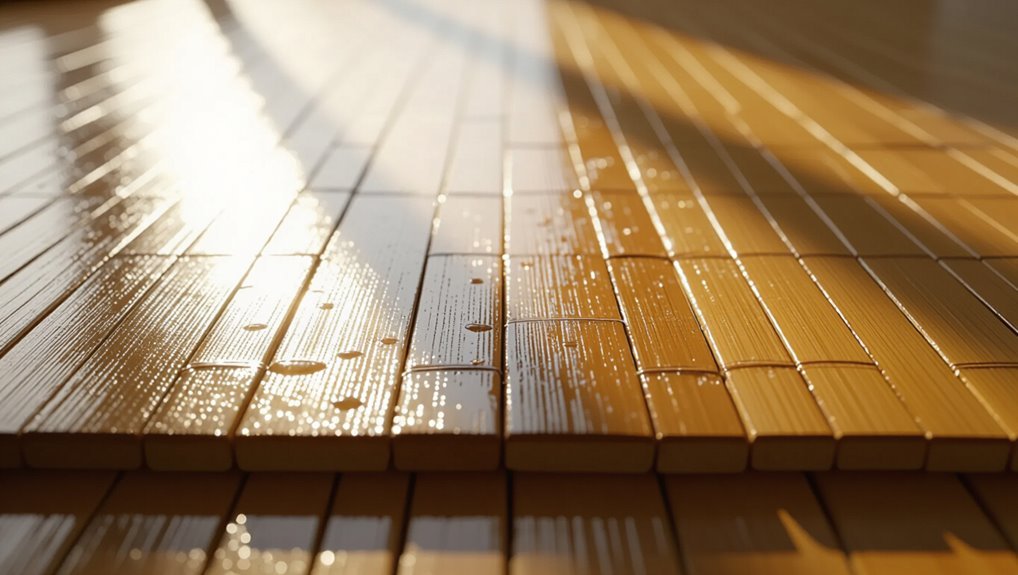
If moisture, heat, or improper installation affects your bamboo floors, you’ll notice distinct problems—warping, cupping, and buckling—that look similar at a glance but have different causes and fixes.
Warping twists individual planks lengthwise. Cupping raises plank edges so centers dip. Buckling lifts entire sections off the subfloor.
Identify which you have to choose proper drying, repair, or replacement steps.
Dull finish versus scratched finish
Dull finishes and scratched finishes look similar at a glance, but they tell different stories about your bamboo floor’s condition and what you should do next.
A dull finish feels smooth but lacks shine—cleaning and a topical polish often restore it.
Scratches are surface abrasions or deeper gouges; you’ll need light buffing, refinishing, or targeted repairs depending on depth to protect the bamboo.
Discoloration, stains, and water marks
Though they can look similar at a glance, discoloration, stains, and water marks each point to different problems with your bamboo floor and need different fixes.
Discoloration often means sun damage or chemical exposure; move rugs and use UV-safe cleaners.
Stains from spills need targeted cleaners or light sanding.
Water marks signal moisture intrusion—dry thoroughly and repair seals to prevent warping.
Preparation Before Cleaning
Before you start, gather the right tools—soft microfiber mops, a dry dust mop, and a pH-neutral cleaner made for bamboo or hardwood.
Test any cleaner in an inconspicuous spot and wait for it to fully dry to check for discoloration or finish damage.
Also set the room to a stable, moderate temperature and humidity so the floor won’t shrink or swell while you clean.
Recommended tools and supplies (mop types, microfiber, cleaners)
You’ll need just a few quality tools to clean bamboo floors effectively: a soft microfiber mop (flat or looped) for everyday dusting, a slightly damp microfiber or sponge mop for wet cleaning, a vacuum or broom with soft bristles for loose debris, and a pH-neutral cleaner made specifically for hardwood or bamboo; skip steam mops, harsh detergents, and oil-based products that can damage the finish.
- Microfiber mop
- Damp sponge mop
- Soft-bristle vacuum/broom
- pH-neutral cleaner
How to test cleaners on an inconspicuous area
When testing a cleaner, pick a hidden spot—like inside a closet or under a cabinet—and apply a small amount to confirm it won’t dull, discolor, or damage the finish.
Wait the full recommended dry time, then inspect for sheen change, softening, or residue.
If safe, proceed with a diluted batch on a larger inconspicuous area before cleaning the whole floor.
Room conditions to set (humidity, temperature)
After confirming a cleaner won’t harm the finish, set the room’s environment so your bamboo responds predictably during and after cleaning.
Keep humidity between 35%–55% and temperature around 60–80°F (15–27°C). Use a humidifier or dehumidifier as needed, and avoid extreme swings.
Stable conditions prevent cupping, gaps, and finish issues while you clean and as the floor dries.
Step-by-Step Safe Cleaning Routine
Start with simple daily care—sweep or dust to keep grit from scratching the finish.
Once a week you’ll dry- or barely-damp mop using the exact technique recommended for bamboo, and once a month use a diluted, floor-safe cleaner at the stated ratio for a deeper clean.
For spills, sticky residue, and scuffs you’ll learn which cleaners and tools to use and which to avoid so you don’t damage the wood.
Step 1 Daily/Regular maintenance: sweeping and dusting
Keep dust and grit off your bamboo floors with a quick daily sweep or dusting—this prevents scratches and preserves the finish.
You should remove debris before it abrades the surface, use soft tools, and spot-check high-traffic zones.
- Use a microfiber dust mop
- Sweep corners daily
- Keep pet nails trimmed
- Empty mats and baskets often
Step 2 Weekly cleaning: dry or slightly damp mopping (exact technique)
Mop your bamboo floors once a week with a dry or slightly damp microfiber mop to lift dirt without saturating the wood; excessive water can warp boards or damage the finish.
Move mop with the grain in slow, overlapping strokes, rinsing or replacing the pad when dirty.
Wring the mop thoroughly if damp, and dry any damp spots immediately to prevent moisture damage.
Step 3 Monthly deeper clean: recommended products and dilution ratios
Once a month, you’ll do a deeper clean using a gentle, pH-neutral wood floor cleaner diluted per the manufacturer’s instructions—typically 1–2 ounces of concentrate per gallon of water—so you remove grime without stripping the finish or swelling the bamboo.
Choose brands labeled for hardwood or bamboo, avoid ammonia or oil soaps, test in a small area, and use a microfiber mop with minimal moisture for even, safe results.
Step 4 Spot cleaning for spills and stains (what to use and avoid)
After your monthly deep clean, you’ll still need to handle everyday spills and stains quickly to protect the finish and prevent discoloration.
Blot liquids immediately with a soft microfiber; don’t let them sit. For sticky spots, dampen the cloth with plain water or a pH-neutral hardwood cleaner—never use vinegar, bleach, abrasive pads, or steam.
Rinse, dry thoroughly, and repeat if needed.
Step 5 Dealing with sticky residue and scuff marks
Step 5 shows you how to remove sticky residues and scuff marks safely without harming the finish:
Gently warm sticky spots with a damp cloth, then lift residue with a soft plastic scraper or microfiber pad.
For scuffs, rub lightly with a tennis ball or melamine eraser.
Wipe area with a damp microfiber, then dry.
Test methods in an inconspicuous spot first.
Recommended Cleaners and What to Avoid
Stick to pH-neutral cleaners or simple DIY mixes like mild soap and water to protect your bamboo’s finish.
Avoid harsh chemicals and tools—no ammonia, concentrated vinegar, steam mops, or abrasive pads that can dull or warp the boards.
We’ll compare reliable commercial products with homemade remedies so you can pick what’s safest and most effective for your floor.
Safe, pH-neutral cleaners and DIY solutions
While you want your bamboo floors to look their best, using the right cleaner matters more than scrubbing harder; choose pH-neutral, water-based products or simple DIY mixes that won’t strip finish or damage the wood fibers.
Use gentle options and test first.
Recommended choices:
- pH-neutral hardwood cleaner
- Mild dish soap + water (few drops)
- Microfiber mop only
- Rinse and dry promptly
Harsh chemicals and tools to avoid (ammonia, vinegar excess, steam mops, abrasive pads)
You’ve picked the right gentle cleaners, but you also need to steer clear of products and tools that can silently ruin bamboo over time.
Avoid ammonia and concentrated vinegar—both strip finishes.
Never use steam mops or excessive water, which warp boards.
Skip abrasive pads, steel wool, or harsh scrubbing powders that dull and scratch.
Choose soft cloths and follow manufacturer guidance.
Comparing commercial products and homemade remedies
Curious which option works best for your bamboo floors? You’ll want gentle pH-neutral commercial cleaners or simple homemade mixes (water with a few drops of dish soap). Avoid vinegar, ammonia, and oil-based products. Test any cleaner on a hidden spot first and wipe up moisture quickly to prevent warping or dulling.
| Type | Pros | Cons |
|---|---|---|
| Commercial | Consistent, tested | Costly |
| Homemade | Cheap, customizable | Variable results |
| Warnings | Easy to test | Risk if wrong product |
Preventing Warping and Dulling (Best Practices)
To keep your bamboo floors from warping or losing their shine, control indoor humidity with a humidifier or dehumidifier and wipe up spills promptly.
Put doormats at entryways, use rugs in high-traffic zones, and keep grit off the surface to prevent scratches.
Protect furniture with felt pads and lift rather than drag pieces, and block or treat strong sunlight to preserve the finish.
Humidity and moisture control strategies (humidifiers, dehumidifiers)
One key way you’ll prevent bamboo floors from warping or dulling is by keeping indoor humidity steady—ideally between 35% and 55%—so the boards neither swell nor shrink.
Use a hygrometer to monitor levels. Run a humidifier in dry winter months and a dehumidifier during humid summers.
Place devices centrally, empty tanks regularly, and maintain filters to guarantee consistent, gentle moisture control.
Entryway and mat strategies to reduce grit and moisture
Because grit and moisture are the two biggest culprits that wear down bamboo, set up a simple entryway system that stops them before they hit your floors.
Place coarse outdoor mats, absorbent indoor mats, and a shoe rack or bench so visitors remove shoes.
Sweep mats regularly, shake out debris, and dry wet footwear.
Rotate mats seasonally to maintain effectiveness.
Furniture protection and movement tips (felt pads, lifting)
While furniture protects your room, it can damage bamboo floors when dragged or left with exposed legs—so prep pieces before placing them.
Use adhesive felt pads on all chair and table legs, check pads monthly for wear, and replace as needed.
Lift rather than slide heavy items, use furniture sliders for short moves, and distribute weight with wide, stable bases to prevent dents and scratches.
Sunlight and finish protection (rugs, UV treatments)
Sunlight can fade and weaken your bamboo floor finish, so take steps to block or filter UV rays and limit prolonged sun exposure.
Use area rugs in high-sun zones and rotate them periodically to equalize wear.
Apply UV-blocking window film or curtains, and consider a professional UV-stable finish or periodic recoat.
These measures protect color, prevent drying, and reduce warping risks.
Common Mistakes That Cause Damage
Don’t soak your bamboo—over-wetting and improper mopping can warp boards and lift seams.
Using the wrong cleaners or homemade mixtures can strip the finish and leave the surface vulnerable.
Also, don’t ignore humidity swings and seasonal care, because fluctuating moisture will cause gaps, cupping, or buckling.
Over-wetting and improper mopping techniques
If you soak bamboo floors or leave puddles behind, moisture can seep into seams and cause swelling, warping, or cupping.
You should mop with a damp, well-wrung microfiber mop, dry promptly, and avoid steam cleaners.
Follow these steps:
- Wring mop until barely damp.
- Work small sections.
- Dry with a clean cloth.
- Ventilate room quickly.
Using wrong cleaners or DIY mixtures that strip finish
Just as excess water can warp bamboo, the wrong cleaning agents can strip its protective finish and leave the surface vulnerable.
Don’t use harsh acids, ammonia, bleach, or undiluted DIY mixes—these dissolve sealers and fade color.
Stick to pH-neutral, manufacturer-recommended cleaners, test a small inconspicuous spot first, and rinse residues promptly so your floor retains shine and long-term protection.
Ignoring humidity swings and seasonal care
Because bamboo reacts to moisture, ignoring seasonal humidity swings can cause cupping, gaps, and splitting that you’ll notice long before cosmetic wear appears.
Monitor indoor humidity with a hygrometer, keep levels between 35–55%, and use a humidifier or dehumidifier as needed.
Wipe spills promptly, avoid wet-mopping, and acclimate new or replacement planks before installation to prevent stress and warping.
Repair and Restoration Options
You’ll need to know when you can buff and recoat a worn finish versus when the floor needs full refinishing.
For small scratches you can do spot repairs or localized refinishing, but deeper damage may require replacing individual boards.
If the job’s beyond your skill or affects many boards, hire a professional to guarantee a proper restore.
When you can buff and recoat vs. when to refinish
When your bamboo floor shows surface wear—light scratches, dullness, or a few scuffs—you can often buff and recoat to restore its finish; deeper damage like gouges, staining that reaches the core, or uneven wear from refinishing limits, however, means you’ll need to sand and refinish to get an even, long-lasting result.
Choose buffing for uniform, superficial wear; refinish when structure, color, or thickness is compromised.
Small scratch repairs and spot refinishing
Assess small scratches quickly so they don’t worsen—most surface nicks and light gouges can be fixed without a full refinish.
Clean the area, use a matching-colored wood filler or wax stick, then gently blend with a soft cloth.
For slightly deeper damage, sand minimally, apply matching stain, and seal with a water-based polyurethane.
Test products in an inconspicuous spot first.
Replacing boards and hiring professionals
If those spot fixes don’t hold up or damage runs deeper than a few scratches, you may need to replace individual boards or call in a pro.
You should assess matching grain and finish, then decide:
- Remove damaged board carefully
- Source matching plank or plank-cut
- Install and secure with proper adhesive/fasteners
- Hire a flooring pro for complex or structural issues
Maintenance Schedule and Checklist
You’ll keep bamboo looking its best by following a simple maintenance schedule that lists daily, weekly, monthly, and annual tasks.
Include seasonal checks for humidity, finishes, and high-wear areas, plus long-term care tips like refinishing intervals.
Use a checklist so you can quickly mark what’s done and what’s next.
Daily, weekly, monthly, and annual tasks
A simple, regular routine keeps bamboo floors looking their best and prevents costly repairs later: follow daily dry-cleaning, a weekly damp-mop, monthly deeper care, and an annual inspection/polish to catch wear early and maintain finish. You’ll sweep/vacuum daily, damp-mop weekly, deep-clean and buff monthly, and inspect/seal or polish yearly.
| Task | Frequency | Action |
|---|---|---|
| Sweep/vacuum | Daily | Remove grit |
| Damp-mop | Weekly | Mild cleaner |
| Deep care | Monthly | Buff/spot repair |
Seasonal checks and long-term care tips
When seasons change, check for gaps, cupping, or finish wear so you can address humidity-related damage before it worsens.
Inspect seams, baseboards, and connections; tighten loose boards and replace damaged planks promptly.
Monitor humidity and run a humidifier or dehumidifier to stay within 40–60%.
Recoat finish every few years, refinish when deeply scratched, and keep rugs and felt pads in place.
FAQ Common Questions About Cleaning Bamboo Floors
You’ve probably got a few quick questions about caring for bamboo—like whether vinegar or steam cleaners are safe, how to tackle water stains or white rings, and when refinishing is needed.
You’ll also want to know if mop brands or microfiber types actually matter.
Let’s answer these common concerns so you can protect your floors and make smart cleaning choices.
Can I use vinegar on bamboo floors?
Wondering if vinegar is safe for your bamboo floors? You can use a diluted vinegar solution (about 1/2 cup white vinegar to a gallon of warm water) sparingly for spot cleaning.
Wring the mop well to avoid excess moisture and never let liquid pool. Test an inconspicuous area first.
For regular care, stick to pH-neutral cleaners made for finished wood or bamboo.
Is steam cleaning safe for bamboo?
Is steam cleaning okay for bamboo floors? You shouldn’t use steam cleaners on bamboo.
High heat and moisture can penetrate seams, swell fibers, and lift or warp the planks. Even with sealed finishes, repeated steam exposure breaks down adhesives and finishes over time.
Stick to damp mops and manufacturer-approved cleaners to protect the floor’s surface and dimensional stability.
How do I remove water stains or white rings?
If steam cleaning can damage bamboo, standing water and spills can do the same by leaving white rings or cloudy stains on the finish.
Gently rub with a soft cloth and a mild oil-based cleaner or furniture polish to lift moisture from the finish.
For stubborn rings, try a paste of baking soda and water or a dedicated wood cleaner, then reapply finish if needed.
How often should bamboo floors be refinished?
How often you should refinish bamboo floors depends on traffic, finish type, and how well you maintain them; most homes need a refinishing or recoating every 3–10 years.
Check for visible wear, deep scratches, or areas where finish has worn through.
Lightly sand and recoat when finish thins; fully refinish only when boards are deeply damaged or color mismatch becomes obvious.
Will mop brands or microfiber types make a difference?
While brand names matter less than mop design and pad material, choosing the right microfiber and mop style will noticeably affect how well you clean and protect bamboo floors.
Pick a flat microfiber mop with a soft, non-abrasive pad to lift dirt without scratching. Avoid string mops and overly abrasive fibers.
Replace pads regularly and wash them without fabric softener to maintain absorbency and debris capture.