
Can You Install Vinyl Flooring Over Carpet? Here’s the Real Answer
You can in some cases install vinyl over low‑pile, firmly attached carpet, but it’s not ideal for thick, plush, wet, or damaged carpet. You’ll get best results with low‑profile carpet, a stable flat subfloor, and vinyl types like rigid LVP or glue‑down sheet installed per manufacturer instructions. Skipping carpet removal can shorten your new floor’s life and risk voiding warranties, so weigh cost and moisture risks—keep going to learn how to decide and proceed.
Quick Answer: Can You Install Vinyl Flooring Over Carpet?
Yes—you can in some cases, but it’s usually not ideal.
You’ll get good results only if the carpet is low-pile, firmly adhered, and the subfloor is flat; thick, plush, or loosely installed carpet should be removed.
If you’re unsure, remove the carpet to guarantee stability and longevity.
Short, Direct Recommendation
You can, but it’s usually not the best choice: thin vinyl planks or tiles can be installed over low-pile, well-secured carpet, yet doing so may shorten the new floor’s lifespan and cause stability, warranty, and appearance issues—so whenever possible remove the carpet first.
If you must, make sure carpet is low-profile, firmly attached, and perfectly level, and accept potential trade-offs before deciding.
When it’s acceptable and when it’s not
If you’re weighing the trade-offs from the short recommendation, here’s the quick answer: installing vinyl over carpet can work in a few limited situations but is usually a poor choice.
It’s acceptable for thin, low-pile, firmly anchored carpet in low-traffic rooms or temporary fixes.
Don’t do it over plush, damaged, or high-moisture carpet—removal is safer for longevity, appearance, and warranty compliance.
Basic Understanding: What Is Vinyl Flooring and How It Installs
You’ll want to know the common vinyl types—LVP and LVT planks, sheet vinyl, and peel-and-stick tiles—because each installs differently.
Installation methods range from floating and glue-down to simple peel-and-stick, and that choice affects whether you can install over existing carpet.
Also consider carpet construction—pile height, padding thickness, and tack strips all change how stable the subfloor will be.
Types of Vinyl Flooring (LVP, LVT, Sheet Vinyl, Peel-and-Stick)
Vinyl comes in several common formats—LVP (luxury vinyl plank), LVT (luxury vinyl tile), sheet vinyl, and peel-and-stick—each designed for different looks and installation methods.
You’ll pick based on appearance, thickness, backing, and room use. Consider durability, water resistance, and edge profile when choosing what suits your space.
- LVP: wood-look planks
- LVT: tile visuals
- Sheet: continuous roll
- Peel-and-stick: adhesive-backed
- Wear layer: protects design
Typical Installation Methods (Floating, Glue-Down, Peel-and-Stick)
Because each vinyl format installs differently, it helps to know the three common methods—floating, glue-down, and peel-and-stick—so you can match the product to your subfloor and skill level.
Floating clicks together over a stable underlayment. Glue-down bonds planks or sheets directly to a solid substrate for durability.
Peel-and-stick sticks easily but relies on a clean, smooth surface and is less forgiving.
How Carpet Construction Affects Subfloor Performance (pile, padding, tack strips)
When you lay vinyl over carpet, the carpet’s pile height, padding thickness, and tack strips all change how the subfloor performs and whether the installation will last.
High pile and thick padding compress, causing uneven support and panel flex that can crack vinyl. Tack strips create gaps and sharp edges.
You’ll need to remove or flatten these elements for a stable, long-lasting vinyl installation.
Key Factors That Determine Feasibility
Before you decide to lay vinyl over carpet, check a few critical factors that determine whether the job will work.
Measure carpet thickness and padding, confirm the subfloor is level and stable, and inspect for moisture or mold that could cause problems.
Also verify door clearances, threshold heights, and any warranty or manufacturer rules that might prohibit installation over carpet.
Carpet Thickness and Padding Constraints
If your carpet is too thick or sits on heavy padding, it can prevent vinyl from lying flat and locking properly.
So you’ll need to assess both pile height and underlay before deciding to install. Measure pile—ideally low-profile or loop less than 1/4″—and remove plush padding.
Firm, dense underlay may work; fluffy, spongy cushioning won’t support vinyl and risks seams, gaps, and movement.
Subfloor Levelness and Stability Requirements
Because a stable, level subfloor keeps vinyl flat and seams tight, you’ll need to evaluate both flatness and firmness before installing over carpet.
Press across the carpet to detect soft spots, dips, or springy areas. If unevenness exceeds manufacturer tolerances, remove or reinforce the substrate.
Secure loose sections, add a rigid underlayment, and guarantee joists and subflooring don’t flex under foot traffic.
Moisture and Mold Considerations
When evaluating whether you can install vinyl over carpet, start by checking for moisture and mold—these problems can ruin the new flooring and void warranties.
You should lift carpet and padding to inspect stains, smell mustiness, and use a moisture meter on the subfloor.
If mold or elevated moisture exists, address remediation and drying first; otherwise, don’t install vinyl over compromised surfaces.
Door Clearance and Transition Height Issues
While installing vinyl over carpet might seem quicker, you’ll need to check door clearances and threshold heights carefully to avoid scraping doors or creating tripping hazards.
Measure door gaps, account for added carpet-plus-vinyl thickness, and test door swing. Adjust hinges or trim doors if needed.
Also plan smooth connections at room edges and stairs to meet code and prevent snags or uneven thresholds.
Warranty and Manufacturer Guidelines
If you want your new vinyl to stay protected and your installation to pass muster, check the manufacturer’s guidelines and warranty terms before you start — they often spell out whether laying vinyl over carpet voids coverage, which subfloor types you can use, and any prep or adhesive requirements you’ll need to follow.
Ignoring them can void warranties; get written approval or follow specified installation methods.
Step-by-Step: How to Install Vinyl Flooring Over Carpet (When Advisable)
Before you start, you’ll inspect the carpet and padding to decide if shaving, compressing, or removing the pad is needed for a stable base.
Then you’ll plan for a level underlayment—often plywood—acclimate and lay out your vinyl planks or sheets, and choose between a floating or glue-down installation.
Follow each step carefully to guarantee the vinyl performs well over the prepared carpet surface.
Step 1 Evaluate Existing Carpet and Padding
Start by closely inspecting the carpet and padding—your decision to install vinyl over them hinges on what you find.
Check for levelness, stains, odors, and wear; note padding thickness. If conditions are good, proceed; if not, reconsider removal.
Consider these specifics:
- pile height and density
- padding thickness
- moisture or mold
- adhesive residue
- subfloor changes
Step 2 Prepare the Carpet Surface (shaving, compressing, or removing padding)
Prepare the carpet surface so your new vinyl will lay flat and last—this means shaving high pile, compressing or removing thick padding, and addressing any loose seam or fringe.
Use a power trimmer for dense pile, flatten remaining fibers with a roller, and strip padding that’s over 1/4 inch or deteriorated.
Secure seams and tack down edges to prevent movement before proceeding.
Step 3 Create a Stable, Level Base (plywood underlayment options)
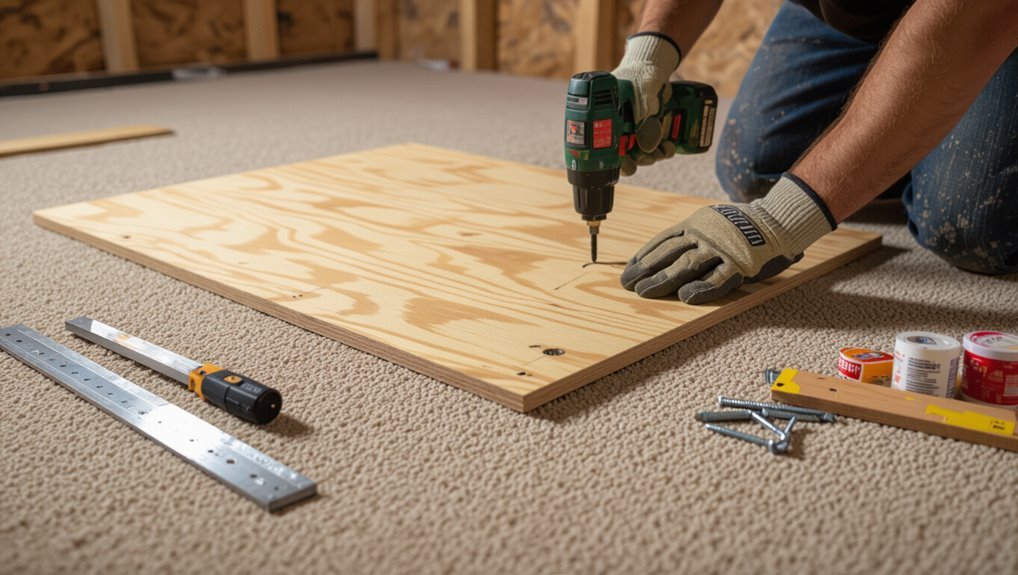
Once the carpet surface is flattened and stable, you’ll need to create a rigid, level base—typically by installing plywood underlayment—so the vinyl won’t flex, buckle, or show seams.
Choose 1/4″ to 3/8″ tongue-and-groove or sanded plywood, screw it to the subfloor through carpet, stagger seams, fill gaps with floor-leveler, and sand high spots for a smooth, stable foundation before proceeding.
Step 4 Acclimate and Lay Out Vinyl Planks/Sheets
Before you lay a single plank, let the vinyl acclimate in the room for at least 48 hours so it settles to the same temperature and humidity as the subfloor; doing this prevents gaps, buckling, and edge peaking after installation.
Unbox and spread planks or sheets flat, inspect for defects, plan staggered seams, mark start lines, and dry-fit rows to confirm pattern, direction, and cuts before permanently securing.
Step 5 Install Floating or Glue-Down Vinyl Over Prepared Surface
With the planks acclimated and your layout confirmed, you’re ready to install either a floating or glue-down system over the prepared carpet surface.
For floating, click planks together, stagger seams, and use spacers at edges.
For glue-down, apply recommended adhesive evenly, press planks firmly, and roll to remove bubbles.
Trim last rows for a snug fit.
Step 6 Finish with Proper Transitions, Baseboards, and Door Adjustments
6. Finish by installing threshold strips at doorways and between rooms to prevent edges from lifting.
Reattach or replace baseboards, nailing them to the wall—not the new flooring—to allow expansion.
Trim door bottoms so doors clear the vinyl by about 1/8 inch.
Check thresholds, secure molding, and inspect seams for gaps.
Test doors and thresholds to guarantee smooth operation and a clean, professional look.
Alternative Methods and When to Remove Carpet First
Before you decide to install vinyl over carpet, consider when you’ll actually need to remove the existing carpet—bad padding, severe stains, or uneven subflooring usually means full removal is required.
We’ll compare the pros and cons of laying vinyl over carpet versus stripping it out, including differences in cost, time, and labor.
That way you can choose the option that fits your budget and long-term goals.
Situations Requiring Full Carpet Removal
Although you can sometimes install vinyl over low-pile carpet or use a floating underlayment, there are clear situations where you should remove the carpet entirely first: when the carpet is thick, uneven, water-damaged, or stretches across multiple levels that require a flush connection.
Remove carpet if it traps odors, harbors mold, has loose seams, or prevents proper adhesive bonding; leave it only when surfaces meet manufacturer guidelines.
Pros and Cons of Installing Over Carpet vs. Removing Carpet
If you’re weighing your options, installing vinyl over carpet can save time and money and reduce demolition dust, but it sacrifices long-term stability, warranty compliance, and often comfort underfoot; removing the carpet first gives you a flat, clean substrate that improves adhesion, lifespan, and appearance, though it adds labor, disposal cost, and potential subfloor repairs.
| Option | Benefit | Drawback |
|---|---|---|
| Over carpet | Quick, less mess | Less stable |
| Remove carpet | Better results | More work |
| Hybrid | Targeted removal | Complexity |
Cost, Time, and Labor Comparisons
When you compare costs, time, and labor for installing vinyl over carpet versus removing the carpet first, the trade-offs become clear: installing over carpet saves removal costs and time but may need extra adhesive, underlayment, or repairs and shortens vinyl life.
Removing carpet costs more up front and takes longer, yet gives a stable subfloor, better warranty eligibility, and longer-lasting results.
Common Problems and Mistakes to Avoid
Don’t skip checking the carpet and subfloor — soft spots and uneven areas can cause peaking and telegraphing that ruin the vinyl’s appearance.
If you ignore proper adhesive and moisture barriers you’ll face adhesion failures, trapped dampness, and mold risk.
Always follow the manufacturer’s instructions or you could void the warranty and lose coverage.
Issues Caused by Uneven or Soft Subfloors
Because an uneven or soft subfloor can’t properly support vinyl over carpet, you’ll quickly run into peeling, buckling, and premature wear.
Low spots cause flexing that stresses seams and backing; high spots create pressure points.
Soft areas let planks sag and creak, accelerating damage.
You should inspect, level, or replace the subfloor before attempting installation to guarantee long-term performance.
Adhesion Failures and Peaking/Telegraphing
If you skip proper surface prep or use the wrong adhesive, you’ll quickly see edges lift, seams separate, or patterns bulge — problems known as adhesion failures and peaking/telegraphing.
You should remove loose fibers, stabilize the carpet or install a suitable underlay, choose adhesive compatible with both materials, and follow manufacturer trowel and cure times to prevent gaps, bumps, and premature failure.
Moisture Trapping and Mold Risk
When you cover carpet with vinyl without addressing moisture, you can trap dampness between layers and create an ideal environment for mold and mildew to grow.
You’ll risk musty odors, health issues, and structural damage as spores spread.
Always check for stains, humidity sources, and water history.
If any moisture exists, remove the carpet and dry the subfloor before installing vinyl to prevent mold.
Voiding Warranties by Ignoring Manufacturer Instructions
Although installing vinyl over carpet might seem like a shortcut, ignoring manufacturer instructions can instantly void your warranty and leave you footing the bill for repairs.
You’ll also risk denied claims if moisture, improper subfloor prep, or unsupported seams cause failures.
Read guidelines, follow recommended adhesives and underlays, and document the installation. That protects coverage and guarantees you won’t pay for preventable mistakes.
Best Practices and Professional Tips
Before you start, make a quick tools-and-materials checklist so you don’t get stuck mid-job.
Know when to use underlayment or plywood versus installing directly.
Follow simple cleaning and maintenance steps after installation, and decide whether the project is within your skill set or if you should hire a pro.
These practical tips will save time and prevent costly mistakes.
Tools and Materials Checklist
1 essential kit will keep your vinyl-over-carpet install efficient and durable: gather the right tools, materials, and safety gear before you start.
You’ll need reliable cutting, measuring, and adhesive tools, plus protective equipment and cleanup supplies to guarantee a professional result.
- Utility knife with spare blades
- Tape measure and straightedge
- Vinyl adhesive or double-sided tape
- Knee pads and gloves
- Broom and shop vacuum
When to Use Underlayment or Plywood vs. Direct Installation
If your carpet is low-pile, firmly attached, and the subfloor is flat and dry, you can often install vinyl directly over it; but when the carpet is thick, cushioned, or loose, adding a layer of plywood or a specialized underlayment creates the stable, rigid base vinyl needs to avoid telegraphing and premature wear.
Choose 1/4″ to 1/2″ exterior-grade plywood or dense underlayment, fasten securely, and make certain connections match floor height.
Cleaning and Maintenance Tips Post-Installation
Once the vinyl is fully settled, keep it looking and performing its best with a simple routine of sweeping or vacuuming (no beater bar) and damp mopping using a manufacturer-approved cleaner; this removes grit and spills that cause scratches and wear without damaging the surface or finish.
Wipe up spills promptly, use felt pads on furniture, avoid wax or abrasive cleaners, and protect high-traffic areas with rugs.
When to Hire a Pro
While many homeowners can handle floating vinyl over carpet, call a pro when the job involves uneven subfloors, glued-down carpet, complex room layouts, or extensive trimming around cabinets and stairs—these situations need tools, experience, and precision that prevent costly mistakes.
You should also hire pros if warranties require professional installation, if moisture issues exist, or if you lack time, confidence, or specialized tools.
Case Scenarios and Examples
You’ll look at three common situations where laying vinyl over carpet might be tempting: a short-term rental or temporary fix, a long-term home renovation, and a basement or other high-moisture area.
For each scenario you’ll weigh pros, cons, and practical steps to help you decide if the approach will hold up.
Then you’ll get clear examples and recommended alternatives when vinyl-over-carpet isn’t the right choice.
Scenario A Short-Term Rental or Temporary Fix
If you need a quick, cost-effective update for a short-term rental or a temporary fix, installing vinyl plank flooring over carpet can be a practical option — provided you accept some trade-offs.
You’ll save time and money, improve appearance, and reduce downtime, but expect reduced durability, possible firmness issues, and potential warranty voids.
Use low-pile carpet and secure edges for best short-term results.
Scenario B Long-Term Home Renovation
Short-term fixes can work, but for a long-term home renovation you should plan differently because durability, comfort, and resale value matter more.
You’ll likely remove carpet, assess subfloor flatness, and install a stable underlayment before laying vinyl.
Choose high-quality plank or sheet vinyl rated for longevity, factor in changes and insulation, and hire pros if you want guaranteed performance and higher resale appeal.
Scenario C Basement or High-Moisture Area
Because basements and other high‑moisture areas trap dampness, you should treat moisture control as the top priority before installing vinyl over carpet.
Test for vapor, fix leaks, and guarantee proper drainage and ventilation.
If moisture persists, remove the carpet, dry and seal the subfloor, then install a moisture barrier and choose waterproof vinyl.
Otherwise, don’t risk mold or adhesive failure.
Cost and Time Estimates
You’ll want to compare typical cost ranges for installing vinyl directly over carpet versus removing the carpet first, since removal can add labor and disposal fees.
Also consider estimated timelines: DIY installs can take a weekend for a single room, while pros may finish faster but need scheduling time.
Knowing both price and time expectations helps you choose the most practical option for your situation.
Typical Cost Ranges for Installing Over Carpet vs. Removal
Installing vinyl directly over carpet can save you both time and money up front, but the exact savings depend on carpet condition, room size, and the vinyl system you choose. You’ll pay less if carpet stays; removal adds labor, disposal, and possible subfloor repairs. Compare quotes and factor materials.
| Option | Typical Cost/Sq Ft |
|---|---|
| Install over carpet | $2–$6 |
| Remove carpet + install | $4–$10 |
Estimated Project Timelines for DIY and Professional Installation
When you weigh DIY against hiring pros, the timeline can swing widely based on room size, carpet condition, and the vinyl system you pick.
For DIY, expect 1–3 days for prep, leveling, and adhesive or click installation in an average room.
Pros typically finish in 4–8 hours per room plus drying time; complex jobs or carpet removal add a day or two.
FAQ
You’ll probably have specific questions like whether peel-and-stick works on carpet, if vinyl will float over high-pile fibers, and which vinyl types are best for this job.
You’ll also want to know how carpet installation affects warranties and whether trapping carpet under vinyl can cause odors or mold.
Below are clear answers to each of these common concerns.
Can I install peel-and-stick vinyl over carpet?
Wondering if peel-and-stick vinyl will stick to carpet? You shouldn’t install it directly on carpet: adhesive needs a firm, smooth surface.
Low-pile, dense commercial carpet might hold temporarily, but seams, padding, and fibers prevent lasting bond and can cause bubbles, shifting, or damage.
For reliable results, remove carpet and prepare a clean, flat subfloor before applying peel-and-stick vinyl.
Will vinyl float properly over high-pile carpet?
Can vinyl planks float properly over high-pile carpet? Probably not reliably.
High-pile carpet compresses unevenly, preventing the rigid locking system from engaging and causing gaps, buckling, or noise.
You’ll get better results by removing thick carpet or installing a firm, level underlayment.
If you insist on floating over carpet, choose low-pile, tightly woven carpet and test a small area first.
How does installing over carpet affect the vinyl warranty?
If you plan to install vinyl over carpet, check the manufacturer’s warranty first—many void coverage when products are laid over soft or nonapproved substrates.
You’ll likely void labor and product warranties if installation doesn’t follow guidelines like required underlayment, subfloor prep, or concrete moisture limits.
Document approval in writing from the maker to keep warranties intact before you proceed.
Can installing vinyl over carpet cause odors or mold?
Although vinyl itself doesn’t feed mold, installing it over carpet can trap moisture, odors, and existing contaminants beneath the planks.
So you’ll likely notice musty smells or accelerated mildew growth if the carpet or subfloor is damp, soiled, or wasn’t fully dried and cleaned first.
You should inspect, clean, and dry everything; otherwise, hidden dampness can cause persistent odors and mold that are hard to remediate.
What is the best vinyl type for installing over carpet?
Which vinyl works best over carpet depends on the carpet’s thickness and your priorities, but as a rule you’ll get the most reliable results with rigid, thin-profile vinyl plank or engineered click-lock luxury vinyl planks (LVP) designed for floating installation—these resist compressing into the pile, lock securely, and tolerate slight unevenness better than very flexible or peel-and-stick sheets.
Choose 5–8mm rigid or thick-core LVP.