
How to Clean Hybrid Flooring Without Causing Damage or Streaks
You can keep hybrid flooring spotless and streak-free by removing grit first with a soft broom or vacuum, then using a barely damp microfiber mop and a pH‑neutral, no‑wax cleaner diluted per instructions. Wring the mop well and clean along the plank direction to avoid streaks. Spot‑clean spills immediately and dry with a microfiber cloth. Avoid abrasive tools, harsh chemicals, waxes, and excess water to prevent damage — keep going to learn detailed tips and routines.
How to Clean Hybrid Flooring Without Causing Damage or Streaks
You’ll protect your hybrid flooring by using gentle, pH-neutral cleaners, a soft mop, and minimal water to avoid swelling or warping.
Wring out the mop thoroughly and clean in the direction of the planks to prevent streaks and residue.
Finish by drying with a microfiber cloth and ventilating the room to speed evaporation.
Best Practices in One Paragraph
Although hybrid flooring is durable, cleaning it the right way prevents damage and streaks. You should sweep or vacuum debris, use a damp microfiber mop with a manufacturer-approved cleaner, avoid excess water and harsh chemicals, blot spills promptly, and protect high-traffic areas with mats.
Regular gentle maintenance following these how to clean hybrid flooring tips keeps surfaces streak-free and long-lasting.
Understanding Hybrid Flooring
Hybrid flooring blends a rigid core with a printed surface to give you the look of wood or stone while being more water-resistant than laminate and sturdier than traditional vinyl.
Its top layers—surface textures, finishes, and wear layers—determine scratch resistance, sheen, and how cleaning products interact with it.
Because finishes and wear layers vary, the wrong cleaner or excess moisture can leave streaks or damage the surface, so you’ll need to match your cleaning method to your floor’s construction.
What Is Hybrid Flooring and How It Differs from Vinyl/Laminate/Wood
Imagine a floor that combines the best of several materials: that’s what hybrid flooring is. You get rigid core stability with waterproof performance and realistic visuals.
Unlike traditional vinyl, it’s firmer; unlike laminate, it tolerates moisture better; unlike solid wood, it won’t swell or dent as easily.
You’ll enjoy easy installation, durability, and lower maintenance without sacrificing appearance.
Common Surface Materials, Finishes, and Wear Layers
Now that you know how hybrid flooring blends materials and benefits, it helps to look closer at what you actually walk on: the surface materials, finishes, and wear layers that determine appearance and longevity. You’ll check wear-layer thickness, textured vs. smooth finishes, UV-cured coatings, and protective embossing to pick durable, low-maintenance options that resist scuffs and look consistent.
| Component | Purpose |
|---|---|
| Wear layer | Scratch resistance |
| Finish type | Sheen, UV protection |
| Surface material | Aesthetics, texture |
| Embossing | Realistic grain, slip control |
Why Hybrid Flooring Can Streak or Be Damaged by Cleaning
Because hybrid floors combine multiple layers and specialized coatings, cleaning can leave streaks or cause damage if you use the wrong methods or products.
You need to avoid harsh chemicals, abrasive tools, and excess water that can erode coatings, swell cores, or leave residue.
Choose pH-neutral cleaners, soft microfiber mops, and minimal moisture to protect finish and prevent visible streaking or long-term harm.
Before You Start Preparation and Safety
Before you start cleaning, make a quick daily maintenance checklist so you don’t miss sweeping, spot-cleaning, or wiping up spills.
Keep basic tools and supplies on hand—microfiber mop, pH-neutral cleaner, soft broom, and felt pads for furniture.
And avoid harsh chemicals, steam cleaners, and abrasive scrubbers that can damage the wear layer.
Daily Maintenance Checklist
Daily upkeep keeps hybrid flooring looking like new and prevents dirt and grit from wearing the surface.
Do a quick sweep or vacuum daily, spot-clean spills immediately, and mop only when needed with a damp cloth.
Rotate rugs and check entry mats for trapped debris.
- Sweep or vacuum
- Spot-clean spills
- Damp-mop high-traffic areas
- Shake/clean entry mats
Tools and Supplies to Have on Hand
When you’re ready to clean, gather a few reliable tools and gentle supplies so the job goes quickly and won’t damage the floor.
You’ll want easy, safe options that lift dirt without scratching or leaving residue.
- Soft microfiber mop with washable head
- Dustpan and soft-bristle broom
- pH-neutral floor cleaner in a spray bottle
- Microfiber cloths for spot drying
What to Avoid (Products and Tools That Cause Damage)
If you want your hybrid floor to keep its finish, steer clear of harsh chemicals, abrasive tools, and excess water that can dull or warp the surface.
Don’t use bleach, ammonia, oil-based solvents, or vinegar concentrates.
Avoid steel wool, scouring pads, stiff-bristle brushes, steam cleaners, and soaking mops.
Test any cleaner on an inconspicuous spot before full use.
Step-by-Step Cleaning Routine
Start with dry cleaning—sweep or vacuum to remove grit that can scratch the surface.
Treat spills and stains immediately, then damp-mop with the recommended cleaner and minimal water.
Finish by drying thoroughly to avoid streaks or damage, and plan monthly or quarterly deep cleans as needed.
Step 1 Dry Cleaning: Sweeping and Vacuuming
Begin by removing loose dirt and debris with a broom or vacuum designed for hard floors; you’ll prevent scratches and make wet cleaning more effective.
Use slow, overlapping strokes and empty the dustbin frequently.
Visualize these actions:
- Bristles sweeping along baseboards
- Vacuum nozzle gliding over seams
- Corners cleared with a soft brush
- Dustpan capturing fine grit
Step 2 Spot Cleaning Tough Spills and Stains
When you spot-clean tough spills and stains, act quickly and gently to prevent them from setting into the wear layer; blot liquids, lift solids with a dull edge, and always test any cleaner in an inconspicuous spot first.
Use a damp microfiber and mild, pH-neutral cleaner for residue, work outward from the stain, rinse with clean water, and dry thoroughly to avoid damage.
Step 3 Damp Mopping: Correct Water and Cleaner Use
1 simple damp-mopping pass keeps hybrid floors clean without risking warping or finish damage: use a well-wrung microfiber mop and only a few ounces of pH-neutral cleaner diluted per the label, avoid soaking the floor, and change rinse water often so you’re not spreading dirt.
Work small sections, rinse the mop frequently, blot stubborn spots with minimal moisture, and replace overly dirty solution immediately.
Step 4 Drying Properly to Prevent Streaks and Water Damage
Dry your hybrid floor promptly with a clean, absorbent microfiber mop or towel to prevent streaks and water damage and to keep seams from swelling.
Work in small sections, blotting excess moisture and buffing until surfaces look matte and uniform.
Open windows or use a fan for faster drying, and avoid walking until completely dry to prevent marks and grout separation.
Step 5 Deep Cleaning Schedule and Method (Monthly/Quarterly)
Although you’re maintaining weekly care, you’ll want a monthly or quarterly deep clean to remove settled dirt and restore the floor’s finish.
Follow a clear routine so you don’t miss spots or over‑wet seams. Clear furniture, sweep, and vacuum crevices.
Use manufacturer-approved cleaner diluted per instructions, mop with minimal moisture, rinse if needed, then dry thoroughly.
Inspect seams and reapply finish boosters sparingly.
Best Cleaners and DIY Solutions
You’ll learn which commercial cleaners are safe for hybrid flooring and why their ingredients work without damaging the wear layer.
I’ll also share simple, tested DIY recipes using mild ingredients like vinegar and castile soap and explain when to avoid them.
Before using anything new, you’ll be shown how to do a quick patch test to protect your floor.
Recommended Commercial Cleaners and Why They Work
When you pick a cleaner for hybrid flooring, choose products formulated for resilient surfaces—they dissolve dirt and grime without stripping the wear layer or leaving a dull residue. Use pH-neutral, no-wax formulas and ready-to-use sprays to prevent streaks and buildup. Test first on a hidden area.
| Product type | Benefit | Example |
|---|---|---|
| pH-neutral | Gentle, non-stripping | No-wax cleaner |
| Spray | Quick spot cleaning | Ready-to-use |
| Floor solution | Deep clean without residue | Resilient-specific cleaner |
Safe Homemade Cleaners and Recipes
If you prefer making cleaners at home, you can get effective, gentle solutions that protect hybrid flooring while cutting costs.
Use mild, pH-neutral mixtures and avoid waxy or abrasive ingredients.
Try these simple recipes and imagine the textures and scents as you clean:
- Warm water with a few drops of gentle dish soap.
- Diluted white vinegar (very light).
- Rubbing alcohol plus water for spot cleaning.
- Castile soap solution.
How to Test a Cleaner Safely on Your Floor (Patch Test)
Because even gentle cleaners can react differently with finishes, always do a quick patch test before treating your whole hybrid floor.
Choose an inconspicuous corner, apply diluted cleaner, wait 10–15 minutes, then blot and inspect for discoloration, swelling, or residue.
If safe, clean a larger area. If not, rinse thoroughly and try a different solution or a manufacturer-recommended product.
Techniques to Prevent Streaks and Residue
To avoid streaks and residue on hybrid flooring, pick a flat microfiber mop and use short, overlapping strokes so you’re lifting dirt rather than pushing it around.
Make sure cleaners are properly diluted and rinse or use a two-bucket method to keep dirty water off the floor.
If you notice soap scum, switch to a mild, residue-free solution and wipe with clean water to remove buildup.
Choosing the Right Mop Type and Microfiber Technique
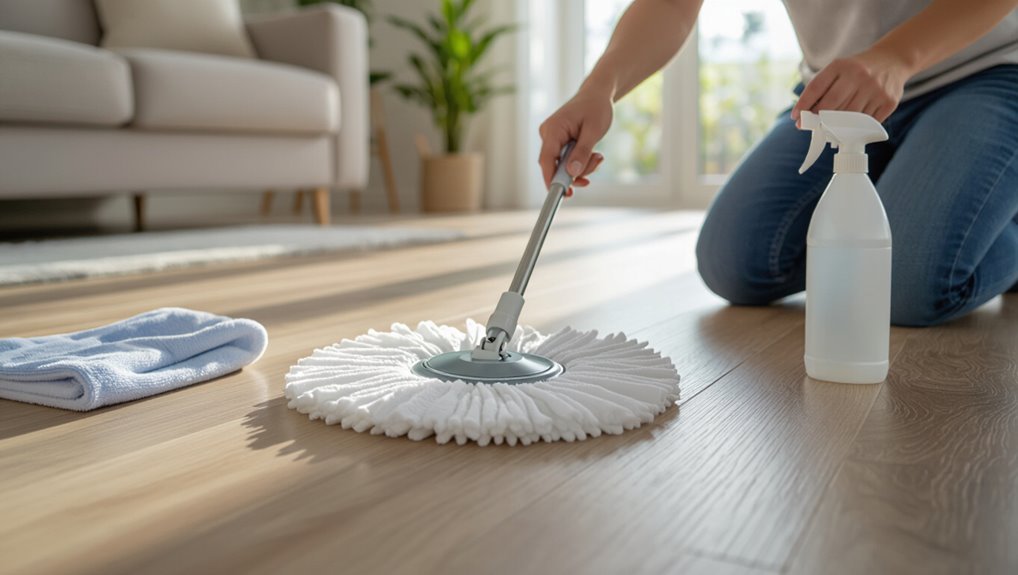
Several mop styles work on hybrid flooring, but picking one that pairs with a high-quality microfiber pad is key to avoiding streaks and residue.
Choose a flat or spin mop with removable, washable microfiber. Use light pressure and a figure-eight motion, rinse or replace pads when dirty, and avoid overly wet mops.
Spot-clean edges with a damp microfiber cloth for best results.
Proper Dilution, Rinsing, and Two-Bucket Method
When you dilute cleaner correctly and rinse pads often, you’ll cut down on streaks and residue that dull hybrid flooring; aim for the manufacturer’s recommended ratio and err on the weaker side if you’re unsure.
Use a two-bucket system—one for clean solution, one for rinsing—to keep soil out of the mop. Change rinse water frequently and wring pads until damp, not dripping.
Eliminating Soap Scum and Residue Buildup
Scrub away soap scum and residue with targeted techniques that prevent streaks and keep hybrid flooring looking its best: use a microfiber mop and a mild, pH-neutral cleaner, dilute properly, and work in small sections.
Rinse frequently with clean water, dry with a soft towel, and tackle stubborn spots with a gentle scrub pad.
Avoid waxes and oily cleaners to prevent buildup.
Common Problems and How to Fix Them
You’ll sometimes see streaks or a hazy film after mopping, scuffs and scratches from furniture or shoes, or water stains and edge swelling from spills.
In the next section you’ll learn quick fixes for removing haze, treating surface marks, and addressing moisture damage before it gets worse.
Follow these tips and you’ll keep your hybrid floor looking consistent and protected.
Removing Streaks and Haze After Cleaning
A streaky, hazy finish can make freshly cleaned hybrid flooring look worse than before, but you can usually fix it quickly by identifying the cause and adjusting your technique.
Check for residue from too-strong cleaner, dirty mop heads, or hard-water spots.
Rinse with clean water, dry with a microfiber cloth, and buff gently.
Repeat with diluted cleaner if needed.
Treating Scuffs, Scratches, and Surface Marks
Minor scuffs and surface marks are usually fixable with the right steps, while deeper scratches may need more attention or professional help.
Gently clean the area, then buff scuffs with a microfiber cloth or a white pencil eraser.
For light scratches, use a manufacturer-approved repair kit or colored filler matching your floor.
Test hidden spots first and avoid abrasive tools.
Dealing with Water Stains or Edge Swelling
Water damage can show up as dull water stains or swollen edges on hybrid flooring, and acting quickly can prevent worsening and costly repairs.
Blot excess moisture, dry with fans and dehumidifiers, then lift baseboards to inspect subfloor.
For minor stains, clean with a manufacturer-approved cleaner; for edge swelling, remove affected planks promptly and replace them to stop mold and structural issues.
Long-Term Care and Maintenance Strategies
To keep your hybrid floors looking their best, you should use rugs at high-traffic spots, felt pads under furniture, and sturdy entry mats to trap grit.
Pay attention to seasonal humidity and temperature changes that can cause expansion or gaps, and adjust humidity controls as needed.
Finally, know the signs that require recoating or replacement versus simple repairs so you can act before damage worsens.
Protective Measures: Rugs, Felt Pads, and Entry Mats
While hybrid flooring is durable, you’ll extend its life considerably by using simple protective measures like rugs, felt pads, and entry mats.
Place washable entry mats at doors, use low-profile rugs in high-traffic zones, add felt pads under furniture legs, and secure rugs with non-slip pads.
These steps prevent scratches, trap grit, and reduce wear without altering your floor’s finish.
- Entry mat
- Low-profile rug
- Felt pads
- Non-slip pad
Seasonal and Environmental Considerations (Humidity/Temperature)
Along with rugs and pads that guard against surface wear, you’ll also want to manage the conditions under and around your hybrid floor—humidity and temperature swings can affect its stability over time.
Use a humidifier or dehumidifier to keep indoor humidity near manufacturer recommendations, and maintain steady temperatures.
Monitor seasonal shifts, ventilate after moisture events, and avoid placing heat sources directly against the flooring.
When to Recoat or Replace vs. Repair
Because hybrid floors are designed for durability, you’ll usually handle most issues with targeted repairs instead of full recoats or replacements.
However, knowing when damage is superficial, structural, or aesthetic will save you time and money.
Repair scratches, dents, and finish wear with spot fixes or boards replacement.
Recoat only when wear is widespread; replace when core swelling, delamination, or persistent buckling occurs.
Comparison: Hybrid Flooring Cleaning vs. Other Floor Types
Although hybrid floors look like real wood, they clean differently from hardwood, laminate, vinyl, and tile, so you’ll want to adjust your routine and products accordingly. You should use pH-neutral cleaners, minimal water, and soft tools to prevent swelling or streaks. Compare care needs below.
| Floor Type | Water Use | Cleaner Type |
|---|---|---|
| Hybrid | Low | pH-neutral |
| Hardwood | Low | Wood-specific |
| Laminate | Very low | Mild, no soak |
| Vinyl/Tile | Moderate | Multi-surface |
Mistakes to Avoid When Cleaning Hybrid Flooring
When you skip proper precautions or reach for the wrong products, you can damage hybrid flooring quickly.
Don’t use abrasive scrubbers, harsh chemicals, excess water, or waxes. Instead, protect finishes and seams by choosing pH-neutral cleaners, microfiber mops, and damp—not soaked—cleaning.
Visualize common errors to avoid and keep your floors streak-free and long-lasting.
- Abrasive scrubbers
- Harsh chemicals
- Excess water
- Waxes
FAQ Common Questions About Cleaning Hybrid Flooring
You probably have quick questions about care, like whether steam cleaners or vinegar are safe and how often to deep clean.
You’ll also want to know if wax or polish works and the best way to remove tough stains like ink or oil.
Below are clear answers to those common concerns.
Can I Use Steam Cleaners on Hybrid Flooring?
Curious whether steam cleaners are safe for hybrid flooring? You should avoid high-heat steam; it can warp cores or loosen seams.
Low-heat, manufacturer-approved steamers used sparingly may be acceptable, but always check your floor’s warranty and test a hidden area first.
Better: use damp mopping with recommended cleaners to remove dirt without risking moisture or heat damage.
Is Vinegar Safe for Hybrid Floors?
Wondering if vinegar’s safe for your hybrid floors? You can use diluted white vinegar sparingly — mix one cup with a gallon of warm water — but avoid straight vinegar or frequent use, which can dull finishes over time.
Test a hidden spot first, mop gently, and rinse with clean water to remove residue.
Use pH-neutral cleaners for regular care.
How Often Should I Deep Clean Hybrid Flooring?
How often you should deep clean hybrid flooring depends on traffic, pets, and visible buildup. Aim for a thorough deep clean every 6–12 months, with more frequent attention (every 3–4 months) in high-traffic or pet-friendly homes.
Spot-clean regularly, sweep or vacuum weekly, and address spills immediately. Use manufacturer-approved cleaners and a damp mop for deep cleans to avoid moisture damage and surface wear.
Will Wax or Polish Work on Hybrid Flooring?
Can you use wax or polish on hybrid flooring? No—don’t.
Hybrid floors have a factory-welded wear layer that resists stains and scuffs; wax or polish can leave residue, create streaks, and interfere with warranties.
Instead, use manufacturer-approved cleaners and microfiber mops.
If you want extra shine, check the floor’s care guide first to avoid damaging the surface or voiding coverage.
How Do I Remove Tough Stains Like Ink or Oil?
If wax and polish are off the table, you’ll want targeted methods for stubborn spots like ink or oil so you don’t damage the wear layer.
Blot fresh spills immediately with a soft cloth.
For ink, use a cotton swab with isopropyl alcohol, testing first in an inconspicuous area.
For oil, apply mild dish soap and warm water, rinse, then dry thoroughly.
Quick Reference Cheat Sheet
Keep a slim kit of tools and supplies so you can clean hybrid flooring fast: a soft-bristle broom or vacuum with a hard-floor setting, a microfiber mop, pH-neutral cleaner, and a few microfiber cloths for spot work.
- Soft-bristle broom — sweep grit away.
- Microfiber mop — damp, not wet.
- pH-neutral cleaner — dilute per label.
- Cloths — blot spills, buff dry.
