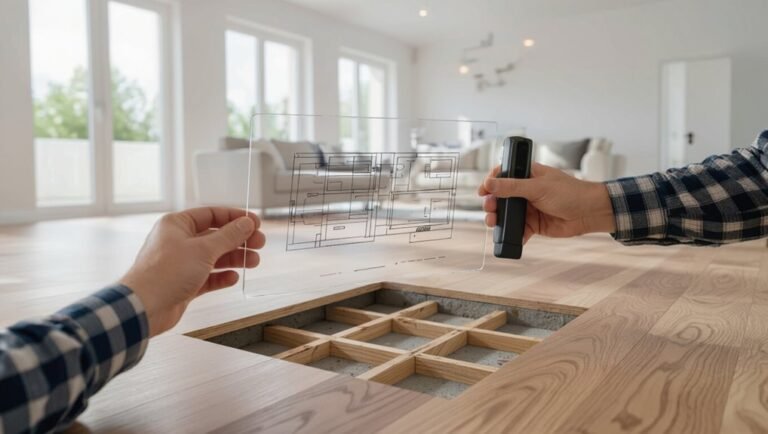
What Is Vinyl Composite Flooring? Benefits, Drawbacks, and Best Uses
Vinyl composite flooring (VCF) gives you a layered, budget-friendly floor that mimics wood or stone while resisting water, stains, and heavy wear. It combines PVC, fiberglass, and mineral fillers with a protective wear layer for durability, low maintenance, and sound dampening. It’s great for kitchens, basements, rentals, and light-commercial spots but can dent, off-gas VOCs, and won’t match premium natural material aesthetics. Keep going to see details on types, costs, and care.
What Is Vinyl Composite Flooring Quick Answer
Vinyl composite flooring (VCF) is a durable, layered vinyl product with a wear layer, printed design, and backing that looks like wood or stone but costs less.
If you want low-maintenance, water-resistant floors for busy homes, rentals, or light-commercial spaces, VCF’s a strong choice.
You’ll especially want it if you’re on a budget, need easy upkeep, or want quick installation.
Direct definition and one-sentence summary
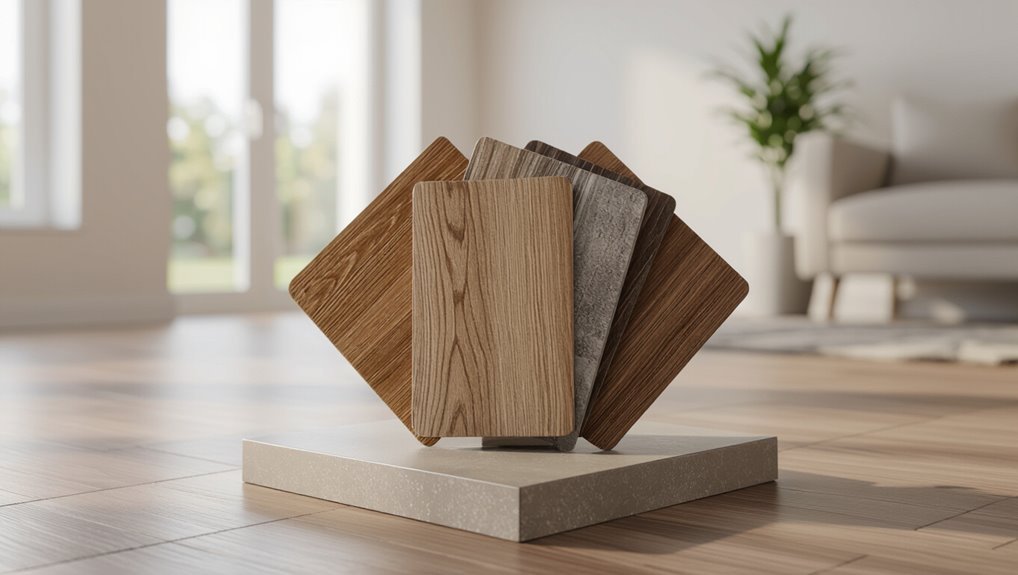
Although it looks like tile or wood, vinyl composite flooring (VCF) is a manufactured sheet or plank product made of layered PVC and mineral fillers with a printed design and protective wear layer.
It gives you a durable, water-resistant, low-maintenance surface suited for homes and commercial spaces.
In short, what’s vinyl composite flooring? It’s an affordable, resilient flooring option that resists moisture, stains, and heavy wear.
Who should consider VCF (brief buyer personas)
Anyone looking for tough, low-maintenance flooring should consider VCF.
You’ll appreciate it if you manage high-traffic areas, run a business, have kids or pets, or want budget-friendly updates.
If moisture resistance and easy cleaning matter, VCF fits kitchens, mudrooms, rental units, and basements.
It’s ideal when durability and practicality outweigh luxury aesthetics.
Basic Understanding Materials, Construction, and Types
To understand vinyl composite flooring, you’ll want to know the core materials—PVC, fiberglass, fillers and the protective wear layer—and how they affect durability and feel.
Different constructions like LVT, VCT, SPC and WPC (and where VCF fits) change rigidity, water resistance and installation methods.
Also note common formats and finishes—tiles or planks, click-lock or glue-down—to match performance with your project.
Vinyl composite flooring components (PVC, fiberglass, fillers, wear layer)
Think of vinyl composite flooring as a layered system where each component—PVC backing and core, a fiberglass reinforcement, mineral fillers, and a clear wear layer—plays a specific role in durability, stability, and appearance.
You rely on PVC for flexibility and moisture resistance, fiberglass for dimensional stability, fillers for cost and hardness, and the wear layer for scratch, stain, and UV protection while defining texture and gloss.
Construction types: LVT, VCT, SPC, WPC how VCF fits in
When you compare vinyl flooring types, you’ll see they’re built from similar materials but arranged into distinct constructions. You’ll find LVT focuses on realistic visuals, VCT is resilient commercial tile, SPC adds rigid stone core stability, WPC brings thicker cushioned cores, and VCF (vinyl composite flooring) sits between VCT and LVT, blending composition and installation flexibility.
| Type | Key trait |
|---|---|
| LVT | Realism |
| SPC | Rigid core |
Common formats and finishes (tiles, planks, click-lock, glue-down)
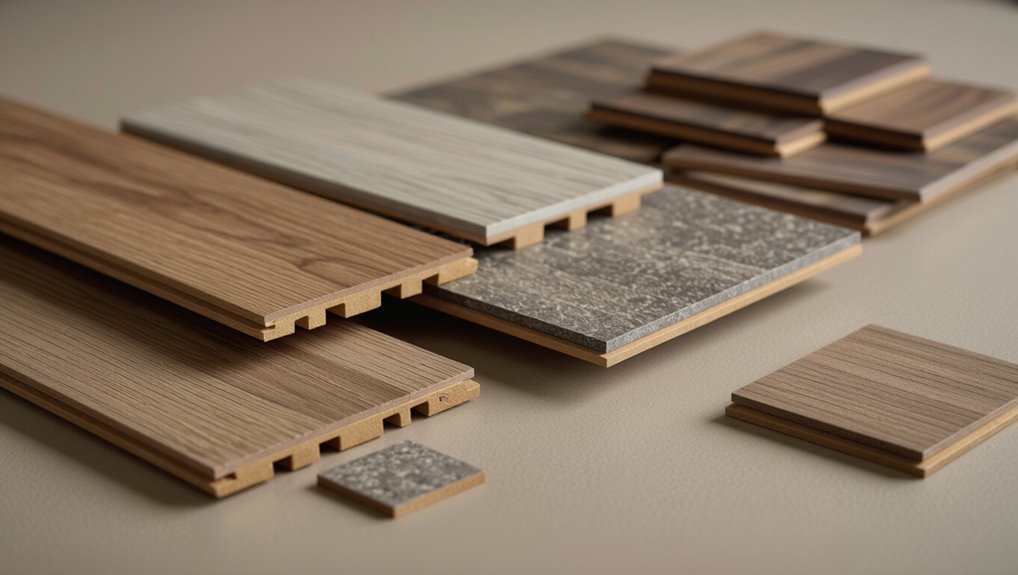
Formats and finishes shape how vinyl floors look, feel, and go down, so you’ll want to pick the right combination for your room and installer.
You can choose tiles or planks for scale and pattern. Click-lock gives DIY-friendly floating installs; glue-down offers permanent stability and better acoustics.
Finish options—matte, semi-gloss, embossed—affect slip resistance and realism.
Benefits of Vinyl Composite Flooring
You’ll find vinyl composite flooring offers tough durability and strong wear resistance for high-traffic areas.
It’s highly water-resistant with good moisture performance, while also giving you wide design versatility—realistic patterns and textures that mimic wood or stone.
Plus it delivers solid lifecycle value through lower installation and maintenance costs, along with comfortable, quieter, and more thermally stable underfoot feel.
Durability and wear resistance
Vinyl composite flooring stands up to daily life with impressive durability, so you won’t worry about scratches, dents, or heavy foot traffic wearing it down quickly.
Its tough wear layer resists abrasion and maintains appearance under pets, kids, and moving furniture.
You’ll find many options rated for commercial use, so choose higher wear ratings for busy areas to extend lifespan and reduce maintenance.
Water resistance and moisture performance
Because it handles spills and humidity so well, vinyl composite flooring makes wet areas far easier to maintain and live with.
You’ll get waterproof surfaces that resist staining, swelling, and mold compared with wood. Seams and edges can be sealed to prevent moisture infiltration, and many products tolerate subfloor dampness.
That reduces maintenance, prolongs lifespan, and lowers risk of water-related repairs.
Design versatility and aesthetics (patterns, textures, realism)
Design freedom makes vinyl composite flooring a standout choice for anyone who wants striking looks without the upkeep headaches.
You’ll find realistic wood, stone, and tile visuals with detailed grain, veining, and embossing that mimic natural materials.
Wide pattern, plank, and tile options let you create traditional, modern, or bold layouts.
Colors and finishes resist fading, keeping designs true over time.
Cost and lifecycle value (installation, maintenance, replacement)
Great looks matter, but you’ll also want to know how this flooring performs over time and what it costs to install, maintain, and eventually replace.
VCF typically offers low upfront costs versus hardwood, straightforward DIY or pro installation, and minimal routine upkeep—sweeping and occasional mopping.
Durable wear layers extend life; when replacement’s needed, planks can be swapped individually, reducing long‑term expense.
Comfort, sound, and thermal properties
While VCF looks like hard flooring, it usually feels softer underfoot thanks to cushioned cores or attached underlayment.
So you’ll find standing and walking more comfortable than on tile or hardwood. It absorbs impact, reduces foot fatigue, and dampens noise, making rooms quieter.
VCF also has modest insulating value, helping floors feel warmer in cool seasons, though you might still want rugs or radiant heat.
Drawbacks and Limitations
You should weigh several practical drawbacks before choosing vinyl composite flooring.
It can emit VOCs that affect indoor air quality, dent or tear from sharp impacts and heavy furniture, and pose repair and patching challenges when damaged.
Also note its limits around high heat or prolonged UV exposure and that it won’t fully match the look of premium natural materials.
Potential issues with VOCs and indoor air quality
Because vinyl composite flooring often contains plasticizers, adhesives, and stabilizers, it can emit volatile organic compounds (VOCs) that affect indoor air quality, especially in new installations or poorly ventilated spaces.
You may notice odors, headaches, or irritation; sensitive occupants could react more.
To reduce risks, ventilate during and after installation, choose low‑VOC products with certifications, and allow off‑gassing before full occupancy.
Susceptibility to sharp impact and heavy furniture
Beyond air-quality concerns, vinyl composite flooring also has physical limits you should consider.
It resists everyday wear but can dent or tear from sharp impacts, dropped tools, or high-heeled shoes. Heavy furniture can compress the core or leave permanent indentations, especially on thin or softer products.
Use protective pads, distribute weight, and avoid dragging to reduce damage risk.
Repairability and patching challenges
Although vinyl composite flooring stands up well to daily use, repairing deep gouges, tears, or seams can be tricky and often won’t restore the original look.
You’ll find small scratches and dents can be concealed with fillers or replacement planks, but color matching, texture, and seam visibility often remain imperfect.
DIY patches may fail; professional repair can be costly and sometimes means replacing sections.
Limitations in high-heat or UV-exposed environments
Repairing surface damage can be frustrating, and you’ll face different problems when vinyl composite flooring sits in hot or sunlit spots.
Extended heat can warp planks, soften adhesives, and cause seams to lift. Prolonged UV exposure fades color, dulls wear layers, and makes surfaces brittle over time.
You’ll need shading, UV-resistant coatings, or avoid installing VCF in intense sun or near heat sources.
Appearance vs. premium natural materials
Perception matters: when you stand over vinyl composite flooring, you’ll notice it mimics wood and stone but can’t fully replicate the depth, grain variation, and tactile warmth of premium natural materials.
You’ll get consistent patterns and fewer imperfections, which some call artificial. If you want authentic aging, unique knots, or stone veining that changes with light, choose real wood or stone instead of vinyl composite.
Best Uses and Ideal Locations
You’ll find vinyl composite flooring works well in many residential rooms—kitchens, bathrooms, basements, and living areas—because it handles moisture and wear better than many options.
It’s also suited for commercial spaces like retail, offices, healthcare, and education when you choose the right wear layer for low- versus high-traffic zones.
Check compatibility with radiant heating and your subfloor type before you install to guarantee performance and comfort.
Residential use cases (kitchen, bathroom, basement, living areas)
Vinyl composite flooring works well across most rooms in a home because it balances durability, water resistance, and comfort — making it a smart choice for kitchens, bathrooms, basements, and living areas.
You’ll get easy cleanup, slip-resistant options, and resilience to moisture and foot traffic. Choose thicker wear layers for busy zones and textured finishes for traction and realistic looks.
Commercial use cases (retail, offices, healthcare, education)
Because commercial spaces demand heavy wear, easy maintenance, and consistent appearance, VCF is a go-to choice for retail, offices, healthcare, and education — especially where budgets and uptime matter.
You’ll appreciate its stain resistance, hygienic surface, and quick installation that reduces disruption.
It handles rolling loads, frequent cleaning, and aesthetic consistency across large areas, making it practical for busy, budget-conscious facilities.
Low-traffic vs. high-traffic recommendations
Commercial settings put VCF through heavy use, but different areas within those environments call for different specifications.
For low-traffic zones—break rooms, private offices, display alcoves—choose thinner wear layers and decorative options to save cost.
For high-traffic corridors, lobbies, and cafeterias, pick commercial-grade VCF with thicker wear layers, reinforced cores, and high abrasion ratings to guarantee longevity and easier maintenance.
Compatibility with radiant heating and subfloor types
If you’re planning radiant heating or working with specific subfloors, check product specs carefully to certify proper performance and longevity.
Many vinyl composite floors work with low-temperature electric or hydronic radiant systems, but follow manufacturer limits.
Ascertain subfloors are flat, dry, and clean—concrete, plywood, and cement board are common.
Avoid direct contact with moisture-prone or uneven substrates without proper preparation.
Buying Guide How to Choose the Right Vinyl Composite Flooring
When choosing vinyl composite flooring, you’ll want to compare key specs like wear layer thickness, SPC vs WPC construction, and core density to match durability to traffic.
Learn to read industry ratings and warranty terms so you know what’s covered and for how long.
Balance style and budget with performance needs, and decide whether to buy from retailers, wholesalers, or pro suppliers based on selection and support.
Key specifications to compare (wear layer thickness, SPC/WPC, density)
Because the technical specs determine real-world performance, you’ll want to compare wear layer thickness, core type (SPC vs. WPC), and density before buying.
Focus on:
- Wear layer — thicker (20–30 mil) means better scratch and longevity.
- Core — SPC is rigid and water-resistant; WPC offers more cushion.
- Density — higher density resists dents and supports heavy traffic; check mm and kg/m³.
Interpreting industry ratings and warranty terms
Ratings and warranties tell you what to expect from a vinyl floor, so learn to read them carefully before you buy.
Check industry ratings like AC or ASTM for durability and slip resistance, and compare wear-layer warranties versus surface finish coverage.
Note exclusions—moisture, improper installation, color fade—and required maintenance.
Longer, transferable warranties often indicate higher quality and manufacturer confidence.
Matching style, budget, and performance needs
If you want a floor that looks great, fits your budget, and stands up to daily life, start by prioritizing the three factors — style, cost, and performance — and let those priorities guide every choice you make.
Compare plank visuals, thickness, wear layer, and installation type.
Balance upfront cost with longevity and maintenance needs, and pick the highest-performing option your budget allows.
Where to buy: retailers, wholesalers, and pro suppliers
Wondering where to buy vinyl composite flooring that meets your style, budget, and performance needs?
Check big-box retailers for selection and easy returns, online marketplaces for variety and reviews, and wholesalers for bulk discounts.
If you want warranty-backed products and installation support, go with pro suppliers or flooring centers.
Compare pricing, shipping, and sample policies before you commit.
Installation Overview Options, Steps, and Timeframe
Before you start, check the subfloor for levelness and moisture and let the planks acclimate as recommended.
Choose the right installation method—floating, glue-down, or loose-lay—based on your subfloor and room use.
Then follow a straightforward step-by-step process and plan time and labor accordingly, since projects can range from a few hours for a small room to a couple of days for more complex jobs.
Pre-installation checks (subfloor, moisture testing, acclimation)
Although it might seem tempting to rush, you’ve got to confirm the subfloor is flat, clean, and structurally sound, perform accurate moisture testing, and let the vinyl acclimate to the room conditions before laying any planks.
Check for levelness, damage, and debris; use a calibrated moisture meter per manufacturer specs; maintain temperature and humidity for 48–72 hours so planks settle and bond properly.
Installation methods: floating, glue-down, loose-lay
You’ve got three common installation methods for vinyl composite flooring—floating, glue-down, and loose-lay—each with different tools, skill levels, and time commitments.
You’ll choose floating for quick, DIY-friendly installs, glue-down for permanent, low-profile results in high-traffic areas, and loose-lay for fast, reversible installs on smooth subfloors.
Typical single-room installs range from a few hours to a day.
Step-by-step high-level installation process
Start by selecting the installation approach that fits your room and skill level—floating for DIY speed, glue-down for permanence and thin profile, or loose-lay for quick, reversible installs on smooth subfloors—and then follow a clear sequence of prep, layout, installation, and finishing steps.
- Prep subfloor: clean, level, acclimate planks.
- Layout: plan seams, connections.
- Install: place, secure, trim, add moldings.
Typical project time and labor considerations
Now that you’ve planned the install approach and basic steps, factor in how time and labor will shape the project.
Estimate removal, subfloor prep, acclimation, and installation hours per room. Solo installs take longer than crewed jobs; expect 1–3 days for average rooms, plus drying or adhesive cure times.
Budget skilled labor for tricky cuts, changes in elevation, and cleanup to avoid delays.
Maintenance, Cleaning, and Repair
To keep your vinyl composite floor looking its best, you’ll want a simple routine of sweeping or vacuuming daily and mopping with a manufacturer-approved cleaner for routine care.
For tougher stains or buildup, use targeted stain-removal tricks and periodic deep cleaning while avoiding harsh chemicals or abrasive tools that can damage the wear layer.
If damage occurs, you can often do spot repairs or replace individual planks, but know that refinishing is limited and long-term care—like using felt pads and matting—extends the floor’s life.
Daily and routine cleaning best practices
Keep daily cleaning simple and consistent to protect your vinyl composite flooring and extend its life.
Sweep or vacuum daily to remove grit, then damp-mop with a manufacturer-recommended cleaner; avoid abrasive tools and harsh chemicals.
Use furniture pads, rugs in high-traffic areas, and wipe spills promptly.
Check mop heads and replace when dirty to prevent scratches and residue buildup.
Stain removal and deep-cleaning methods
Stain removal and deep cleaning call for targeted products and careful technique so you won’t damage the wear layer or leave residues that attract dirt.
For stains, blot spills promptly, use pH-neutral cleaners or manufacturer-recommended stain removers, and test in an inconspicuous spot.
For deep cleaning, mop with diluted cleaner, rinse thoroughly, avoid abrasive tools, and dry to prevent streaks or moisture intrusion.
Repair options: spot repair, plank replacement, refinishing limits
While minor scuffs and isolated damage don’t always mean a full replacement, you should assess whether a spot repair, plank replacement, or refinishing (if your product allows it) is the most durable, cost-effective fix.
Each option has limits based on the wear layer, installation type, and manufacturer’s warranty. You can patch small gouges with repair kits, swap click-lock or glued planks, but refinishing usually isn’t possible on thin wear layers.
Products to avoid and long-term care tips
Because vinyl’s surface and installation type determine what’ll harm it, you should steer clear of harsh cleaners, waxes, steam mops, and abrasive tools that can strip the wear layer, cause swelling at seams, or void your warranty.
Instead, use manufacturer-approved pH-neutral cleaners, soft microfiber mops, felt pads under furniture, area rugs in high-traffic zones, and wipe spills promptly to prevent stains and moisture damage.
Common Mistakes and How to Avoid Them
You’ll save time and money if you address four common pitfalls before and after installation.
Don’t skip subfloor and moisture prep, pick a wear layer suited to traffic, use the correct adhesive and method, and follow maintenance guidelines so you don’t void the warranty.
In the next section we’ll explain how to avoid each mistake with simple, actionable steps.
Mistake 1: Ignoring subfloor and moisture prep
If you skip proper subfloor inspection and moisture testing, your new VCF can buckle, peel, or grow mold within months.
You should remove debris, level uneven areas, and repair damage before installation.
Test for moisture with a reliable meter or ASTM-approved method, then use an appropriate vapor barrier or primer when needed.
Don’t assume the subfloor is ready.
Mistake 2: Choosing too thin a wear layer for the use case
After confirming your subfloor and moisture protection, think about how the room will be used before picking a wear layer.
Don’t skimp: thin wear layers wear faster in high-traffic, commercial, or pet-heavy areas. Choose thicker wear layers for durability, scratch resistance, and longer warranties.
Match thickness to expected use to avoid premature replacement and higher lifetime costs.
Mistake 3: Using incorrect adhesives or installation method
Because different VCF products and subfloors demand specific adhesives or installation methods, using the wrong one can cause peeling, shifting, or long-term damage.
You should follow manufacturer instructions, match adhesive type to substrate, and use proper trowel size, acclimation, and moisture testing.
If you’re unsure, consult a flooring pro—correct prep and method prevent failures and protect warranties.
Mistake 4: Poor maintenance practices that void warranty
When you skip routine cleaning steps or use harsh chemicals, you can unknowingly void your VCF warranty and shorten the floor’s life.
Read the manufacturer’s care guide, use recommended cleaners, and avoid steam mops or abrasive pads.
Wipe spills promptly, use protective mats, and follow traffic-pattern maintenance.
Document your care routine to prove compliance if a warranty claim arises.
Cost Breakdown and Lifecycle Value
You’ll want to start by looking at typical price ranges for VCF—materials, installation, and any trim or underlayment—to set a realistic budget.
Compare those upfront and maintenance costs with hardwood, laminate, and tile to see where VCF saves or costs more over time.
Finally, weigh expected lifespan and resale impact to estimate your return on investment.
Typical price ranges (material, installation, accessories)
Typical vinyl composite flooring (VCF) projects run a wide price range depending on product quality, installation complexity, and necessary accessories: expect entry-level sheet or plank VCF materials to start around $0.75–$2 per square foot, mid-range luxury vinyl plank (LVP) and tile (LVT) around $2–$5/sq ft, and premium or specialized options up to $8–$12/sq ft; installation typically adds $1.50–$6/sq ft for straightforward glue-down or floating installs and more for full demolition, leveling, or pattern work, while underlayment, trim, joining strips, adhesives, and moisture mitigation can tack on another $0.50–$3/sq ft or fixed costs like $50–$300 for thresholds and $150–$600 for underlayment treatments.
| Item | Typical cost | Notes |
|---|---|---|
| Entry materials | $0.75–$2/sq ft | basic sheet/plank |
| Mid-range LVP/LVT | $2–$5/sq ft | popular choice |
| Installation | $1.50–$6/sq ft | varies by complexity |
Long-term cost comparison vs. hardwood, laminate, tile
Although upfront material and installation costs matter, you should weigh lifecycle expenses—maintenance, repair, refinishing, and replacement—because they determine true value over decades.
Vinyl composite often costs less to maintain than hardwood, avoids costly refinishing, and outlasts many laminates in moisture.
Tile can be durable but grout and crack repairs add expense.
Compare expected service life and periodic upkeep when choosing.
Return on investment and resale considerations
When evaluating return on investment and resale impact, focus on how vinyl composite flooring balances upfront cost with long-term value: it generally lowers ongoing maintenance and replacement expenses, resists moisture-related damage that can scare buyers, and can be styled to suit market tastes without the premium price of hardwood.
You’ll save on renovations, appeal to practical buyers, and recover a reasonable portion of cost at sale, especially in wet or rental properties.
Environmental and Health Considerations
You’ll want to weigh vinyl composite flooring’s recyclability and full lifecycle impacts when choosing materials.
Check for low-VOC products and certifications like FloorScore or GREENGUARD to reduce indoor air risks.
Also plan for disposal paths or take-back programs to handle end-of-life responsibly.
Recyclability and lifecycle impacts
Because vinyl composite flooring combines multiple materials and additives, its end-of-life options are more limited than many other floorings. You’ll need to weigh recycling availability, embodied energy, and potential emissions.
You should expect limited curbside recycling, rely on specialized take-back programs, and consider lifespan, maintenance, and disposal costs.
Choosing durable products and supporting circular initiatives reduces overall lifecycle impacts.
VOCs, certifications, and low-emission options (FloorScore, GREENGUARD)
Although vinyl composite flooring can off-gas volatile organic compounds (VOCs), you can reduce indoor exposure by choosing products with recognized low-emission certifications like FloorScore and GREENGUARD.
Look for labels, ask manufacturers for test reports, and prefer certified lines for sensitive spaces.
Certified products meet strict emission limits, lowering health risks and improving indoor air quality while keeping performance and design options intact.
Disposal and end-of-life options
When it’s time to remove vinyl composite flooring, plan for disposal that minimizes environmental and health impacts.
You should check local recycling programs—some accept VCF or mixed vinyl for reprocessing.
If recycling isn’t available, use licensed hazardous-waste or construction-waste facilities to avoid landfill leachate and incineration toxins.
Consider donating unused planks and document proper removal to protect workers and occupants.
FAQs
You probably have a few practical questions about vinyl composite flooring, like whether it’s waterproof and how long it lasts.
You’ll also want to know if it can go over existing floors, whether it’s right for kitchens and bathrooms, and how to spot quality versus cheap alternatives.
I’ll answer each clearly so you can make an informed choice.
Is vinyl composite flooring waterproof?
Curious whether vinyl composite flooring (VCT) stands up to spills and moisture?
VCT isn’t fully waterproof; its vinyl wear layer resists light spills, but seams and grout can let water seep into the backing and subfloor.
You’ll need prompt cleanup, proper sealing, and moisture barriers in humid or wet areas.
For consistently wet spaces, consider fully waterproof alternatives.
How long does vinyl composite flooring last?
Although VCT isn’t as long-lived as some resilient floors, it can last 10–20 years with proper care and maintenance.
Your VCT’s lifespan depends on traffic, finish quality, and upkeep. Regular stripping, waxing, and timely repairs prevent wear.
Heavy commercial use shortens life; low-traffic residential settings extend it.
Replace tiles when wear through or adhesive failure compromises appearance or safety.
Can vinyl composite flooring be installed over existing floors?
Knowing how long VCT lasts also helps when deciding whether to install it over an existing floor.
You can lay VCT over many stable, level substrates like concrete, wood, or older vinyl if adhesive and moisture conditions are suitable.
You’ll need proper preparation: clean, repair, and possibly use a primer or underlayment.
Consult manufacturer guidelines to guarantee warranty compliance and avoid moisture issues.
Is vinyl composite flooring suitable for kitchens and bathrooms?
Wondering if vinyl composition tile (VCT) can handle kitchens and bathrooms? Yes—VCT tolerates spills and regular foot traffic, and you can seal seams to resist moisture.
It’s durable and easy to clean, but prolonged standing water or poor subfloor prep can cause problems.
For wet zones, consider professional installation, proper sealing, and routine maintenance to keep VCT performing well.
How do I tell quality vinyl composite flooring from cheap alternatives?
How can you spot quality vinyl composition flooring at a glance and through quick checks?
Look for a thick wear layer (≥20 mil for residential), tight seams, consistent embossing, and clear manufacturer specs with warranties.
Check backing stability, odor (low VOCs), and certification labels (e.g., FloorScore).
Test a hidden edge for layered construction.
Trust known brands and verified reviews.