Laminate vs Vinyl Flooring: What’s the Real Difference and Which Is Better
Laminate and vinyl look similar but work differently: laminate has a fiberboard core with a printed design, giving a firm, scratch-resistant feel best for dry rooms; vinyl is PVC-based, waterproof, softer underfoot, and better for kitchens, bathrooms, and basements. Vinyl tolerates moisture and is easier to maintain, while laminate is often cheaper and mimics wood more convincingly. Choose by room, budget, and moisture levels, and keep going to see installation tips, pros, and cons.
Which Is Better: Laminate or Vinyl?
You’ll find there’s no absolute winner—your choice depends on budget, durability needs, and room conditions.
Below, you’ll get a one-sentence verdict plus an at-a-glance list of pros and cons for each option.
Use those quick points to match the flooring to how you live and where you’ll install it.
One-sentence verdict
While both laminate and vinyl can give you a great-looking floor, vinyl wins for most homes because it’s more water-resistant, softer underfoot, and easier to maintain.
Laminate can be a better choice if you want a firmer feel and often a lower upfront cost.
When deciding what’s the difference between laminate and vinyl flooring, weigh durability, moisture needs, comfort, and budget to choose.
At-a-glance pros and cons
Quick snapshot: vinyl wins on water resistance, softness, and easy upkeep, while laminate often costs less upfront and feels firmer underfoot. You’ll choose vinyl for bathrooms and busy homes; pick laminate for tighter budgets and solid feel. Compare key pros and cons below.
| Laminate | Vinyl |
|---|---|
| Lower cost | Water resistant |
| Firmer feel | Softer underfoot |
| Easier DIY | Easier cleaning |
| Less humid-friendly | Better in wet areas |
| Resists scratches | Wide style range |
What Are Laminate and Vinyl Flooring?
You’ll learn that laminate flooring is made of stacked fiberboard with a printed design layer and a protective wear layer that mimics wood or stone.
Vinyl flooring, by contrast, is PVC-based and can come as sheets, tiles, or planks with printed patterns and a wear layer.
The key difference is that laminate’s core is engineered wood fiber while vinyl is resilient plastic, which affects durability, water resistance, and feel.
What is laminate flooring?
Laminate flooring is a multi-layered synthetic product that mimics wood or stone. It is made up of a decorative image layer, a durable wear layer, and a high-density fiberboard core bonded under heat and pressure.
You get a cost-effective, scratch-resistant surface that installs as floating planks, offers varied styles and realistic visuals. However, it needs careful moisture management and occasional underlayment for sound and comfort.
What is vinyl flooring?
Vinyl flooring is a resilient, water-resistant sheet or plank product made primarily from polyvinyl chloride (PVC) with printed layers that replicate wood, stone, or tile.
It’s available as luxury vinyl plank (LVP), luxury vinyl tile (LVT), or sheet vinyl and can be glued down, click-installed, or loose-laid.
You’ll find it durable, low-maintenance, softer underfoot, and suitable for moisture-prone areas.
Key material and construction differences
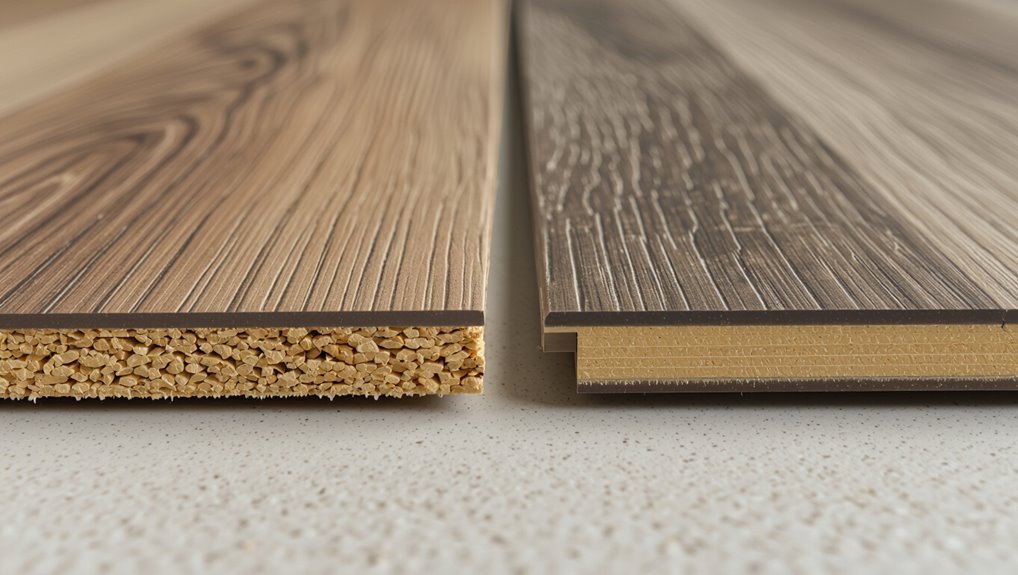
Both products look similar at a glance, but they’re built very differently: laminate is made from compressed wood fibers (HDF or MDF) topped with a printed image and a clear wear layer, while vinyl uses PVC-based layers—often a printed design film, a rigid or flexible core, and a durable wear coating.
You’ll notice laminate is thicker and more rigid; vinyl resists moisture better and can feel softer underfoot.
How Laminate and Vinyl Compare Side-by-Side Evaluation
Now you’ll compare laminate and vinyl across key traits like appearance and design choices, durability and scratch resistance, and how each handles water and moisture.
You’ll also look at comfort and underfoot feel, plus acoustics, and weigh installation methods and DIY difficulty.
This side-by-side will help you pick the best fit for your space and lifestyle.
Appearance and design options
Curious which flooring will match your style? You’ll find laminate offers realistic wood grains and bold patterns, while vinyl gives photo‑real textures plus waterproof plank and tile looks. Choose by feel, color range, and installation layout to suit rooms.
| Laminate | Vinyl |
|---|---|
| Wood realism | Waterproof visuals |
| Wide planks | Flexible formats |
| Matte to glossy | Textured finishes |
Durability and scratch/wear resistance
While they look similar at a glance, laminate and vinyl handle daily wear very differently, so you should match the choice to your household’s needs.
Laminate’s tough wear layer resists scratches and dents from pets and furniture but can show edge wear over time.
Vinyl is more forgiving—less prone to gouges and wears evenly—making it better for high-traffic, active homes.
Water resistance and moisture performance
Scratches and traffic patterns matter, but moisture often dictates where you can actually install a floor.
You’ll find vinyl is inherently waterproof, so it handles bathrooms, basements, and kitchens with no special underlayment.
Laminate resists spills only briefly; prolonged exposure or high humidity can warp its core unless you choose water-resistant or engineered options and guarantee proper subfloor moisture control.
Comfort, underfoot feel, and acoustics
Because your feet and ears notice differences you mightn’t see, comfort and acoustics are key when choosing between laminate and vinyl.
Laminate feels firmer and can sound hollow unless you add underlayment; it transfers impact noise.
Vinyl offers softer, more cushioned underfoot, quieter footsteps, and better resilience.
Use padding or acoustic underlayment to improve comfort and reduce sound for either choice.
Installation methods and DIY difficulty
If you want a weekend project, both laminate and vinyl can be DIY-friendly, but they differ in technique and tools: laminate typically uses a floating click-lock system that’s straightforward to snap together but needs precise subfloor prep and saw cuts.
On the other hand, vinyl comes in click-lock planks, glue-down sheets, or peel-and-stick tiles, each with its own skill level — click-lock vinyl is easiest, glue-down demands more time and adhesive handling, and sheet vinyl often requires careful measuring and trimming.
For tight rooms, trims and connections need patience; consider tools, time, and willingness to fix mistakes.
Maintenance and cleaning requirements
Once your floor is installed, upkeep becomes a regular task you’ll want to understand so stains, wear, and moisture don’t shorten its life.
For laminate, sweep or vacuum, use a damp (not wet) mop, avoid harsh cleaners and standing water.
For vinyl, you can mop more freely, tolerate gentle cleaners and occasional steam with manufacturer approval.
Promptly wipe spills on both.
Lifespan and long-term performance
When you’re weighing long-term value, consider both expected lifespan and how performance holds up under daily use.
Laminate typically lasts 10–25 years depending on wear layer and maintenance, while quality vinyl can reach 15–30+ years, especially luxury vinyl with thicker cores.
You’ll find laminate resists scratches but can swell with moisture.
Vinyl tolerates water and heavy traffic but may dent or fade over decades.
Environmental impact and recyclability
Although both laminate and vinyl aim to mimic natural wood, they differ sharply in environmental footprint and end-of-life options. You’ll want to weigh production impacts, indoor air quality, and recyclability when choosing.
Laminate often uses wood fiber and fewer harmful additives. It can be partly recyclable or biodegradable depending on backing and adhesives.
Vinyl is petroleum-based, harder to recycle, and may off-gas PVC-related chemicals.
Cost comparison: product and installation
Price matters for most projects, so let’s break down what you’ll actually pay for laminate vs. vinyl—both for materials and installation. Laminate often costs less upfront; vinyl can be pricier but offers waterproofing. Installation varies by type—click-lock is cheaper, glue-down costs more. Consider long-term durability and maintenance when comparing total value.
| Item | Typical cost range |
|---|---|
| Laminate | $1–$5/ft² |
| Vinyl | $2–$8/ft² |
Choosing Based on Room and Use Cases
When you pick flooring, think about how each room gets used and what spills, moisture, or traffic it must handle.
Kitchens and bathrooms usually do better with water-resistant vinyl, while basements and humid areas need waterproof options rather than standard laminate.
For living rooms, bedrooms, pets, kids, or commercial high-traffic zones, weigh durability, scratch resistance, and maintenance to choose the right laminate or vinyl type.
Best choices for kitchens and bathrooms
How do you pick between laminate and vinyl for kitchens and bathrooms where water, traffic, and spills are daily realities?
You’ll usually favor vinyl: it resists moisture, handles spills, and endures heavy foot traffic.
Choose luxury vinyl planks or tiles with a good wear layer and proper underlayment.
Use waterproof laminate only in low-exposure spots and maintain seals to prevent damage.
Best choices for basements and high-humidity areas
Because basements and other high-humidity spaces often sit below grade and trap moisture, you should prioritize truly waterproof flooring and moisture-managed installation methods.
Choose vinyl plank or tile with a waterproof core, or specialized waterproof laminate with a tight seam system.
Use vapor barriers, proper subfloor prep, and floating installations rated for moisture.
Avoid standard laminate and always check manufacturer moisture warranties.
Best choices for living rooms and bedrooms
If you’re picking flooring for living rooms and bedrooms, prioritize comfort, appearance, and durability over extreme moisture resistance.
Choose laminate for realistic wood visuals and scratch resistance if you want a warmer, textured feel underfoot.
Pick luxury vinyl for softer, quieter surfaces and better water tolerance near windows or plants.
Consider pad, AC rating, and color to match decor and lifestyle.
Best choices for high-traffic commercial spaces
When you’re choosing flooring for high-traffic commercial spaces, prioritize durability, maintenance ease, and slip resistance over aesthetic nuances; these areas demand materials that withstand constant footfall, heavy equipment, and frequent cleaning.
Choose commercial-grade sheet vinyl or luxury vinyl tile with reinforced wear layers for longevity, rapid cleaning, and stain resistance.
Consider anti-slip finishes and sound-absorbing underlays to improve safety and acoustics.
Pet-friendly and family-friendly recommendations
Although pets and kids put different stresses on floors, you’ll want options that handle scratches, moisture, and frequent cleaning without sacrificing comfort or safety.
Choose vinyl in kitchens, mudrooms, and bathrooms for water resistance and easy cleaning. Use durable laminate with strong wear layers in living areas and halls. Prefer textured surfaces to reduce slips.
- Vinyl: waterproof, forgiving
- Laminate: durable, stylish
- Add rugs for protection
Installation Guide Step-by-Step for Each Type
Before you start, run through a pre-installation checklist—acclimate materials, check moisture, and gather tools.
For laminate, you’ll prep a flat, dry subfloor and fit boards with a floating click system; for vinyl, you’ll smooth and clean the subfloor then install sheet, plank, or tile according to the product.
Below are step-by-step instructions for each method so you can tackle the job confidently.
Pre-installation checklist for both materials
1 essential checklist will save you time and prevent costly mistakes: verify the subfloor is clean, dry, level, and compatible with your chosen flooring; confirm room temperature and humidity meet manufacturer specs; acclimate the planks per instructions; gather all required tools and underlayment; and measure and plan layout to minimize cuts and waste.
- Confirm materials, tools, and underlayment.
- Check moisture, level, and compatibility.
- Acclimate flooring and plan cuts.
Step 1: Preparing the subfloor for laminate
Start by making the subfloor rock-solid: clean away debris, repair cracks or squeaks, guarantee it’s level within manufacturer tolerances, and verify moisture levels with a reliable meter so your laminate has a stable, dry base to click together on.
Next, install appropriate underlayment for sound, vapor control, and minor imperfections; secure loose boards and remove trim that could obstruct expansion gaps.
Step 2: Installing laminate (floating click system)
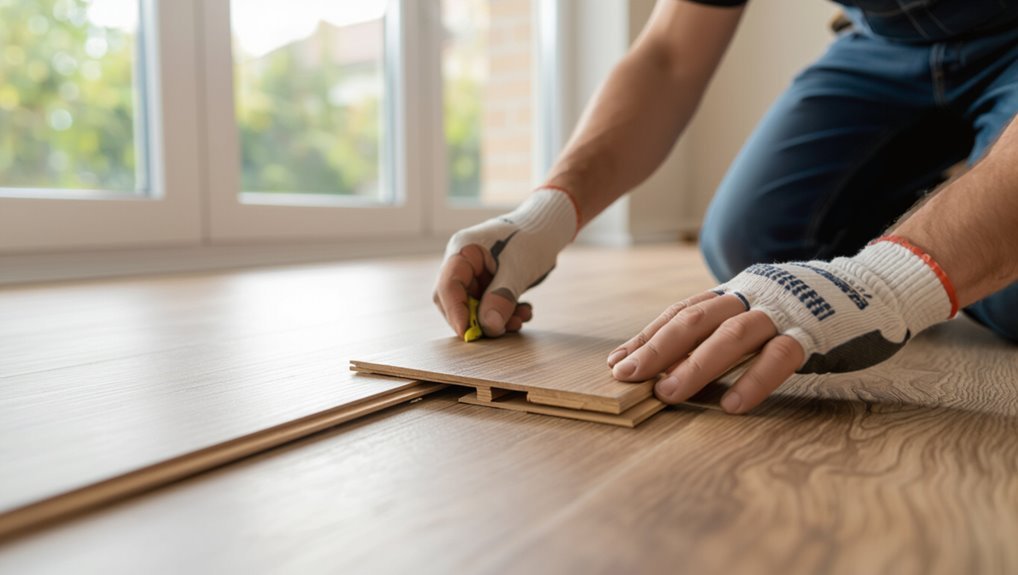
Lay the first row along your longest wall with the tongue side facing the wall, keeping a consistent expansion gap (usually 1/4″ to 1/2″) using spacers; this gives you a straight reference line and confirms the rest of the floor clicks together squarely.
Angle and snap each plank into the previous row, stagger end joints at least 12″, trim as needed, and tap seams with a block to guarantee tight, secure connections.
Step 3: Preparing the subfloor for vinyl
Before you install vinyl, make sure the subfloor is clean, dry, flat, and sound—any bumps, gaps, or moisture will compromise adhesion and appearance.
Remove debris, old adhesive, and loose boards. Sand high spots, fill low areas with a recommended leveling compound, and repair damaged sections.
Check moisture with a meter and allow remediation if levels exceed manufacturer limits before proceeding.
Step 4: Installing vinyl (sheet, plank, or tile)
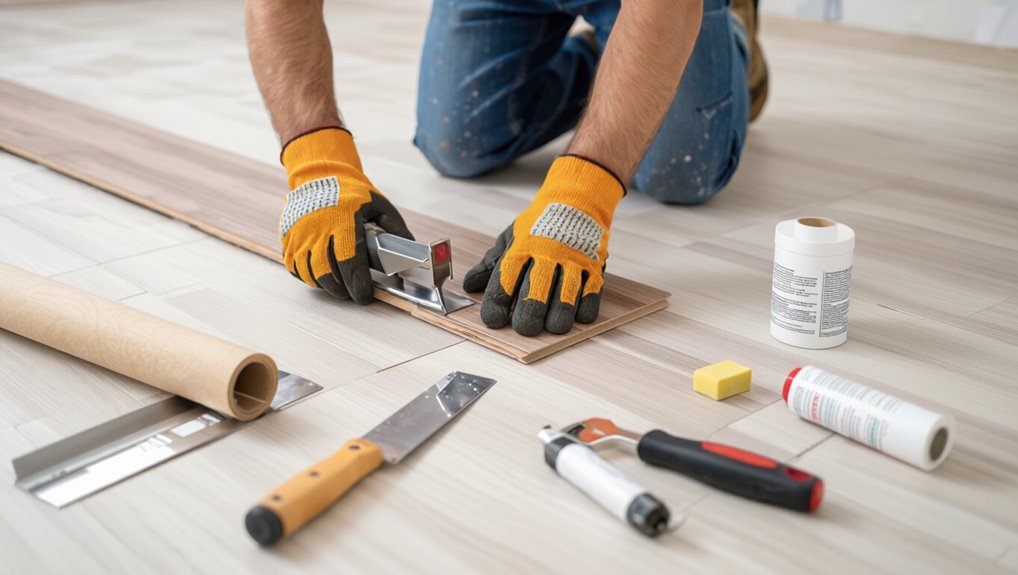
Now that the subfloor’s prepped, you’ll install the vinyl according to the type—sheet, plank, or tile—because each has specific handling, adhesive, and seam techniques that affect fit and finish.
Roll out and trim sheets, apply recommended adhesive or double-sided tape, stagger and click-lock planks, or spread adhesive and grout tile seams.
Work outward, keeping seams tight and tools clean for a smooth, durable surface.
Common installation mistakes to avoid
While you follow the specific steps for sheet, plank, or tile vinyl, watch for a few recurring installation mistakes that can undo hours of work and shorten the floor’s life.
Don’t skip acclimation, underlayment, or moisture testing. Stagger seams properly, allow expansion gaps, use correct adhesives/tools, and avoid traffic until seams set.
Trim poorly—tight cuts cause buckling and gaps.
Common Problems and How to Fix Them
You’ll learn common laminate problems like warping, gapping, and surface scratches and simple fixes such as moisture control, plank replacement, and refinishing options.
For vinyl, we’ll cover issues like tears, lifting edges, and stains plus repairs like patching, adhesive re-seating, or heat-welded seams.
I’ll also explain damage indicators and clear guidelines for when to repair versus when it’s better to replace.
Laminate-specific issues and solutions
Laminate floors can look great, but they come with a few predictable problems—swelling from moisture, warped or separating planks, surface scratches, and hollow-sounding spots—and knowing how to diagnose them quickly saves time and money.
You should stop leaks, replace swollen boards, tighten or refit seams, use laminate repair kits for scratches, and lift planks to relevel hollow areas.
Regular humidity control prevents recurrence.
Vinyl-specific issues and solutions
Vinyl flooring shares some maintenance themes with laminate—moisture, wear, and installation mistakes—but it behaves differently and needs other fixes.
You can repair small tears with vinyl adhesive or a patch kit, gently flatten lifting edges with heat and pressure, replace damaged planks or tiles individually, and prevent discoloration by avoiding rubber-backed mats and prolonged sun exposure.
Regular cleaning keeps it resilient.
Signs of damage and when to repair vs replace
How do you know when a section of flooring needs a quick repair or a full replacement? Inspect damage type, spread, and subfloor condition.
Consider these steps:
- Localized scratches or lifted edges — repair or replace plank.
- Warping, bubbling, or persistent moisture — likely replace and fix subfloor.
- Widespread wear or structural rot — full replacement for safety and longevity.
Cost, ROI, and Value Considerations
You’ll want to weigh initial purchase and installation costs against long-term durability and maintenance expenses to see which flooring really saves you money.
Consider how each option affects resale—some buyers prefer authentic-look vinyl or higher-end laminate, and that can sway your ROI.
Choose the cheaper route for temporary or low-traffic spaces, but invest more when durability, appearance, or market expectations matter.
Initial cost vs long-term cost analysis
Compare upfront price tags with lifetime expenses to get a clear picture of which floor makes smarter financial sense for your home. You’ll weigh purchase, installation, maintenance, and replacement frequency. Laminate often costs less initially; luxury vinyl may last longer and resist moisture. Use the table to compare estimated costs and expected service life.
| Item | Consideration |
|---|---|
| Purchase | Initial price |
| Installation | Labor/time |
| Maintenance | Ongoing cost |
| Durability | Years expected |
| Replacement | Frequency/cost |
Resale value impact and buyer preferences
Because flooring is one of the first things buyers notice, your choice between laminate and vinyl can influence offer prices and perceived home quality.
Weigh initial cost against how each material appeals to your target market and local trends. Buyers seeking durability and realism often prefer high-end vinyl or waterproof laminate.
Upscale finishes boost perceived value, while visible wear can lower offers.
When to choose cheaper option vs invest more
If your goal is short-term savings for a rental flip or temporary space, pick the cheaper option—laminate or basic vinyl—so you keep renovation costs low and recover them quickly.
Choose higher-end vinyl or premium laminate when you live in the home, expect heavy use, or want better resale appeal.
Invest if durability, water resistance, and perceived value will justify the upfront cost.
Tips, Best Practices, and Maintenance Checklist
You’ll want a simple daily and weekly care routine—sweeping or vacuuming with a hard-floor setting and spot-mopping—to keep both laminate and vinyl looking their best.
Add seasonal and long-term maintenance like deeper cleans, sealing edges on certain vinyls, and checking for gaps or wear.
Protect floors with felt pads, entry mats, and consistent humidity control to prevent scratches, water damage, and warping.
Daily and weekly care routine
Keep dirt and grit from scratching your laminate or vinyl by sweeping or vacuuming high-traffic areas daily and doing a gentle mop once a week; this simple routine preserves the finish and prevents buildup that’s harder to remove later.
- Spot-clean spills immediately with a damp cloth.
- Use pH-neutral cleaner for weekly mopping.
- Place mats at entrances and felt pads under furniture.
Seasonal and long-term maintenance tips
After nailing daily and weekly care, plan a seasonal and long-term maintenance routine to protect your laminate or vinyl investment and extend its life.
Quarterly, deep-clean with manufacturer-approved products, inspect seams and connections, and address minor gaps or lifting.
Annually, reseal edges if recommended, refinish vinyl wear layers when possible, and replace damaged planks promptly to prevent wider issues.
Protecting floors: pads, mats, humidity control
When you pair the right protective pads, entry mats, and humidity controls with regular checks, your laminate or vinyl floor will resist scratches, dents, and moisture-related damage far longer.
Use felt pads under furniture, rubber-backed mats at entrances, and trays under planters.
Keep indoor humidity 35–55%, monitor with a hygrometer, replace worn pads, and sweep weekly to prevent grit abrasion.
Mistakes to Avoid When Choosing Flooring
Don’t rush your flooring choice—common mistakes like picking based on looks alone or ignoring traffic patterns come back to haunt you.
Watch installation steps carefully, since cutting corners can void warranties and lead to costly fixes.
And don’t underestimate moisture or poor subfloor conditions, because both can wreck laminate or vinyl long-term.
Common selection mistakes homeowners make
How do you pick the right flooring without falling into common traps? You’ll avoid costly regrets by focusing on real needs, not trends.
Don’t ignore maintenance, moisture tolerance, or traffic levels. Consider these points:
- Choosing style over durability
- Skipping moisture and subfloor checks
- Underestimating long-term upkeep and costs
Make choices that match usage, not impulse.
Installation pitfalls that void warranties
Because warranties hinge on proper installation, skipping manufacturer guidelines or using the wrong underlayment can instantly void coverage.
Don’t improvise with adhesives, adhesives not specified, or nail-down methods on floating systems.
Avoid cutting corners on acclimation, improper connections, or uneven subfloor prep.
Keep documented receipts and follow written installation steps precisely so claims won’t be denied due to installer errors.
Misjudging moisture risks or subfloor conditions
If you underestimate moisture or ignore subfloor issues, you’ll likely face warping, cupping, mold, or a voided warranty.
Don’t assume all floors tolerate dampness; test concrete for moisture, check wood for rot, and guarantee proper vapor barriers.
Choose waterproof vinyl for basements or high-humidity rooms, and prep or repair subfloors before installation to protect appearance, performance, and warranties.
Product Recommendations and Buying Checklist
Now that you know common mistakes, it’s time to read labels, ask the right questions, and pick a budget or premium option that fits your needs.
Check specifications like wear layer, water resistance, and warranty so you know what performance to expect.
When talking to retailers or installers, ask about subfloor prep, real-world durability, and total installed cost.
How to read product labels and specifications
Labels and specs are your roadmap to choosing the right plank: read them carefully to confirm wear layer thickness, AC rating (for laminate), SPC or LVP construction (for vinyl), water resistance, and warranty details so you know what performance to expect and what’s actually covered.
Check labels for key facts and compare models:
- Wear layer / AC rating
- Construction type (SPC/LVP/laminate)
- Warranty scope and limitations
Questions to ask retailers and installers
Want to make sure you’re getting the right product and a reliable installation? Ask about water resistance, wear rating, and warranty exclusions.
Confirm recommended underlayment, acclimation time, and installation method.
Request references, proof of insurance, and installer certifications.
Get a written quote with scope, timeline, disposal, and post-install care instructions.
Verify return and damage policies before you commit.
Budget and premium pick criteria
With those retailer and installer questions sorted, you can focus on picking the right product for your budget and needs.
For budget picks, choose durable, mid-thickness laminate or vinyl with a solid wear layer and water-resistant core.
For premium choices, opt for thicker planks, embossed texture, longer warranties, and realistic visuals.
Prioritize warranty terms, installation type, and maintenance needs when deciding.
Frequently Asked Questions
You’ve probably got practical questions like whether laminate is cheaper than vinyl and if either will stand up in a bathroom.
We’ll also cover how long vinyl lasts, which option is easier for DIY installation, and what to know about eco-friendly choices.
Read on and you’ll get concise answers to help you choose.
Is laminate cheaper than vinyl?
Curious whether laminate or vinyl will cost you less? Generally, laminate has a lower material price, but vinyl ranges widely—budget sheets are cheap, luxury vinyl planks (LVP) can cost more than mid-range laminate.
Installation, underlayment, and labor affect total cost. Compare per-square-foot prices and factor durability and maintenance so you don’t overpay for a product that won’t meet your needs.
Can laminate be installed in bathrooms?
Cost often guides your floor choice, but moisture concerns should too—so can you put laminate in a bathroom?
You can, but choose water-resistant or specially rated laminate and seal seams tightly.
Keep humidity low, use rugs near tubs, and fix leaks promptly.
For full bathrooms or frequent water exposure, consider waterproof alternatives instead to avoid swelling, warping, and warranty issues.
How long does vinyl flooring last?
How long will vinyl flooring last in your home? Expect 10–25 years for residential vinyl; luxury vinyl plank (LVP) with a thicker wear layer can reach 20–30 years with proper care.
Longevity depends on quality, wear-layer thickness, installation, and traffic. Clean spills promptly, avoid harsh scrubs, and use protective pads to extend life.
Warranty terms vary—check them.
Which is easier to install for DIYers?
Wondering which is simpler to install yourself? You’ll find both are DIY-friendly: laminate uses click-lock planks over a flat underlayment, so prep and precise cuts matter but installation is fast.
Vinyl planks/tile also click together or glue down; rigid core vinyl tolerates uneven subfloors better.
Choose based on subfloor condition, room moisture, and your comfort with cutting and sealing edges.
Are either of these floors eco-friendly?
Curious whether laminate or vinyl is a greener choice? You’ll find trade-offs: laminate uses wood byproducts and can be recyclable, but often has formaldehyde-based resins and requires deforestation concerns.
Vinyl is petroleum-based, less biodegradable, and can emit VOCs, though some low-VOC and recycled options exist.
Choose certified products, check VOC ratings, and prioritize longevity and proper disposal to reduce impact.
Conclusion Final Recommendations by Situation
While both laminate and vinyl offer durable, attractive options, your choice should hinge on the room’s moisture levels, foot traffic, budget, and desired look;
pick vinyl for wet areas and heavy use,
choose laminate for a more natural wood feel and tighter budget in dry spaces.
For rentals, go vinyl for easy upkeep;
for living rooms, choose laminate for warmth;
for basements, pick waterproof vinyl.