Is Carpet Cheaper Than Laminate Flooring? A Honest Cost Breakdown
You’ll usually pay less up front for carpet than for laminate, since basic carpet and padding run low per square foot and install cheaper, but laminate often lasts longer and resists stains and scratches so its annual cost can be lower. Include material, underlayment, installation, subfloor repair, maintenance and replacement frequency when comparing. If you want to see when carpet truly saves money versus when laminate pays off over time, keep going for specifics and room-by-room examples.
Is Carpet Cheaper Than Laminate Flooring?
You’ll usually pay about $1–$5 per square foot for carpet and $1–$6 per square foot for laminate, with installation pushing totals to roughly $2–$8/sq ft for carpet and $3–$10/sq ft for laminate.
That means carpet is often the cheaper option up front, but high-end carpet can overlap with budget laminate.
Consider durability and maintenance too, since long-term costs can flip the verdict.
Short cost verdict (average cost ranges and final takeaway)
Although prices vary by quality and region, carpet generally costs less upfront than laminate—most homeowners pay roughly $2–$6 per square foot for carpet materials plus $1–$2 for installation, while laminate typically runs $1.50–$5 per square foot for materials but $2–$6 to install. You’ll ask: is carpet cheaper than laminate flooring? Short verdict: carpet usually wins on initial cost; laminate lasts longer.
| Option | Typical total cost |
|---|---|
| Carpet | $3–$8 / sq ft |
| Laminate | $3.50–$11 / sq ft |
How Costs Are Calculated What to Include in Price Comparisons
When comparing carpet and laminate costs, you’ll want to look beyond sticker prices to material costs per square foot, which can vary widely by quality.
Also factor in installation and labor, subfloor prep or repairs, and extras like padding, underlayment, trim, connections, and disposal.
Finally, consider long-term expenses such as maintenance, cleaning, repairs, and how often you’ll likely need to replace the flooring.
Material costs (per square foot ranges for carpet and laminate)
Compare material costs on a per-square-foot basis to get a clear baseline: carpet typically runs from about $1 to $8 per sq ft depending on fiber and pile, while laminate ranges roughly $0.70 to $5 per sq ft based on thickness and wear layer.
You should factor in padding for carpet (usually $0.30–$1.50/sq ft) and underlayment for laminate (about $0.20–$0.70/sq ft).
Installation and labor costs (typical factors that change pricing)
Material prices give you a starting point, but labor and installation can double or even triple your total cost depending on factors like room size, layout complexity, subfloor condition, and regional labor rates.
You’ll pay more for intricate cuts, stairs, connections, and removing old flooring. Carpet often needs padding and stretching; laminate requires precise fitting and underlayment.
Get multiple quotes and itemized bids.
Subfloor preparation and repair costs
1 key factor that often surprises homeowners is the condition of the subfloor, because repair or prep work can add considerably to your carpet or laminate project cost.
You’ll need to assess for rot, levelness, moisture, and squeaks.
Include material, labor, moisture mitigation, and demo in comparisons.
Unexpected repairs can swing a budget, so get a professional inspection and detailed estimate before deciding.
Additional costs: padding, underlayment, trim, transitions, disposal
Once your subfloor’s fixed and inspected, you’ll want to budget for the extras that complete the installation and affect both function and final price.
You’ll need carpet padding or laminate underlayment, moisture barriers, moulding, thresholds and joining strips, plus adhesive or fasteners.
Include removal and disposal fees for old flooring and any trim replacement—these modest line items add up and change total project cost.
Long-term costs: maintenance, cleaning, repairs, replacement frequency
While upfront costs grab attention, long-term expenses usually determine which floor you’ll actually pay for over time; include regular maintenance, cleaning supplies and labor, repair parts and service, and the expected replacement interval when comparing carpet and laminate so you get a true lifecycle price.
You’ll budget for vacuuming, deep cleans, spot repairs, refinishing or full replacement over years.
- Routine cleaning and supplies
- Repair/service costs
- Expected replacement timeline
Basic Understanding Carpet vs Laminate: Features That Affect Price
When comparing carpet and laminate costs, you’ll want to look at material composition and quality tiers—budget, mid-range, and premium—since that drives the base price.
Consider durability and expected lifespan, plus aesthetic options, customization, and how comfortable or insulating each option is.
Also weigh water resistance and which rooms each flooring is best suited for to avoid costly replacements.
Material composition and quality tiers (budget, mid-range, premium)
Because the fibers, cores, and backing determine both performance and price, you should look at material composition first when comparing carpet and laminate.
For carpet, budget uses basic olefin fibers and thin padding. Mid-range offers nylon or polyester with denser pad. Premium uses wool blends and hefty underlay.
For laminate, budget has thin HDF and simple wear layers. Premium uses thicker core and reinforced wear tops.
Durability and expected lifespan
Material choices you just reviewed directly shape how long flooring will last and how it’ll wear over time.
Carpet fibers compress, stain, and show traffic paths sooner—expect 5–15 years depending on grade and maintenance.
Laminate resists scratches, stains, and fading better, often lasting 15–25 years with quality underlayment and moisture control.
Your usage patterns and upkeep ultimately determine real lifespan.
Aesthetic options and customization
You have a lot of control over the look of your floors, and that control directly affects cost: carpet gives you endless fiber textures, pile heights, and colorways (including custom dye lots), while laminate offers increasingly realistic wood, stone, and tile visuals through printed layers and varied plank formats.
You can mix patterns, borders, or inlays; custom carpets and specialty laminates raise prices, while standard options stay budget-friendly.
Comfort, insulation, and acoustic properties
Comfort plays a big role in how you’ll experience a room and it also affects price: carpet feels softer underfoot, provides better thermal insulation, and dampens sound more effectively than laminate.
On the other hand, laminate is firmer, transfers cold from subfloors, and reflects more noise.
You’ll pay more for plush carpet and padding, but enjoy quieter, warmer rooms; laminate costs less upfront and suits firmer, low-maintenance spaces.
Water resistance and suitability for different rooms
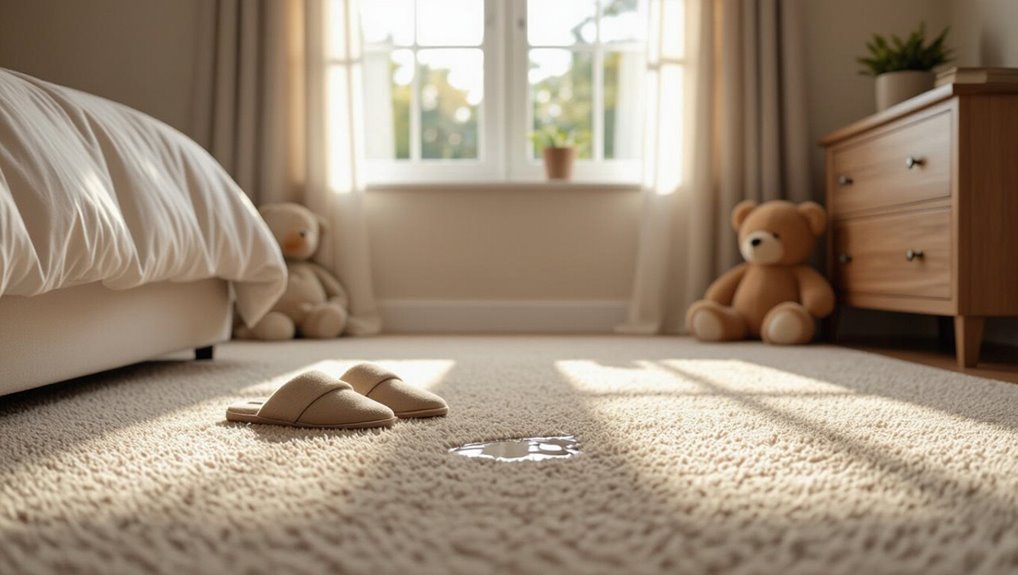
While carpet keeps rooms warmer and quieter, moisture performance often decides which floors work where.
You’ll avoid carpet in bathrooms, laundry rooms, or basements prone to dampness because it traps moisture and molds.
Laminate varies: basic types swell with water, but waterproof options suit kitchens, mudrooms, and basements.
Choose based on room humidity, maintenance willingness, and long-term durability.
Direct Cost Comparison Side-by-Side Breakdown
Now we’ll compare carpet and laminate side-by-side so you can see the real price differences in materials and installation.
I’ll show cost estimates for a small bedroom, a living room, and a basement to give you practical examples.
Then we’ll break those totals down into a cost-per-year over each product’s expected lifespan so you can judge long-term value.
Upfront cost comparison (material + installation)
Start by comparing the upfront costs you’ll actually pay: materials plus installation. You’ll usually find carpet materials cheaper, but installation can vary; laminate often costs more per plank yet installs faster. Use the table below for a quick side-by-side snapshot.
| Item | Carpet (per sq ft) | Laminate (per sq ft) |
|---|---|---|
| Materials | $1–$4 | $2–$5 |
| Installation | $0.50–$1.50 | $1–$3 |
Example room scenarios with cost estimates (small bedroom, living room, basement)
Because room size and layout change the math, it helps to see direct, real-room examples so you can compare total out-the-door costs for carpet vs. laminate.
For a small bedroom (120 sq ft) expect carpet $600–900, laminate $700–1,000.
Living room (300 sq ft): carpet $1,500–2,200, laminate $1,800–2,600.
Basement (500 sq ft): carpet $2,500–3,500, laminate $3,000–4,200.
Cost per year over expected lifespan (amortized comparison)
Those room examples give a clear sense of total upfront costs, but you’ll get a better value comparison by spreading those totals over each floor’s expected lifespan.
Calculate annual cost by dividing installation plus material by expected years (carpet 8–12, laminate 15–25).
Include maintenance and replacement portions.
That shows true yearly expense: often carpet’s lower upfront cost rises above laminate when amortized.
When Carpet Is Cheaper Typical Scenarios
When you’re on a tight budget or can reuse existing padding, carpet often costs less up front than laminate.
It also makes sense for short-term rentals or homes you don’t plan to keep long, where longevity isn’t a priority.
And in rooms where comfort and insulation matter more than durability—like bedrooms—you’ll likely save and get better feel with carpet.
Low-budget installations and reuse of existing padding
Wondering how to stretch a tight flooring budget? You can save by choosing basic carpet and keeping existing padding if it’s in good shape.
That cuts material and labor costs—no new underlay, minimal prep. You’ll still need seams checked and foam inspected for moisture or wear.
This approach lowers upfront expense, making carpet cheaper than laminate in many low-cost installs.
Short-term occupancy or rental properties
If you’re outfitting a short-term rental or a property with high tenant turnover, carpet often wins on cost and convenience: it’s cheaper to replace, quicker to install, and hides minor wear better than laminate.
You can swap stained sections fast, keep upfront expenses low, and accept shorter lifespans without major loss.
For transient rentals, carpet minimizes downtime and replacement cost compared to laminate.
Rooms where comfort and insulation outweigh longevity concerns
Because bedrooms, nurseries, and cozy family rooms prioritize warmth and soft footing over decades-long durability, carpet often costs less overall in those spaces— you’ll save on material and installation, enjoy better sound and thermal insulation, and replace worn areas affordably when needed.
- softer underfoot reduces heating needs
- quieter, kinder for kids and pets
- easy spot repairs beat full plank replacement
When Laminate Is Cheaper or More Cost-Effective
If you have busy hallways, entryways, or family rooms, laminate often pays off because its toughness means fewer replacements over time.
You’ll also save on cleanup and stain treatments in homes prone to spills since laminate wipes clean much easier than carpet.
And if you plan to stay in your house for years, that longer lifespan can amortize the higher upfront cost into a smarter long-term investment.
High-traffic areas where durability reduces replacement costs
When you’ve got hallways, entryways, or family rooms that see constant foot traffic, laminate holds up better and cuts down on how often you’ll need to replace flooring.
You’ll pay more upfront for higher-grade laminate, but its scratch and wear resistance means fewer replacements over years.
That durability often makes laminate the smarter, more economical choice for busy zones in your home.
Homes prone to spills or where easy cleaning lowers maintenance expenses
Although spills are inevitable in busy kitchens and kids’ playrooms, laminate makes cleanup fast and keeps maintenance costs down.
You won’t need specialized cleaners or frequent deep cleanings; a quick mop and spot wipe usually suffice. That reduces time and money compared with carpet, which traps stains and often needs professional shampooing or replacement sooner in spill-prone homes.
Long-term ownership where lifespan amortizes higher upfront price
Because you plan to stay in the same home for many years, laminate’s higher upfront cost can pay off as its lifespan amortizes—meaning the initial investment spreads across more years of use, lowering your annual flooring expense.
You get durable wear, fewer replacements, and steady resale value.
- Lower annual cost after amortization
- Fewer replacement cycles
- Better long-term resale appeal
Step-by-Step Guide to Choosing Based on Cost and Needs
Start by measuring your room and calculating square footage so you know how much material you’ll need.
Set a budget and expected lifespan, then get multiple quotes for materials and installation while accounting for hidden costs like subfloor work, removal, and delivery.
Finally, compare the total cost of ownership for carpet versus laminate and choose the option that best meets your needs and budget.
Step 1: Measure room size and calculate square footage
Before you pick a flooring type, measure the room so you know the exact square footage you’ll need. Use a tape measure to record length and width in feet, multiply to get square feet, and note irregular areas separately.
Add 5–10% for waste and pattern matching. Write down totals for each room so you can compare material costs accurately.
Step 2: Define your budget and expected lifespan
Once you know the room size, set a clear budget and decide how long you want the floor to last — this will narrow your choices between cheaper carpet and longer-lasting laminate.
Consider expected wear, household traffic, pets, and resale value.
Decide if you’ll replace in a few years or invest for decades. That timeframe guides material grade and how much you’re willing to spend.
Step 3: Get multiple quotes for materials and installation
Get at least three quotes for both materials and installation so you can compare real costs, timelines, and warranty terms side-by-side.
Request itemized bids showing product brand, grade, labor hours, and warranty specifics.
Ask installers about scheduling, payment terms, and cleanup.
Compare per-square-foot pricing and ask for references or photos of similar projects to guarantee quality matches the quoted cost.
Step 4: Factor in hidden costs (subfloor, removal, delivery)
After you’ve collected and compared quotes, don’t stop at the line-item prices—look for hidden costs that can push your total well past the initial estimate.
Check whether installers include removal and disposal of old flooring, subfloor repairs or leveling, moisture barriers, and delivery fees.
Ask for itemized charges, contingency allowances, and timelines so you won’t face surprise bills or delays during installation.
Step 5: Compare total cost of ownership and make decision
Now compare lifetime expenses, not just upfront price: total cost of ownership includes purchase and installation, expected lifespan, maintenance, repair or replacement costs, and resale impact.
So weigh carpet’s shorter lifespan and cleaning needs against laminate’s durability and potential refinishing limits to decide which fits your budget and lifestyle.
Calculate annualized cost, factor comfort and noise, and choose the option that meets finances and use.
Common Mistakes That Increase Flooring Costs
Don’t underestimate the time and cost of subfloor repairs and prep—you’ll pay later if hidden issues pop up.
Picking bargain materials often means faster wear and higher replacement costs, and complex areas like stairs, alcoves, or junctions add labor you mightn’t account for.
Always get multiple quotes and use licensed installers so you don’t end up with costly mistakes.
Underestimating subfloor repairs and prep time
If you skip a careful inspection of the subfloor, you’ll likely face surprise repairs that blow your budget and timeline.
You should factor in leveling, rot replacement, moisture remediation, and fastener fixes before choosing carpet or laminate. These tasks add labor and material costs and can delay installation.
Plan inspections, get contractor estimates, and budget contingencies to avoid costly last-minute decisions.
Choosing very low-quality products that wear out quickly
After you’ve accounted for subfloor repairs, the next costly mistake is buying very low-quality carpet or laminate that looks fine at first but wears out fast.
You’ll save upfront but replace flooring sooner, doubling labor and material costs. Choose durable ratings, check warranties, and consider traffic patterns.
Spending a bit more now prevents frequent replacements and keeps long-term costs—and headaches—down.
Ignoring installation complexity (stairs, alcoves, transitions)
When you overlook tricky areas like stairs, alcoves, or changes, installation turns into a time-consuming puzzle that drives up labor costs.
You’ll face extra cutting, connections, and molding work that installers must charge for. Measure and plan for these features up front, choose appropriate connection pieces, and account for added labor in your budget so surprises don’t blow your flooring estimate.
Skipping quotes or hiring unlicensed installers
Because you’re keen to save time or money, skipping multiple quotes or hiring unlicensed installers can cost you far more in the long run.
You’ll risk shoddy work, hidden fees, warranty voids, and safety issues. Get at least three detailed quotes, check licenses and references, and compare warranties.
Paying a bit more upfront usually avoids costly repairs and replacements later.
Cost-Saving Tips and Best Practices
You can cut flooring costs without cutting quality by choosing smart materials, hunting sales, and using clearance or remnant pieces.
Decide to DIY for simple, low-risk installs but hire a pro for complex layouts or moisture-prone areas to avoid costly mistakes.
Keep floors well-maintained to extend their life and lower your long-term replacement expenses.
How to lower material costs without sacrificing quality
Although it’s tempting to pick the cheapest options, smart shopping and a few strategic choices let you cut material costs without sacrificing quality.
Buy remnants or end-of-run lots, compare online and local prices, choose durable mid-tier products, and buy slightly more to avoid waste.
Look for bulk discounts, seasonal sales, and manufacturer rebates.
Inspect samples to confirm performance before buying.
When to DIY vs when to hire a pro
After trimming material costs, your next big savings come from deciding whether to DIY or hire a pro.
If you’re handy, DIY carpet stretching or click-lock laminate can save labor, but factor time, tools and mistakes.
Hire a pro for complex subfloor, moisture issues, stairs or warranty requirements.
Get quotes, check reviews, and weigh labor cost against your skill and schedule.
Seasonal buying tips, discounts, and clearance strategies
When buying flooring, timing can shave hundreds off your project—shop late winter for carpet and late summer for laminate, and watch for holiday sales and end-of-season clearances that retailers use to move inventory.
Compare online coupons, ask about floor model discounts, and bundle materials with installation for a lower rate.
Join store mailing lists for flash deals and negotiate matched prices before you check out.
Maintaining flooring to extend lifespan and reduce total cost
Keep up with simple care routines and you’ll stretch your carpet or laminate’s life and cut long-term costs. You should vacuum, mop, and address spills quickly, rotate rugs and furniture to prevent wear, and use protective pads.
Regular inspections catch issues early, avoiding expensive repairs or replacement.
- Vacuum and spot-clean weekly
- Use mats and furniture pads
- Inspect and fix seams or chips promptly
Environmental and Health Cost Considerations
When comparing carpet and laminate, you should consider VOC emissions, indoor air quality, and where materials come from since they affect your home’s health and long-term costs.
Think about disposal and recycling options and any fees or logistics you’ll face at end of life.
Also factor in energy savings from a floor’s insulation value, which can lower your heating and cooling bills.
VOCs, indoor air quality, and material sourcing
Because indoor air quality affects your health and comfort, you should factor in VOC emissions and material sourcing when choosing between carpet and laminate.
Carpets can trap allergens and off-gas from adhesives and fibers; look for low-VOC certifications and natural fibers.
Laminate may emit formaldehyde from cores or glues—choose products with E0/E1 ratings or formaldehyde-free binders and responsibly sourced materials.
Disposal and recycling costs and options
Although you might think disposal is just a one-time expense, end-of-life costs and recycling options can add considerably to the total environmental and health impact of your flooring choice.
You’ll pay landfill fees or haul-away charges for old carpet and padding; some carpets aren’t recyclable.
Laminate often goes to mixed-waste streams, though take-back programs exist.
Factor disposal, transport, and any recycling fees.
Energy savings from insulation value
Many homeowners underestimate how much floor covering affects heating and cooling: carpet’s fibrous layers trap air and give noticeably better insulation than thin laminate, which can cut energy use for heating by a few percent in cooler climates.
You’ll save modestly on bills, especially over cold months, and reduce HVAC strain.
Consider padding quality and room orientation to maximize those savings.
FAQs Common Questions About Carpet vs Laminate Costs
You’ll find answers to common cost questions here, like typical per-square-foot installed prices for carpet and laminate.
You’ll also learn which is cheaper to maintain, whether you can save by installing laminate over carpet, and how often each flooring usually needs replacement.
Use these FAQs to compare upfront and long-term costs quickly.
How much does carpet typically cost per square foot installed?
Curious how much you’ll pay for carpet installed? Expect typical installed costs around $2 to $6 per square foot for basic carpet and padding.
Mid-range options run $6 to $10, while high-end carpet with premium padding or specialty fibers can reach $10 to $15 or more.
Labor, padding quality, and removal of old flooring influence the final per-square-foot price.
How much does laminate typically cost per square foot installed?
Wondering what laminate will cost you per square foot installed?
You’ll typically pay $2 to $8 for materials and $1.50 to $4 for professional installation, so expect about $3.50 to $12 per square foot overall.
Premium options or complex layouts can push costs higher.
Always get multiple quotes and factor in underlayment, trim, and disposal to compare accurately.
Which is cheaper to maintain: carpet or laminate?
Which one costs less to keep looking good: carpet or laminate?
You’ll find laminate usually wins—it’s easier to clean, resists stains, and needs no deep-cleaning services.
Carpet requires regular vacuuming, periodic shampooing, and faster replacement in high-traffic areas.
Expect higher recurring costs for carpet over time, especially with pets or allergies, while laminate’s upkeep is simpler and cheaper long-term.
Can I install laminate over existing carpet to save money?
Can you install laminate over existing carpet to save money? You generally shouldn’t.
Laminate needs a flat, stable subfloor; carpet compresses and flexes, causing gaps, clicks, and premature wear.
Removing carpet adds labor and disposal costs but prevents problems and yields better warranties.
If you insist, consult a pro—expect added underlayment, leveling, or plywood to stabilize the floor, raising costs.
How often will I likely need to replace carpet vs laminate?
How long your floors last depends mostly on traffic, maintenance, and material quality—carpet typically needs replacement every 5–15 years, while laminate commonly lasts 15–30 years under normal residential use.
You’ll replace carpet sooner in pet or high-traffic areas; expect to refinish or replace laminate less often but watch for swelling from moisture and wear on the wear layer.