Can Ceramic Tile Be Used Outdoors? Best Options and What to Avoid
You can use ceramic tile outdoors in mild, covered, or low-freeze areas if you pick frost-rated, low-porosity tiles and use exterior-grade mortar, grout, and proper slope for drainage to avoid water damage. Avoid standard indoor ceramics, horizontal surfaces in freeze-thaw zones, and areas with standing water or heavy traffic unless you choose porcelain or quarry tile. Seal grout, plan expansion joints, and maintain regularly—and keep going to learn which tiles and installations work best for your site.
Can Ceramic Tile Be Used Outdoors? Quick Answer and Overview
Yes—you can use ceramic tile outdoors, but only in mild, covered, or low-freeze areas and on surfaces that won’t see heavy moisture or frost.
You should choose tiles rated for exterior use, use frost-resistant and slip-resistant options, and set them with proper outdoor mortar and grout.
In short, pick the right tile and installation materials for your climate and substrate to avoid cracking and water damage.
Direct Answer When and Where Ceramic Tile Works Outdoors
If you plan carefully and choose the right materials, ceramic tile can work outdoors in many situations; however, it’s not a one-size-fits-all solution.
You can use porcelain-style ceramic on covered patios, entryways, and mild climates where freeze-thaw isn’t an issue.
Avoid exterior floors exposed to heavy frost or constant moisture unless tiles are specifically rated for outdoor use and installed over a proper drainage-capable substrate.
One-sentence Summary of Best Practices
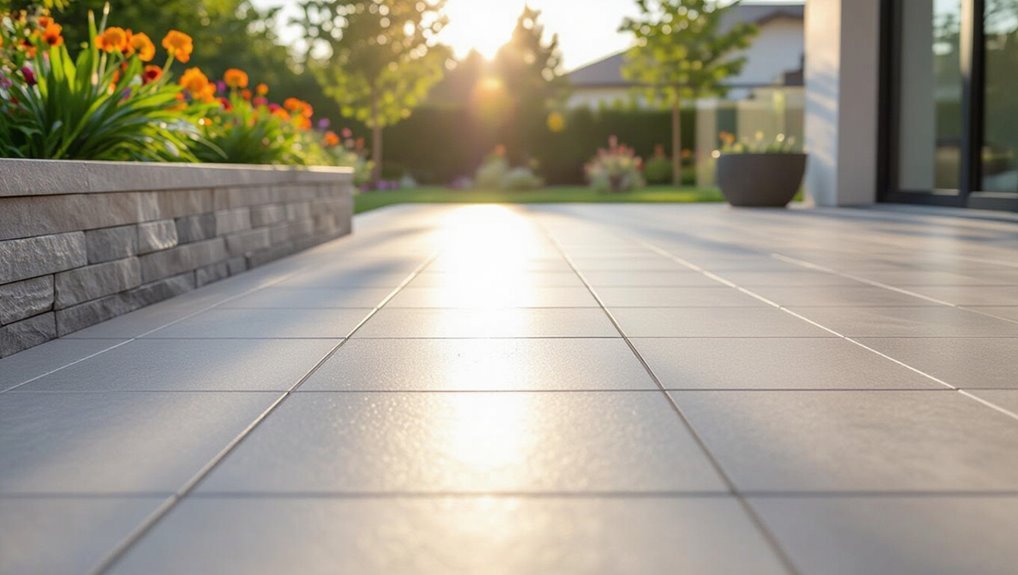
When you pick frost-resistant, slip-rated tiles, set them on a waterproof, well-draining substrate, and use proper exterior-grade adhesive and grout, ceramic tile can work outdoors in covered or mild environments.
In exposed areas, it can only be used if the tile is rated for freeze-thaw conditions and the installation allows for movement and drainage.
You should plan for expansion joints, slope for runoff, and routine sealing to prevent moisture damage.
Understanding Ceramic Tile Basics for Outdoor Use
You’ll want to know what ceramic tile is made of and how manufacturing affects its durability outdoors.
Pay attention to porosity and water absorption, since high absorption can mean frost damage in cold climates.
Also check tile ratings like PEI, water absorption class, and specific frost-resistance labels to match the tile to your location.
What Is Ceramic Tile? Materials and Manufacturing
Ceramic tile is a hard, durable product made from clay and other natural materials that’s shaped, glazed or left unglazed, and fired at high temperatures to create a dense finished piece suitable for many outdoor applications.
You’ll find earthenware, stoneware, and porcelain types; they differ by clay composition, firing temperature, and density.
Manufacturing adds glazes, textures, and digital prints to meet aesthetic and functional needs.
Porosity, Water Absorption, and Frost Resistance Explained
Because outdoor conditions push materials to their limits, understanding porosity, water absorption, and frost resistance is key before you pick tiles for patios, steps, or facades.
Check porosity: lower means less staining and moisture uptake.
Know water absorption rates affect freeze–thaw damage.
Choose tiles with tight body and low absorption for cold climates, and guarantee proper installation and drainage to reduce risk.
Tile Ratings and Standards to Know (PEI, Water Absorption, Frost Resistance)
When you’re choosing tiles for outdoor use, rely on standardized ratings—like PEI for wear, water absorption percentages, and frost-resistance classifications—to match performance to the site conditions. Check PEI 3+ for light outdoor traffic, ≤0.5% absorption for freeze-thaw, and explicit frost-rating. Use the table below to remember essentials and feel confident.
| Rating | Meaning |
|---|---|
| PEI | Durability |
| Absorption | Frost safety |
| Frost | Climate fit |
Types of Ceramic and Related Tiles Suitable for Outdoors
You’ll want to compare glazed and unglazed ceramic to see how surface finish affects slip resistance and water absorption.
Then weigh porcelain against ceramic — porcelain is denser and usually better for freeze-thaw conditions.
Also consider quarry, terracotta, and other clay-based tiles for their rustic look and how they handle outdoor exposure.
Glazed Ceramic vs. Unglazed Ceramic Key Differences
If you’re choosing tiles for an outdoor space, the main practical split is between glazed and unglazed ceramic: glazed tiles have a glassy surface that resists stains and adds color, while unglazed tiles rely on their body for appearance and usually offer better slip resistance and durability in harsh conditions.
Choose glazed where aesthetics and easy cleaning matter; pick unglazed for traction and wear.
Porcelain vs. Ceramic for Exterior Use (direct comparison)
Beyond the glazed-versus-unglazed choice, you’ll also need to pick between porcelain and ceramic bodies for outdoor use, since their composition and performance differ considerably.
Porcelain is denser, less porous, frost-resistant, and better for heavy-traffic patios and freeze-thaw climates.
Ceramic is lighter, more affordable, and suits covered or mild-weather areas.
Choose porcelain for durability; choose ceramic for cost and sheltered spaces.
Quarry, Terracotta, and Other Clay-based Options
When you need earthy, slip-resistant surfaces for patios, walkways, or steps, quarry and terracotta tiles offer rugged, clay-based options that perform well outdoors; they’re fired at different temperatures and finished differently, which affects durability, porosity, and look. You’ll choose based on frost resistance, maintenance, and aesthetic.
| Type | Best Use |
|---|---|
| Quarry | High-traffic |
| Terracotta | Rustic patios |
| Salt-glazed | Wet areas |
| Reconstituted clay | Consistent color |
Best Outdoor Applications for Ceramic Tile
You can use ceramic tile in many outdoor spots where conditions are fairly sheltered, like covered patios, balconies, and pergolas.
It’s also a great choice for outdoor walls, backsplashes, and feature facades that don’t get constant wetting.
For low-traffic walkways and some pool surrounds, choose tiles rated for exterior use and follow installation guidelines to keep them safe and durable.
Covered Patios, Balconies, and Pergolas
If you want durable, attractive flooring for areas that get some weather protection, covered patios, balconies, and pergolas are ideal spots for ceramic tile.
You can choose slip-resistant, frost-rated tiles and proper grout to handle occasional moisture.
Install with a waterproof membrane and slope for drainage.
Regular sealing and maintenance keep tiles looking great and prevent staining or grout deterioration.
Outdoor Walls, Backsplashes, and Feature Facades
Outdoor walls, backsplashes, and feature facades make excellent canvases for ceramic tile because they combine durability with design flexibility; you can pick frost-resistant, UV-stable tiles and proper adhesives to withstand weather exposure while creating striking visual accents.
You’ll want porcelain or specially rated ceramics, sealed grout, and flashing details to prevent moisture intrusion.
Install on stable substrates and use outdoor-rated grout for longevity.
Low-traffic Walkways and Pool Surrounds (where permissible)
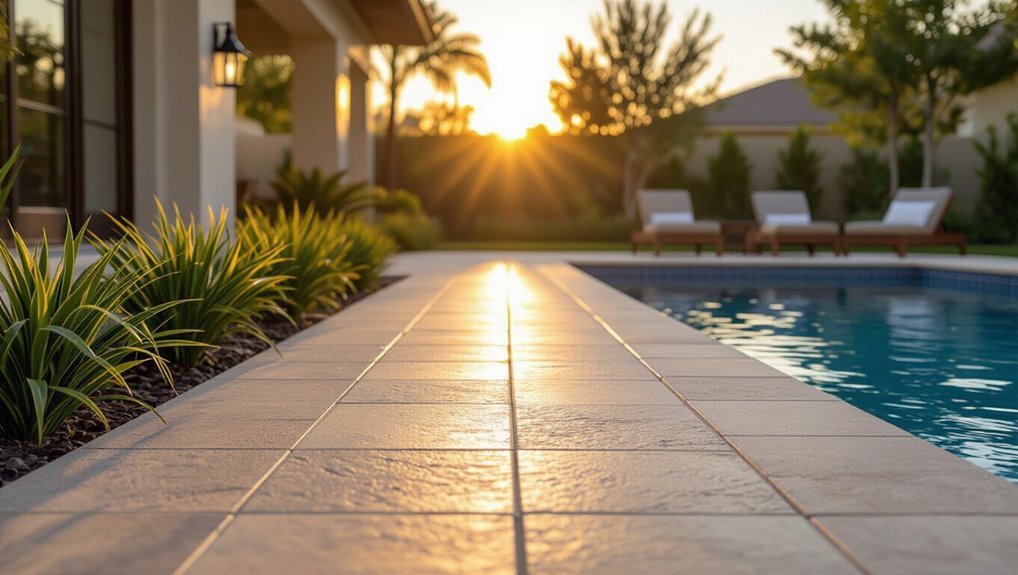
When placed in low-traffic walkways and carefully chosen pool surrounds, ceramic tile offers a durable, attractive surface that resists stains and stands up to occasional moisture.
You should pick frost-resistant, textured tiles with slip-resistant finishes, use proper outdoor-grade grout and sealant, and guarantee slight slope for drainage.
Avoid glazed, smooth tiles and heavy freeze–thaw exposure to prevent cracking and slipping.
What to Avoid Tiles and Conditions Unsuitable for Outdoor Ceramic
You shouldn’t use standard ceramic tile where freezing and thawing happen frequently, because the cycles can crack glazed surfaces and grout.
Avoid areas with constant standing water or heavy moisture that can weaken adhesive and promote mold.
Also skip ceramic for high-traffic driveways or spots needing strong impact resistance—it isn’t built for heavy loads.
High-freeze Climates and Areas with Heavy Freeze-Thaw Cycles
If your region sees frequent hard freezes or rapid freeze–thaw cycles, ceramic tile can fail quickly because water trapped in the body or grout expands and cracks the material.
Don’t install standard ceramic or non-frost-proof porcelain on exterior horizontal surfaces where freeze cycles occur. You’ll want frost-resistant tiles, proper drainage, an impervious substrate, and flexible, winter-grade grout to avoid spalling and delamination.
Locations with Constant Standing Water or Heavy Moisture
Because constant standing water and persistent dampness keep moisture trapped against tile and grout, you’ll see accelerated deterioration, slipping hazards, and adhesive failure in outdoor ceramic installations.
Don’t install standard ceramic where pools, pond edges, soggy patios, or poorly drained planters hold water.
Porcelain or specialized wet-area materials with proper slope, drainage, and waterproof membranes suit those spots better than ordinary outdoor ceramic tiles.
High-traffic Driveways or Areas Requiring High Impact Resistance
While wet zones call for waterproof materials and drainage, areas exposed to constant vehicle traffic or heavy impacts demand a different set of concerns.
You shouldn’t use standard ceramic on driveways or loading zones; it chips, cracks, and delaminates under weight and abrasion.
Choose porcelain, natural stone, or reinforced concrete instead, and guarantee proper substrate, bedding, and joint design for long-term durability.
How to Choose the Right Ceramic Tile for Outdoor Use (Step-by-Step)
Start by evaluating your climate and how exposed the tile will be to freeze-thaw, sun, and moisture so you know what performance you need.
Then check technical ratings—water absorption, PEI for wear, and slip resistance—and pick a surface finish (R-rating or textured) that suits the use.
Finally, match size, thickness, and edge profile to the application and choose grout and adhesive formulated for exterior conditions.
Step 1 Assess Climate and Exposure
If you’re planning to install ceramic tile outdoors, first evaluate your climate and how exposed the area will be to weather, sun, and moisture.
Consider freeze-thaw cycles, prolonged humidity, salt air near coasts, and full sun fading.
Match tile durability and installation methods to those conditions, and plan for drainage, shade, or protective coverings to reduce long-term stress on the installation.
Step 2 Check Technical Ratings (water absorption, PEI, slip resistance)
Usually you’ll want to verify a tile’s technical ratings—water absorption, PEI rating, and slip resistance—before buying, because they determine whether a ceramic tile can handle outdoor conditions.
Check water absorption (porcelain ≤0.5% ideal), PEI for wear (higher for walkways), and manufacturer slip test values.
Match ratings to freeze/thaw exposure and foot traffic to avoid cracking, staining, or premature wear.
Step 3 Select Surface Finish and Slip Resistance (R-ratings, textured finishes)
Pick a surface finish that balances grip and maintenance: outdoor tiles need enough texture to prevent slips when wet but not so much that dirt and grime get trapped.
Check R-ratings for slope and exposure, choosing higher values for steeper or wetter areas.
Prefer micro-textures or matte glazes that shed water yet clean easily.
Test samples under real conditions before buying.
Step 4 Match Tile Size, Thickness, and Edge Profile to Application
Now that you’ve balanced texture and slip resistance, consider how tile dimensions, thickness, and edge profile affect performance and appearance outdoors.
Use larger tiles on flat, stable substrates to minimize grout lines; choose thicker, frost-resistant pieces for patios and steps; pick beveled or rounded edges where water runoff and wear occur.
Match size to layout for fewer cuts and cleaner drainage.
Step 5 Choose Compatible Grout and Adhesive for Exterior Conditions
Because outdoor conditions put grout and adhesive under constant stress, you’ll need products rated for freeze-thaw cycles, moisture exposure, and UV resistance.
Use polymer-modified thinset or epoxy adhesive for high bond strength and water resistance.
Select sanded or epoxy grout with a matching expansion profile and stain resistance.
Always follow manufacturer guidelines for substrate prep, curing times, and joint movement to avoid failures.
Installation Best Practices for Outdoor Ceramic Tile
Before you lay a single tile, make sure the substrate is stable, drains well, and has the proper slope to prevent standing water.
Use exterior-rated mortars and adhesives, plan flexible grout and sealant joints for movement, and choose grouts and sealers suited to freeze-thaw cycles.
Also schedule work for appropriate temperatures and humidity so adhesives cure correctly and tiles bond for long-term performance.
Site Preparation: Substrate, Drainage, and Slope Requirements
Good site preparation makes the difference between a long-lasting outdoor tile installation and one that fails quickly.
You’ll guarantee a stable, clean substrate—concrete or properly compacted, cured backer—free of cracks and contaminants.
Provide positive drainage away from structure, slope surfaces 1/8″–1/4″ per foot (1–2%) for water run-off, and include control joints and perimeter movement joints to prevent cracking and pooling.
Recommended Mortars and Adhesives for Exterior Use
Choosing the right mortar and adhesive is critical for a durable outdoor tile job, so select products rated for exterior use, freeze-thaw cycles, and the specific substrate you’re working with.
Use polymer-modified thinset for most outdoor ceramic on concrete or cement backerboard. For stone or variable substrates, pick an enhanced adhesive or epoxy-based mortar.
Follow manufacturer open time and curing instructions.
Grouting, Sealing, and Joint Movement Strategies
When tiles are set and cured, you’ll need to grout, seal, and plan for movement to keep the installation watertight and flexible; using the right grout type, sealer, and joint design prevents cracking, staining, and water intrusion.
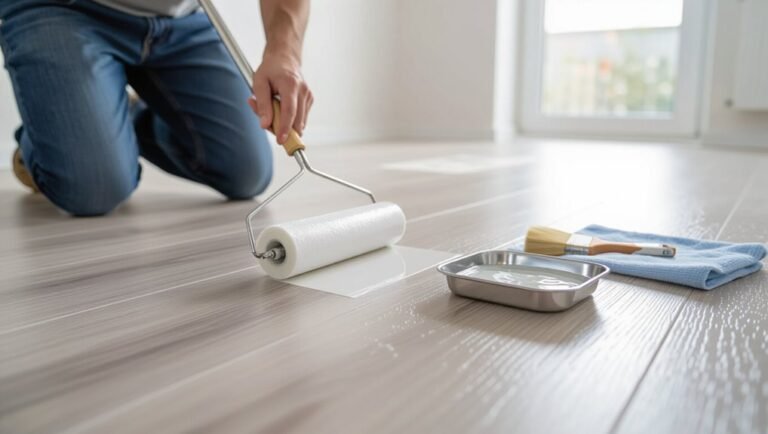
Use polymer-modified, sanded grout for joints; apply a breathable penetrating sealer on porous tiles; incorporate control and movement joints filled with flexible silicone or polyurethane sealant to accommodate movement.
Seasonal and Temperature Considerations During Installation
Because outdoor tile installations respond directly to temperature and weather, you should plan work for conditions that let adhesives and grout cure properly and let tiles stay stable; avoid installing in freezing temperatures or under direct midday heat, and aim for mild, dry days or follow manufacturer guidance for cold- or hot-weather products.
- Protect adhesives from frost and rapid drying
- Use fast-setting products in cool seasons
- Allow extended cure times in cold or humid conditions
Maintenance, Longevity, and Weatherproofing
To keep outdoor ceramic tile looking and performing well, you’ll need regular cleaning, stain prevention, and timely repairs for cracks or loose pieces.
Know when to re-seal grout and tiles to block moisture and freeze damage, and act quickly on any gaps or chips.
Expect lifespan to vary by climate—cold, wet regions shorten service life unless you choose frost-resistant materials and maintain them diligently.
Routine Cleaning and Stain Prevention
If you want your outdoor ceramic tile to look good and last, establish a simple routine for cleaning and quick stain prevention that fits your climate and use.
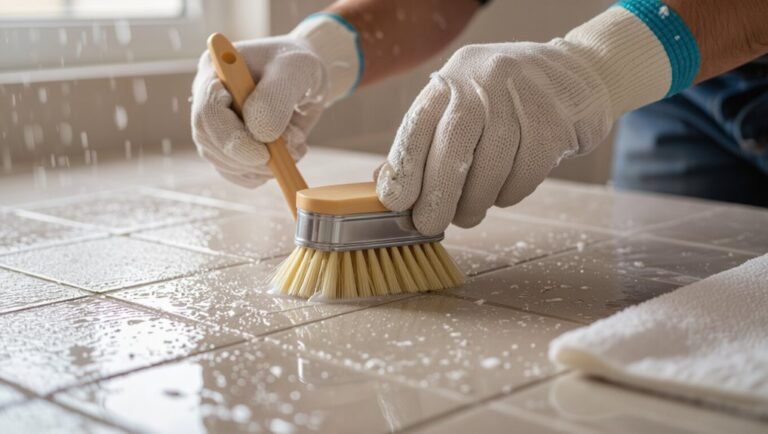
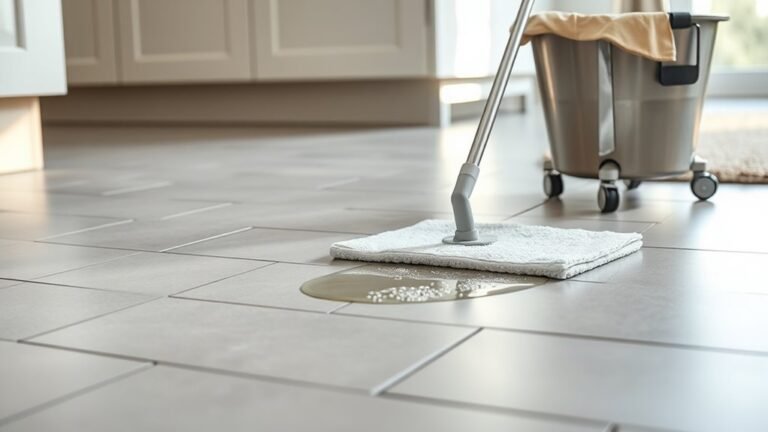
Sweep debris weekly, hose or mop with a mild detergent, and tackle spills immediately.
Use pH-neutral cleaners, soft brushes, and avoid harsh acids or bleach.
Promptly remove organic stains to prevent lasting discoloration.
Re-sealing and When It’s Necessary
After you’ve kept up with routine cleaning and quick stain removal, check whether your grout and tile finish still repel water and wear.
If water beads, you’re fine; if it soaks in or grout darkens, re-seal.
Use a penetrating sealer for porous tiles and grout, and reseal every 1–3 years depending on exposure.
Test first in an inconspicuous spot.
Repairing Cracks, Loose Tiles, and Freeze Damage
Check your outdoor tile regularly for cracks, loose pieces, or signs of freeze damage so small problems don’t become big, expensive ones.
Promptly replace cracked tiles, remove and re-bed loose ones with appropriate thinset, and use flexible, weatherproof grout and caulk.
For freeze damage, lift affected tiles, inspect and repair substrate drainage, then reinstall with freeze-thaw rated materials to prevent recurrence.
Expected Lifespan in Different Climates
Where you live and how you maintain it will largely determine how long outdoor tile lasts, so plan choices and upkeep around local climate stresses.
In mild, dry regions properly installed porcelain can last 30+ years with occasional sealing and grout care.
In freeze-thaw zones expect 10–20 years; salt, sun, and humidity shorten lifespan unless you use rated tiles, strong adhesives, and regular maintenance.
Common Mistakes and How to Avoid Them
Don’t use indoor-rated tiles outside or skimp on drainage and slope—you’ll end up with cracked grout, pooling water, and premature failure.
Make sure you include movement joints and pick the right adhesive for freeze-thaw cycles.
Also choose tiles with proper slip resistance for wet conditions to keep surfaces safe.
Using Indoor-rated Tiles Outside
Although indoor tiles can look tempting for an outdoor project, using products not rated for exterior use risks cracking, staining, and premature failure—so you need to know what to avoid and why.
Choose frost- and slip-resistant porcelain or natural stone rated for exterior use.
Avoid glazed, low-PEI, or water-absorptive tiles.
Sealants won’t fix wrong tile choice; pick proper materials and installers for lasting results.
Ignoring Proper Drainage and Slope
If water doesn’t flow away from your tiled surfaces, you’ll quickly face pooling, grout washout, and freeze-thaw damage that shorten the life of the installation.
Design a consistent slope (typically 1/4″ per foot), direct runoff to drains or beds, and avoid flat spots.
Check connections and outlets, maintain clear drainage, and correct low areas before tiling to prevent long-term failure.
Skipping Movement Joints or Using Wrong Adhesive
Proper drainage only protects the surface from water damage; movement joints and the right adhesive protect the tile assembly from stress and temperature swings.
Don’t skip joints or use indoor mastic outdoors. You’ll get cracking, debonding, and grout failure.
Plan control and perimeter joints, use flexible, exterior-rated adhesives and sealants, and follow manufacturer temperature and substrate guidelines to guarantee longevity.
Overlooking Slip Resistance for Wet Conditions
Wet outdoor tiles get slippery fast, and overlooking slip resistance can turn a beautiful patio or pool deck into a hazard.
You should choose tiles rated for wet areas (look for R10+ or specific wet-rated porcelain), test surface texture when damp, avoid polished finishes, and add anti-slip treatments or mats near water.
Regular cleaning prevents buildup that reduces traction.
Cost Considerations and Value Comparison
You’ll want to weigh upfront costs against long‑term maintenance when choosing outdoor tile, since cheap materials can cost more over time.
Compare price, durability, and slip/frost resistance for ceramic, porcelain, and natural stone to see which fits your budget and climate.
I’ll outline typical cost ranges and lifetime performance so you can make a clear value comparison.
Upfront Costs vs. Long-term Maintenance
Although tile can cost more upfront than alternatives like concrete or composite decking, it often saves you money over time because of lower maintenance and longer lifespan.
You’ll pay more initially for quality materials and proper installation, but routine cleaning and occasional grout sealing stay inexpensive.
Over years, reduced repairs and replacements usually make outdoor tile a better value than cheaper, high-maintenance options.
Comparing Cost and Performance: Ceramic vs. Porcelain vs. Natural Stone
When weighing ceramic, porcelain, and natural stone for outdoor use, consider both upfront price and long-term value: you’ll pay less for basic ceramic but replace sooner; porcelain costs more upfront yet lasts; stone is pricey and needs sealing.
| Material | Snapshot |
|---|---|
| Ceramic | Affordable, less durable |
| Porcelain | Durable, mid-high cost |
| Natural Stone | Premium, high maintenance |
Case Examples and Scenario-based Recommendations
If you have a mild-climate covered patio, you can save money with economical ceramic tiles that don’t need extreme frost resistance.
For a cold, partially exposed balcony, choose porcelain or frost-rated ceramic to prevent cracking.
Around a warm-climate pool, pick unglazed, slip-resistant options for safety and durability.
Mild Climate, Covered Patio Economical Ceramic Choices
Because your patio stays dry under a good roof and your region rarely freezes, you can choose affordable ceramic tiles that balance durability with low maintenance—porcelain-look ceramics, rectified edge options, and textured glazes are all practical picks that won’t break the bank.
Pick slightly textured, low-absorption tiles, use outdoor-rated adhesive and grout, and seal grout annually for simple, long-lasting results.
Cold Climate, Partially Exposed Balcony Porcelain or Frost-rated Ceramic
Although balconies in cold climates face freeze-thaw cycles and partial exposure, you can still install porcelain or frost-rated ceramic tiles that resist cracking and moisture intrusion.
Choose low-absorption porcelain, proper outdoor-grade grout and flexible, freeze-thaw-rated thinset.
Guarantee slope for drainage, perimeter movement joints, and protected changes to doors.
If snowmelt or deicing salts are common, pick durable, dense tiles and plan maintenance.
Pool Surround in Warm Climate Slip-resistant Unglazed Options
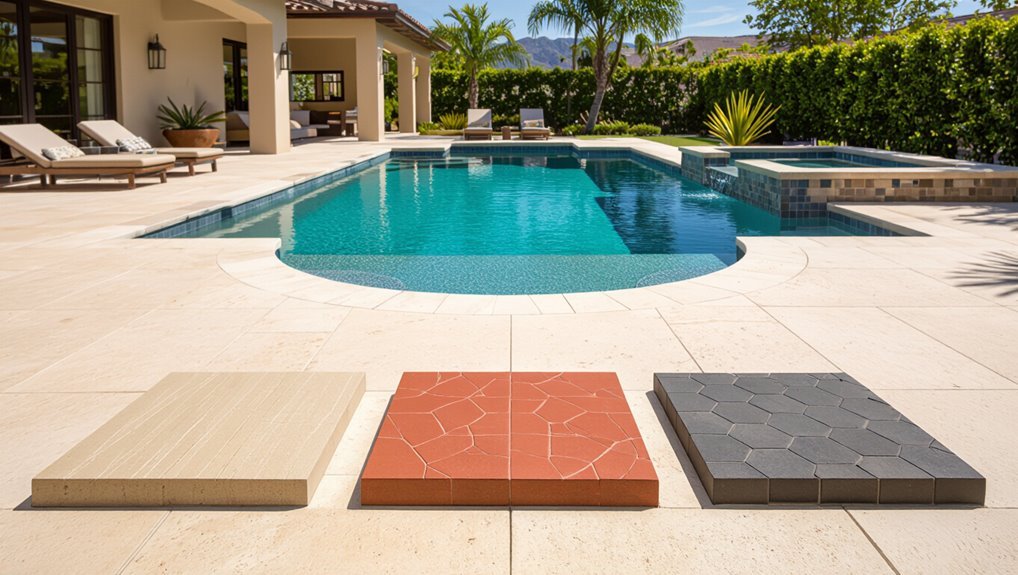
Moving from cold-climate balconies to warm-weather pool areas means you’ll focus less on freeze-thaw resistance and more on slip performance, heat tolerance, and barefoot comfort.
Choose unglazed porcelain or textured terracotta with a high COF, matte finish, and micro-texture to shed water.
Prioritize PTV or R11 ratings, chamfered edges for drainage, and light colors to reduce heat.
Sealers for stain resistance.
Quick Decision Checklist for Using Ceramic Tile Outdoors
Before you commit to outdoor ceramic, check climate suitability first — freeze-thaw cycles, UV exposure, and moisture levels all matter.
Then quick-verify technical specs like water absorption, PEI rating, and slip resistance to match your site.
Finally, run through installation and maintenance quick-steps: substrate prep, proper grout/adhesive, and routine sealing.
Climate Suitability Checklist
Wondering whether ceramic tile will hold up where you live? Check your local climate: frequent freeze-thaw cycles, heavy rainfall, prolonged humidity, intense sun, and salt exposure each affect durability.
If you face frost, choose frost-resistant materials and proper installation; in hot, sunny areas pick UV-stable surfaces.
Avoid tiles in environments with extreme moisture or salt unless rated for those conditions and professionally installed.
Technical Specs Quick-verify List
After checking climate factors, you’ll want a fast way to verify whether specific tiles and installation materials meet outdoor demands.
Check PEI rating (use ≥3 for light traffic, ≥4 for heavy), water absorption (<0.5% for porcelain), frost resistance, slip rating (R11 or higher for wet areas), UV/stain resistance, matching outdoor-grade grout and mortar, and manufacturer outdoor-use certification.
Installation and Maintenance Quick-steps
Once you’ve confirmed materials meet outdoor specs, follow a tight, practical checklist to install and maintain them properly:
prep a stable, sloped substrate; use exterior-rated thinset and grout; allow proper curing; seal porous tiles and grout; use slip-resistant finishes; schedule seasonal inspections; clear debris and reseal as needed; repair cracks promptly; avoid standing water; follow manufacturer temperature and freeze-thaw guidelines.
Frequently Asked Questions
You probably have a few practical questions before starting an outdoor tile project, like whether glazed ceramic survives freezing temperatures and if sealing is required.
You’ll also want to know about installing over concrete, preventing slippery surfaces when wet, and when porcelain is the better choice.
Below are concise answers to help you decide.
Can glazed ceramic tiles handle freezing temperatures?
Wondering if glazed ceramic tiles can survive freezing temperatures? They can, but only if rated frost-resistant.
You’ll want porcelain-like low water absorption; typical glazed ceramics often absorb more moisture and crack during freeze-thaw cycles.
Choose tiles labeled frost-proof, install with proper adhesive and drainage, and avoid thin, highly glazed indoor-only styles.
Inspect ratings before using them outdoors to prevent damage.
Is sealing ceramic tile necessary for outdoor use?
Do you need to seal ceramic tile for outdoor use? You don’t always, but sealing helps protect unglazed tiles and grout from moisture, stains, and freeze-thaw damage.
Choose a penetrating sealer rated for exterior use, reapply per manufacturer instructions, and focus on grout lines.
Glazed tiles may need less frequent sealing, but check porosity and local climate before deciding.
Can I install ceramic tile directly over concrete outside?
Yes — you can install ceramic tile directly over exterior concrete, but only if the slab is sound, clean, level, and properly prepared.
You’ll need to repair cracks, remove contaminants, and guarantee proper slope for drainage.
Use a flexible, exterior-grade thinset or mortar and movement joints to tolerate thermal and moisture changes.
Follow manufacturer guidelines and local freeze-thaw recommendations.
How do I prevent tiles from becoming slippery when wet?
How can you keep outdoor ceramic tiles safe when they get wet?
Choose textured, slip-resistant tiles (high COF) and apply a non-slip surface treatment or anti-slip tape in high-traffic areas.
Use grooved or sand-finish tiles near pools, guarantee proper slope for drainage, and clean regularly to remove algae, oil, and debris that make surfaces slick.
Regular maintenance preserves traction.
When should I choose porcelain instead of ceramic for outdoor projects?
When should you pick porcelain over ceramic for outdoor work?
Choose porcelain when you need superior frost resistance, low water absorption, and higher durability against heavy foot traffic or freeze-thaw cycles.
Pick through-body or glazed porcelain rated for exterior use, with a textured finish for slip resistance.
Use appropriate outdoor adhesives and grout to guarantee longevity and prevent moisture damage.