Can Brown Laminate Flooring Be Stained Black for a Modern Dark Look
You can’t truly stain brown laminate black like wood because the sealed wear layer won’t absorb stain, but you can get a modern dark look by using surface options. With proper cleaning, light scuffing, and a compatible bonding primer, you can apply gel stains, tinted polyurethane, or paint systems that sit on the surface. Test first, use low‑VOC products, and expect touch‑ups over time. Keep going and you’ll find practical steps, product choices, and pros‑vs‑DIY tips.
Can Brown Laminate Flooring Actually Be Stained Black?
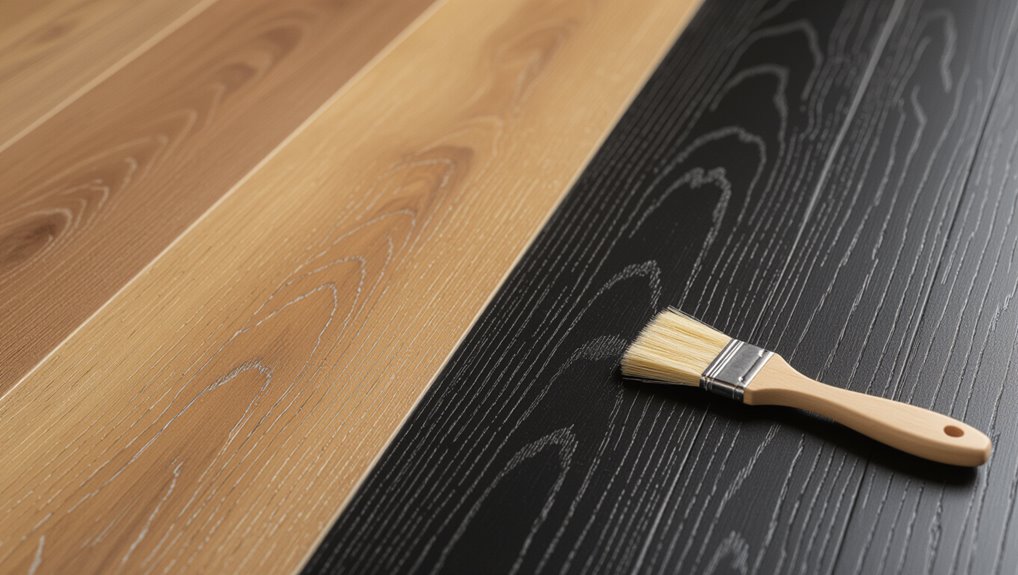
Can you stain brown laminate flooring black? You can’t truly stain laminate because it lacks porous wood; you’d use surface staining techniques like gel paints or dye-toned coatings.
You’ll prep and test small areas, then seal with appropriate topcoats. This alters appearance but needs careful laminate maintenance—gentle cleaning, scratch prevention, and re-coating plans—to preserve the finish and avoid peeling.
Quick Decision Guide: Stain, Coat, or Replace Laminate?
You’ll want to first confirm whether your laminate can accept any stain-like treatment or if its wear layer blocks penetration.
If the surface is just worn or scratched, a recoat or refinishing kit might restore appearance without replacing the planks.
But if the wear layer is too thin or the damage is structural, replacement is the safer, longer-lasting choice.
Can Laminate Be Stained?
Wondering whether laminate can take a stain? You’ll find it’s limited: only some laminate types (unfinished or engineered with a real wood veneer) accept staining.
Most factory-sealed laminates resist dyes. Assess surface, test staining techniques on scraps, and know results vary—colors may appear uneven or fade.
If staining won’t work, consider coating or replacement options covered next.
Recoat Or Full Replacement?
If your laminate shows wear or you want a dramatic color change, decide quickly whether a recoat will suffice or if full replacement’s necessary; recoat when the surface is intact and you just need color or protection, replace when planks are warped, delaminating, or the substrate’s damaged.
| Option | When to choose |
|---|---|
| Recoat | Surface intact, try staining techniques, refresh modern aesthetics |
| Replace | Warped, delaminating, or substrate damaged |
How Laminate Differs From Hardwood (Why Staining Fails)
You can’t treat laminate like hardwood because the top layer is a hard melamine coating that resists penetration.
The color is factory-pigmented in the printed layer beneath that coating, so stain can’t reach or change it.
Because the finish doesn’t absorb liquids the way wood does, stains simply won’t take or will sit on the surface unevenly.
Surface Is Melamine-Coated
Because laminate flooring has a printed wood pattern sealed under a tough melamine resin, it doesn’t behave like solid hardwood when you try to stain it.
You won’t penetrate that melamine coating; its melamine durability resists solvents and dyes.
You’ll alter laminate aesthetics only superficially, risking patchy results or damage to the wear layer.
Color Is Factory-Pigmented
One key difference is that laminate planks carry color as an integral, factory-applied pigment rather than an open wood grain that absorbs stains.
You’ll notice staining won’t penetrate, and attempts can harm the wear layer.
Consider these points:
- Color is embedded during manufacture.
- You can’t dye it like hardwood.
- Attempts risk surface damage and color fading.
- Factory pigment supports laminate longevity.
Finish Lacks Absorption
Although it might seem like any wood surface will take a stain, laminate’s sealed finish won’t absorb it—the top layer is a dense, nonporous coating bonded over a printed design, so stains just bead up or smear instead of penetrating. You’ll face absorption challenges; common staining techniques fail, so consider refinishing or replacing.
| Problem | Result |
|---|---|
| Nonporous finish | Beading/smearing |
| Printed layer | Color mismatch |
| Surface coating | No penetration |
| Stain attempt | Short-lived color |
What in Laminate’s Wear Layer Blocks Traditional Stains
When you look closely at laminate flooring, you’ll see a clear, hard wear layer that prevents traditional wood stains from penetrating the surface.
- It creates surface resistance, blocking pigment absorption and causing staining challenges.
- Coating techniques used for laminate boost laminate durability but hinder dye bonding.
- You’ll face maintenance concerns if you try abrasive prep to alter the finish.
- This engineered barrier preserves modern aesthetics while limiting traditional stain options.
Diagnose Your Laminate: Types and What You Have
Now that you know the wear layer blocks traditional stains, you’ll need to identify which type of laminate you actually have before deciding what to do next.
Use laminate identification techniques: inspect edges, core color, and surface texture.
Combine visual cues with simple flooring material analysis like light scratch tests and manufacturer codes. That helps you choose feasible refinishing or replacement options.
How to Check If Your Laminate Has a Removable Top Layer
Want to know if your laminate’s top layer can come off? You’ll perform simple laminate testing to spot a removable layer.
Check edges, peel a tiny corner, test adhesion with tape, and consult manufacturer codes.
If any step shows lifting or printed paper, you likely have a removable layer; stop and document findings before attempting staining or alteration.
How Your Laminate Type Affects Darkening Options
Because laminate is made in different ways, the darkening methods that’ll work depend on your specific type.
If you’ve got a melamine-wear layer, paint or specialized coatings are your main options; printed-top laminates resist stains.
High-pressure laminate and engineered surfaces may accept certain primers and paints better.
Identify laminate types first, then match darkening methods to adhesion and durability requirements.
Surface Prep Steps That Let Coatings Stick to Laminate
Prep the surface carefully so coatings will adhere and last. You’ll improve surface bonding by cleaning, degreasing, and removing finishes. Use proper preparation techniques to guarantee uniform adhesion.
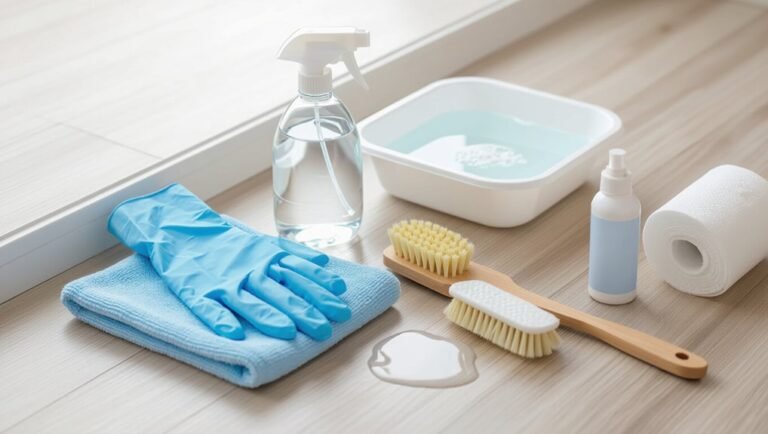
- Clean with a pH-neutral cleaner and dry thoroughly.
- Degrease stubborn spots.
- Light abrasion to promote mechanical grip.
- Remove loose or flaking topcoat before recoating.
Will Scuffing Laminate Make Coatings Stick?
After you’ve cleaned and deglossed the floor, scuffing is the next practical step to help coatings bond to laminate.
You’ll use scuffing techniques like fine-grit sanding or scuff pads to roughen the wear layer without cutting through. That micro-abrading increases coating adhesion by creating mechanical tooth.
Work evenly, remove dust, and test a small area before full application.
Pros and Cons of Tinted Penetrating Stains on Laminate
When you consider using a tinted penetrating stain on laminate, weigh its ability to subtly alter color and enhance depth against the fact that true penetration into the plastic wear layer is limited.
Stains can improve tone and uniformity but won’t change the core material or restore missing grain.
Stains can refine tone and even out color, but they won’t alter the substrate or recreate lost grain.
- You get improved color saturation and subtle shading.
- Application is quick and inexpensive.
- Stain longevity is limited on the wear layer.
- You won’t create true depth like real wood.
Pros and Cons of Gel Stains or Pigmented Oils for Laminate
If you’re considering gel stains or pigmented oils for laminate, know that surface prep is essential—any wax or finish residue will keep the product from adhering.
These finishes sit more on the surface than soak in, so color penetration is limited and true black may need multiple coats or a compatible primer.
Expect decent surface durability but be prepared for periodic maintenance to refresh the look and protect against wear.
Surface Prep Importance
1 key step before changing brown laminate to black is preparing the surface properly, because gel stains and pigmented oils react very differently to what’s already on the floor.
You’ll use surface preparation techniques and laminate cleaning methods to guarantee adhesion and uniform color.
Follow these steps:
- Remove dirt and wax residue.
- Degrease with appropriate cleaner.
- Lightly scuff the finish.
- Dry completely before staining.
Color Penetration Limits
Because laminate has a sealed, nonporous wear layer, gel stains and pigmented oils sit on the surface rather than soaking in, so you’ll get color coverage but not true penetration into the core. You’ll limit color absorption; choose staining techniques for even coating. Visualize options:
| Gel | Oil | Layer |
|---|---|---|
| Surface | Pigment | Top |
| Sheen | Tint | Edge |
Durability And Maintenance
Having covered how gel stains and pigmented oils sit on the laminate surface rather than soaking in, you should also weigh how each finish will hold up and what upkeep they’ll demand.
- Consider durability factors: wear layer resistance and UV sensitivity.
- Follow maintenance tips: avoid harsh abrasives and use pH-neutral products.
- Use proper cleaning techniques: microfibre mops, minimal water.
- Plan long term care: reseal occasional touch-ups to extend life.
How Water‑Based Wood Dyes Perform on Laminate Surfaces
While water-based wood dyes offer a lower-odor, quick-drying option, they usually struggle to penetrate the factory-sealed wear layer on laminate; you’ll often find they sit on the surface, tinting the topcoat rather than changing the core color.
You’ll notice limited dye absorption and uneven results where laminate texture varies. For consistent darkening, expect surface-level tinting and test small areas first.
Darken Laminate With Tinted Polyurethane: What to Expect
If you apply a tinted polyurethane over laminate, expect the finish to sit on the surface and change the sheen and hue rather than penetrate the core, so you’ll get a semi-transparent darkening that follows the plank texture and seams.
- You’ll see a tinted finish that emphasizes grain and joints.
- Color depth is limited; original pattern shows.
- Apply thin coats for even coverage.
- Follow laminate maintenance to protect the topcoat.
Rolled‑On Liquid Stains vs Paint: Which Wins for Laminate?
You’ll need different surface prep depending on whether you use a rolled‑on liquid stain or paint—stains often require scuffing and primer alternatives, while paint usually needs a bonding primer.
Think about durability and maintenance too: paints can chip and need touch‑ups, whereas specialty liquid stains with a clear topcoat resist wear better.
We’ll compare which option gives the best long‑term finish for laminate.
Surface Preparation Needs
Because laminate’s factory finish is thin and smooth, surface prep becomes the deciding factor between rolled-on liquid stains and paint.
You must do Surface cleaning, Dust removal, and Adhesion testing before deciding coatings.
Check Coating compatibility and Primer selection, assess Texture assessment, and use light Scratching techniques if allowed.
Confirm Equipment readiness.
- Clean
- Test
- Prime
- Texture
Durability And Maintenance
When weighing rolled-on liquid stains against paint for laminate, consider how each holds up to daily wear, cleaning, and repair; stains tend to soak into micro-textures and resist chipping, while paint forms a surface layer that can flake but is easier to spot-repair.
You’ll extend laminate lifespan by following maintenance tips: gentle cleaners, felt pads, prompt touch-ups, and routine inspection to catch wear early.
Choosing the Right Primer for Laminate
If you want a durable, even finish on brown laminate that you plan to turn black, choosing the right primer is essential: it bonds to the slick laminate surface and gives paint something to grip.
- Know primer types: bonding, shellac, acrylic.
- Match primer to laminate composition.
- Prepare surface before primer application.
- Thin, even coats reduce peeling and improve adhesion.
Step‑By‑Step: Darken Laminate With Bonding Primer and Paint
With the floor prepped and the right bonding primer on hand, you’ll work in small sections to guarantee full coverage and a smooth, durable base for black paint.
Tape edges, apply primer with a low‑nap roller, sand lightly when dry, then wipe.
Choose primer selection for adhesion and consider color matching if topcoat transparency demands it.
Apply two thin black coats, curing fully between.
How to Test Coatings on Sample Laminate Boards
Before you commit to coating your actual floor, grab a few scrap laminate boards and run quick tests so you can confirm adhesion, appearance, and durability without risking the whole room.
Use laminate testing techniques and coating adhesion methods to evaluate results:
- Sand, clean, and apply primer.
- Paint sample coats.
- Rub with a cloth after curing.
- Inspect for peeling, color shift, and wear.
How to Use Dark Wood‑Look Vinyl Planks Over Existing Laminate
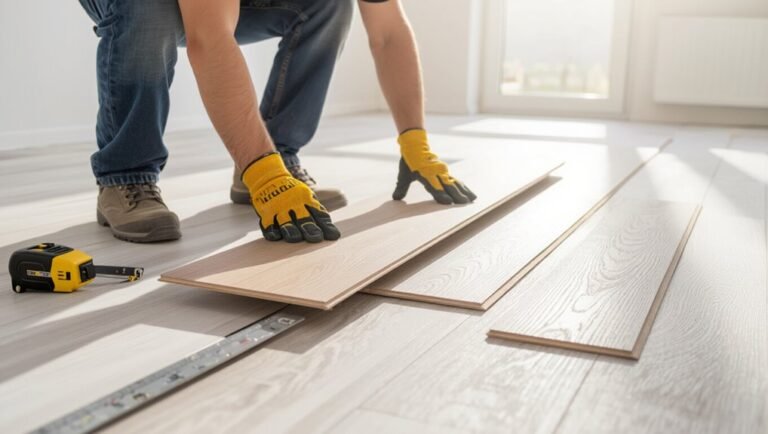
Before you lay dark wood‑look vinyl over existing laminate, you’ll need to clean, level, and repair the surface so the planks sit flat.
Pick a vinyl that’s compatible with floating installations and adhesive types recommended for nonporous surfaces.
During installation, follow manufacturer seaming guidelines, stagger joints, and use proper trims to guarantee a tight, long‑lasting finish.
Surface Preparation Steps
If you’re installing dark wood‑look vinyl planks over existing laminate, proper surface prep makes the difference between a smooth, long‑lasting floor and problems down the road.
- Inspect boards for damage and repair gaps.
- Use sanding techniques to dull glossy finishes for better adhesion.
- Perform thorough surface cleaning, removing dust, grease, and debris.
- Ascertain flatness with a self‑leveling compound where needed.
Choosing Compatible Vinyl
When picking dark wood‑look vinyl planks to lay over existing laminate, focus on compatibility: choose click‑lock or glue‑down vinyl rated for installation over hard, non‑porous surfaces, confirm plank thickness and underlayment requirements, and verify the manufacturer explicitly allows installation over laminate to keep your warranty intact. Match color matching samples, check compatible materials, and plan connections.
| Type | Underlayment | Warranty |
|---|---|---|
| Click‑lock | Required? | Verify |
| Glue‑down | May not need | Verify |
Installation And Seaming
Now that you’ve confirmed compatibility and gathered matching planks, start the installation by preparing a clean, flat laminate surface—remove trim, repair any loose boards, and sweep or vacuum thoroughly.
- Lay planks perpendicular to seams, testing installation techniques for tight fit.
- Stagger joints for stability and visual appeal.
- Use recommended adhesive or click systems per manufacturer.
- Employ consistent seaming methods and seam rollers to finish edges neatly.
Install Engineered Hardwood Over Laminate (Stainable Surface)
Although laminate isn’t ideal as a finished substrate, you can install engineered hardwood over a stainable laminate surface by taking a few key prep steps and using the right underlayment and adhesive; you’ll end up with a stable, attractive floor without removing the existing layer.
You’ll check laminate compatibility, verify it’s level and firmly bonded, sand glossy finishes, clean thoroughly, then follow manufacturer’s bonding and acclimation guidelines.
Overlay Options Over Laminate: Floating vs Glue‑Down
You can choose between a floating overlay or a glue‑down installation when covering laminate, and each method has clear pros and cons.
Floating floors are quicker and easier to remove or replace, while glue‑down offers a more permanent, solid feel and better sound control.
Consider your budget, subfloor condition, and whether you might want to change the floor later when deciding.
Floating Versus Glue‑Down
When deciding how to overlay brown laminate with a black finish, you’ll choose between floating and glue‑down installations — two distinct methods that affect stability, sound, and removal.
- You can opt for a floating installation for easy removal and movement.
- Glue down stability gives a firmer, quieter surface.
- Consider subfloor flatness.
- Plan future refinishing or replacement accordingly.
Installation Pros And Cons
Having picked between floating and glue‑down for your overlay, weigh the installation pros and cons to match performance with your needs.
A floating install’s speed and easier repairs reduce installation challenges and won’t bond to substrate movement, preserving laminate durability.
Glue‑down gives solid feel and better sound control but needs flawless prep and is harder to remove, risking subfloor damage.
How to Refinish High‑Traffic Laminate: Spot Repairs and Recoating
Although laminate isn’t as forgiving as solid wood, you can still salvage high‑traffic areas with targeted spot repairs and a thin recoating that restores appearance and extends life.
Use spot repair techniques and laminate maintenance tips to prep, then follow these steps:
- Clean and assess damage.
- Sand lightly around scratches.
- Apply compatible filler and color.
- Thinly recoat with clear protective finish.
Matching Sheen and Texture When Changing Laminate Color
When you change the color of laminate, matching the existing sheen is essential so the new sections don’t stand out.
Use texture replication techniques—like light embossing or surface primers—to mimic the original grain and feel.
Finish with an appropriate sealer to guarantee a uniform gloss and durable, consistent appearance.
Matching Sheen Levels
If you want a convincing color change, match the sheen and texture of the new finish to the existing laminate so light reflects the same way across the floor.
You’ll control sheen effects and guarantee texture matching for a unified look.
Consider these steps:
- Compare gloss levels.
- Test small areas.
- Use compatible topcoats.
- Inspect in varied lighting.
Texture Replication Techniques
Because texture and sheen control how light reads a floor, you’ll need deliberate techniques to recreate the original surface when changing a laminate’s color.
Test small areas with light abrasion, glazing, or micro-bead methods to match grain depth.
Keep texture experimentation documented, compare samples under room lighting, and prioritize laminate aesthetics so the new black finish looks integrated rather than applied.
Sealing For Uniform Finish
Although sealing won’t change the color itself, it determines how that black finish reads across the room by evening out sheen and locking in texture; you’ll want a sealant that matches your chosen gloss level and fills or highlights surface details consistently.
- Test sealing techniques on scraps for sheen match.
- Apply thin coats for uniform application.
- Sand lightly between coats to blend texture.
- Finish with recommended cure time for even appearance.
Color Tips for Achieving a Modern Black Laminate Look
When you want a modern black laminate look, focus on high-contrast pairings and cool-toned accents to keep the space crisp and contemporary.
You’ll use color psychology to balance dark contrasts with light walls and metallics.
Follow interior trends and modern aesthetics by choosing complementary flooring materials, maintaining design harmony, and applying clear maintenance tips so the dark finish stays striking without overwhelming the room.
How Lighting and Room Size Change Perceived Darkness
How much natural light your room gets will change how dark black-stained laminate reads, so check windows and sun patterns before committing.
The scale of the room matters too — smaller spaces feel heavier with dark floors while larger rooms can handle the depth.
Finally, choose artificial lighting (temperature and placement) to balance the darkness and keep the space feeling inviting.
Natural Light Impact
Wondering why the same brown laminate reads dramatically darker in one room than another?
You’ll notice natural light adjustments change tone and reveal undertones, while light reflection effects brighten or deepen perceived blackness.
Consider how windows, sun angle, and bulb warmth interact.
- Morning sun increases warmth.
- Overcast days mute contrast.
- South-facing rooms glow more.
- Directional lighting sharpens shadows.
Room Scale Effect
Because room size and lighting work together, a brown laminate stained black can look vastly different depending on the space around it.
You’ll notice small rooms feel cozier but darker, altering spatial perception, while large rooms keep the floor from overpowering.
Consider ceiling height and window placement to shape room ambiance; those proportions determine whether the dark floor reads as elegant or visually heavy.
Artificial Lighting Choices
Lighting will make or break the effect of a black-stained floor: in a small room a single dim fixture will deepen shadows and close the space, while multiple layered light sources can lift the darkness and keep the floor from feeling oppressive.
- Adjust lighting intensity for mood enhancement and room functionality.
- Choose color temperature to aid ambiance creation.
- Mix fixture styles for balance.
- Use light layering and reflective surfaces.
Maintenance for Painted or Coated Black Laminate Floors
If you’ve painted or applied a durable coating to achieve a black laminate floor, you’ll want a simple, consistent maintenance routine to keep that deep color and smooth finish looking new.
Use gentle cleaning techniques: microfiber mop, pH-neutral cleaner, and minimal water.
Place mats, felt pads, and avoid harsh abrasives.
Regular sweeping and prompt spill cleanup are essential maintenance tips to preserve sheen.
Repairing Chips or Wear on a Black‑Finished Laminate
When chips or wear show on your black‑finished laminate, address them promptly to prevent moisture damage and further peeling.
- Perform a wear assessment to identify affected planks and severity.
- Clean areas with a mild cleaner before any chip repair.
- Use a color-matched laminate repair kit or filler for small chips.
- Sand lightly and seal edges with compatible topcoat to protect repairs.
Cost Comparison: Attempt to Darken vs Full Replacement
After you’ve repaired visible chips and sealed touch-ups on a black-finished laminate, weigh the cost of trying to darken remaining planks against replacing them entirely.
You’ll compare cost effectiveness: DIY darkening can save money but may need repeating and compromise aesthetic appeal.
Full replacement raises upfront cost yet guarantees uniform color, warranty, and longer-term consistency—choose based on budget, time, and desired outcome.
Time, Tools, and Materials Checklist for Darkening Laminate
Gathering the right tools and estimating how long each step will take sets you up for a smooth darkening job: expect 2–6 hours for a small room and plan more time for drying between coats.
Follow this checklist to apply staining techniques that preserve laminate longevity:
- Degreaser, fine sandpad, tack cloth
- Gel stain or laminate-specific dye
- Brushes, foam rollers, applicator pads
- Clear topcoat and drying racks
Safety and VOCs When Altering Laminate Finishes
When you’re altering laminate finishes, know that many solvents and coatings release volatile organic compounds (VOCs) that can affect indoor air quality.
Prepare surfaces with low-dust methods and proper cleaners to minimize airborne particles, and always wear gloves and a respirator rated for organic vapors.
Make sure you ventilate aggressively—open windows, run fans or a HEPA air scrubber—to keep VOC concentrations down while you work.
VOC Emission Basics
Safety matters when you alter laminate finishes, because changing a floor’s surface can release volatile organic compounds (VOCs) that affect indoor air quality.
- Know VOC regulations and flooring standards to limit emission sources.
- Understand health impacts like headaches and respiratory irritation.
- Use mitigation strategies: ventilation, low-VOC or eco friendly options.
- Prefer sustainable materials and tested products to protect indoor air quality.
Safe Surface Preparation
Before you sand, strip, or otherwise alter laminate, plan your surface-prep to minimize VOC release and protect your health: work outdoors or in a well-ventilated area, wear an appropriate respirator and gloves, and choose low-VOC strippers, primers, and sealers rated for laminate.
After surface cleaning, test adhesion with recommended primer types, follow manufacturer cure times, and dispose of waste per local regulations.
Ventilation And Personal Protection
Good ventilation is essential—set up cross-breeze with open windows and fans or work outside so fumes don’t build up, and keep fresh air moving for the full cure time of primers and sealers.
- Use ventilation tips: fans, window exhaust, and air purifiers.
- Wear personal protection: respirator, gloves, goggles.
- Limit exposure time; take breaks outdoors.
- Store solvents sealed and dispose per label.
How to Test Adhesion and Durability Before Full Rollout
When you’re ready to scale up staining brown laminate to black, perform small-scale adhesion and wear tests on inconspicuous boards first to confirm your prep and products work together; this lets you catch bonding issues, finish incompatibilities, or excessive wear before committing to the whole floor.
Tape, sand, stain, cure, then run adhesion testing and a simple durability assessment (walk, drag, mop) to verify results.
Protecting Furniture, Trims, and Walls During the Project
Before you start staining, cover furniture with drop cloths or plastic sheeting and secure them so dust and stain can’t settle.
Tape kraft paper or painter’s tape along baseboards and use masking film to protect trims and walls from splatter.
Work in small sections and keep a damp rag handy to wipe accidental drips immediately.
Covering Furniture Thoroughly
Start by removing or moving as much furniture as you can from the room; for items that must stay, wrap them in thick plastic drop cloths or furniture blankets and secure the edges with painter’s tape so dust and stray stain can’t sneak underneath.
- Use heavy-duty drop cloths for furniture protection.
- Tape seams and floor edges tightly.
- Cover tall pieces with breathable blankets.
- Label and vent wrapped items for moisture control.
Protecting Baseboards And Walls
With furniture wrapped and taped, turn your attention to the walls and baseboards to prevent drips, splatters, and scuff marks.
Use low-tack painter’s tape along trim edges, secure kraft paper or plastic sheeting for baseboard protection, and lay drop cloths at wall bases.
Work methodically, check tape adhesion, and remove coverings promptly after finish coats cure to avoid paint pull or residue—ensure proper wall safeguarding.
Best Sealers to Extend a New Dark Finish on Laminate
If you want your new dark laminate finish to keep its depth and resist wear, choosing the right sealer matters—pick a product formulated for non-porous surfaces and designed to bond with laminates or vinyl planks.
Consider sealer types, application techniques, finish longevity, maintenance tips, compatibility factors, product recommendations, eco-friendly options, and cost analysis.
- Water-based polyurethane
- Acrylic urethane
- Clear vinyl sealers
- Eco-friendly waterborne coats
How to Achieve a Distressed or Matte Black Laminate Look
When you want a matte or gently distressed black look on laminate, you’ll focus on surface preparation, the right materials, and controlled techniques that don’t damage the wear layer.
Laminate won’t accept stain like wood, so you’ll be relying on paints, dyes made for non-porous surfaces, or thin topcoats that alter sheen and texture.
Light sanding, matte techniques like flat acrylics, and selective scuffing create subtle distressed finishes without penetrating the wear layer.
Seasonal and Humidity Considerations for Laminate Coatings
Because laminate reacts to moisture and temperature changes, you’ll need to plan coatings around the season and indoor humidity to prevent bubbling, peeling, or gaps at the seams.
- Test seasonal humidity levels before applying laminate coatings.
- Choose a dry, stable season for work.
- Maintain consistent indoor RH during curing.
- Allow extra drying time after humid days to avoid adhesion issues.
Preserving Slip Resistance on Dark Laminate Floors
While dark laminate gives a room a sleek, modern look, it can also hide wet spots and reduce contrast needed for safe footing.
So you’ll need to take specific steps to preserve slip resistance. Use slip resistance techniques like adding textured mats, applying a compatible anti-slip finish, and choosing cleaners that don’t polish away grip.
Maintain consistent surface texture for predictable traction.
How Dark Laminate Choices Affect Long‑Term Resale Value
If you pick dark laminate, you’re making a visible design choice that can either boost curb appeal or narrow your buyer pool depending on trends, lighting, and regional preferences.
- Track resale trends in your area to gauge demand.
- Match tone to common buyer preferences for warmth or modernity.
- Guarantee contrast with walls and lighting for broader appeal.
- Consider reversible options to avoid limiting future offers.
Common Mistakes to Avoid When Coloring Laminate
Dark flooring can make or break a sale, but when you decide to color or refinish laminate yourself, mistakes can undo that appeal fast.
Don’t skip testing products, ignore surface prep, or use harsh stains meant for wood. Choose appropriate coloring techniques, apply thin even coats, and protect the finish.
Proper care preserves appearance and maximizes laminate longevity.
When to Call a Pro: Signs You Need a Flooring Contractor
When challenges go beyond sanding and staining, call a flooring contractor—especially if you’re facing warped planks, persistent moisture, uneven subflooring, or visible gaps that DIY fixes haven’t closed.
You’ll preserve flooring durability and restore laminate aesthetics faster with pros.
Consider hiring when you encounter:
- Structural subfloor issues
- Chronic moisture or mold
- Widespread warping
- Complex shifts or pattern repairs
Final Checklist: Decide to Stain, Coat, or Replace Laminate
Because laminate has limits that real wood doesn’t, you’ll want a quick checklist to decide whether staining, coating, or replacing makes the most sense for your brown floors. Evaluate surface type, stain durability, cost, and color retention. Choose coating for protection, replace if wear is severe, or test a small area first.
| Factor | Action |
|---|---|
| Surface compatibility | Test patch |
| Wear level | Coat or replace |
| Desired color | Stain coat/replacement |
Frequently Asked Questions
Can Black Coatings Hide Embossed Woodgrain Patterns Completely?
No — you won’t completely hide embossed woodgrain; black coatings can reduce visibility but texture shows through. You’ll need to evaluate stain durability and color absorption, and choose heavy-build primers or fillers for a smoother finish.
Will Changing to Black Laminate Affect Underfloor Heating Performance?
Ironically, yes — changing to black laminate won’t wreck underfloor heating. You’ll notice minimal impact: color absorption slightly raises surface warmth, but heat distribution stays effective so your system still warms the room evenly and efficiently.
Can Pets’ Nails Damage Painted or Coated Black Laminate More Easily?
Yes — you’ll likely see more visible scratches and color fading on painted or coated black laminate; its scratch resistance still matters, so you should use protective measures, trim nails, and choose high-quality, wear-resistant finishes.
Do Darker Laminate Floors Require Different Baseboards or Transition Strips?
Yes — you’ll want baseboard materials that contrast or match dark floors and connector strip options like aluminum, wood-look, or rubber to suit aesthetics and durability; choose profiling to hide gaps and guarantee smooth visual shifts.
Are Warranty Claims Voided if I Professionally Coat Existing Laminate?
About 70% of warranties get voided if you alter the surface; you’ll want laminate maintenance tips and to explore professional coating options first. You shouldn’t coat without checking your warranty terms and getting written approval.
Conclusion
You can’t really stain most brown laminate black because its plastic wear layer rejects dye — yet you’ll often find a prefinished dark laminate that gives the exact look you want by coincidence: the solution you hoped to create already exists. If you’re short on time or patience, coat or replace instead of fighting the material. Trust the floor’s construction, weigh resale, and pick the path that matches your budget, skill, and timeline.