
What Is Vinyl Wood Plank Flooring and Is It Worth the Investment?
Vinyl wood plank flooring gives you a realistic hardwood look with a waterproof, low‑maintenance surface at a much lower price than real wood. It’s built from a wear layer, printed design, vinyl core (SPC/WPC/LVP), and backing, and you can install it as click‑lock, glue‑down, or loose‑lay. It resists scratches, handles kids and pets, and suits basements and busy rooms, though it can’t be refinished and won’t last as long as hardwood — keep going to see costs, pros, and buying tips.
Quick Answer Is Vinyl Wood Plank Flooring Worth the Investment?
Yes — vinyl wood plank flooring gives you wood-like looks, strong durability, and lower cost, making it a solid value for many homeowners.
You should consider it if you want a waterproof, low-maintenance option for high-traffic areas, rentals, or basements.
If you prioritize authentic hardwood grain, resale value tied to real wood, or lifetime refinishing, you might choose solid hardwood or engineered wood instead.
One-sentence summary
If you want durable, attractive flooring that’s easy to maintain and generally cheaper than real hardwood, vinyl wood plank flooring is usually worth the investment—especially in moisture-prone areas or high-traffic homes where you’d value longevity and low upkeep.
In one sentence: when you ask what’s vinyl wood plank flooring, it’s a resilient, layered synthetic product that mimics wood at lower cost and maintenance.
Who should consider it (best-use scenarios)
When you want wood-look floors that stand up to kids, pets, spills, and heavy foot traffic without constant fuss, vinyl wood plank flooring is a smart choice—you’ll get durable, low-maintenance performance in kitchens, bathrooms, basements, entryways, rental units, and busy family rooms where moisture or wear would shorten real hardwood’s life.
Consider it if you need affordable, waterproof, scratch-resistant flooring that installs quickly and suits high-use or budget-conscious spaces.
Who might choose alternatives
Vinyl wood plank flooring makes a lot of sense for high-traffic, moisture-prone, or budget-limited spaces, but it isn’t the best pick for everyone.
If you value authentic hardwood grain, long-term refinishing, or high resale prestige, you might prefer solid or engineered wood.
Also choose tile or stone for extreme heat resistance and specialists’ options for ultra-luxury or historic restorations.
What Is Vinyl Wood Plank Flooring? Basic Understanding
You’ll find vinyl wood plank flooring is a layered product made of a wear layer, a printed design layer, a vinyl core, and a backing for stability.
It comes in types like SPC (rigid stone-plastic composite), WPC (wood-plastic composite), and traditional LVP, each offering different density and comfort.
These planks replicate real wood with high-resolution visuals and embossed textures so you get authentic grain and feel without the maintenance.
Definition and components (wear layer, vinyl core, printed layer, backing)
Think of vinyl wood plank flooring as a layered system designed to mimic real wood while standing up to daily wear.
You get a clear wear layer that resists scratches and stains, a printed layer with the wood visuals, a durable vinyl core that provides stability and resilience, and a backing that adds moisture resistance and cushioning for installation and comfort.
Types: SPC, WPC, Traditional Luxury Vinyl Plank (LVP)
Because different cores change how a plank performs, it’s helpful to know the three main types: SPC, WPC, and traditional LVP.
- SPC: rigid, stone-based core, extremely durable and thin for tight spaces.
- WPC: wood-plastic core, slightly softer, offers better underfoot comfort and sound dampening.
- LVP: flexible vinyl, budget-friendly, easy to install but less rigid and dense than SPC or WPC.
How it mimics real wood (visuals and texture)
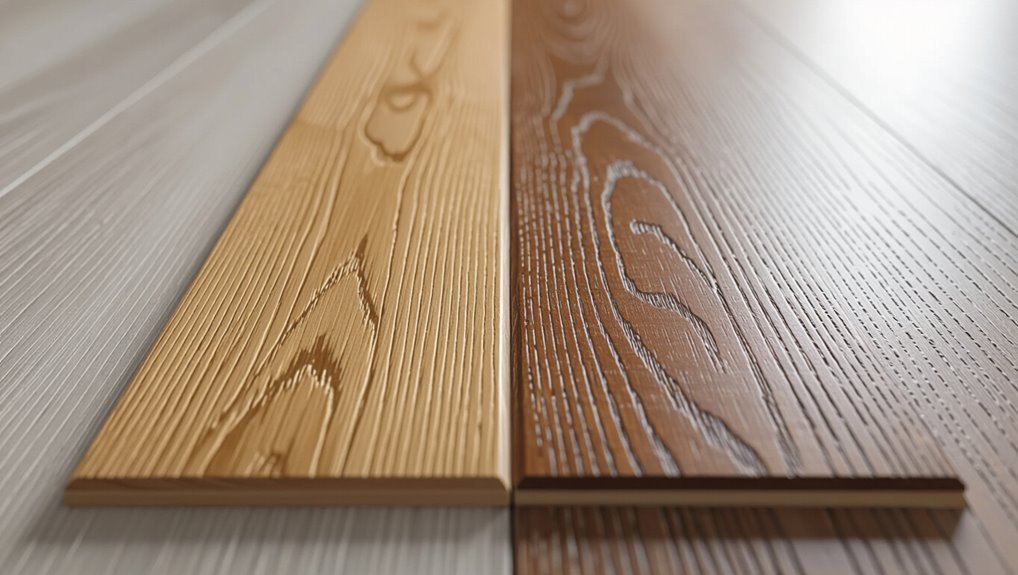
When you look closely, vinyl wood plank flooring recreates real wood by layering a high-resolution photographic print beneath a clear wear layer and textured surface, so you get authentic grain patterns, knots, and color variations without the maintenance wood demands.
You’ll notice embossed or registered textures that align with the print, tactile ridges and smooth areas that catch light, and consistent color stability over time.
How Vinyl Wood Plank Flooring Works Construction & Features
You’ll first look at a layer-by-layer breakdown—wear layer, printed design, core, and backing—to see how each part affects performance.
Then you’ll compare installation methods like click-lock, glue-down, and loose lay to find what fits your space and skill level.
Finally, you’ll assess performance characteristics such as water resistance, durability, noise, and thermal behavior to match the flooring to your needs.
Layer-by-layer breakdown
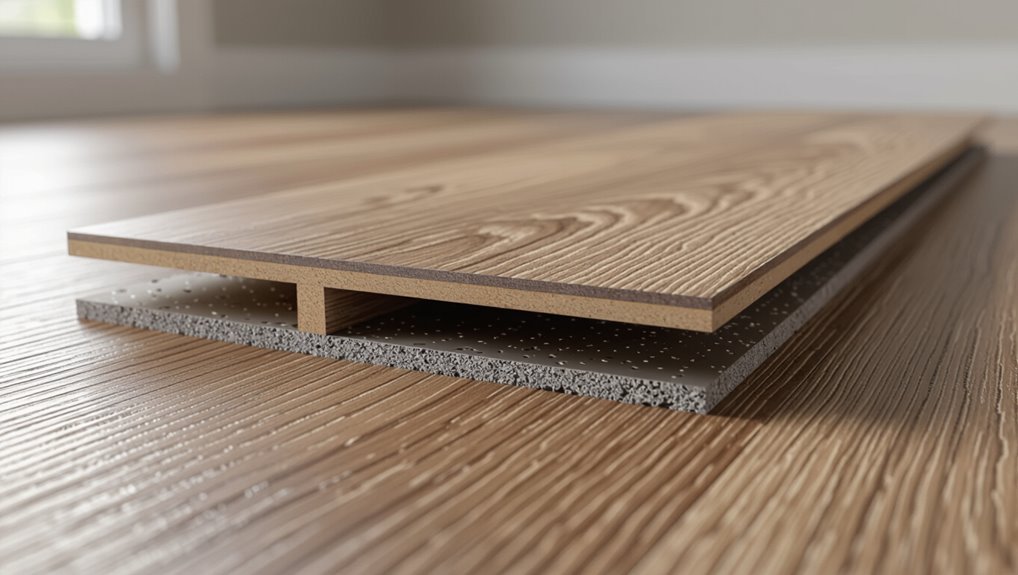
Although it looks simple on the surface, vinyl wood plank flooring is built from several distinct layers that each play a specific role in durability, appearance, and comfort.
You’ll find a clear wear layer for scratch and stain resistance, a printed vinyl layer that provides realistic wood visuals, a rigid core or fiberglass for stability, and an attached backing that cushions, resists moisture, and guarantees dimensional integrity.
Installation methods (click-lock, glue-down, loose lay)
Because installation influences performance as much as the plank’s makeup, you’ll choose among three main methods—click-lock, glue-down, and loose lay—each designed for specific subfloors, traffic levels, and DIY comfort.
- Click-lock: you snap planks together for floating installs, quick DIY.
- Glue-down: you bond planks to concrete or plywood for permanence.
- Loose lay: you rely on weight and friction for easy replacement.
Performance characteristics (water resistance, durability, noise, thermal properties)
Installation choice affects how the floor behaves day to day, but the plank’s construction determines how it handles water, wear, sound, and temperature.
You get excellent water resistance from waterproof cores and welded seams. Wear layers resist scratches and dents; thicker layers last longer.
Noise varies by underlayment—choose acoustic pads.
Vinyl feels warmer than tile but benefits from underfloor heating compatibility.
Cost Breakdown Price vs Value
You’ll want to compare upfront material costs—SPC, WPC, and traditional LVP—to understand what you’re paying for.
Factor in installation choices (DIY vs professional) and the long-term expenses of maintenance, repairs, and eventual replacement.
Finally, weigh how those costs affect resale value and ROI so you pick the option that makes financial sense for your home.
Upfront material costs (by type: SPC, WPC, LVP)
When weighing vinyl plank options, start by comparing upfront material costs for SPC, WPC, and LVP so you can match budget to performance. SPC usually costs more per square foot for rigid durability, WPC sits midrange with added comfort, and LVP is often cheapest. Use the table below to compare typical price, durability, and best use.
| Type | Price | Best use |
|---|---|---|
| SPC | High | High-traffic |
| WPC | Mid | Comfort |
| LVP | Low | Budget rooms |
Installation costs (DIY vs professional)
Although fitting vinyl plank yourself can save on labor, you should weigh those savings against skill, time, and tool costs—professionals will cost more upfront but can deliver faster, cleaner results and often a service warranty that adds value.
If you’re handy, DIY lowers total cost but expect longer install time and potential mistakes; hire pros for speed, precision, and peace of mind.
Long-term costs: maintenance, repairs, replacement
Because vinyl plank needs little upkeep compared with hardwood or tile, you’ll save on routine maintenance but should budget for occasional repairs and eventual replacement.
Understanding those lifecycle expenses helps you weigh upfront price against long-term value.
You’ll clean with mild products, replace damaged planks individually, and expect full replacement after 10–25 years depending on wear, traffic, and product quality.
Resale value and ROI considerations
1 key question about vinyl plank flooring is how its upfront cost compares to the resale value it adds to your home.
You’ll find vinyl often boosts appeal without matching hardwood’s premium price.
Consider quality, installation, and market expectations—midrange vinyl can offer strong ROI in rentals or updates, but high-end homes may see better returns from real wood or engineered alternatives.
Pros and Cons Evaluation of Vinyl Wood Plank Flooring
You’ll find vinyl wood plank flooring offers clear perks—waterproofing, low maintenance, and a budget-friendly price—that make it hard to ignore.
You should also weigh limitations like a shorter lifespan compared with hardwood, environmental and recycling concerns, and trickier repairs.
Finally, we’ll compare how it stacks up against hardwood, laminate, and tile so you can pick what’s best for your space.
Major advantages (waterproofing, affordability, low maintenance)
Durability and practicality make vinyl wood plank flooring a standout choice for many homes: it’s engineered to be waterproof, budget-friendly, and easy to care for, so you get the look of real wood without the usual headaches.
- You’ll resist spills and moisture in kitchens or basements.
- You’ll save compared with hardwood and many tiles.
- You’ll clean and maintain it quickly with basic sweeping and mopping.
Limitations and trade-offs (lifespan vs hardwood, environmental concerns, repairability)
Those practical benefits make vinyl wood plank flooring an attractive pick, but it’s important to weigh a few trade-offs before you commit.
You’ll get less lifespan than hardwood—vinyl lasts decades, hardwood can last a lifetime with refinishing.
You’ll also face limited repair options for deep damage and mixed environmental impacts from PVC production and recycling challenges, so factor those into your decision.
Comparative snapshot vs hardwood, laminate, tile
While vinyl wood plank flooring won’t match hardwood in longevity or laminate in scratch resistance, it strikes a practical middle ground: you get strong water resistance, easier installation, and lower upfront cost than hardwood, plus more realistic wood visuals and better moisture performance than many laminates, though ceramic or porcelain tile still outperforms vinyl for heat resistance and ultimate durability in high-traffic or wet commercial settings.
| Feature | Comparison |
|---|---|
| Cost | Lower than hardwood, similar to laminate |
| Water resistance | Better than hardwood/laminate |
| Durability | Less than hardwood/tile |
| Installation | Easier than hardwood/tile |
How to Choose the Right Vinyl Wood Plank Flooring
When choosing vinyl wood plank flooring, you’ll want to compare key specs like thickness, wear layer, core type, and AC rating to match durability to your needs.
Think about the room—kitchens and bathrooms need moisture-resistant options, basements may need waterproof cores, and high-traffic areas benefit from thicker wear layers.
Also check warranty types and fine print so you know what’s covered and for how long.
Key selection criteria (thickness, wear layer, core type, AC rating)
Before you buy, focus on four practical specs—thickness, wear layer, core type, and AC rating—because they determine durability, comfort, and where the flooring will perform best.
Thicker planks feel firmer; a heavier wear layer resists scratches.
Choose core types (WPC, SPC) for stability and moisture resistance.
Higher AC or commercial ratings mean longer life in busier spaces.
Matching style and room function (kitchen, bathroom, basement, high-traffic areas)
Those four specs set the performance baseline, but you also need to match style and construction to each room’s purpose.
Choose water-resistant, textured planks for kitchens and bathrooms to resist slips and spills.
In basements, pick waterproof cores and lighter visuals to brighten space.
For high-traffic areas, prioritize thicker wear layers and realistic wood tones that hide scuffs while complementing your decor.
Warranty types and what to look for
A solid warranty gives you confidence in your vinyl wood plank flooring, so learn what each type covers and for how long.
Check residential vs. commercial coverage, wear-layer and finish protection, water damage limits, and lifetime vs. limited-term specifics.
Verify transferability, installation and maintenance requirements, and remedy options—repair, replace, or prorated credit—so you know your responsibilities and protections.
Installation Overview Steps and Considerations
Before you start, make sure the subfloor is clean and level and the planks have acclimated to the room.
Measure and plan your layout, then follow step-by-step click-lock installation instructions, finishing with trims and junction pieces.
If the room has tricky cuts, thresholds, or uneven floors, consider hiring a pro instead of tackling it yourself.
Pre-installation preparation (subfloor, acclimation)
Because a successful vinyl wood plank install starts with the base, you’ll want to inspect and prepare the subfloor and acclimate the flooring before laying any planks.
Remove debris, repair cracks, level uneven areas, and guarantee the surface is dry and clean.
Stack cartons unopened in the room for 48–72 hours so planks reach room temperature and stabilize before installation.
Step 1: Measuring and planning
Now that your subfloor’s prepped and the planks have acclimated, it’s time to measure and plan the layout so you’ll avoid costly mistakes.
Measure room length and width, note doorways, vents and junctions.
Calculate plank runs to avoid narrow end pieces under walls. Allow expansion gaps per manufacturer, map starting wall and seam staggering, and estimate extra material for cuts and waste.
Step 2: Installation methods step-by-step for click-lock (DIY-friendly)
1. You’ll prep the subfloor, lay underlayment, and acclimate planks.
Start along the longest wall, keeping a 1/4-inch expansion gap. Click short edges first, then angle and snap long edges into place.
Stagger end joints by at least 6–8 inches. Use a tapping block and pull bar for tight seams. Trim final row as needed.
Step 3: Finishing touches and transitions
After the planks are locked in, focus on finishing touches and connections to make the floor look professional and perform correctly; install trim, quarter-round, and junction strips, check expansion gaps, and seal cut edges where moisture may enter.
Fit junctions at doorways, secure baseboards without pinching the floor, use color-matched caulk for gaps, and test thresholds for smooth, snag-free movement.
When to hire a pro vs DIY
While many homeowners can handle vinyl plank installation with the right tools and patience, you should hire a pro if the job involves uneven subfloors, extensive demolition, complicated layouts, or plumbing/electrical obstacles that require permits or specialist skills.
Decide based on your skills, time, and budget. Consider:
- Complexity of subfloor/prep
- Layout challenges and trims
- Time constraints or warranty needs
Common Problems and Mistakes to Avoid
When you install vinyl wood plank flooring, watch for common mistakes like inadequate subfloor prep, improper acclimation, and fastener errors that lead to gaps or buckling.
You’ll also want to prevent performance issues such as peeling, buckling, and fading by controlling moisture, using correct adhesives or click systems, and avoiding excessive sun exposure.
Finally, pick the right product—don’t opt for a thin wear layer or the wrong core type for your room’s traffic and moisture conditions.
Typical installation mistakes and how to prevent them
Mistakes during vinyl wood plank installation are usually avoidable if you know the common pitfalls and take a few deliberate steps beforehand; skip these and you’ll face gaps, buckling, or visible seams.
- Check and level subfloor — unevenness causes poor locking.
- Acclimate planks — sudden temperature changes warp edges.
- Follow stagger and expansion-gap guidelines — avoid tight runs and repeated seam lines.
Common performance issues (peeling, buckling, fading) and causes
If your vinyl wood planks start peeling, buckling, or fading, the cause is usually a specific, preventable factor such as moisture intrusion, improper acclimation or installation, or prolonged UV exposure.
Check for leaks, high humidity, or wet subfloors; guarantee proper acclimation time and secure installation; use window treatments or UV-resistant finishes to limit sun damage.
Address issues early to avoid worsening.
Mistakes in product selection (thin wear layer, wrong core type)
Although a beautiful plank can tempt you, choosing the wrong vinyl—like one with a thin wear layer or an unsuitable core—quickly turns a smart-looking floor into a durability headache.
You should match wear-layer thickness to traffic: thin layers wear fast.
Pick the right core—SPC for firmness, WPC for comfort—and avoid bargain products that skimp on construction or warranties.
Maintenance, Care, and Repair
You’ll keep vinyl wood plank flooring looking great by following simple daily and routine cleaning do’s and don’ts—sweep or vacuum regularly and use a damp mop with a manufacturer-recommended cleaner.
When spills or stains happen, blot promptly and use targeted stain removers to prevent set-in marks.
For scratches, dents, or damaged planks you’ll usually have repair options from spot treatments to replacing individual boards, so check warranties and repair methods before you act.
Daily and routine cleaning tips (do’s and don’ts)
When you stick to a simple daily routine, your vinyl wood plank floor will look great and last longer; quick sweeps and prompt spot-cleaning prevent grit and spills from causing scratches or stains.
Follow gentle habits and avoid harsh tools:
- Sweep or vacuum daily with a soft brush.
- Damp-mop weekly using manufacturer-approved cleaner.
- Use felt pads and entry mats to reduce wear.
Stain removal and dealing with spills
If a spill happens, act fast: blot liquids with a soft cloth and rinse the area with warm water to prevent staining and sticky residue.
For stubborn spots, use a mild pH-neutral cleaner or a mixture of water and gentle dish soap.
Avoid abrasive scrubbers and harsh chemicals. Rinse thoroughly, dry completely, and repeat as needed.
Test cleaners in an inconspicuous spot first.
Repair options for scratches, dents, and plank replacement
Though minor scratches and dents are inevitable over time, you can often fix them yourself with a few simple tools and products.
Use vinyl repair kits, color-matching markers, or wax sticks for surface scratches. Fill small dents with sanding dust and adhesive if needed.
For badly damaged planks, remove the plank and replace it—most click-lock or glue-down systems allow straightforward plank replacement.
Environmental and Health Considerations
When choosing vinyl wood plank flooring, you’ll want to evaluate VOC emissions and how they affect your indoor air quality.
Think about recyclability and the product’s overall sustainability to reduce long-term environmental impact.
Look for certifications like FloorScore and GREENGUARD to verify low emissions and healthier material choices.
VOCs and indoor air quality concerns
Indoor air quality matters a lot with vinyl wood plank flooring because some products can release volatile organic compounds (VOCs) that affect your health and comfort.
You should choose low‑VOC or certified floors, ventilate during and after installation, and avoid unsealed cuts that off‑gas.
Ask manufacturers for emissions data (TVOC, formaldehyde) and install air purifiers if you’re sensitive to guarantee safer indoor air.
Recyclability and sustainability factors
Because flooring choices shape both your home’s environmental footprint and long‑term health outcomes, it’s important to weigh recyclability, embodied carbon, and material sourcing when picking vinyl wood planks.
You should check whether manufacturers offer take‑back programs, use recycled PVC, or design for easy separation of layers.
Also consider lifespan—longerlasting planks reduce waste—and local manufacturing to cut transport emissions.
Certifications and labels to look for (FloorScore, Greenguard)
Having checked recyclability, lifespan, and sourcing, you’ll also want to verify third‑party certifications that confirm low emissions and safer materials.
Look for FloorScore for indoor air quality and GREENGUARD or GREENGUARD Gold for low chemical emissions. These labels reduce VOC concerns and support healthier indoor environments.
Also check product declarations (HPD/EPD) for transparency on contents and environmental impact before you buy.
Cost-Benefit Scenarios Is It Worth It? (Case-Based)
You’ll weigh different cost-benefit scenarios to see if vinyl wood plank flooring fits your project.
For a budget rental remodel, a family home with kids and pets, or a luxury look that competes with hardwood, cost, durability, and appearance matter differently.
Use a simple decision checklist—budget, lifespan, maintenance, and resale impact—to guide your choice.
Scenario A: Budget remodel for rental property
When you’re updating a rental on a tight budget, vinyl wood plank flooring gives you a lot of bang for your buck: it’s inexpensive to buy, quick to install, and holds up well to tenant wear and tear.
This means you can raise appeal without a huge upfront cost. You’ll cut downtime, lower maintenance, and still attract higher rents—ideal for short-term ROI and easy turnovers.
Scenario B: Family home with kids and pets
If vinyl planks make sense for tight-turnover rentals, they can be an even better fit in a busy family home with kids and pets—offering scratch resistance, waterproof options, and easy cleanup that cut long-term upkeep.
You’ll appreciate durability against spills, toys, and claws, plus lower replacement costs and simpler maintenance routines.
Choose higher wear-layer ratings and a trusted installer for best performance.
Scenario C: Luxury finish vs hardwood appearance goal
Though real hardwood brings unmatched depth and resale appeal, high-end vinyl planks can mimic that look at a fraction of the cost.
You should weigh appearance against long-term value and maintenance. If you prioritize flawless, glossy luxury finishes and authentic grain, hardwood may win.
If you want similar aesthetics, lower upfront cost, and easier upkeep, premium vinyl often delivers better short-term value without sacrificing style.
Decision checklist for homeowners
Because every home and budget is different, a short decision checklist helps you compare vinyl wood plank flooring against alternatives across real-world cost-benefit scenarios.
Use this quick guide to weigh priorities and trade-offs before deciding.
- Budget: initial cost, installation, long-term maintenance.
- Lifestyle: pets, kids, moisture exposure, foot traffic.
- Aesthetics vs resale: look fidelity, perceived value, upgrade potential.
Buyer’s Guide Steps to Purchase
Now that you’ve weighed costs and benefits, start by defining your needs and budget so you know what to shop for.
Then shortlist product types and order samples, compare warranties and installation options, and finally make the purchase and schedule installation.
Follow these steps and you’ll avoid surprises and get the best fit for your home.
Step 1: Define needs and budget
Before you start shopping, figure out exactly what you need and what you can afford—measure the rooms you’ll cover, note high-traffic or moisture-prone areas, and set a realistic budget that includes underlayment and installation if you’re not doing it yourself.
Prioritize durability, maintenance, and warranty levels; decide whether you need pet- or kid-friendly options, and allocate a contingency for unexpected subfloor repairs.
Step 2: Shortlist types and samples
With your needs and budget mapped out, start narrowing choices by focusing on the vinyl plank types that match your priorities—rigid core (WPC or SPC) for stability and impact resistance, flexible luxury vinyl for softer feel and easier curves, or peel-and-stick for quick DIY installs.
Order samples to check color, texture, and thickness in your light. Test under furniture, in highs and lows, and note click vs. glue fit.
Step 3: Compare warranties and installation options
How will your investment hold up over time? Check warranty length, coverage for wear, moisture, and pet damage, and whether transferability matters.
Compare manufacturer, retailer, and installer guarantees.
For installation, weigh floating, glue-down, and click-lock methods against subfloor needs and DIY skill.
Confirm who handles repairs and exclusions so you won’t face unexpected costs later.
Step 4: Purchase and scheduling installation
Now it’s time to buy and lock in your installation date—confirm product quantities, review delivery and return policies, and schedule a pro or set a DIY timeline so the flooring arrives just before work begins.
You’ll finalize payment, arrange delivery, and prep the space.
Consider:
- Buffer 5–10% extra planks for cuts and damage.
- Confirm installer arrival window.
- Verify return and warranty steps.
Frequently Asked Questions
You probably have questions about installation, longevity, and care—like whether you can install vinyl planks over existing floors, how long they last, and if they’re waterproof.
You’ll also want to know if planks can be refinished and whether vinyl boosts your home’s resale value.
Below are clear answers to each of these common concerns.
Can vinyl wood plank flooring be installed over existing floors?
Wondering if you can lay vinyl wood planks over your current floor? You often can, provided the substrate is clean, dry, level and structurally sound.
Low-profile floors like vinyl, laminate or well-adhered tile usually work. Remove loose or cushioned flooring, repair high spots, and follow manufacturer guidelines for underlayment and adhesive.
When in doubt, consult a pro to avoid warranty issues.
How long does vinyl plank flooring last?
How long vinyl plank flooring lasts depends mainly on quality, installation, and traffic—expect 10 to 25 years for residential use, with premium, well-installed products lasting longer.
You’ll extend lifespan by choosing thicker wear layers, following manufacturer installation and maintenance guidelines, using protective mats, and avoiding harsh cleaners.
Replace damaged planks promptly to prevent adjacent wear and preserve overall performance and appearance.
Is vinyl plank flooring waterproof?
Curious whether vinyl plank flooring can handle spills and splashes? Yes—many vinyl planks are waterproof, with a solid vinyl core and sealed seams that block moisture.
That makes them great for kitchens, bathrooms, and basements.
Still, you should clean up standing water quickly and follow manufacturer guidelines for installation and changes to prevent water intrusion at edges or seams.
Can vinyl planks be refinished?
If you’ve been treating spills and moisture carefully, you might next ask whether you can refinish vinyl planks to restore their look.
You can’t refinish most vinyl like hardwood; wear layers and printed surfaces prevent sanding and re-staining.
Instead, clean, spot-repair edges, replace damaged planks, or use surface treatments recommended by the manufacturer to refresh appearance without risking further harm.
Will vinyl flooring increase my home’s resale value?
Wondering whether vinyl flooring will boost your home’s resale value? It can, especially if you choose high-quality, realistic planks and install them professionally.
Buyers appreciate durability, water resistance, and low maintenance. Luxury vinyl often competes with hardwood visually, so it may improve appeal and justify a higher asking price in mid-range homes, though it won’t command the same premium as real hardwood.
Conclusion Final Recommendation and Next Steps
If you’re a budget-conscious renter, pick an affordable SPC option; if you own a family home, prioritize durable, waterproof luxury vinyl planks; if you’re remodeling to sell, choose neutral, mid-range styles.
Next steps: order a few samples to compare in your lighting and get at least two installer quotes with timelines and warranties.
When you’re ready, schedule measurements and confirm lead times so the project stays on track.
Bottom-line recommendation by homeowner type
When choosing vinyl wood plank flooring, focus on what matters most to your situation—budget, lifestyle, and long-term plans—and you’ll pick the option that balances cost, durability, and appearance.
If you rent, pick affordable, easy-to-remove planks. If you have kids or pets, choose scratch-resistant, waterproof vinyl. If you plan to sell, invest in higher-end looks that boost curb appeal and resale value.
Quick action steps (sample ordering, installer quotes)
Now that you’ve narrowed choices by budget and lifestyle, take a few practical steps to lock in the best vinyl wood plank for your home.
Order samples to test color and texture in your light.
Get three installer quotes with itemized labor and warranty terms.
Confirm delivery lead times and return policies before you commit.
- Order samples
- Request quotes
- Verify timelines
