What Is Pergo Laminate Flooring and Is It Worth the Investment?
Pergo laminate flooring gives you a durable, budget-friendly wood- or stone-look option that’s easy to install and maintain, making it a solid choice for many homes. You’ll get scratch- and stain-resistant surfaces, simple tongue-and-groove installation, and lower upfront cost than hardwood, though it won’t feel as warm underfoot and can’t be refinished. It resists everyday wear but dislikes standing water, and its typical lifespan is 10–25 years—keep going to learn practical pros, cons, and costs.
Is Pergo Laminate Flooring Worth the Investment?
Yes — Pergo laminate is generally worth the investment for its durability, easy maintenance, and lower cost versus hardwood.
You’ll get scratch- and stain-resistant surfaces and simple installation, though it can feel less authentic than real wood and isn’t ideal for very wet areas.
Consider your budget, traffic levels, and whether you prioritize appearance or practicality.
One-sentence verdict
Although no flooring suits every situation, Pergo laminate offers a durable, cost-effective option that’s worth the investment for most homeowners seeking realistic wood looks, easy maintenance, and strong wear resistance.
If you want clear guidance on what’s Pergo laminate flooring, it’s a practical choice: you’ll get convincing visuals, robust performance, and lower upfront cost compared with many hardwood alternatives.
Summary of pros and cons
If you’re weighing whether Pergo laminate is worth the investment, consider how its combination of realistic visuals, strong scratch and stain resistance, and lower price compare with its limits on moisture performance and refinishing—these trade-offs will determine if it fits your home and lifestyle.
- You’ll love the look and low cost.
- You’ll relax about scratches.
- You’ll worry about wet areas.
- You’ll accept limited refinishing.
What Is Pergo Laminate Flooring?
Now you’ll get a clear picture of what Pergo laminate flooring actually is, starting with the brand’s history and reputation.
You’ll learn how laminate boards are constructed—wear layer, printed design, core, and backing—and what materials give them durability and realism.
Then you’ll see Pergo’s main product lines and the features that set each one apart, like water resistance, thickness, and locking systems.
Definition and brand overview
When you’re shopping for durable, low-maintenance flooring, Pergo laminate stands out as a popular engineered option that mimics wood and stone using a layered construction: a wear-resistant top layer, a high-definition printed design, a coreboard for stability, and a backing layer for moisture control.
You’ll find Pergo’s reputation centers on durability, wide style selection, easy installation, and strong warranty support, making it a trusted brand.
How laminate flooring is made (layers and materials)
To understand what makes Pergo laminate perform the way it does, look at how laminate is constructed: it’s a multi-layered panel engineered for durability, appearance, and dimensional stability.
You’ll find a transparent wear layer, a high-resolution decorative print mimicking wood or stone, a dense fiberboard core for strength, and a backing layer that resists moisture and prevents warping.
Pergo product lines and distinguishing features
Pergo laminate brings a clear product hierarchy that helps you match performance, style, and budget: their lines range from entry-level, cost-conscious options to premium collections that emphasize ultra-realistic textures, thicker wear layers, and enhanced moisture resistance.
You’ll find choices tailored to traffic, appearance, and wet areas. Pick what fits your life and feel confident.
- Cozy appeal
- Durable pride
- Practical relief
- Luxurious joy
Key Benefits of Pergo Laminate Flooring
You’ll appreciate how Pergo stands up to daily wear with strong scratch resistance and long-lasting durability.
It also gives you a wide range of looks, simpler DIY installation, and lower cost than many hardwood or tile options.
Plus, upkeep is straightforward—regular sweeping and occasional mopping keep it looking new.
Durability and scratch resistance
Although it looks and feels like real wood, Pergo laminate resists dents, scuffs, and everyday scratches far better than many natural floors.
So you’ll get long-lasting beauty with minimal upkeep. You’ll appreciate its tough wear layer that shields against pets, kids, and moving furniture.
Cleaning’s simple, repairs are rarely needed, and warranties back its performance for high-traffic rooms.
Aesthetics and design variety

When you want the look of real wood without the limits, laminate offers a wide range of colors, textures, and plank sizes that fit any decor and budget.
You’ll find realistic grain patterns, matte or glossy finishes, and trendy options like reclaimed or whitewashed looks.
Mixing widths and tones helps you customize rooms, achieving designer style without the cost or maintenance.
Installation ease and DIY-friendliness
Beyond looks, Pergo laminate scores big on installation ease, so you can get the style without hiring pros.
You’ll click planks together with a tongue-and-groove system, cut boards with a saw, and float the floor over existing subfloors. Clear instructions and common tools keep projects quick.
You’ll save time, gain confidence, and tackle most rooms as a straightforward DIY weekend job.
Cost compared to hardwood, vinyl, and tile
If you’re balancing style and budget, Pergo laminate usually gives you the biggest bang for your buck: it’s considerably cheaper than solid hardwood up front, often undercuts luxury vinyl in mid-range styles, and can be comparable to or slightly more than basic ceramic tile once installation is included. You’ll save on material costs and often on installation.
| Option | Typical cost range |
|---|---|
| Pergo laminate | $2–$6/sq ft |
| Hardwood | $5–$15/sq ft |
| Luxury vinyl | $3–$8/sq ft |
| Ceramic tile | $1–$7/sq ft |
Maintenance and cleaning advantages
Cost advantages also show up over the life of the floor because Pergo laminate is low-maintenance and easy to clean.
You won’t need special cleaners—regular sweeping and a damp mop handle dirt and spills. Its wear layer resists stains and scuffs, so you avoid frequent treatments or refinishing.
Quick spot cleaning saves time, keeping upkeep simple and affordable.
Limitations and Potential Drawbacks
While Pergo is durable and attractive, you’ll want to contemplate a few limitations before choosing it.
It can be vulnerable to prolonged moisture, is harder to repair than solid wood and may not last as long, and some options emit VOCs or use materials you might want to avoid.
Also expect a different underfoot feel and acoustics compared with real hardwood.
Water resistance and moisture concerns
Because Pergo laminate uses a wood-based core and interlocking joints, it can resist spills but still be vulnerable to prolonged moisture and flooding.
You should avoid installing it in consistently wet areas like unfinished basements or near indoor pools.
Wicking at seams or damaged edges can cause swelling, warping, or delamination, so promptly clean spills and maintain proper humidity and moisture barriers.
Repairability and lifespan vs. real wood
When you compare Pergo to real hardwood, expect clearer limits on repairability and lifespan: you can’t sand and refinish laminate repeatedly; deep scratches or gouges usually need plank replacement.
Pergo resists wear well initially, but it won’t age like solid wood. With heavy traffic over years you may replace sections sooner than hardwood, so factor shorter long-term lifespan into your investment decision.
Environmental and VOC considerations
You’ve covered repair limits and lifespan, and it’s worth looking next at environmental and indoor air-quality issues.
You should know Pergo laminate contains engineered cores, plastics and adhesives that can emit VOCs, especially initially.
Choose low-VOC or Greenguard-certified options, guarantee proper ventilation during and after installation, and consider end-of-life recycling limits compared with solid wood to minimize environmental impact.
Sound and feel underfoot
Although Pergo can mimic wood visually, it often feels firmer and can sound hollow underfoot compared with solid hardwood or engineered wood, especially without proper underlayment.
You’ll notice less warmth and muted footstep resonance; high heels may click.
Adding quality underlayment and pad reduces noise and improves cushioning, but you won’t fully replicate the dense, satisfying feel of real wood underfoot.
Comparison Pergo vs. Other Flooring Options
When you compare Pergo to hardwood, LVP, and ceramic or porcelain tile, you’ll see trade-offs in cost, durability, and appearance.
Pergo often wins for budget-friendly installation and moisture resistance, hardwood for resale value and authentic look, LVP for waterproof performance and softer feel, and tile for long-term durability in wet areas.
Think about each option’s best use-cases—living rooms and bedrooms for hardwood, basements or rentals for Pergo or LVP, and bathrooms or kitchens for tile—when choosing.
Pergo vs. hardwood
Picking between Pergo laminate and hardwood comes down to how you value cost, maintenance, and authenticity: Pergo gives you a durable, lower-cost surface that resists scratches and moisture better, while hardwood offers natural beauty, longevity, and the chance to refinish for decades.
| Feature | Verdict |
|---|---|
| Cost | Pergo |
| Maintenance | Pergo |
| Longevity | Hardwood |
| Resale | Hardwood |
Pergo vs. luxury vinyl plank (LVP)
You’ve just weighed Pergo against hardwood for cost, upkeep, and authenticity; now let’s compare Pergo to luxury vinyl plank (LVP) to see how they stack up on realism, durability, and water resistance. You’ll find Pergo is often firmer and more scratch-resistant, while LVP wins on waterproofing and softer underfoot—choose based on room use and moisture exposure.
| Feature | Better |
|---|---|
| Realism | Tie |
| Durability | Pergo |
| Water resistance | LVP |
| Comfort | LVP |
| Cost | Tie |
Pergo vs. ceramic/porcelain tile
Compare Pergo laminate and ceramic or porcelain tile by focusing on how you’ll use the room, because they differ sharply in feel, maintenance, and moisture handling. You’ll weigh warmth, durability, and upkeep: Pergo feels softer and warms easier; tile resists water and heavy wear but feels cold and needs grout care.
| Feature | Pergo | Tile |
|---|---|---|
| Feel | Warmer | Colder |
| Maintenance | Low | Grout care |
| Moisture | Limited | Excellent |
Best use-cases for each alternative
Now that you’ve weighed Pergo against ceramic and porcelain, let’s look at which rooms and needs each flooring suits best.
You’ll pick Pergo for cozy, budget-friendly living areas and busy families; tile fits wet zones and sleek modern kitchens; hardwood suits formal rooms and resale value; vinyl works where comfort and waterproofing matter most.
- Comfort and warmth
- Durability under pets
- Elegant curb appeal
- Stress-free maintenance
How to Decide If Pergo Is Right for Your Project
To decide if Pergo fits your project, look at each room’s needs—kitchens and basements may require moisture resistance, while high-traffic areas need durability.
Compare upfront cost, expected maintenance, and how long the floor will hold up before replacement to gauge long-term value.
Also factor in your household: pets, kids, and spills can steer you toward tougher or more water-resistant options.
Assessing room-by-room suitability (kitchen, bathroom, basement, high-traffic areas)
When you’re deciding whether Pergo is right for each room, focus on moisture exposure, wear level, and installation conditions—kitchens and high-traffic living areas often suit Pergo’s durable, scratch-resistant surfaces, while bathrooms and damp basements need careful product selection and proper moisture barriers to prevent damage.
Choose water-resistant or waterproof Pergo for kitchens; use strict moisture control in bathrooms and basements; prefer higher AC-rated options for busy zones.
Budget and long-term value calculation (initial cost, maintenance, replacement)
Although Pergo often costs less upfront than hardwood, you should weigh initial price against maintenance and replacement over time. Calculate purchase plus installation, factor routine care, and plan for replacement based on wear. Use a simple cost snapshot:
| Item | Estimate |
|---|---|
| Initial | $ |
| Annual care | $ |
| Replacement (yrs) | $/yr |
Lifestyle and household factors (pets, kids, moisture)
If your household includes pets, kids, or frequent moisture, think about how daily life will stress the floor and whether Pergo can handle it; its scratch-resistant wear layers and spill-resistant cores work well for busy homes, but you should still plan for mats at entryways, prompt cleanup of spills, and occasional touch-ups for high-traffic areas.
Also consider pet nails, toy impact, and basement humidity—choose appropriate AC rating.
Buying Guide What to Look for When Choosing Pergo
When choosing Pergo, you’ll want to compare AC ratings and wear layer thickness to match the room’s traffic.
Consider whether you need water-resistant or fully waterproof lines, plus edge styles, plank sizes, and finishes that fit your look.
Don’t forget to check warranties and coverage, and confirm the right underlayment and subfloor requirements for proper installation.
AC rating and wear layer thickness
Because the AC rating and wear-layer thickness tell you how well a Pergo floor will stand up to foot traffic and everyday abuse, you should check both specs before buying.
Higher AC numbers mean tougher abrasion resistance; thicker wear layers add durability and refinishing options.
Match AC level and wear thickness to room use—bedrooms, living areas, or high-traffic kitchens—for long-lasting performance.
Water-resistant vs. waterproof lines
Although both labels promise protection from spills, water-resistant and waterproof Pergo lines serve different needs and deserve different expectations.
You’ll want water-resistant for light, occasional moisture—kitchen splashes, damp shoes—while waterproof handles standing water, bathrooms, basements, and spills you might miss.
Check installation limits, warranty specifics, and edge seals; choose waterproof if you need maximum moisture tolerance and peace of mind.
Edge styles, plank sizes, and finishes
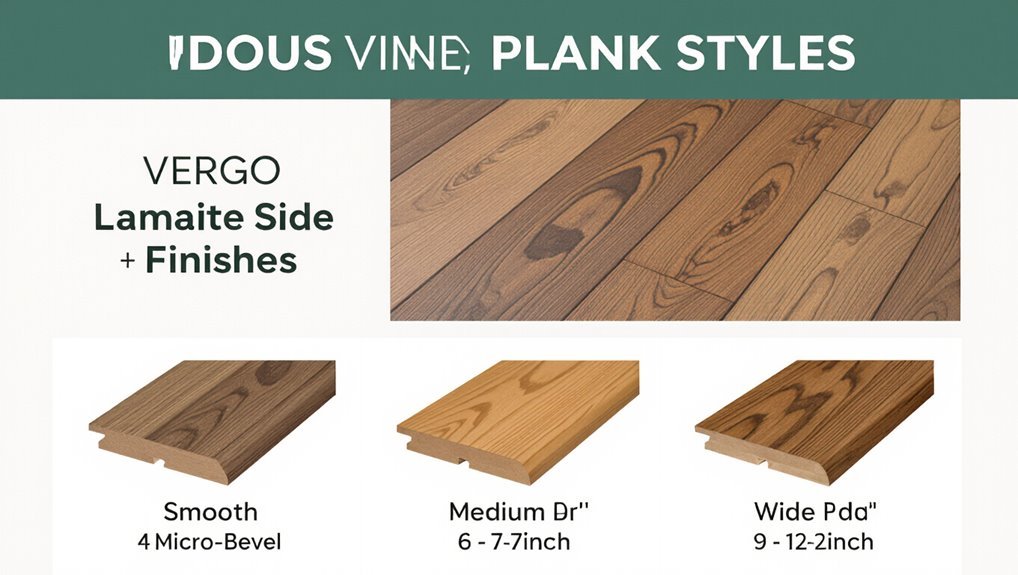
Pick the edge profile, plank size, and finish that match your room’s style and traffic needs, because those details shape both the look and performance of Pergo flooring.
Choose beveled edges for a traditional, defined plank look or square edges for a modern seamless appearance.
Longer, wider planks make spaces feel bigger.
Opt for matte finishes to hide wear or gloss for easier cleaning.
Warranties and what they cover
When you shop for Pergo, pay close attention to the warranty terms—what’s covered, for how long, and under what conditions—since they directly affect your long-term protection and peace of mind.
Check residential versus commercial coverage, wear and stain guarantees, moisture and fade limits, transferability, and required maintenance.
Note exclusions, claim procedures, and whether installation method affects validity so you won’t be surprised.
Matching underlayment and subfloor requirements
Warranties tell you what Pergo will cover, but matching the right underlayment and meeting subfloor requirements determines how well your floor performs and whether those warranties stay valid.
Check Pergo’s recommended underlayment for sound, moisture, and thermal properties.
Confirm subfloor is flat, clean, dry, and structurally sound.
Use vapor barriers where required and follow thickness/tolerance specs to avoid voiding coverage.
Installation Overview and Cost Considerations
You can install Pergo yourself with basic tools—saw, tapping block, spacers—and expect a weekend or two depending on room size.
If you’re short on time, dealing with uneven subfloors, or want a perfect finish, hiring a pro (typically $2–$6 per sq ft plus labor) is worth it.
Watch for common mistakes like skipping underlayment, ignoring expansion gaps, or cutting planks inaccurately to avoid costly fixes.
DIY installation steps (tools and timeline)
1 clear plan makes a DIY Pergo laminate installation smoother and faster: gather the right tools, set aside uninterrupted time, and follow a step-by-step sequence so you avoid costly mistakes.
You’ll prep subfloor, acclimate planks, snap rows, and finish trim. Expect a weekend for 200–300 sq ft.
Essentials:
- Tape measure (confidence)
- Pull bar (relief)
- Tapping block (precision)
- Spacer wedges (calm)
When to hire a professional and typical installer costs
If your project involves tricky subfloors, lots of built-ins, or a large open area, consider hiring a pro — they’ll handle leveling, changes, and complex cuts faster and with fewer risks than most DIYers.
You should also hire pros for moisture issues, connections to other flooring, or warranty-required installations.
Expect installers to charge $2–$6 per sq ft plus labor, or $800–$2,500 total.
Common installation mistakes to avoid
Although Pergo’s click-lock planks are user-friendly, several common mistakes can still derail a project.
Don’t skip acclimation, ignore subfloor flatness, or neglect moisture barriers. Space expansion gaps properly, stagger end joints per manufacturer, and use correct underlayment.
Avoid forcing planks, cutting inaccurately, or rushing changes. Proper prep and patience prevent gaps, buckling, and costly repairs.
Maintenance, Repair, and Longevity Tips
Keep your Pergo looking great by sticking to simple daily and periodic cleaning routines and using preventive measures like entry mats and furniture pads.
If you spot scratches, dents, or water stains, you’ll want to address them quickly with touch-up kits, plank replacement, or proper drying and repair techniques.
These steps will help you extend the floor’s lifespan and avoid bigger, costlier problems.
Daily and periodic cleaning routines
When you stay consistent with simple daily and periodic routines, your Pergo laminate will look better and last longer with less effort.
You’ll clean spills fast, sweep grit away, and mop lightly with a Pergo-approved cleaner. Schedule deeper cleans monthly to remove buildup and check seams.
- Quick spot-clean to calm worries
- Daily sweeping for peace of mind
- Damp mopping for fresh shine
- Monthly inspection to reassure you
Preventive measures to extend lifespan (mats, furniture pads)
If you want your Pergo laminate to stay looking new, take simple preventive steps like using entry mats to trap dirt and furniture pads to prevent scratches; these small habits cut down on abrasive wear and reduce the need for repairs.
Also use felt pads on chair legs, lift heavy items instead of dragging, place rugs in high-traffic zones, and rotate mats periodically to maintain even protection.
Repair options for scratches, dents, and water damage
Although prevention is your best defense, damaged Pergo laminate can often be restored without a full replacement. You can buff light scratches with a repair kit or colored wax, replace individual planks for deep dents, and use moisture repair compounds or plank replacement for water damage.
Act quickly: dry spills, lift affected boards, and consult manufacturer guidelines to preserve warranties and finish integrity.
Common Mistakes Homeowners Make with Pergo
You can save time and money by avoiding a few common Pergo mistakes.
Skipping proper subfloor prep, using the wrong underlayment or adhesives, or putting laminate in rooms with high moisture all cause problems.
Also don’t ignore the manufacturer’s care instructions—those guidelines protect your warranty and product life.
Improper subfloor preparation
When you skip proper subfloor prep, Pergo won’t perform as promised—boards can squeak, buckle, or separate as moisture and unevenness take their toll.
You need a flat, dry, clean subfloor; failing to remove debris, level high spots, or address dips invites gaps, movement, and premature wear.
Inspect, repair, and acclimate materials before installation to avoid costly fixes.
Using wrong underlayment or adhesives
If you pick the wrong underlayment or adhesive, your Pergo floor can look fine at first and still fail quickly—mismatched materials cause squeaks, poor locking, moisture problems, and reduced warranty coverage.
You should follow Pergo’s specifications, use recommended vapor barriers for moisture-prone areas, and pick adhesives compatible with laminate.
Otherwise you’ll void warranties and face costly repairs or premature replacement.
Installing in inappropriate rooms
Although Pergo’s laminate is durable, it’s not suited for every room in your home; installing it in high-moisture areas like bathrooms, saunas, or laundry rooms leads to warping, swelling, and glue failure.
Don’t fit it where water exposure is constant or where subfloor humidity fluctuates.
Choose waterproof options or tile for those spaces to avoid costly repairs and premature replacement.
Neglecting manufacturer care instructions
Because Pergo provides specific cleaning and maintenance guidelines for a reason, skipping them can cut the life of your floor short.
You’ll void warranties, invite premature wear, and damage protective coatings by using wrong cleaners, excessive water, or abrasive tools.
Follow recommended products, drying methods, and traffic-control tips.
Regular, proper care keeps appearance and performance, so don’t ignore the manufacturer’s instructions.
Cost vs. Value: Return on Investment Analysis
You’ll want to compare typical Pergo price points and installation costs so you know what you’re starting with.
Consider how buyers in your market perceive laminate versus hardwood to estimate resale value impacts.
Then run simple scenarios to see your likely break-even timeline under conservative and optimistic assumptions.
Typical price ranges and installation costs
A typical Pergo laminate floor will cost you between $1.50 and $6.00 per square foot for the material, with premium styles and water-resistant options pushing toward the higher end; once you include professional installation, expect total project costs of roughly $3 to $12 per square foot depending on room size, subfloor prep, and trim or underlayment needs.
| Item | Low | High |
|---|---|---|
| Material | $1.50/ft² | $6.00/ft² |
| Installation | $1.50/ft² | $6.00/ft² |
| Extras | $0.00 | $3.00/ft² |
Resale value impact and market perceptions
When buyers walk into a home, upgraded flooring often shapes their first impression. So installing Pergo laminate can boost perceived value without the high cost of hardwood.
You’ll typically recoup a meaningful portion of your investment—especially in midrange or recently renovated properties—though exact ROI depends on local market preferences, the quality of the product and installation, and whether the style complements the rest of the home.
You’ll appeal to pragmatic buyers who value durability and modern looks, though luxury-focused markets may favor real hardwood.
Break-even timeline based on scenarios
If you’re weighing Pergo laminate against other flooring, the break-even timeline hinges on upfront costs, expected lifespan, and how much value it adds at sale—so run a simple comparison of purchase/installation plus maintenance against the projected increase in resale price and years of service.
Calculate scenarios: low cost/short lifespan, mid cost/10–15 years, high cost/20+ years.
Pick the scenario matching your market and tenure.
Real-World Examples and Case Studies
You’ll see how Pergo performs in real homes with three practical scenarios: a budget remodel for a high-traffic family room, achieving a luxury look on a midrange budget, and options for basements or moisture-prone areas.
Each case highlights product choices, installation tips, and maintenance trade-offs you can expect.
Use these examples to match a Pergo solution to your priorities and constraints.
Scenario: Budget remodel for high-traffic family room
Although budget constraints can feel limiting, a smart Pergo laminate choice can transform a high-traffic family room into a durable, low-maintenance space that still looks great.
You’ll pick a scratch-resistant, high-density core plank, install with a tight locking system, and choose a neutral woodgrain to hide wear.
The result: affordable longevity, easy cleaning, and satisfied family use for years.
Scenario: Luxury look on a midrange budget
When aiming for a luxury look on a midrange budget, smart Pergo choices let you get designer style without designer prices.
You’ll pick wide-plank, dark oak visuals with subtle bevels, pair with elegant baseboards, and use high-quality underlayment for feel.
The result reads upscale, lasts well, and stays affordable—perfect if you want showroom warmth without overspending.
Scenario: Basement or moisture-prone area solution
If your basement or a moisture-prone room needs flooring that stands up to damp conditions, Pergo’s water-resistant laminate systems offer practical, attractive solutions you can trust.
You can install waterproof underlayment, choose Pergo’s SPC or AquaSafe lines, and enjoy easy maintenance.
In a damp finished basement, homeowners reported no swelling, simple cleaning, and confident resale appeal after professional or DIY installation.
Best Practices and Recommendations
When choosing Pergo, match the line to each room’s traffic, moisture risk, and style so you get the right durability and look.
Stick to a simple maintenance schedule—regular sweeping, prompt spills cleanup, and seasonal checks for gaps or wear—to keep floors performing.
With proper selection and care, you’ll maximize your Pergo’s longevity and maintain its appearance.
Choosing the right Pergo line for each room
Because each room has different traffic, moisture, and style needs, you’ll want to match a Pergo line to those specific demands rather than picking the prettiest plank alone.
Choose tougher, wear-resistant lines for entryways and family rooms; waterproof or water-resistant collections for kitchens, bathrooms, and basements; and quieter, softer options for bedrooms.
Prioritize AC rating, warranty, and finish for each space.
Maintenance schedule and seasonal care
Although Pergo’s durable surfaces resist everyday wear, a simple, regular maintenance routine keeps floors looking their best and prevents minor issues from becoming costly repairs.
Sweep or vacuum weekly, damp-mop with manufacturer-approved cleaner monthly, and wipe spills immediately.
In changing seasons, monitor humidity, use mats at entrances, and check seams for gaps.
Address minor scuffs promptly to avoid escalation.
Maximizing longevity and appearance
Building on regular cleaning and seasonal checks, you can extend your Pergo floor’s life and keep it looking like new by following a few straightforward practices.
Use felt pads under furniture, lift rather than drag heavy items, maintain stable indoor humidity, wipe spills promptly, avoid harsh cleaners, recoat high-traffic areas with manufacturer-approved products, and place entry mats to trap grit.
Regular inspections prevent minor issues from worsening.
Frequently Asked Questions
You probably have a few quick questions about Pergo, like how long it lasts and whether it’s waterproof.
You’ll also want to know if it can be refinished, how to clean and maintain it, and whether it adds value to your home.
Let’s answer each of those so you can make an informed choice.
How long does Pergo laminate typically last?
Most Pergo laminate floors last 10 to 25 years depending on traffic, maintenance, and the product’s AC rating; with proper care you can expect durable, long-lasting performance.
How long yours lasts depends on wear, installation quality, and maintenance—higher AC ratings and protective measures extend life.
Replace boards when visible wear or damage appears, and consider warranty terms for realistic expectations.
Is Pergo laminate waterproof?
Wondering if Pergo laminate is waterproof? Pergo offers water-resistant and some waterproof laminate lines.
You’ll find spill-resistant coatings and tight locking systems that prevent minor moisture intrusion, making them fine for kitchens and hallways.
However, prolonged standing water or severe leaks can damage core layers, so wipe spills promptly and follow manufacturer guidelines to maintain warranty coverage and performance.
Can Pergo laminate be refinished?
If spills and moisture can harm some Pergo laminate, you’ll probably want to know whether it can be refinished when it shows wear.
You can’t sand and refinish Pergo like real hardwood; its thin wear layer and printed design prevent traditional refinishing.
Minor scratches you’ll hide with touch-up kits or replacement planks, but deep damage usually requires swapping affected boards for best results.
How do I clean and maintain Pergo laminate?
Because Pergo laminate’s protective wear layer repels dirt and moisture, you can keep it looking like new with simple, regular care:
Sweep or vacuum (using a hard-floor setting) to remove grit, wipe up spills promptly with a damp — not wet — cloth, and use a manufacturer‑approved laminate cleaner for occasional mopping.
Avoid steam cleaners, felt pads under furniture, and abrasive scrubbers to prevent scratches and damage.
Will Pergo add value to my home?
Keeping your Pergo laminate in top shape not only preserves its look but can also affect your home’s appeal to buyers.
You’ll likely see modest value gains: Pergo’s durability, modern styles, and low maintenance attract buyers, especially in kitchens or living areas.
It won’t dramatically boost resale price alone, but it can improve perceived value and speed of sale when paired with overall good staging.