How to Clean Polished Concrete Floors Without Dulling the Finish
You can keep polished concrete bright by using pH‑neutral cleaners, soft microfiber mops, and low‑speed buffing with nonabrasive pads to avoid scratching or chemical damage. Dust‑mop daily to remove grit, spot‑clean spills immediately, and damp‑mop weekly with clean water and a mild solution, rinsing well to prevent residue. For tough stains, test treatments in an inconspicuous spot and call pros for heavy repolishing—keep going to learn specific tools, techniques, and troubleshooting tips.
Quick Answer Can You Clean Polished Concrete Without Dulling the Finish?
You can clean polished concrete without dulling it by using a pH-neutral cleaner, soft microfiber tools, and gentle agitation.
Stick to recommended dilution rates and avoid harsh acids, abrasives, or high-speed burnishing that can strip the sheen.
If stains, etching, or widespread haze appear, call a professional to assess and restore the finish.
Short recommended approach
Yes—you can clean polished concrete without dulling the finish by using the right tools and gentle methods:
Follow this short approach so you know how do you clean polished concrete floors effectively.
- Dust mop daily and use pH-neutral cleaner.
- Damp mop with microfiber, rinse frequently.
- Buff lightly with non-abrasive pad to restore shine between deep cleans.
When to call a professional
If regular dust mopping, damp mopping with a pH-neutral solution, and occasional light buffing aren’t keeping the shine or stains and etching persist, call a professional.
You should also call one for deep scratches, large-scale restoration, or when sealers and densifiers fail.
Pros have the right equipment, expertise, and products to restore finish without risking further damage, saving time and cost long-term.
Understanding Polished Concrete Floors
Polished concrete is a dense, ground surface with a range of sheens created by progressively finer abrasives and sealers, and you’ll notice the smoothness and gloss when you walk on it.
Cleaning can dull that finish either by mechanical abrasion from grit and harsh scrubbing or by chemical damage from strong cleaners that strip sealers or etch the surface.
Different polish levels—from a matte hone to a high-gloss mirror—need different cleaning approaches, so you’ll choose gentler methods for higher glosses and more tolerant options for lower ones.
What is polished concrete? (surface structure and sheen)
Imagine a smooth, glass-like floor that’s actually heavy-duty concrete treated to expose and densify its surface — that’s polished concrete.
You’re left with a hard, low-porosity top layer where aggregates and cement matrix are revealed.
Successive grinding and fine polishing produce varying sheen levels, from matte to high-gloss, while enhancing hardness, reflectivity, and stain resistance without adding coatings.
Why cleaning can dull the finish (mechanical abrasion vs chemical damage)
You’ve seen how grinding and polishing create a hard, low-porosity surface with varying sheen; now consider how routine cleaning can reduce that sheen.
Abrasive grit, dirt and rough pads physically micro-scratch the top, scattering light. Harsh alkali or acid cleaners etch or strip densifiers and coatings chemically, dulling gloss.
Use gentle detergents, soft pads and regular dust control to prevent both.
Types/levels of polish and how they affect cleaning methods
Because concrete can be finished to different sheen levels—from matte to high-gloss—you’ll need tailored cleaning approaches for each to preserve appearance and performance. Match tools and products to polish level: softer pads and pH-neutral cleaners for high-gloss, slightly more aggressive scrubbing for satin, and basic maintenance for matte. Choose methods that avoid abrasion and residue.
| Level | Cleaners | Tools |
|---|---|---|
| Matte | pH-neutral | Microfiber mop |
| Satin | Mild neutral | Soft scrubbing pad |
| High-gloss | Residue-free | Non-abrasive pad |
Tools and Supplies You Need (Safe and Effective)
You’ll want a few key tools on hand: a microfiber mop, soft-bristled broom, and a low-speed auto-scrubber for larger areas.
Use pH-neutral cleaners at the manufacturer-recommended dilution to protect the finish.
Avoid harsh acids, high-alkaline cleaners, and abrasive pads that can etch or dull the surface.
Recommended equipment (microfiber mop, low-speed auto-scrubber, soft-bristled broom)
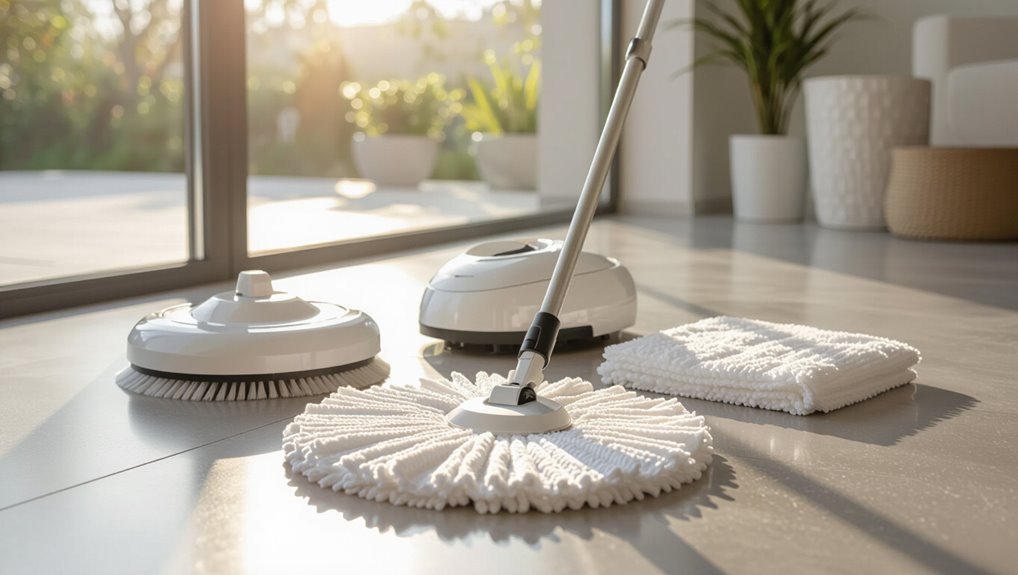
When maintaining polished concrete, pick tools that protect the finish while removing dirt efficiently: a microfiber mop for everyday dusting and light cleaning, a low-speed auto-scrubber for larger areas and periodic deep cleaning, and a soft-bristled broom for quick dry sweeping.
- Microfiber mop — traps dust without scratching.
- Low-speed auto-scrubber — controlled agitation, even cleaning.
- Soft-bristled broom — gentle debris removal.
Approved cleaning solutions (pH-neutral cleaners, dilution ratios)
If you want to protect the shine and longevity of polished concrete, use pH-neutral cleaners formulated for sealed stone and concrete; they’re gentle enough to avoid etching or dulling the surface yet effective at lifting dirt and oils.
Dilute per label—typically 1:128 to 1:64 for routine cleaning.
Follow these steps:
- Mix measured solution.
- Mop or auto-scrub gently.
- Rinse with clean water.
Products and materials to avoid (harsh acids, high-alkaline cleaners, abrasive pads)
Because polished concrete relies on a sealed, low-porosity surface, avoid harsh acids, strong alkaline cleaners, and abrasive pads that can etch, dull, or strip the finish; instead choose pH-neutral, non-abrasive products and soft microfiber or fine-fiber pads designed for sealed stone.
- Don’t use muriatic or vinegar-based concentrates.
- Skip high-alkaline degreasers.
- Avoid steel wool or coarse scrubbing pads.
Step-by-Step Cleaning Routine to Preserve Shine
You’ll follow a simple routine to keep that polished concrete shining: daily sweeping, weekly pH-neutral mopping, monthly deep cleaning with an auto-scrubber or pros, and targeted spot treatments for stains.
I’ll also cover how to mix solutions, choose pads and settings, and the dry-and-buff steps to restore gloss.
Stick to the checklist and you’ll prevent buildup and preserve the finish.
Step 1 Daily maintenance: sweeping and dust-mopping (technique checklist)
Start each day by sweeping and dust-mopping your polished concrete to remove grit and loose debris that can scratch the surface.
Use proper technique and tools to protect shine:
- Sweep edges first, then work inward with soft-bristle broom.
- Dust-mop in overlapping passes; change pads often.
- Inspect for stuck particles; pick up gently with a microfiber cloth.
Step 2 Weekly wet cleaning: dilute pH-neutral method (mixing and mopping steps)
Mix a mild, pH-neutral cleaner with water according to the manufacturer’s directions, then mop the floor with a damp—not soaking—microfiber or flat mop to remove residue without dulling the finish.
Follow these steps:
- Dilute cleaner precisely; avoid excess concentration.
- Work in sections, rinsing the mop frequently.
- Dry with a clean microfiber pad to prevent water spots and streaks.
Step 3 Monthly deeper clean with auto-scrubber or professional-grade equipment (settings and pads)
Once a month, bring out an auto-scrubber or professional-grade equipment to remove embedded soil and restore gloss without overworking the surface.
You’ll use correct pads, low-down pressure, and a neutral cleaner to preserve shine.
- Choose soft red or beige pads.
- Set low RPM and moderate solution flow.
- Overlap passes; avoid scrubbing edges aggressively.
Step 4 Spot cleaning stubborn stains safely (stain type, recommended method)
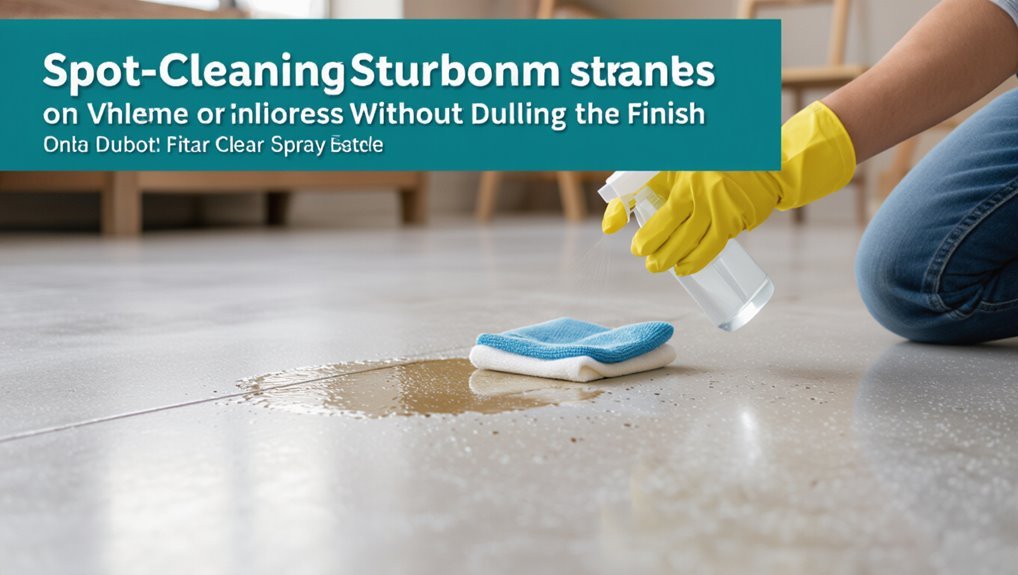
After your monthly machine clean has lifted most grime, you’ll still find isolated stains that need targeted treatment.
You should identify stain type, test a mild cleaner in an inconspicuous spot, then proceed gently.
Use:
- pH-neutral cleaner for dirt/oils.
- Solvent or poultice for greasy or adhesive marks.
- Hydrogen peroxide paste for organic stains.
Work softly to protect the finish.
Step 5 Post-cleaning dry and buffing techniques to restore gloss (tools and pressure guidelines)
Bring the floor back to its mirror finish by thoroughly drying and then buffing the surface with the right tools and light, even pressure; use microfiber pads or a low-speed floor machine (800–1,500 RPM) with a clean, dry pad and keep passes overlapping and consistent to avoid uneven shine or heat buildup.
- Dry: microfiber mops, absorbent towels.
- Buff: 800–1,500 RPM, light pressure.
- Inspect: check for streaks, repeat gentle passes.
Troubleshooting Common Problems and Solutions
You’ll run into a few common issues—dull patches after cleaning, hazy residue buildup, and surface scratches or etching—and each has a clear set of causes and fixes.
For dull areas you’ll check your cleaning solution strength and buffing technique, while haze usually comes from soap or improper rinsing and can be removed with a neutral cleaner and microfiber mop.
Minor scratches and etching can be temporarily minimized with polishing pads, but deeper damage will need professional restoration.
Problem: Dull patches after cleaning causes and fixes
When you notice dull patches on your polished concrete after cleaning, it’s usually a sign that something went wrong in the process—insufficient rinsing, abrasive cleaners, or uneven drying are common culprits.
Check your cleaner’s pH and dilution, rinse thoroughly, and avoid scrubbing with harsh pads.
Spot-treat affected areas with a neutral cleaner, buff gently with a soft pad, and let the floor dry evenly.
Problem: Residue or haze buildup how to remove without damage
If residue or a cloudy haze shows up after cleaning, it’s usually caused by soap buildup, hard-water minerals, or incorrect rinsing that leaves a film on the surface.
Flush the floor with clean water, then mop using a neutral pH cleaner diluted per instructions.
For persistent haze, use a vinegar rinse (dilute 1:10) or a manufacturer-approved mild descaler, then rinse thoroughly and dry.
Problem: Scratches and etching temporary fixes vs professional restoration
Though small scratches and light etching can sometimes be masked with DIY methods, they’re not the same as structural damage and often need professional restoration for a true, lasting fix.
You can try fine polishing pads, poultices, or topical sealers for minor blemishes, but don’t expect permanence.
For deeper scratches or widespread etching, hire a pro who’ll grind, hone, and repolish to restore uniform shine.
Prevention and Best Practices
Keep a simple routine—daily dust-mopping, weekly wet-cleaning, monthly deeper scrubs, and annual inspections—to protect your polished concrete.
Use mats at entrances, felt pads under furniture, control humidity, and encourage soft-soled footwear to prevent scratches and staining.
Watch for dull spots, increased staining, or loss of shine as signs it’s time to reseal or repolish, and follow manufacturer or contractor recommendations for frequency.
Routine care schedule (daily, weekly, monthly, annual tasks)
A simple, consistent routine will prevent buildup, protect shine, and extend the life of your polished concrete; think regarding daily, weekly, monthly, and annual tasks so nothing gets missed. You should sweep daily, damp-mop weekly, deep-clean monthly, and inspect/rehab annually. Plan tasks, track spills, and schedule professional polishing when gloss fades.
| Frequency | Task | Outcome |
|---|---|---|
| Daily | Sweep | Remove grit |
| Weekly | Damp-mop | Clean surface |
| Monthly | Deep-clean | Remove residue |
Protective measures (mats, felt pads, proper footwear, humidity control)
When you take simple preventive steps—placing durable mats at entrances, adding felt pads to furniture legs, wearing non-marking shoes, and controlling indoor humidity—you’ll cut down on scratches, stains, and moisture-related damage to polished concrete.
- Use low-profile, coarse-weave mats outside and absorbent mats inside.
- Apply felt pads to all movable furniture; check quarterly.
- Keep relative humidity near 40–60% with ventilation or dehumidifiers.
When and how to reseal or repolish (signs it’s needed and frequency)
Those preventive steps will prolong your floor’s finish, but even well‑maintained polished concrete will need occasional resealing or repolishing to stay smooth and glossy.
Check for dull patches, etching, staining, or increased porosity. Reseal every 1–3 years depending on traffic; repolish when scratches or loss of sheen appear.
Hire a pro for abrasive polishing; use recommended sealer and follow manufacturer cure times.
Comparison: DIY vs Professional Cleaning and Restoration
You can handle routine care and minor stains with basic tools and cleaners, but DIY has limits when it comes to deep scratches, heavy etching, or worn sealer.
If you’re facing widespread damage, uneven sheen, or need a long-lasting restoration, hiring a pro usually delivers predictable results and can save you time.
Use cost cues—simple maintenance is low-cost DIY, while bids that include mechanical polishing, densification, or resealing usually indicate professional-level work and higher expense.
What DIY can achieve vs limitations
While basic cleaning and minor stain removal are well within a DIYer’s reach, tackling deep wear, etching, or restoring high-gloss finishes usually needs a professional’s tools and expertise. You can maintain shine, remove spills, and fix light scratches, but heavy honing, densifying, or repolishing calls for pros.
| DIY Tasks | Professional Tasks | Outcome |
|---|---|---|
| Daily cleaning | Mechanical honing | Deep restoration |
| Spot stains | Densifier application | Lasting gloss |
| Light scratches | Resin polishing | Uniform finish |
| Sealing | Industrial buffing | Structural repair |
When to hire a pro (cost indicators and expected outcomes)
After you’ve handled routine upkeep and minor repairs, it helps to know when a professional makes sense: if the floor shows widespread etching, deep scratches, uneven gloss, or large stains that won’t lift, bring in a pro.
You’ll pay $2–6 per sq ft for basic restoration, more for grinding.
Expected outcomes: restored sheen, uniform finish, sealed protection.
- Cost
- Time
- Results
Common Mistakes That Dull Polished Concrete
You can unintentionally dull polished concrete by reaching for the wrong cleaners or high-alkaline products that strip the finish.
Aggressive scrubbing with abrasive pads, letting spills sit, or failing to rinse properly will wear the polish down. Piling on waxes or using incorrect restoration products only makes things worse.
Learn which products and techniques to avoid so your floor stays glossy longer.
Using the wrong cleaners or high-alkaline products
Because polished concrete relies on a balanced surface chemistry, using the wrong cleaners—or high-alkaline products—can quickly strip the shine and leave a hazy residue.
You should choose pH-neutral, manufacturer-recommended cleaners and dilute concentrates correctly. Avoid bleach, ammonia, and heavy-duty degreasers.
If you accidentally use a harsh product, rinse thoroughly with clean water and neutralize per guidelines to prevent long-term damage.
Excessive scrubbing with abrasive pads
Mistakes with cleaning chemicals aren’t the only way to damage polished concrete—scrubbing too hard or using abrasive pads will wear down the finish just as quickly.
You should use soft microfiber mops or non-abrasive pads and gentle pressure. Let cleaners loosen soil, then lift it without force.
Replace worn pads promptly and test any new tools on an inconspicuous spot before full use.
Letting spills sit or using improper rinsing
If spills sit, they’ll penetrate tiny pores and leave stains or etch the finish. Failing to rinse cleaners properly can leave residue that dulls the shine.
You should blot spills immediately, use pH-neutral cleaners, and rinse thoroughly with clean water.
Don’t let detergent film dry—wipe wet, then dry with a microfiber mop to restore luster and prevent long-term damage.
Overuse of waxes or incorrect restoration products
You’ve already learned how spills and improper rinsing can harm the finish; another common culprit is using waxes or the wrong restoration products.
You’ll clog pores, create hazy film, and force frequent stripping that wears the sheen. Use manufacturer-approved, pH-neutral restorers and minimal application.
Test products in a discreet area, follow dilution guidelines, and avoid layering waxes to preserve the polished look.
FAQ Polished Concrete Cleaning FAQs
You probably have a few practical questions about maintaining your polished concrete, like how often to mop, whether vinegar or bleach are safe, and if steam cleaning will harm the finish.
You’ll also want to know the best way to remove oil or grease without dulling the surface and whether polishing is needed after a cleaning that’s left the floor looking dull.
Below are clear answers to those common FAQs so you can care for your floor correctly.
How often should I mop polished concrete?
How often you should mop polished concrete depends on foot traffic and dust levels.
For low-traffic areas, mop once weekly with a microfiber mop and neutral pH cleaner.
For moderate to high traffic, mop two to four times weekly or spot-clean daily.
Always use minimal water, wring the mop well, and dry any puddles promptly to protect the shine.
Can I use vinegar or bleach on polished concrete?
Can you safely use vinegar or bleach on polished concrete?
You shouldn’t use straight vinegar or strong bleach repeatedly — they’re acidic/alkaline and can etch or dull the finish over time.
For occasional spot cleaning, dilute mild bleach (follow label) or use a pH-neutral cleaner instead.
Rinse thoroughly and dry to avoid residue.
Test any solution in an inconspicuous area first.
Will steam cleaning damage the polish?
Curious whether steam cleaning will harm your polished concrete? You shouldn’t use high-temperature steam or heavy pressure; both can strip sealers and degrade burnished surfaces.
Low-temperature, low-pressure steamers used sparingly can sanitize without damage, but always test a small, inconspicuous area first.
Prefer pH-neutral cleaners and microfiber mops for routine maintenance to protect shine and finish longevity.
How do I remove oil or grease stains without dulling the floor?
Wondering how to lift oil or grease without dulling your polished concrete? Act fast: blot up excess with paper towels, don’t rub.
Apply a pH-neutral degreaser or a poultice of baking soda and water, let sit, then gently agitate with a soft brush.
Rinse thoroughly with clean water and microfiber mop. Repeat if needed; avoid harsh solvents or abrasive scrubbing.
Can polishing be done after a cleaning makes the floor dull?
If a cleaning leaves your polished concrete looking dull, you can usually restore the shine without replacing the slab.
Light haze often comes from residue or abrading cleaners; re-polish with fine-grit diamond pads or burnish using a high-speed machine and appropriate polishing compound.
Test a small area first, then proceed gradually.
Hire a pro for deep damage or uneven gloss to avoid over-grinding.