
How to Remove Wax From Laminate Flooring Without Leaving a Residue
You can remove wax from laminate without a greasy film by softening or hardening the wax, lifting the bulk with a plastic scraper or cloth, then dissolving any thin film with a few drops of rubbing alcohol or diluted vinegar on a microfiber. Rinse with clean water and dry promptly to avoid streaks. Use a hair dryer or ice as needed, test solvents first, and swap to commercial removers or pros for stubborn jobs if you want more tips.
Quick Answer Remove Wax from Laminate Flooring Without Residue
You can remove wax from laminate flooring without residue by gently melting it with a hair dryer and wiping it away with a soft cloth and a mild laminate-safe cleaner.
You’ll want a hair dryer, soft microfiber cloths, a plastic scraper or old credit card, and a pH-neutral floor cleaner.
Follow up with a dry microfiber to buff any remaining streaks.
One-sentence solution
Tackle fresh or dried wax on laminate floors by gently scraping off excess with a plastic putty knife.
Dissolve residue with a few drops of mineral spirits on a soft cloth, and wipe the area clean with a damp microfiber to remove any remaining film.
For a one-sentence solution, follow that sequence when learning how to remove wax from laminate flooring to avoid streaks or residue.
Recommended tools and supplies
Having the right tools and supplies makes removing wax from laminate much faster and prevents damage, so gather a plastic putty knife, soft microfiber cloths, rubbing alcohol or mineral spirits, a mild dish soap, a spray bottle with warm water, and optional items like a hair dryer for softened wax and white vinegar for final residue removal.
- Plastic putty knife, microfiber cloths
- Rubbing alcohol/mineral spirits, vinegar
- Mild dish soap, spray bottle, hair dryer
Why Wax on Laminate Is a Problem
When wax sits on laminate, it can leave a cloudy film that masks the floor’s protective wear layer and makes the surface look dull.
If you try to remove it with the wrong solvents or abrasive tools, you risk stripping the finish, causing dull spots or even swelling at the seams.
Proper removal matters because leftover residue will attract dirt and shorten the life of your flooring.
How laminate flooring reacts to wax
Although laminate’s tough wear layer resists everyday scuffs, it doesn’t take well to wax — the paste or liquid sits on the surface instead of bonding, leaving a cloudy film, slippery patches, and buildup that attracts dirt.
You’ll notice reduced traction, uneven sheen, and stubborn streaks that won’t buff out. Wax also fills textured grooves, making cleaning harder and highlights imperfections.
Risks of improper removal (dulling, swelling, residue)
Because wax sits on the surface and resists proper cleaning, removing it the wrong way can quickly cause more damage than the wax itself.
If you scrape too hard or use harsh solvents, you’ll dull the wear layer, lift edges, or cause swelling where moisture seeps in.
Residual wax attracts dirt and creates uneven shine, so remove it gently and thoroughly.
Basic Understanding: Types of Wax and Stains
You’ll want to tell the difference between common wax sources—candles, furniture polish, and shoe polish—because their ingredients affect how they react on laminate.
Fresh wax is easier to lift, while hardened wax often needs heat or scraping.
Wax that’s mixed with dirt or dyes can leave stains that need special cleaners. Knowing the type and whether it’s mixed with grime will guide the safest, most effective removal method.
Candles, furniture polish, shoe polish composition differences
Waxes come from different sources and are mixed with distinct additives, so candle wax, furniture polish wax, and shoe polish behave differently on laminate.
You’ll find candle wax is often paraffin or soy with dyes and scents that harden.
Furniture polish adds oils and solvents that smear.
Shoe polish contains pigments, oils, and wax for shine, leaving more stubborn, colored residue.
Fresh vs. hardened wax behavior
When wax is still soft or melted, it spreads, smears, and mixes with dirt or polish oils, so you can usually blot or wipe it up with warm cloths or paper towels.
Once it cools and hardens, it contracts and forms a brittle, often adhesive film that peels or flakes and may need gentle scraping or heat to remove without damaging the laminate.
You should act quickly on fresh wax; hardened wax requires cautious tools and patience.
Wax mixed with dirt or dyes
Someone who spills colored or dirty wax on laminate will often end up with a stain that’s more than just wax—pigments, grit, and polish residues can bind into the film and make removal trickier. You’ll need gentle solvents and lift, not scrubbing that spreads color. Assess stain type, test cleaners, and repeat careful blotting until pigment lifts.
| Stain type | Recommended action |
|---|---|
| Pigment | Solvent test, blot |
| Grit/dye | Lift, repeat blot |
Safety and Preparation Before You Start
Before you start, make sure the area is well ventilated and put on gloves and eye protection to avoid fumes and splashes.
Test any cleaner or heat method on a small, inconspicuous spot to check for discoloration or damage.
Tape off baseboards and cover nearby furniture or edges to protect surrounding surfaces while you work.
Safety precautions (ventilation, gloves, eye protection)
For safe wax removal, make sure the area’s well ventilated and you’re wearing gloves and eye protection.
Open windows and run a fan to disperse fumes from cleaners or hot wax.
Use chemical-resistant gloves to protect skin and sealed goggles to shield eyes from splashes.
Avoid cotton gloves—use nitrile or neoprene.
Keep kids and pets out of the work zone.
Test area protocol
Pick a small, inconspicuous spot—like inside a closet or under a cabinet—and run your chosen removal method there first.
Note timing, appearance, and any finish change. Wait recommended dwell and drying times, then inspect for discoloration, swelling, or dulling.
If the test shows no harm, proceed. If you see damage, stop and try a gentler product or a professional.
Protecting surrounding surfaces and edges
If your test patch shows no damage, move on to protect the surrounding surfaces and edges so the removal process doesn’t create new problems.
Tape off baseboards, lift vents, and cover nearby furniture with drop cloths. Work inward from the wax spot. Verify solvents won’t contact trim or walls by using barriers.
- Use painter’s tape.
- Lay microfiber cloths.
- Prop open doors gently.
Step-by-Step Removal Method
Start by scraping off any hardened wax with a plastic scraper or credit card so you don’t scratch the laminate.
Then soften remaining wax with a hair dryer or an iron set low and covered with a cloth, blotting the melted wax with paper towels or a brown paper bag.
Finish by wiping the area with a mild vinegar or dish soap solution, then rinse and dry to prevent streaks.
Step 1 Remove excess hardened wax (tools and technique)
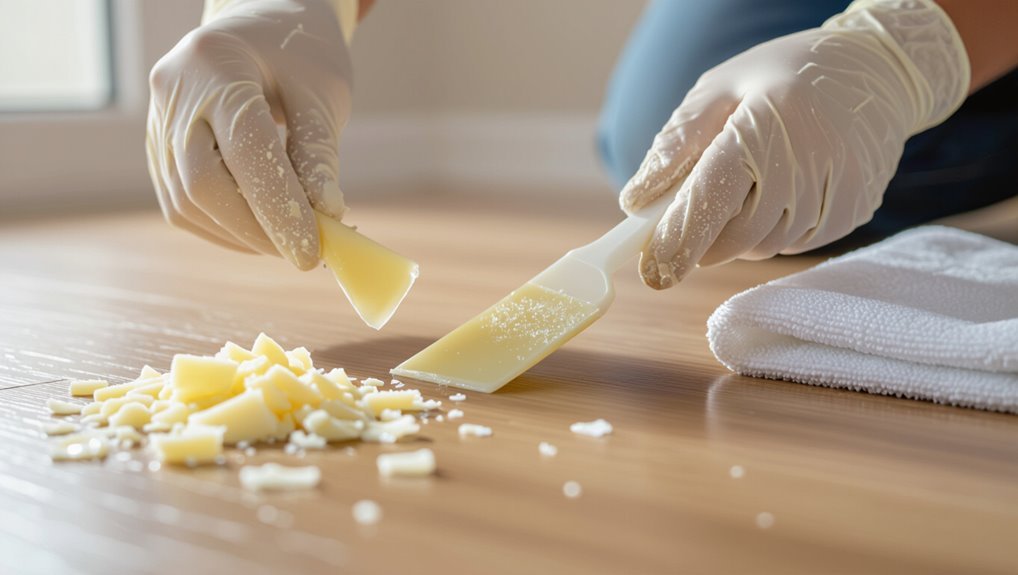
Gather a few simple tools before you tackle the hardened wax: a plastic scraper or old credit card, a soft cloth, a hairdryer or heat gun on low, and a mild laminate-safe cleaner.
Start by gently prying up flaky pieces with the scraper at a shallow angle, working outward from the center.
Wipe loosened wax with the cloth, disposing of debris to avoid re-smearing.
Step 2 Soften remaining wax safely (heat methods: hair dryer, iron with cloth)
Once you’ve removed the loose chunks, you’ll need to soften the remaining wax so it lifts without damaging the laminate.
Aim a hair dryer on low to medium, keeping it 6–8 inches away and moving constantly.
For stubborn spots, place a thin cloth over wax and press a warm (not hot) iron briefly—no steam.
Test heat on an inconspicuous area first.
Step 3 Absorb softened wax (paper towels, brown paper bag method)
Blot the softened wax with several layers of paper towels or a scrap of brown paper bag until the pad stops picking up residue.
Press gently, lift, and replace so you don’t smear. For larger areas, work from the edge inward.
Change to clean layers frequently to avoid re-depositing wax. Dispose of used towels safely — they can be flammable.
Step 4 Clean residual film with gentle solutions (vinegar solution, dish soap)
After you’ve lifted the bulk of the wax, you’ll want to remove the thin, sticky film left behind with a gentle cleaning solution so the floor looks and feels clean.
Use a soft microfiber mop and a mild mix—avoid harsh scrubbers.
- Mix 1 cup vinegar to 1 gallon warm water.
- Or use a few drops of dish soap in water.
- Wring mop well.
Step 5 Rinse and dry to avoid streaks
Because lingering cleaner can leave streaks and attract dirt, rinse the floor with clean water and dry it promptly to restore a streak-free finish.
Use a mop dampened with plain water to remove residue, changing water often.
Then wipe with a microfiber cloth or dry mop until surfaces feel dry and smooth.
Work in small sections to prevent pooling and streaks.
Step 6 Final polish/restoration using laminate-safe products
Restore shine by applying a laminate-safe polish or restorer in small sections, following the manufacturer’s instructions so you don’t overload the surface.
Work with a microfiber cloth or applicator pad, buffing gently in the plank direction. Let each section dry fully before walking on it.
Repeat only where needed to blend finish and avoid buildup. Test first in an inconspicuous spot.
Alternative Methods for Stubborn or Large Wax Spills
If a spill’s too stubborn or widespread for the basic method, you can use ice to harden wax on delicate spots so it flakes off without scraping the finish.
Look for commercial wax removers labeled safe for laminate and free of strong solvents or abrasives, and always test in an inconspicuous spot first.
For large or persistent jobs, consider hiring a professional cleaner who’s the right tools and knows when repair is better than removal.
Ice method for delicate areas
When wax sits on a narrow groove, trim, or other delicate spot where scraping would risk scratching the laminate, use the ice method to harden the wax before removing it; this lets you lift flakes without abrading the floor.
Place an ice pack in a sealed bag over the wax until it’s brittle, then gently pick or flick pieces away with a plastic spatula or your fingernail.
Commercial wax removers safe for laminate (what to look for)
Because stubborn or large wax spills sometimes need more than scraping or ice, you can turn to commercial removers specifically formulated for laminate. Choose pH-neutral, non-abrasive, low-odor formulas and test in an inconspicuous spot. Follow directions, ventilate, and wipe residue with a damp microfiber.
| Feature | Why it matters |
|---|---|
| pH-neutral | Protects finish |
| Non-abrasive | Prevents scratches |
| Low-odor | Safer indoors |
| Spot-test | Guarantees compatibility |
Professional cleaning options and when to call a pro
Though you can handle most wax mishaps yourself, some spills call for professional help—especially when wax covers large areas, soaks into seams, or risks damaging the laminate finish.
Call a floor-care specialist for hot-water extraction, low-abrasion steam cleaning, or controlled stripping and resealing.
They’ll assess finish compatibility, avoid moisture creep, and restore appearance safely, saving time and preventing costly replacement.
Comparison of Cleaning Agents and Tools
Now you’ll compare homemade solutions like vinegar or rubbing alcohol with commercial cleaners so you can pick what’s safest and most effective for your floor.
You’ll also weigh tools—razor and plastic scrapers, microfiber cloths, and paper towels—based on control, risk of scratching, and cleanup ease.
Together these choices will help you match the right product and tool to the size and hardness of the wax spill.
Homemade solutions vs. store-bought products
Which works better for your laminate — a DIY mix or a store-bought remover? You’ll weigh cost, control, and risk: DIY vinegar or mild detergent is cheap and gentle; commercial removers act faster but can be harsher. Test first.
| Option | Pros | Cons |
|---|---|---|
| DIY | Low cost, gentle | Slower |
| Store | Fast, effective | Potential residue |
Tools comparison: razor scraper, plastic scraper, microfiber, paper
Choosing the right tool makes wax removal faster and safer for your laminate, so you’ll want to compare a razor scraper, plastic scraper, microfiber cloth, and paper products by effectiveness, control, and risk of damage.
You’ll pick based on scratch risk, wax thickness, and cleanup ease. Consider:
- Razor: effective, high risk.
- Plastic: safer, less aggressive.
- Microfiber/paper: gentle for residue.
Common Mistakes and How to Avoid Them
Don’t use abrasive scrapers or steel wool, because they’ll scratch your laminate.
Don’t apply excessive heat or harsh chemicals, since they can warp or dull the finish.
And don’t rub wax into the floor—lift it gently to avoid spreading grime.
Using abrasive scrapers or steel wool
Be careful when you reach for a razor blade, metal scraper, or steel wool—those tools can quickly remove wax but they can also gouge or dull laminate’s protective finish if you apply too much pressure or work at the wrong angle.
Instead, test on an inconspicuous spot, use plastic scrapers, work gently along the grain, and stop at the first sign of surface abrasion.
Applying excessive heat or harsh chemicals
If you apply too much heat or pour strong chemicals on laminate to speed up wax removal, you can warp planks, strip the wear layer, or leave permanent discoloration.
Don’t use heat guns, steamers, or undiluted solvents. Test mild cleaners on an inconspicuous spot, follow manufacturer guidance, and work gently with a soft cloth and gentle detergent to protect finish and avoid long-term damage.
Rubbing instead of lifting spreading wax and grime
After avoiding heat and harsh chemicals, you still need to watch how you remove the wax — vigorous rubbing can smear wax and grind grit into the finish instead of lifting it away.
Instead, gently lift softened wax with a plastic scraper, blot with a microfiber cloth, and use short sweeping motions with a mild cleaner.
Test a hidden spot first to prevent scratches.
Prevention and Long-term Care
To keep wax off your laminate, adopt simple habits like using candle trays, mats, or drip-catchers and avoiding open flames near floors.
You’ll also want a regular cleaning routine to prevent buildup before it becomes a problem. Use manufacturer-recommended laminate cleaners and nonabrasive products to protect the finish long-term.
Preventing wax spills (behaviors and protective coverings)
When you’re mindful about where and how you use candles, wax melts, or hobby supplies, you’ll cut the chance of a messy spill on laminate floors; simple habits and smart coverings make a big difference.
Use trays, heat-resistant mats, and dedicated craft stations to contain drips. Follow these tips:
- Place candles on nonporous trays.
- Use silicone mats under projects.
- Restrict wax work to one covered area.
Regular maintenance to avoid buildup
Keeping up with simple, regular care stops wax from building up and makes any accidents easier to handle.
Sweep or vacuum frequently to remove grit, and mop with a damp microfiber cloth weekly to lift dust and light residues.
Wipe spills immediately, dry the area, and inspect high-traffic zones monthly so you can address any dulling or residue before it becomes stubborn.
Recommended products for ongoing laminate care
Although you can tackle occasional wax spots with household items, using the right products regularly prevents buildup and protects your laminate’s finish.
Choose pH-neutral laminate cleaners, microfiber mops, and gentle enzyme sprays for spills. Use manufacturer-recommended polish or restorer sparingly.
Avoid oil-based waxes, steam cleaners, and abrasive pads. Store cleaners safely and spot-test new products before full use.
Troubleshooting: If Residue or Damage Remains
If you still see sticky residue after cleaning, try a diluted vinegar solution or a commercial adhesive remover on a small test area to lift it without harming the laminate.
If the finish looks dull or cloudy, you can often restore shine with a gentle laminate polish or a microfiber buffing pad.
For long-term surface damage like deep scratches or peeling, consider repair kits, replacement planks, or consulting a pro for the best long-term fix.
Removing sticky residue after cleaning
After you’ve removed the bulk of the wax, you might still feel a tacky, sticky residue on the laminate; don’t panic—this is fixable with the right cleaners and technique.
Dampen a microfiber cloth with diluted white vinegar or isopropyl alcohol (10–20% in water), gently rub the residue, then rinse with plain water.
Dry thoroughly and repeat once if needed.
Dealing with dull or cloudy finish
When a dull or cloudy film lingers after you’ve removed wax and residue, don’t assume the floor’s permanently damaged—often you can restore its appearance with targeted cleaning and light polishing.
Use a microfiber mop with a vinegar-water mix (1 cup vinegar to 1 gallon water) to remove haze, rinse with clean water, then buff dry with a soft cloth to revive shine without abrasive methods.
Repair options for long-term surface damage
Although mild haze and surface residue usually respond to cleaning, stubborn wax buildup, scratches, or permanent finish wear may need repair beyond routine maintenance.
You can refinish floating laminate? No — you’ll replace damaged planks, match patterns, and reseat underlayment.
For minor scratches use manufacturer-approved touch-up kits or blending sticks.
Consult pros for extensive delamination or warped boards to guarantee proper replacement.
FAQ
Got questions about wax removal? You’ll find answers on using an iron safely, whether vinegar or commercial removers can harm your laminate, how to tackle colored candle stains, and how fast you should act after a spill.
Read on for concise, practical guidance.
Can I use an iron to remove wax from laminate?
Can you use an iron to remove wax from laminate flooring? You can, but you must be careful.
Use a low heat setting and a clean cloth between the iron and floor to melt wax gently. Move quickly, avoid prolonged heat, and keep iron in constant motion.
Test an inconspicuous spot first to prevent warping or finish damage before proceeding across visible areas.
Will vinegar damage my laminate floor?
Wondering if vinegar will harm your laminate floor? You can safely use a diluted solution (about 1 cup white vinegar to a gallon of warm water) for spot cleaning.
Don’t soak the floor or use straight vinegar; excess moisture can warp seams and damage the protective finish.
Wring mop or cloth well, rinse with plain water, and dry immediately to avoid problems.
How do I remove colored candle wax stains?
If you’ve cleaned up spills with a vinegar solution before, you’ll handle colored candle wax the same way but with a bit more care to avoid staining.
Let wax harden, gently scrape with a plastic spatula, then place a paper towel and iron briefly on low to lift dye.
Clean residue with mild detergent, rinse, and dry.
Test any method in an inconspicuous spot first.
Is it safe to use commercial wax removers on all laminate?
Which laminate finishes tolerate commercial wax removers depends on the product and your flooring’s wear layer.
You shouldn’t assume all laminates are safe: manufacturers vary. Test removers in an inconspicuous area, follow label instructions, and avoid solvents on textured or thin-wear surfaces.
If unsure, contact the floor maker or choose milder methods to prevent dulling, discoloration, or surface damage.
How quickly should I act after a wax spill?
Act quickly — the faster you act after a wax spill, the easier it’s to remove without damaging the laminate.
Start blotting excess while warm but not hot, then cool and scrape gently.
Treat softened residue promptly with a mild solvent or warm soapy water, testing first in an inconspicuous spot.
The sooner you address it, the less chance of staining or sticky buildup.
