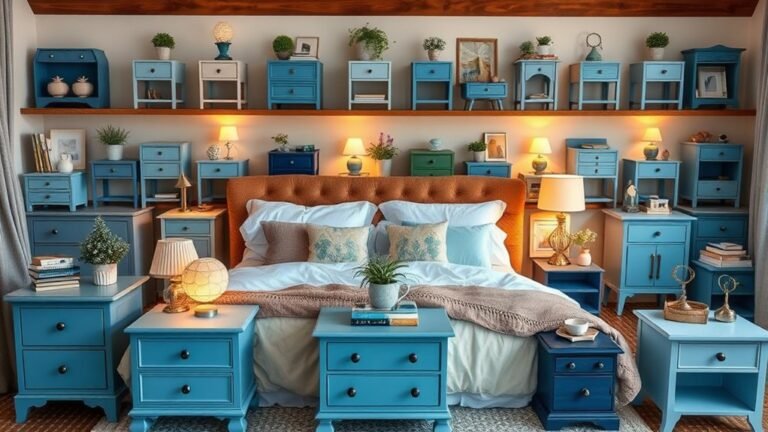
40 Botanical Bedroom Ideas to Bring Nature Inside Your Home
To bring nature inside your bedroom, start by incorporating indoor plants like snake plants or pothos to boost your mood. Create a botanical gallery wall with art featuring greenery and choose nature-inspired color palettes with soft greens and warm browns. Opt for botanical-themed bedding and add a green accent wall for visual interest. Consider seasonal swaps with plants and integrate nature-themed decor accessories for a rejuvenating vibe. Keep exploring for more ideas to enhance your botanical sanctuary!
Choose a Botanical Bedroom Style That Fits Your Space
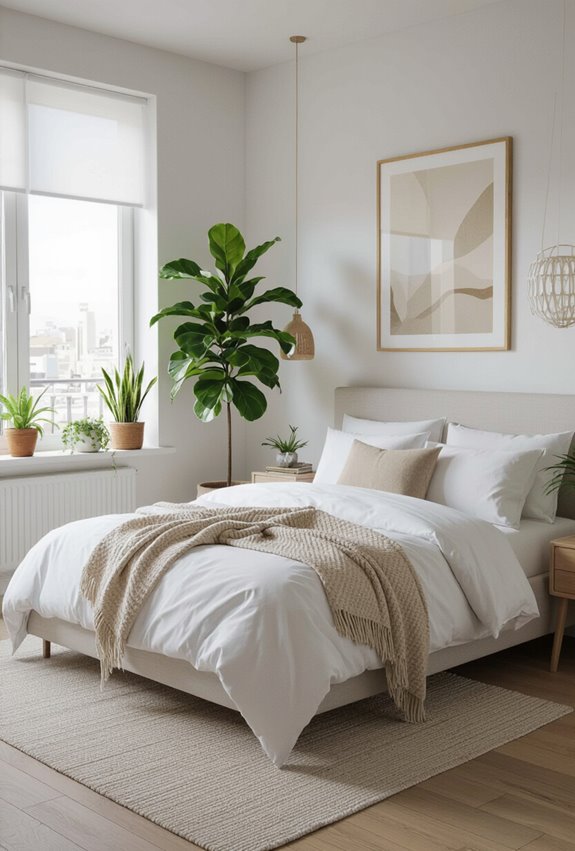
When you start designing a botanical bedroom, pick a style that matches your room’s size, light, and your daily routines; doing so keeps the space both beautiful and usable.
Choose coastal botanicals if you want airy, low-maintenance plants and pale textures. Opt for an urban jungle when you crave dense foliage and layered greenery. Balance scale, care needs, and furniture to suit your life.
Use a Living Green Wall as a Focal Point

Anchoring your bedroom with a living green wall instantly turns a flat surface into a vibrant focal point that breathes life and texture into the room.
You can craft a moss gallery or a structured fern mural to define the space, add sound-dampening softness, and support sleep-friendly humidity.
Choose low-maintenance species, plan irrigation access, and position lighting to highlight form without overwhelming the room.
Add Cascading Hanging Plants for Vertical Interest
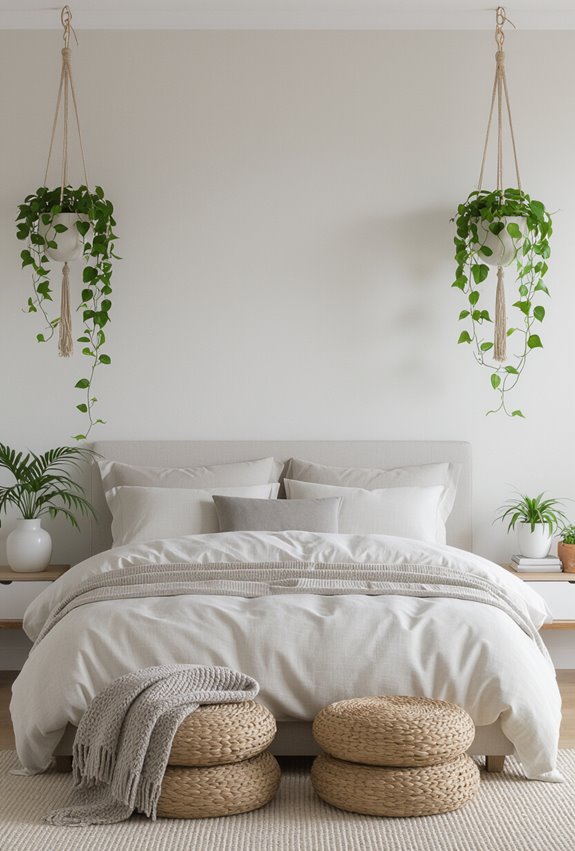
Layering cascading hanging plants adds instant vertical interest and draws the eye upward, making your ceiling feel higher and the room more intimate.
You can mix cascading pothos with trailing philodendron and hanging succulents for varied texture.
Hang them at different heights, use lightweight pots and macramé, and rotate for even growth.
This creates a lush, layered look without crowding floor space.
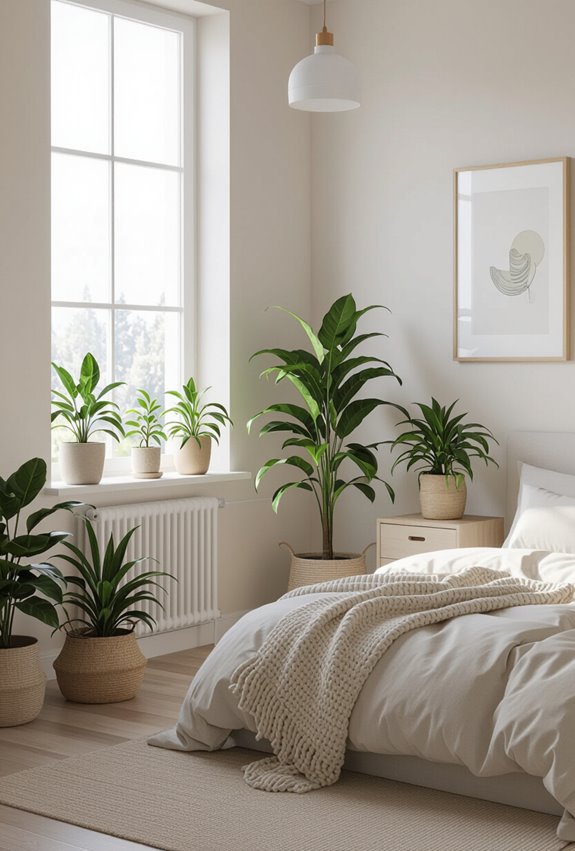
Place Large Statement Floor Plants for Drama
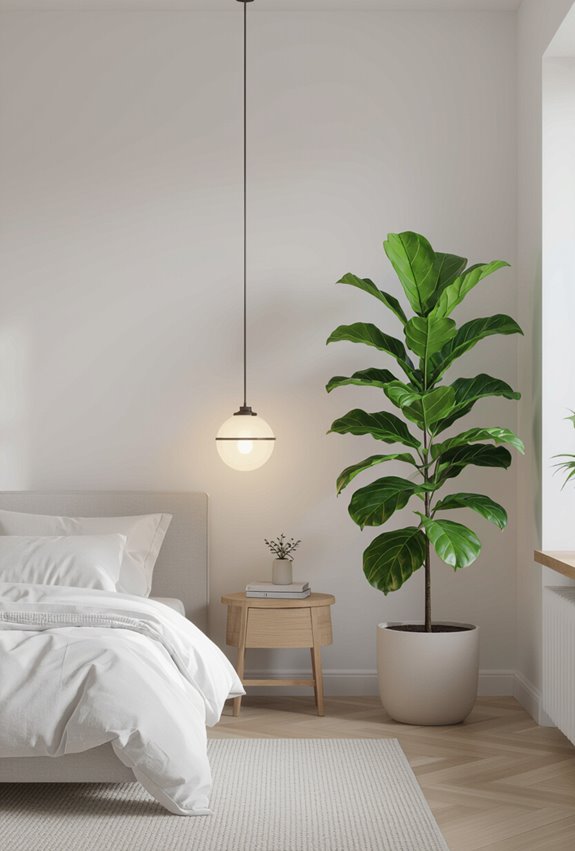
Drama helps define a room, and a single large floor plant can become your instant focal point.
Place statement palms near windows to emphasize height and movement, or position a sculptural fiddleleaf beside a dresser to add bold form.
Keep surrounding décor simple so the plant reads as intentional, and use a sturdy pot to anchor the composition without cluttering the space.
Create a Bedroom Jungle With Layered Foliage

Often you’ll want to mix heights, textures, and leaf shapes to build a lush, layered jungle that feels intentionally wild.
Start with microclimate mapping to place humidity- and light-loving plants correctly.
Use foliage layering—low ground covers, mid-height spider or philodendron varieties, and taller palms—to create depth.
Keep pathways and maintenance access clear so the room stays vibrant without feeling overgrown.
Opt for a Minimalist Botanical Look With a Few Sculptural Plants

Choose a few striking plants and let them do the work: a sculptural fiddle-leaf fig, a tall snake plant, or a bonsai can serve as focal points without cluttering the room.
You’ll balance negative space with sculptural succulents and minimalist monsteras, placing each on a low stand or corner shelf.
Keep pots neutral, prune regularly, and let form, not quantity, define the calm.
Introduce Potted Trees for Height and Scale
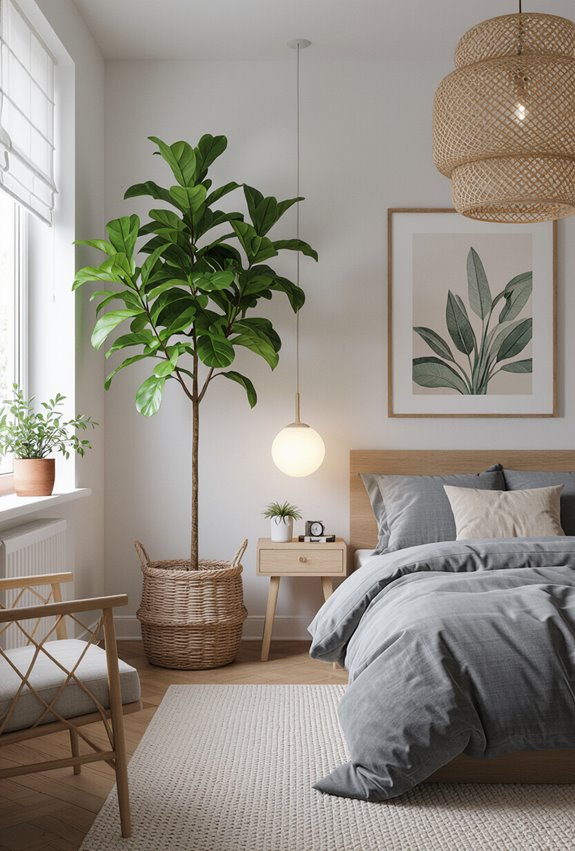
If you like the clean look of a few sculptural plants, you can build on that by adding one or two potted trees to give the room real height and a grounded sense of scale.
Choose potted tree placement near corners or windows to draw the eye upward without crowding. You’ll focus on scale balancing with furniture, lighting, and negative space for calm proportion.
Use Trailing Vines on Shelves and Headboards
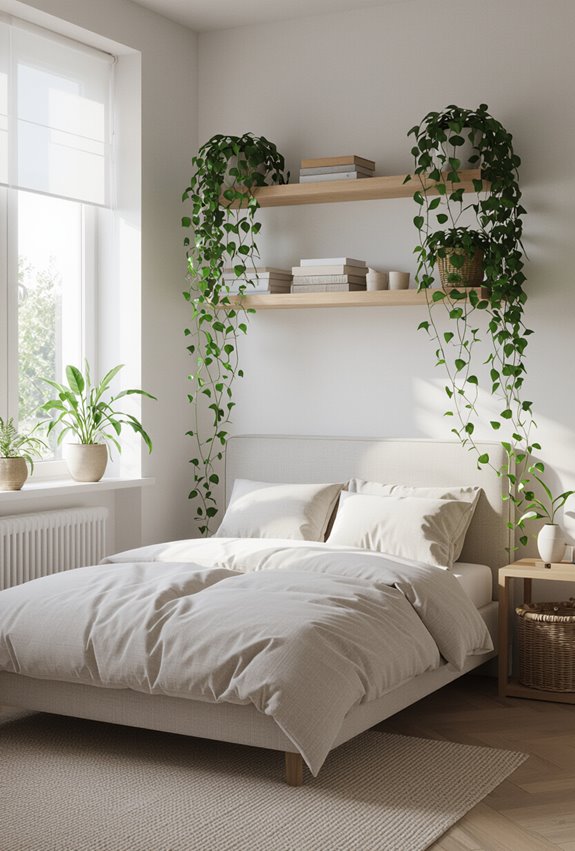
Along shelves and over headboards, trailing vines add softness and movement—let them spill gently to create layered texture and a living canopy without taking up floor space.
You can drape trailing ivy or mixed shelf scape vines across wood, metal, or woven shelves. Prune to shape, secure stems with discreet clips, and rotate pots for even light so growth stays balanced and tidy.
Install a Window Sill Herb Garden for Scent and Utility
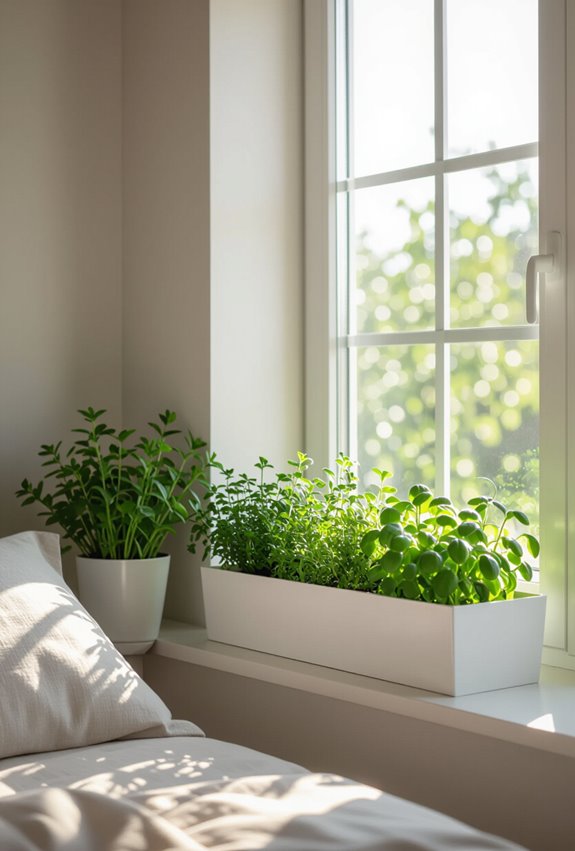
Trailing vines give your bedroom a soft, living frame; a window sill herb garden brings scent and usefulness right to your fingertips.
Set small pots or a compact window herbarium along an aromatic windowsill to grow basil, mint, and lavender for teas, pillow sachets, or cooking.
You’ll water lightly, rotate pots for even light, and harvest fresh sprigs to enjoy daily.
Grow Low-Light Plants for Bedrooms With Limited Sun
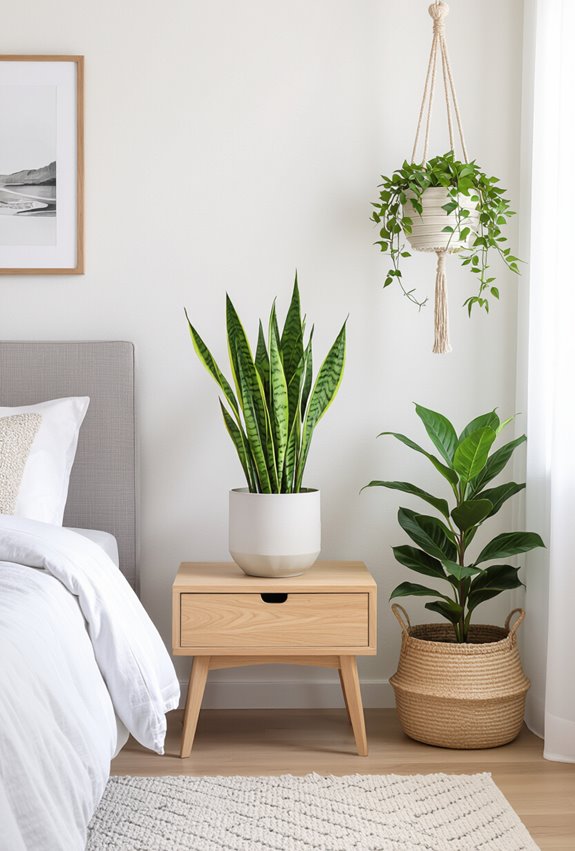
For bedrooms that get little direct sun, choose hardy low-light plants that thrive in shade so you won’t be fussing over constant light adjustments.
Place low light succulents in brightened corners using grow lights sparingly, group shade-tolerant ferns and pothos for humidity, and display moss terrariums on bedside tables for a contained, low-maintenance green focal point that won’t demand daily sunlight.
Combine Plants With Natural Textiles and Bedding
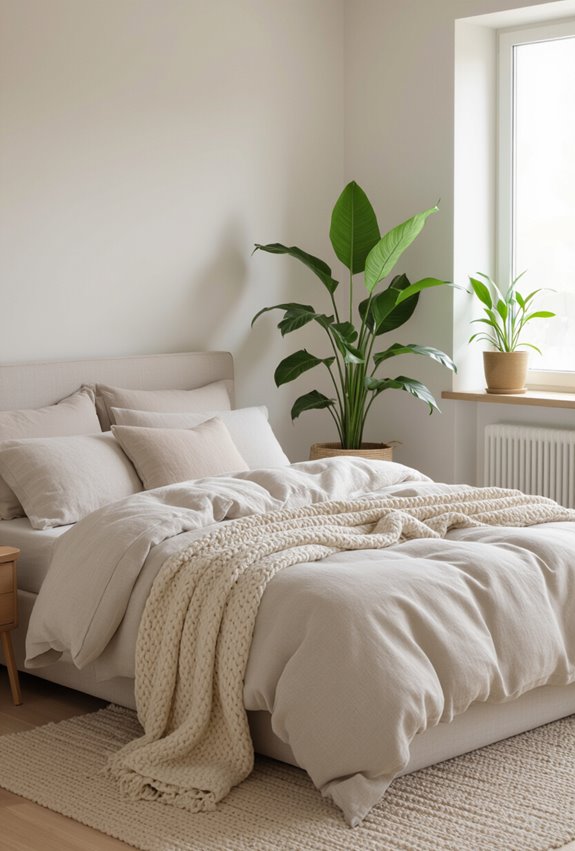
Pairing plants with natural textiles creates a cohesive, calming bedroom that feels alive and thoughtfully curated. You’ll mix linen textures and woven throws with potted greenery to add tactile warmth and visual depth.
Place plants near a bed dressed in bamboo bedding to reinforce softness and breathability. Choose muted, earthy tones so fabrics and foliage read as a unified, restful scheme.
Layer Botanical Prints in Art and Wallpaper
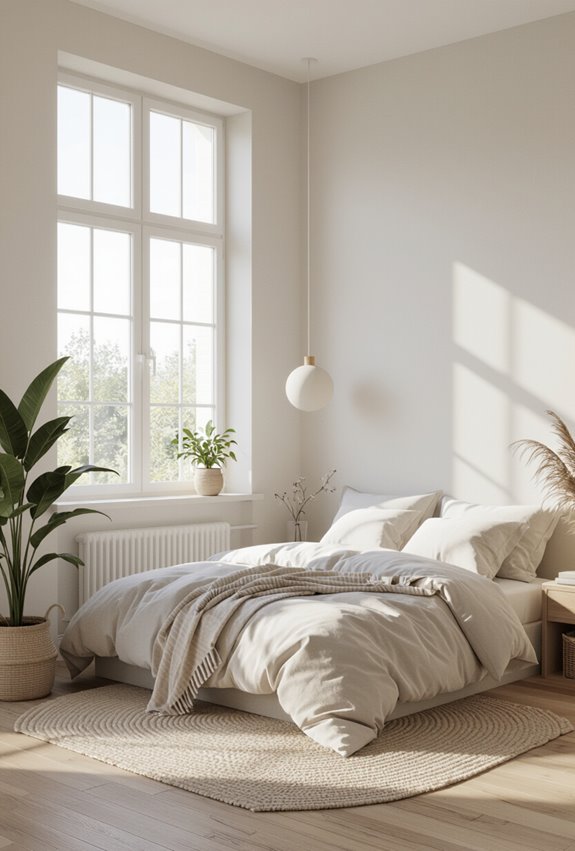
To extend the living feel of your textiles, layer botanical prints in art and wallpaper to create depth and continuity on your walls. Choose complementary framed pieces and a single accent wall with textured wallpaper to anchor the space.
Mix scaled motifs and muted tones so layered prints feel intentional, and arrange art at varying heights for a cohesive, natural focal point without overwhelming the room.
Mix Real Plants With Realistic Faux Alternatives

Once you’ve settled on a green palette, bring that scheme to life by combining living plants with high-quality faux pieces. You’ll balance liveliness and low upkeep by placing hardy succulents near windows and using silk palms where light’s scarce.
Follow simple maintenance tips for real plants, dust faux textures lightly, and rotate specimens so your bedroom feels lush without overwhelming care.
Build a Bedside Terrarium for a Contained Ecosystem

Bring a tiny, self-contained world right to your bedside by building a terrarium that’s tailored to your light, time, and style.
Choose shallow glass, drainage layers, and low-light plants; add decorative stones and miniature waterfeatures for movement.
Use microclimate monitoring with a small hygrometer to track humidity and adjust ventilation.
Maintain lightly, prune selectively, and enjoy a calm, contained green corner.
Create a Macramé Plant Hanger Gallery
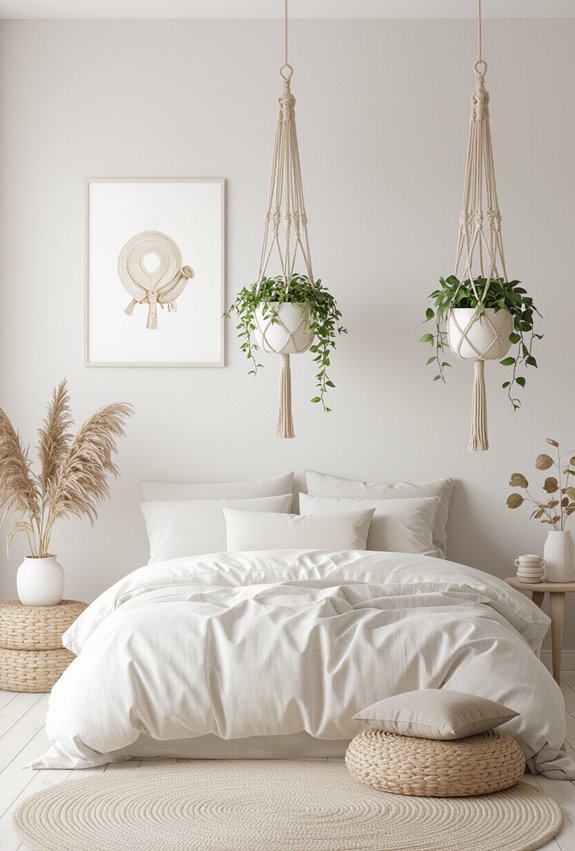
If you love the texture and timeless feel of dried botanicals, extend that layered look upward by arranging a macramé plant hanger gallery on a blank wall or near a window.
Choose varied macramé patterns to add rhythm, mix heights, and pick plants with complementary foliage.
Prioritize secure ceiling hooks, light conditions, and thoughtful plant selection for effortless, sculptural greenery you’ll enjoy.
Introduce a Botanical Reading Nook With Plants
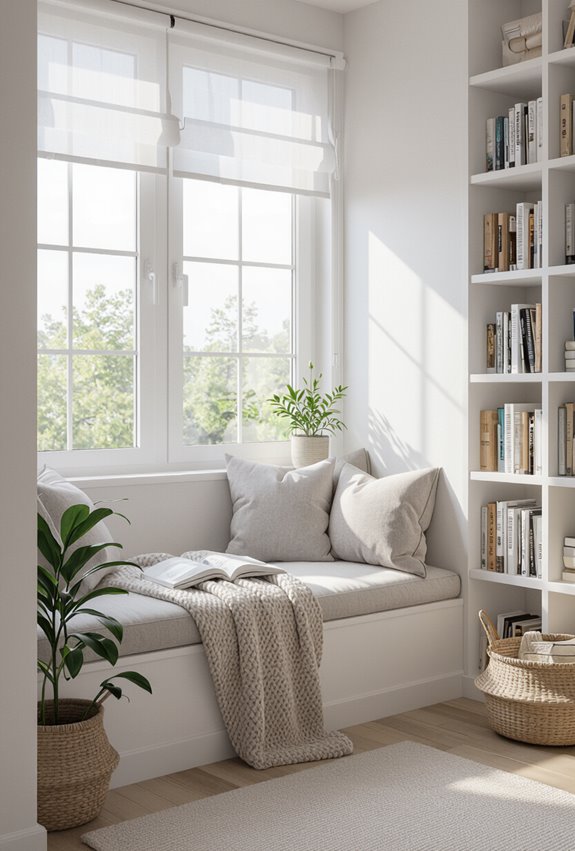
Looking for a peaceful spot to read and recharge? Create a reading alcove with a comfy chair in a bright window nook, layer soft textiles, and add bookish greenery on nearby shelves.
Choose low-maintenance pots and trailing cozy foliage to frame your view, improve air quality, and keep distractions down. Arrange plants for balance and easy care to sustain a calm, natural retreat.
Add Botanical Lighting: Plant-Friendly Lamps and Fixtures
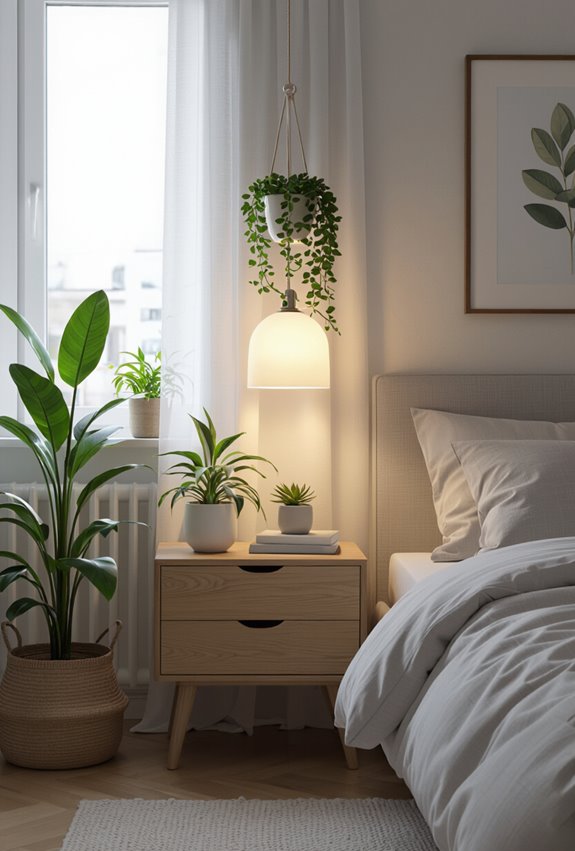
Because plants need the right light to thrive, choose fixtures that balance function and mood: think adjustable grow lamps tucked behind shelving, warm-toned pendant lights that highlight foliage shapes, or LED strips with dimmers to mimic dawn and dusk.
Position LED growlights for low-light species, add humidity lamps where moisture-loving plants sit, and use timers so lighting matches natural rhythms without overdoing it.
Use Scent: Essential Oils and Flowering Plants for Ambiance
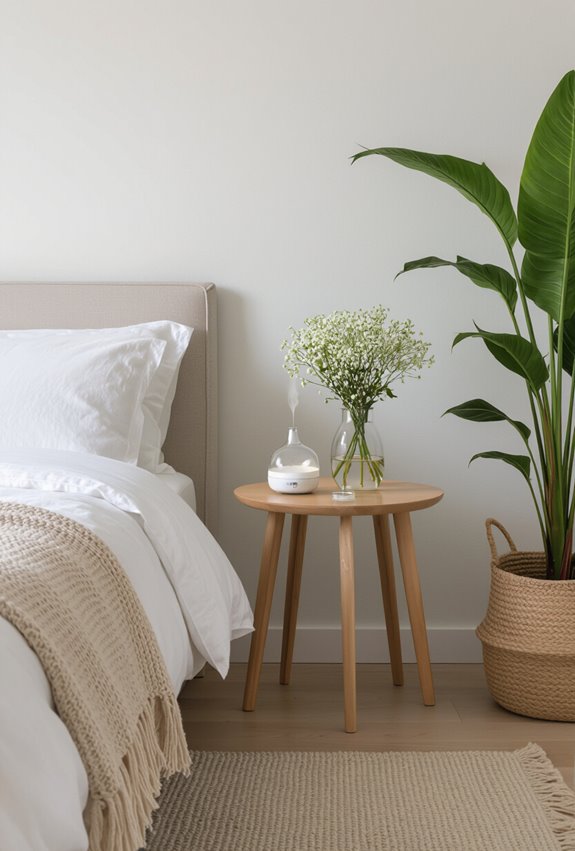
When you layer delicate scents from essential oils with a few well-chosen flowering plants, your bedroom becomes a calm, sensory retreat that still feels natural.
Diffuse mild blends briefly and follow essential oil safety—dilute and ventilate. Position flowering plants for scent flow and light, using flowering plant placement to avoid clutter. Swap fragrances seasonally to keep the mood fresh and restorative.
Choose Pet-Safe Plants If You Have Animals
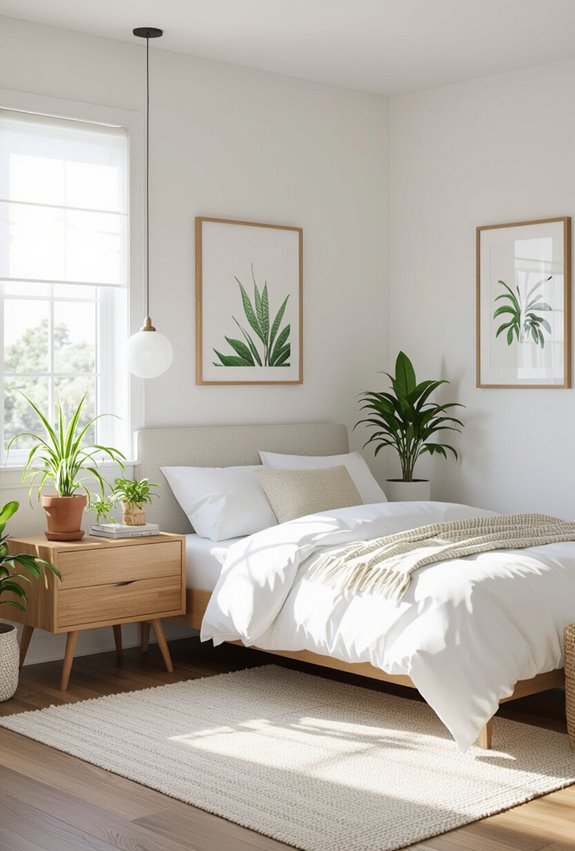
If you share your bedroom with pets, pick plants that won’t harm curious cats or dogs, since animals often nibble leaves or dig in pots; choose non-toxic varieties and place anything mildly irritating out of reach to keep everyone safe.
Opt for pet friendly foliage like spider plants, Boston ferns, and calatheas.
Prioritize toxic free choices and secure soil to prevent digging or accidental ingestion.
Select Low-Maintenance Plants for Busy Lifestyles
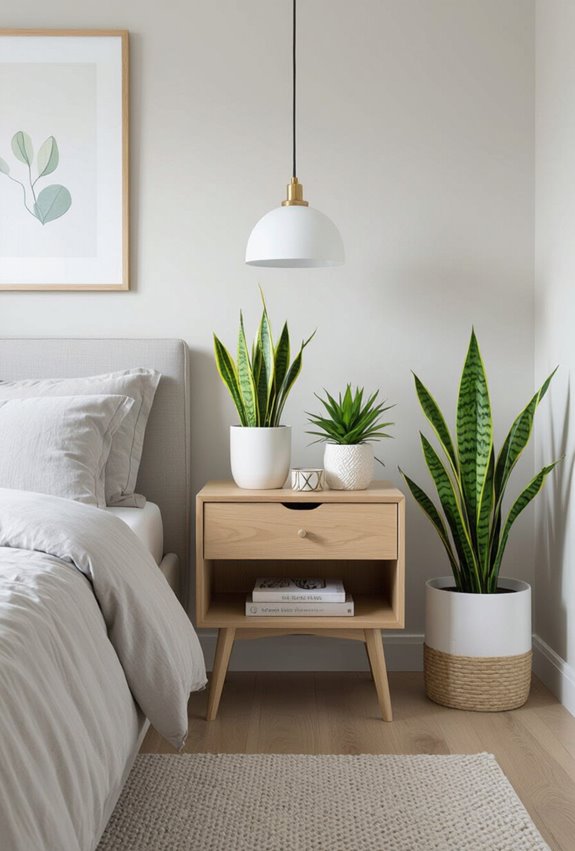
Pets and a packed schedule don’t have to mean giving up greenery—choose plants that thrive on neglect so your bedroom stays fresh with minimal effort. Pick hardy options like snake plants, ZZ plants, and low light succulents that tolerate irregular care.
Use self watering pots or pebble trays to reduce watering tasks. Group plants by light needs and tidy leaves weekly for lasting calm.
Build a Simple DIY Planter Wall From Slats or Crates
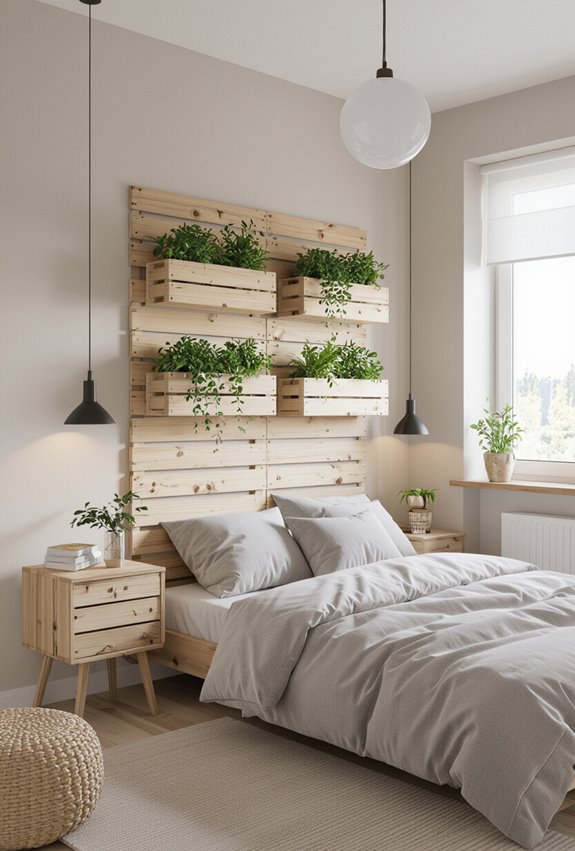
With a few slats or reclaimed crates and basic tools, you can create a striking planter wall that saves floor space and brings greenery up to eye level.
Mount a rustic slat planter or assemble a recycled cratewall, secure pots or liners, and stagger heights for visual interest.
Choose lightweight plants, add drainage, and anchor firmly to studs for safety and lasting style.
Incorporate Seasonal Botanical Swaps for Freshness

Even as light and temperatures shift, you can keep your bedroom feeling fresh by swapping in season-appropriate plants and arrangements—think cool-toned foliage and fir sprigs for winter, bright blooms and airy grasses for summer.
Plan a seasonal plant rotation so pots and vases reflect the months, and try fragrance focused swaps like lavender in spring or citrus-scented greens in warmer months to refresh mood.
Use Plant-Safe Humidity Boosts Like Pebble Trays and Misters

On dry nights or when your heater’s running, boosting humidity helps tropical and flowering houseplants thrive without turning your bedroom into a greenhouse.
Use pebble trays filled with water beneath pots to raise local humidity safely, and establish simple misting routines for ferns and orchids.
Check trays so roots don’t sit in water, and mist mornings to avoid overnight dampness.
Watering Schedules Tailored to Bedroom Microclimates
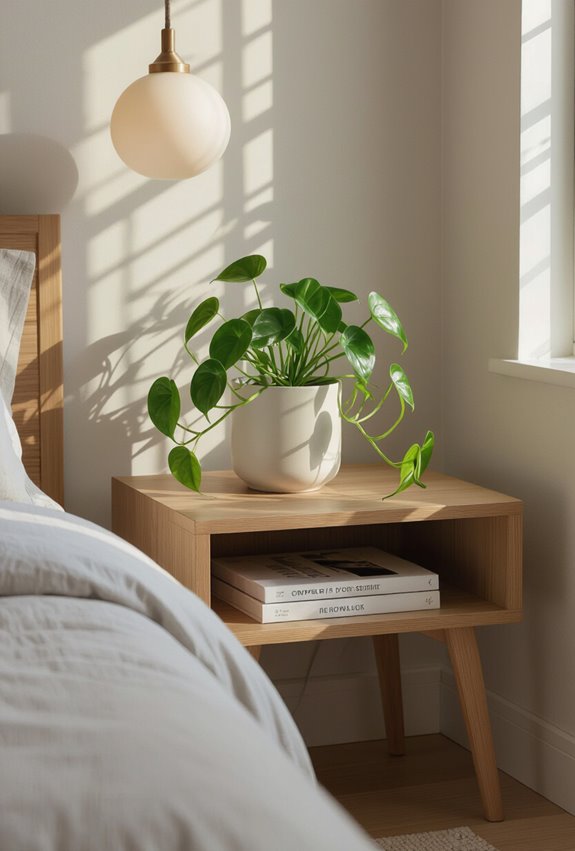
In a bedroom with low light and dry air, you’ll water far less often than in a bright, humid room—matching frequency to the microclimate prevents overwatering and stress.
Check humidity zones near windows, vents, and radiators, and adjust timing.
Use pot wicking or self-watering inserts for consistent moisture in drier spots, and water deeply but infrequently where humidity is higher to avoid root rot.
Choose the Right Potting Mix for Indoor Bedroom Plants
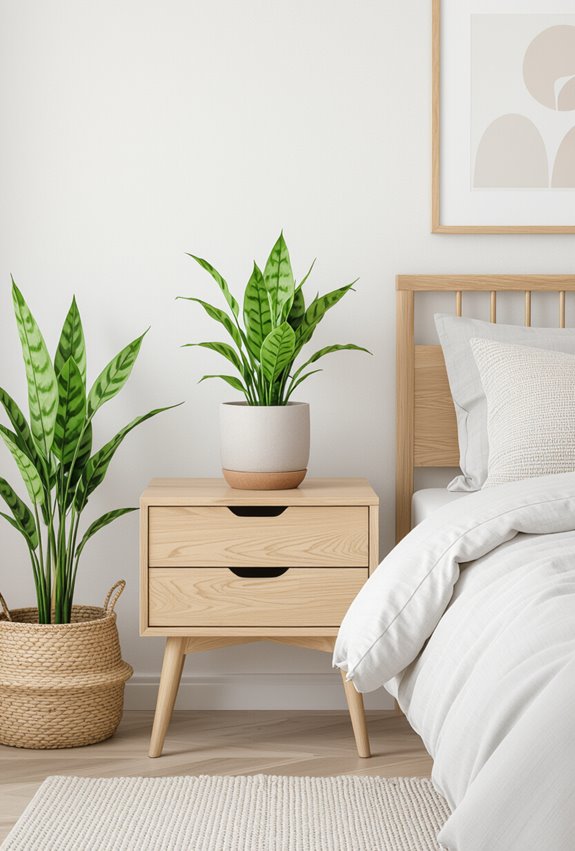
Because bedroom plants face specific light, humidity, and space limits, choosing the right potting mix matters more than you might think.
Pick a well-draining blend that balances moisture retention and soil aeration—peat-free mixes with perlite or pumice work well. Consider mixes formulated with microbial inoculants to boost root health and nutrient uptake, and match mix choice to each plant’s light and humidity needs.
Budget-Friendly Botanical Ideas Under $50

Stretch your plant budget without skimping on style by choosing a few high-impact, low-cost pieces—think a hardy snake plant or pothos, an affordable macramé hanger, and a DIY painted terracotta pot—all of which you can pick up for under $50.
Hunt thrifted planters, swap propagated cuttings with friends, add inexpensive pebbles or a shelf, and arrange compact groupings for big visual impact.
High-Impact Botanical Upgrades Worth Splurging On
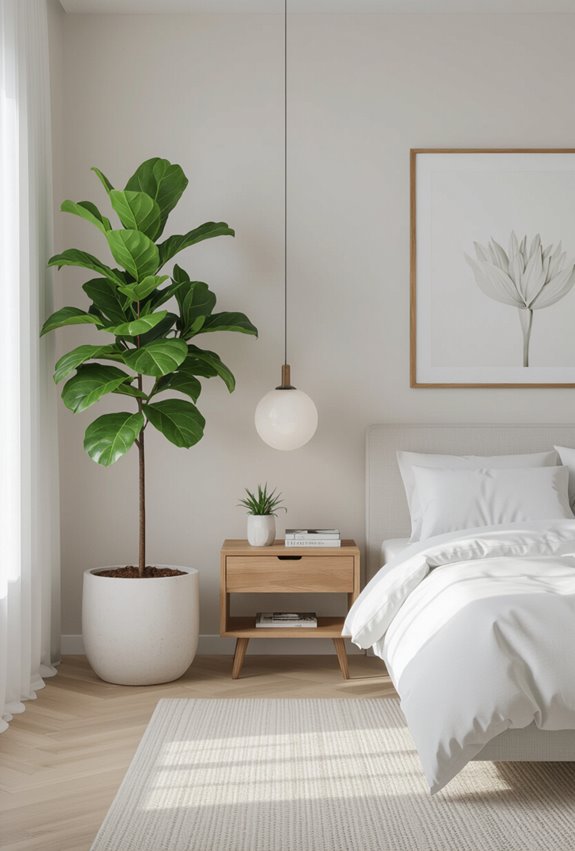
Invest in a statement plant or quality fixture and you’ll transform your bedroom from pleasant to unforgettable.
Choose a dramatic fiddle-leaf or tall monstera paired with premium planters to anchor the room. Add luxe lighting—adjustable, warm fixtures that spotlight foliage and create mood.
Spend on durable pots, quality grow lights, and a standout pendant; these upgrades elevate comfort and lasting style.
Styling Tips to Keep a Tidy Botanical Bedroom

Often, you can keep a leafy bedroom looking crisp by limiting plant numbers, grouping pots for easy care, and choosing low-shedding varieties that suit your light.
Set routines for daily pruning, wipe leaves, and deadhead to prevent mess.
Define clutter zones—surfaces where tools or pots stay—and use trays, baskets, and matching pots to contain soil, water, and styling items neatly.
Create a Soothing Sleep Environment With Greenery

When you place the right plants and arrange them thoughtfully, they’ll calm your senses and help signal bedtime—choose soft-leaved varieties, position greenery where morning light can filter through, and keep foliage away from vents and bedside surfaces to avoid drafts and allergens.
Pair fragrant, low-pollen species with subtle botanical soundscapes, use a moss mattress topper sparingly for grounding texture, and maintain nightly routines that reinforce rest.
Photographing Your Botanical Bedroom for Social Sharing

Start by scouting the best light in your room—morning or late-afternoon sun will soften leaves and bring out textures without harsh shadows.
Use golden hour to capture warm tones, angle plants toward windows, and include reflective surfaces like mirrors or glass to add depth.
Frame clean compositions, remove clutter, and vary close-ups with wider shots to tell a cohesive botanical story for social sharing.
How to Transition Your Bedroom Plants When Moving
Packing up your room for photos is one thing; moving your plant collection takes a bit more planning to keep foliage healthy.
Label pots, prune lightly, and secure soil. Keep tropicals together to monitor transit humidity and avoid drafts.
After arrival, isolate new additions in plant quarantine for two weeks to catch pests or disease.
Gradually restore light and watering routines.
Use Nature-Inspired Color Palettes

To create a tranquil atmosphere in your bedroom, embracing nature-inspired color palettes can make a significant difference.
Start by choosing nature color combinations like soft greens, warm browns, and muted blues to evoke a sense of calm. These colors mimic the serenity found in nature, helping you feel grounded and relaxed.
Earthy paint options, such as sage green or terracotta, add warmth and depth, making your space inviting. Consider accent walls in deeper shades to create visual interest without overwhelming the room.
You can also incorporate natural materials like wood and stone to enhance the overall aesthetic. By thoughtfully selecting your color palette, you’ll transform your bedroom into a peaceful retreat that brings the beauty of the outdoors inside.
Introduce Floral Wallpaper

Hanging planters can beautifully complement your bedroom’s botanical theme, but to truly make a statement, consider introducing floral wallpaper.
The right floral patterns can transform your space, enveloping you in nature’s beauty. Choose from vibrant blooms or subtle, muted designs that resonate with your personal style.
Wallpaper textures also play an essential role; opt for tactile options that add depth and warmth to the room. Whether you go for a bold accent wall or cover all four walls, floral wallpaper sets a lively atmosphere.
As you unwind in your botanical haven, the patterns will evoke a sense of tranquility and connection to the outdoors.
With floral wallpaper, you’ll create an inviting sanctuary filled with charm.
Opt for Natural Wood Furniture

To enhance the organic feel of your botanical bedroom, opting for natural wood furniture is a smart choice.
The rich textures and warm tones of wood create a cozy atmosphere that complements your floral wallpaper beautifully. Look for pieces with natural finishes that showcase the wood’s grain, adding character and depth to your space.
Rustic styles like reclaimed wood beds or nightstands can evoke a sense of nature, making your room feel like a haven.
Don’t shy away from mixing different wood tones to create visual interest while maintaining a cohesive look.
Incorporate Dried Flowers

After adding a living plant headboard, consider incorporating dried flowers to enhance your botanical bedroom theme.
Dried flower arrangements not only bring a rustic charm but also require minimal maintenance. You can create stunning displays by grouping various dried blooms in vintage glass vases or wooden containers.
Think about using lavender, eucalyptus, or wheat for their soothing colors and textures. Arrange them on your nightstand or dresser to create eye-catching focal points.
You might even hang a bunch of dried flowers from the ceiling or wall for a unique touch. These rustic floral displays add warmth and character, perfectly complementing your living plant headboard while inviting nature’s beauty into your personal space.
Use Botanical Curtains

If you want to infuse your bedroom with a touch of nature, consider using botanical curtains. These window treatments can transform your space with their vibrant botanical patterns, bringing the outdoors inside.
Choose from various fabric types, such as lightweight cotton for a breezy feel or heavier fabrics for added warmth and privacy. Floral prints, leafy designs, or tropical motifs can create a relaxing atmosphere and serve as a stunning focal point.
To enhance the natural vibe, select colors that complement your existing decor, like soft greens or earthy tones. By incorporating botanical curtains, you’ll not only frame your view but also create a serene sanctuary that reflects your love for nature.
It’s an easy way to elevate your bedroom’s aesthetic!
Incorporate Nature-Inspired Lighting

To enhance the earthy ambiance of your botanical bedroom, nature-inspired lighting plays an essential role.
Start by maximizing natural light; use sheer curtains to invite sunlight while ensuring privacy. Incorporate ambient lighting with fixtures that mimic natural elements—think wood, rattan, or even fixtures shaped like leaves.
These choices not only provide warm, inviting light but also resonate with the organic theme. Consider adding fairy lights entwined in plants or along shelves to create a magical, starry feel at night.
Table lamps with botanical designs can also work wonders, casting soft shadows that evoke a forest-like atmosphere.
Use Natural Stone Accents

Natural stone accents can transform your bedroom into a serene retreat. By incorporating natural stone textures, you’ll create a calming atmosphere that connects you with nature.
Consider a feature wall made of rustic stone features; it adds depth and character to your space. You can also use stone in your bedding area, like a stone bedside table or a decorative stone lamp. These elements not only enhance the aesthetic appeal but also bring a sense of earthiness.
If you’re feeling adventurous, a stone fireplace can serve as a stunning focal point. With these accents, your bedroom will feel like a peaceful escape, allowing you to unwind while surrounded by the beauty of nature.
Use Botanical-Themed Throw Pillows

To bring a touch of nature into your bedroom, consider using botanical-themed throw pillows. These pillows can instantly elevate your space with vibrant colors and eye-catching designs.
Look for various botanical pillow patterns featuring leaves, flowers, or even abstract nature-inspired designs. Mixing different patterns can create a dynamic and inviting atmosphere.
Additionally, pay attention to throw pillow textures; combining smooth fabrics with textured ones, like velvet or linen, adds depth and interest to your bedding.
Don’t hesitate to layer pillows in different sizes for a cozy look. With the right botanical-themed throw pillows, you can create a serene environment that feels fresh and connected to the great outdoors, making your bedroom a true oasis.
Incorporate Wood Beams or Accents

Incorporating wood beams or accents can instantly elevate the warmth and charm of your botanical bedroom.
Whether you opt for exposed wood beam designs on the ceiling or choose rustic accents like wooden furniture and decor, these elements create a natural, inviting atmosphere.
Consider adding a reclaimed wood headboard or a vintage nightstand to enhance the rustic feel.
If you’re feeling adventurous, try layering wood textures by mixing different finishes, like a smooth, polished dresser paired with rough-hewn shelves.
Accent pieces, such as driftwood art or wooden plant stands, can seamlessly tie the room together.
Use Botanical-Themed Area Rugs

To enhance the botanical theme in your bedroom, consider using area rugs that feature vibrant plant patterns or nature-inspired designs.
These rugs can create a cozy atmosphere while tying your decor together. Look for botanical patterns that complement your bedding and wall colors, creating a harmonious look.
You might choose a large rug with bold leaves or smaller accent rugs with delicate floral designs. Pay attention to rug textures, too; a plush, soft texture can add warmth underfoot, while a flat-weave option can offer a modern touch.
Mixing different rug textures can also add depth to your space. With the right botanical-themed area rugs, you’ll bring a rejuvenating, natural vibe into your bedroom.
Incorporate Nature-Inspired Decor Accessories

Nature can be your best source of inspiration when decorating your bedroom. To create a serene and inviting atmosphere, start by adding nature-themed accessories like leaf-patterned throw pillows or a soft, organic cotton blanket.
Choose botanical accent pieces, such as a vibrant wall art print featuring lush greenery or a decorative vase filled with dried flowers. Incorporating wooden elements, like a rustic nightstand or framed botanical prints, can also enhance the natural vibe.
Don’t forget to include living plants, like snake plants or succulents, to purify the air and bring life into your space. By thoughtfully selecting these decor items, you’ll transform your bedroom into a tranquil retreat that celebrates the beauty of nature.
Conclusion
Bringing nature into your bedroom doesn’t have to be a tall order. By incorporating indoor plants, choosing botanical-themed decor, and using nature-inspired colors, you can create a serene oasis that feels like a refreshing change. Don’t forget to switch things up seasonally to keep your space lively and inviting. With just a few thoughtful touches, you’ll be well on your way to turning your bedroom into a cozy retreat where you can truly unwind.