
40 Space-Saving Attic Bedroom Storage Ideas for Every Home
Maximize your attic bedroom’s space with smart and stylish storage solutions. Utilize under-bed bins for seasonal items, create lofted areas for additional room, and install built-in shelving to keep everything organized. Incorporate storage ottomans and pull-out systems for easy access while using vertical space with wall-mounted racks. Don’t forget to create display shelves for your collectibles! Keep these ideas in mind, and you’ll discover even more innovative ways to transform your attic into a clutter-free retreat.
Plan Ventilation, Moisture Control, and Pest-Proofing
Because attics are prone to temperature swings, humidity, and small intruders, you should plan ventilation, moisture control, and pest-proofing together so each solution reinforces the others.
Install balanced roof vents and soffit intake to promote airflow, add damp barriers and proper insulation to block condensation, seal gaps, screen openings, and use pest-resistant storage to keep insects and rodents out while preserving stored items.
Estimate Costs and Tools for Attic Storage Projects
Now that you’ve addressed airflow, moisture, and pest barriers, it’s time to size up costs and gather the right tools so your attic storage plans stay on budget and on schedule.
Create a clear budget breakdown: materials, insulation, shelving, fasteners, and contingency.
Build a tool checklist: drill, level, stud finder, saw, safety gear.
Get quotes, compare DIY versus pro labor to finalize costs.
Use Low-Profile Built-In Drawers Under Knee Walls

Once you’ve mapped zones, make the most of the short, sloped space by installing low-profile built-in drawers under knee walls. You’ll create low profile storage that fits beneath rafters, using under eave drawers to store linens, shoes, and seasonal items.
Kneewall panels conceal hidden compartments, keeping the attic tidy and accessible without intruding into headspace.
Fit Rolling Drawers Under a Low Bed Frame
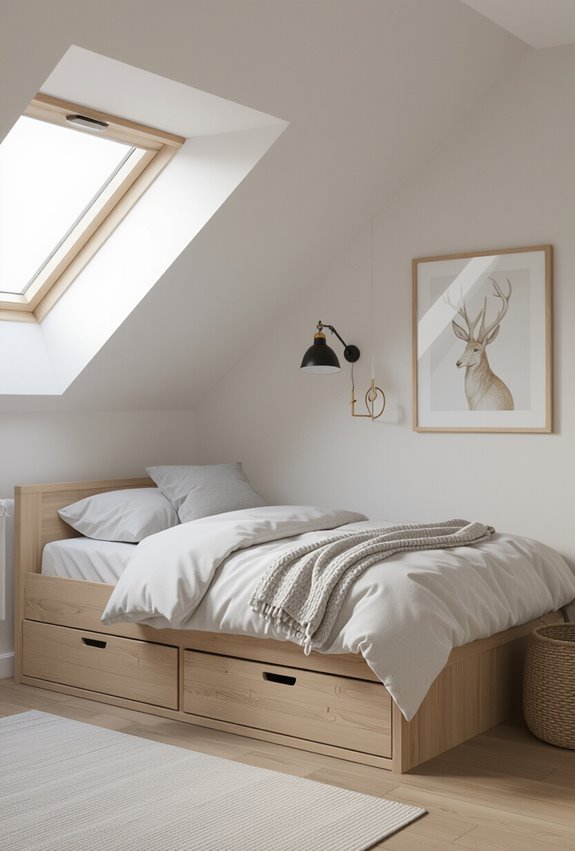
Tuck rolling drawers beneath a low bed frame to capture wasted floor space and keep essentials within easy reach.
Choose shallow under bed organizers that slide smoothly; measure clearance and mattress overhang first.
Opt for sturdy casters, label each drawer, and group items by frequency of use.
Perform basic caster maintenance periodically to prevent sticking and prolong lifespan.
This keeps clutter hidden and access effortless.
Build Pull-Out Shoe Racks in Narrow Attic Gaps
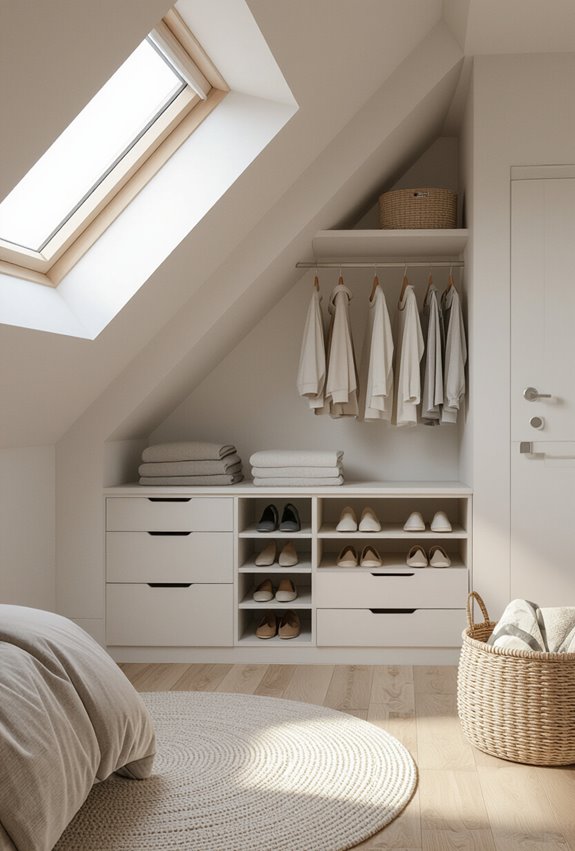
Squeezing custom pull-out shoe racks into narrow attic gaps makes otherwise wasted space work hard for you, giving easy visibility and access to pairs you rarely reach.
Design a narrow shoe rack on smooth glides, stagger shelves for heel clearance, and use thin-faced drawers to preserve headroom. Label rows, secure stops, and exploit hidden toe space at the back for flats or sandals.
Build Custom Drawers Around Chimneys and Vents
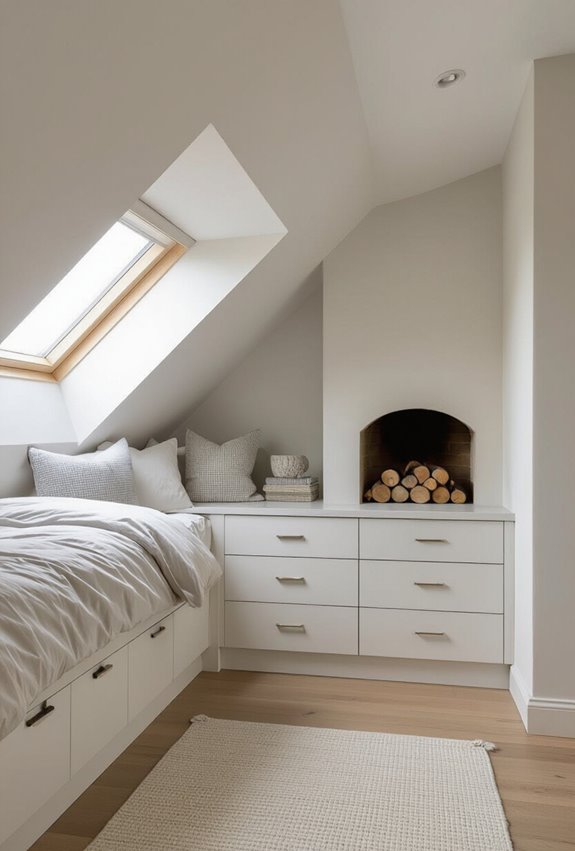
Plan around the obstruction and build drawers that embrace chimneys and vents instead of fighting them.
You’ll measure clearances, frame around pipes, and fit chimney proof drawers with removable panels for access.
Use vent clearance cabinets to maintain airflow and code compliance, and choose finishes that match the attic.
This approach maximizes storage while keeping serviceability and safety intact.
Create a Window Seat With a Storage Bench
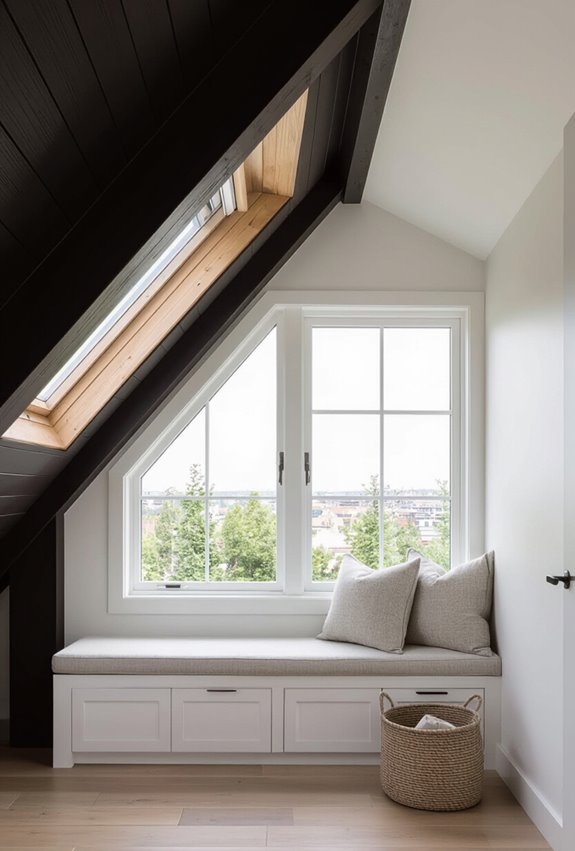
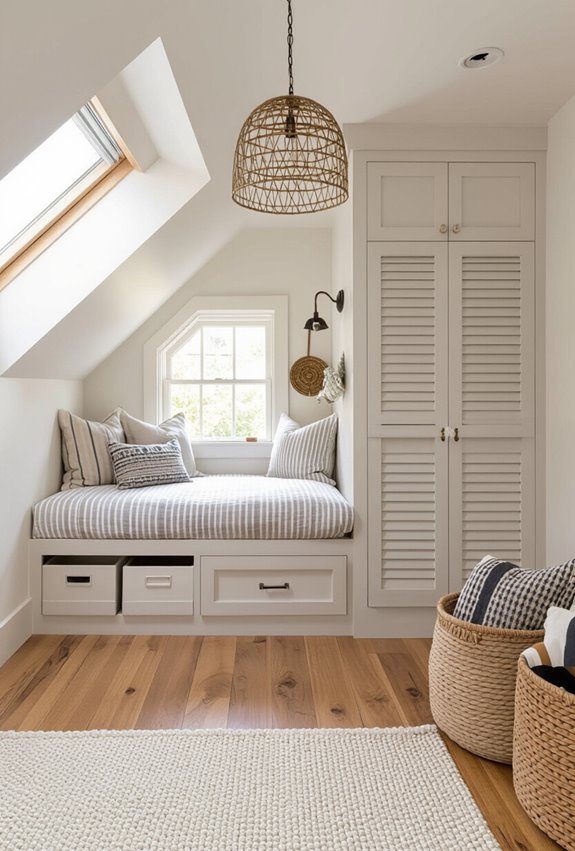
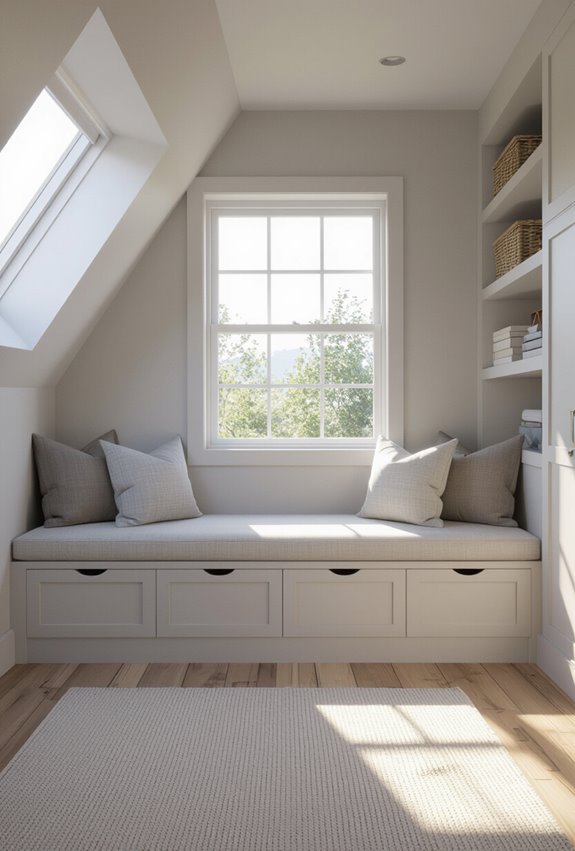
Carving a cozy nook, you can turn an attic window into a dual-purpose feature by installing a built-in storage bench that doubles as seating and concealed organization.
Add hinged lids or drawers to hold linens, books, or seasonal items, and cushion the top for comfort.
Pair with a matching storage ottoman for flexible seating and extra stowage while keeping sightlines clear and space efficient.
Install Custom Attic Shelving Into Roof Eaves

If you liked the streamlined storage of a platform bed, you can extend that smart use of space by installing custom shelving into the roof eaves.
You’ll measure depth, frame supports between rafters, and add low-profile eave lighting for visibility. Seal and insulate carefully to prevent insulation gaps, use ventilated shelving to preserve airflow, and finish with doors or baskets for tidy, accessible storage.
Add a Lofted Storage Shelf Above the Bed
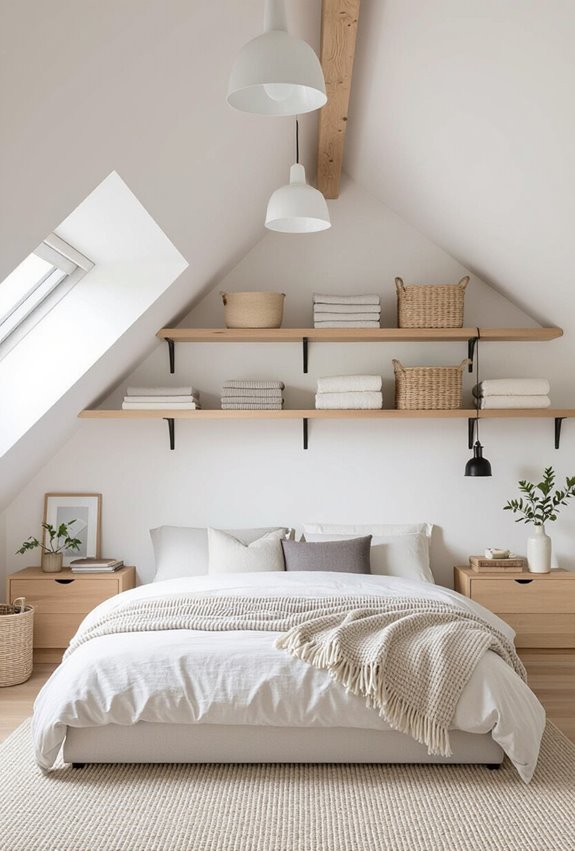
Mount a lofted shelf above the bed to reclaim vertical space for seasonal items, extra linens, and decorative boxes without crowding your floor.
Secure a sturdy platform to studs, add an overhead hammock for soft storage, and use labeled bins.
Install an angled ladder for safe access and consider low-profile railings to prevent slips while keeping the room airy and functional.
Fit Corner Shelving to Maximize Awkward Attic Spaces
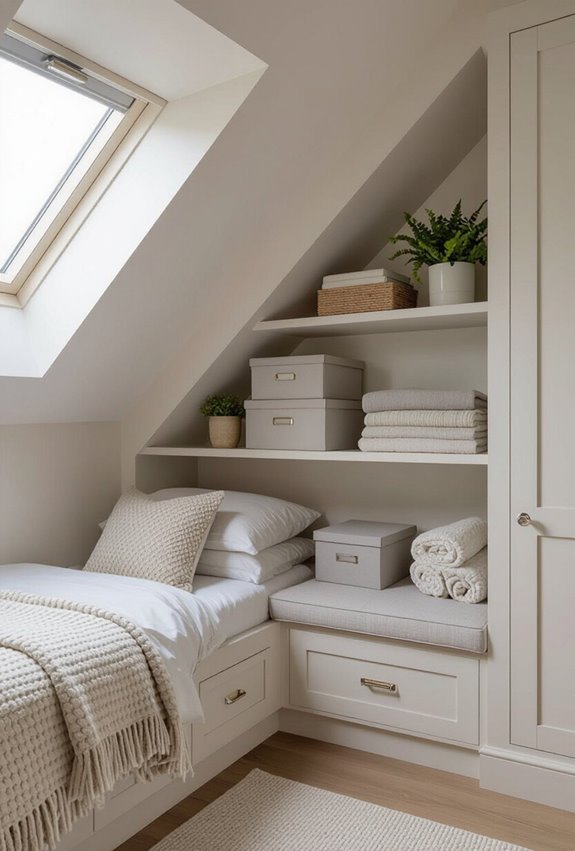
While a lofted shelf uses the center of a wall, corner shelving takes advantage of the tight, oddly shaped angles that attic rooms often have.
You can mount staggered floating cubes into corners, use angled brackets for extra support, and tailor depths to sloped ceilings.
This maximizes storage without crowding pathways, lets you display items neatly, and keeps awkward spaces functional and tidy.
Install Recessed Shelving Between Studs in Low Walls
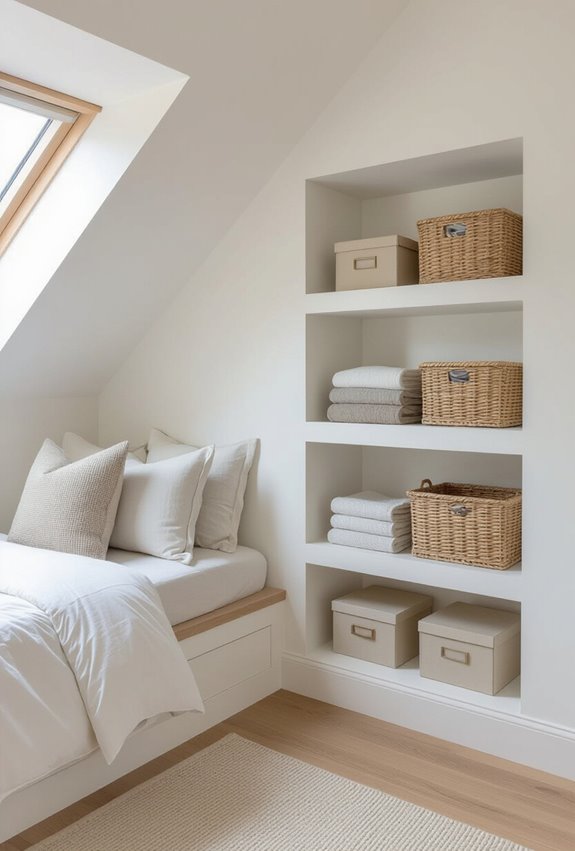
When you carve recessed shelving between studs in a low attic wall, you create slim storage that won’t eat into limited floor or headroom.
You measure stud wall bays, maintain insulation clearance, and frame shallow boxes flush with drywall.
Keep a light pocket for display lighting and plan a wiring chase to run cables safely.
Finish with trim and painted backs for neat, low-profile storage.
Add Under-Eave Cubbies for Kids’ Toys

Tuck a row of low, open cubbies under the eaves to give kids easy-access storage that won’t steal valuable play space or headroom. You’ll label bins and add soft bins for toy cubbyheads, keeping favorites visible and rotated.
In under eave playrooms, secure cubbies to studs, round edges, and use non-toxic finishes so storage’s safe, tidy, and suited to small hands.
Use Shallow Hanging Rods for Seasonal Attic Clothes
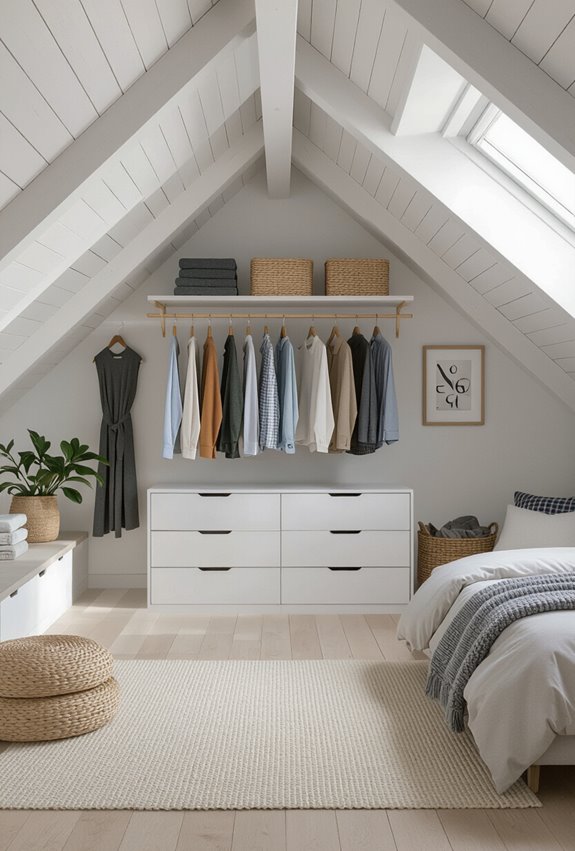
Once the kids’ toys are corralled under the eaves, you can make the most of nearby attic wall space by installing shallow hanging rods for seasonal clothes.
You’ll mount seasonal garment rods or shallow closetrails low and high to separate coats, dresses, and off-season shirts.
Use slim hangers, label sections, and leave a clear aisle so you can access swaps quickly and keep the attic tidy.
Install Pull-Down Attic Ladders With Storage Hooks
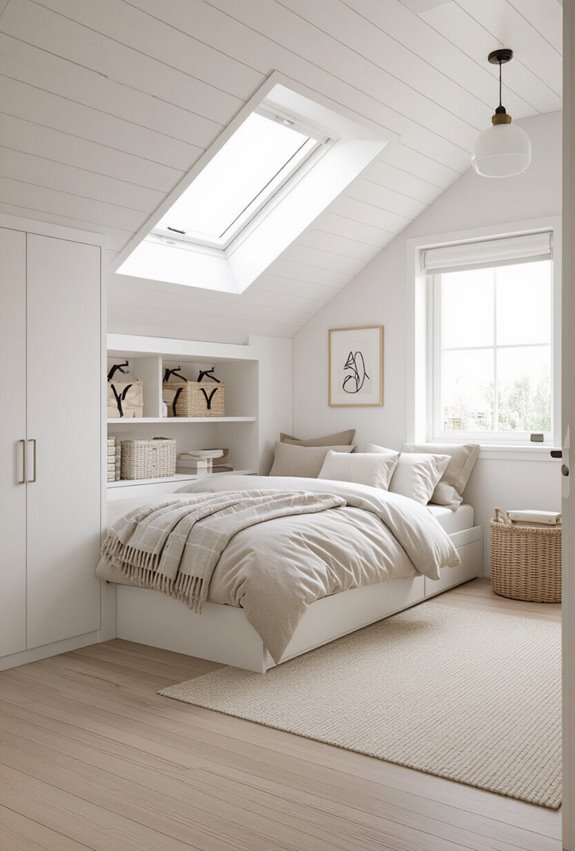
Install a pull-down attic ladder to make accessing stored items effortless, and add screw-in or clip-on storage hooks to maximize vertical space around the opening.
You’ll secure ladder safety by anchoring the frame and inspecting hinges regularly. Plan hook placement for coats, bags, or lightweight tools, keeping weight limits in mind and leaving clearance so the ladder folds freely without catching or bending.
Use Tension Rods and Baskets for Linens and Sheets
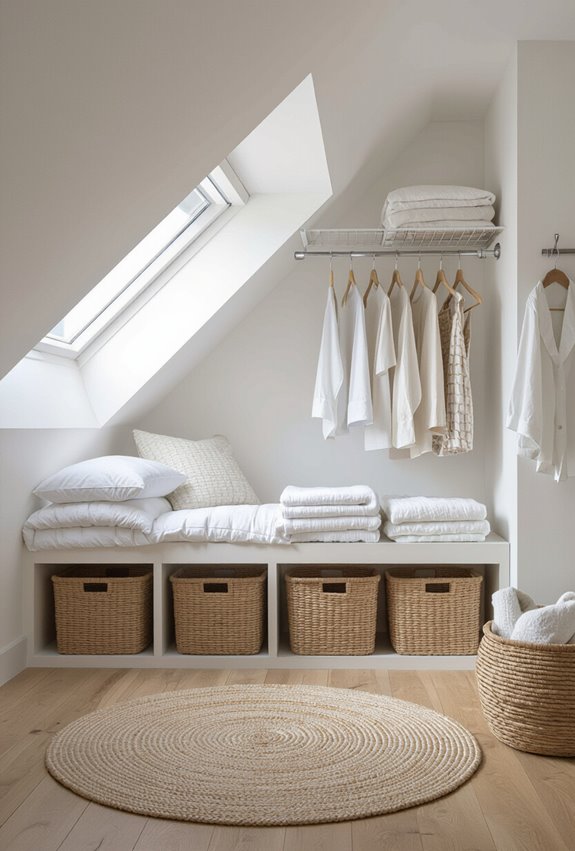
When space is tight, tension rods and baskets give you a simple, adjustable system for storing sheets and linens without drilling into rafters or walls.
You mount rods across narrow bays, hang labeled baskets for quick access, and implement a Linen rotation system so older sets move forward.
Tension basket organization keeps items visible, off the floor, and easy to reorder as seasons or guests change.
Build Hidden Compartments Into Stair Risers to Attic

If you’ve used baskets and rods to free up floor space, you can keep pushing clever storage into the architecture by building hidden compartments into stair risers leading to the attic.
You’ll convert a hidden riser into a secure staircase cubby for linens, books, or seasonal items. Install simple pulls or magnetic catches for access, and reinforce cutouts for safe, discreet storage.
Install Sliding Barn Doors to Hide Attic Closets
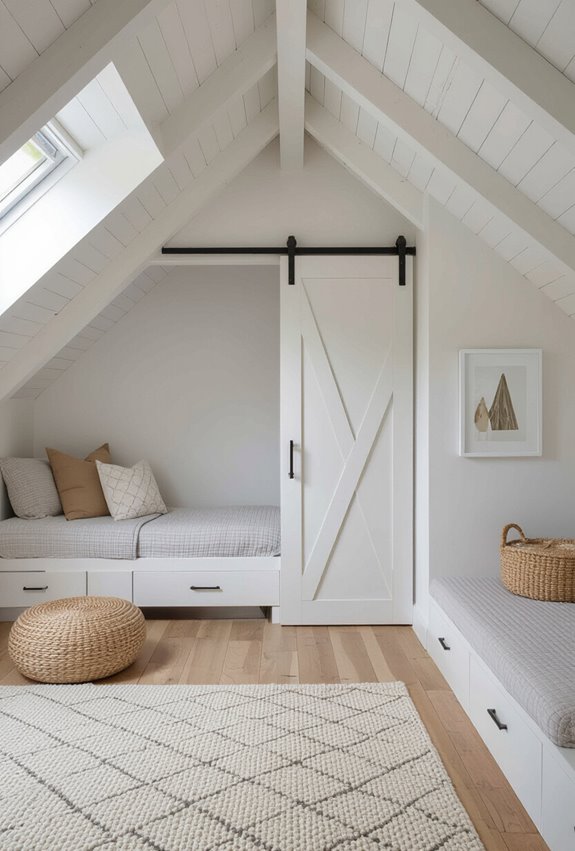
Looking to hide a cluttered attic closet without losing access or style? Install sliding barn doors on sturdy sliding hardware to maximize space and create a focal point.
Choose lightweight panels and track-mounted rollers for smooth operation, add a privacy latch for secure closure, and finish with paint or stain that complements the attic. You’ll gain concealed storage with easy, elegant access.
Create a Wardrobe Alcove With Curtain Doors
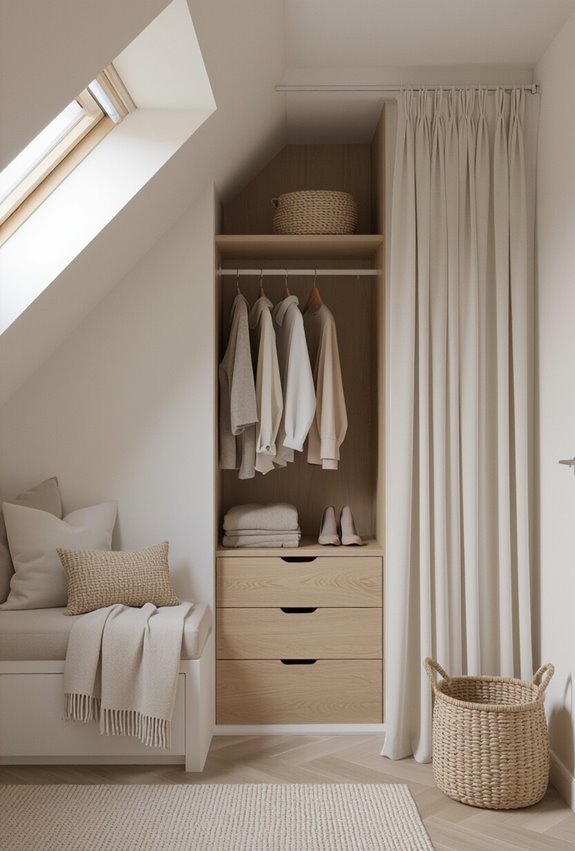
Carve out a cozy wardrobe alcove by hanging curtain doors on a simple track—it’s an easy, flexible way to hide clothes and keep the attic feeling open.
Choose light fabric panels that glide smoothly, add tiebacks for style, and layer patterns to mimic faux doors when you want structure without rigidity.
You’ll gain instant, adaptable storage that’s simple to install and refresh.
Add a Slim Chest of Drawers for Narrow Attic Aisles

Slide a slim chest of drawers into narrow attic aisles to add significant, organized storage without crowding the space.
You’ll choose a slim dresser with a tall profile and shallow depth, fitting a vertical drawer arrangement that keeps clothing, linens, and small items tidy.
Anchor it to the wall, use uniform bins inside drawers, and keep aisles clear for easy access.
Use Under-Bed File and Craft Organizers for an Attic Room
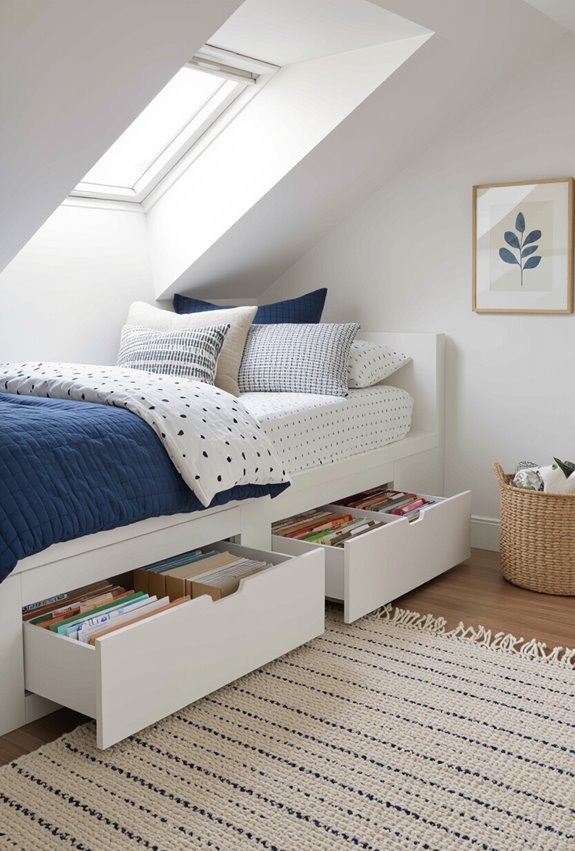
A few low-profile under-bed file and craft organizers can reclaim wasted attic-floor space and keep supplies within easy reach; they’re especially useful where ceiling slopes limit other storage.
Slide shallow file caddies and labeled craft boxes under the bed for papers, yarn, and tools. You’ll access materials quickly, rotate seasonal items, and maintain a tidy room without bulky furniture crowding narrow attic walkways.
Mount Floating Shelves on Short Attic Walls
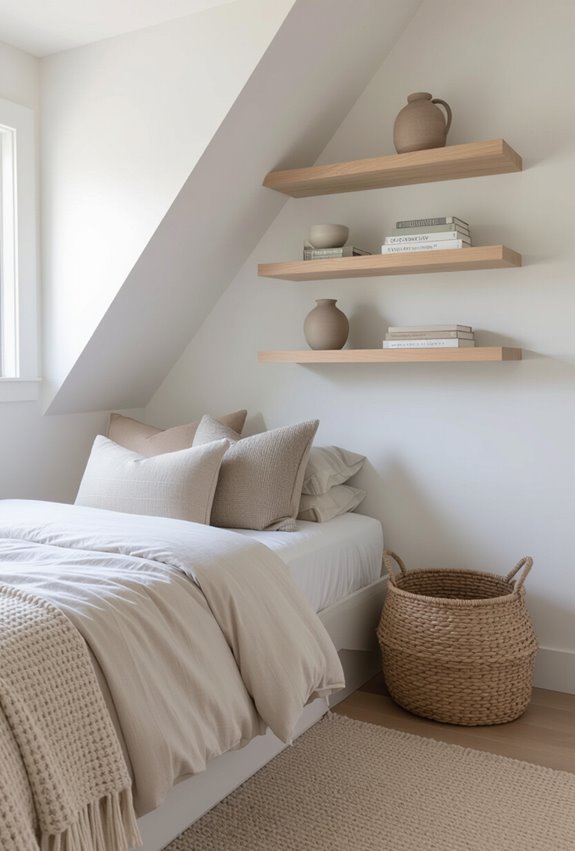
Mount floating shelves on short attic walls to make the most of low-clearance space without crowding the floor.
You’ll measure depth to pick shallow shelves that won’t hit sloped ceilings, mark and align studs for secure anchoring, and use brackets or hidden supports rated for your load.
Arrange staggered heights for books, baskets, and decorative storage to keep the room airy and tidy.
Use Wall-Mounted Cabinets With Shallow Depth for Attics

Install shallow wall-mounted cabinets to maximize storage on attic walls where depth is limited and floor space is precious.
You can fit shallow cabinetry along knee walls and under eaves, creating concealed storage without crowding the room.
Choose slim doors, adjustable shelves, and magnetic catches for sloped wall cabinets to keep items organized and accessible while preserving headroom and a tidy attic bedroom.
Add Hooks and Rails for Bags, Hats, and Gear
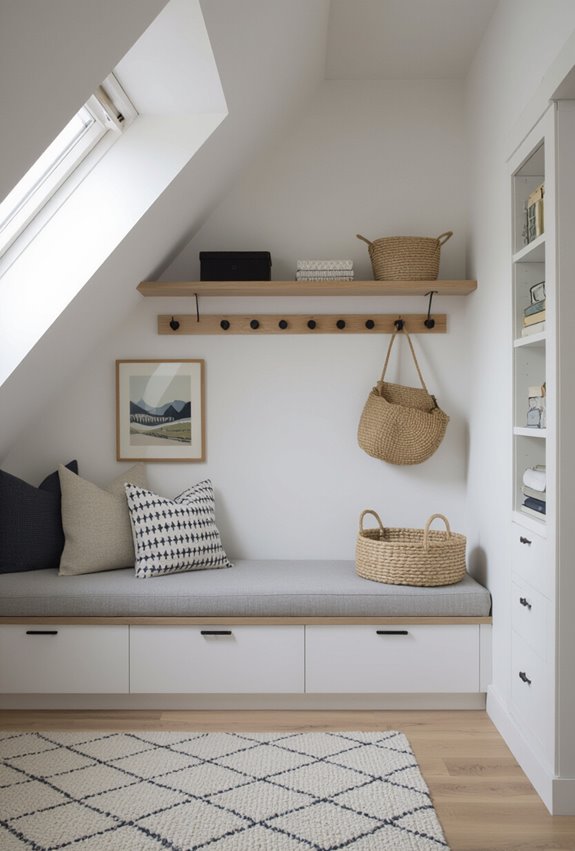
Complementing shallow wall cabinets with hooks and rails gives you quick-access spots for everyday items like bags, hats, and jackets without eating into floor space.
Mount wall hooks at varying heights for purses, backpacks, and scarves, and install hat rails under sloped eaves to keep caps tidy.
Use sturdy materials, space items to prevent crowding, and label zones so everything stays reachable and organized.
Install Pegboard Walls for Accessories in Attic Nooks
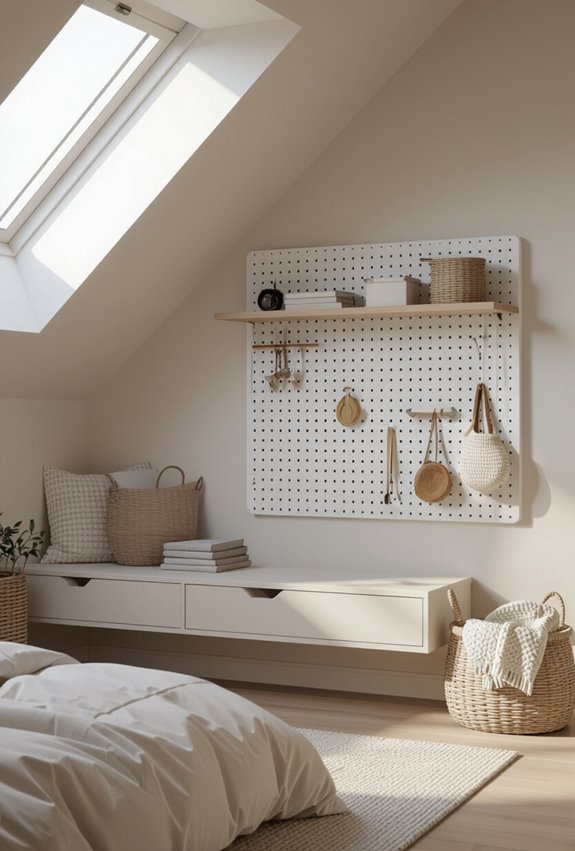
Turn awkward attic nooks into practical storage by fitting pegboard walls that hold accessories within easy reach. You’ll mount pegboard lighting to brighten dim corners and arrange accessory hooks for necklaces, belts, and small bags.
Customize spacing for folded scarves and a small shelf for sunglasses. This keeps items visible, reachable, and organized without bulky furniture, maximizing tight attic spaces.
Use Magnetic Strips for Small Metal Tools and Keys
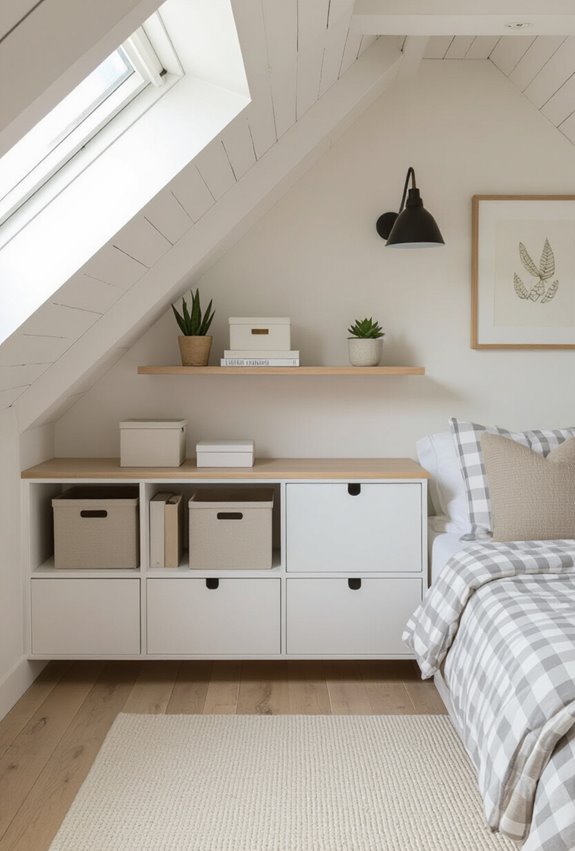
When space is tight, mount magnetic strips along an attic wall or under a rafter to keep small metal tools and keys visible and off the floor.
Use a magnetic knife rack or slim RFID safe strip to secure screwdrivers, pliers, and spare keys.
Arrange by frequency of use, label nearby, and leave clearance so items don’t shift when you access them.
Use Labeled Clear Bins for Visible Attic Storage
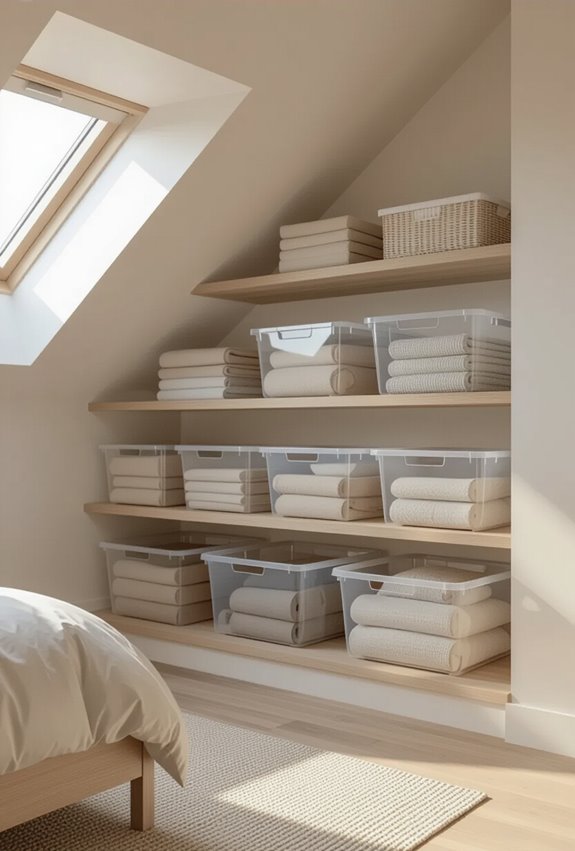
Often a simple swap to clear, labeled bins makes everything in your attic instantly usable: you can see contents at a glance, stack them neatly, and grab what you need without digging.
Use transparent bins for seasonal decor, linens, and hobby supplies, and apply visible labeling on lids and fronts. Arrange by category, keep frequently used items accessible, and maintain a consistent labeling system.
Store Off-Season Items in Vacuum Bags to Save Space
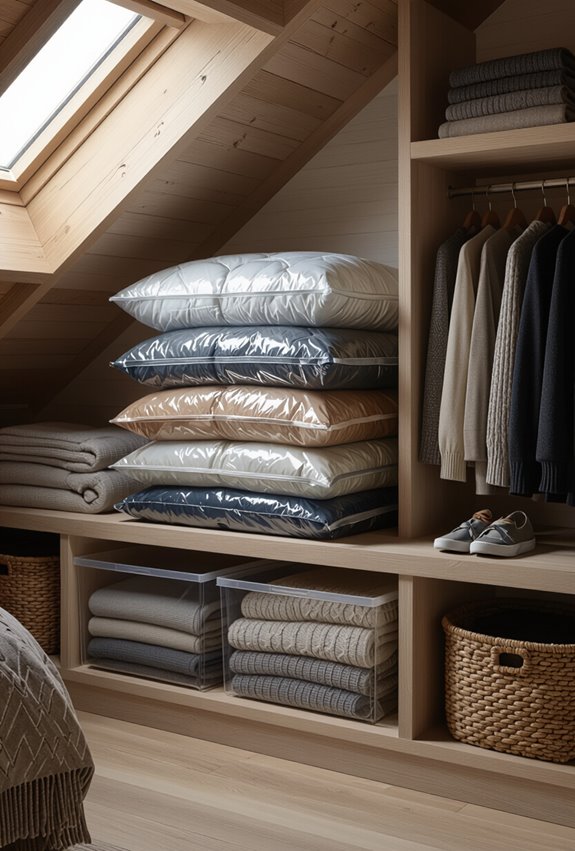
Frequently, you can free up a surprising amount of attic space by packing seasonal clothes, bulky bedding, and holiday linens into vacuum bags; they compress items down to a fraction of their original volume, making stacks and shelving far more efficient.
You’ll get serious space saving and garment protection, keep labeled bags for rotation, and store them off the floor to avoid moisture and pests.
Create a Sliding Platform for Seasonal Decor Storage
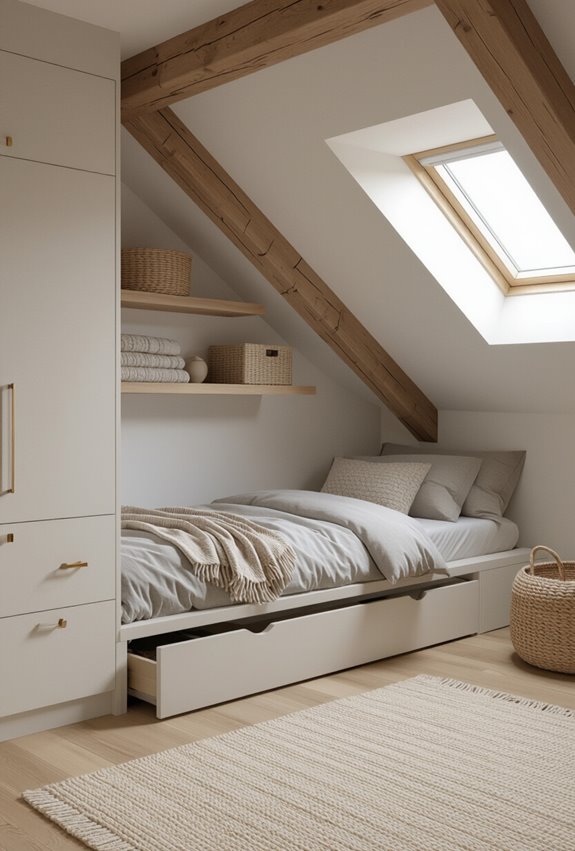
Once you’ve reduced bulk with vacuum bags, make accessing seasonal decor just as simple by installing a sliding platform: a low-profile, roll-out tray on rails that lets you pull boxes out without crawling into the rafters.
You’ll mount it near the attic opening, secure rails to studs, and organize boxes for easy seasonal rotation while checking weight distribution so the platform glides safely and lasts.
Build Pull-Out Drawers and Rolling Platforms for Heavy Items
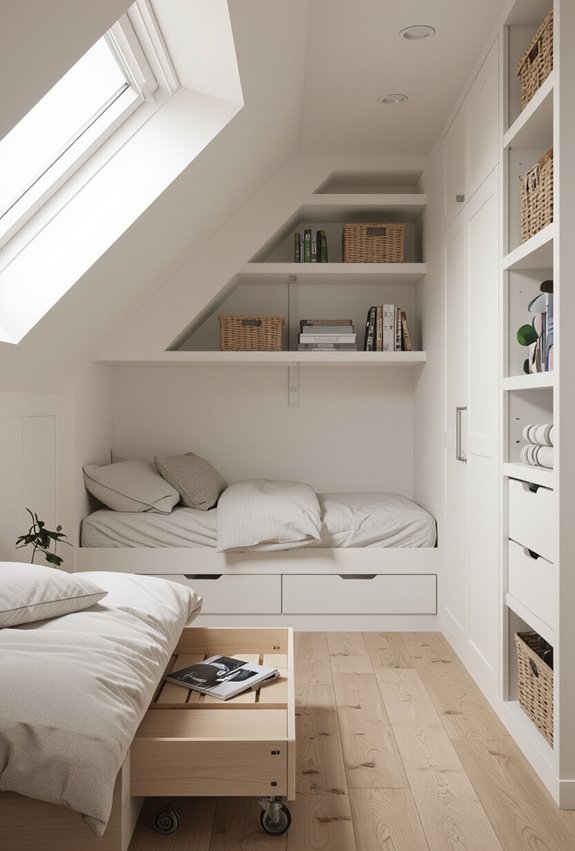
Make heavy storage manageable by installing sturdy pull-out drawers or rolling platforms that let you slide boxes and bins in and out without hauling them through the rafters.
Use heavy hardware and robust runners rated for weight, anchor frames to joists, and fit underbed sliders for smooth movement.
Label visible fronts, limit depth for access, and guarantee clear paths so you can retrieve bulky items safely.
Integrate Lighting Into Attic Storage for Better Visibility

While dual-purpose seating hides clutter, it won’t help much if you can’t see what’s inside. Install LED strips inside storage benches and cubbies so you can find items quickly.
Add motion sensors or remote-controlled Skylight switches for overhead illumination that won’t wake sleeping occupants. Use warm, dimmable lighting to protect fabrics and keep the attic cozy while improving visibility and usability.
Choose Moisture-Resistant Materials for Attic Conditions
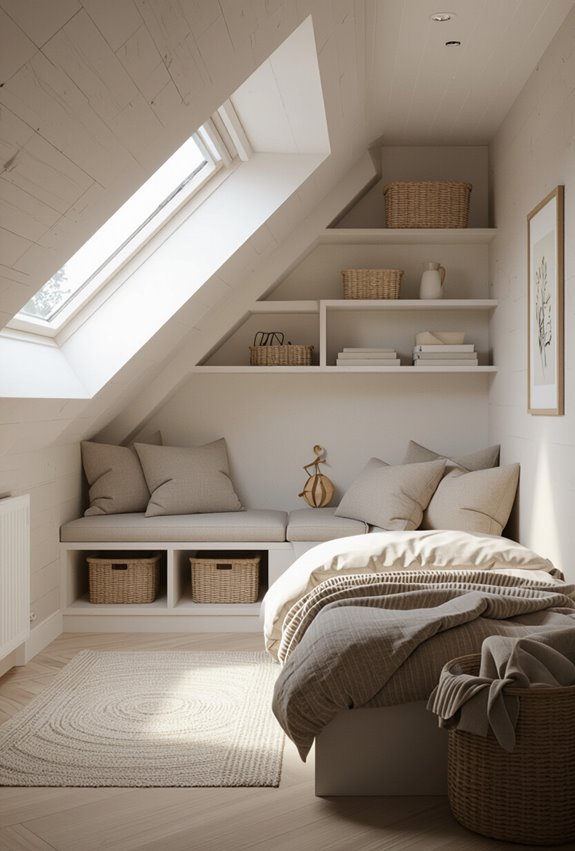
Many attic spaces face fluctuating humidity and occasional leaks, so pick materials that resist moisture and mold. Use sealed paint on wood and drywall to block dampness, and install a proper vapor barrier behind built-ins.
Choose metal, plastic, or marine-grade plywood for shelving, and opt for moisture-resistant fabric bins. Regularly inspect seals and caulking to keep stored items dry.
Plan Pest-Proof and Ventilated Storage Methods
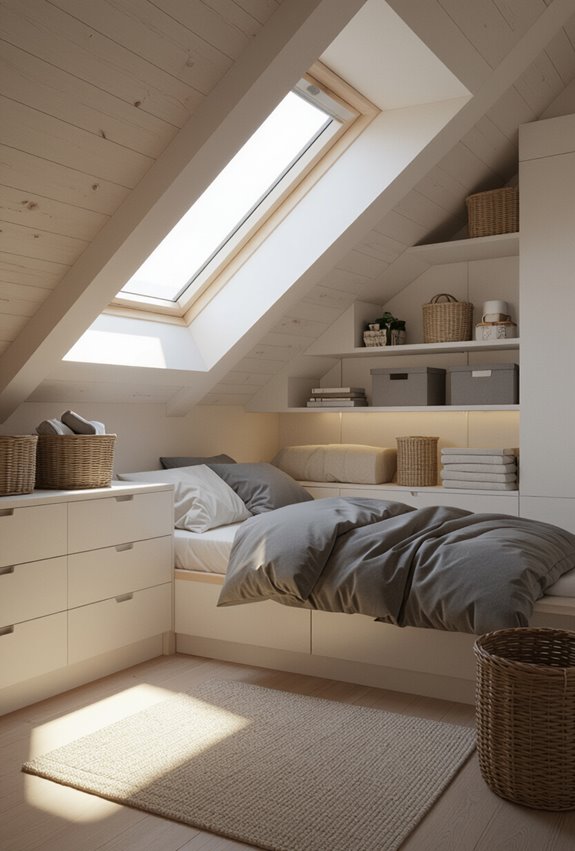
When protecting stored items from pests and stale air, plan for sealed, elevated storage and continuous ventilation so you won’t trap moisture or invite critters.
Use sealed vents with mesh to keep insects out while moving air. Elevate boxes off the floor on pallets or shelves, use breathable barriers on fabrics, inspect periodically for gaps, and store foodproof containers away from textiles.
Label Baskets and Create Quick-Access Zones for Daily Use
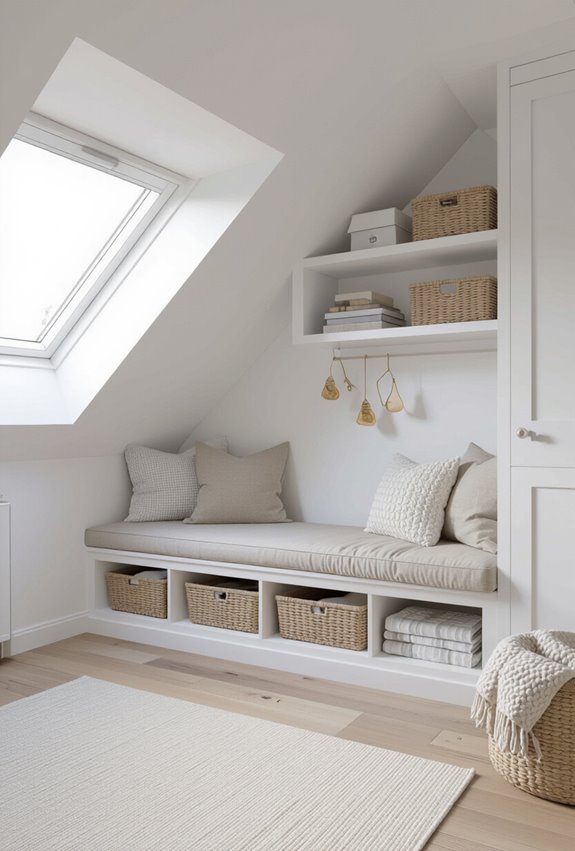
A few clearly labeled baskets make finding everyday items in your attic bedroom fast and stress-free.
Use color coded baskets for socks, accessories, and chargers so you can spot things at a glance.
Place them in daily zones—near the bed, desk, and entry—so routines flow.
Update labels seasonally and keep contents minimal to maintain accessibility and order.
Install Built-In Shelving

Maximizing storage in your attic bedroom doesn’t stop at under-bed solutions.
Installing built-in shelving is a smart way to utilize your space effectively. You can choose built-in designs that fit snugly against sloped walls, making the most of every inch.
Consider using a mix of shelving materials like wood, metal, or even glass to create a stylish display for books, decor, or storage bins.
Design your shelves at varying heights to accommodate different items, and don’t forget to leave space for personal touches.
With a bit of planning, built-in shelving can transform your attic bedroom into an organized haven, blending functionality with aesthetics seamlessly.
Enjoy the newfound space and keep your room clutter-free!
Use Vertical Space With Wall-Mounted Racks
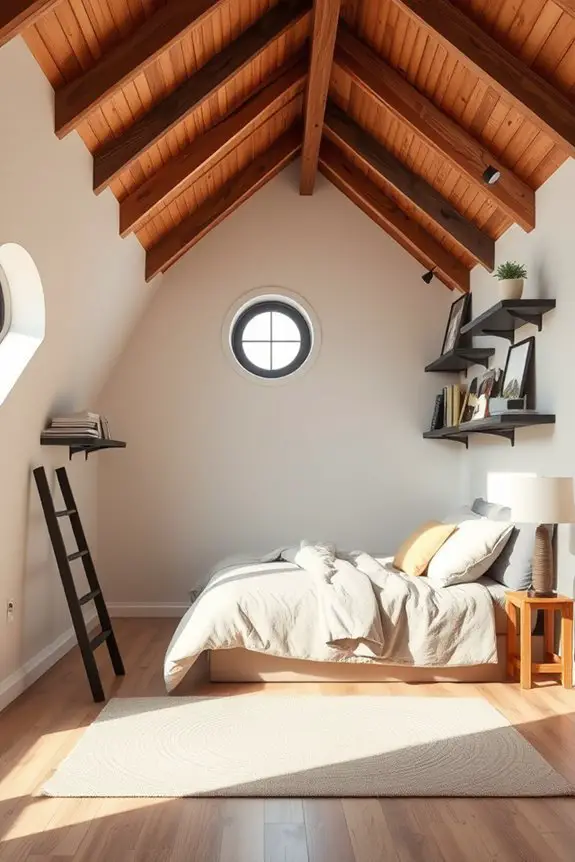
One of the smartest ways to optimize your attic bedroom is by using vertical space with wall-mounted racks.
These wall-mounted shelves not only save floor space but also keep your belongings organized and easily accessible. You can install them above your bed or desk, creating a practical home for books, plants, or decorative items.
Consider adding a vertical garden for a touch of greenery; it’ll liven up your space and improve air quality. Use stylish baskets or bins on the shelves to store smaller items, keeping everything neat.
Incorporate a Window Seat With Storage

Transforming a corner of your attic bedroom into a cozy window seat not only enhances the room’s charm but also provides valuable storage.
You can create a built-in window seat with drawers underneath or opt for a cushioned bench with a hollow base. This design allows you to store extra blankets, books, or seasonal clothing out of sight.
If you prefer a more portable option, consider using a stylish storage ottoman as your window seat. It’ll offer a comfy spot to relax while providing easy access to your belongings.
Adding decorative baskets or bins beneath the seat can also maximize your storage options.
With a little creativity, your window seat can be both a functional and inviting feature in your attic bedroom.
Utilize Corner Shelves
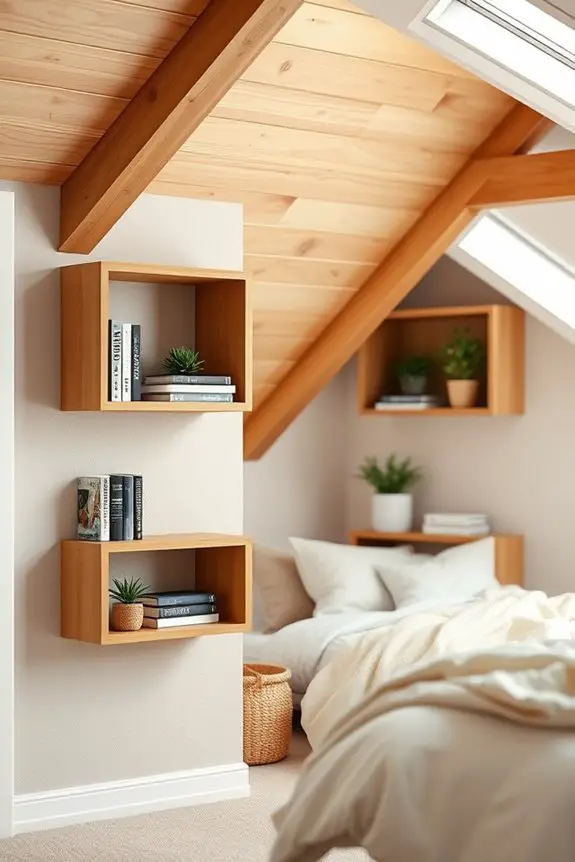
Corner shelves can transform unused space in your attic bedroom into a stylish and functional storage solution. By utilizing these often-overlooked areas, you can maximize storage without sacrificing floor space.
Choose from a variety of corner shelf materials like wood, metal, or even glass to match your decor. For a cozy, rustic feel, wooden shelves work wonders, while metal styles can lend a modern touch.
Consider floating shelves for a sleek look, or opt for tiered designs to display books and decor. No matter your corner shelf style, these storage solutions can help keep your attic bedroom organized and visually appealing, making it a perfect retreat.
Don’t let corners go to waste; embrace their potential!
Use a Bed With Built-In Drawers
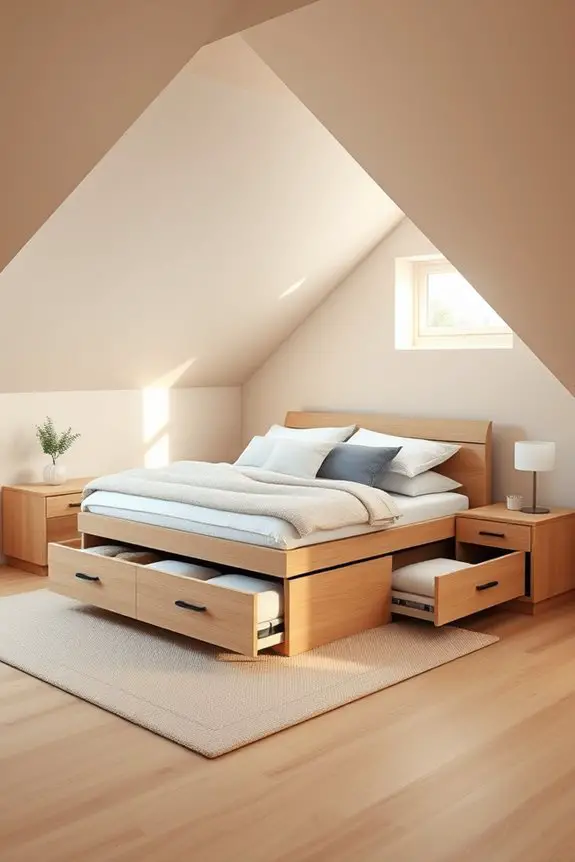
A bed with built-in drawers can be a game changer for your attic bedroom.
It not only maximizes your space but also keeps your room organized. When choosing among different bed styles, look for those that offer ample drawer organization beneath the mattress.
These drawers are perfect for storing extra bedding, seasonal clothing, or even shoes, making clutter a thing of the past.
Conclusion
In your attic bedroom, think of each storage solution as a stepping stone on a winding path, leading to a space that feels open and inviting. By embracing under-bed bins, built-in shelves, and multifunctional furniture, you’re not just saving space; you’re crafting a sanctuary that reflects your unique style. Just like a well-tended garden, your bedroom can flourish when you nurture it with clever organization, turning every nook into a vibrant corner of comfort and creativity.