How Long Does a Concrete Floor Take to Dry Before You Can Walk On It?
You can usually walk on a new concrete floor after about 24–48 hours, though it’s still fragile and won’t have full strength. Surface drying happens fast, but curing (strength gain) takes weeks; avoid heavy loads or dragging items for at least 7–28 days depending on mix and weather. Keep the slab moist to prevent cracking and follow any contractor guidance. Continue below to get timelines, care tips, and factors that affect safe use.
How Long Does a Concrete Floor Take to Dry Before You Can Walk On It? Quick Answer
You can usually walk on a newly poured concrete floor after about 24 to 48 hours.
Light foot traffic is typically safe within that window, while heavy use or moving furniture should wait 7 days to 28 days depending on mix and curing conditions.
Always check the specific concrete’s cure recommendations and surface hardness before putting stress on it.
Direct answer in one sentence
If the surface’s dry and cool, you can usually walk on a freshly poured concrete floor after about 24 to 48 hours.
For most projects, how long does a concrete floor take to dry depends on mix, thickness, and weather, but light foot traffic is typically safe within that window; avoid heavy loads until the slab gains more strength.
Typical time ranges for foot traffic vs heavy use
1–2 days is typically enough for light foot traffic on a freshly poured concrete floor. You can walk cautiously, but avoid dragging heavy items. For heavier loads and frequent use, wait longer to prevent damage and guarantee curing.
| Use type | Recommended wait |
|---|---|
| Light foot traffic | 1–2 days |
| Moderate use | 3–7 days |
| Heavy use | 28 days |
Understanding Concrete Drying vs Curing
When you check a new concrete floor, “dry” usually means the surface feels dry, while “cured” means the slab has gained the strength it needs through ongoing chemical reactions.
Those reactions—hydration—consume water and require proper moisture retention to form a strong matrix, so surface dryness doesn’t equal full strength.
Temperature, humidity, mix design, slab thickness, and curing methods all affect how quickly the surface dries and the concrete cures.
What “drymeans (surface dryness) vs what “curedmeans (strength development)
Although a concrete slab may feel dry to the touch within a day or two, that surface dryness is different from the ongoing chemical process that builds strength.
Drying means moisture has evaporated from the top layer, while curing means the cement is hydrating and gaining structural integrity over weeks or months.
You should avoid heavy traffic until curing provides required strength, even if the surface seems dry.
Key chemical process: hydration and moisture retention
Surface dryness can mislead you about what’s really happening inside the slab: concrete hardens because of hydration, a chemical reaction where water and cement form calcium-silicate-hydrate bonds that give the material strength.
You’ll retain moisture to let hydration continue; if it evaporates too fast, strength suffers.
Keep the slab moist during early curing so bonds fully develop and long-term durability improves.
Factors that influence drying and curing rates
Because drying and curing are driven by different processes, you need to evaluate distinct sets of factors:
- Temperature and humidity: they speed evaporation but also affect chemical reaction rates.
- Mix and thickness: water-cement ratio, additives, and slab depth change internal moisture movement.
- Airflow and curing methods: ventilation, covers, or curing compounds control surface drying while hydration continues internally.
Typical Timelines by Condition and Mix
For a typical residential slab you’ll usually be able to walk on the surface in 24–48 hours.
Move light furniture after a few days, and reach full structural load capacity in about 28 days.
If you use high-strength mixes or accelerators, those milestones can come sooner, while additives like retarders or cooler conditions will slow them down.
Thin overlays and toppings dry and accept traffic faster than full slabs, but they still need moisture checks and often reach usable strength within a few days to a week depending on thickness and mix.
Standard residential concrete (typical slab mix) timeline for walking, light furniture, and full load
Most standard residential concrete slabs will support foot traffic in 24–48 hours.
Light furniture can be placed after about 7 days, and full structural loads can be supported around 28 days.
Though temperature, mix design, and curing can shift those windows, you should protect the slab from heavy impact and moisture loss early.
Wait a week before moving sofas or cabinets, and plan major loads or equipment installation after the 28-day strength gain.
High-strength mixes and additives how they change timelines
When you choose a high-strength mix or add accelerators, the slab gains usable strength much faster than a standard mix.
You can often walk on it within 12–24 hours, move light furniture in 3–5 days, and safely apply full loads sooner than the typical 28-day benchmark depending on the product and curing conditions.
Check manufacturer cure charts, monitor ambient temperature and moisture, and follow curing recommendations to avoid premature loading that could cause cracking or reduced long-term strength.
Thin overlays and toppings drying expectations
Although thin overlays and toppings are applied in slimmer lifts than standard slabs, they still need careful drying time that varies by mix, thickness, and site conditions.
You’ll often walk on them in 24–48 hours, but full curing for coatings or heavy use can take 7–28 days.
Monitor moisture with a meter, control ventilation and temperature, and follow manufacturer guidelines for each product.
Environmental and Site Factors That Change Drying Time
You’ll notice drying speed shifts a lot with temperature — hot speeds evaporation, cold slows the chemical cure.
Humidity, ventilation, wind and sun exposure all change how fast moisture leaves the slab, and wet ground beneath can keep it damp longer.
Also remember thicker pours and larger aggregates retain water differently, so thickness and mix proportion affect drying time.
Temperature effects (hot vs cold)
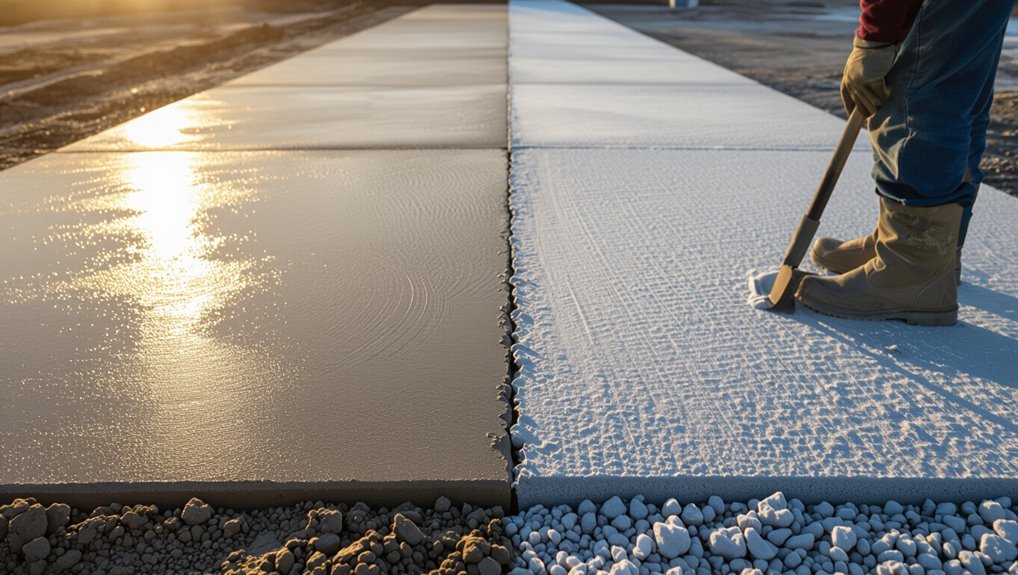
Because temperature controls the chemical pace of curing, hot and cold conditions change how quickly your concrete loses moisture and gains strength.
In hot weather your slab cures faster but may dry unevenly, risking cracks unless you cool or cure properly.
In cold weather reactions slow, delaying walk-on time and requiring insulation or heaters to maintain safe curing rates and avoid freeze damage.
Humidity and ventilation impacts
Hot or cold conditions set the pace for curing, but humidity and air movement determine how quickly moisture actually leaves the slab.
If relative humidity is high, drying slows and you’ll wait longer before walking.
Improve ventilation with fans, dehumidifiers, or open windows to accelerate evaporation.
Monitor RH and avoid sealing until interior moisture drops to manufacturer-recommended levels to prevent trapping dampness.
Wind, sun exposure, and ground moisture
When wind sweeps across a fresh slab and the sun beats down, they pull moisture out faster, while a damp subgrade can push moisture back up and slow drying.
You should monitor wind direction, solar exposure, and soil wetness; shielding or curing compounds help retain moisture for proper strength, while drainage or vapor barriers reduce upward moisture, speeding safe foot traffic timing.
Pour thickness and aggregate size
Pour thickness and the size of the aggregate you use directly change how fast a concrete slab sheds moisture: thicker pours trap water longer and coarse aggregate creates larger internal voids that can speed internal evaporation paths, while fine aggregates pack tighter and slow moisture movement.
You should adjust mix design, curing, and drying time expectations: thicker slabs and finer aggregates need more time before foot traffic.
Step-by-Step: When Can You Walk on New Concrete?
When you’re judging when to step onto new concrete, follow a clear, time-based checklist to protect the slab and yourself.
Expect only brief access in the first 24 hours, light foot traffic after 24–48 hours, increased use and moving lightweight items by 3–7 days, and heavy foot traffic, furniture, or vehicles after 7–28 days depending on cure and strength.
Full design strength — and unrestricted use — typically occurs after 28+ days.
Step 1 First 24 hours: what to expect and safety precautions
During the first 24 hours your new concrete gains initial strength but remains fragile, so avoid walking on it and keep traffic off the slab unless a contractor directs otherwise.
Stay clear, mark the area, and control moisture to prevent surface damage.
- Block access and post warnings.
- Keep curing moist with light misting.
- Don’t place tools, materials, or weight on slab.
Step 2 2448 hours: light foot traffic guidelines
24–48 hours after placement your concrete will accept light foot traffic, but you should still move cautiously and only if the contractor gives the go-ahead.
Walk gently, avoid dragging tools, and keep weight minimal. Use soft-soled shoes, limit trips across the slab, and watch for soft spots or discoloration.
Report any cracking immediately so repairs can be scheduled.
Step 3 37 days: increased use and moving lightweight items
After you’ve been cautious for the first couple of days, you can start increasing activity on the slab at about 3–7 days for most mixes.
However, around day 7 to day 30 is when concrete gains most of its strength.
By day 37, you can safely walk freely and begin moving lightweight items onto the floor.
You can place rugs, small furniture, and boxes, avoiding concentrated loads and dragging.
Step 4 728 days: heavy foot traffic, furniture placement, and vehicle loading
By about two years (roughly 728 days) your concrete has mostly finished drying and gained the long-term strength needed for heavy foot traffic, full furniture placement, and vehicle loads.
So you can move in larger pieces, drive on the slab if it’s designed for vehicles, and use the space normally, while still avoiding point loads or impacts that could crack the surface.
You can safely place heavy furniture, park, and host regular activity.
Step 5 28+ days: when concrete reaches design strength and full use
When concrete reaches 28 days, it typically hits its design strength so you can use the surface for its planned purpose; that means regular foot traffic, furniture, and light vehicle loads (if the slab was engineered for them) are generally safe.
You should still follow any contractor recommendations, avoid harsh chemicals, and be cautious with concentrated loads until tests confirm full strength or the warranty period passes.
How to Test If Concrete Is Ready for Foot Traffic
You can start with simple visual and tactile checks—look for uniform color, no surface tackiness, and a firm feel underfoot.
Try quick on-site moisture tests like the plastic sheet or paper towel method, and consider a moisture meter to get numeric RH or moisture content readings.
If readings are high or you need load-bearing assurance, call a pro for compressive strength testing.
Visual and tactile checks
Wondering if the slab’s ready for foot traffic? Look for uniform color, no damp dark spots, and a matte finish rather than glossy wet sheen.
Press with your palm—if it feels cool or leaves a mark, it’s still curing. Walk gently in socks to test firmness; avoid areas that indent or crumble.
Note any powdery residue indicating ongoing drying.
Simple moisture tests you can do on-site
Curious how to confirm a slab’s ready for foot traffic without fancy tools? You can perform quick on-site checks that give practical confidence before stepping on concrete.
- Tape a plastic sheet to the slab for 24 hours; look for condensation.
- Press a paper towel for several minutes; dampness signals more curing time.
- Smell for mustiness; persistent damp odors mean wait longer.
Using a moisture meter and interpreting readings
If the quick on-site checks leave you unsure, a moisture meter gives a concrete, measurable answer about slab readiness.
Choose a pin or non‑destructive meter, follow manufacturer calibration, and test multiple spots across the slab.
Compare readings to flooring manufacturer limits (often <3% for calcium chloride equivalent or specified RH).
If values exceed limits, delay foot traffic and continue drying.
When to call a professional for compressive strength testing
When you need certainty that a slab can bear weight—not just that it looks dry—call a professional for compressive strength testing; they’ll provide standardized, calibrated results that hand-held meters and visual checks can’t match.
You’ll get core or cored-cylinder tests, clear pass/fail criteria, and documented reports.
Contact a licensed lab if loads, warranties, or safety depend on verified strength before opening to traffic.
Common Mistakes That Delay Drying or Cause Damage
Don’t remove forms or coverings too soon, because that lets the slab lose moisture and weakens the surface.
Don’t let people or equipment traffic the slab before it reaches proper strength, and don’t use curing methods that either over-dry or leave it too wet.
Also, don’t skip protecting the surface from rain, sun, or freezing weather—those exposures can stall drying or cause permanent damage.
Removing forms or coverings too early
Because concrete keeps curing long after it looks set, taking off forms or coverings too soon can crack the slab, warp edges, or pull moisture out unevenly.
You should keep forms and protective coverings until the mix reaches adequate strength and surface hardness. Remove supports gradually, avoid abrupt exposure to wind or sun, and follow manufacturer or engineer timelines to prevent shrinkage, edge damage, and uneven curing.
Allowing traffic during improper strength stages
If you let people, equipment, or vehicles onto a concrete slab before it reaches the required strength, you’ll risk surface damage, indentations, and delayed curing that can compromise the whole pour.
You should restrict all traffic until the concrete attains specified compressive strength—usually measured by days or test cylinders.
Use barriers, signage, and scheduled access; premature loads force repairs and extend overall drying and use timelines.
Improper curing methods (over-drying or inadequate moisture)
When you let a slab dry out too quickly or fail to keep it moist, the curing process gets disrupted and the concrete can crack, weaken, or develop an uneven surface; proper curing means maintaining consistent moisture and temperature for the recommended period so the cement hydrates fully.
You should wet-cure, use curing compounds, or cover with damp burlap/plastic to prevent premature drying and strength loss.
Skipping surface protection against weather
Though it might seem unnecessary on a calm day, skipping surface protection leaves your fresh slab exposed to rain, sun, wind, and temperature swings that can slow drying, cause surface crazing, or wash out cement paste.
You should cover new concrete with plastic sheeting, curing blankets, or temporary shelters to maintain even moisture and temperature, preventing weak spots, dusting, and delayed strength development.
Best Practices and Tips to Speed Safe Use Without Damaging Concrete
To speed safe use without harming the slab, you’ll want to follow proven curing methods like wet curing, curing compounds, or breathable coverings.
Control site conditions—manage temperature, humidity, and windbreaks—and pick a mix with appropriate admixtures that gain strength faster.
For early traffic, use temporary protection such as walk boards or lightweight covers to prevent abrasion and contamination.
Proper curing methods (wet curing, curing compounds, coverings)
If you want durable, crack-resistant concrete, you need to cure it properly using wet curing, curing compounds, or coverings to control moisture loss and temperature for the first several days.
You’ll choose methods based on access, schedule, and finish. Follow proper timing and coverage to avoid rapid drying and surface defects.
- Wet cure: keep moist.
- Compounds: seal moisture.
- Coverings: protect and retain.
Managing site conditions: temperature, windbreaks, and humidity control
When you control temperature, wind, and humidity on-site, you cut drying time and reduce cracking without compromising strength.
You’ll use heaters or shade to keep temps steady, erect windbreaks to prevent rapid evaporation, and run humidifiers or misting to maintain relative humidity.
Monitor conditions with simple sensors, adjust ventilation, and avoid abrupt changes so the slab cures evenly and reaches safe walkability sooner.
Choosing the right mix and admixtures for faster safe use
Although mix selection often feels technical, choosing the right cement type, aggregate grading, water-cement ratio, and targeted admixtures is the most effective way to shorten safe-use times without sacrificing durability.
You should opt for low w/c ratios, well-graded aggregates, and set-accelerating admixtures or high-early-strength cements when appropriate.
Balance additives to avoid shrinkage, guarantee proper curing, and confirm compatibility with overlays or finishes.
Temporary protection strategies for early traffic
1 simple strategy can protect newly placed concrete from early traffic while you wait for full strength: create a staged barrier system that diverts loads and limits contact to cured, load-bearing zones.
Use plywood or rubber mats on light-traffic paths, temporary ramps at edges, and clear signage.
Monitor moisture and restrict heavy equipment until specified strength is reached to prevent cracking and surface damage.
Comparison: Surface Drying Methods and Time-to-Walk Outcomes
If you need to get onto a concrete floor quickly, the drying method you choose makes a big difference in how soon you can walk on it safely. You’ll compare common techniques—air drying, fans, and heaters—by typical time-to-walk and surface risk. Choose based on urgency, humidity, and finish sensitivity.
| Method | Typical time-to-walk |
|---|---|
| Air drying | 24–72 hrs |
| Fans/heaters | 12–36 hrs |
Real-World Scenarios and Case Examples
When planning a residential driveway pour, you’ll weigh cure time against seasonal constraints and when you can drive or seal.
For interior slabs, you’ll coordinate drying with flooring installers so adhesives or finishes aren’t applied too soon.
On commercial jobs, you’ll schedule heavy equipment and trades around longer cure times and moisture-testing requirements.
Residential driveway pour timeline and decisions
Because a residential driveway pour affects vehicle access, landscaping, and your schedule, you’ll want a clear timeline and smart decisions from day one.
Plan for 24–48 hours before foot traffic, 7 days for limited car use with precautions, and 28 days for full strength.
Coordinate deliveries, set curing methods (moisture retention or sealers), and protect edges and nearby plants during curing.
Interior slab with flooring installation coordination and timing
Although interior slabs can seem ready once forms come off, coordinating flooring installation needs a clear timeline tied to moisture testing, adhesive and flooring type, and jobsite conditions.
You’ll wait for recommended moisture readings (usually below manufacturer limits), allow extra cure for dense finishes, and schedule installers only after passing tests.
Communicate delays, control humidity, and select adhesives compatible with residual moisture to avoid failures.
Commercial slab with heavy equipment schedule
Shifting from interior finish schedules to commercial slabs, you’ll face heavier loads, more equipment, and tighter uptime demands that change drying and curing choices.
You’ll plan thicker slabs, extended curing (often 28 days for full strength), and moisture mitigation before installing heavy machinery.
Coordinate load-in sequencing, use rapid-strength mixes or post-tensioning where needed, and schedule testing to avoid costly delays or equipment damage.
Frequently Asked Questions
You probably have a few quick questions about using new concrete, like whether you can walk on it after 24 hours or move furniture soon after.
You’ll also want to know how rain, sealers, and drying times affect when you can install flooring.
Below are concise answers to those common concerns.
Can I walk on concrete after 24 hours?
If the concrete was mixed and cured under typical conditions, you can usually walk on it after 24 hours without causing major damage, but you should still avoid heavy loads or dragging sharp objects across the surface.
Stay cautious: wear soft-soled shoes, avoid sudden impacts, and keep pets off.
Check for tackiness or discoloration; if present, wait longer before regular use.
How long before I can move furniture onto new concrete?
Before moving furniture onto new concrete, wait until it’s reached sufficient strength—usually at least 7 days for light items and 28 days for heavier pieces—because surface hardness at 24–48 hours won’t protect against concentrated loads that can cause cracking or dents.
Use protective pads, distribute weight, and stagger placement. If items are very heavy, consult your contractor before relocating to avoid damage.
Will rain slow down or speed up concrete drying?
Although a light shower won’t speed curing, rain can slow drying by adding surface moisture and leaching cement fines.
So you’ll usually see delayed setting and a weaker surface if slabs get wet during the first 24–48 hours.
Prolonged or heavy rain can cause bleeding, washouts, and surface defects that need repair.
You should protect fresh concrete, delay finishing work, and remove pooled water promptly.
Do sealers affect drying/curing time?
When you apply a sealer, it won’t speed the chemical curing of concrete but it can change surface drying and the time before you can walk on or coat the slab.
Breathable sealers let moisture escape while film-forming or high-solids coatings can trap water vapor and extend surface drying times.
Pick a sealer designed for your slab moisture level, follow manufacturer dry times, and test small areas first.
How long before I can install flooring over concrete?
If you’ve sealed the slab or chosen a breathable finish, the next question is how long you should wait before laying flooring over the concrete.
Generally, wait until moisture content meets manufacturer specs—often 28 days for new pours, but engineered flooring or adhesives may need 60–90 days or moisture tests showing acceptable relative humidity or moisture vapor emission rates.
Always follow product guidelines and test.